Total de visualitzacions de pàgina:

26.7.23


FLEETWOOD MAC - DREAMS


“Dreams" es va llançar com el segon senzill de Rumours. Es va convertir en el primer i únic número u de la banda al Billboard Hot 100 dels EUA, i va arribar al número 24 a la llista de singles del Regne Unit.


"Dreams" de Fleetwood Mac tracta sobre la ruptura de Stevie Nicks amb el membre de la banda Lindsey Buckingham. La cançó explora les emocions que es produeixen al final d’una relació. Com era d'esperar, les sessions de gravació de Rumors van estar plenes d'irritació i conflictes. Stevie Nicks, per exemple, estava furiósa quan Buckingham va presentar "Go Your Own Way" a la banda. La cançó va retratar la perspectiva de Buckingham sobre la ruptura entre ell i Nicks. En resposta, Nicks va escriure "Dreams". La frase "Players only love you when they're playing” (Els jugadors només t'estimen quan juguen) és un cop de puny directe al nas de Lindsey.


Nicks va explicar a les notes de la reedició de Rumors del 2013: "Tot i que amb  'Go Your Own Way' estava molt enfadada, ell va ser honest. Aleshores vaig escriure 'Dreams' perquè sóc la noia que creu en fades i àngels, i Lindsey és un tipus dur que diu les coses d'una altra manera. Lindsey diu que segueixi endavant, surti amb altres homes i vagi a viure la meva vida de merda, i jo mentre vaig cantant sobre la pluja que el neteja. Des d'angles oposats, però en realitat estàvem dient exactament el mateix".


“Erem la fada i el gnom. Jo Intentava ser filosòfica i ell simplement estava boig". (Stevie Nicks)


Nicks va escriure "Dreams" a l'estudi Record Plant de Sausalito, Califòrnia, on Fleetwood Mac va gravar Rumours. Retirada de l'estudi principal, Nicks va trobar una habitació buida amb un piano i un teclat petit. Aïllada de la resta de la banda, va escriure ràpidament la cançó. Més tard, Nicks va presentar el treball en brut a la resta del grup, que va ajudar a organitzar-la i perfeccionar-la. Stevie Nicks va recordar a The Daily Mail el 16 d'octubre de 2009: "Recordo la nit que vaig escriure 'Dreams'. Vaig entrar i vaig lliurar un casset de la cançó a Lindsey. Era una gravació on només estava jo sola cantant i tocant el piano. Tot i que estava molt enfadat amb mi en aquell moment, Lindsey la va tocar i després em va mirar i va somriure. El que passava entre nosaltres era trist. Érem una parella que no es podia veure, però com a músics ens respectàvem i vam fer cançons brillants".


El vers inicial de "Dreams" marca el to de la cançó, amb Nicks abordant la necessitat de llibertat de Buckingham. Nicks anima Buckinham a seguir els seus sentiments, però també l'adverteix de la solitud que pot comportar-ho. La tornada és la part més memorable de la cançó. La frase, "Players only love you when they're playing” (Els jugadors només t'estimen quan juguen), és una plantofada directa a Buckingham suggerint que només està interessat en ella quan li convé. Però Nicks està convençuda que Buckingham es penedirà de les seves accions algun dia. En el segon vers, Nicks expressa els seus propis sentiments i desitjos. Nicks revela que encara lluita amb el sentiment cap a ell, però també sap que ell l’ignorarà. En general, la lletra de "Dreams" és una poderosa expressió de les emocions complexes que poden acompanyar el final d'una relació.


Cal destacar l'enorme professionalitat d'Stevie i Lindsey, ja que ambdues cançons són punyals enverinats  d'un cap a l'altre, i com que són dos dels seus èxits més populars els han estat cantant durant tota la seva carrera. No ha de ser fàcil haver de viure tota la teva vida professional amb una relació que es va trencar fa tants anys.


Aquest és l'únic èxit número 1 de Fleetwood Mac als EUA, és sorprenent tenint en compte lo conegudes que són moltes de les seves cançons en aquell país. L'Hot 100 no sempre va reflectir l'impacte de les seves cançons, moltes de les quals formen part de la cultura popular del país. 


DREAMS


“Dreams” was eventually released as the second single of Rumours. It became the band’s first and only number-one hit on the US Billboard Hot 100, and reached number 24 on the UK Singles Chart.


Fleetwood Mac’s “Dreams” is about Stevie Nicks’ breakup with band member Lindsey Buckingham. The song explores the emotions that occur with an ending relationship. As expected, the recording sessions of Rumours were filled with irritation and conflicts. Stevie Nicks, for instance, was furious when Buckingham introduced “Go Your Own Way” to the band. The song portrayed Buckingham’s perspective on the break between him and Nicks. In response, Nicks wrote “Dreams”. The line, "Players only love you when they're playing," it's a punch to Lindsey's nose.


Nicks explained in the liner notes for Rumours' 2013 reissue: "Even though 'Go Your Own Way' was a little angry, it was also honest. So then I wrote 'Dreams,' and because I'm the chiffony chick who believes in fairies and angels, and Lindsey is a hardcore guy, it comes out differently. Lindsey is saying go ahead and date other men and go live your crappy life, and [I'm] singing about the rain washing you clean. We were coming at it from opposite angles, but we were really saying the same exact thing."


“It was the fairy and the gnome. I was trying to be all philosophical. And he was just mad.” (Stevie Nicks)


Nicks wrote “Dreams” at the Record Plant studio in Sausalito, California, where Fleetwood Mac recorded Rumours. Withdrawn from the main studio, Nicks found an empty room with a piano and a small keyboard. Isolated from the rest of the band, she quickly wrote the song. Nicks later presented the raw work to the rest of the group, who helped arrange and refine it. Stevie Nicks recalled to The Daily Mail October 16, 2009: "I remember the night I wrote 'Dreams.' I walked in and handed a cassette of the song to Lindsey. It was a rough take, just me singing solo and playing piano. Even though he was mad with me at the time, Lindsey played it and then looked up at me and smiled. What was going on between us was sad. We were couples who couldn't make it through. But, as musicians, we still respected each other - and we got some brilliant songs out of it."


The opening verse of “Dreams” sets the tone for the song, with Nicks addressing Buckingham’s need for freedom. Nicks encourages Buckinham to follow his feelings, but also warns him of the loneliness that may come with it. The chorus is the most memorable part of the song. The line, “Players only love you when they’re playing”, is a direct dig at Buckingham. They suggest Buckingham is only interested in Nicks when it’s convenient to him. But Nicks is convinced Buckingham will regret his actions one day. In the second verse, Nicks expresses her own feelings and desires. Nicks reveals she still struggles with attachment to Buckingham, but also knows he won’t listen to her. Overall, the lyrics of “Dreams” are a powerful expression of the complex emotions that can accompany the end of a relationship.


We must highlight the enormous professionalism of Stevie and Lindsey, since both songs are hurtful daggers of one another, and as they are two of their most popular hits they have been singing them all their careers. It must not be easy have to live all your professional life with a relationship that broke up so many years ago.


"Dreams" became the quintessence of how the warring bandmates' ability to channel their agony into pitch-perfect harmony proved a winning formula.


This is Fleetwood Mac's only #1 hit in the US, surprising considering how familiar many of their songs are in that country. The Hot 100 didn't always reflect the impact of their songs, many of which showed remarkable endurance.


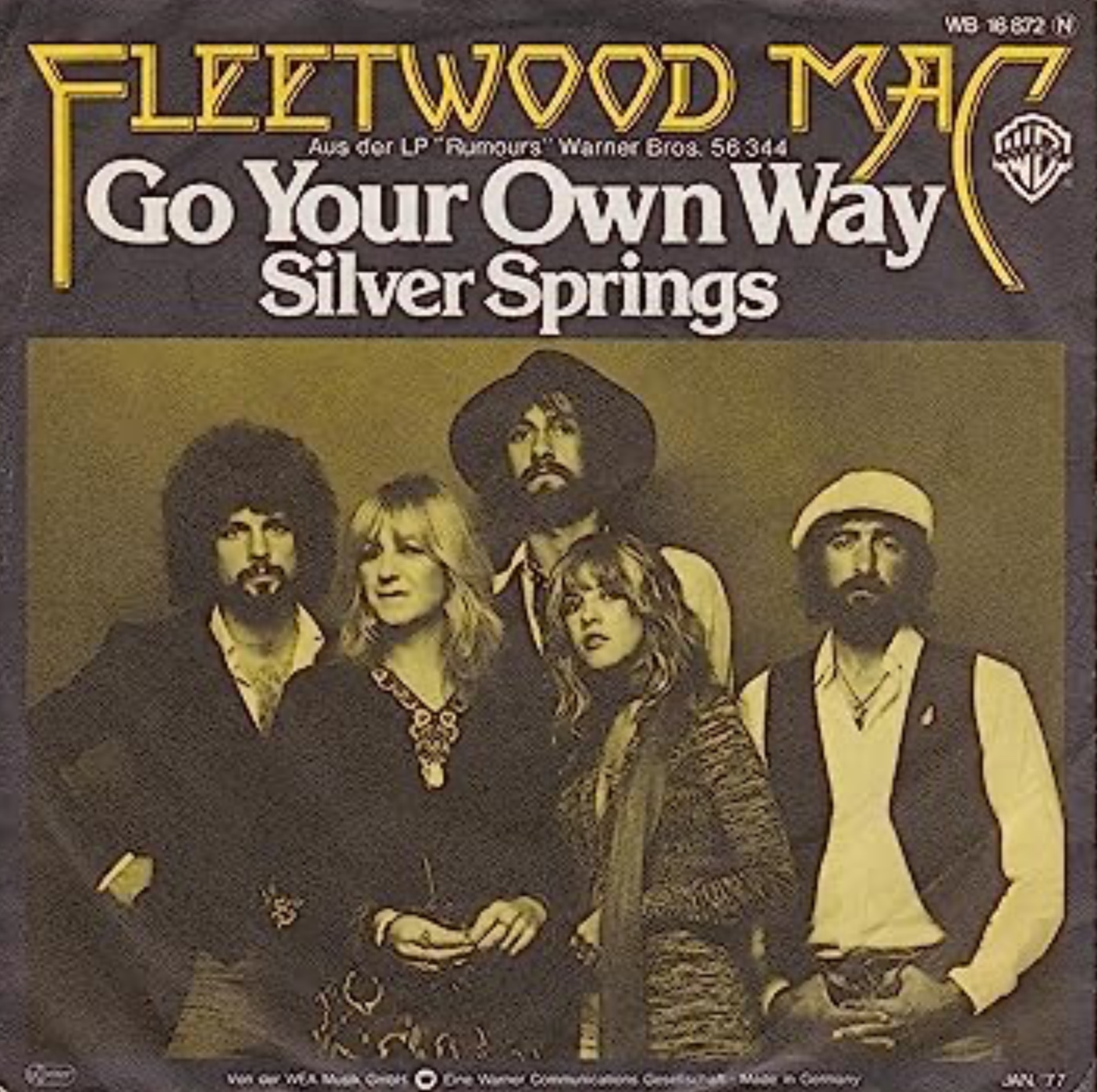


 FLEETWOOD MAC - GO YOUR OWN WAY


"Go your own way" va ser llançat com el primer senzill de l'àlbum a finals de 1976, tres mesos abans del llançament de "Rumours", i va ser un èxit comercial, arribant al número 10 al Billboard Hot 100 dels EUA. El llançament avançat va ser un intent de crear expectativa al voltant de l'àlbum. Amb èxit, perquè l'àlbum tenia prop d'un milió de precomandes. "Rumors" acabaria per vendre més de 10 milions de còpies a tot el món durant el primer mes del seu llançament. Amb els anys, l'àlbum també va ser un èxit massiu, encapçalant les llistes d'àlbums a tot el món. "Rumors" acabarà encapçalant les llistes d'àlbums nord-americanes durant 31 setmanes i vendrà més de 40 milions de còpies a tot el món. A més, "Go Your Own Way" ha demostrat ser un clàssic del rock atemporal. La popularitat perdurable de la cançó és una prova de la música captivadora d’aquest LP. Al Regne Unit, el senzill no va tenir tant èxit, només va arribar al número 38.


Buckingham va escriure "Go Your Own Way", una cançó sobre la seva tumultuosa relació amb Stevie Nicks. La potent cançó aprofundeix en el dolor i la frustració d'una relació fallida.


"Vaig quedar completament devastat quan ella (Nicks) va trencar la nostra relació, i al mateix temps havia de fer-li èxits. Vaig haver de fer moltes coses per ella que realment no volia fer. Però les vaig fer. (Lindsey Buckingham)


Stevie Nicks estava furiosa quan va escoltar la cançó. Ella va percebre la cançó com un atac personal i il·lícit i va instar a Buckingham a canviar algunes de les lletres. Però Buckingham es va negar a fer-ho. En resposta, Stevie Nicks va escriure la cançó "Dreams".


'Dreams' i 'Go Your Own Way' són el que jo anomeno les 'cançons bessones'. Són la mateixa cançó escrita per dues persones sobre la mateixa relació." (Stevie Nicks)


Cal destacar les diferències entre les 'cançons bessones'. "Go Your Own Way" de Buckingham segueix un patró senzill del rock, mentre que "Dreams" de Nicks té un enfocament més filosòfic.


Mick Fleetwood va dir: "El ritme de 'Go Your Own Way' va ser una estructura de tam-tam que Lindsey va demostrar colpejant capses de Kleenex o alguna cosa així. Mai no vaig aconseguir el que volia, així que el resultat final va ser la meva interpretació mutada. Es va convertir en una part important de la cançó, un enfocament completament de darrera a davant que, em fa vergonya dir-ho, va sorgir de capitalitzar la meva pròpia ineptitud. Hi va haver algun conflicte sobre la frase "crackin' up, shackin' up", amb la que Stevie se sentia tractada injustament, però Lindsey s’hi va fer molt fort. Bàsicament era; fes la teva, noia!


La banda va tenir dificultats per muntar un solo de guitarra adequat, després el productor Ken Caillat va construir el solo reunint sis preses diferents de solos de guitarra de Lindsey dels assajos. Ho va aconseguir aixecant i silenciant solos de guitarra individuals mitjançant ajustos tècnics. Caillat va trobar el solo "sense fissures" malgrat la seva naturalesa fragmentada.


GO YOUR OWN WAY


“Go your own way” was released as the album’s first single at the end of 1976, three months before the release of “Rumours”, and was a commercial success, reaching #10 on the US Billboard Hot 100. The early release was an attempt to create hype around the album. With success, because the album had close to a million pre-orders. “Rumours” would eventually sell over 10 million copies worldwide in the first month of its release. Over the years, the album was also a massive success, topping the album charts worldwide. “Rumours” would eventually top the US album charts for 32 weeks and sell over 40 million copies worldwide. Besides, “Go Your Own Way” has proven to be a timeless rock classic. The song’s enduring popularity is evidence of the captivating music and the relatable themes of the iconic tune. In the UK, the single was not as successful, only reaching #38.


Buckingham wrote “Go Your Own Way”, a song about his tumultuous relationship with Stevie Nicks. The powerful song delves into the pain and frustration of a failing relationship.


“I was completely devastated when she (Nicks) took off. And yet I had to make hits for her. I had to do a lot of things for her that I really didn’t want to do. And yet I did them. (Lindsey Buckingham)


Stevie Nicks was reportedly furious when she heard the song. She perceived the song as a personal and wrongful attack and urged Buckingham to change some of the lyrics. But Buckingham refused to do so. In response, Stevie Nicks wrote the iconic song “Dreams”.


‘Dreams’ and ‘Go Your Own Way’ are what I call the ‘twin songs’. They’re the same song written by two people about the same relationship.”(Stevie Nicks)


The differences between the ‘twin songs’ are noteworthy. Buckingham’s “Go Your Own Way” follows a straightforward course, while Nicks’ “Dreams” has a more philosophical approach.


Mick Fleetwood said: "'Go Your Own Way's' rhythm was a tom-tom structure that Lindsey demoed by hitting Kleenex boxes or something. I never quite got to grips with what he wanted, so the end result was my mutated interpretation. It became a major part of the song, a completely back-to-front approach that came, I'm ashamed to say, from capitalizing on my own ineptness. There was some conflict about the 'crackin' up, shackin' up' line, which Stevie felt was unfair, but Lindsey felt strongly about. It was basically, On your bike, girl!


The band had a difficult time assembling a suitable guitar solo, then producer Ken Caillat built the solo by piecing together six different lead guitar takes. He accomplished this by pulling up and muting individual guitar solos through faders. Caillat found the solo "seamless" despite its fragmented nature.


8.7.23


BOSTON - MORE THAN A FEELING


"More Than a Feeling" és una cançó del grup de rock nord-americà Boston, llançada com a senzill principal de l'àlbum debut de la banda al setembre de 1976. Tom Scholz, fundador i líder de la banda va escriure la cançó sol. El senzill va assolir el número cinc als EUA i el número 22 al Regne Unit. La cançó parla d'un noi que es desperta, posa una mica de música i es perd en el somni somiant amb els seus dies amb Marianne. "Es va escriure sobre un esdeveniment de fantasia", va dir a Entertainment Weekly de la cançó. "Però és una cosa amb la qual gairebé tothom es pot identificar, algú perd algú que era important per a ell i la música els porta de tornada". La noia dels somnis d'aquesta cançó, Marianne, es basava en una persona real. "Era la meva cosina gran, de qui em vaig enamorar quan tenia 10 anys", va explicar Scholz. "Em vaig trobar amb ella molts anys després i em va dir que es va molestar molt quan vaig dir que era la meva cosina gran".


Aquest va ser el primer senzill de Boston i un èxit sorprenent. L'ascens del grup va ser sobtat i inesperat; quan es va llançar "More Than a Feeling", els seus representants van passar molt de temps portant-la a les emissores de ràdio. És molt difícil per a un grup desconegut que decideixin promocionar-la, però la cançó era tan polida i radiable que moltes emissores la van posar de seguida. L’èxit va ser instantani, i molt aviat aquella banda desconeguda amb un àlbum gravat majoritàriament en un soterrani va esdevenir un actor important de l'escena del rock d’aquell 1976.


El lloc web de Boston diu que la cançó tracta sobre "el poder que pot tenir una cançó antiga a la teva vida, amb Scholz explicant que "va ser una mena de balada agredolça que va funcionar".


"More Than a Feeling" is a song by the American rock band Boston, released as the lead single from the band's 1976 debut album in September 1976. Tom Scholz, the former and leader of the band wrote the whole song. The single peaked at number five on the US and #22 in the UK. The song is about a guy who wakes up with the blahs, turns on some music, and gets lost in reverie dreaming of his days with Marianne. "It was written about a fantasy event," he told Entertainment Weekly of the song. "But it's one that almost everybody can identify with, of somebody losing somebody that was important to them, and music taking them back there." The dream girl in this song, Marianne, was based on a real person. "She was my older first cousin, who I had a crush on when I was 10," Scholz explained. "I ran into her many many years later and she was very annoyed at me for mentioning that she was my older cousin”. 


This was Boston's first single, and a surprising hit. The group's rise was sudden and unexpected; when "More Than a Feeling" was released, their managers spent a lot of time pitching it to radio stations, which is a very tough sell for an unknown band, but the song is so polished and radio-friendly that many stations put it on the air. It took off, and very soon this unknown band with an album recorded mostly in a basement was a major player on the rock scene.


Boston's website says the song is about "the power an old song can have in your life, with Scholz elaborating that "it was sort of a bittersweet ballad”. 


THE KNACK - MY SHARONA


"My Sharona" és el primer senzill de The Knack. Va ser llançat el juny de 1979 del seu àlbum debut "Get The Knack", i va arribar al número 1 a la llista de senzills Billboard Hot 100, on va romandre durant sis setmanes, i va ser el senzill més venut de l'any. Al Regne Unit va ser el seu únic èxit, aconseguint el número 6.


El cantant principal de The Knack, Doug Fieger, va escriure la lletra d'aquesta cançó, que tracta sobre una noia que li agradava. Doug tenia una relació quan va entrar a la botiga de roba on treballava una estudiant de secundària anomenada Sharona Alperin (que tenia un xicot). La diferència d'edat (ell era uns vuit anys més gran) i l'estat de la seva relació no van dissuadir a Fieger, que es va enamorar immediatament. Amb la seva xicota mirant, va convidar a Sharona a un concert.No gaire després, va trencar amb la xicota i va professar el seu amor per Sharona, creant una dinàmica estranya on ell es trobava amb ella tot i que ella tenia un xicot que sovint assistia als concerts de The Knack amb ella. Es va fer força pesat quan Fieger va començar a escriure més cançons sobre ella. Quan va composar "My Sharona" encara no estaven junts. Aproximadament un any després de conèixer-se, Sharona va cedir i van començar a sortir. 


Es va unir a la banda de gira i va veure com la cançó que Fieger va escriure sobre ella els elevava a l'estrellat. La parella va estar junta durant uns quatre anys abans que l'estil de vida del rock and roll i l'alcoholisme de Fieger es convertís en massa per a Sharona, i ho van trencar. Després, Sharona va respondre a preguntes de la premsa sobre la ruptura dient que havia de convertir-se en la seva pròpia Sharona, no en la d'una altra persona. Després d'un període de relaxació, Alperin i Fieger es van fer amics. Alperin va estar amb Fieger l'última setmana de la seva vida; va morir de càncer el 14 de febrer de 2010.


La versió de l'àlbum te una durada de 4:52, però la versió single es va editar deixant-la en 3:58. La víctima d'aquest tall va ser el solo del guitarrista del grup Berton Averre, que va ser tallat, tot i ser un dels solos més admirats pel públic i la critica musical.


Quentin Tarantino va voler utilitzar la cançó a Pulp Fiction durant l'escena on Bruce Willis i Ving Rhames són atacats per Zed i el seu germà (i el sotmès encadenat). Fieger va acabar rebutjant la sol·licitud. La cançó va aparèixer poc després a la pel·lícula de 1994 Reality Bites.


Run-D.M.C. va utilitzar el riff de guitarra per a la seva cançó de 1986 "It's Tricky".


A la portada del single americà apareix Sharona Alperin subjectant l'àlbum “Get The Knack”. Quan es va fer la sessió fotogràfica ella i Doug Fieger encara no estaven sortint.


THE KNACK - MY SHARONA


"My Sharona" is the first single by The Knack. Was released in June 1979 from their debut album “ Get The Knack”, and reached #1 on the Billboard Hot 100 singles chart, where it remained for six weeks, and was the best-selling single of the year. In the UK was his one hit wonder, peaking at #6. 


The Knack lead singer Doug Fieger wrote the lyrics to this song, which is about a girl he fancied. Doug was in a long-term relationship when he walked into the clothing store where a high school student named Sharona Alperin (who had a boyfriend), was working. The age difference (he was about eight years older) and relationship status didn't deter Fieger, who was immediately lovestruck. With his girlfriend looking on, he invited Sharona to a show. Not long after, he broke up with the girlfriend and professed his love for Sharona, creating a weird dynamic where he would come on to her even though she had a boyfriend who often attended Knack concerts with her. It got pretty heavy when Fieger started writing songs about her - they weren't together when he composed "My Sharona."


About a year after they first met, Sharona gave in and they started dating. She joined the band on tour and watched as the song Fieger wrote about her elevated them to stardom. The couple were together for about four years (and engaged at one point) before the rock and roll lifestyle and Fieger's alcoholism became too much for Sharona, and they called it off. In the aftermath, Sharona answered questions about the breakup by saying that she needed to become her own Sharona, not someone else's. After a cooling off period, Alperin and Fieger became friends. Alperin was with Fieger the last week of his life; he died of cancer on February 14, 2010.


The album version runs 4:52, but the single version was edited down to 3:58. The victim of this cut was Knack guitarist Berton Averre, whose much-admired solo was chopped. That's Sharona Alperin on the cover of the single holding the Get The Knack album. She posed for the art even though she and Doug Fieger weren't yet dating.


Quentin Tarantino wanted to use this in Pulp Fiction during the scene where Bruce Willis and Ving Rhames are being set upon by Zed and his brother (and the chained submissive). Fieger ended up nixing the request and the song appeared in the 1994 movie Reality Bites instead.


Run-D.M.C. used the guitar riff for their 1986 song "It's Tricky."


7.7.23


ZZ TOP - GIMME ALL YOUR LOVIN


When ZZ Top released “Gimme All You Lovin’” as a single in April 1983, it loudly announced the band’s foray into synth-rock, a transition that was inspired by a different legendary act. A year before “Eliminator” made ZZ Top one of the biggest bands on the planet, Billy Gibbons and the group were on tour in Europe. The frontman wandered into a local nightclub and was surprised to see people dancing to the Rolling Stones 1980 single “Emotional Rescue.”


The idea to infuse electronic elements, synthesizers and dance rhythms with ZZ Top’s traditional blues rock sound eventually became the driving force of Eliminator. Nowhere was that more evident than on the album’s first single, “Gimme All Your Lovin.’” Lyrically, the song is a variation on a common theme for the band: sex.


The single peaked at No. 37 on the Billboard Hot 100 chart and reached No. 10 in the U.K. Its presence was felt even more strongly on MTV, where the "Gimme All Your Lovin'" music video earned heavy rotation, sparking ZZ Top's unexpected ascent to video stardom.


The video was ZZ Top's first and also the first to have a sequel. The clip showed a mechanic/gas station attendant who is working when three beautiful women appear in "The Eliminator," which was a 1933 Ford Hot Rod owned by Gibbons. Our hero gets the keys to the car, and goes for a ride with the ladies, who return him some time later.


In a brilliant move, they left room for a sequel, as he sees the car driving off. The story picks up in the video for “Sharp Dressed Man”, where the guy is now a valet. Establishing the car and the girls as iconic images of ZZ Top helped them wow the younger generation. The car was so popular that Gibbons had another one made to take on tour. The video for this song helped pay off the car that starred in it. Billy Gibbons estimates that he spent about $250,000 buying and restoring the car, and was deep in debt on the vehicle. By putting the car in the video, it became a business expense, and thus a write-off. The car was used on the album cover and became a personification of the band.


 ELTON JOHN - BENNIE AND THE JETS


"Bennie and the Jets" va aparèixer per primera vegada a l'àlbum "Goodbye Yellow Brick Road" l'any 1973 i ha estat una de les cançons més populars de John. No es va publicar com a senzill al Regne Unit, on es va publicar com a cara B de "Candle in the wind". Als Estats Units, "Candle In The Wind" no es va llançar com a senzill perquè MCA Records pensava que aquesta era millor. Elton va protestar, però va aparèixer quan les emissores de ràdio de música soul van començar a reproduir-la i es va convertir en un èxit. Elton no pensava que “Bennie” seria un èxit. Es va sorprendre quan va arribar al número 1 a Amèrica. John afirma que poques vegades sap quina de les seves cançons serà un èxit. Al Regne Unit es va llançar com a senzill dos anys més tard, arribant al número 37.


"Bennie and the Jets" és una cançó sobre una banda de ficció de la qual el narrador del tema és un fan. És una melodia sincopada de piano-percussió que encaixa perfectament amb els anys 70. El tema troba Elton en el seu millor moment, amb un arranjament de piano excel·lent i original, i una melodia inusual interpretada en part en falset. Va ser idea d'Elton tartamudejar la veu: "B-B-B-Bennie..." Bernie Taupin va pensar que això funcionava molt bé amb el tema futurista i robòtic de les seves lletres. Taupin va dir: "Aquesta és una petita peculiaritat de la cançó amb la qual em sap greu dir que no he tingut res a veure. Això i aquest gran acord meravellós al principi. Crec que aquestes dues coses són les que probablement van fer que aquesta cançó sigui tan popular, amb la qual vaig tenir alguna cosa a veure". Això és jazz divertit com l'infern.


Tot i sonar com si s'hagués gravat en directe, la cançó es va gravar en estudi, amb efectes de so en directe afegits més tard. El productor Gus Dudgeon va barrejar sons d'una actuació de John del 1972 i un concert de Jimi Hendrix de 1970 a l'illa de Wight. Va incloure una sèrie de xiulets d'un concert en directe i va afegir aplaudiments i diversos crits.


Elton va escriure la música d'aquesta cançó com un homenatge al glam rock, un estil definit per vestits escandalosos que va ser popular a principis dels anys 70, especialment al Regne Unit. Artistes com David Bowie i Gary Glitter n’eren les estrelles, però per a Elton va ser una extensió de la seva personalitat; realment era gai i li agradava portar roba femenina a l'escenari. Es va fer conegut pel seu aspecte salvatge i la seva col·lecció d'ulleres de sol vistoses.


Va interpretar "Bennie And The Jets" a Soul Train, convertint-se en la primera superestrella blanca a aparèixer al programa. El seu episodi es va emetre el 17 de maig de 1975, superant David Bowie per sis mesos. Elton va demanar d’apareixer al programa, ja que n’era un gran fan. Aquesta cançó també es va interpretar durant la seva aparició a l'escenari de Live Aid a Londres.


ELTON JOHN - BENNIE AND THE JETS


“Bennie and the Jets” first appeared on the “Goodbye Yellow Brick Road” album in 1973, and has been one of John's most popular songs. This wasn't released as a single in the UK, where it was released as the B-side of "Candle in the wind”. In the US, "Candle In The Wind" was not released as a single because MCA records thought this was better. Elton protested, but came around when black radio stations started playing it and it became a hit. Elton did not think this would be a hit. He was shocked when it went to #1 in America. John claims he rarely knows which of his songs will be hits. In the UK was released as a single two years ago peaking at #37.


"Bennie and the Jets" it’s a song about a fictional band that the track’s narrator is a fan of. It’s a syncopated piano-percussion tune that fits in perfectly with the 70’s. The track finds him at his best with an excellent and original piano arrangement and an unusual melody performed partly in falsetto. It was Elton's idea to stutter the vocal: "B-B-B-Bennie..." Bernie Taupin thought this worked very well with the futuristic, robotic theme of his lyrics. Said Taupin: "That's a little quirk of the song which I'm sad to say I had nothing to do with. That and that wonderful big chord at the beginning. I think those two things are what probably made that song so popular. Neither of which I had anything to do with." This one is jazzy and fun as hell.


Despite sounding as though recorded live, the song was actually recorded in studio, with live sound effects added in later. Producer Gus Dudgeon mixed in sounds from a 1972 performance of John, and a 1970 Jimi Hendrix concert at the Isle of Wight. He included a series of whistles from a live concert and added hand claps and various shouts.


Elton wrote the music to this song as an homage to glam rock, a style defined by outrageous costumes that was popular in the early '70s, especially in the UK. Artists like David Bowie and Gary Glitter got into the act, but for Elton, it was an extension of his personality - he really was gay and liked to wear feminine clothes on stage. He became known for his wild appearance and collection of gaudy sunglasses.


He performed "Bennie And The Jets" on Soul Train, becoming the first white superstar to appear on the show. His episode aired May 17, 1975, beating David Bowie by six months. Elton asked to appear on the show, as he was a big fan. This song was also performed during his appearance at Live Aid in London stage. 


THE CURE - A FOREST


"A Forest" is a song by the English band The Cure. it was released as a single from the band's second album “Seventeen Seconds” on 28 March 1980. It was their debut entry on the UK Singles Chart reaching #31. The track is representative of The Cure's 1980s gothic rock phase.


"A Forest," from The Cure's Seventeen Seconds album, tells a vague story of pursuit of a girl in a forest, which ends in loss. Many fans and critics regard this song in particular as a good example of The Cure's unique sound. Frontman Robert Smith described it as "a childhood dream (nightmare) that came true with adolescence." 


He also told Rockstar in 1984 that it was inspired by his experience of getting lost in the forest as a boy. "I try to capture that feeling of extreme fear I was being taken by and how - maybe in other ways - this type of unpleasant feeling can still be felt by anyone," he explained.


It was their first Top 40 hit on the UK singles chart, which garnered them their first appearance on the BBC's Top Of The Pops program. Also was the first Cure single to be released on the 12-inch single record format - the alternative 7-inch record single omits the initial guitar-and-keyboard introduction, skips a few bars between the verses, and it goes to a fade-out sooner in the guitar solo ending. All this makes it two minutes shorter on the smaller single.


This is one of The Cure's first hits, and certainly one of their most acclaimed songs. Today sounds as good as the first day.


ABC - THE LOOK OF LOVE


"The Look of Love" és una cançó de la banda de pop anglesa ABC, publicada el 7 de maig de 1982 com el tercer senzill del seu àlbum debut "The Lexicon of Love", un àlbum que es pot considerar una de les joies del pop britànic del anys 80. El senzill va ser l'èxit principal de la banda al Regne Unit, aconseguint el número 4, i també va arribar al número 1 a la llista Billboard Dance/Disco dels Estats Units i al número 18 al Billboard Hot 100.


Aquesta cançó va combinar una banda ambiciosa amb un productor ambiciós, i el resultat va ser una peça de música pop perfecta. Poques cançons evoquen l'esperit del 1982 de manera tan viva com "The Look Of Love" d'ABC. Trevor Horn diu avui sobre la cançó: "Així era com ho tenien al cap. Els nois d’ABC solien anar a un club de Sheffield i volien fer un disc que poguessin posar al club. Si hi penses bé, als anys 70, la producció disco era allò que ho va tirar tot endavant. Vull dir, la producció de rock també va ser molt bona... Però la manera com la gent feia discos de ball era molt diferent". Horn va aconseguir crear un so de pantalla panoràmica que combinava les immaculades produccions de Nile Rodgers i Bernard Edwards per a Chic amb les dramàtiques orquestracions de Nelson Riddle per a Frank Sinatra. Per a Horn, la visió musical d'ABC reflectia completament la seva en aquell moment, és a dir, crear produccions precises, imaginatives i d'última generació. "Estava intentant fer alguna cosa millor del que faries normalment. Suposo que estava intentant fer discos per competir amb Amèrica".


La lletra es va inspirar en una ruptura a la vida real que havia patit Martin Fry. Trevor Horn és un perfeccionista notori; va insistir que la veu femenina que responia "Goodbye" a Fry al segon vers hauria de ser cantada per la dona real  que l'havia abandonat. Martin Fry esmenta el seu nom a la lletra quan canta: "Diuen 'Martin, potser, un dia trobaràs el veritable amor'".


Publicat com a single i com a remix de 12", consta de quatre parts, anomenades "Parts One, Two, Three and Four". La primera part és la versió estàndard de l'àlbum, la segona part és una versió instrumental excel·lent, la tercera part és una versió vocal sense els overdubs orquestrals i Part Four és una breu part instrumental acústica de la cançó.


MTV va tenir un paper important en l'èxit nord-americà d'ABC, i el vídeo d'aquesta cançó va ser un dels favorits de la xarxa, que es va llançar al 1981. El clip va ser dirigit per Brian Grant i inspirat en antigues pel·lícules de Hollywood. Martin Fry ho descriu com un encreuament entre An American In Paris i The Benny Hill Show.


ABC - THE LOOK OF LOVE


"The Look of Love" is a song by English pop band ABC, released on 7th May 1982 as the third single from their debut album “The Lexicon of Love”, an album that can be considered one of the jewels of British pop from the 80s. The single was the band's highest charting hit in the UK, peaking at #4, and also went to #1 on the US Billboard Dance/Disco chart and #18 on the Billboard Hot 100.


This song paired an ambitious band with an ambitious producer, and the result was a perfect piece of pop music. Few tracks evoke the spirit of 1982 as vividly as ABC’s ‘The Look Of Love’. Trevor Horn says today of the track, “That was kind of how they had it in their heads. The guys in ABC used to go to a club up in Sheffield, and they wanted to make a record that they could play in the club. If you think about it, in the ‘70s, disco production was the thing that pushed everything forward. I mean, rock production was pretty cool too... But the way that people made dance records was so different.” Horn managed to create a widescreen sound that blended Nile Rodgers’ and Bernard Edwards’ immaculate productions for Chic with Nelson Riddle’s dramatic orchestrations for Frank Sinatra. For Horn, ABC’s musical vision completely mirrored his own at the time, namely to create precise, imaginative, state-of-the-art productions. “I was trying to make something better than you would normally make. I suppose I was trying to make records to compete with America.”


The lyrics were inspired by a real-life break-up Martin Fry had gone through. Trevor Horn is a notorious perfectionist; he insisted the female voice replying "goodbye" to Fry in the second verse should be sung by the actual woman in the relationship who had jilted him. Martin Fry mentions his forename in the lyric when he sings: "They say 'Martin, maybe, one day you'll find true love.'"


Released as a single and as a 12" remix, it consists of four parts, referred to as "Parts One, Two, Three and Four". Part One is the standard album version, Part Two is an excellent instrumental version, Part Three is a vocal version without the orchestral overdubs and Part Four is a short acoustic instrumental part of the song.


MTV played a big role in ABC's American success, and the video for this song was a favorite on the network, which launched in 1981. The clip was directed by Brian Grant, and inspired by old Hollywood movies. Martin Fry describes it as a cross between An American In Paris and The Benny Hill Show.


 T. Rex were one of the pioneering groups of Glam Rock, and made it grow vigorously in the UK to top the charts for a few years. In Elton’s week we remember them with this song that they performed together on TV. 


T. REX - GET IT ON


In the UK, “Get it On” hit #1 on July 24, 1971, giving T. Rex their second chart-topper there, following "Hot Love." The band's American record company, Reprise, dragged their feet on the song and didn't release it until January 1972. It went to #10 in March, but ended up being the group's only significant hit Stateside. In the UK, they had two more #1s, "Telegram Sam" and "Metal Guru", and a total of 11 Top 10s.


This is a great example of "glam rock," which was characterized by outrageous, often effeminate costumes, nonsensical lyrics, driving beats and very theatrical stage shows. The songs low slung groove, cosmic lyrics and Marc Bolan's cool vocal delivery is pure glam rock gold. This is one of the true glam anthems.


This song was written and recorded when T. Rex was touring America in 1971. The group had made inroads in their native UK with their 1970 self-titled album, but were little-known in the US. Marc Bolan wanted to change that by coming up with something that would strike to the heart in America. He wrote this song that is all about sex, but with imagery so comically vague it would be hard for even the most prudish listeners to take offense. Bolan's delivery is feral, and he does keep calling the girl "dirty and sweet," but you really have to stretch to find sexual connotations in a "hubcap diamond star halo" or a "cloak full of eagles." The biggest suggestion is in the title. Everything fits here, the provocative title, that sinuous, slinky-irresistible riff, the organ fills, the high-pitched backing vocals, the breakdown to let the guitars, drums and saxophone kick-start it again and of course that so-simple gong-banging chorus. All this and Bolan's crazy-sexy lyrics, which anticipate Prince's "Cream" by about 35 years, there's a doff of the cap to inspiration Chuck Berry over the fade. 


This track was covered by The Power Station in 1985. Their version, referred to as "Get It On (Bang a Gong)" in the US, was a strong hit on the US Billboard Hot 100 chart, where the single peaked at #9 (one place higher than the original) in the summer of 1985. 


During a December 1971 Top of the Pops performance, our artist of the week, Elton John played a piano on the song.


As a curious fact we want to say that Marc Bolan took his name from Bob Dylan... BO from Bob and LAN from Dylan.