Total de visualitzacions de pàgina:

4.8.23


PETER FRAMPTON - SHOW ME THE WAY


Publicació: juny de 1975, febrer de 1976 (en directe)

Llistes: Regne Unit: #10  EUA: #6


"Show Me the Way" és una cançó de Peter Frampton. Va ser llançada originalment el juny de 1975 com a senzill principal del seu quart àlbum d'estudi "Frampton", va guanyar popularitat després de ser gravada en directe i llançada al febrer de 1976 com a senzill principal del seu àlbum en directe "Frampton Comes Alive!" Publicat el gener de 1976; a l'abril, ja havia venut un milió de còpies a Amèrica i va ser l'àlbum més venut de l'any allà. "Frampton Comes Alive" va entrar a les llistes immediatament després de la seva publicació, i al febrer, el senzill de "Show Me the Way" va fer igual, assolint el número 6. L'àlbum va arribar al número u on hi romandria durant 10 setmanes. En aquest context, si estaves a prop d'una ràdio al 1976, escoltar a Frampton era inevitable.


La lletra podria relacionar-se amb una persona concreta, però Frampton en va mantenir sempre el nom en secret. "Acabo de conèixer algú que m’ha donat molta confiança", va dir a Melody Maker el 1976. "La meva vida ha canviat completament. Totes les lletres d'aquesta cançó parlen de mi i d'ella. No diré de què ni de qui tracta la cançó perquè podria espatllar la idea que en tens”. 


A la introducció de la versió en directe, Frampton va utilitzar un talkbox, un dispositiu connectat a la seva guitarra que li permetia crear sons vocals amplificats i distorsionats amb la boca. Es fa un talkbox amb un tub connectat a un controlador de compressió i l'altre extrem entrant a la boca de l'intèrpret. A continuació es connecta a l'amplificador de la guitarra.


En una entrevista amb Paul Brannigan, Frampton va dir: "Vaig començar a escriure “Show Me The Way” a Nassau, a les Bahames. El líder d'Humble Pie, Steve Marriott, tenia una cabana a la platja allà i em vaig mudar durant tres setmanes, amb una guitarra acústica i una guitarra elèctrica. Alvin Lee de Ten Years After va estar a l'illa alhora, així que durant les dues primeres setmanes, no vaig escriure gaire! Però l'endemà que l'Alvin marxés, vaig agafar la guitarra acústica i, en uns 20 minuts, vaig trobar la seqüència d'acords d'obertura de la cançó, i un vers i la tornada de la lletra. Em va agradar com anava, però el vaig deixar de banda per treballar-hi més endavant. Aleshores, aquella tarda, quan el sol es ponia, em vaig asseure sota una palmera i vaig escriure “Baby, I Love Your Way”. He estat intentant esbrinar de quin costat del llit em vaig aixecar aquell dia tan profitòs!" (Riu).


"De tornada a Anglaterra vaig acabar “Show Me The Way”. Va ser quan se'm va ocórrer el famós riff de talkbox, i vaig començar a experimentar amb ell. Estic content d'haver-ho fet! Vam gravar la cançó al castell de Clearwell a Gloucestershire, utilitzant el Mobile Studio de Ronnie Lane, bàsicament perquè Led Zeppelin hi havia gravat. Jo era un gran fan de Zeppelin i em va encantar la producció que Jimmy Page havia fet en aquell indret".


"Vam publicar “Show Me The Way” com a senzill de l'àlbum "Frampton", i va tenir un èxit moderat, no es va incendiar el món. Però tothom pensava que seria un èxit al igual que “Baby, I Love Your Way”, i ens ho vam creure! Així que el vam tornar a publicar quan s’havia de promocionar "Frampton Comes Alive" i llavors va esclatar. Va ser una sorpresa veure com et podia canviar la vida un àlbum supervendes. De sobte no podia anar a les botigues de discos, i fins i tot els ascensoristes dels hotels sabien qui era. Aneu amb compte amb el que voleu, perquè hi ha parts de la fama que no són tan desitjables”.


"Vaig conèixer a Bono d'U2 una vegada i li vaig preguntar si era cert que U2 solia tocar "Show Me The Way" quan començaven, perquè molta gent m'ho havia dit, sobretot quan anava de gira per Irlanda. Va dir: "Sí, sempre vaig pensar que era una pregària". Em va emocionar que ho veies així”.


"Estic orgullós de la cançó, i encara la toco, òbviament. Probablement sigui el primer èxit que toquem en els concerts cada nit, i sempre fa que la gent es connecti".


PETER FRAMPTON - SHOW ME THE WAY


Released: June 1975, February 1976 (Live)

Charted:  UK: #10 US: #6


"Show Me the Way" is a song by Peter Frampton. Originally released in June 1975 as the lead single from his fourth studio album “Frampton”, it gained popularity after being recorded live and released in February 1976 as the lead single from his live album “Frampton Comes Alive!” released in January 1976; by April, it sold a million copies in America and was the best-selling album of the year. “Frampton Comes Alive” charted immediately after it was released, and by February, the single of “Show Me the Way” was skittering up the charts, eventually landing at Number 6. The album itself would hit Number One and stay there for 10 weeks; its success also catapulted the Frampton album to Gold status. If you were anywhere near a radio in 1976, Frampton was inescapable. 


The lyric could relate to a specific person or to a higher power; Frampton kept it universal on purpose, but he did have a specific inspiration in mind. "I just met somebody that gave me such confidence," he told Melody Maker in 1976. "My life is completely changed. All the lyrics in that song are about me and her."


On the intro to the live version, Frampton used a talkbox, a device hooked up to his guitar that allowed him to create amplified, distorted vocal sounds with his mouth. A talkbox is made with tubing connected to a compression driver (meant to be part of a P.A. system), with the other end going into the performer's mouth. The unit is then hooked up to the guitar amp.


In a interview with Paul Brannigan, Frampton said: "I started writing Show Me The Way in Nassau, in the Bahamas. Humble Pie’s frontman Steve Marriott had a cottage on the beach there, and I moved in for three weeks, with an acoustic guitar and an electric guitar. Alvin Lee from T’en Years After happened to be on the island at the same time, so for the first two weeks, I didn’t get very much writing done! But the day after Alvin left, I picked up my acoustic guitar, and within about 20 minutes I came up with the opening chord sequence to Show Me The Way, and a verse and a chorus of lyrics. I liked how it was going, so I set it aside to work on later. Then that afternoon, as the sun was setting, I sat under a palm tree and wrote Baby, I Love Your Way. I’ve been trying to work out which side of the bed I got out on that day ever since!"


"I finished writing Show Me The Way back in England, and I came up with the famous talk box riff when we were experimenting with it. I’m glad I did! The talk box has a certain comedic potential, and people go nuts every time they hear it. We recorded the song in Clearwell Castle [in Gloucestershire], using Ronnie Lane’s Mobile Studio, basically because Led Zeppelin had recorded there. I was a huge Zeppelin fan, and I loved that open production that Jimmy Page got”.


"We put out Show Me The Way as a single from the “Frampton” album, and it got some airplay, without setting the world on fire. But everyone thought that it and Baby, I Love Your Way should be hit records, and I believed them! So we put it out again when it came to promote “Frampton Comes Alive” and it just took off. It was a shock to see how life-changing a big-selling album could be. Suddenly I couldn’t go to record shops anymore, and even the elevator operators in hotels knew who I was. Be careful what you wish for, because there are parts of fame that are not so desirable”. 


"I met Bono from U2 once, and I asked him if it was true that U2 used to play “Show Me The Way” when they formed at school, because a lot of people had told me that, particularly when I toured in Ireland. He said, 'Yes, I always thought it was prayer.' I was thrilled that he thought of it that way”. 


"I’m proud of the song, and still play it, obviously. It’s probably the first hit that we play in the act each night, and it always gets the evening going."


3.8.23


SUGARHILL GANG - RAPPER’S DELIGHT


Publicació: 16 de setembre de 1979

Llistes: Regne Unit: #3  EUA: #36


"Rapper's Delight", va ser la primera aposta seriosa per posar un disc de rap al  capdevant de la música popular, i va funcionar. Aquesta va ser la primera cançó de rap que va entrar al Billboard Hot 100 dels EUA. Va entrar al #84 la setmana del 10 de novembre, va assolir el Top 40 (al #37) el 5 de gener, aconseguint el #36 una  setmana després. Aquestes posicions a les llistes poden semblar modestes, però aconseguir l'atenció nacional d'una cançó de rap va ser tot un èxit, fent de "Rapper's Delight" una cançó fonamental en la història del hip-hop. 


La música rap havia començat uns set anys abans, però normalment s'escoltava a discoteques on els DJ feien ritmes breakbeat i els MC (master of ceremony) afegirien veus en directe. Fora del Bronx, el rap es considerava generalment una moda, i les discogràfiques no tenien cap interès a finançar-lo. La primera cançó de rap llançada comercialment va ser "Kim TIM III" de la Fatback Band, que va sortir a l'estiu de 1979, però va ser relegada a la cara B d'una melodia més tradicional de R&B.


L’èxit d’aquesta cançó va obrir les portes a molts artistes de rap. Molts d'aquests llançaments van ser al segell Sugarhill, que va ser la llar de Grandmaster Flash and the Furious Five, Spoonie Gee i un grup femení anomenat Sequence. A desembre de 1979, Kurtis Blow es va convertir en el primer raper a llançar un senzill en un segell important quan va publicar "Christmas Rappin'". Fins i tot Kurtis Blow admet que "Rapper's Delight" va vendre més còpies que la seva cançó "The Breaks", que va ser el primer senzill de rap certificat com a disc d'or. Però Kurtis va signar amb el segell multinacional Mercury Records, que va fer la seva deguda diligència amb el procés de certificació. "Rapper's Delight" segurament va vendre més d'un milió de còpies, però no hi ha cap registre oficial ni cap certificació. Això era habitual per a segells més petits que no enviaven els seus registres a la RIAA i sovint es dedicaven a la comptabilitat creativa per justificar vendes.


"Rapper's Delight" va utilitzar músics reals per recrear el ritme de "Good Times" perquè la tecnologia no existia per convertir-lo en un sample. L'única manera de fer-ho seria empalmar la cinta. "Good Times" va ser escrit pel guitarrista i productor de Chic Nile Rodgers i el baixista Bernard Edwards. Rodgers va escoltar "Rapper's Delight" per primera vegada quan estava a un club i el DJ la va posar. Després d'amenaçar amb una demanda, es van canviar els crèdits d’autor de la cançó. Originalment, els tres rapers de Sugarhill Gang i la seva cap de segell, Sylvia Robinson, n’eren els autors, però després del conflicte els únics compositors que hi figuren són Rodgers i Edwards, que reben tots els drets d'autor de la cançó.


"Rapper's Delight" va ser un èxit major al Regne Unit, que va anar un pas per davant dels Estats Units en quant a l’acceptació generalitzada de la música rap. L’artista  local que va tenir un primer èxit de rap al Regne Unit van ser Wham!, que van arribar al número 8 amb "Wham Rap! (Enjoy What you do)" al ​​1983. Blondie es va convertir en el primer grup blanc en arribar al número 1 als EUA amb una cançó de rap amb "Rapture". 


Al principi "Rapper's Delight" no es va publicar en àlbum, només com a single i maxi-single, perquè Sugarhill Records no pensava que un àlbum sencer de música rap es vendria. Amb això no van estar gaire encertats. 


SUGARHILL GANG - RAPPER’S DELIGHT


Released: September 16, 1979

Charted:  UK: #3 US: #36


"Rapper's Delight," was a serious push to get a rap record into the mainstream, and it worked. This was the first rap song to enter the US Hot 100. The song reached the Hot 100 (at #84) on the chart dated November 10, and cracked the Top 40 (at #37) on January 5, peaking at #36 a week later. These chart positions may look modest, but getting a rap song national attention was quite an accomplishment, making "Rapper's Delight" a seminal song in hip-hop history. The winning formula was boastful lyrics over a sampled beat - a technique that became ubiquitous in rap.


Rap music had been around for about seven years, but it was usually heard at block parties and discos where DJs would loop breakbeats and MCs would add live vocals. Outside of the Bronx, rap was generally considered a fad, and record companies had no interest in financing it. The first rap song commercially released was "Kim TIM III" by the Fatback Band, which came out in the summer of 1979, but was relegated to the B-side of a more traditional R&B tune.


This song opened the floodgates for many more rap records. Many of these releases were on the Sugarhill label, which was home to Grandmaster Flash and the Furious Five, Spoonie Gee, and a female group called Sequence. In December 1979, Kurtis Blow became the first rapper to release a single on a major label when he put out "Christmas Rappin’". Even Kurtis Blow concedes that "Rapper's Delight" sold more copies than his song "The Breaks," which was the first rap single certified as a Gold record. But Kurtis was signed to the major label Mercury Records, which did their due diligence with the certification process. "Rapper's Delight" surely sold well over a million copies, but there's no official record of it, and no certification. This was common for smaller labels that didn't submit their records to the RIAA and often engaged in creative accounting.


"Rapper's Delight" used real musicians to re-create the "Good Times" rhythm because the technology didn't exist to make it into a sample loop. The only way to do it would be splicing tape together, and that could get choppy. But Sugarhill Gang didn't just use the "Good Times" beat; the string stabs were also lifted (these were samples, played from the record), so the entire "Delight" track was made up of pieces from the Chic song. "Good Times" was written by Chic's guitarist/producer Nile Rodgers and bass player Bernard Edwards. Rodgers heard "Rapper's Delight" for the first time when he was out at a club and the DJ played it. After he threatened a lawsuit, the credits on the song were changed. Originally, the three Sugarhill Gang rappers and their label boss Sylvia Robinson were listed as the song's writers, but now the only composers listed are Rodgers and Edwards, who receive all the songwriting royalties it brings in (Edwards' share goes to his estate, as he died in 1996).


This was a far bigger hit in the UK, which was a step ahead of America when it came to widespread acceptance of rap music. In England, where there is a large Jamaican population, rap music wasn't too far removed from the reggae music that featured "toasters" who added vocals over breaks in the music.


At first, this was not released on an album, only as a 12" single, because Sugarhill Records didn't think an entire album of rap music would sell. It has since appeared on numerous compilation albums.


Blondie became the first white act to chart with rap when they hit #1 with "Rapture" also in 1980. A homegrown act that had an early rap hit in the UK was Wham!, which went to #8 with "Wham Rap! (Enjoy What you do)" in 1983. 


2.8.23


SISTER SLEDGE - HE’S THE GREATEST DANCER


Publicació: 3 de febrer de 1979

Llistes: EUA: #9  Regne Unit: #6


"He's The Greatest Dancer" va ser escrita i produïda per Bernard Edwards i Nile Rodgers, líders de la banda Chic. Sister Sledge havien gravat per a Cotillion Records durant quatre anys, amb només dos èxits menors al 1975: "Mama Never Told Me" (#20 al Regne Unit) i "Love Don't You Go Through No Changes On Me" (núm. 92 als EUA). Estaven considerant deixar el segell i seguir amb els seus estudis acadèmics (les quatre germanes de Sister Sledge finalment es van graduar a la Temple University), quan Edwards i Rodgers les van fitxar i van produir el seu tercer àlbum, "We Are Family". "He's The Greatest Dancer" es va llançar com a senzill principal de l'àlbum i va ser el seu primer gran èxit. El següent senzill, la cançó del títol de l'àlbum va tenir un èxit encara més gran.


Potser inspirada en el personatge de John Travolta a Saturday Night Fever, aquesta cançó tracta d'un xulo de discoteca que ho deixa tot a la pista de ball. Inusual en aquell moment, hi ha algunes mencions de productes de marca a la cançó: Halston, Gucci, Fiorucci.


Edwards i Rodgers havien triomfat amb el seu grup Chic i se'ls va donar l'oportunitat de produir qualsevol banda del segell. Van triar Sister Sledge perquè eren joves, amb un clar talent i disposades a seguir els seus consells.


Kathy Sledge va ser la cantant solista, tan en aquesta com a "We Are Family". Era la més jove de les quatre germanes Sledge amb només 19 anys quan es va gravar la cançó. Segons Kathy, Bernard Edwards i Nile Rodgers volien guardar aquesta cançó per a la seva banda Chic i fer que Sister Sledge enregistrés "I want your love", però van acabar triant aquesta última i donant a les Sledge "He's The Greatest Dancer". "Crec que Bernard era el lletrista, i sentia que aquesta cançó era més indicada per a nosaltres, i tenia raó".


Nile Rodgers recorda que les membres de Sister Sledge estaven "furioses" quan se'ls va demanar que cantessin la frase de la lletra "My crème de la crème please take me home", "per a elles, aquesta frase era una mica suggerent". Kathy Sledge deia: "Vaig ser molt ingènua, em vaig sentir com: 'Sí, porta'm a casa, et casaràs amb mi'". Segons Rodgers, la seva frase "les va fer semblar dones fàcils", i van suggerir un ajust a la lletra: "My crème de la crème, please don't go home”. Rodgers va dir que tan ell com Edwards es van negar a canviar la lletra "perquè sabíem el món sobre el qual estàvem escrivint, òbviament, més que el de les Sledge perquè ni tan sols havien estat en una discoteca. No tornarà a casa perquè "He's The Greatest Dancer" (és el millor ballarí) i s'hi quedarà més temps que tu". Més tard, Rodgers va descriure el seu enfrontament i el d'Edwards amb les Sister Sledge com una ordre: "canteu això", i va admetre haver-les menyspreat perquè ni tan sols coneixien les Sister Sledge abans de les sessions.


L'àlbum "We Are Family" es va gravar al mateix temps que el segon àlbum de Chic, "C'est Chic". Molts dels mateixos músics van tocar en ambdós àlbums, que van ser gravats a The Power Station a la ciutat de Nova York. "He's The Greatest Dancer" i "I Want Your Love" de Chic van tenir èxit al mateix temps, ambdós assolint el pic a les llistes americanes el maig de 1979.


Luther Vandross va fer de cantant de suport. Era un jove cantant de la discogràfica que encara buscava el seu primer èxit.


Will Smith va utilitzar el ritme de "He's The Greatest Dancer" pel seu gran èxit de 1998 "Gettin' Jiggy wit it". Molts dels seus joves fans ni tan sols sabien que era un sampler.


SISTER SLEDGE - HE’S THE GREATEST DANCER


Released: February 3, 1979

Charted: US: #9  UK: #6


This was written and produced by Bernard Edwards and Nile Rodgers, leaders of the disco band Chic. Sister Sledge had been on Cotillion Records for four years, with just two minor hits to show for it, both in 1975: "Mama Never Told Me" (#20 in the UK) and "Love Don't You Go Through No Changes On Me" (#92 in the US). They were considering leaving label and pursuing their academic interests (all four of the sisters in Sister Sledge eventually earned degrees from Temple University), when Edwards and Rodgers took them on and produced their third album, “We Are Family”. "He's The Greatest Dancer" was released as the lead single from the album and was their first big hit, and the next single, the album’s title track was even bigger. The track gives Sister Sledge a number one hit on both Billboard's Dance and R&B charts in March 1979.


Perhaps inspired by John Travolta's character in Saturday Night Fever, this song is about a disco pimp who knocks 'em dead on the dance floor. Unusual at the time, there are some brand-name product mentions in the song, as we hear about the designers he's wearing: Halston, Gucci, Fiorucci.


Edwards and Rodgers had proven themselves with their group Chic and were given the opportunity to produce any band on the label. They chose Sister Sledge because they were young, clearly talented, and willing to go along with whatever they came up with.


Kathy Sledge sang lead on this one and also on "We Are Family." She's the youngest of the four Sledge sisters in the group, 19 when the song was recorded. According to Kathy, Bernard Edwards and Nile Rodgers planned to keep this song for their band Chic and have Sister Sledge record "I want your love," but they ended up keeping that one and giving the sisters "He's The Greatest Dancer." "I think Bernard was more of the lyricist, and he felt like this song would be better for these girls to sing, and he was right."


Nile Rodgers recalled the Sister Sledge members being "furious" at being asked to sing the lyric "My crème de la crème please take me home", "to them that line is a bit suggestive”. Kathy Sledge says it went over her head. "I was very naive," she told: "I felt like, 'Yeah, take me home - you're gonna marry me.'" According to Rodgers his line “made them seem like loose women", and they suggested a lyric adjustment to "My crème de la crème, please don't go home." Rodgers says he and Edwards refused to change the lyric "because we knew the world that we were writing about obviously more than Sledge’s did because they had never even been in a disco. He ain't going to go home because he’s the greatest dancer. He's gonna stay there longer than you." Rodgers later described his and Edwards's approach with Sister Sledge as one of "sing this," and admitted to "misrepresenting" them because Rodgers and Edwards had not even met Sister Sledge before the sessions.


The “We Are Family” album was recorded around the same time as Chic's second album, “C'est Chic”. Many of the same musicians played on both albums, which were both recorded at The Power Station in New York City. "He's The Greatest Dancer" and Chic's "I Want Your Love" were popular at the same time, both peaking on the American charts in May 1979. 


Luther Vandross sang backup. He was a young singer at the record label still looking for his first hit.


Will Smith lifted the "He's The Greatest Dancer" groove for his massive 1998 hit "Gettin’ Jiggy wit it". Many of his young fans didn’t know it was a sample.


 TEARS FOR FEARS - EVERYBODY WANTS TO RULE THE WORLD


Publicació: 22 de març de 1985

Llistes: EUA: #1  Regne Unit: #2


"Everybody Wants to Rule the World" és una cançó del segon àlbum d'estudi de Tears for Fears "Songs From The Big Chair" publicat al 1985. Va ser escrita per Roland Orzabal, Ian Stanley i Chris Hughes i produïda per Hughes.


Aquesta cançó tracta sobre la recerca del poder i com pot tenir conseqüències desafortunades aconseguir-lo. En una entrevista el productor de la banda, Chris Hughes, va explicar que van passar mesos treballant a "Shout" i, cap al final de les sessions, Roland Orzabal va entrar a l'estudi i va tocar dos simples acords a la seva guitarra acústica, que es van convertir en la base de la cançó. Hughes va dir: "'Everybody Wants to Rule the World' va ser senzilla i va sorgir molt ràpidament, gairebé sense esforç. Tot i que musicalment aquesta és una cançó bastant enganxosa, la seva lletra és en realitat força fosca. "El concepte és bastant seriós: tracta de tothom que vol el poder, sobre la guerra i la misèria que provoca", va explicar Curt Smith de Tears For Fears al lloc web de la banda.


"Everybody Wants To Rule The World" és una línia de la cançó de Clash de 1980 "Charlie don't surf". Tears for Fears ho van plagiar? Joe Strummer de The Clash ho pensava. Va explicar que va trobar-se a Roland Orzabal en un restaurant i li va dir "me’n deus cinc". Roland es va posar la mà a la butxaca i va treure un bitllet de cinc lliures, aparentment com a compensació per robar-li la línia del seu títol d'èxit.


Com que "Shout" va ser el primer senzill del grup a la resta del món, Tears For Fears van pensar que també hauria de ser el seu primer llançament als Estats Units, però el segell discogràfic va insistir que "Everybody Wants To Rule The World" era més adequat per al seu debut americà. "La cosa és interessant vista en retrospectiva", va dir Smith a ‘Consequence of Sound’, "perquè va ser un d'aquells moments en què la discogràfica tenia raó i nosaltres estàvem equivocats, perquè per als Estats Units, sí, que va ser millor llançar-la primer".


Tears For Fears va passar la major part de l'any 1985 de gira en suport de l'àlbum "Songs From The Big Chair". Els va esgotar molt tant físicament com emocionalment i no van tornar a la feina fins uns anys més tard, quan van resorgir al 1989 amb el seu disc “The Seeds Of Love”. Curt Smith va explicar a la revista Outlook: "Aviat ens vam adonar que anar de gira no és gaire divertit quan vas amb un munt de caixes de tambors sintetitzadors i seqüenciadors. No vaig entrar al negoci de la música per ser programador informàtic, ho vaig fer per ser músic i tocar instruments tradicionals. Si la gent hagués volgut escoltar el disc, s'hauria pogut quedar a casa i escoltar-lo". 


Aquest va ser el primer número 1 als Estats Units per a Tears for Fears. La setmana del 8 de juny de 1985, la cançó va passar del 2 a 1, substituint "Everything she wants" de Wham! com a número u de la llista, on hi passaria dues setmanes. "Shout" va arribar al número 1 dos mesos després.


Els crítics musicals van elogiar "Everybody Wants to Rule the World" i alguns van qualificar la cançó entre les millors de la dècada. Juntament amb "Shout" és una de les cançons estandart de la banda. "Everybody Wants to Rule the World" va guanyar "Best Single" de l’any als Brit Awards de 1986.


TEARS FOR FEARS - EVERYBODY WANTS TO RULE THE WORLD


Released: March 22, 1985

Charted: US: #1  UK: #2


"Everybody Wants to Rule the World" is a song from Tears for Fears second studio album “Songs From The Big Chair” released in 1985. It was written by Roland Orzabal, Ian Stanley and Chris Hughes and produced by Hughes. 


This song is about the quest for power, and how it can have unfortunate consequences. In an interview with Mix magazine, the band's producer Chris Hughes explained that they spent months working on "Shout", and near the end of the sessions, Roland Orzabal came into the studio and played two simple chords on his acoustic guitar, which became the basis for the song. Said Hughes: "'Everybody Wants to Rule the World' was so simple and went down so quickly, it was effortless, really. In fact, as a piece of recording history, it's bland as hell." Although musically this is quite a jangly and catchy song, its lyrical theme is actually pretty dark. "The concept is quite serious - it's about everybody wanting power, about warfare and the misery it causes," Curt Smith of Tears For Fears explained on the band's website.


"Everybody Wants To Rule The World" is a line from the 1980 Clash song "Charlie don’t surf". Did Tears for Fears lift it? Joe Strummer of The Clash thought so. He recounted a story about confronting Roland Orzabal in a restaurant, informing Orzabal that "you owe me a fiver." Strummer said that Roland reached in his pocket and produced a five pound note, ostensibly as compensation for poaching the line for his hit title.


Because "Shout" was the group's first single in the rest of the world, Tears For Fears thought it should also be their first release in the US, but the record label insisted "Everybody Wants To Rule The World" was better suited for their American debut. "Which is interesting in retrospect," Smith told Consequence of Sound, "because it was one of those times when the record company was right and we were wrong, because for America, yes, it was a better first single."


Tears For Fears spent most of 1985 touring in support of the “Songs From The Big Chair” album. It took so much out of them physically and emotionally, they didn't go back to work until a few years later, finally emerging in 1989 with their album “The Seeds Of Love”. Curt Smith explained in Outlook magazine: "We soon realized that touring isn't much fun with a bunch of drum machines and sequencers. We didn't get into the music business to be computer programmers. I did it to be a musician! On that tour, I just went out and did the album for nine months. If people wanted to hear the album, they could've stayed home and listened to it."


This was the first US #1 hit for Tears for Fears. On the week of 8 June 1985, the song moved  2 to 1, replacing Wham!'s "Everything she wants" as the number one on the chart, it would spend a total of two weeks in this position. "Shout" went to #1 two months later. 


Music critics praised "Everybody Wants to Rule the World” with some ranking the song among the decade's best. Along with "Shout" it is one of the band's signature songs. In 1986 "Everybody Wants to Rule the World” won "Best Single" at the Brit Awards. 


29.7.23


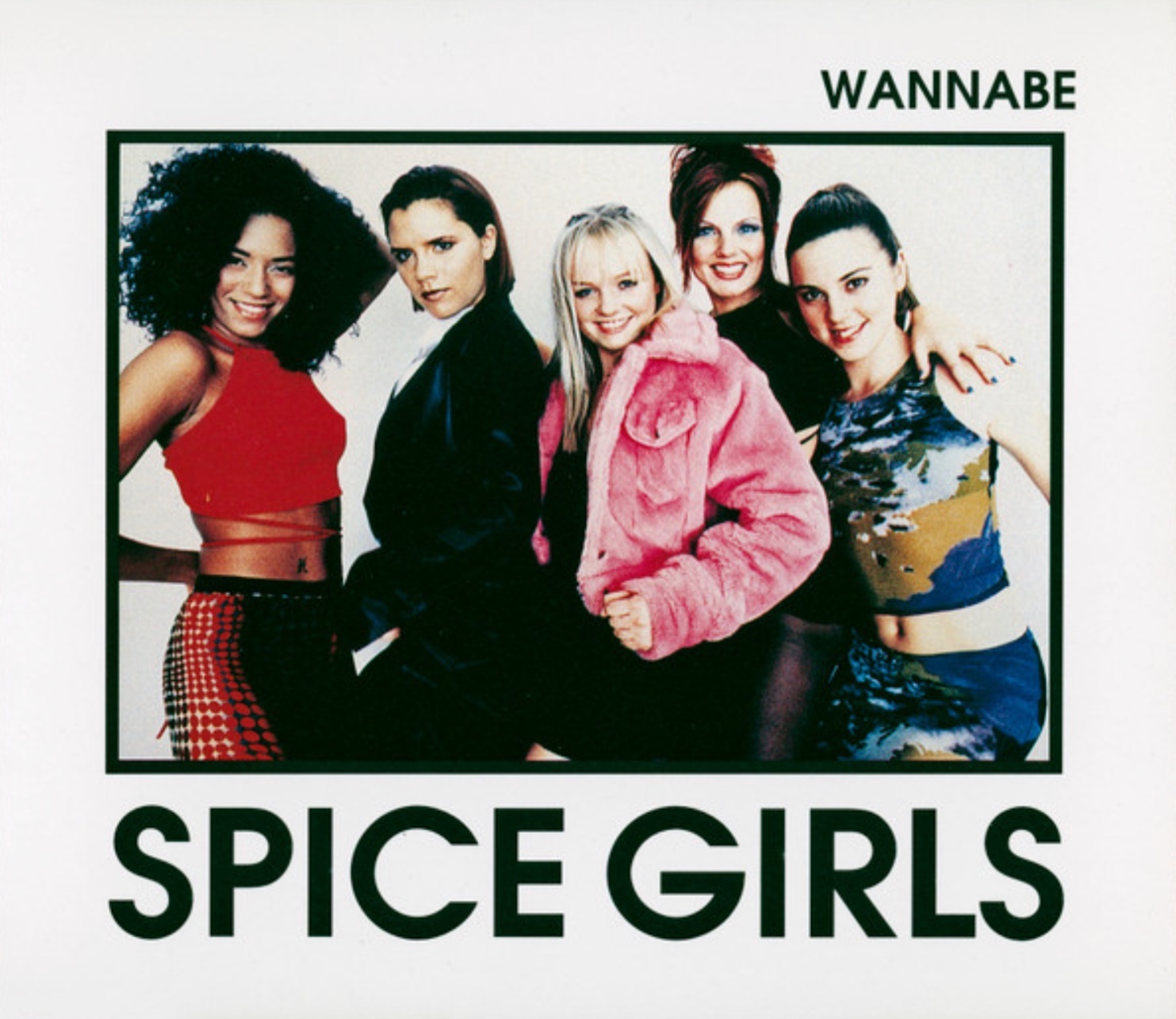
SPICE GIRLS - WANNABE 


Publicació: 26 de juny de 1996 (Regne Unit) Gener de 1997 (EUA)

Llistes: EUA: #1. Regne Unit: #1


Aquest va ser el primer senzill de les Spice Girls. Va ser un èxit enorme i immediat, ja que el seu missatge de "Girl Power" i les personalitats peculiars de les integrants del grup, acompanyat del ritme enganxós de la cançó va captivar el públic de tot el món.


La cançó va ser escrita per Richard "Biff" Stannard i el seu col·laborador musical Matt Rowe amb l'ajuda de les membres del grup, que van rebre crèdits d'escriptores. Stannard havia escrit la cançó "Steam" per a una banda de nois anomenada East 17, i després d'una trobada casual amb Mel B., va ser contractat per a escriure algunes cançons per a les Spice Girls, que estaven perfeccionant la seva posta a punt. Al llarg de deu dies, ell i Rowe van escriure tant "Wannabe" com l'eventual tercer senzill del grup, "2 become 1". Stannard va dir que gairebé totes les hores d'aquells deu dies es van dedicar a treballar en les cançons; va explicar a Pink News: "Vam escriure 'Wannabe' amb força rapidesa, però vam trigar una eternitat a aconseguir que sonés bé. El gran final de la pel·lícula Grease, on John Travolta fa uns grans moviments de ball en un ambient de festa de carnaval, va ser una inspiració per a aquesta cançó. Stannard diu que estaven parlant d'aquesta escena quan van començar a escriure la cançó, i es van basar en aquesta vibració amb Matt Rowe afegint acords a un ritme que Stannard tenia en una caixa de ritmes MPC. Recordo que em vaig despertar al pis de l'estudi amb aquest post-it de Matt dient: 'clica play'. Finalment ho havíem aconseguit, així que va ser sort i molt d’esforç”.


La lletra, que aborda el valor de l'amistat femenina sobre les relacions heterosexuals, es va convertir en un símbol de l'empoderament femení i la cançó més emblemàtica de la filosofia Girl Power del grup. Les cinc Spice Girls van ajudar a escriure la lletra i elaborar la cançó. Pel que fa a la seva contribució, Richard Stannard va dir: "Érem set asseguts a terra en aquesta petita habitació. Matt Rowe i jo afegim la pista de fons i comencem amb ritmes; cadascú tenia el seu paper; Geri sempre es concentrava en el tema i tots els altres intervindrien amb melodies i lletres". La línia "Friendship never ends" (l'amistat mai s'acaba) es va convertir en un credo per a les Spice Girls. Per exemple, van utilitzar aquesta frase en un comunicat de premsa quan Ginger Spice va deixar el grup.


Les Spice Girls es van formar com una alternativa femenina a les bandes de nois (Boy Band), que eren molt populars en aquell moment al Regne Unit. Van passar anys desenvolupant el seu paper i cultivant la seva imatge; quan es va publicar aquesta cançó, ja havien fet moltes aparicions als mitjans i estaven preparades per al gran moment.


Quan "Wannabe" es va estrenar al Regne Unit va superar fins i tot les expectatives més altes, arribant al número 1 el 27 de juliol, on va romandre durant set setmanes. Tot seguit va venir l’èxit global, a gener de 1997 la cançó va ser llançada als EUA i al febrer va arribar al número 1. Va encapçalar les llistes d'almenys 10 països més. El “Girl Power” era un fet. 


Un "Wannabe" és una persona que aspira a ser una altra persona, generalment una celebritat, i la imita. La frase té molt poc a veure amb la cançó, però fa un títol enganxós per a una cançó d’èxit. 


Al febrer de 1997, “Wannabe” va guanyar el Brit Award a la millor cançó. A més, el seu èxit posterior, "Say you’ll be there" va guanyar el millor vídeo. Aquest és el single més venut d'un grup totalment integrat per dones a tot el món. 


SPICE GIRLS - WANNABE


Released: June 26, 1996 (UK) January 1997 (US)

Charted: US: #1. UK: #1


This was the Spice Girls first single. It was a huge and immediate hit, as their message of "Girl Power" and quirky personalities went along with the catchy beat and intrigued audiences around the world.


The song was written by Richard "Biff" Stannard and his musical collaborator Matt Rowe with assistance from the group members, who all received writers credits. Stannard had written the song "Steam" for a boy band called East 17, and after a chance encounter with Mel B., he was invited to write some songs for the Spice Girls, which was honing their act. Over the course of 10 days, he and Rowe wrote both "Wannabe" and the group's eventual third single, "2 become 1". Stannard said that pretty much every waking hour of those 10 days was spent working on the songs; he explained to Pink News: "We wrote 'Wannabe' quite quickly, but it took ages to get it to sound right. I remember waking up on the studio floor with this post-it from Matt saying, 'Press play.' We'd finally got it. So it was luck and hard work”.


The big finish in the movie Grease, where John Travolta breaks out some great dance moves in a party carnival setting, was an inspiration for this song. Stannard says they were talking about that scene when they started to write the song, and they built on that vibe with Matt Rowe adding chords to a beat Stannard had on an MPC drum machine.


The lyrics, which address the value of female friendship over heterosexual relationships, became a symbol of female empowerment and the most emblematic song of the group's Girl Power philosophy. The five Spice Girls helped come up with the words and craft the song. Regarding their contribution, Richard Stannard said: "There were seven of us sitting on the floor in this tiny room. Matt Rowe and I would add the backing track and start with rhythms; everyone had their role; Geri was always concentrating on the theme and all the others would chip in with melodies and lyrics." The line "Friendship never ends" became a credo for the Spice Girls. They used the phrase in a press release when Ginger Spice left the group.


The Spice Girls were formed as a female alternative to boy bands, which were big at the time in the UK. They spent years developing their act and cultivating their image; by the time this song was released, they had already made many media appearances and were ready for the big time.


When "Wannabe" was released in the UK it blew past even the loftiest of expectations, reaching #1 on July 27, where it stayed for seven weeks. Global domination followed, in January 1997 the song was released in the US and in February it went to #1. It topped the charts in at least 10 other countries, including Australia, Canada, Israel, Netherlands, Norway, Sweden, and Switzerland.


A "Wannabe" is a person who aspires to be someone else, generally a celebrity, and imitates that person. The phrase has very little to do with the song, but makes a catchy title..


In February of 1997, this song won a Brit Award for Best Song. In addition, their follow-up hit, "Say you’ll be there" won for Best Video. Worldwide, this is the best-selling single by an all-female group.