Total de visualitzacions de pàgina:

11.8.23


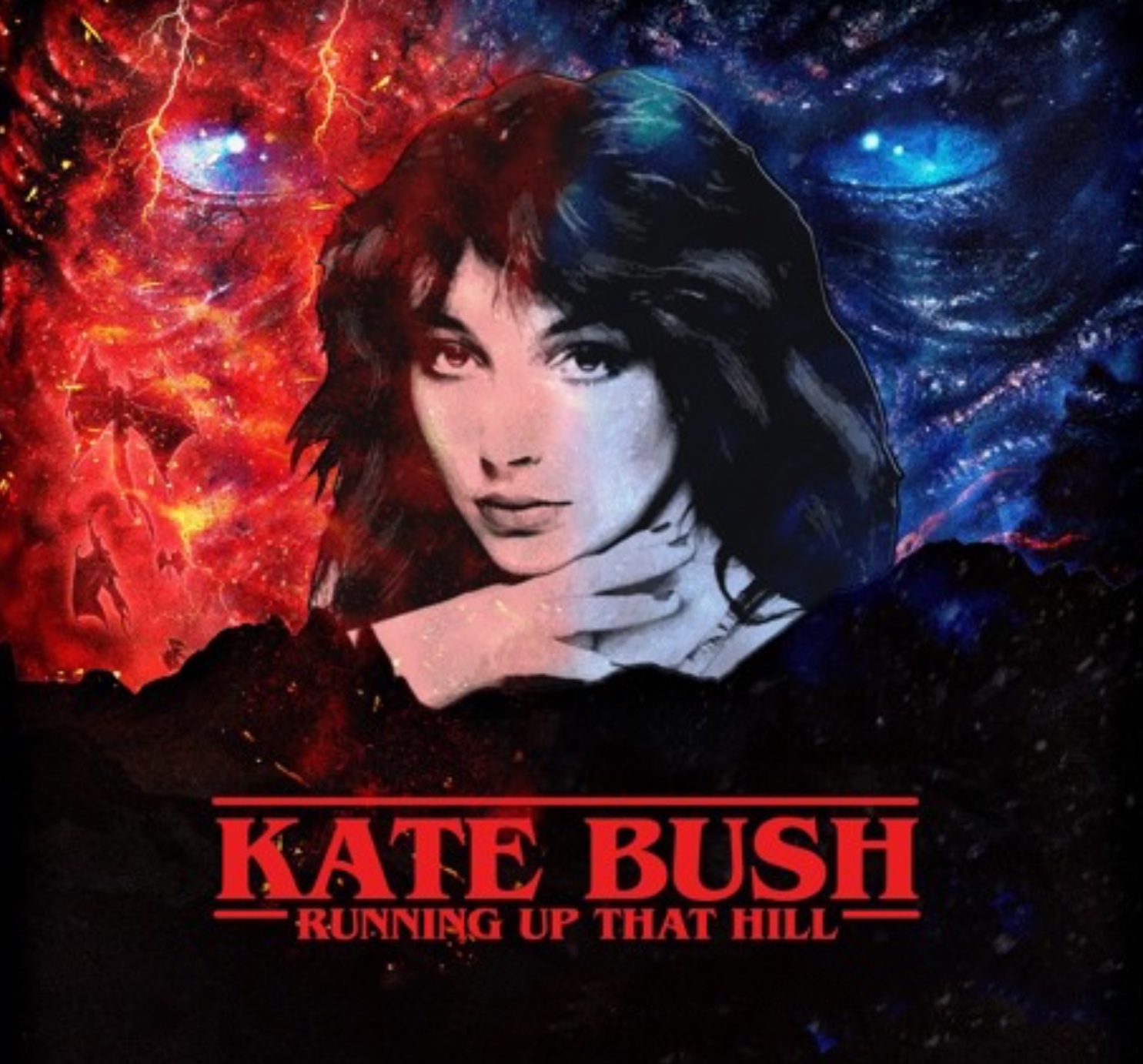
KATE BUSH - RUNNING UP THAT HILL


Publicació: 5 d'agost de 1985

Llistes: Regne Unit: #1  EUA: #3


"Running Up That Hill", titulada "Running Up That Hill (A Deal with God)" en alguns llançaments, és una cançó de la cantant i compositora britànica Kate Bush. Va ser llançada al Regne Unit com a single principal del seu àlbum "Hounds of Love". Bush la va escriure amb el títol "Deal With God". El seu segell el va fer canviar perquè pensaven que les emissores de ràdio de paíssos amb molta creença religiosa no radiarien una cançó amb "Déu" al títol. Bush va pensar que era ridícul, però va acceptar el canvi perquè després de passar dos anys fent l'àlbum, no volia que la seva cançó anés a la llista negra a causa del títol.


La companyia discogràfica de Bush volia llançar "Cloudbusting" com a primer senzill, però Kate els va convèncer per publicar "Running Up That Hill". Com que ja li havien canviat el títol, es sentien amb deute amb ella. En el seu llançament original al 1985, "Running Up That Hill" va assolir el número tres de la llista de singles del Regne Unit i el número 30 del Billboard Hot 100 als Estats Units, i va ser el primer èxit de la britànica al Top 40 dels EUA.


La  lletra imagina un escenari en què un home i una dona fan "un tracte amb Déu" per intercanviar llocs. Bush va explicar en una entrevista de 1985: "Es tracta d'una relació entre un home i una dona. S'estimen molt, i la força de la relació és una cosa que s'interposa, crea inseguretats. Llavors es planteja si l'home podria ser la dona i la dona l'home, si poguessin fer un tracte amb Déu, per canviar de lloc, així entendrien com és ser l'altra persona i potser aclaririen malentesos. Ja saps, tots els petits problemes; no hi hauria cap problema". El concepte de la cançó és un gir a la idea faustiana on es fa un tracte amb el diable. Quan Bush va pensar en què es necessitaria per canviar de lloc amb la teva parella, primer va pensar en l'acord amb el Diable i després va decidir que també es podria fer mitjançant un acord amb Déu, que seria encara més poderós.


Al 2022, "Running Up That Hill" va tornar a rebifar quan es va presentar a la quarta temporada de la sèrie de Netflix "Stranger Things". L’aparició a la sèrie va provocar el ressorgiment de la cançó a les llistes d'èxit d'arreu del món, encapçalant les llistes de vuit països, inclòs el Regne Unit durant tres setmanes consecutives, Irlanda durant set setmanes consecutives i Austràlia durant nou setmanes no consecutives. La cançó també va assolir un nou cim als EUA arribant al número tres al Billboard Hot 100.


KATE BUSH - RUNNING UP THAT HILL


Released: August 5, 1985

Charted:  UK: #1 US: #3


"Running Up That Hill", titled "Running Up That Hill (A Deal with God)" on some releases, is a song by the British singer and songwriter Kate Bush. It was released in the United Kingdom as the lead single her album “Hounds of Love”. Bush wrote this with the title "Deal With God." Her label made her change it because they didn't think radio stations in any religious countries would play a song with "God" in the title. Bush thought that was ridiculous, but agreed to the change because after spending two years making the album, she didn't want her song to get blacklisted because of the title.


Bush's record company wanted to release "Cloudbusting" as the first single, but Kate convinced them to release "Running Up That Hill" instead. Since they had already renamed her song, it was considered a compromise. Upon its original release, "Running Up That Hill" reached number three on the UK Singles Chart and number 30 on the Billboard Hot 100 in the United States, and was Bush's first US Top 40 hit.


The lyrics imagine a scenario in which a man and a woman make "a deal with God" to exchange places. Bush explained in a 1985 interview: "It's about a relationship between a man and a woman. They love each other very much, and the power of the relationship is something that gets in the way. It creates insecurities. It's saying if the man could be the woman and the woman the man, if they could make a deal with God, to change places, that they'd understand what it's like to be the other person and perhaps it would clear up misunderstandings. You know, all the little problems; there would be no problem." The song's concept is a flip on the Faustian bargain where one makes a deal with the Devil. When Bush thought about what it would take to switch places with your partner, she first thought of the deal with the Devil, then decided it could also be done through a deal with God, which would be even more powerful.


In 2022, "Running Up That Hill" received renewed attention when it was featured in the fourth season of the Netflix series “Stranger Things”. Its appearance led to the song's resurgence on charts around the world, topping the charts in eight countries, including the United Kingdom for three consecutive weeks, Ireland for seven consecutive weeks and Australia for nine non-consecutive weeks. The song also reached a new peak of number three on the Billboard Hot 100.


9.8.23


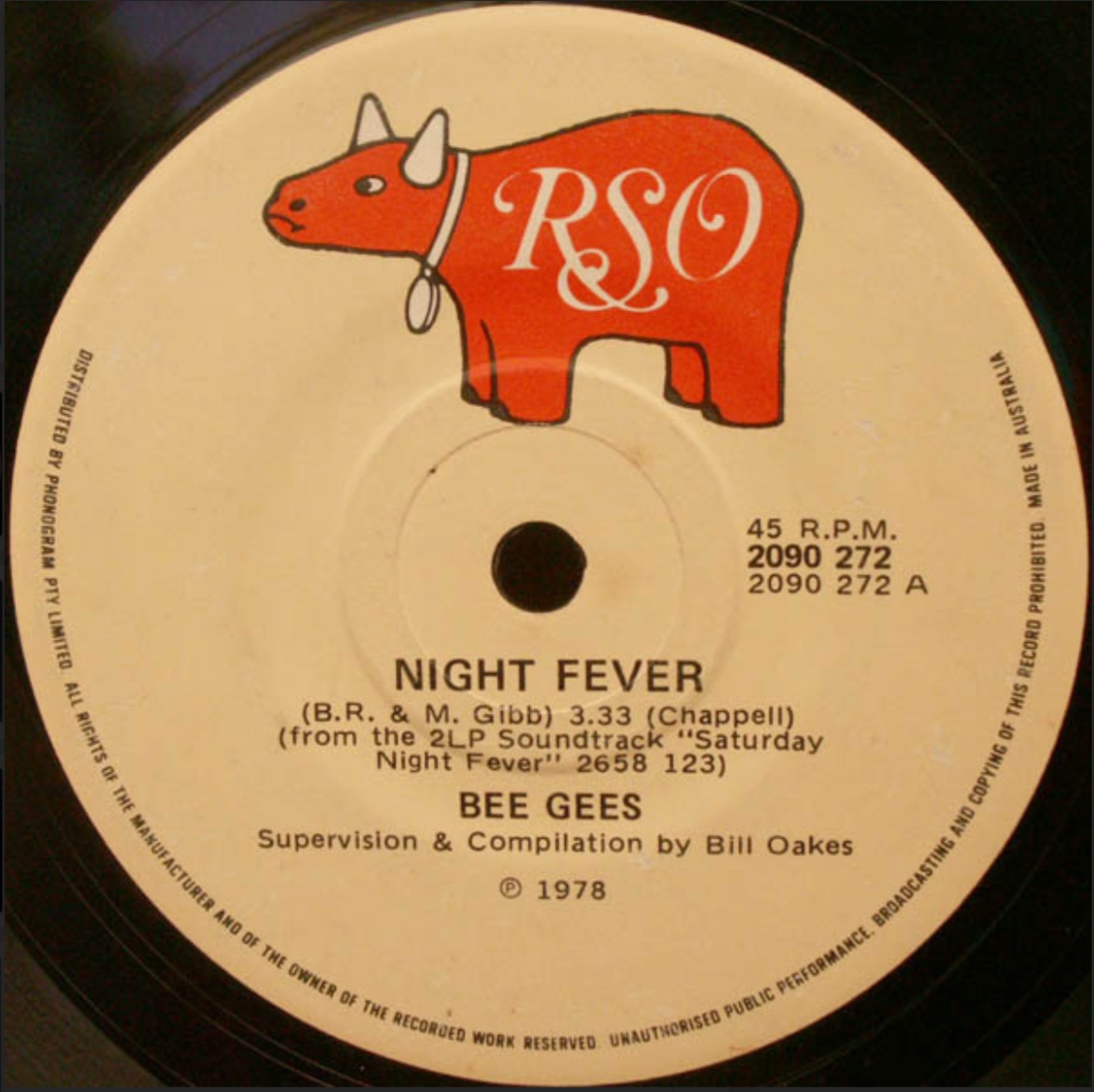
 BEE GEES - NIGHT FEVER


Publicació: gener de 1978

Llistes: Regne Unit: #1 EUA: #1


"Night Fever" és una cançó escrita i interpretada pels Bee Gees. Va aparèixer per primera vegada a la banda sonora de "Saturday Night Fever" a RSO Records. El tercer i últim senzill dels Bee Gees, impulsat pel moment estelar dels altres dos singles que encara es trovaben a les llistes, van ser la que va restar més temps al número 1 de les llistes de Billboard, vuit setmanes. També va ser número 1 a Gran Bretanya durant dues setmanes.


Al 1977, el manager dels Bee Gees, Robert Stigwood, estava produïnt una pel·lícula sobre l'escena disco de Nova York. El títol provisional de la pel·lícula era "Saturday Night", així que va demanar al grup que escrivís una cançó amb aquest nom. Els Bee Gees van pensar que era un títol estúpid, però ja havien escrit una cançó anomenada "Night Fever". Van convèncer a Stigwood d'utilitzar-lo i canviar el títol de la pel·lícula a “Saturday Night Fever”. La pel·lícula es va convertir en un clàssic. Va ajudar a llançar la carrera cinematogràfica de John Travolta, que va interpretar a Tony Manero, el jove conflictiu que fugia dels seus problemes mentre era a la pista de ball.


"Night Fever" és una cançó disco, no era el seu estil habitual. La majoria de les vegades, els Bee Gees escrivien sobre l'amor, l'atracció i la desesperació. I una de les coses que situa "Night Fever" per sobre de moltes cançons disco és que és Bee Gees al complet, és a dir, és una cançó sobre l'amor, l'atracció i la desesperació, però també tracta sobre ballar. Gairebé incomprensible en alguns fragments, la lletra de “Night Fever” és molt bona, capturant perfectament la sensació d'expectació abans d'una nit de festa. La música és captivadora i els versos, dramàtics amb una tornada feliç. Una obra mestra.


La veritable escena de ball de “Saturday Night Fever” és la que te com a protagonista la cançó "You should be dancing", però "Night Fever" també té la seva pròpia gran seqüència. Tony Manero, un jove de Brooklyn la vida del qual s'esfondra quan no balla, entra al club Odyssey 2001, on s'amaga entre dues noies i una d'elles li demana tot seguit que la besi. Tony dubta un segon, i després ho fa. Ella respon amb èxtasi total: "Déu meu, acabo de fer un petó a Al Pacino!" Això és tot un afalac per Tony Manero. Tony i els seus amics entren a la pista i fan una coreografia seguint tots el pas. No és una cosa divertida, més aviat sembla estressant per a Manero. El ball  és una forma d'escapament per a ell, la seva manera d’expressar-se individualment, més que un ritual coreografiat. La càmera llisca sobre la multitud, tothom il·luminat amb la llum vermella i movent-se amb total llibertat a través de la boira creada per la màquina de fum. És un número musical on tothom es veu genial en l’escena i "Night Fever" hi juga un paper important. 


La setmana que "Night Fever" va arribar al número 1 a Estats Units, "Stayin' Alive" va ser la cançó número 2. Aquestes dues cançons van ocupar els dos primers llocs durant cinc setmanes seguides (del 18 de març al 15 d'abril). Els Bee Gees van ser els primers artistes post-Beatles a apoderar-se dels números 1 i 2 alhora. Si incloim les cançons que van escriure i produir els germans Gibb, els Bee Gees van ser els autors de quatre cançons entre les cinc primeres d’una d'aquelles  setmanes. Una va ser l'anterior numero 1 de les llistes “Love is thicker than Water” del germà petit Andy Gibb. I l'altre va ser "Emotion" de Samantha Sang, que va arribar al número 3. El registre assolit pels Beatles l’any 1964 va ser espectacular a la història de les llistes pop, però els Bee Gees van tenir la seva pròpia tempesta perfecta. El març de 1978 va ser quan aquella onada va sorgir i va esclatar. Aquest va ser l'any que les cançons de Barry Gibb van dominar les llistes. Al Hot 100 de Billboard, Barry com a compositor va ocupar el lloc número 1 durant la meitat de l'any. Les seves cançons van ser al número 1 durant 27 setmanes de 37, entre el 24 de desembre de 1977 i el 2 de setembre de 1978 (llistades a continuació). A més de la primera posició, aquestes cançons van estar a les llistes durant molt de temps. Van tenir una reproducció incessant i van competir entre elles per les posicions capdavanteres de les llistes.


"How Deep Is Your Love" (Bee Gees) - 3 setmanes, del 24 de desembre al 7 de gener

"Stayin' Alive" (Bee Gees) - 4 setmanes, del 4 al 25 de febrer

"(Love Is) Thicker Than Water" (Andy Gibb) - 2 setmanes, del 4 de març a l'11 de març

"Night Fever" (Bee Gees) - 8 setmanes, del 18 de març al 6 de maig

"If I Can't Have You" (Yvonne Elliman) - 1 setmana, 13 de maig

"Shadow Dancing" (Andy Gibb) - 7 setmanes, del 17 de juny al 29 de juliol

"Grease" (Frankie Valli) - 2 setmanes, del 26 d'agost al 2 de setembre


BEE GEES - NIGHT FEVER


Released: January 1978

Charted:  UK: #1  US: #1


"Night Fever" is a song written and performed by The Bee Gees. It first appeared on the soundtrack to ”Saturday Night Fever” on RSO Records. The Bee Gees third and last single propelled by the momentum of the other two still on the charts, had the longest run at number 1 on Billboard’s charts, eight weeks. It also went number 1 in Britain for two weeks.


In 1977, The Bee Gees manager Robert Stigwood was producing a movie about the New York disco scene. The working title of the film was "Saturday Night," so he asked the group to write a song of that name. The Bee Gees thought it was a dumb title, but they had already written a song called "Night Fever." They convinced Stigwood to use that and change the film's title to Saturday Night Fever. The movie became a classic, telling a coming-of-age story in the disco era. It helped launch the film career of John Travolta, who starred as Tony Manero, the conflicted youth who escaped his troubles on the dance floor.


“Night Fever” is a nightclubbing song. The Bee Gees were not above a song like that. Most of the time, the Bee Gees wrote about love and attraction and desperation. And one of the things that sets “Night Fever” above so many of the other disco songs about disco dancing is that “Night Fever” is full Bee Gees. It’s a song about love and attraction and desperation. It’s also about dancing. Almost incomprehensible on record, the lyrics of Night Fever’s verses are really good, perfectly capturing the sense of anticipation before a night out. The music is captivating: dramatic, beseeching verses, blissful chorus. A masterpiece.


“Night Fever” has its roots in another melodramatic movie-soundtrack blockbuster: Percy Faith’s “Theme from A Summer Place”, a chintzy easy-listening instrumental that had gone to #1 for nine weeks in 1960. Bee Gees keyboardist Blue Weaver had been trying to figure out how to do a disco cover of “Theme From A Summer Place”. Barry Gibb heard him working on it in the studio and built the whole song around that string figure. The synth-strings on the “Night Fever” intro are only a slight variation on that old “Theme From A Summer Place” melody. But there’s a lot more than that string figure to “Night Fever.”


The true classic dance scene in Saturday Night Fever is the one set to “You should be dancing”. But “Night Fever” gets its own big sequence, too. Tony Manero, a Brooklyn teenager whose life is falling apart whenever he isn’t dancing, steps into the 2001 Odyssey club, sidles right between two girls, and twirls both of them. One of them immediately demands that he kiss her. Tony hesitates for a second, and then he does it. She responds with total ecstasy: “Oh my God, I just kissed Al Pacino!” This is all Tony Manero has ever wanted to hear. Tony and the other dancers then fill up the floor, immediately falling into geometric formation, as if by instinct. They all do the hustle in lockstep. It doesn’t look like much fun. Really, it looks stressful, clubbing less as a form of escape or individual expression, more as a heavily choreographed ritual. The men don’t even smile. But the camera glides over the crowd, everyone bathed in red light and moving with total confidence through fog-machine smoke. It’s basically a musical number. The people in this scene look cool. “Night Fever” plays a huge role in that.


The week that the Bee Gees’ “Night Fever” hit #1, “Stayin’ Alive” was the #2 song in America. Those two songs held down the top two spots for five weeks in a row (March 18 - April 15). The Bee Gees were the first post-Beatles artists to seize #1 and #2 at the same time. If you include the songs that the Gibb brothers wrote and produced, the Bee Gees were responsible for four songs in the top five that week. One was brother Andy Gibb’s previous chart-topper “Love is thicker than water”. The other was Samantha Sang’s “Emotion” which peaked at #3.  The Beatles’ achievement is still totally singular in pop-chart history, but the Bee Gees had their own perfect storm. March of 1978 was when that wave welled up and crested.


BEE GEES - YOU SHOULD BE DANCING


Publicació: juny de 1976

Llistes: Regne Unit: #5  EUA: #1


"You Should Be Dancing" va ser unúmero 1 als Estats Units el setembre de 1976 durant una setmana, i va ser el número 1 a la llista dels EUA Hot Dance Club durant 7 setmanes, convertint-se en un dels èxits discogràfics més grans del moment. La cançó va ser el tercer single número u dels Bee Gee als Estats Units.


Quan la pel·lícula “Saturday Night Fever” va arribar als cinemes el desembre de 1977, la cançó es va utilitzar en una famosa escena de la pel·lícula on John Travolta es fa l’amo de la pista de ball, una opció adequada ja que la cançó tracta específicament de ballar. Aquesta pel·lícula va portar els Bee Gees a un nivell estratosfèric i va consolidar la cançó entre les preferides del públic. Però "You Should Be Dancing" ja era molt popular abans de la pel·lícula. De fet, segons va dir John Travolta va insistir que la cançó s'inclogués a la pel·lícula. Havia estat practicant amb ella i la volia a la pel·lícula. "You Should Be Dancing" va tenir un gran impacte a les discoteques. Segons Nicky Siano, un DJ de diversos clubs de la ciutat de Nova York, es punxava als clubs més populars unes tres vegades per nit durant el seu apogeu i va ajudar a introduir la cultura disco en el corrent popular. 


L'àlbum de 1976 "Children of the World" va dominar les ones radiofòniques amb el seu gran èxit, "You Should be Dancing", la qual és la que obre aquest àlbum de 10 cançons, que els Bee Gees va gravar als Criteria Studios de Miami, on van gravar el seu disc anterior, “Main Course”. Una diferència notable és que “Children of the World” va ser produït per The Bee Gees, Karl Richardson i Albhy Galuten. El resultat és un àlbum immensament optimista que Bruce Eder d'All Music va elogiar com un dels "àlbums més divertits de la història del grup".


"You Should Be Dancing" es mou amb la seva pròpia lògica. Està plena de petits ganxos: el riff de sintetitzador suau, les puntejades de guitarra perfectament cronometrades, l'explosió eufòrica de la secció de vent. Barry havia desenvolupat el seu falset a un grau increïble, convertint-lo en un instrument més. Conforme avança, la cançó sembla anar in crescendo fins que envolta l’oient amb el seu ritme trepidant que el transporta a la pista de ball. El missatge és clar: Has de ballar!


Stephen Stills de Crosby, Stills i Nash van tocar la percussió en aquest tema. Va recordar a The Independent el 17 d'agost de 2013: "Estàvem a l'estudi del costat fent un àlbum de CSN i David (Crosby) estava molt cofoi de si mateix dient que aquell seria l'àlbum de l'any. Vaig respondre:" No, no ho és, això que s'està gravant al final del passadís ho serà", perquè havia escoltat alguna peça de “Saturday Night Fever” i sabia que era totalment únic i que seria monstruós. Així que vaig tocar els timbals i durant molt de temps aquest va ser el meu únic single de platí".


The Dee Gees, el projecte de música disco del grup de rock The Foo Fighters, la va versionar pel seu àlbum "Hail Satin", que inclou quatre versions de Bee Gees i una interpretació de "Shadow dancing" d'Andy Gibb.


Personalment, "You Should Be Dancing" la considero la millor cançó amb diferència de l’època discotequera dels Bee Gees, i la situo en el top 3 de les millors cançons de la història de la música disco. 


BEE GEES - YOU SHOULD BE DANCING


Released: June 1976

Charted:  UK: #5  US: #1


"You Should Be Dancing" was a #1 US hit in September 1976 for one week, and was #1 on the US Hot Dance Club Chart for 7 weeks, becoming one of the biggest disco hits of the era. The song was the Bee Gee’s third number-one single in the US. 


When the movie Saturday Night Fever hit theaters in December 1977, the song was used in a famous scene from the movie where John Travolta takes over the dance floor, an appropriate choice since the song is specifically about dancing. That movie took the Bee Gees to a stratospheric level, and it solidified the cultural place of “You Should Be Dancing.” But “You Should Be Dancing” had lodged itself into the collective unconscious long before the movie. In fact, John Travolta reportedly insisted that the song be included in the movie. He’d been practicing to it, and he wanted the real thing, not a substitute, in the movie. "You Should Be Dancing" had a huge impact on the dance club scene. According to Nicky Siano, a DJ at various clubs in New York City, it was played at the hottest clubs about three times a night during its heyday, and helped bring disco culture into the mainstream.


The 1976 album “Children of the World” dominated the airwaves with its smash hit single, “You Should be Dancing.” Critic Joe McEwen of Rolling Stone called the song “an impossibly propulsive track, whose only rival in the genre is KC’s ‘Get Down Tonight.'” “You Should be Dancing” is the first number on this 10-track album, which the Bee Gees recorded at Criteria Studios in Miami, where they crafted their previous album, Main Course. A notable difference is that Children of the World was produced by The Bee Gees, Karl Richardson and Albhy Galuten. The result is an immensely upbeat and listenable album that Bruce Eder of All Music praised as one of the “most enjoyably light-hearted album in the group’s history”. 


“You Should Be Dancing” moves with its own logic. It’s fully of tiny little hooks: the squelchy synth riff, the perfectly timed guitar scratches, the euphoric explosion of horns. With every passing moment, the song seems to jump a little bit higher. Most pop songs are organized around the idea of tension and release. “You Should Be Dancing” starts with release, and then it gets to more releases, bigger releases.


Stephen Stills of Crosby, Stills and Nash played percussion on this track. He recalled to The Independent August 17, 2013: "We were in the studio next door making a CSN album and David (Crosby) was all full of himself and saying this is going to be the album of the year. I went, "No it's not, that's being recorded across the hall," 'cause I'd heard some of that Saturday Night Fever stuff and I knew it was totally unique and going to be a monster. So I played timbales and for a long time that was my only platinum single."


The Dee Gees, the disco side project of rock band The Foo Fighters, covered this for their album “Hail Satin” which features four Bee Gees covers and an interpretation of Andy Gibb's "Shadow dancing”.