Total de visualitzacions de pàgina:

27.8.23


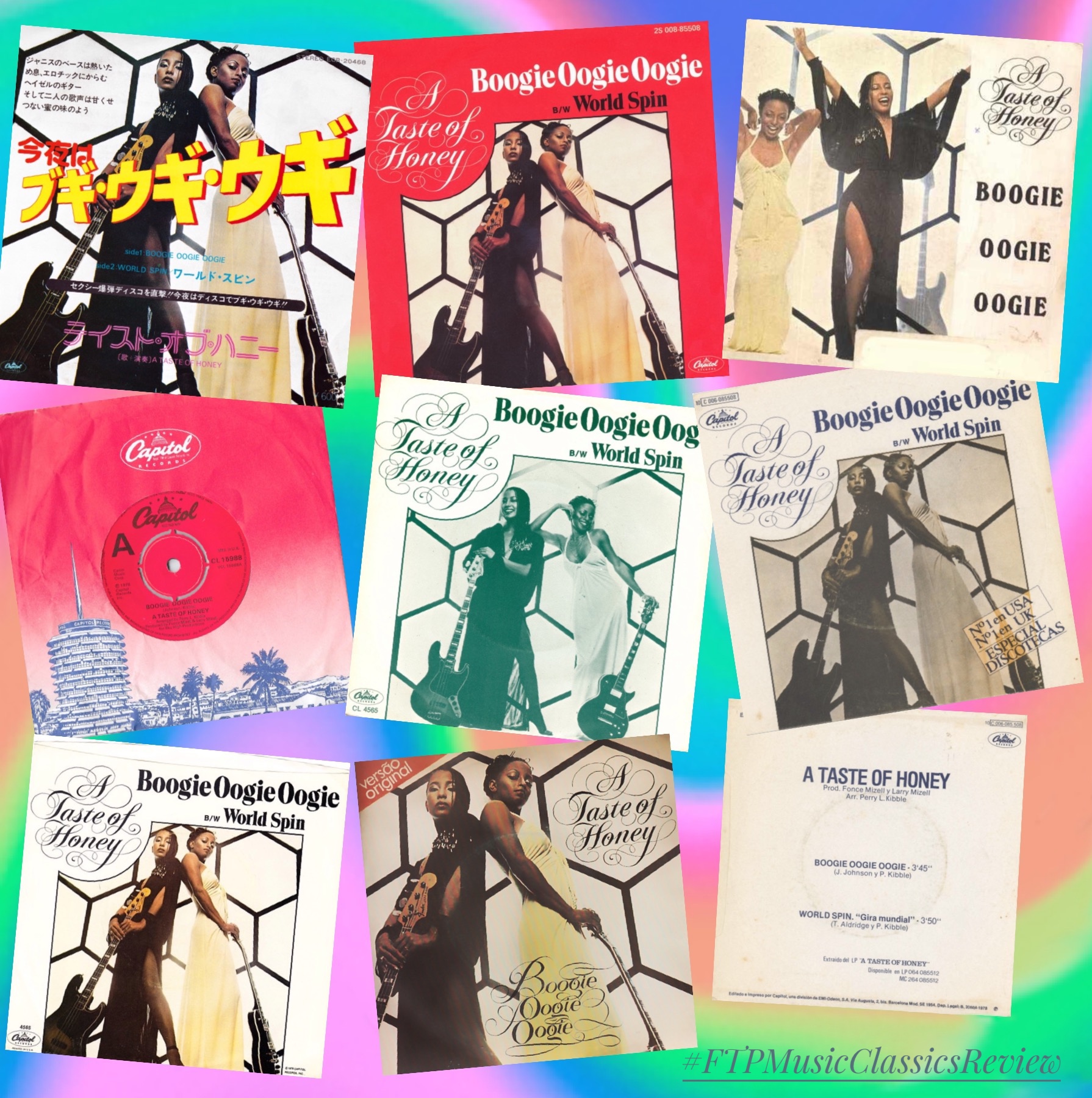
A TASTE OF HONEY - BOOGIE OOGIE OOGIE


Publicació: 16 de juny de 1978

Llistes: EUA: #1 (3 setmanes) Regne Unit: #3


El 1978, A Taste Of Honey es van reunir amb dos productors, el col·laborador dels Jackson 5, Fonce Mizell i el seu germà Larry. Van signar per Capitol Records i els germans Mizell van produir el seu àlbum homònim de 1978. Janice Marie Johnson i el teclista Perry Kibble van escriure "Boogie Oogie Oogie", el seu primer senzill. La banda va tenir la idea d'aquesta cançó quan van tocar en un espectacle en una base militar. Era un públic dur que no responia a les seves cançons. La cantant Hazel Payne els va advertir des de l'escenari: "Si penseu que sou massa genials per fer boogie (ballar), tenim males notícies per a vosaltres, tothom aquí aquesta nit farà boogie i no sou una excepció a la regla". Després, a l’habitació d'hotel, la baixista Janice Marie Johnson va escriure la frase, pensant que seria bona per a la lletra d’una cançó. Escoltant "Boogie Oogie Oogie", però, no tindríeu ni idea que Janice Marie Johnson va escriure la cançó perquè estava enfadada amb un grup de nois de la Força Aèria poc agraïts. 


Més que la majoria dels èxits disco del 1978, "Boogie Oogie Oogie" manté una connexió amb la música soul. Johnson va fer la famosa introducció al baix quan estava escalfant abans de la sessió d'enregistrament, sense saber que estava sent gravada. La línia de baix de Johnson és profunda i et sedueix al moment. Perry Kibble sembla inspirar-se en Stevie Wonder al teclat. Hazel Payne fa un parell de solos de guitarra que semblen de heavy metal però que encaixen perfectament amb el context de la cançó.


"Boogie Oogie Oogie" és un himne a l'alegria per ballar i l’arrelament de les amistats que això aporta. Anima els oients a deixar les seves inhibicions, deixar que els seus cossos es moguin amb la música i submergir-se completament en l'experiència del boogieing (ball). Les pauses instrumentals de la cançó i les repeticions de "Boogie" a la tornada creen una atmosfera animada i immersiva, reforçant l'estat d'ànim desenfadat i vibrant de la cançó. La frase repetida "Get down" serveix com una invitació addicional perquè tothom pugui abraçar plenament la música i deixar-se anar.


El senzill va arribar a vendre més de 2 milions de còpies.


El grup es va separar l'any 1983. Johnson va tenir una breu carrera en solitari i Payne es va convertir en una actriu teatral. Johnson i Payne es van tornar a reunir el 2004 per cantar "Boogie Oogie Oogie" en un especial de televisió sobre música disco.


A TASTE OF HONEY - BOOGIE OOGIE OOGIE


Released: June 16, 1978

Charted:  US: #1 (3 wks)  UK: #3


In 1978, A Taste Of Honey met up with two producers, Jackson 5 collaborator Fonce Mizell and his brother Larry. That got them signed to Capitol, and the Mizell brothers produced their self-titled 1978 album. Johnson and keyboardist Perry Kibble wrote “Boogie Oogie Oogie,” their first single. The band got the idea for this song when they played a show at a military base. It was a tough crowd, and the audience was not responding to their songs. Lead singer Hazel Payne admonished them from the stage: "If you're thinking that you're too cool to boogie, we've got news for you. Everyone here tonight must boogie and you are no exception to the rule." Afterwards in her hotel room, bass player Janice Marie Johnson wrote down the line, thinking that it would be a good song lyric. Listening to “Boogie Oogie Oogie” though, you’d have no idea that Janice Marie Johnson wrote the song because she was pissed about a bunch of insufficiently appreciative Air Force guys. 


Johnson came up with the famous bass intro when she was warming up before the recording session, unaware that she was being recorded. The single went on to sell over 2 million copies.


More than most of the disco hits of 1978, “Boogie Oogie Oogie” keeps at least some connection to soul music. Johnson’s bassline is heavy and deep, and she gets especially busy on the breakdown. Perry Kibble gets into some Stevie Wonder clavinet action on the keyboard. Hazel Payne plays a couple of blazing rock-adjacent solos that fit beautifully within the context of the song.


"Boogie Oogie Oogie" celebrates the joy of dancing and the sense of community it brings. It encourages listeners to shed their inhibitions, let their bodies move to the music, and fully immerse themselves in the experience of boogieing. The song's instrumental breaks and repetitions of "Boogie" in the bridge create a lively and immersive atmosphere, reinforcing the carefree and vibrant mood of the song. The repeated phrase "Get down" serves as an additional invitation for everyone to fully embrace the music and let themselves go.


The group broke up in 1983. Johnson had a brief solo career, and Payne became a stage actress. Johnson and Payne got back together in 2004 to sing “Boogie Oogie Oogie” on a PBS special about disco.


26.8.23


 STEVIE WONDER - I WISH 

Publicació: novembre de 1976

Llistes: Regne Unit #5  EUA #1


"I Wish" és una cançó publicada a finals de 1976 com el senzill principal de l’àlbum Stevie Wonder de 1976, "Songs in the key of life". La cançó es centra en la seva infància des dels anys 50 fins a principis dels 60 sobre com desitjava poder tornar enrere i reviure-la. La cançó va ser número u al Billboard Hot 100 i a la llista de música soul. A la 19a edició dels premis Grammy, Stevie Wonder va guanyar la millor interpretació vocal masculina de R&B per aquesta cançó.


Wonder recorda com li va arribar la inspiració per a la música de "I Wish": el dia que la vaig escriure va ser un dissabte, el dia d'un pícnic de Motown a l'estiu del 76. Déu meu, ho recordo perquè tenia molt mal de queixal i em sentia ridícul. Tot i així m’ho vaig passar tan bé al pícnic que vaig anar al Crystal Recording Studio just després i em va venir la melodia. Va ser un dia fantàstic, amb el pícnic, els concursos on vam participar tots. Va ser molt divertit, i d’aquest gran ambient va sorgir "I Wish”.


La contagiosa línia de baix de 8 notes de Nathan Watts és una de les raons per les quals "I Wish" és una de les cançons més samplejades d’Stevie Wonder.


El 2015, Wonder va ser homenatjat amb l'especial de televisió Stevie Wonder: Songs in the Key of Life - An All-Star Grammy Salute, on Lady GaGa va fer una excel·lent interpretació de "I wish".


STEVIE WONDER - I WISH 


Released: November 1976

Charted: UK #5 US #1


"I Wish" is a song released in late 1976 as the lead single from his 1976 album, “Songs in the key of life”. The song focuses on his childhood from the 1950s into the early 1960s about how he wished he could go back and relive it. The single hit number one on the Billboard Hot 100 and soul singles chart. At the 19th Grammy Awards, Stevie Wonder won the Best R&B Vocal Performance Male for this song.


Wonder recollected how the music for "I Wish" came to him: The day I wrote it was a Saturday, the day of a Motown picnic in the summer of '76. God, I remember that because I was having this really bad toothache. It was ridiculous...I had such a good time at the picnic that I went to Crystal Recording Studio right afterward and the vibe came right to my mind – running at the picnic, the contests, we all participated. It was a lot of fun ... and from that came the 'I Wish' vibe.


Nathan Watts' infectious 8-note bassline is one reason why "I Wish" is one of Stevie Wonder's most sampled songs. 


In 2015, Wonder was honored with the TV special Stevie Wonder: Songs in the Key of Life - An All-Star Grammy Salute, where Lady GaGa gave an excellent performance of "I wish".


ELTON JOHN - COLD HEART (PNAU REMIX FEAT DUA LIPA)


Publicació: 13 d'agost de 2021

Llistes: EUA: #7  Regne Unit: #1


Enmig del confinament provocat per la pandèmia de COVID-19, Elton John va aconseguir una sèrie de col·laboracions, una de les quals va ser amb Dua Lipa, amb qui va cantar la cançó "Cold Heart (Pnau remix)", com a part del seu següent àlbum d'estudi "The Lockdown Sessions”. El senzill i l'àlbum sencer es van gravar de forma remota o d'acord amb les estrictes normes de seguretat i salut de la pandèmia. També mitjançant l'ús del programa Zoom.


Al Regne Unit, el single va debutar al número 33 i va assolir el número u, després d'haver passat tres setmanes consecutives al número 2. La cançó va assolir el seu cim al número 7 als EUA. A Austràlia va estar 10 setmanes al número 1, un èxit impressionant.


Aquest senzill de ball combina quatre de les cançons d'Elton John per a una única cançó que tracta sobre una relació que s'ha tornat gelada. Comença amb John interpretant la lletra del seu senzill "Sacrifice" de 1989, després Dua Lipa entra per a la tornada entonant fragments de l’èxit de 1972 d'Elton "Rocket man". La cançó també inclou elements de "Kiss The Bride" (original de l'àlbum de 1983 Too Low For Zero) i "Where's the Shoorah?" (de l'àlbum doble de 1976 Blue Moves). La lletra inclou la tornada de "Rocket Man", "And I think it's gonna be a long, long time 'til touchdown brings me 'round again to find / I'm not the man they think I am at home", i versos de "Sacrifice", com ara "Cold, cold heart / hardened by you / Some things look better baby / Just passing through". 


"Cold Heart (Pnau remix)" va rebre una càlida acollida per part dels crítics musicals, i molts van aplaudir la combinació d’èxits anteriors de John a la cançó. El mix combina i complementa perfectament la visió original que John tenia de les cançons amb un estil de ball que els dóna una frescor ideal per a les noves generacions.


Quan "Cold Heart" va entrar al Top 10 del Regne Unit el setembre de 2021, Elton John es va convertir en el primer artista a acumular una cançó del Top 10 al Regne Unit en sis dècades diferents. Va superar a Cher, Cliff Richard, Elvis Presley, Michael Jackson i David Bowie, que van obtenir almenys un senzill Top 10 en cinc dècades diferents.


ELTON JOHN - COLD HEART (PNAU REMIX FEAT DUA LIPA)


Amidst the lockdown caused by the pandemic of COVID-19, the singer pursued a series of collaborations, one of which was with Dua Lipa with whom I sing the song "Cold Heart (Pnau remix)", as part of his upcoming studio album “The Lockdown Sessions”. The single and the full album were recorded either remotely or in compliance with strict health and safety regulations or through the use of the Zoom software.


In the UK the single debuted at #33 on the UK Singles Chart in the issue dated 26 August 2021. The song reached number one, having spent three consecutive weeks at number 2. The track reached its summit at #7 in the US. The song spent 10 weeks at #1 on the Australian singles chart, an impressive achievement. 


This club single blends together four of Elton John's tracks for a song about a relationship that's gone icy. It starts with John performing lyrics from his 1989 single "Sacrifice," then Dua Lipa comes in for the chorus borrowed from Elton's 1972 hit "Rocket man." The song also features elements from "Kiss The Bride" (originally from the 1983 album Too Low For Zero), and "Where's the Shoorah?" (from the 1976 double album Blue Moves). The lyrics transmit the chorus from "Rocket Man", which includes "And I think it's gonna be a long, long time 'til touchdown brings me 'round again to find / I'm not the man they think I am at home", and verses from "Sacrifice", such as "Cold, cold heart / hardened by you / Some things look better baby / Just passing through". 


"Cold Heart (Pnau remix)" was met with a warm reception from music critics, with many complimenting the combination of John's previous hits in the song. The mashup does a terrific job combining and complementing John's original visions with a dance style that gives them an ideal freshness for the new generations too. 


When "Cold Heart" entered the UK Top 10 in September 2021, Elton John became the first artist to rack up a Top 10 song in the UK in six different decades. He overtook Cher, Cliff Richard, Elvis Presley, Michael Jackson and David Bowie, who each scored at least one Top 10 single in five different decades.


25.8.23


BEE GEES - STAYIN’ ALIVE


Publicació: 15 de desembre de 1977

Llistes: Regne Unit: #4 EUA: #1


"Stayin' Alive" és una cançó de la banda sonora de "Saturday Night Fever". Va ser llançada com el segon senzill de l'àlbum doble. Aquest va ser el segon dels quatre èxits número 1 als EUA de la banda sonora de “Saturday Night Fever”, després de "How Deep Is Your Love", que es va editar abans de la pel·lícula, que va arribar als cinemes el 14 de desembre de 1977. "Stayin' Alive" es va publicar un dia abans de la pel·lícula, però molts espectadors ja havien escoltat la cançó als tràilers. En el seu llançament, "Stayin' Alive" va pujar a les llistes per aconseguir el primer lloc del Billboard Hot 100 la setmana del 4 de febrer de 1978, romanent-hi durant quatre setmanes consecutives i es va convertir en una de les cançons més reconeixibles de la pel·lícula. Als Estats Units, es convertiria en el segon dels sis senzills número u consecutius dels Bee Gees, empatant el rècord dels Beatles de números u consecutius al país en aquell moment.


"Stayin' Alive" s’escolta durant els crèdits inicials de la pel·lícula "Saturday Night Fever", mentre John Travolta es pavoneja pels carrers de la ciutat de Nova York. Aquesta escena inicial estableix Tony Manero com una mena d'ideal masculí ètnic blanc de Brooklyn. Les dues hores següents de la pel·lícula intentaran trencar aquesta imatge inicial que projecta. La pel·lícula va representar com cap altra l'era de la música disco i va fer de "Stayin' Alive" una de les cançons més associades a aquest estil. 


Els Bee Gees havien començat a imposar el falset alt a les seves cançons des del seu èxit de 1975 "Jive Talkin'", que també estava a la banda sonora, tot i que van ser molt populars com a grup d'harmonia vocal a finals dels anys 60 i principis dels 70. Les seves contribucions a "Saturday Night Fever" els va reportar un gran èxit, però els va marcar com a cantants de música disco. En una entrevista de 1989 van parlar d'aquest estigma i per què no el mereixien. "No érem disco", va dir Robin Gibb. "La gent que ens emulava eren disco. Tot el que escoltaves a la ràdio era aquell so de bombo sincronitzat que nosaltres no vam tenir mai en els nostres discos!" Els Bee Gees sovint van assenyalar que el ball no s'esmenta mai específicament a "Stayin' Alive", encara que diu que l'home va on hi ha "música alta i dones calentes", està clar que està preparat per ballar i el que calgui. Robin Gibb va dir que la lletra parla molt òbviament d’un “escenari de supervivència", i Barry va dir que estava influenciada per la ciutat de Nova York. "El nivell en aquell moment a finals dels anys 70 a la ciutat era realment això: supervivència".


Demostrant encara més el domini dels Bee Gees en les llistes nord-americanes l'any 1978, "Stayin' Alive" va ser substituïda al número u pel senzill del germà petit del grup, Andy Gibb, "Love is thicker than water", seguida per "Night Fever" dels Bee Gees on s’hi va estar vuit setmanes. Després "If i can't have you" d'Yvonne Elliman li va prendre el lloc. Barry Gibb va escriure les quatre cançons, convertint-se en l'única persona de la història a escriure quatre senzills successius número u als EUA.


"Stayin' Alive" va ser una petita part de la cursa dominant dels Bee Gees el 1978, però ha arribat a ser la peça fonamental del seu repertori marcant el seu llegat. La trajectoria dels Bee Gees va caure enormement després que el boom de la música disco va acabar, i l'omnipresència de "Stayin' Alive" probablement hi va tenir molt a veure. Se’n van ressentir. Havien estat un grup molt abans del disco, i ho serien també després, però aquesta cançó ha quedat com la que els representa i tothom coneix. 


"Stayin' Alive" és la melodia de ball perfecta i atemporal, que fa que els oients se sentin bé. El seu riff d'inici clarament impulsa la gent cap a les pistes de ball i gairebé és impossible no moure's amb el seu ritme captivador. 🎶Ah, ha, ha,ha, stayin’ alive, stayin’ alive! 🎶


STAYIN’ ALIVE


Released: December 15, 1977

Charted:  UK: #4 US: #1


"Stayin' Alive" is a song from the “Saturday Night Fever” soundtrack. It was released as the second single from the double album. It is one of the Bee Gees signature songs. This was the second of four US #1 hits from the Saturday Night Fever soundtrack, following "How Deep Is Your Love" which was released ahead of the film, which hit theaters December 14, 1977. "Stayin' Alive" was released one day before the movie, but many theatergoers had already heard the song in trailers for the film. On its release, "Stayin' Alive" climbed the charts to hit the number one spot on the Billboard Hot 100 the week of 4 February 1978, remaining there for four consecutive weeks. Consequently, it became one of the band's most recognisable tunes. In the United States, it would become the second of six consecutive number one singles, tying the record with The Beatles for most consecutive number ones in the United States at the time.


This plays over the opening credits of the movie “Saturday Night Fever” while John Travolta struts through the streets of New York City. That opening scene establishes Tony Manero as some kind of white ethnic masculine ideal, a peacocking prince of Brooklyn. The next two hours of the movie work overtime to break down that image, to burn it to cinders. The movie has come to represent the disco era, and has made "Stayin' Alive" one of the songs most associated with disco. The Bee Gees had been singing in a high-falsetto style since their 1975 hit "Jive Talkin’" which was also on the soundtrack, but they were very popular as a vocal harmony group in the late '60s and early '70s. Their contributions to “Saturday Night Fever” brought them huge success, but marked them as disco singers. In a 1989 interview they talked about this stigma and why they didn't deserve it. "We were not disco," Robin Gibb said. "People who emulated us were disco. All you heard on the radio was that dooo! dooo! syn-drum sound. We never had a syn-drum on one of our records!" The Bee Gees often pointed out that dancing is never specifically mentioned in "Stayin' Alive," although when this woman's man goes where there's "music loud and women warm," it's clear he's ready to boogie. Robin Gibb said the lyrics "very obviously state the scenario of survival," and Barry said it was influenced by New York City. "The energy level at that point in the late '70s was really that - it was survival," he said. 


Further demonstrating the Bee Gees' US chart domination in 1978, "Stayin' Alive" was replaced at number one with the group's younger brother Andy Gibb's single, "Love is thicker than water", followed by the Bee Gees' "Night Fever" for their longest run, eight weeks. This was then replaced by Yvonne Elliman's "If i can’t have you". Barry Gibb had a hand in writing all four of these songs, becoming the only person in history to write four successive US number-one singles. 


Beatles producer George Martin commented about this song saying: "The great thing about 'Stayin' Alive' is that it had a great guitar hook to start with which set up the theme, that pulsating beat. It's no coincidence, by the way, that the disco beat of 120 beats per minute coincides the heartbeat of your heart when you're excited. This was a key thing which underlined the whole tune, and when the vocals came in, the vocals were so designed that they pushed that beat further".


“Stayin’ Alive” was one small part of the Bee Gees’ dominant 1978 run, but it’s come to tower over the rest of their catalog and to dominate their legacy. The Bee Gees’ career took a tremendous nosedive after the disco boom ended, and the omnipresence of “Stayin’ Alive” probably had a lot to do with that. They resented it. They’d been a group long before disco, and they’d be a group long after, but this song was the one thing that everyone knew about them. “Stayin’ Alive” is the perfect and timeless dance tune, making listeners need to groove. An opening riff that will clearly propel people towards dance-floors, it’s almost possible not to move with the strutting rhythm and exciting horns. 🎶Ah, ha, ha,ha, stayin’ alive, stayin’ alive! 🎶.