Total de visualitzacions de pàgina:

13.11.23


BOB SEGER & THE SILVER BULLET BAND - OLD TIME ROCK & ROLL


Publicació: març de 1979

Llistes: EUA: #28


"Old Time Rock and Roll" és una cançó escrita per George Jackson i Thomas E. Jones III, amb lletra sense acreditar de Bob Seger. Va ser gravada per Seger per al seu desè àlbum d'estudi "Stranger in Town". Es va utilitzar a la pel·lícula de 1983 “Risky Business” en una famosa escena on Tom Cruise balla la cançó amb roba interior. A Seger li està bé que la seva cançó estigui estretament associada amb un Cruise vestit en roba interior perquè és bo pel negoci.


Aquesta és una de les poques cançons que Seger va gravar que no va escriure ell. Els compositors George Jackson i Thomas Jones van treballar per a Muscle Shoals Sound Studios, on es va gravar la cançó. Tot i que Seger va treballar en la lletra, no va prendre cap crèdit com a compositor. Això vol dir que Seger no té els drets de publicació de la cançó i Jackson i Jones controlen quan s'utilitza en pel·lícules i anuncis. Segons Seger, es va sentir generós aquell dia i diu que no voler crèdit com a compositor va ser "la cosa més estúpida que vaig fer". Seger afirma que va canviar tota la lletra original excepte la part del "old time rock and roll".


Seger ho va gravar amb la Muscle Shoals Rhythm Section, un famós grup de músics d'estudi que posseïa el seu propi estudi de gravació a Alabama. Van donar a moltes cançons una sensació d'autenticitat, cosa que va ser important per a Seger perquè el seu disc anterior, "Night Moves", va tenir molt d'èxit i no volia que anès a parar a la ràdio pop.


Jerry Masters, que era enginyer de gravació a Muscle Shoals Sound Studio, va explicar la història: "Vam fer una demo de l'autor de la cançó, George Jackson, a l'estudi quan no teníem res més a fer. Va ser una gran maqueta, juntament amb algunes altres que vam treballar aquell dia. A Seger li va agradar tant la cançó que va intentar editar-la ell mateix, però després de nombrosos intents, amb els Swampers i amb la seva banda, finalment es va rendir. Ell i el manager de Seger, Punch Andrews van decidir comprar-nos el tema de la maqueta i posar-hi la seva veu, i va acabar en el disc. Així que el clàssic 'Old Time' va ser en realitat una maqueta que vam editar a l'escriptor un parell d'anys abans”.


El guitarrista solista de "Old Time Rock And Roll" no era un músic de Muscle Shoals Rhythm Section. Va ser Forrest McDonald, un jove que passava per allà i que aquell dia es va aturar a l'estudi. Va entrar a l'aparcament una tarda i Jimmy era al porxo del darrere. I el noi li va dir: "Bé, sóc guitarrista i tinc ganes d'aprendre a tocar en les sessions de gravació, i crec que sóc bo.” Jimmy va dir: "Bé, tens la teva guitarra amb tu?" Ell diu: "Sí". Jimmy diu: "Bé, entra". I el van gravar a la cançó. La seva mare i el seu pare ni tan sols van baixar del cotxe. Es van quedar al cotxe a l'aparcament amb l'aire condicionat en marxa. El van gravar tocant la guitarra i està al disc, ho va fer prou bé per mantenir-lo allà." McDonald no va ser acreditat per la seva part a la cançó, però sí que li van pagar la sessió.


"Old Time Rock and Roll" és un himne nostàlgic sobre el poder i l'atractiu perdurables de la música rock clàssica. Les lletres giren al voltant de la preferència del cantant pel rock and roll antic per sobre de les tendències de la música contemporània. La cançó expressa un anhel pel passat, on la música tenia una ànima i una energia diferents que el cantant considera que falten a la música actual. Les primeres frases, "Just take those old records off the shelf, I'll sit and listen to 'em by myself," (Només treu aquests discos vells de la prestatgeria, m'asseuré a escoltar-los jo sol), impliquen un desig de solitud, destacant la connexió personal que el cantant sent amb la música. La lletra també subratlla la resistència del cantant a les tendències de la música moderna, rebutjant les invitacions a discoteques i balls de saló en favor del blues i la música soul. Això reforça la idea que el cantant anhela uns temps més simples quan el rock and roll era el gènere dominant.


BOB SEGER & THE SILVER BULLET BAND - OLD TIME ROCK & ROLL


Released: March 1979

Charted:  US: #28 


"Old Time Rock and Roll" is a song written by George Jackson and Thomas E. Jones III, with uncredited lyrics by Bob Seger. It was recorded by Seger for his tenth studio album “Stranger in Town”. This was used in the 1983 movie Risky Business in a famous scene where Tom Cruise dances to the song in his underwear. 

Seger is OK with having his song closely associated with an underwear-clad Cruise - he says he gets a kick out of it.


This is one of the few songs Seger recorded that he didn't write. Songwriters George Jackson and Thomas Jones worked for Muscle Shoals Sound Studios, where the song was recorded. Although Seger worked on the lyrics, he didn't take any songwriting credit. This means that Seger doesn't own the publishing rights to the song, and Jackson and Jones control when it is used in movies and commercials. According to Seger, he was feeling generous that day, and says not seeking composer credit was "the dumbest thing I ever did." Seger claims he changed all the original lyrics except for the "old time rock and roll" part.


Seger recorded this with the Muscle Shoals Rhythm Section, a famous group of studio musicians who owned their own recording studio in Alabama. They gave many songs a feeling of authenticity, which was important to Seger because his previous album, “Night Moves”, was very successful and he didn't want to be perceived as selling out to pop radio.


Jerry Masters, who was a recording engineer at Muscle Shoals Sound Studio, told the story: "We cut a demo on the writer of the song, George Jackson, there at the studio when we didn't have anything else to do. It was a great demo, along with some others we cut that day. Seger liked the song so much he tried to cut it himself, but after numerous tries, with the Swampers and with his band, he finally gave up. He and Seger's manager Punch Andrews decided to buy the demo track from us and put his vocal on it, and that ended up being the record. So the classic 'Old Time' was in reality a demo we cut on the writer a couple of years earlier”.


The lead guitar player on "Old Time Rock And Roll" was not a Muscle Shoals Rhythm Section player. It was Forrest McDonald, a young man just passing through who happened to stop in the studio that day. He came into the parking lot one afternoon and Jimmy was out on the back porch. And he says, 'Well, I'm a guitar player and I'm wanting to learn how to play on recording sessions. And I think I'm good.' He says, 'Well, got your guitar with you?' He says, 'Yeah.' Jimmy says, 'Well, come on in.' And they put him on the track. His mother and daddy never even got out of the car. They sat in the car in the parking lot with the air conditioning running. And they put him on the track playing guitar and it's on the record, it stayed on there. It was a good enough part that they kept it on there." McDonald wasn't credited for his part on the song, but he did get paid.


"Old Time Rock and Roll" is a nostalgic anthem about the enduring power and appeal of classic rock music. The lyrics revolve around the singer's preference for old-fashioned rock and roll over contemporary music trends. The song expresses a longing for the past, where music had a distinct soul and energy that the singer feels is lacking in today's music. The opening lines, "Just take those old records off the shelf, I'll sit and listen to 'em by myself," imply a desire for solitude, highlighting the personal connection the singer feels to the music. The lyrics also emphasize the singer's resistance to modern music trends, rejecting invitations to discos and tango dances in favor of blues and soul music. This reinforces the idea that the singer yearns for a simpler time when rock and roll was the dominant genre.


12.11.23


CHICAGO - 25 OR 6 TO 4

Released: June 1970

Charted:  UK: #7    US: #4 


"25 or 6 to 4" is a song written by American musician Robert Lamm, one of the founding members of the band Chicago. It was recorded in 1969 for their second album, with Peter Cetera on lead vocals. This song was a huge hit Peaking #4 in the US And #7 in the UK.


Lamm said the song is about trying to write a song in the middle of the night. The song's title is the time at which the song is set: 25 or 26 minutes before 4 AM (twenty-five or [twenty-]six [minutes] to four [o’clock]), i.e. 03:34 or 03:35. Lamm explained on The Chris Isaak Hour: "I was living with a bunch of hippies up above Sunset Strip. One of the advantages of this particular house was that it was in the Hollywood Hills and I could look out over the city late at night. I wanted to try to describe the process of writing the song that I was writing. So, 'waiting for the break of day, searching for something to say, flashing lights against the sky' - there was a neon sign across the city. That song came from the fact that it was 25 or 6 to 4 a.m. in the morning when I looked at my watch - I was looking for a line to finish the chorus.


Although Lamm told Chris Isaak he glanced at his watch for the time while he was writing the song, he told Mix magazine in 2019 he looked at an antique clock that was on the wall of the 1920s bungalow, which explains his confusion about the precise minute. "I couldn't quite tell where the hands of the clock were pointing. It was 25 or 26 minutes before 4 a.m. I didn't expect to keep those words. I expected to replace them with some actual lyrics. But it ended up working out okay," he said.


However there are a lot of unsubstantiated rumors regarding the meaning behind this song's lyrics. A popular rumor is that "6 to 4" was a nickname for LSD, because if you dropped acid at 6 p.m., the effects of the drug would wear off by 4 a.m., 10 hours later.


Recently it can be heard in a scene from the movie “The Flash”.


CLOUT - SUBSTITUTE

Released : November 1977 (SA)  August 1978 (US)

Charted:  UK: #2   US: #67 


"Substitute" is a song by Willie H. Wilson, recorded first by The Righteous Brothers and released as a single from their album The Sons of Mrs. Righteous in 1975. A 1978 version by the South African all-female band Clout was a global hit. Clout was brand new, and Beggs had them record this song as their first single - sort of. He had the girls sing on it, but used a band called Circus to play the instruments. The song became a surprise hit, going to #1 in South Africa, New Zealand and parts of Europe. It also made #2 in the UK (behind "You're The One That I Want" by John Travolta and Olivia Newton-John).


"Substitute" is a song about unrequited love and the desire to be someone's substitute for the person they are pining over. The protagonist of the song, named Sam, has been waiting patiently for a loved one who has not returned. The lyrics convey Sam's dedication, loyalty, and faithfulness throughout their time together.

However, the speaker realizes that they have been neglected and left alone while Sam continues to wait for the person who is not coming back. They express a longing for the same kind of devotion and promise to provide everything they can if they were given that same level of commitment. The singer offers to be Sam's substitute, to fill the void left by the person they are waiting for, whenever Sam wants or needs them. The chorus emphasizes the singer's willingness to be there for Sam, acting as a substitute for the person he is longing for. They assure Sam that they will be available whenever desired or needed. The repetition of the chorus underscores their dedication and the willingness to fill the emotional void. In the bridge, the singer observes how Sam waits hopefully at the window, yearning to see the face of the person they are waiting for. The speaker suggests that Sam should forget about this person and find someone else who can take their place. This insight implies their intention to be that replacement, to be the one who can fulfill Sam's emotional needs and desires.


The disco diva Gloria Gaynor recorded this song in 1978 at the behest of her record label. At the same session, she recorded a song called "I Will Survive," which was released as the B-side of her "Substitute" single. This single stalled at #107 in the US, but many DJs flipped it and played the B-side, so it was released with the sides reversed and "I Will Survive" shot to #1. Gaynor's version uses the same lyrics as Clout's - it's likely that someone in her camp heard the Clout version and thought Gaynor could make it a hit in America.


Fun fact: It was very common when a song was very successful to hear people in pubs singing it out loud. It was also very common to hear the lyrics of many popular songs being changed. Therefore, it was very common to hear how the lyrics were transformed into: "I'll be your prostitute whenever you want me".


9.11.23


TYLA - WATER

Publicació: 28 de juliol de 2023

Llistes: Regne Unit: #4 EUA: #21


"Water" és una cançó de la cantant sud-africana Tyla, publicada a través de Fax i Epic Records com a senzill principal del seu proper EP debut. Tyla i Sammy Soso han co-escrit la cançó amb Tricky Stewart, un productor i compositor nord-americà que ha treballat amb alguns dels noms més importants de la música, com Beyoncé, Rihanna i Mariah Carey. Els altres compositors són Ari PenSmith, Mocha Bands, Jack LoMastro, Olmo Zucca, Rayo i Believve. La cançó ha convertit Tyla en la primera solista sud-africana a entrar al Billboard Hot 100 dels EUA en 55 anys des que la llegenda del jazz Hugh Masekela va assolir el número 1 amb "Grazing In The Grass" el 1968.


"Water" és una cançó afrobeats sensual i seductora amb elements de pop i R&B. El productor Sammy Soso uneix forces amb Tyla per crear un paisatge sonor seductor. La cançó explora temes de desig, passió i la intensitat d'una connexió física. La lletra transmet l'anhel de ser portat a noves cotes de sensació i plaer, tal com ho indiquen frases com "Make me sweat" i "Make me hotter". La repetició de la frase "Make me water" al llarg de la cançó suggereix el desig de ser completament consumida per aquesta experiència intensa, de tornar-se fluid i restar immersa en les emocions aclaparadores. "L'aigua" es pot interpretar com una invitació apassionada i atrevida a explorar les profunditats del desig i a lliurar-se plenament a sensacions i emocions intenses, celebrant el poder transformador d'una connexió profundament satisfactòria.


Tyla ha gravat música durant més de dos anys des que va signar amb Epic, però encara no havia fet una cançó de ball d'estiu. Va dir a Billboard: "Vaig sentir que trobava a faltar un èxit, vaig dir-me: D'acord, necessito que soni així. Necessito que tingui influència africana. Ha de sonar com popiano, afrobeats, amapiano, R&B tot en un. Necessito que soni als clubs. Necessito una cançó bomba. Tan bon punt vaig acabar i escoltar "Water" vaig saber que havia trobat la cançó de ball d'estiu que cercava. "Literalment vaig dir: "S'ha acabat. S'ha acabat per a tothom!" Me n'acabo d'enamorar", va dir. "La vaig posar per a tothom que podia, i tothom se'n va enamorar. Així que sabia dins la meva ànima que era aquesta".


TYLA - WATER


Released: July 28, 2023

Charted: UK: #4 US: #21 


"Water" is a song by South African singer Tyla, released through Fax and Epic Records as the lead single from her upcoming debut EP. Tyla and Sammy Soso co-wrote the song with Tricky Stewart, an American producer and songwriter who has worked with some of the biggest names in music, including Beyoncé, Rihanna, and Mariah Carey. The other songwriters are Ari PenSmith, Mocha Bands, Jack LoMastro, Olmo Zucca, Rayo and Believve. The song made Tyla the first South African soloist in 55 years to enter the US Billboard Hot 100 since jazz legend Hugh Masekela hit #1 with "Grazing In The Grass" in 1968.


"Water" is a sensual and seductive Afrobeats song with elements of pop and R&B. Producer Sammy Soso joins forces with Tyla to craft a seductive soundscape. The song explores themes of desire, passion, and the intensity of a physical connection. The lyrics convey a longing to be taken to new heights of sensation and pleasure, as indicated by lines such as "Make me sweat" and "Make me hotter." The repetition of the phrase "Make me water" throughout the song suggests the desire to be completely consumed by this intense experience, to become fluid and immersed in the overwhelming emotions. "Water" can be interpreted as a passionate and daring invitation to explore the depths of desire and to fully surrender oneself to intense sensations and emotions. It celebrates the transformative power of a deeply fulfilling connection.


Tyla had been recording music for over two years since signing to Epic, but hadn't yet done a summer dance song. She told Billboard: "I felt like I was missing that, I said, 'OK, I need it to sound like this. I need it to have African influence. It needs to sound like 'popiano,' Afrobeats, amapiano, R&B all in one. It needs to live in the clubs. It needs to be a banger.'" As soon as she heard "Water," Tyla knew she'd found that summer dance song. "I was literally like, 'It's over. It's over for everybody!' I just fell in love with it," she said. "I played it for everybody I could, and everyone fell in love with it. So I just knew in my soul that this was the one."


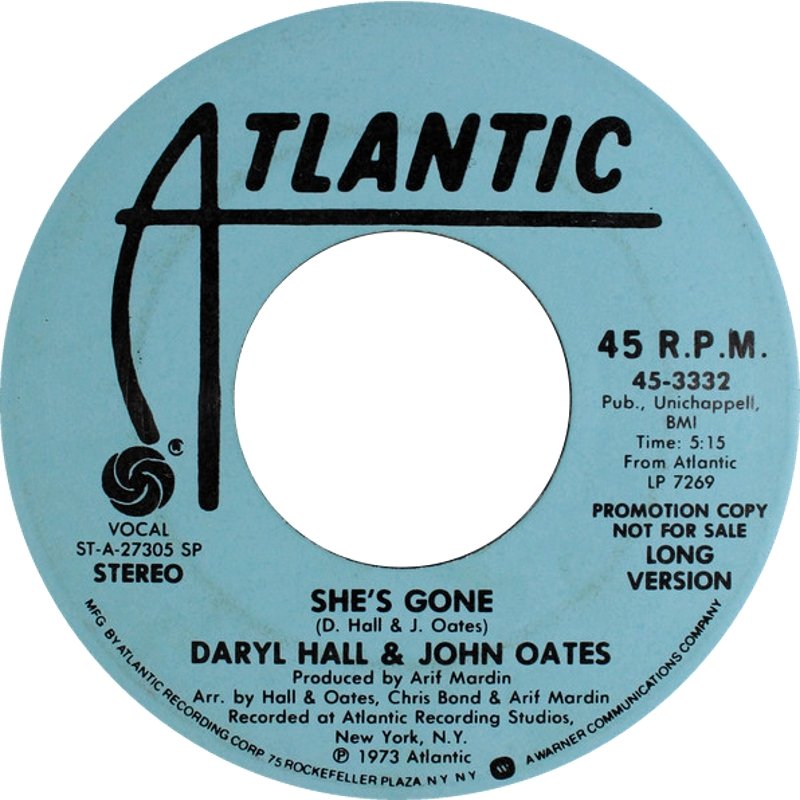
DARYL HALL & JOHN OATES - SHE’S GONE

Publicació: novembre de 1973

Llistes: EUA: #7 Regne Unit: #42


"She's Gone" és una cançó escrita i interpretada originalment pel duo nord-americà Daryl Hall i John Oates. La balada soul s'inclou al seu àlbum de 1973, "Abandoned Luncheonette". Hall & Oates van escriure això mentre es consolaven mútuament amb els desamors. Daryl s'acabava de divorciar de la seva dona Bryna Lublin, i una cita de Cap d'Any havia acabat amb una relació de John.


Moltes cançons de Hall & Oates van ser escrites principalment per un membre del duo, però aquesta cançó va ser una col·laboració al 50%. Hall va explicar que Oates va idear la tornada i la va polir amb la guitarra acústica. Hall va pensar que sonava com la cançó "Wild world" de Cat Stevens, així que amb el seu teclat va reelaborar el ritme. A partir d'aquí, va ser qüestió de trobar la progressió i la lletra. "Ens vam asseure junts i la primera frase que va sortir va ser: 'Everybody's high on consolation (Tothom està ben consol)'", va dir Hall. "Va ser una d'aquelles coses en què les frases fluïen soles, i ho aprofitavem. Per a mi, aquesta és la cançó definitiva de Daryl i John, perquè era molt col·laborativa i explicava molta part de les nostres experiències i vides".


John va explicar: "Vam començar com a compositors. Tant Daryl com jo tenim una gran varietat de gustos musicals. El fet que la música que feiem podria haver caigut en una categoria determinada no vol dir que no en fossim conscients, i m'interessaven altres tipus de música. Quan Hall i Oates es van unir, vaig aportar un enfocament folk-i tradicional nord-americà, i era una cosa de la qual Daryl ni tan sols era conscient. I Daryl va aportar molt més del costat del R&B urbà. I quan els vam barrejar, finalment vam crear un so propi".


Aquesta és una de les cançons preferides de Hall & Oates. Daryl Hall va dir a Entertainment Weekly al 2009: "És molt autobiogràfica. El que vam escriure era real, tot i que tractava sobre dues situacions diferents. I és molt característica amb el nostre estil: una melodia creixent i una progressió d'acords edificant, però sobre una temàtica molt trista". Aquesta cançó ha estat un pilar habitual a les llistes de cançons dels concerts del duo des que la van gravar, una peça per a la que no passa el temps. Al DVD de Hall & Oates 2015 Live In Dublin, Hall presenta la cançó dient: "És honesta, és real, sembla la primera vegada que la toquem".


Aquesta cançó es va publicar per primera vegada com a senzill el febrer de 1974, però es va quedar en el número 60. Més tard aquell any, Tavares la va gravar i, tot i que la seva versió només va arribar al número 50, va ser número 1 a les llistes de R&B. Després que Hall & Oates obtinguessin un bon èxit amb "Sara Smile", Atlantic Records va llançar una versió editada de la cançó que va arribar al número 7 el 1976.


Hall & Oates van crear un vídeo musical per a aquesta cançó el 1973, un dels primers d'un grup nord-americà. Dirigida per la germana d'Oates, Diane, que estudiava cinema a la Temple University, la van rodar en una cadena de televisió de Filadèlfia perquè pogués publicar-se en un programa de dansa local. El clip és absurd i inescrutable, amb Oates amb un esmòquing sense mànigues i un noi amb un vestit de diable que els ajuda a retratar una interpretació literal de les línies, "I'd pay the devil to replace her (Pagaria al diable per substituir-la)". El clip no es va emetre mai, però Oates el va publicar més tard a YouTube.


DARYL HALL & JOHN OATES - SHE’S GONE


Released: November 1973

Charted:  US: #7  UK: #42 


"She's Gone" is a song written and originally performed by the American duo Daryl Hall and John Oates. The soul ballad is included on their 1973 album, “Abandoned Luncheonette”. Hall & Oates wrote this while they were consoling each other over heartbreaks. Daryl had just divorced from his wife Bryna Lublin, and a New Year's Eve date had stood up John.


Many Hall & Oates songs were written primarily by one member of the duo, but this song was an equal collaboration. Hall explained that Oates came up with the chorus, which he wrote on acoustic guitar. Hall thought it sounded like the Cat Stevens song "Wild world” so he went to his Wurlitzer keyboard and reworked the groove. From there, it was a matter of finding the progression and coming up with the lyrics. "We sat down together, and the first line that came out was, 'Everybody's high on consolation'" said Hall. "It was one of those things where the lines just flowed out, and we were banging it back and forth. To me that is the ultimate Daryl and John song, because that was so collaborative, and so much a part of both of our experiences and lives thrown together". 


John said: "We started out as songwriters. And both Daryl and myself, individually and collectively, have a wide variety of musical tastes. Just because the music we made may have fallen into a certain category doesn't mean we weren't aware of and interested in other kinds of music. When Hall & Oates got together, I brought a traditional American folk-y approach, and it was something Daryl wasn't really even aware of. And Daryl brought a lot more of the urban R&B side. And when we blended those together, we eventually created a sound".


This is one of the duo's favorite Hall & Oates songs. Daryl Hall told Entertainment Weekly(October 16, 2009): "It's very autobiographical. What we wrote about was real, even though it was two different situations. And it's very thematic with us: this soaring melody and uplifting chord progression, but about a very sad thing". This has been a mainstay of the duo's setlists since they recorded it, bet it never gets old for them. On Hall & Oates 2015 Live In Dublin DVD, Hall introduces the song by saying, "It's honest, it's real, it feels like the first time every time we play it".


This song first was released as a single in February 1974, but stalled at #60. Later that year, Tavares recorded the song, and while their version only made #50, it was a #1 R&B hit. After Hall & Oates scored a hit with "Sara Smile", Atlantic Records released an edited version of the song which made #7 in 1976.


Hall & Oates created a music video for this song in 1973 - one of the first ever by an American act. Directed by Oates' sister Diane, who was studying film at Temple University, they shot it at a Philadelphia TV station so it could run on a local dance show. The clip is absurd and inscrutable, complete with Oates in a sleeveless tuxedo and a guy in a devil suit helping them portray a literal interpretation of the lines, "I'd pay the devil to replace her". The clip never aired, but Oates later posted it on YouTube.