Total de visualitzacions de pàgina:

22.11.23


THE TEMPTATIONS - JUST MY IMAGINATION (RUNNING AWAY WITH ME)

Publicació: 14 de gener de 1971

Llistes: Regne Unit: #8   EUA: #1 (2 setmanes)


"Just My Imagination (Running Away with Me)" és una cançó escrita per Norman Whitfield i Barrett Strong. Publicada pel segell Gordy (Motown), i produïda per Norman Whitfield, apareix a l'àlbum del grup de 1971, "Sky's the Limit". Quan es va llançar com a senzill, "Just My Imagination" es va convertir en la tercera cançó de Temptations en arribar al número 1 del Billboard Hot 100 dels EUA.


La cançó parla d'un noi que està bojament enamorat d'una noia, però només estan junts en la seva imaginació. Cada dia, la veu passar per davant la seva finestra, i en el seu somni imagina la seva vida junts. De fet, ella ni tan sols el coneix.


Els escriptors de Motown Norman Whitfield i Barrett Strong van escriure "Just My Imagination" a finals dels anys 60, però com que les cançons psicodèliques eren populars en aquell moment, van decidir esperar uns quants anys abans de llançar-la. Whitfield la va treure de la naftalina després del fracàs relatiu de "Ungena Za Ulimwengu (Unite the World)" de The Temptations, que va arribar al número 33 el 1970 (inacceptable per als seus estàndards). Whitfield va sentir que necessitaven canviar de direcció per mantenir-se al capdavant, així que va allunyar Temptations de la seva sèrie de cançons socialment rellevants i els va fer gravar aquesta balada. L'estratègia va funcionar i la cançó va arribar al número 1 a Amèrica.


Eddie Kendricks va ser la veu principal en aquest tema, que va acabar sent el seu últim senzill amb el grup. Membre original del grup, Kendricks va deixar The Temptations per a una carrera en solitari poc després de la publicació de la cançó. Amb el seu substitut, Damon Harris, els Temptations van aconseguir el seu últim gran èxit el 1972 amb "Papa Was A Rollin' Stone", que va assolir el número 1 als Estats Units. Kendricks va tenir el seu propi numero 1 el 1973 amb "Keep On Truckin'". "Just My Imagination" també va ser l'última cançó del membre del grup Paul Williams, que és el solista en la frase "Every night on my knees I pray". 


THE TEMPTATIONS - JUST MY IMAGINATION (RUNNING AWAY WITH ME)


Released : January 14, 1971 

Charted:  UK: #8    US: #1 (2 weeks)


"Just My Imagination (Running Away with Me)" is a song written by Norman Whitfield and Barrett Strong. Released on the Gordy (Motown) label, and produced by Norman Whitfield, it features on the group's 1971 album, “Sky's the Limit”. When released as a single, "Just My Imagination" became the third Temptations song to reach number one on the US Billboard Hot 100.


The song is about a guy who is madly in love with a girl, but they're only together in his imagination. Every day, he watches her walk by his window, and in his reverie he pictures their life together. In reality, she doesn't even know him.


Motown writers Norman Whitfield and Barrett Strong wrote "Just My Imagination" in the late '60s, but since psychedelic songs were popular at the time, they decided to wait a few years before releasing it. Whitfield pulled it out of the mothballs after the relative failure of The Temptations' "Ungena Za Ulimwengu (Unite the World)," which hit #33 in 1970 (unacceptable by their standards). Whitfield felt they needed to change direction to stay on top of the game, so he steered Temptations away from their string of socially relevant songs and had them record this airy ballad. The strategy worked, and the song rose to #1 in America.


Eddie Kendricks took lead vocals on this track, which ended up being his last single with the group. An original member, Kendricks left The Temptations for a solo career soon after the song was released. With his replacement, Damon Harris, the Temps landed their last big hit in 1972 with "Papa Was A Rollin' Stone," which went to #1 in the US. Kendricks had his own chart-topper in 1973 with "Keep On Truckin'." "Just My Imagination" was also the last song for group member Paul Williams, who sings the "Every night on my knees I pray," line.


20.11.23


JACKSON 5 - I WANT YOU BACK / ABC


I WANT YOU BACK

Released : October 6, 1969 

Charted:  UK: #2  US: #1 (1 wk)


“I Want You Back” is the first national single by the Jackson Five. It was released by Motown and became the first number-one hit for the band on January 31, 1970. It was performed on the band's first television appearances, on October 18, 1969, on Diana Ross's The Hollywood Palace and on their milestone performance on December 14, 1969, on The Ed Sullivan Show.


What a way to announce yourselves to the world. When The Jackson 5 released their debut Motown single “I Want You Back”, they became an immediate sensation. This was a product of a new Motown system. Gordy had just moved the label’s operations from Detroit to Hollywood, where the Jacksons recorded the song. It’s the first big hit from the new songwriting/production unit known as the Corporation — Gordy himself alongside Freddie Perren, Alphonso Mizell, and Deke Richards. The song was originally meant for Gladys Knight & The Pips, and Diana Ross was also going to record it at one point. But in the end, Gordy knew where it should go. Ultimately, the Corporation existed only to crank out Jackson 5 hits, and they only lasted a couple of years, but they came up with some songs that will resonate until long after we’re all dead.


"I Want You Back" explores the theme of a lover who decides that he was too hasty in dropping his partner. An unusual aspect about "I Want You Back" was that its main lead vocal was performed by a tween, a then-11-year-old Michael Jackson.


The Jackson 5 went on to do great things; they were the first group, for instance, to see their first four singles all hit #1. And Michael would, of course, do great things on his own.


ABC 


Released : February 24, 1970

Charted:  UK: #8  US: #1 (2 wks)


“ABC” is a song released as a single for group’s second album of the same name. The song knocked the Beatles’ “Let it be” off the top of the Billboard Hot 100 in 1970, and was No. 1 on the soul singles chart for four weeks. In this Motown classic, 'ABC' sees Michael Jackson attempting to woo a girl on the playground saying it's "as simple as ABC, do re mi and 1-2-3".


“ABC,” the Jackson 5’s second Motown single, is a totally, shamelessly formulaic work. Its melody isn’t too far removed from what they’d done with “I Want You Back.” The arrangement wasn’t much different, either. Both songs are fast and jittery and joyous, and both of them are driven by the overwhelming, exhilarated yawp of the 11 year old Jackson and by the way that Michael and his brothers would euphorically bounce their voices off of each other. Gordy was one of the four members of the Corporation, the songwriting and producing team who’d given “I Want You Back” to the Jacksons. And the Corporation also wrote and produced “ABC.” Pretty much everything about “ABC” is an attempt to replicate the success of “I Want You Back”.


Cash Box said "Having whetted the world’s appetite with "I Want You Back” the Jackson 5 makes it back with another dynamite side cast in the image of its million seller. Searing vocals and the familiar drive of the Motown supporting cast assure another giant here”. Billboard said "This pulsating swinger has all the sales and chart potential of the initial entry ‘I Want You Back’”. Record World said the song proved that "the Jackson 5 are Motown's newest supergroup. 


THE MIRACLES - THE TRACKS OF MY TEARS

Released: June 23, 1965

Charted:  UK: #9    US: #16 


"The Tracks of My Tears" is a song written by Smokey Robinson, Pete Moore, and Marv Tarplin. It is a multiple award-winning 1965 hit R&B song originally recorded by their group, The Miracles, on Motown's Tamla label. The Miracles' million-selling original version has been inducted into The Grammy Hall of Fame, has been ranked by the Recording Industry Association of America and The National Endowment for the Arts at No. 127 in its list of the "Songs of the Century".


Robinson had the music Tarplin wrote on a cassette, but it took him about six months to write the lyrics. The words started coming together when he came up with the line, "Take a good look at my face, you see my smile looks out of place." From there, it was a few days before he got the lines, "If you look closer it's easy to trace... my tears." What to do with those tears was a problem, as he wanted to say something no one has said about tears. In a 2006 interview with NPR, he explained that he finally came up with the image of tears leaving lasting marks, and the song came together. "One day I was listening, and it just came - the tracks of my tears," said Robinson. "Like footprints on my face. So that was what I wrote about."


"The Tracks of My Tears" is a classic soul ballad that delves into the hidden emotions and pain behind a seemingly cheerful and lively exterior. The lyrics tell the story of a person who is often considered the life of the party, known for their humorous personality and ability to make others laugh. However, beneath the surface, they are actually deeply sad and lonely.


The song was popular among American soldiers fighting in the Vietnam War, which is reflected in the 1986 Oliver Stone movie “Platoon”, where the song is used. Motown head Berry Gordy has said that this song represents Smokey Robinson's best work.


THE MIRACLES - YOU’VE REALLY GOT A HOLD ON ME


Released: November 9, 1962

Charted:  US: #8 


"You've Really Got a Hold on Me" is a song written by Smokey Robinson, which became a 1962 Top 10 hit single for the Miracles. One of the Miracles' most covered tunes, this million-selling song received a 1998 Grammy Hall of Fame Award. It has also been selected as one of The Rock and Roll Hall of Fame's 500 Songs that Shaped Rock and Roll. It was recorded by the Beatles for their 1963 second album, “With the Beatles”.


Miracles leader Smokey Robinson wrote this song while thinking about Sam Cooke's "Bring It On Home To Me." Cooke would sometimes perform at Robinson's church with his group the Soul Stirrers, and Smokey was a big fan. Cooke's song finds the singer apologizing to his girl after casting her off, promising to treat her right if she comes back. "You've Really Got A Hold On Me" is the same sentiment but with the roles reversed: the girl mistreats the guy, but he loves her unconditionally.


When Motown was growing into a dominant label in 1962, they set up a tour where many of their acts performed together around the United States. For many people, this was their first look at Motown acts like The Supremes, Stevie Wonder and Marvin Gaye. This was the biggest Motown hit at the time, so The Miracles closed the shows with it.


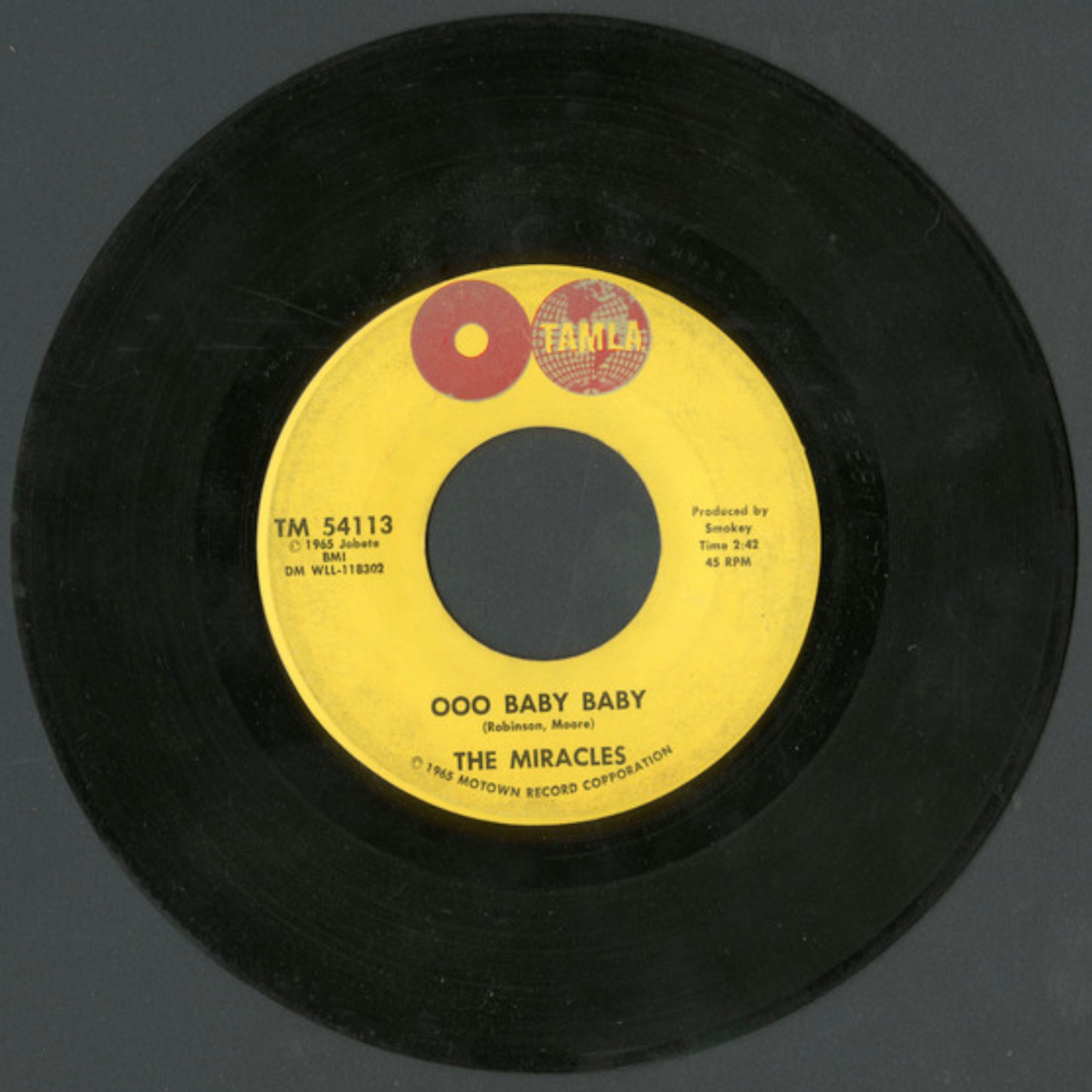
THE MIRACLES - OOO BABY BABY


Released: March 5, 1965

Charted:  US: #16 


"Ooo Baby Baby" is a song written by Smokey Robinson and Pete Moore. It is a classic 1965 hit single by The Miracles for the Tamla (Motown) label. The song has inspired numerous other cover versions by other artists over the years, including covers by Ella Fitzgerald, Todd Rundgren, Linda Ronstadt, and many others.


"Ooo Baby Baby" features Miracles lead singer Smokey Robinson lamenting the fact that he cheated on his female lover, and begging for her to overlook his mistakes and please forgive him. The song's highly emotional feel is supported by the Miracles' tight background vocal harmonies, arranged by Miracles member and song co-author Pete Moore, and a lush orchestral string arrangement that accents The Funk Brothers band's instrumental track.


When Smokey Robinson appeared on American Idol in 2009, he said that this song came about by accident. The Miracles used to sing a medley of love songs on stage, and at the end of the medley (a song called "Please Say You Want Me" by the Schoolboys) he broke off into singing "ooh, baby baby." The Miracles were so in tune that the other members started harmonizing with him, and the crowd went crazy. They incorporated this bit into their live act, then used it as the basis for the song when they decided to record it.


This is one of the most confusingly credited songs of all time; the title sometimes appears as "Ooo Baby Baby" instead of "Ooh Baby Baby," and the group alternately listed as The Miracles or Smokey Robinson & the Miracles. We've even seen a demo 45 where the song is listed as "Oo Baby Baby". On most compilation albums, the song is listed as "Ooo Baby Baby”. 


Robinson called this ballad his 'National anthem,' noting, 'Wherever we go, it's the one song that everybody asks for.' It is now considered the Miracles' signature song.


18.11.23


DIANA ROSS - UPSIDE DOWN

Publicació: 18 de juny de 1980

Llistes: Regne Unit: #2    EUA: #1 (4 setmanes)


Per al seu àlbum d'estudi "Diana", la diva va fer un canvi amb l'ajuda dels cofundadors de Chic Nile Rodgers i Bernard Edwards després d'escoltar el grup actuar en un concert. Diu la llegenda que després de conversar amb Rodgers i Edwards, Diana Ross suposadament volia "Upside down” (capgirar) la seva carrera i "Have Fun (Again)" (passar-s’ho bé de nou). Tant si això és cert com si no, l'LP de vuit temes no és més que una celebració de la llibertat artística i conté les cançons "Upside Down" i "Have Fun (Again)". Casualitat?


"Upside Down" va ser el single principal de l'àlbum i va resultar ser un gran èxit mundial per a Ross, aconseguint el numero 1 en quinze països. Amb la guitarra rítmica habitual de Rodgers i aquella línia de baix divertida que només Edwards podia oferir, la veu de Ross es va col·locar fermament al capdavant de l'èxit discogràfic. Donada la qualitat tan evident en aquesta cançó i a tot l'àlbum, és difícil de creure que la primera vegada que Rodgers i Edwards van treballar amb una gran estrella va ser amb Ross i aquest disc.


En una entrevista del 2011, Nile Rodgers va dir: "Diana Ross va ser la primera gran estrella amb la qual vam treballar i ens ho vam prendre molt seriosament". Rodgers i Edwards la van entrevistar durant diversos dies. "Aquesta va ser la primera vegada a la seva vida que algú es preocupava per qui era; què era, tothom l'havia tractat abans com nosaltres havíem tractat les Sister Sledge, anaven i li deien 'Canta això'. Amb ella vam prendre un enfocament més personal. 


Les llegendes que envolten aquest àlbum són moltes i variades, amb rabietes de diva i un xocs amb la producció que suposadament va fer que Ross es sentis disconforme amb el so amb que Rodgers i Edwards van tractar la seva veu, que, segons ella, quedava eclipsada pels instruments lluny del concepte original que havien previst. Això va culminar amb Ross trucant al seu enginyer de Motown Records, Russ Terrana, per remesclar l'àlbum a l'últim moment. Rodgers i Edwards estaven inicialment furiosos i van considerar eliminar el seu crèdit a la producció del disc. Finalment no ho van fer, i van decidir acceptat la edició, ja que el so Chic que van utilitzar va seguir sent molt influent en la cançó i a tot l'àlbum. El 2001 i el 2003 es van publicar versions de luxe de l'àlbum i a tots dos estaven incloses les mescles originals de Rodgers & Edwards.


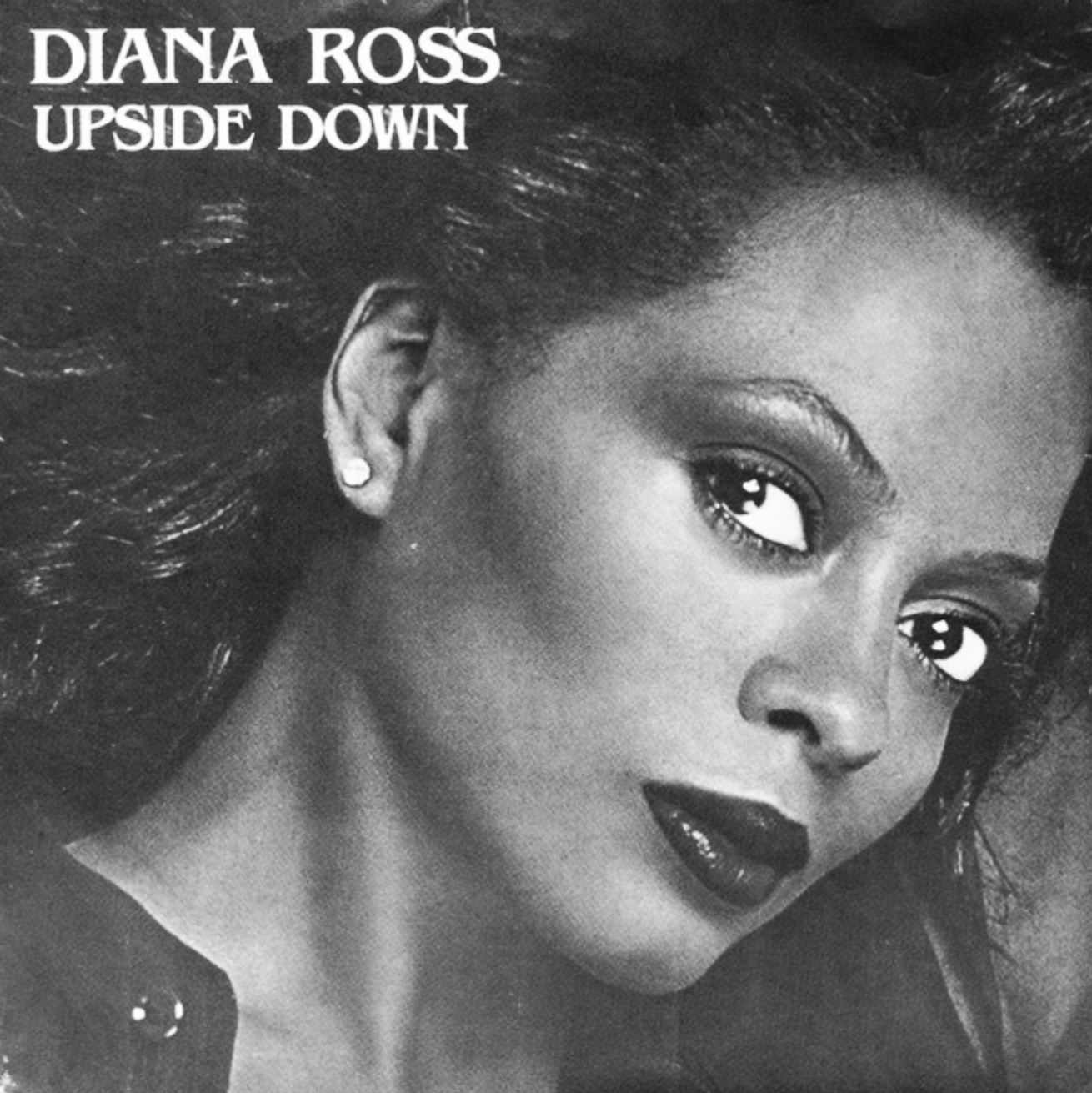
DIANA ROSS - UPSIDE DOWN


Released : June 18, 1980

Charted:  UK: #2   US: #1 (4 weeks)


For her studio album “Diana”, she switched things up by enlisting the help of Chic co-founders Nile Rodgers and Bernard Edwards after hearing the group perform at a gig. Legend has it that in conversation with Rodgers and Edwards, Ms. Ross supposedly wanted to “turn her career upside down and have fun again.” Whether this is true or not, the eight track LP is nothing short of a celebration of artistic freedom and does happen to contain the tracks “Upside Down” and “Have Fun (Again)”.


“Upside Down” was also the album’s lead single and proved to be a massive smash for Ross, hitting the number one spot around the world in fifteen countries. With Rodgers’ signature guitar and that funked-up bassline that only Edwards could deliver, Ross’ vocals were placed firmly at the front of the flawless disco hit. Given the quality of craftsmanship that is so apparent on this track and throughout the entire album, it’s hard to believe that Rodgers and Edwards’ first time working with a big star came in the form of Ross and this album.


In a 2011 interview, Nile Rodgers said "Diana Ross was the first big star we ever worked with and we took it very seriously." Rodgers and Edwards interviewed her for several days. "This was the first time in her life somebody cared about who she was; what she was, everyone previously had treated her the way we had treated Sister Sledge, they got her in and said 'Sing this'. We took a more personal approach.


The legend surrounding this album are many and varied with diva-esque tantrums and a clash of vision that resulted in Ross supposedly feeling blind sighted and her sound dwarfed in comparison to Rodgers and Edwards’ original concept. This culminated in Ross calling in her long-time engineer from Motown Records, Russ Terrana, to remix the album at the last minute. Rodgers and Edwards were initially furious, and considered having their production credit removed. They eventually decided to leave the track unedited, as the sound they used for Chic remained heavily influential on the album. In 2001 and 2003 a deluxe version of the album was released with both including the album’s original mixes by Rodgers & Edwards.