"Hot Blooded" is a song by the British-American rock band Foreigner, from their second studio album “Double Vision”. Written by Foreigner mainstays Lou Gramm and Mick Jones, this song is known for its distinctive guitar riff and sexually charged lyrics. The guitar riff was sampled for the 1988 Tone Loc hit "Funky Cold Medina".
"Hot Blooded" is about a sexually charged encounter between the singer and a woman he meets. The chorus talks about the singer's physical state, with his "hot blooded" nature creating a fever of 103 degrees, suggesting intense desire. In the verses, the singer expresses his desire for the woman and asks what she is doing after the show, indicating that he wants to take their relationship further. The bridges suggest secrecy and a willingness to take a risk to be with the woman, but also indicate a potential age difference between the two. The outro describes how the woman is making the singer feel and how he is willing to sing for her. Overall, the lyrics portray a strong physical attraction between the two parties and a desire to pursue a romantic/sexual encounter.
Gramm said: We used to work at Mick’s apartment and he would just keep playing one guitar riff after another. Just playing whatever came into his mind. When he started playing that riff, I remember saying, “Wait! Stop! What’s that?” Mick said it was just another riff. So, I started singing along to it. We eventually got the idea of what the chorus would be and then started working on the verse lyrics. Once they were put together it naturally led to the “Hot Blooded” verbal line. I remember we were jumping off the walls when we cracked the title of the song.
Billboard described "Hot Blooded" as "a high energy rocker that boils with a feverent energy." It compared the "powerhouse" guitar playing and the vocals with Bad Company, but said the song retains Foreigner's own identifiable sound. Cash Box called it "driving, unadorned rock 'n' roll," saying that "the vocal arrangement is crisp and insistent" and the "guitars provide sinister, hard-edged power”.
FOREIGNER - DOUBLE VISION
Released : September 8, 1978 (US) July 1979 (UK)
Charted: US: #2
"Double Vision" is a single by Foreigner from their second album of the same name. The song reached No. 2 on the Billboard Hot 100 chart for two weeks in 1978, behind "MacArthur Park" by Donna Summer. This wasn't released as a single in the UK until almost a full year after the release of the album of the same name. It didn't chart there.
Foreigner guitarist Mick Jones and vocalist Lou Gramm wrote this song after seeing New York Rangers goalie John Davidson get knocked out during the 1977 Stanley Cup Playoffs. Jones told us: "That's where the title came from. We were at a hockey game. I was an avid Rangers fan in those days, and Lou and I went to a game, and the goaltender for the Rangers got a concussion, and it was announced over the PA that he was taken off and was suffering from double vision. I'd never heard that term before, and we picked up on it. And then that led to the title for that song. I know it was received by a majority of the public as a drug song. I didn't mind that, you know. It wasn't the intention in the beginning, but that's how a lot of people interpreted it." Davidson went on to become a popular broadcaster and hockey analyst. He and Jones have had a laugh over it several times since.
"Double Vision" is a song about living life to the fullest and embracing the unpredictable. It describes feeling down and out, but determined to have a good time and live life to the fullest. The chorus captures the idea of double vision, seeing the world through an altered perspective that allows one to enjoy the unpredictable and exciting aspects of life. The song encourages us to embrace life's chaotic and unpredictable moments and make the most of them.
Billboard felt that "Double Vision" was a stronger single than the previous release "Hot Blooded" due to its "driving but less monotonous hard rock rhythm" and "more infectious melody." Cash Box said it has "slashing guitars and a mean, ticking beat" that gives way "to an appealing, lighter chorus which is underlined by gently swirling keyboard work" and also praised the vocal performance.
FOREIGNER - COLD AS ICE
Released : July 1977
Charted: UK: #24 US: #6
"Cold as Ice" is a song written by Lou Gramm and Mick Jones that was first released by British-American rock band Foreigner from their eponymous debut album. It became one of the best-known songs of the band in the US. It was initially the B-side of some versions of the "Feels Like the First Time" 45 rpm single.
"Cold as Ice" is about trying to warn someone, who is emotionally unresponsive, that their cold-hearted attitude will catch up with them someday. The lyrics state that the person in question is willing to sacrifice love and feelings for their own career, material or selfish interests. The singer also implies that this person will realize their mistake eventually and will pay for the things they have done. The chorus is a warning that you can't just ignore your feelings forever because ultimately it will be your downfall. The bridge and outro emphasize the line "you're as cold as ice" to create a sense of dread and hopelessness.
Gramm told: "Subconsciously you draw from stuff, things that happened in your past, things that came out of relationships, the pain and the heartache of love that is intense and then so deep, and then suddenly you lose it. The whole gamut of emotional feeling that you go through in a relationship. Sometimes they end, and sometimes they last, and when it's the final breakup, you're left with the memories of that relationship. So I go for that quite a bit. You're kind of digging down deep into your well of significant things that you recall from sometimes near tragedy that you go through at the time."
Billboard described "Cold as Ice" as having a "haunting feel" and a "surrealistic chilling effect" produced by its "richly textured instrumentals and gutsy vocals" Billboard also praised how the song maintains its momentum and intensity. Cash Box said that "listeners will recognize the controlled fury of Lou Gramm's lead vocal as well as the finely textured harmonies" and that "the orchestra lends an expansive effect."
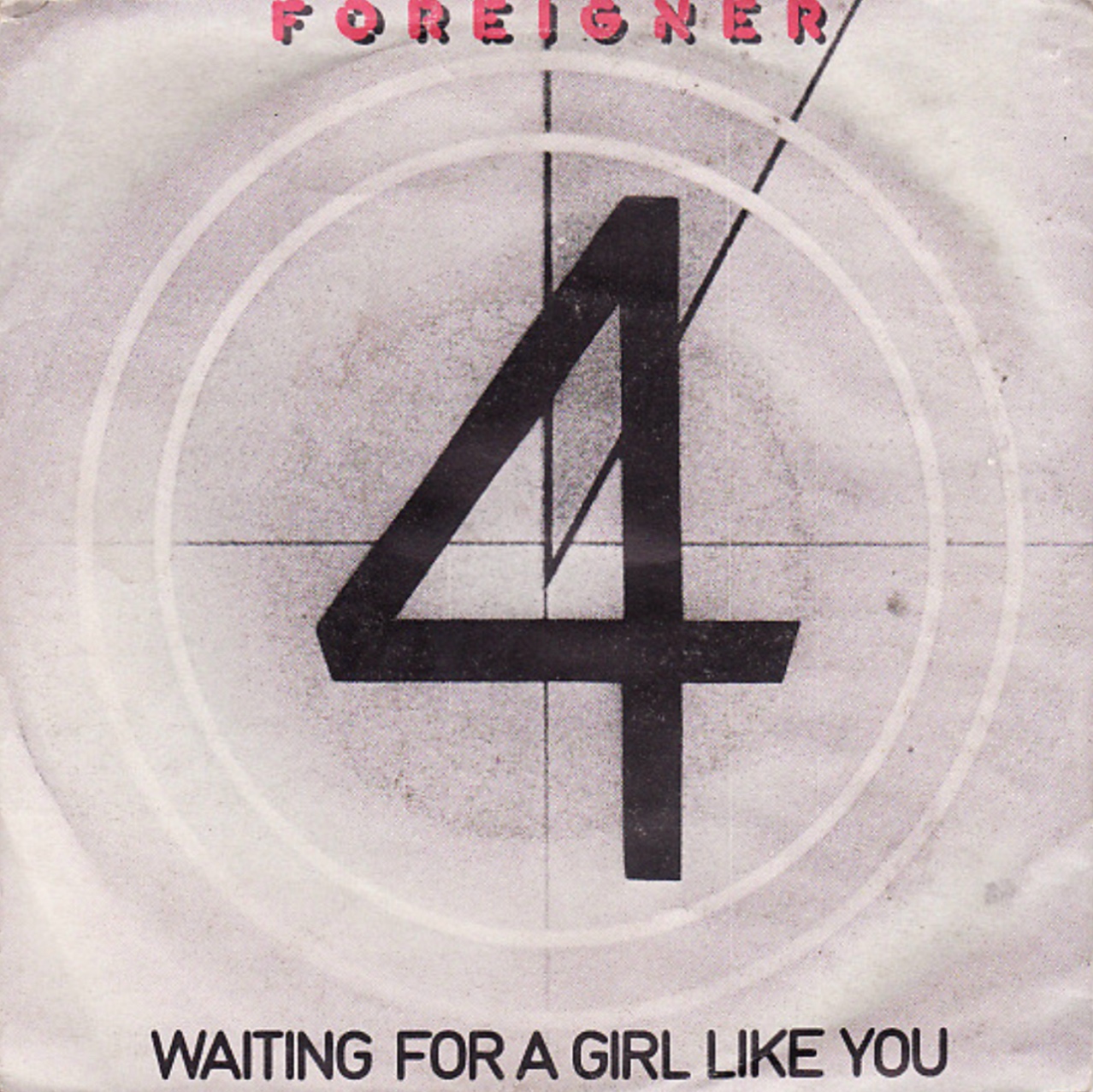
FOREIGNER - WAITING FOR A GIRL LIKE YOU
Publicació: 2 d'octubre de 1981 (EUA) 4 de desembre de 1981 (Regne Unit)
Llistes: Regne Unit: #8 EUA: #2
"Waiting for a Girl Like You" és una balada de 1981 de la banda de rock britànica-nord-americana Foreigner publicada com a segon senzill de l'àlbum "4" de 1981 i va ser coescrita pel cantant Lou Gramm i el guitarrista Mick Jones. El sintetitzador va ser interpretat pel llavors poc conegut Thomas Dolby.
Aquest pot ser el single de més èxit de la història de les llistes dels Estats Units que mai va arribar al número 1. Va estar 10 setmanes al número 2, però va tenir la desgràcia d'assolir el màxim al mateix temps que l'èxit encara més massiu d'Olivia Newton-John "Physical", que va estar 10 setmanes al primer lloc. Però fins i tot quan "Physical" finalment va caure del número 1, "I Can't Go For That (No Can Do)" de Daryl Hall i John Oates va passar per davant de la cançó de Foreigner al lloc més alt de la llista. La setmana després d'això, "Centerfold" de la J. Geils Band va fer caure la cançó de Hall i Oates al número 2 i "Waiting for a Girl Like You" al número 3. L'any 2002, "Work It" de Missy Elliott va igualar la dubtosa gesta d'aquesta cançó, mantenint-se també al número 2 durant 10 setmanes sense arribar al número 1. Tot i que "Waiting for a Girl Like You" mai va arribar al número 1, l'àlbum "4" ho va fer, encapçalant el Billboard 200 durant deu setmanes.
Mick Jones, que va escriure la cançó amb el cantant principal Lou Gramm, va dir: "Hi ha una cançó anomenada 'Waiting For A Girl Like You', sobre la qual literalment no tenia cap control, va sortir sola. No tenia ni idea del que volia dir, i va arribar al punt que de vegades ni tan sols podia estar a l'estudi quan l'enregistràvem, em va deixar una impressió molt profunda. Però va acabar sent una cançó que va triomfar i va agradar a molta gent. Aquests dies he escoltat que és una cançó que molta gent la posa als seus casaments. És el tipus de cançó que s’escriu sola, i ni tan sols saps d'on et ve. Però sento que són coses que et passen a vegades i les has d'aprofitar, és una mena d’inspiració que hi ha a l'aire, i només has d'estar prou despert per agafar-la i deixar que flueixi a través teu. Hi ha una mica de mística en la forma que provenen aquestes idees. A vegades tens una idea sobre una cançó, o tens un títol en què bases la resta de la cançó, però a vegades prové literalment d'una àrea desconeguda. Estàs pensant en una cosa completament diferent i, de sobte et ve aquesta inspiració. Normalment sé quan està passant, i només deixo que flueixi i intento no interferir-hi, només intento transmetre el que signifiquen aquell pensament, i aquests sentiments."
A la seva autobiografia, Lou Gramm parla d'una dona preciosa i misteriosa que va aparèixer a la sala de control quan estava gravant la seva veu, i li va donar la inspiració per oferir l'emocionant presa que va ser la millor del que mai havia cantat per a la cançó, i la que es va utilitzar finalment. Escriu que aquesta bellesa efímera va desaparèixer i mai no ha sabut la seva identitat.
FOREIGNER - WAITING FOR A GIRL LIKE YOU
Released : October 2, 1981 (US) December 4, 1981 (UK)
Charted: UK: #8 US: #2
"Waiting for a Girl Like You" is a 1981 power ballad by the British-American rock band Foreigner released as the second single from the 1981 album “4” and was co-written by Lou Gramm and Mick Jones. The distinctive synthesizer theme was performed by the then-little-known Thomas Dolby.
This may be the biggest hit single in US chart history that never made it to #1. It spent an astounding 10 weeks at #2, but had the misfortune of peaking at the same time as Olivia Newton-John's even more massive hit "Physical," which spent 10 weeks at the top spot. But even when "Physical" finally fell out of #1, "I Can't Go For That (No Can Do)" by Daryl Hall and John Oates leapfrogged ahead of Foreigner’s song into the #1 spot. The week after that, "Centerfold" by the J. Geils Band knocked the Hall and Oates song to #2 and "Waiting for a Girl Like You" to #3. In 2002, "Work It" by Missy Elliott matched this song's dubious chart feat, also staying at #2 for 10 weeks without hitting #1. Whilst this song never made it to #1, the “4” album did, topping the Billboard 200 for ten weeks.
Mick Jones, who wrote the song with lead singer Lou Gramm, said: "There's a song called 'Waiting For A Girl Like You,' which I literally had no control over, it just came out. I had no idea what it meant, but it got to the point where I couldn't even be in the studio when we were recording it sometimes, it left such a deep impression on me. But it ended up being a song that brought a lot of people together. I hear these days that it's a song that a lot of people play at their weddings. It's the kind of song that the pen does the writing, and you don't even know where it came from. But I feel that it's stuff that's floating around at times and you have to grasp it - it's kind of flying around in the air, and you just have to be open enough to let that flow through you. Sometimes it's sort of mystical where these ideas come from. Sometimes you have an idea about a song, or you have a title that you base the rest of the song on, but sometimes it comes just literally from an unknown area. You'll be thinking about something completely different, and suddenly you get that inspiration. I usually know when it's happening, and I just let it flow and try not to interfere with it - just try and deliver what that thought, those feelings, mean."
In his autobiography, Lou Gramm tells of a beautiful, mysterious woman who appeared in the control room when he was recording his vocal and gave him the inspiration to deliver the stirring take that was better than he has ever sung the song. He writes that this ephemeral beauty vanished, and he has never discerned her identity.
25.11.23
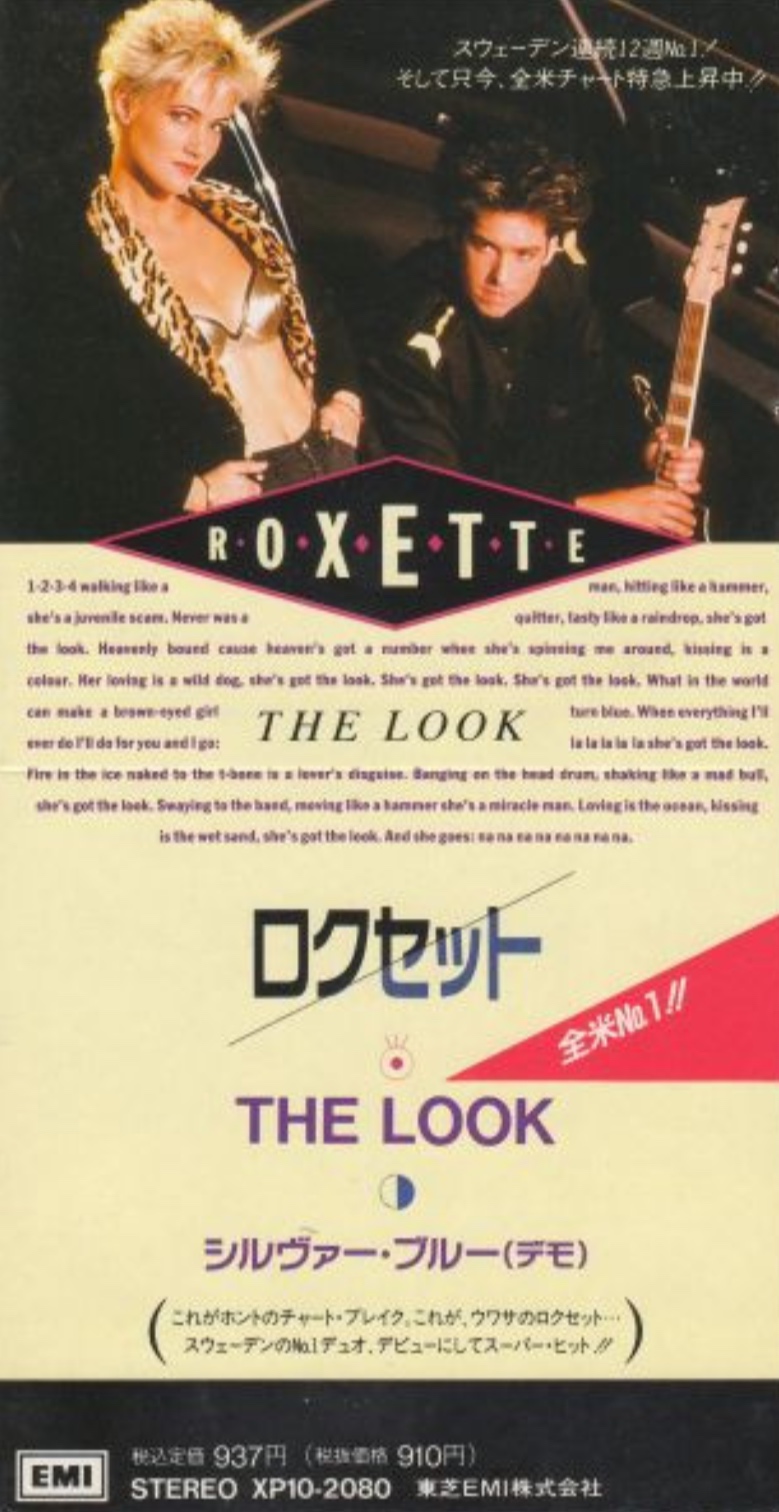
ROXETTE - THE LOOK
Publicació: 12 de gener de 1989
Llistes : Regne Unit: #7 EUA: #1 (1 setmana)
"The Look" és una cançó del duo pop suec Roxette. Va ser llançada a principis de 1989 com a senzill del seu segon àlbum d'estudi, "Look Sharp!". Es va convertir en un èxit internacional, i va ser un dels senzills amb més èxit de l’any. Va encapçalar les llistes de 25 països i va ser el primer dels seus quatre números 1 al Billboard Hot 100.
Gessle va explicar a la revista Billboard la història darrere de la cançó: "Volia escriure una cançó del tipus ZZ Top. Al final va resultar ser una cosa totalment diferent, cosa que sempre sol passar. Mai vaig pensar que seria una gran cançó. La vaig treballar durant un parell de mesos abans de tocar-la per a Marie i Clarence Ofwerman, el nostre productor. Tots dos van dir: ‘Això és el millor que has fet en molts anys: hem de gravar-ho’." Gessle a la demo original: "Estava intentant barrejar un ambient de ball amb guitarres potents. La vaig escrire per a Marie, però sonava terrible quan la va provar. Necessita més melodia perquè es pugui gaudir correctament la seva fabulosa veu! Sempre, per instint, vam optar per singles on Marie feia la veu principal. Quan vam sentir a parlar que una cançó s’estava emitint als EUA vam pensar de seguida que era 'Dressed For Success' o 'Listen To Your Heart' la que triomfava. La gran sorpresa per a tots nosaltres és que era 'The Look'. Badabam!"
Aquesta cançó tracta sobre una dona que és alhora atractiva físicament i captivadora pel que fa a la seva personalitat i aura. El tema la descriu com a poderosa i irresistible, amb trets que remarquen la seva atracció juvenil i el seu costat més salvatge, que la fan emocionant i seductora. La lletra suggereix que la dona està segura de si mateixa, simbolitzat per les frases "walking like a man, hitting like a hammer" (camina com un home, colpeja com un martell). La tornada repeteix la frase "she's got the look" per emfatitzar com l'aspecte i la personalitat d'aquesta dona és el que la fa destacar i atraure la gent. A més, la lletra "what in the world can make a brown-eyed girl turn blue?" (Què pot fer que els ulls marrons d’una noia es tornin blaus?) suggereix que, tot i que sembli impecable, també pot sentir dolor i tristesa. El pont instrumental de la cançó mostra encara més el poder i la força de la dona, amb un fort ritme de bateria i riffs de guitarra. "The Look" mostra una dona que traspua confiança, atractiu sexual i una personalitat magnètica.
El vídeo va provocar certa controvèrsia per mostrar a Fredriksson tocant la guitarra mentre estava asseguda en un vàter (completament vestida, amb la tapa tancada). "La van prohibir en alguns llocs dels Estats Units i no volien possar-la per això", va dir Gessle al bloc de música I Like Your Old Stuff. "Crec que hi ha una versió sense aquesta escena, perquè alguns països no la volien posar. És una bogeria".
ROXETTE - THE LOOK
Released : January 12, 1989
Charted: UK: #7 US: #1 (1 week)
"The Look" is a song by Swedish pop duo Roxette. It was released in early 1989 as a single from their 1988 second studio album, “Look Sharp!”. It became an international hit, and was one of the most successful singles of 1989. It topped the charts in 25 countries, and was the first of their four number ones on the Billboard Hot 100.
Gessle gave Billboard magazine the story behind the song: "I wanted to write a ZZ Top-type of song. It turned out to be something totally different in the end, which is always the case. I never really thought it would be a big song. I had it around for a couple of months before I played it for Marie and Clarence Ofwerman, our producer. They both said, 'This is the best thing you've done in ages - you have to record it.'" Gessle on the original demo: "I was trying to mix a 'dance-vibe' with powerful guitars. It was written for Marie but it sounded terrible when she tried it out. She needs 'bigger' melodies so you can hear her fab voice properly! We always, by instinct, went for singles where Marie did the lead vox. When we heard about the airplay in the US we instantly thought it was 'Dressed For Success' or 'Listen To Your Heart' that started to happen. Big surprise to all of us that it was 'The Look.' Badabam!"
This is a song about a woman who is both physically attractive and captivating in terms of her personality and aura. The track describes her as powerful and irresistible, with traits such as being a "juvenile scam" and a "wild dog" that make her exciting and alluring. The lyrics suggest that the woman is confident and self-assured, symbolized by the lines "walking like a man, hitting like a hammer." The chorus repeats the phrase "she's got the look" to emphasize how this woman's appearance and personality are what makes her stand out and draw people in. Additionally, the lyrics "what in the world can make a brown-eyed girl turn blue?" suggest that even though she may seem flawless, she too can feel pain and sadness.
The song's instrumental bridge further showcases the woman's power and strength, with a heavy drum beat and guitar riffs. "The Look" celebrates a woman who exudes confidence, sex appeal, and a magnetic personality.
The video caused some controversy for showing Fredriksson playing the guitar while sitting on a toilet (fully clothed, with the lid closed). "It was banned in some places in the United States and they didn't want to play it because of that," Gessle told the music blog I Like Your Old Stuff. "I think there's actually a version without that scene in it, because some countries didn't want to play it. It's crazy."