Total de visualitzacions de pàgina:

22.1.24


QUEEN - DON’T STOP ME NOW

Estrena: 26 de gener de 1979

Llistes: Regne Unit: #9 EUA: #86 


"Don't Stop Me Now" de la banda britànica Queen, inclosa al seu àlbum "Jazz" del 1978, es va llançar com a senzill el 1979. El cantant Freddie Mercury va escriure la cançó durant les sessions per a l'àlbum, i es va enregistrar a l'agost de 1978 als Super Bear Studios de Berre-les-Alpes (Alps-Marítims), França. La lletra reflecteix el sentiment de la banda de passar-s'ho bé, capturant l'esperit optimista i enèrgic pel qual Queen eren coneguts durant aquells anys.


La lletra de Freddie Mercury suggereix un sentit d'abandonament i risc, especialment amb frases com "I am a satellite, I'm out of control" i "I am a sex machine ready to reload” (Sóc un satèl·lit, estic fora de control" i "Sóc una màquina sexual a punt de recarregar). Això afegeix una capa de complexitat a la cançó, destacant l'actitud intrèpida i hedonista de Mercury durant aquell període. La lletra captura un moment de viure l'instant, abraçant una insinuació dels perills associats amb aquest estil de vida.


"Don't Stop Me Now" es caracteritza musicalment pel piano de Freddie Mercury, complementat pel baix de John Deacon i la bateria de Roger Taylor formant la base de la pista. La cançó mostra la distintiva harmonia vocal en multitrack de Queen, especialment evident a les frases de la tornada, reflectint l'estil característic de la banda. Una versió alternativa de la cançó, titulada "Don't Stop Me Now... Revisited", presenta un arranjament més dur amb guitarres. Aquesta versió va aparèixer a l'àlbum de la banda sonora del 2018 "Bohemian Rhapsody: The Original Soundtrack".


Després de la mort de Freddie Mercury el 1991 a causa del VIH/sida, va quedar evident que el seu estil de vida hedonista durant el període de "Don't Stop Me Now" havia tingut les seves conseqüències. Brian May, que inicialment no era un fan de la cançó, va revelar més tard en una entrevista amb Mojo que va tenir problemes amb la lletra, ja que reflectia un moment difícil a la vida de Mercury en què "prenia moltes drogues i tenia relacions sexuals amb molts homes". May va expressar preocupació sobre els perills que Mercury va enfrontar durant aquell període. Malgrat aquestes reserves, May va reconèixer l'èxit de la cançó, convertint-se en un gran èxit i un himne per a aquells que abraçaven un estil de vida hedonista. May la va considerar un cop de geni de Freddie, però amb un corrent subterrani de preocupació pel seu benestar.


El canvi en les normes de la llista de vendes del Regne Unit a principis de 2007, que permetien que totes les descàrregues digitals figuressin a la llista independentment a una equivalent física, va tenir un impacte significatiu en "Don't Stop Me Now". Tot i que la cançó mai va arribar al Top 75 durant aquest temps, va mantenir una presència al Top 200 al llarg de 2007. Curiosament, va vendre 53.000 còpies i aquesta xifra de vendes va superar la del número 1 de McFly, "Baby's Coming Back", en 3.000 còpies.


El 2011, els fans de Queen van participar en una enquesta realitzada per HMV, on van votar la tornada de "Don't Stop Me Now" com la millor lletra de la banda. La lletra preferida va ser "Don't stop me now, I'm having such a good time, I'm having a ball." Seguida de prop com la segona lletra preferida hi havia una frase de "The Show Must Go On": "My soul is painted like the wings of butterflies, fairy tales of yesterday will grow but never die, I can fly my friends." Aquest reconeixement destaca l'atractiu i l'impacte emocional de la lletra de "Don't Stop Me Now" entre els aficionats de Queen.


QUEEN - DON’T STOP ME NOW 


Released: January 26, 1979

Charted:  UK: #9   US: #86 


"Don't Stop Me Now" by the British rock band Queen, featured on their 1978 album "Jazz", was released as a single in 1979. Lead singer Freddie Mercury wrote the song during the sessions for the album, and it was recorded in August 1978 at Super Bear Studios in Berre-les-Alpes (Alpes-Maritimes), France. The lyrics mirror the band's sense of improving at having a good time, capturing the upbeat and energetic spirit that Queen was known for during this years.


Freddie Mercury's lyrics suggest a sense of abandon and risk, especially with lines like "I am a satellite, I'm out of control" and "I am a sex machine ready to reload." This adds a layer of complexity to the song, highlighting Mercury's fearless and hedonistic attitude during that period. The lyrics capture a moment of living in the moment, embracing exhilaration, and perhaps a hint of the dangers associated with such a lifestyle.


"Don't Stop Me Now" is characterized musically by Freddie Mercury's piano playing, complemented by John Deacon's bass guitar and Roger Taylor's drums forming the backing track. The song showcases Queen's distinctive multitrack harmony vocals, especially evident in the chorus lines, reflecting the band's trademark style. An alternative version of the song, titled "Don't Stop Me Now... Revisited", features a harder, guitar-driven arrangement. This version appeared on the 2018 soundtrack album "Bohemian Rhapsody: The Original Soundtrack".


After Freddie Mercury's death in 1991 due to AIDS-related causes, it became evident that his hedonistic lifestyle during the period of "Don't Stop Me Now" had taken its toll. Brian May, initially not a fan of the song, later revealed in an interview with Mojo that he struggled with the lyrics as they reflected a challenging time in Mercury's life when he was "taking lots of drugs and having sex with lots of men." May expressed concerns about the dangers Mercury faced during that period. Despite these reservations, May acknowledged the song's enduring success, becoming a massive track and an anthem for those embracing a hedonistic lifestyle. May considered it a stroke of genius from Freddie, but with an undercurrent of worry for his well-being.


The change in UK chart rules at the beginning of 2007, allowing all digital downloads to chart regardless of a physical equivalent, had a significant impact on "Don't Stop Me Now". While the song never reached the Top 75 during that time, it sustained a presence in the Top 200 throughout 2007. Remarkably, it sold 53,000 copies and interestingly, this sales figure surpassed that of McFly's #1 hit "Baby's Coming Back" by 3,000 copies.


In 2011, Queen fans participated in a survey conducted by HMV, where they voted the chorus of "Don't Stop Me Now" as the band's best-ever lyric. The favored lyric was "Don't stop me now, I'm having such a good time, I'm having a ball." Following closely as the second favorite lyric was a line from "The Show Must Go On": "My soul is painted like the wings of butterflies, fairy tales of yesterday will grow but never die, I can fly my friends." This recognition highlights the enduring appeal and emotional impact of the lyrics from "Don't Stop Me Now" among Queen enthusiasts.


21.1.24


PAUL McCARTNEY & MICHAEL JACKSON - SAY SAY SAY 


Publicació: 3 d'octubre de 1983

Llistes: Regne Unit: #2 EUA: #1 (6 setmanes)


"Say Say Say" va ser una col·laboració entre Paul McCartney i Michael Jackson i es va llançar com a primer senzill de l'àlbum de McCartney del 1983, "Pipes of Peace". Enregistrada als AIR Studios de Londres amb George Martin, antic col·laborador dels Beatles, com a productor, la cançó es va fer a l'època en què McCartney explorava sons de funk sintètic, coincidint amb l'estil dance-pop de Jackson. Malgrat ser a l'àlbum "Pipes Of Peace" de McCartney, la cançó integra sense problemes els estils distintius dels dos artistes.


La química entre Jackson i McCartney és evident en les seves veus, amb cada artista complementant l'altre. Les aportacions de McCartney, incloent guitarra, teclat i percussió, es barregen amb l'estil de Jackson, que s'inclina més cap al so de "Off The Wall" que al treball posterior de Jackson a "Thriller".


George Martin, el productor dels Beatles, va compartir la seva experiència treballant amb Michael Jackson, afirmant: "Realment irradia una aura quan entra a l'estudi, no hi ha cap dubte. No és un músic en el sentit que ho és en Paul... però sap el que vol en la música i té idees molt clares". Martin va destacar la presència de Jackson i va emfatitzar la seva claredat en les preferències musicals, tot i no encaixar amb el motlle tradicional d'un músic com Paul McCartney.


"Say Say Say" explora el tema de l'amor no correspost i la desitjada afecció. Els versos de Paul McCartney expressen el desig d'honestitat i claredat a la relació, instigant l'altre persona a comunicar-se obertament. Michael Jackson pren el relleu a la tornada, retratant la vulnerabilitat de qui queda anhelant la connexió. El pont destaca la frustració i la incredulitat, amb McCartney i Jackson cantant junts, posant de manifest el contrast de perspectives. Malgrat l'esperança de McCartney en el tercer vers, l a tornada de Jackson subratlla el dolor i les llàgrimes constants, capturant el cost emocional de l'amor no correspost. 


El videoclip de "Say Say Say" és una peça conceptual no relacionada amb el tema de la cançó, però destaca la dansa de Michael Jackson. Ambientat al segle XIX, retracta Paul McCartney i Jackson com a botiguers venent la "Poció Meravellosa de Mac i Jack". Linda McCartney i LaToya Jackson hi fan aparicions. El vídeo inclou una escena inicial no musical on Jackson mostra els suposats efectes de la poció meravellosa. Finalment, McCartney i Jackson es revelen com a figures de Robin Hood, utilitzant els guanys per beneficiar un orfenat on entretenen els nens.


PAUL McCARTNEY & MICHAEL JACKSON - SAY SAY SAY 


Released : October 3, 1983

Charted:  UK: #2  US: #1 (6 weeks)


“Say Say Say” is a song by Paul McCartney and Michael Jackson released as the lead single from McCartney's 1983 album “Pipes of peace”.  Michael Jackson and Paul McCartney collaborated on "Say Say Say," recorded at London's AIR Studios with George Martin, McCartney's former Beatles collaborator, producing. During this period, McCartney was exploring icy synth-funk sounds, making Jackson's dance-pop style a compatible fit. Despite standing out on McCartney's "Pipes Of Peace" album, the song seamlessly integrates the distinct styles of both artists.


The chemistry between Jackson and McCartney is evident in their vocals, with each artist complementing the other. McCartney's contributions, including guitar, keyboard, and percussion, blend with Jackson's style, leaning more towards the sound of "Off The Wall" than Jackson's later work on "Thriller." The collaboration captures a unique blend, bridging the musical worlds of McCartney and Jackson.


George Martin, the Beatles' producer, shared his experience working with Michael Jackson, stating, "He actually does radiate an aura when he comes into the studio, there's no question about it. He's not a musician in the sense that Paul is ... but he does know what he wants in music and he has very firm ideas." Martin highlighted Jackson's distinct presence and emphasized his clarity in musical preferences, despite not fitting the traditional mold of a musician like Paul McCartney.


"Say Say Say" delves into the theme of unrequited love and the yearning for affection. Paul McCartney's verses express a desire for honesty and clarity in the relationship, urging the other person to communicate openly. Michael Jackson takes over in the chorus, portraying the vulnerability of someone left heartbroken and longing for connection. The bridge emphasizes frustration and disbelief, with McCartney and Jackson singing together, highlighting the contrast in perspectives. Despite McCartney's hope in the third verse, Jackson's chorus underscores ongoing pain and tears, capturing the emotional toll of unreciprocated love. The song explores themes of vulnerability, longing, and the impact of one-sided affection.

The music video for "Say Say Say" is a concept piece unrelated to the song's theme but prominently features Michael Jackson dancing. Set in the 1800s, it portrays Paul McCartney and Jackson as hucksters selling "Mac and Jack's Wonder Potion." Linda McCartney and LaToya Jackson make appearances. The video includes a non-musical opening scene where Jackson acts as the plant, showcasing the supposed effects of the wonder potion. Ultimately, McCartney and Jackson reveal themselves as Robin Hood figures, using the earnings to benefit an orphanage where they entertain the children.


18.1.24


GEORGE HARRISON - GIVE ME LOVE (GIVE ME PEACE ON EARTH)


Publicació: 7 de maig de 1973 (EUA)  25 de maig de 1973 (Regne Unit)

Llistes: EUA: #1 (1 setmana)  Regne Unit: #8 


"Give Me Love (Give Me Peace on Earth)" és una peça de l'àlbum del 1973 de George Harrison, "Living in the Material World". Llançada com a senzill, es va convertir en el segon número 1 als Estats Units de Harrison després de "My Sweet Lord", desplaçant "My Love" de Paul McCartney and Wings de la primera posició de la llista Billboard Hot 100. Això va significar l’única ocasió en què dos antics membres dels Beatles ocupaven les dues primeres posicions de la llista a Amèrica. La cançó, que presenta solos notables de guitarra slide, és elogiada per la seva desviació de l'anterior obra post-Beatles de Harrison, mostrant un so diferenciat de la seva anterior obra produïda per Phil Spector.


"Give Me Love (Give Me Peace on Earth)" va marcar el retorn de George Harrison a la escena dels singles després de gairebé dos anys, des de "Bangla Desh" al juliol de 1971. No obstant això, el seu llançament es va retardar estratègicament per acomodar altres ítems al calendari de llançaments d'Apple Records durant la primera meitat del 1973, incloent-hi les compilacions dels Beatles i l'àlbum de Paul McCartney and Wings, "Red Rose Speedway". En el context de la dinàmica pública entre Lennon i McCartney i la percepció de la seva producció musical, la participació altruista de Harrison en el projecte Bangladesh va contribuir a una audiència receptiva per a les seves noves cançons, com es destaca al llibre de Nicholas Schaffner del 1977, "The Beatles Forever".


"Give Me Love (Give Me Peace on Earth)" ocupa un lloc significatiu en el viatge espiritual de George Harrison, com s'explica a la seva autobiografia, "I Me Mine". La cançó va sorgir com una expressió espontània, amb Harrison describint-la com una pregària i una declaració personal compartida entre ell, el Senyor i qualsevol persona que s’identifiqui amb ella. El missatge positiu i l'essència espiritual de la cançó s’alineen amb la profunda devoció de Harrison cap a l'espiritualitat hindú durant aquell període. Tot i que comparteix semblances amb la seva anterior cançó religiosa "My Sweet Lord", aquesta peça combina de manera única elements devocionals hindús amb tradicions evangèliques occidentals, posant l'èmfasi en una pregària contínua al "Senyor" en lloc de Hare Krishna.


GEORGE HARRISON - GIVE ME LOVE (GIVE ME PEACE ON EARTH)


Released: 7 May 7, 1973 (US)  May 25, 1973 (UK)

Charted: US: #1 (1 week) UK: #8 


"Give Me Love (Give Me Peace on Earth)" is a track from George Harrison's 1973 album "Living in the Material World." Released as a single, it became Harrison's second US number 1 hit after "My Sweet Lord," displacing Paul McCartney and Wings' "My Love" from the top of the Billboard Hot 100. This marked a unique occasion when two former Beatles held the top two chart positions in America. The song, featuring notable slide-guitar solos, is praised for its departure from Harrison's earlier post-Beatles work, showcasing a scaled-down sound distinct from his Phil Spector-produced works.


"Give Me Love (Give Me Peace on Earth)" marked George Harrison's return to the singles scene after almost two years, following "Bangla Desh" in July 1971. However, its release was strategically delayed to accommodate other items on Apple Records' release schedule during the first half of 1973, including Beatles compilations and Paul McCartney and Wings' album, “Red Rose Speedway”. In the context of the public dynamics between John Lennon and McCartney and their perceived musical output, Harrison's altruistic involvement in the Bangladesh project contributed to a receptive audience for his new songs, as highlighted in Nicholas Schaffner's 1977 book, "The Beatles Forever".


"Give Me Love (Give Me Peace on Earth)" holds a significant place in George Harrison's spiritual journey, as explained in his autobiography, "I Me Mine". The song emerged as a spontaneous expression, with Harrison describing it as a prayer and personal statement shared between himself, the Lord, and anyone who resonates with it. The track's positive message and spiritual essence align with Harrison's deep devotion to Hindu spirituality during that period. While sharing similarities with his earlier religious song "My Sweet Lord", this track uniquely combines Hindu devotional elements with Western gospel traditions, emphasizing a continuous prayer to the "Lord" rather than Hare


17.1.24


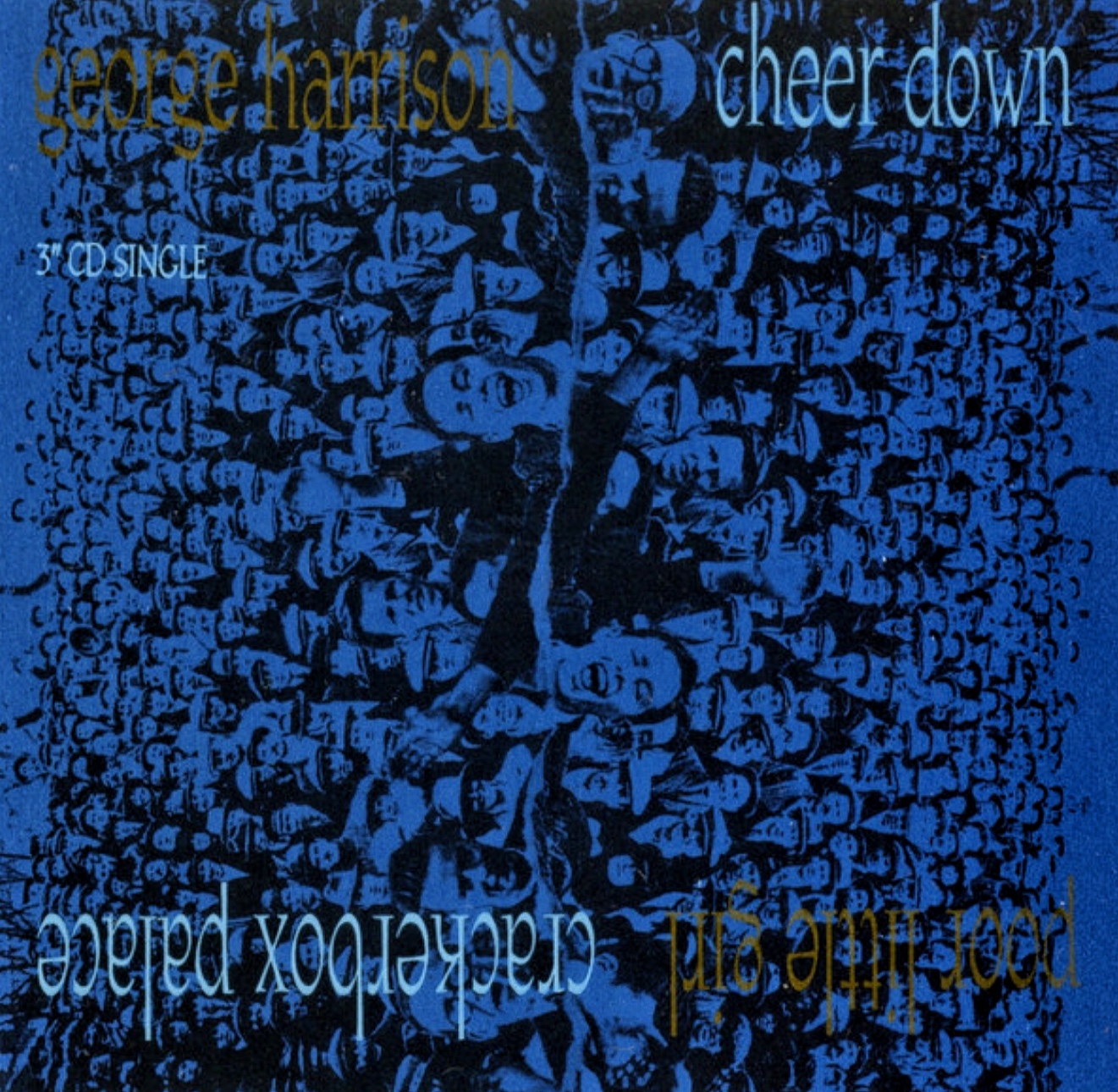
GEORGE HARRISON - CHEER DOWN


Released: August 22, 1989 (US)  November 27, 1989 (UK)


"Cheer Down" is a song by George Harrison released in 1989 as part of the soundtrack for the film Lethal Weapon 2. Co-written with Tom Petty, it also became a single and is featured on Harrison's compilation albums. Additionally, a live version with Eric Clapton can be found on Harrison's 1992 album Live in Japan. "Cheer Down" gets its title from a phrase George Harrison's wife, Olivia, used when calming him down. The song was finalized at George Harrison's FPSHOT studio in March 1989.


"Cheer Down" was initially earmarked for a subsequent solo album following George Harrison's well-received "Cloud Nine" from 1987. In collaboration with co-producers Jeff Lynne and Tom Petty, they were in the process of recording tracks for this unnamed album. However, during their California recording sessions with friends, the idea shifted, leading to the formation of the Traveling Wilburys. 


Although Harrison offered the song to Eric Clapton for his album "Journeyman," it ended up being featured in the Lethal Weapon 2 soundtrack. George decided to set aside the solo project and repurposed the existing tracks for a "Best Of" album at Warner Brothers, incorporating selections from his other Dark Horse/Warner Brothers albums.


George Harrison included "Cheer Down" in his 1991 Japanese tour with Eric Clapton, marking his first tour since 1974. This song, one of the more recent additions to Harrison's set list, stood out for featuring his slide guitar playing, a role he often delegated to Andy Fairweather-Low, Clapton's guitarist. During the concerts, Harrison humorously introduced it as a song from the musical "South Pacific". A live version of "Cheer Down" from the Tokyo Dome concert on December 15, 1991, was later featured on Harrison's 1992 double album "Live in Japan."