Total de visualitzacions de pàgina:

26.1.24


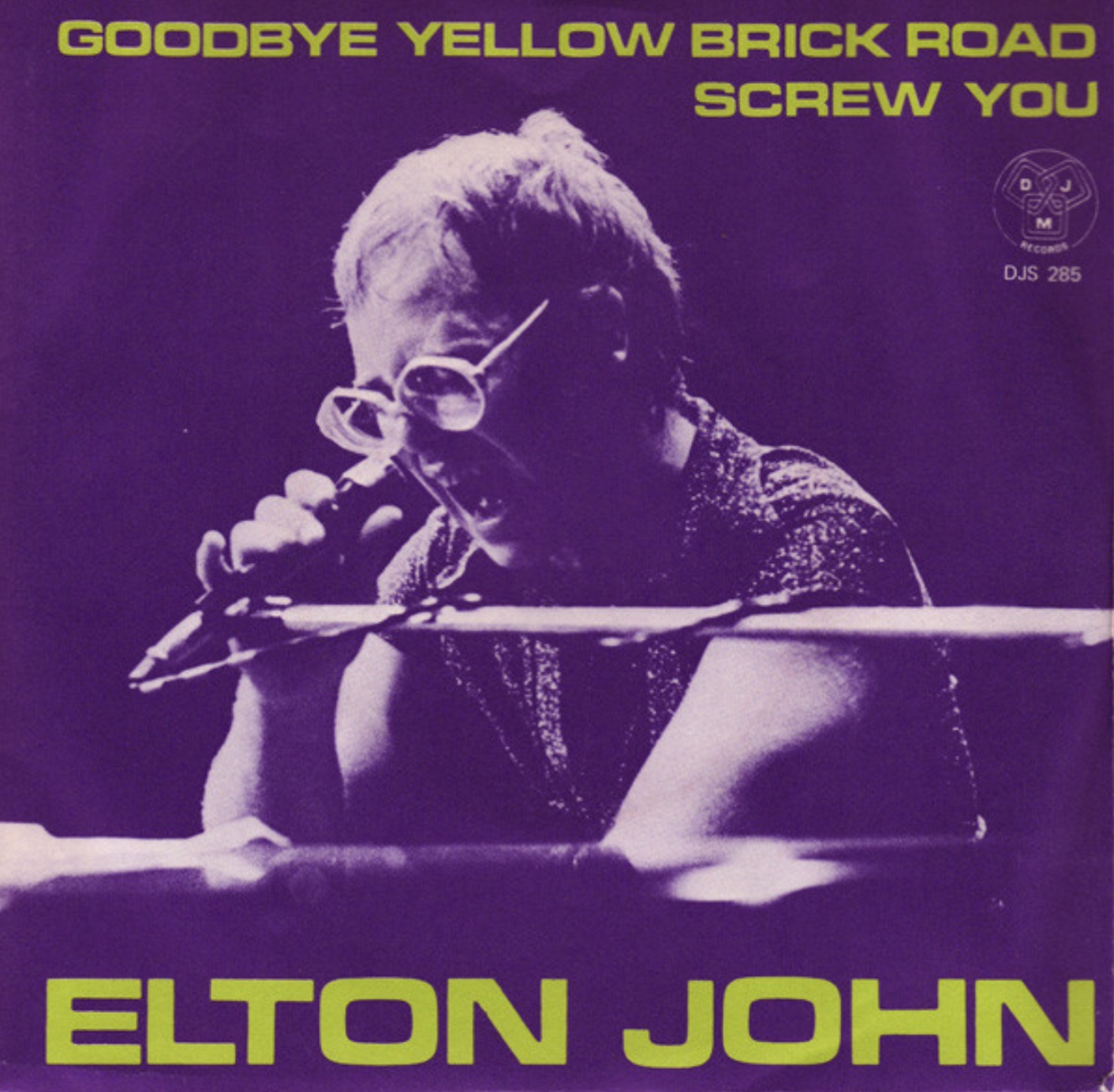
ELTON JOHN - GOODBYE YELLOW BRICK ROAD 


Publicació: 7 de setembre de 1973 (Regne Unit) 15 d'octubre de 1973 (EUA)

Llistes: Regne Unit: #6   EUA: #2


"Goodbye Yellow Brick Road" llançada el 1973 com a segon senzill de l'àlbum amb el mateix nom, va assolir un notable èxit al entrar en les llistes dels deu primers tant al Regne Unit com als Estats Units. Considerada com una de les grans interpretacions d'Elton John, la cançó ràpidament va superar en popularitat i vendes el seu senzill anterior, "Saturday Night's Alright for Fighting". "Goodbye Yellow Brick Road" és considerada per molts crítics com una de les millors pistes de tota la carrera d'Elton.


"Goodbye Yellow Brick Road" explora el tema d'abandonar una vida d'opulència per una existència més senzilla en un entorn rural. Tot i que Elton John havia experimentat una vida luxosa, la lletra, sovint malinterpretada, incorpora elements autobiogràfics de Bernie Taupin. El lletrista, que preferia una vida més discreta, va prendre inspiració de la seva infància en una granja a Lincolnshire.


La cançó captura el desig de tornar a les arrels i abraçar una vida menys extravagant. La referència al Camí daurat és presa de "El mag d'Oz", on Dorothy i els seus companys emprendran un viatge al llarg del camí daurat a la recerca del màgic Mestre d'Oz, només per adonar-se que allò que buscaven estava dins seu tot el temps. Aquest simbolisme enriqueix el significat de la cançó, posant èmfasi en el tema de la descoberta personal i la cerca d'una vida autèntica i plena.


Bernie Taupin, reflexionant sobre "Goodbye Yellow Brick Road," va compartir idees sobre la creació de la cançó i la seva connexió amb el seu viatge personal. Va expressar un record vívid en certes cançons, però amb "Yellow Brick Road", hi havia una sensació de distància. Taupin va reconèixer una fase de la seva vida en què es sentia atret per la idea de reconnectar amb les seves arrels, inspirant cançons com aquesta.


Durant aquest període, estava contemplat una existència més tranquil·la, tot i que mai va aspirar a rebutjar l'èxit. Taupin creia en trobar un punt mitjà entre l'èxit i un estil de vida més tranquil. Mirant enrere, va reconèixer que aconseguir aquest equilibri requeria navegar per reptes i guanyar experiència. Va concloure expressant gratitud per haver arribat a un punt on podia afirmar "Estic a casa", significant una sensació de satisfacció en el seu viatge personal i creatiu.


ELTON JOHN - GOODBYE YELLOW BRICK ROAD 


Released: September 7, 1973 (UK)  October 15, 1973 (US)

Charted:  UK: #6   US: #2 


"Goodbye Yellow Brick Road," released in 1973 as the second single from the album of the same name, achieved notable success by entering the top ten charts in both the United Kingdom and the United States. Regarded as one of Elton John's biggest hits, the song swiftly surpassed the popularity and sales of his preceding single, "Saturday Night's Alright for Fighting”. “Goodbye yellow brick road” is considered by many critics as one of the best in Elton's entire career.


"Goodbye Yellow Brick Road" delves into the theme of forsaking a life of opulence for a simpler existence in a rural setting. While Elton John had experienced a lavish lifestyle, the lyrics, often misconceived, actually incorporate autobiographical elements from Bernie Taupin. Taupin, preferring a more understated life, drew inspiration from his childhood on a farm in Lincolnshire.


The song captures a desire to return to one's roots and embrace a less extravagant life. The reference to the Yellow Brick Road is borrowed from "The Wizard of Oz", where Dorothy and her companions embark on a journey along the yellow brick road in search of the magical Wizard of Oz, only to realize that what they sought was within themselves all along. This symbolism enriches the song's meaning, emphasizing the theme of self-discovery and the pursuit of a genuine and fulfilling life.


Bernie Taupin, reflecting on "Goodbye Yellow Brick Road," shared insights into the song's creation and its connection to his personal journey. He expressed a vivid recollection of certain songs, but for "Yellow Brick Road," there was a sense of detachment. Taupin acknowledged a phase in his life when he was drawn to the idea of reconnecting with his roots, inspiring songs like this one.


During that period, he was contemplating a more tranquil existence, although he never aimed to reject success. Taupin believed in finding a happy medium between success and a calmer lifestyle. Looking back, he recognized that achieving this balance required navigating challenges and gaining experience. He concluded by expressing gratitude for having reached a point where he could assert, "I am home," signifying a sense of fulfillment in his personal and creative journey.


PATRICE RUSHEN - FORGET ME NOTS


Llançament: 2 d'abril de 1982

Llistes: EUA: #23   Regne Unit: #8


"Forget Me Nots" és una pista de l'àlbum del 1982 "Straight from the Heart". Amb el seu ritme contagiant i la melodia memorable, la cançó mostra l'habilitat de Rushen com a músic i compositor de R&B. La línia de baix funky i la veu plena d'ànima li han fet guanyar reconeixement, consolidant el seu estatus com un himne estimat pels amants de la música R&B arreu del món.


Des de la seva publicació, "Forget Me Nots" ha deixat una empremta indeleble a la cultura popular, ja que ha estat samplejada en diverses cançons de diferents gèneres musicals. Destaquen "Men in Black" de Will Smith (1997) i "Fastlove" de George Michael (1996) que inclouen elements de l'iconica cançó de Rushen.


"Forget Me Nots" captura el desig de preservar una connexió significativa cap a un amor que pot estar escapant-se. La lletra sincera ressona amb força en els oients, evocant una sensació de nostàlgia i anhel per allò que podria haver estat un lligam entre dues persones. No obstant, és el ritme contagiós de la cançó el que defineix veritablement el seu llegat.


El ritme de la cançó va servir com a fonament per a l'èxit de Will Smith "Men in Black", que també va donar títol a la pel·lícula blockbuster. En l'adaptació de Smith, la lletra es va reescriure per reflectir el tema de l'oblit de la memòria per part dels misteriosos Men in Black, afegint una nova capa d'intriga a la narrativa de la peça.


La perseverança i la creença de Patrice Rushen en "Forget Me Nots" van acabar portant al seu èxit, malgrat l'escepticisme inicial de la seva discogràfica, Elektra Records. Determinada a demostrar el potencial de la cançó com a èxit, Rushen va prendre el control de la situació, invertint els seus propis diners, juntament amb el productor Charles Mims, per promocionar la cançó. Enfrontant-se a la resistència del segell discogràfic, Rushen i Mims van contractar un promotor independent per impulsar "Forget Me Nots" a les emissores de ràdio i al públic. Els seus esforços van donar fruits quan la cançó ràpidament va guanyar adeptes, superant les expectatives i esdevenint una sensació. L'ascens ràpid de "Forget Me Nots" va cridar l'atenció del president d'Elektra Records, qui es va assabentar de la inversió personal de Rushen en la promoció del senzill. En reconeixement de la seva dedicació i l'èxit del disc, el segell va reemborsar Rushen els fons que havia gastat en la promoció independent.


Els forget-me-nots tenen una significació simbòlica com a flors que s'entreguen per expressar record i amor sincer. En el llenguatge de les flors, els forget-me-nots simbolitzen un amor veritable i fidel. En adoptar el nom de "Forget Me Nots" per a la seva cançó, Patrice Rushen li va donar aquest sentiment de la flor, evocant el desig de ser recordada i la naturalesa duradora de l'amor i les relacions.


PATRICE RUSHEN - FORGET ME NOTS 


Released: April 2, 1982

Charted:  US: #23   UK: #8 


"Forget Me Nots" is a standout track from the 1982 album "Straight from the Heart." With its infectious groove and memorable melody, the song showcases Rushen's prowess as an R&B musician and songwriter. The funky bassline and soulful vocals have earned it widespread acclaim, solidifying its status as a beloved anthem for R&B music lovers around the world.


Since its release, "Forget Me Nots" has left an indelible mark on popular culture, being sampled and interpolated in various songs across different musical genres. Notably, Will Smith's "Men in Black" (1997) and George Michael's "Fastlove" (1996) feature elements from Rushen's iconic track.


"Forget Me Nots" captures the sentiment of longing to preserve a meaningful connection or love that may be slipping away. The heartfelt lyrics resonate with listeners, evoking a sense of nostalgia and yearning for what could have been a lasting bond between two individuals. However, it's the song's infectious groove that truly defines its legacy.


In 1997, the song's groove served as the foundation for Will Smith's chart-topping hit "Men in Black," which also lent its title to the blockbuster movie. In Smith's adaptation, the lyrics were reworked to reflect the theme of memory erasure by the mysterious Men in Black, adding a new layer of intrigue to the song's narrative.


Patrice Rushen's perseverance and belief in "Forget Me Nots" ultimately led to its success, despite initial skepticism from her label, Elektra Records. Determined to prove the song's potential as a hit, Rushen took matters into her own hands, investing her own money, along with producer Charles Mims, to promote the track. Facing resistance from the label, Rushen and Mims hired an independent promoter to push "Forget Me Nots" to radio stations and audiences. Their efforts paid off handsomely when the song quickly gained traction, surpassing expectations and becoming a sensation. The rapid ascent of "Forget Me Nots" caught the attention of Elektra Records' president, who learned of Rushen's personal investment in promoting the song. In recognition of her dedication and the song's success, the label reimbursed Rushen for the funds she had spent on independent promotion.


Forget-me-nots indeed hold symbolic significance as flowers given to express remembrance and enduring love. In the language of flowers, forget-me-nots symbolize true and faithful love, as well as lasting connections and cherished memories. By adopting the name "Forget Me Nots" for her song, Patrice Rushen imbued it with the sentiment of the flower, evoking the desire to be remembered and the enduring nature of love and relationships.


25.1.24


THE BROTHERS JOHNSON - STOMP!

Estrena: 6 de febrer de 1980

Llistat: Regne Unit: #6 EUA: #7


"Stomp!" és una cançó de funk i dance-pop interpretada per The Brothers Johnson, llançada el 1980. La pista forma part del seu quart àlbum "Light Up the Night" i va aconseguir un notable èxit. La cançó va assegurar el primer lloc a les llistes de senzills de música dance i R&B als Estats Units, arribant al número 7 al Billboard Hot 100. Al Regne Unit, va fer la seva entrada al número 65 el 23 de febrer de 1980, pujant constantment fins al seu pic al número 6 el 30 de març de 1980, mantenint-se a les llistes de senzills del Regne Unit durant un total de 12 setmanes. A més, la cançó va dominar les llistes de singles de Nova Zelanda, ocupant la primera posició durant un impressionant total de sis setmanes el 1980.


L'energètic i entranyable himne de ball "Stomp!" va sorgir d'una directiva del productor dels Brothers Johnson, Quincy Jones, que va encarregar al seu guitarrista, George Johnson, que escrivís una cançó anomenada "Stomp!". Aquesta no era la primera vegada, ja que Jones ja li havia assignat "Get The Funk Out Ma Face" per al seu àlbum debut el 1976. George Johnson va acceptar el repte, va tornar a casa per buscar idees. Va escriure la paraula "Stomp!" i fins i tot va dibuixar una imatge d'un peu. Després d'una nit d'exploració, va crear la cançó i la va portar a l'estudi per a la sessió de la tarda, donant a llum la contagiosa i ballable "Stomp!"


L'esforç col·laboratiu darrere de "Stomp!" va implicar que George Johnson treballés a l'estudi amb el seu germà i company de banda Louis, la dona de Louis, Valerie, i el letrista/productor Rod Temperton. Quincy Jones va portar Temperton al projecte, i tots quatre col·laboradors estan acreditats com a autors de la pista. Cal destacar que Rod Temperton, conegut pel seu treball amb Heatwave i les seves col·laboracions amb Quincy Jones en el material de Michael Jackson, va escriure èxits com "Rock With You" i "Thriller". "Stomp!" es caracteritza pel seu ritme enganchós i la la seva instrumentació. Sovint es recorda per la seva qualitat ballable i ha mantingut la seva popularitat en els gèneres de funk i música dance.


"Stomp!" va marcar la culminació de l'èxit dels Brothers Johnson, tot essent el seu últim èxit rellevant. El seu àlbum "Light Up The Night", produït per Quincy Jones, també va assolir l'estatus de platí, convertint-se en el darrer dels seus quatre àlbums de platí. Després de la seva separació el 1982, els germans es van reunir esporàdicament. Entre els seus grans èxits destaquen clàssics com "Strawberry Letter 23" i "I'll Be Good To You", que han deixat una empremta duradora en el llegat musical dels Brothers Johnson.


THE BROTHERS JOHNSON - STOMP!


Released: February 6, 1980

Charted:  UK: #6   US: #7 


"Stomp!" is a funk and dance-pop song by The Brothers Johnson, released in 1980. The track is featured on their fourth album "Light Up the Night" achieved remarkable success. The song secured the top spot on the Dance singles chart, as well as the R&B singles chart in the US, peaking at number 7 on the Billboard Hot 100. In the UK, it made an entrance at number 65 on February 23, 1980, steadily climbing to its peak at number 6 by March 30, 1980, maintaining a presence on the UK Singles Chart for a total of 12 weeks. Additionally, the song dominated the New Zealand Singles Chart, claiming the number one position for an impressive six weeks in 1980.


The energetic and groovy dance anthem "Stomp!" emerged from a directive by Brothers Johnson's producer, Quincy Jones, who tasked their guitarist, George Johnson, with writing a song called "Stomp!" This was not the first time, as Jones had previously assigned him "Get The Funk Out Ma Face" for their debut album in 1976. George Johnson took on the challenge, returning home to brainstorm. He wrote down the word "Stomp!" and even drew a picture of a foot. After a night of creative exploration, he crafted the song and brought it to the studio for the afternoon session, giving birth to the infectious dance hit "Stomp!"


The collaborative effort behind "Stomp!" involved George Johnson working in the studio with his brother and bandmate Louis, Louis' wife Valerie, and the songwriter/producer Rod Temperton. Quincy Jones brought Temperton into the project, and all four contributors are credited as writers on the track. Notably, Rod Temperton, known for his work with Heatwave and collaborations with Quincy Jones on Michael Jackson's material, penned hits like "Rock With You" and "Thriller." "Stomp!" is characterized by its infectious beat, catchy hooks, and lively instrumentation. It's often celebrated for its danceable quality and has remained popular in the funk and dance music genres. 


"Stomp!" marked the culmination of success for the Brothers Johnson, serving as their final significant hit. Their album "Light Up The Night," produced by Quincy Jones, also achieved Platinum status, making it the last of their four Platinum albums. Following their split in 1982, the brothers reunited sporadically. Noteworthy among their greatest hits are classics like "Strawberry Letter 23" and "I'll Be Good To You," which have left a lasting impact on the musical legacy of the Brothers Johnson.


24.1.24


JOHN LENNON - WOMAN

Publicació: 12 de gener de 1981

Llistes: Regne Unit: #1 (2 setmanes)  EUA: #2 


"Woman" és una cançó escrita com un oda a la seva dona, Yoko Ono, inclosa al seu àlbum de 1980 "Double Fantasy". Escollida com a segon senzill de l'àlbum, es va convertir en el primer llançament pòstum de Lennon després del seu tràgic assassinat el 8 de desembre de 1980. La cara B del senzill presenta la cançó de Yoko Ono "Beautiful Boys". La pista comença amb Lennon xiuxiuejant "For the other half of the sky", una frase inspirada en un proverb xinès utilitzada prèviament per Mao Zedong. Lennon considerava "Woman" la cançó més similar als Beatles a "Double Fantasy", comparant-la com una actualització dels anys 80 de "Girl" de l'àlbum "Rubber Soul".


En una reflexió amb Rolling Stone poc abans de la seva tràgica mort, John Lennon va compartir la inspiració darrere de "Woman": "De cop vaig entendre el que fan les dones per nosaltres. No només el que la meva Yoko fa per mi, tot i que ho pensava en termes personals... sinó que qualsevol veritat és universal." Lennon va reconèixer la importància de les dones i la seva contribució, descrivint-les com "l'altre meitat del cel", un sentiment que es repeteix al començament de la cançó. "Woman" serveix com a disculpa de Lennon a Yoko pels reptes que va experimentar el seu matrimoni durant el "Lost Weekend", un període d'uns 18 mesos a principis dels anys 70 quan es van separar temporalment.


El film promocional de "Woman" creat per Yoko Ono al gener de 1981 ofereix una visió commovedora dels moments íntims de John i Yoko. Filmada a Central Park, prop de l'icònic Strawberry Fields davant de The Dakota, el vídeo captura els passejos reflexius de la parella. Dirigit pel fotògraf Ethan Russell el 26 de novembre de 1980, les imatges es barregen amb imatges de Yoko sola i presenten cobertura de premsa de l'assassinat tràgic de Lennon, creant una narrativa visual potent entorn de la cançó.


"Woman" va tenir un fort impacte a les llistes, debutant al número tres a la nativa UK de John Lennon. Va pujar gradualment al número dos abans d'assegurar-se el primer lloc durant dues setmanes. La substitució de "Imagine" per "Woman" va marcar un moment històric únic. Va ser la primera vegada des de 1963, quan The Beatles van aconseguir-ho amb "She Loves You" i "I Want To Hold Your Hand", que un artista va reemplaçar una cançó pròpia en la posició número 1 a les llistes del Regne Unit. Als Estats Units, el single va arribar al número dos al Billboard Hot 100, enfrontant-se a la competència de "Keep On Loving You" de REO Speedwagon i "Rapture" de Blondie.


JOHN LENNON - WOMAN


Released: January 12, 1981

Charted:  UK: #1 (2 weeks)  US: #2 


"Woman" is a heartfelt song written as an ode to his wife, Yoko Ono, featured on his 1980 album “Double Fantasy”. Chosen as the second single from the album, it became Lennon's first posthumous release after his tragic murder on December 8, 1980. The B-side of the single features Yoko Ono's song "Beautiful Boys". The track commences with Lennon whispering, "For the other half of the sky", a phrase inspired by a Chinese proverb previously used by Mao Zedong. Lennon considered "Woman" the most Beatles-like track on Double Fantasy, likening it to an '80s update of "Girl" from the “Rubber Soul” album.


In a poignant reflection with Rolling Stone shortly before his tragic death, John Lennon shared the inspiration behind "Woman": "It suddenly hit me what women do for us. Not just what my Yoko does for me, although I was thinking in those personal terms... but any truth is universal." Lennon recognized the significance of women and what they contribute, describing them as "the other half of the sky," a sentiment echoed at the beginning of the song. In many ways, "Woman" serves as Lennon's apology to Yoko for the challenges their marriage faced during the "Lost Weekend", a period of about 18 months in the early '70s when they temporarily separated.


The promotional film for "Woman" created by Yoko Ono in January 1981 offers a poignant glimpse into the intimate moments of John Lennon and Yoko Ono. Filmed in Central Park, near the iconic Strawberry Fields across from The Dakota, the video captures the couple's reflective strolls. Directed by photographer Ethan Russell on 26 November 1980, the footage blends with images of Ono alone and features newspaper coverage of Lennon's tragic murder, creating a powerful visual narrative around the song.


"Woman" made a strong impact on the charts, debuting at number three in John Lennon's native UK. It gradually climbed to number two before securing the top spot for two weeks. "Woman" replacing "Imagine" marked a unique historical moment. It was the first instance since 1963, when The Beatles accomplished the feat with "She Loves You" and "I Want To Hold Your Hand", that an artist replaced their own song at the #1 position on the UK charts. In the United States, the single reached number two on the Billboard Hot 100, facing competition from REO Speedwagon's "Keep On Loving You" and Blondie's "Rapture".