Total de visualitzacions de pàgina:

4.2.24


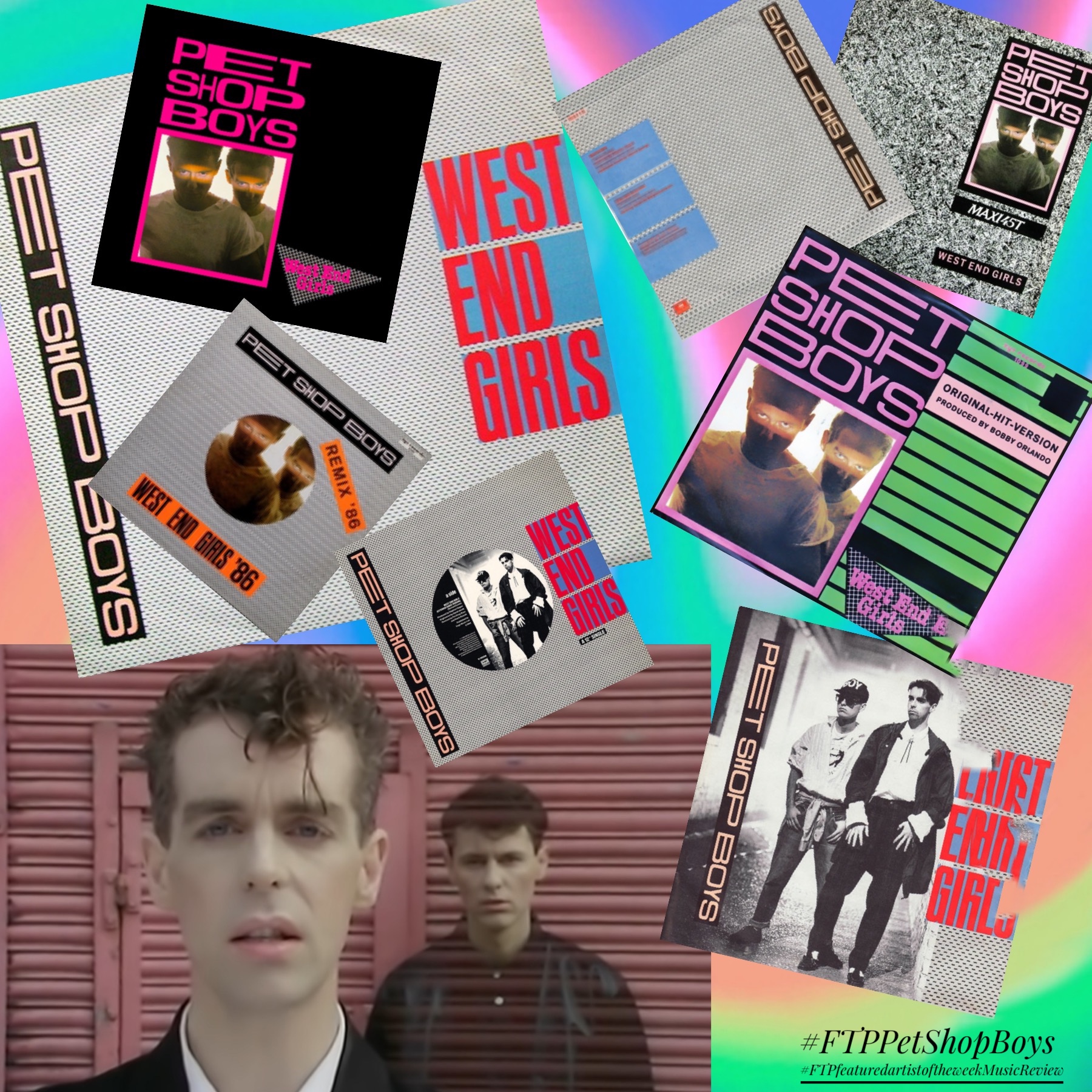
PET SHOP BOYS - WEST END GIRLS


Publicació: 9 d'abril de 1984 (versió de Bobby Orlando)

28 d'octubre de 1985 (versió de Stephen Hague)

Llistes: EUA: #1 (1 setmana) Regne Unit: #1 (2 setmanes)


"West End Girls" és un viatge per l'escena dels clubs de Londres, on els Pet Shop Boys Neil Tennant i Chris Lowe van passar moltes vetllades. El glamurós West End és on hi havia l'acció, en contrast amb l'East End més aspre. Aquest va ser el gran èxit de Pet Shop Boys, un èxit mundial que va arribar al número 1 tant a Amèrica com al seu Regne Unit natal. La versió d'èxit no es va publicar fins un any després de l'original.


El grup va escriure la cançó el 1983 abans de tenir un contracte discogràfic. Hi ha una sèrie de temes recurrents a la lletra que Tennant va escriure, però una idea clau és escapar de la vida nocturna. El 2020, Tennant va dir a The Guardian: "tracta sobre la ciutat a la nit. Tracta de nois i noies que es reuneixen per divertir-se i, presumiblement per enrrollar-se. Tracta de sexe. És paranoic".


Neil Tennant va ser redactor a  la revista musical britànica Smash Hits. La cançó no podria existir sense l'experiència de Tennant com a crític de pop, el seu amor pels sons underground o la seva perspectiva inexpresiva. Amb la cançó, ell i Lowe gairebé accidentalment van ensopegar amb un so que, contra tot pronòstic, va ressonar com a música pop a tot el món.


El 1983, Smash Hits va enviar Tennant a Nova York per entrevistar The Police, un grup la música del qual no li agradava gaire. Mentre Tennant era a Nova York va conèixer a Bobby Orlando, un productor que feia música underground, Jams de ball NRG que tant a Tennant com a Lowe els agradava. Orlando va escoltar les demos de Tennant i va acceptar produir els Pet Shop Boys, així que ell i Lowe van tornar a Nova York poc després per gravar algunes cançons amb Bobby O, nom amb el qual era reconegut el productor. Una d'aquestes cançons va ser "West End Girls", una història impressionista del glamour urbà de Londres i també sobre la seva miserabilitat. Els nois de l'East End de Tennant són els joves bruts de la classe treballadora de Londres; Les noies del West End són les dones joves riques que se senten atretes per aquest tipus de nois. No hi ha cap narrativa real a "West End Girls". En canvi, Tennant reflexiona sobre la classe i l'atracció que produeixen els pols oposats i sobre l'amenaça de violència que s'amaga sota la superfície d'aquestes interaccions. Canvia la frase dels Sex Pistols sobre "there is no future for you”: “We have no future, we have no past/ Here today, built to last.” (no hi ha futur per a tu": "No tenim futur, no tenim passat / Aquí avui, construït per durar). Tennant també fa al·lusió a la manera com el conflicte de classes reapareix al llarg de la història, esmentant el retorn de Vladimir Lenin a Rússia des d'Alemanya: "In every city, in every nation / From Lake Geneva to Finland Station” (A cada ciutat, a cada nació / Del llac de Ginebra a l'estació de Finlàndia). "West End Girls" comença amb Tennant oferint una imatge de desesperació: "Sometimes, you’re better off dead/ There’s a gun in your hand, and it’s pointed at your head”. (De vegades, estàs millor mort/ tens una pistola a la mà i t'apunta al cap). Tennant ha dit que es va inspirar tant en el poema modernista de TS Eliot de 1922, "The Waste Land", com en el clàssic de rap urbà de 1982 de Grandmaster Flash And The Furious Five, "The Message".


Hi ha una cruesa brillant i atractiva a la versió d'Orlando de "West End Girls", que la va fer diferent a qualsevol cosa que havia fet abans. Fins i tot el seu ritme era més lent. El van gravar i el seu segell O Records va aconseguir un acord amb Epic Records per llançar-la com a senzill. Publicat el 1984, el single va tenir un bon rendiment a França i Bèlgica, arribant a les llistes d'ambdós països, però va tenir poc impacte en altres llocs. La cançó també va funcionar bé als clubs de ball d'algunes ciutats americanes.


Tennant i Lowe van trobar un agent que els va aconseguir un tracte amb EMI. Això va significar que van haver de deixar Bobby Orlando, la qual cosa va acabar en una batalla legal i els va impedir gravar noves cançons durant més d'un any. El duet no va obtenir els drets per publicar la versió d'Orlando de "West End Girls", així que van decidir tornar a gravar-la i també totes les cançons que havien gravat amb ell. I aquí ve Stephen Hague, un productor nord-americà que havia treballat amb alguns grups britànics de la New Wave. EMI va llançar "Opportunities (Let's make lots of money)" com el seu primer senzill al segell. No va funcionar però encara tenien esperances per a "West End Girls".


La versió de "West End Girls" de Stephen Hague és la que es va fer popular. Hague va fer la cançó més elegant amb nous efectes de so, transformant-la en quelcom més cinematogràfic. La bateria d'Hague sona menys com "Billie Jean", afegint-hi brunzits, trompetes i cors amarats d'eco de la cantant Helena Springs. La versió de Hague va sortir a finals de 1985, un any i mig després de la versió original d'Orlando.


En el seu nou llançament "West End Girls" és una cançó pop rica i innovadora que conserva part de la puresa de la original. Neil Tennant sembla rapejar però no rapeja, tot i que tampoc canta. Més aviat, sembla un narrador que descriu desapassionadament escenes de passió, sonant divertit i desconcertat. Transmet una sensació de misteri millorada encara més al vídeo.


Al clip dirigit per Andy Morahan, director habitual de Wham!, i el fotògraf de Smash Hits Eric Watson, Tennant i Lowe passegen amb la cara en blanc per Londres, sense semblar mai sorpresos ni emocionats. La majoria de les vegades, Lowe és semitransparent, com un fantasma.


"West End Girls" és una gran cançó que es va convertir en un veritable èxit mundial, un disc número u al Regne Unit, als EUA i també a altres països. The Guardian la va col·locar al número 1 de la seva llista del 2020 dels 100 millors singles del Regne Unit de tots els temps. En general, va ser ben rebuda pels crítics de música contemporània i s'ha citat sovint com un moment destacat en la carrera del duet. Potser realment hi ha nois de l'East End i noies del West End a totes les ciutats, a totes les nacions del món.


PET SHOP BOYS - WEST END GIRLS


Released: April 9, 1984 (Bobby Orlando version)

October 28, 1985 (Stephen Hague version)

Charted:  US: #1 (1 wk)   UK: #1 (2 wks)


"West End Girls" is a journey through the club scene in London, where Pet Shop Boys Neil Tennant and Chris Lowe spent many evenings. The glamorous West End is where the action was, contrasting with the rougher East End. This was the breakout hit for Pet Shop Boys, a global smash that went to #1 in both America and their native UK. The hit version, thought, wasn't released until a year after the original.


The group wrote the song in 1983 before they had a record deal. There are a number of themes running through the lyric, which Tennant wrote, but a key idea is nightlife escape. In 2020, Tennant told The Guardian: "It's about the city at night. It's about boys and girls meeting to have fun and presumably to bond. It's about sex. It's paranoid." 


Neil Tennant was a writer for the UK music magazine Smash Hits. The song couldn't exist without Tennant's experience as a pop critic, his love of underground sounds or his deadpan outsider perspective. With the song, he and Lowe almost accidentally stumbled upon a sound that, against all odds, resonated as pop music worldwide.


In 1983, Smash Hits sent Tennant to New York to interview The Police, a group whose music he didn't much like. While Tennant was in New York he met Bobby Orlando, a producer who made underground music. -NRG dance jams that both Tennant and Lowe loved. Orlando heard Tennant's demos and agreed to produce the Pet Shop Boys, so he and Lowe returned to New York shortly after to record some songs with Bobby O, the name by which the producer was recognized. One of those songs was "West End Girls," an impressionistic tale of London's urban glamor and its squalor. Tennant's East End boys are the young brutes of London's working class; West End girls are the wealthy young women who are attracted to that kind of guy. There is no real narrative in “West End Girls.” Instead, Tennant reflects on class and the attraction that produces polar opposites and on the threat of violence that lurks beneath the surface of those interactions. Change the Sex Pistols' line about “there is no future for you”: “We have no future, we have no past/ Here today, built to last.” Tennant also alludes to the way class conflict reappears throughout history, mentioning Vladimir Lenin's return to Russia from Germany: “In every city, in every nation / From Lake Geneva to Finland Station”. “West End Girls” begins with Tennant distracting himself from an image of despair: “Sometimes, you’re better off dead/ There’s a gun in your hand, and it’s pointed at your head”. Tennant has said that he was inspired by both TS Eliot's 1922 modernist poem, “The Waste Land”, and Grandmaster Flash And The Furious Five's 1982 urban rap classic, "The Message".


There's a bright, appealing rawness to Orlando's version of “West End Girls,” which made it unlike anything he'd done before. Even his pace was slower. They recorded it and his label O Records got a deal with Epic Records to release it as a single. Issued in 1984, it did well in France and Belgium, reaching the charts in both countries,but had little impact elsewhere. The song also did well in dance clubs in some American cities.


Tennant and Lowe found an agent who got them a deal with EMI. This meant they had to leave Bobby Orlando, which ended in a legal battle and prevented them from recording new songs for over a year. The duo did not obtain the rights to release the Orlando version of “West End Girls”, so they decided to re-record it again and also all the songs they had recorded with him. And here comes Stephen Hague, an American producer who had worked with some British New Wave acts. EMI released "Opportunities (Let’s make lots of money)" as their first single on the label. It stiffed, but they still had hopes for "West End Girls".


Stephen Hague's version of “West End Girls” is the one that became popular. Hague made the song sleeker with new sound effects, transforming it into something more cinematic. Hague's drums sound less like “Billie Jean,” adding hazy hums, lone trumpets, and echo-soaked backing vocals from singer Helena Springs. Hague's version came out in late 1985, a year and a half after Orlando's original version.


In its final release, “West End Girls” is a rich, innovative pop song that retains some of the purity of its original. Neil Tennant seems to rap but he doesn't rap, although he doesn't sing either. Rather, he seems like a narrator dispassionately describing scenes of passion, sounding both amused and bewildered. It conveys a sense of mystery enhanced even more in the video.


In the clip directed by Andy Morahan, regular director of Wham!, and Smash Hits photographer Eric Watson, Tennant and Lowe wander blank-faced around London, never seeming surprised or excited. Most of the time, Lowe is semi-transparent, like a ghost.


“West End Girls” is a great song that became a true global hit, a number one record in the UK, in the US and as well as in other countries. The Guardian placed it at #1 on their 2020 list of the top 100 UK #1 singles of all time. It was generally well received by contemporary music critics and has been frequently cited as a highlight in the duo's career. Maybe there really are East End boys and West End girls in every city, in every nation around the globe.


BILL MEDLEY & JENNIFER WARNESS - (I’VE HAD) THE TIME OF MY LIFE


Estrena: 10 de juliol de 1987

Llistes: Regne Unit: #6   EUA: #1 (1 setmana)


"(I've Had) The Time of My Life" és una cançó del 1987 composta per Franke Previte, John DeNicola i Donald Markowitz. Enregistrada per Bill Medley i Jennifer Warnes, va servir com a cançó principal de la pel·lícula del 1987 Dirty Dancing. La cançó ha guanyat diversos reconeixements, incloent-hi l'Oscar a la Millor Cançó Original, el Globus d'Or a la Millor Cançó Original i el Grammy a la Millor Actuació Pop per un Duo o Grup Vocal. La banda sonora de Dirty Dancing va mantenir-se al número 1 de les llistes de Billboard durant 18 setmanes consecutives i ha venut més de 48 milions de còpies a tot el món.


La reticència inicial de Bill Medley a gravar un senzill de la banda sonora per a Dirty Dancing provenia d'experiències passades i percepcions sobre el títol de la pel·lícula. El moment crucial va arribar quan Jennifer Warnes, una cantant que admirava profundament, va acceptar col·laborar en el projecte durant una sessió d'enregistrament a Los Angeles. Les circumstàncies personals de Medley, incloent-hi l'arribada imminent del seu fill, també van jugar un paper en el seu procés de presa de decisions. La persistència de Jimmy Ienner i la disposició de Warnes a treballar amb Medley van acabar influint en la seva decisió, destacant la importància de les relacions personals i el moment en el procés creatiu. Aquesta confluència de factors va obrir pas al duet icònic "(I've Had) The Time of My Life", que es va convertir en un clàssic intemporal associat a la pel·lícula.


La comparació de Jennifer Warnes de cantar amb Bill Medley amb ballar amb Fred Astaire posa de manifest la química i sinergia musical que compartien. Mentre Bill Medley és conegut com la meitat dels Righteous Brothers, Jennifer Warnes també ha assolit un èxit significatiu a través dels seus duets. A més de "(I've Had) The Time of My Life", va encapçalar les llistes americanes el 1982 amb "Up Where We Belong", un duet amb Joe Cocker que es va incloure a la banda sonora de la pel·lícula "An Officer And A Gentleman".


Es va considerar una cançó de Lionel Richie per al ball final de Dirty Dancing. No obstant això, el coreògraf Kenny Ortega i la seva assistent Miranda Garrison van optar per una demo de "(I've Had) The Time of My Life". La pista de Warnes/Medley no estava llesta a temps per a la filmació del final de la pel·lícula a causa de restriccions pressupostàries. Com a resultat, la versió més lleugera i jove de Franke Previte i Rachele Cappelli va servir com a pista de fons, permetent als actors i ballarins, inclosos Patrick Swayze i Jennifer Grey, interpretar la música durant la filmació. Tot i que la demo finalment no es va utilitzar en el tall final de la pel·lícula, una posterior versió més polida amb Bill Medley i Jennifer Warnes va esdevenir el tema icònic.


El vídeo musical de "(I've Had) The Time of My Life" es va produir a l'octubre de 1987. Mostra diverses parelles ballant, comparables a les escenes icòniques de la pel·lícula. A més, es van incorporar fragments de la pel·lícula al vídeo.


BILL MEDLEY & JENNIFER WARNESS - (I’VE HAD) THE TIME OF MY LIFE 


Released: July 10, 1987

Charted:  UK: #6   US: #1 (1 week)


"(I've Had) The Time of My Life" is a 1987 song composed by Franke Previte, John DeNicola, and Donald Markowitz. Recorded by Bill Medley and Jennifer Warnes, it served as the theme song for the 1987 film Dirty Dancing. The song has earned several accolades, including the Academy Award for Best Original Song, the Golden Globe Award for Best Original Song, and the Grammy Award for Best Pop Performance by a Duo or Group with Vocals. The Dirty Dancing soundtrack stayed at #1 on the Billboard charts for 18 straight weeks and has sold over 48 million copies worldwide.


Bill Medley's initial reluctance to record a soundtrack single for Dirty Dancing stemmed from past experiences and perceptions about the film's title. The pivotal moment came when Jennifer Warnes, a singer he deeply admired, agreed to collaborate on the project during a recording session in Los Angeles. Medley's personal circumstances, including the imminent arrival of his child, also played a role in his decision-making process. Jimmy Ienner's persistence and Warnes' willingness to work with Medley ultimately swayed his decision, highlighting the importance of personal relationships and timing in the creative process. This convergence of factors paved the way for the iconic duet "(I've Had) The Time of My Life," which went on to become a timeless classic associated with the film.


Jennifer Warnes' comparison of singing with Bill Medley to dancing with Fred Astaire underscores the chemistry and musical synergy they shared. While Bill Medley is renowned as one half of the Righteous Brothers, Jennifer Warnes has also achieved significant success through her duets. In addition to "(I've Had) The Time of My Life," she topped the American charts in 1982 with "Up Where We Belong," a duet with Joe Cocker featured in the soundtrack of the film “An Officer And A Gentleman”.


A song by Lionel Richie was considered for the finale of Dirty Dancing. However, choreographer Kenny Ortega and his assistant Miranda Garrison opted for a demo of  "(I've Had) The Time of My Life" instead. The Warnes/Medley track wasn't ready in time for the filming of the finale due to budget constraints. As a result, Franke Previte and Rachele Cappelli's lighter and more youthful version served as the backing track, allowing the actors and dancers, including Patrick Swayze and Jennifer Grey, to perform to the music during filming. Although the demo wasn't ultimately used in the final cut of the film, a more polished version with Bill Medley and Jennifer Warnes became the iconic theme.


The music video for "(I've Had) The Time of My Life" was produced in October 1987. It showcases several couples dancing, reminiscent of the iconic scenes from the movie. Additionally, clips from the film were incorporated into the video. 


KENNY LOGGINS - FOOTLOOSE


Publicació: 11 de gener de 1984

Llistes: Regne Unit: #6   EUA: #1 (3 setmanes)


"Footloose" és una cançó coescrita i enregistrada pel cantautor nord-americà Kenny Loggins. Llançada al gener de 1984, va servir com el primer dels dos senzills de Loggins de la pel·lícula del 1984 del mateix nom (l'altre és "I'm Free (Heaven Helps the Man)"). La cançó va gaudir d'un èxit significatiu, passant tres setmanes al número u dels Estats Units al Billboard Hot 100 des del 31 de març fins al 14 d'abril de 1984. Va significar l'únic número u de Loggins i va ser el primer dels dos èxits al número u de la pel·lícula.


"Footloose" va servir com a tema principal de la pel·lícula protagonitzada per Kevin Bacon en el seu paper d'enlairament. Curiosament, Rob Lowe i Tom Cruise també van fer proves per al paper. La pel·lícula segueix un adolescent que es muda a una petita ciutat on ballar és il·legal. Dean Pitchford, qui va escriure el guió i les lletres de totes les cançons de la pel·lícula, es va inspirar en un article de diari de 1979 sobre Elmore City, Oklahoma. A la ciutat, una llei contra el ball existia des dels anys 1800. No obstant això, 14 estudiants de l'últim any de secundària van aconseguir convèncer el consell de la ciutat per derogar la prohibició perquè poguessin tenir un ball de graduació. Pitchford es va immergir en la cultura d'Elmore City durant una visita de recerca d'una setmana mentre desenvolupava el guió.


L'ús de diversos noms propis a "Footloose" afegeix un toc distintiu a la cançó. Louise, Jack, Marie i Milo s'esmenten en la lletra. Marie va ser inspirada per la mare de Dean Pitchford, mentre que Milo va ser la contribució de Kenny Loggins perquè li agradava el so de les vocals. Pitchford va mencionar: "Un cop vaig trobar la idea per a la cançó amb el 'Oo-wee, Marie, shake it shake it for me', vam decidir d'utilitzar noms al llarg de la tornada i cantar 'Jack, get back, come on before we crack', un cop això es va lligar, Loggins va afegir Milo perquè li agradava com li sonaven les paraules a la boca."


La banda sonora de la pel·lícula Footloose va ser un èxit massiu, donant sis èxits al Top 40 dels Estats Units de les nou cançons originals. Llançat el 17 de febrer de 1984, per la setmana del 14 d'abril, quatre cançons de la pel·lícula estaven simultàniament al Top 40: la pista titular, "Let's Hear It For The Boy" de Deniece Williams, "Holding Out For A Hero" de Bonnie Tyler i "Dancing in the Sheets" de Shalamar. "Almost Paradise" va entrar a la llista al maig i es va convertir en un èxit núm. 1 a Adult Contemporary, mentre que l'últim senzill, "I'm Free (Heaven Helps The Man)" de Kenny Loggins, va tancar el seguit d’èxits. Una altra cançó notable de la pel·lícula, "The Girl Gets Around" de Sammy Hagar, no es va llançar com a senzill.


Dean Pitchford, qui va escriure les lletres de totes les cançons, va col·laborar amb diversos co-compositors per aconseguir una gamma diversa d'estils i evitar la repetició al llarg de la banda sonora. Aquest enfocament estratègic va contribuir a l'èxit de la banda sonora, amb l'àlbum passant 10 setmanes al número 1 de les llistes, desplaçant l'icònic àlbum “Thriller” de Michael Jackson del primer lloc als Estats Units.


KENNY LOGGINS - FOOTLOOSE 


Released:  January 11, 1984 

Charted:  UK: #6    US: #1 (3 weeks)


"Footloose" is a song co-written and recorded by American singer-songwriter Kenny Loggins. Released in January 1984, it served as the first of two singles by Loggins from the 1984 film of the same name (the other being "I'm Free (Heaven Helps the Man)"). The song enjoyed significant success, spending three weeks at number one on the US Billboard Hot 100 from March 31 to April 14, 1984. It marked Loggins' only chart-topper and was the first of two number-one hits from the film.


"Footloose" served as the main theme from the movie starring Kevin Bacon in his breakout role. Interestingly, Rob Lowe and Tom Cruise also auditioned for the part. The film follows a teenager who moves to a small town where dancing is illegal. Dean Pitchford, who wrote the screenplay and the lyrics to all the songs in the movie, drew inspiration from a 1979 newspaper article about Elmore City, Oklahoma. In the town, a law against dancing had been in place since the 1800s. However, 14 high school seniors successfully lobbied the town council to overturn the ban so they could have a prom. Pitchford immersed himself in the culture of Elmore City during a week-long research visit while developing the screenplay.


The use of various names in "Footloose" adds a distinctive songwriting touch to the track. Louise, Jack, Marie, and Milo are all mentioned in the lyrics. Marie was inspired by Dean Pitchford's mother, while Milo was Kenny Loggins' contribution because he liked the sound of the vowels. Pitchford mentioned, "Once I had cracked the back of the song with the 'Oo-wee, Marie, shake it shake it for me,' once we had the idea of using names throughout the chorus and calling out, 'Jack, get back, come on before we crack,' once that had been set up as a convention, he threw out Milo because he liked the way that the words felt in his mouth."


The Footloose movie soundtrack was a massive success, yielding six Top 40 US hits out of its nine original songs. Released on February 17, 1984, by the week of April 14, four songs from the movie were simultaneously in the Top 40: the title track, "Let's Hear It For The Boy" by Deniece Williams, "Holding Out For A Hero" by Bonnie Tyler, and "Dancing in the Sheets" by Shalamar. "Almost Paradise" entered the chart in May and became a #1 Adult Contemporary hit, while the last single, "I'm Free (Heaven Helps The Man)" by Kenny Loggins, rounded out the hits. Another notable song in the film, "The Girl Gets Around" by Sammy Hagar, wasn't released as a single.


Dean Pitchford, who wrote the lyrics to all the songs, collaborated with various co-writers to achieve a diverse range of styles and avoid repetition throughout the soundtrack. This strategic approach contributed to the soundtrack's crossover success, with the album spending 10 weeks at #1 on the charts, displacing Michael Jackson's iconic “Thriller” album from the top spot in the US.


DENIECE WILLIAMS - LET’S HEAR IT FOR THE BOY


Publicació: 14 de febrer de 1984

Llistes: Regne Unit: #2   EUA: #1 (2 setmanes)


"Let's Hear It for the Boy" és una cançó de Deniece Williams que va aparèixer a la banda sonora de Footloose. Llançada com a senzill, la cançó va guanyar ràpidament popularitat. Escrita per Tom Snow i Dean Pitchford, i produïda per George Duke, va assolir el primer lloc de la llista dels èxits dels Estats Units, el Billboard Hot 100, el 26 de maig de 1984, marcant el segon número u de Williams. La cançó també va arribar al cim de les llistes de música dance i R&B.


Tot i que va arribar al número dos a la UK Singles Chart, darrere de "Wake Me Up Before You Go-Go" de Wham!, va gaudir d'un gran èxit internacional. "Let's Hear It for the Boy" va rebre una nominació als premis de l'Acadèmia a la millor cançó original i va aconseguir la certificació de platí als Estats Units, així com la certificació d'or al Canadà i al Regne Unit, per part de la Recording Industry Association of America, Music Canada, i la British Phonographic Industry, respectivament.


La col·laboració de Dean Pitchford amb Tom Snow en "Let's Hear It for the Boy" per a la pel·lícula Footloose va marcar un altre èxit per al compositor, conegut pel seu treball a Fame. La primera cançó per a l'escena, "Somebody's Eyes", no connectava, la qual cosa va portar Pitchford a crear una peça més animada centrada en la línia "Let's hear it for the boy". Deniece Williams, amb el seu bagatge i afecte per la narrativa de la petita ciutat a Footloose, va trobar la cançó fascinant.


George Merrill i Shannon Rubicam de Boy Meets Girl van proporcionar les veus de suport per a la interpretació de Deniece Williams. El duo va gaudir de l’èxit amb la seva pròpia cançó "Waiting for a Star to Fall" el 1988. A més, van escriure les cançons de Whitney Houston "How Will I Know" i "I Wanna Dance with Somebody (Who Loves Me)". La sessió va ser supervisada pel teclista de jazz/funk George Duke, amb els compositors Tom Snow i Dean Pitchford també presents.


El videoclip presenta Deniece Williams al costat de diversos joves, incloent-hi el cantant Aaron Lohr, que interpreta el jove al videoclip. A la pel·lícula, la cançó s'utilitza en una escena on el personatge de Kevin Bacon intenta ensenyar a ballar al personatge de Christopher Penn, amb Penn lluitant per seguir el ritme.


DENIECE WILLIAMS - LET’S HEAR IT FOR THE BOY


Released:  February 14, 1984

Charted:  UK: #2   US: #1 (2 weeks)


"Let's Hear It for the Boy" is a song by Deniece Williams that featured on the Footloose soundtrack. Released as a single the song quickly gained popularity. Written by Tom Snow and Dean Pitchford, and produced by George Duke, it soared to the top of the US Billboard Hot 100 on May 26, 1984, marking Williams' second number one hit. The song also reached the pinnacle of the dance and R&B charts. 


Although it peaked at number two on the UK Singles Chart, behind "Wake Me Up Before You Go-Go" by Wham!, it still enjoyed significant success internationally. "Let's Hear It for the Boy" received an Academy Award nomination for Best Original Song, and achieved platinum certification in the US, as well as gold certification in Canada and the UK, by the Recording Industry Association of America, Music Canada, and the British Phonographic Industry, respectively.


Dean Pitchford's collaboration with Tom Snow on "Let's Hear It for the Boy" for the movie Footloose marked another success for the songwriter, known for his work on Fame. The initial song for the scene, "Somebody's Eyes," wasn't resonating, prompting Pitchford to craft a more uplifting piece centered around the line "Let's hear it for the boy." Deniece Williams, with her background and affinity for the small-town narrative in Footloose, found the song compelling.


George Merrill and Shannon Rubicam of Boy Meets Girl provided backup vocals for Deniece Williams' rendition of "Let's Hear It for the Boy." The duo later found success with their own hit "Waiting for a Star to Fall" in 1988. Additionally, they penned Whitney Houston's songs "How Will I Know" and "I Wanna Dance with Somebody (Who Loves Me)." The session was overseen by jazz/funk keyboardist George Duke, with songwriters Tom Snow and Dean Pitchford also present.


The music video features Deniece Williams alongside several young men, including the singer Aaron Lohr, who portrays the young boy in the video. In the film the song is used in a scene where Kevin Bacon's character tries to teach Christopher Penn's character how to dance, with Penn's character struggling to keep up.