Total de visualitzacions de pàgina:

5.2.24


THE CRANBERRIES - ZOMBIE


Publicació: 19 de setembre de 1994

Llistes: Regne Unit: #14


"Zombie" és una cançó de protesta de la banda irlandesa de rock alternatiu The Cranberries, escrita per la cantant principal de la banda, Dolores O'Riordan, sobre els problemes a Irlanda del Nord. Va ser llançada com el senzill principal del seu segon àlbum d'estudi de 1994, "No Need to Argue", dues setmanes abans del llançament de l'àlbum. Els crítics musicals han reconegut durant molt temps "Zombie" com "una obra mestra del rock alternatiu", així com un número grunge poc característic de l'altre treball de la banda.


La cançó es va inspirar en l'atemptat de l'IRA a Warrington, Cheshire, Anglaterra, el 20 de març de 1993. Dos nens van ser assassinats. L'IRA (Exèrcit Republicà Irlandès) és un grup militant decidit a retirar les tropes britàniques d'Irlanda del Nord. La cantant Dolores O'Riordan va afirmar que "Zombie" parla de "la lluita irlandesa per la independència que sembla durar per sempre". La lletra fins i tot diu: "És el mateix tema des del 1916". Igual que les obres de Yeats, Heaney i U2, els Cranberries afirmen que van escriure "Zombie" per ser una "cançó per a la pau entre Anglaterra i Irlanda. Aquesta cançó pren la posició inexpugnable que matar nens petits és tràgic, però en aventurar-se en la lluita política, va crear una gran polèmica, cosa que no va sorprendre a O'Riordan. "Sabia que aquest seria el punt de vista de la cançó, perquè era controvertit", va dir. "Però suposo que em vaig conformar per la sorpresa de l'èxit de la cançó. No sabia que triomfaría tant".


El vídeo va ser filmat per Samuel Bayer, que va volar a Belfast per a obtenir imatges de la zona poc abans de l’alto el foc, i mostra soldats britànics reals i nens locals. Bayer va barrejar aquestes escenes amb imatges sorprenents de Dolores O'Riordan, dempeus al costat d'una creu i coberta de pintura daurada, amb nens amb un daurat similar. Pintar-se per al vídeo va ser idea d'O'Riordan. Explicant el simbolisme, va dir: "Va ser per magníficar d'alguna manera l’escena de la creu. Era metafòric de tot el dolor que s'estava causant, i també era una mica religiós". Bayer, que va començar com a pintor, va ser molt creatiu en els seus vídeos quan es va donar a conèixer. El seu treball més conegut és "Smells Like Teen Spirit" de Nirvana.


El 31 d'agost de 1994, poques setmanes després de la publicació d'aquesta cançó, l'IRA va declarar un alto el foc després de 25 anys de conflicte, fet que va fer que alguns crítics de The Cranberries es preguntessin si l'IRA estava disposat a convocar una treva per assegurar-se que el grup no publiqués més cançons sobre ells.


A Amèrica, la cançó no es va publicar com a senzill, una tàctica dissenyada per vendre més àlbums. Es van enviar còpies promocionals a les emissores de ràdio i MTV va posar molt el vídeo, de manera que la cançó va tenir molta exposició, ajudant “No Need To Argue” a vendre més de 7 milions de còpies als Estats Units. Com que no es va editar com a senzill, "Zombie" no era elegible per a la llista Billboard Hot 100, però va arribar al número 22 a la llista Airplay.


THE CRANBERRIES - ZOMBIE


Released: September 19, 1994

Charted:  UK: #14   


"Zombie" is a protest song by Irish alternative rock band the Cranberries, written by the band's lead singer Dolores O'Riordan about the troubles in Northern Ireland. It was released as the lead single from their 1994 second studio album, “No Need to Argue”, two weeks ahead of the album's release. Music critics have long recognized "Zombie" as "a masterpiece of alternative rock", as well as a grunge number uncharacteristic of the band's other work.


This was inspired by the IRA bombing in Warrington, Cheshire, England on March 20, 1993. Two children were killed. The IRA (Irish Republican Army) is a militant group that was determined to remove British troops from Northern Ireland. Lead singer Dolores O'Riordan claimed that "Zombie" speaks about "the Irish fight for independence that seems to last forever". The lyrics even say, "It's the same old theme since 1916." Like the responsive works of Yeats, Heaney and U2, the Cranberries claim they wrote "Zombie" to be a "song for peace, peace among England and Ireland. This song takes the unassailable position that killing young children is tragic, but in venturing into the political fray, it created a great deal of controversy. This didn't surprise O'Riordan. "I knew that would be the angle of the song, because it was controversial," she told. "But, I suppose I was kind of taken aback with the success of the song. I didn't know it was going to be that successful."


The video was shot by Samuel Bayer, who flew to Belfast shortly before the fire ceased to get footage of the area - those are real British soldiers and local children. Bayer intercut these scenes with striking images of Dolores O'Riordan, standing by a cross and covered in gold paint, as similarly gilded children look on. Getting painted for the video was O'Riordan's idea. Explaining the symbolism, she told, "It was to make it magnificent in a way, at the cross. It was metaphoric for all the pain that was being caused, and it was slightly religious as well." Bayer, who began as a painter, was wildly creative in his videos when given free rein. His best-known work is Nirvana's "Smells Like Teen Spirit".


On August 31, 1994, just a few weeks after this song was released, the IRA declared a ceasefire after 25 years of conflict, leading some critics of The Cranberries to wonder if the IRA was willing to call a truce to make sure the group didn't release any more songs about them.


In America, the song wasn't released as a single, a tactic designed to sell more albums. Promotional copies were issued to radio stations and MTV gave the video plenty of spins, so the song got lots of exposure, helping No Need To Argue sell over 7 million copies in the US. Since it wasn't sold as a single, "Zombie" was ineligible for the Billboard Hot 100 chart, but it did make #22 on the Airplay chart.


TEARS FOR FEARS - SOWING THE SEEDS OF LOVE


Estrena: 21 d'agost de 1989

Llistes: Regne Unit: #5   EUA: #2 


"Sowing the Seeds of Love" és una cançó de Tears for Fears, llançada l'agost de 1989 com a single principal del seu tercer àlbum d'estudi, "The Seeds of Love". La cançó ret un homenatge nostàlgic als anys 60, inspirant-se en The Beatles i abraçant la filosofia Flower Power. Aquesta peça va aconseguir un èxit generalitzat, assolint el primer lloc a la llista Canadian RPM 100 Singles i assegurant-se posicions al top 10 a diversos països, com Irlanda, Itàlia, els Països Baixos, Nova Zelanda, Espanya, Suècia i el Regne Unit. Als Estats Units, va arribar al núm. 2 a la llista Billboard Hot 100, marcant el seu quart i últim èxit al top 10.


La lletra està influïda pel interès de Roland Orzabal en la psicologia i la filosofia, prenent inspiració d'obres com "Les Mains Sales" de Sartre i "Primal Scream" d'Arthur Janov. La cançó serveix com a crida a l'acció, encoratjant a rebutjar el que està establert amb frases com "High time we made a stand and shook up the views of the common man" (Ja és hora de plantar cara i sacsejar l’opinió de l’home comú). Reflecteix el desig de canvi i una crítica a les normes socials. La frase "Politician granny with your high ideals, have you no idea how the majority feels?" (Àvia política amb els teus ideals tan elevats, tens idea de com es sent la majoria?) s'adreça a Margaret Thatcher, una conservadora ferma que estava a punt de complir el seu tercer mandat consecutiu com a primera ministra britànica. La lletra "I love a sunflower" (Estimo un girasol), va sorgir de la inspiració quotidiana, concretament d'una pintada prop de la casa de Roland Orzabal.


"Sowing the Seeds of Love" porta ecos de l'esperit experimental present en algunes obres dels Beatles a finals dels anys 60. El reconeixement de Curt Smith a la singularitat i la qualitat sonora de la cançó destaca la confiança de la banda en explorar els límits musicals, fent que destaqués fins i tot quan es compara amb pistes icòniques com "I Am The Walrus".


El simbolisme del vídeo sembla ric i divers, des de referències de l'antic Egipte i el budisme fins a elements pagans i masònics. La feina del director Jim Blashfield en el vídeo, reconeguda amb MTV Music Video Awards, mostra la creativitat i la innovació que van contribuir al seu èxit el 1989.


TEARS FOR FEARS - SOWING THE SEEDS OF LOVE


Released: August 21, 1989

Charted:  UK: #5   US: #2 


"Sowing the Seeds of Love" stands as a prominent song by Tears for Fears, released in August 1989 as the lead single from their third studio album, "The Seeds of Love". The song reflects a nostalgic homage to the '60s, drawing inspiration from The Beatles and embracing a Flower Power philosophy. This track achieved widespread success, reaching the top of the Canadian RPM 100 Singles chart and securing top 10 positions in various countries, including Ireland, Italy, the Netherlands, New Zealand, Spain, Sweden, and the United Kingdom. In the United States, it reached No. 2 on the Billboard Hot 100, marking their fourth and final top 10 hit.


The lyrics are influenced by Roland Orzabal's interest in psychology and philosophy, drawing inspiration from works like Sartre's "Les Mains Sales" and Arthur Janov's "Primal Scream." The song serves as a call to action, encouraging a rejection of the status quo with lines such as "High time we made a stand and shook up the views of the common man." It reflects a desire for change and a critique of societal norms. The line "Politician granny with your high ideals, have you no idea how the majority feels?" takes aim at Margaret Thatcher, a staunch conservative who was about to serve her third consecutive term as British Prime Minister. The lyric "I love a sunflower" emerged from everyday inspiration, specifically graffiti near Roland Orzabal's home. The synchronicity of the sunflower symbolism, coinciding with the success of the Ecology Party in Euro-elections using the sunflower as their emblem, adds an intriguing layer to the song's meaning.


"Sowing the Seeds of Love" carries echoes of the experimental spirit found in some of the Beatles' late '60s work. Curt Smith's acknowledgment of the song's uniqueness and sound quality highlights the band's confidence in pushing musical boundaries, making it stand out even when drawing comparisons to iconic tracks like "I Am The Walrus."


The symbolism in the video seems rich and diverse, ranging from ancient Egyptian and Buddhist references to Pagan and Freemason elements. Director Jim Blashfield's work on the video, recognized with MTV Music Video Awards, showcases the creativity and innovation that contributed to its success in 1989.


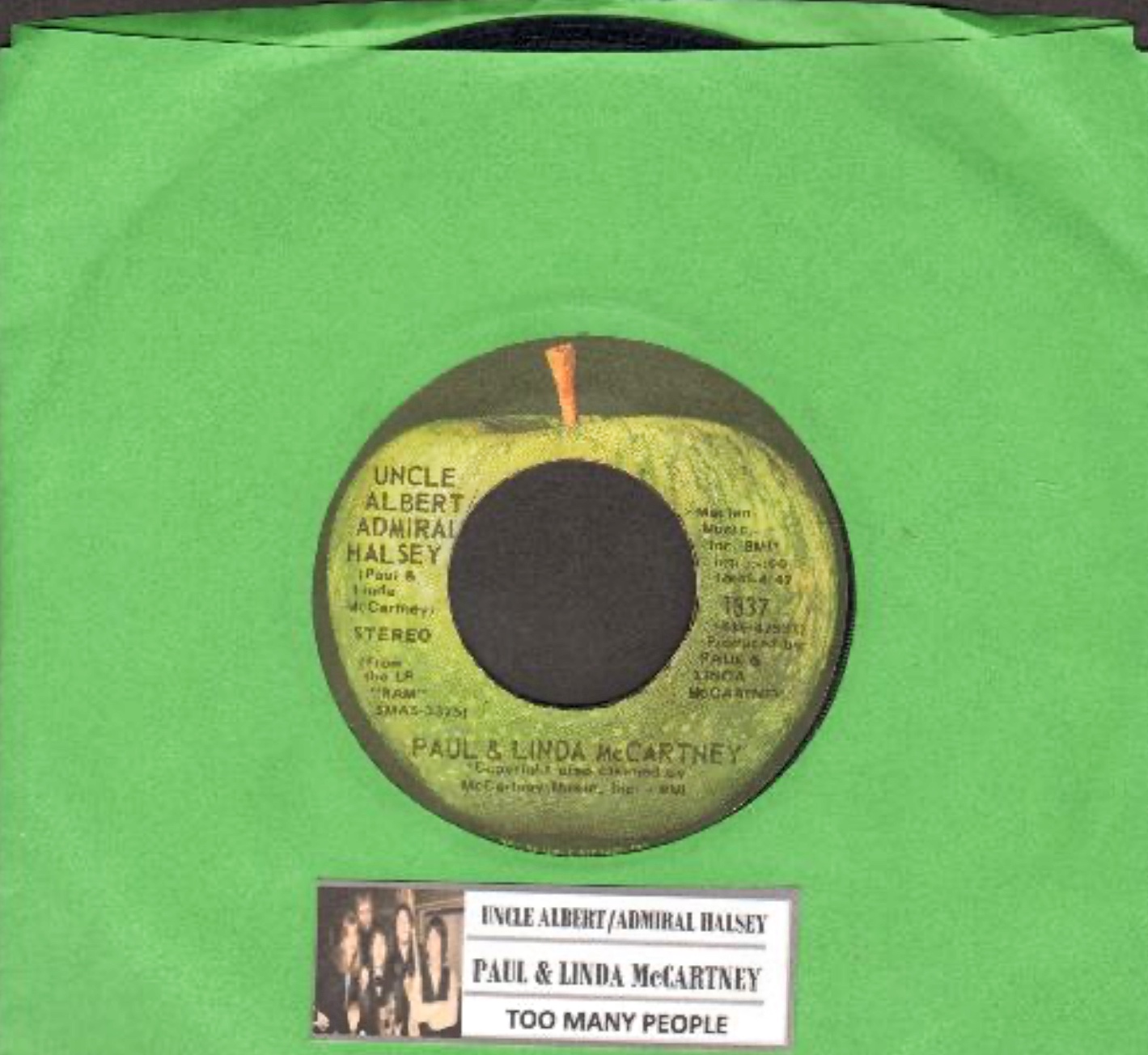
 PAUL & LINDA McCARTNEY - UNCLE ALBERT / ADMIRAL HALSEY

Publicació: 2 d'agost de 1971 (només als Estats Units)

Llistes: EUA: #1 (1 setmana)


"Uncle Albert/Admiral Halsey", la cinquena cançó de l'àlbum "Ram" de Paul i Linda McCartney de 1971, no només va ser part de la seva exploració creativa, sinó que també va marcar un esdeveniment significatiu en la carrera en solitari de Paul McCartney després dels Beatles. Publicada com a senzill als Estats Units, va aconseguir l'assoliment de ser el seu primer single número u després dels Beatles.


La cançó reflecteix la perspectiva en evolució de McCartney sobre la família i la nostalgia, especialment després de traslladar-se de les seves arrels a Liverpool. La lletra transmet un sentit de diversió i un gest cap a les diferències generacionals, amb frases com "Ho sentim tant, Oncle Albert". L'habilitat de McCartney per canviar d'accent i encarnar diferents personatges afegeix un element teatral a la cançó. La referència a "Hands across the water/Heads across the sky" reflecteix la doble identitat de McCartney i la seva dona Linda com a americans i britànics.


"Uncle Albert/Admiral Halsey" no només va mostrar la versatilitat musical de Paul McCartney, sinó que també va explorar referències històriques, barrejant inspiracions de la vida real amb elements imaginatius. El personatge de l'Almirall Halsey, basat de manera laxa en l'oficial naval nord-americà de la Segona Guerra Mundial, Fleet Admiral William Frederick Halsey Jr., va afegir una capa de complexitat a la cançó. McCartney va reconèixer que l'Almirall Halsey era una figura nord-americana, nomenat com a comandant de la Tercera Flota dels Estats Units el 1944. La inclusió de Halsey a la lletra pot haver estat provocada per l’afició de McCartney a la lectura o per un interès general en esdeveniments històrics.


"Uncle Albert/Admiral Halsey" destaca com una composició que desafia les estructures tradicionals de les cançons, amb dues parts ben diferenciades i la incorporació de nombrosos fragments no acabats teixits de manera cohesionada per McCartney. Les 12 seccions separades de la cançó, algunes repetides al llarg de la peça, mostren la capacitat del music per crear una experiència musical polièdrica.


Els dos primers minuts, caracteritzats per una sensació melòdica i de ritme mitjà, demostren l’habilitat de Paul McCartney com a compositor, desmentint qualsevol dubte sobre les seves capacitats després dels Beatles. L'arranjament orquestral de George Martin, amb la participació de la Orquestra Filharmònica de Nova York, afegeix una capa de sofisticació a la composició.


La segona meitat introdueix el motiu 'Almirall Halsey', instàncies repetides del lema "Hands across the water/Heads across the sky" i el passatge "Live a little, be a gypsy, get around". El final es desenvolupa en dues parts distintes, transicionant des de melodies de guitarra country i western fins a una transició que es connecta de manera fluida amb la següent peça de l’àlbum, 'Smile Away'.


Remarcable per la seva producció innovadora, la cançó incorpora diversos efectes de so, com ara pluja, una imitació vocal del to d'un telèfon, ocells marins i vent. L'ús divertit dels accents anglesos de classe alta per part de Paul i Linda McCartney afegeix un toc capritxós a la composició.


John Lennon, malgrat les seves crítiques generals a l'àlbum "Ram", va parlar favorablement de "Uncle Albert/Admiral Halsey". Va apreciar alguns aspectes, com les melodies a "Junk", l'inici de "Ram On" i especialment la part introductòria de "Uncle Albert". Tot i això, Lennon va expressar les seves reserves sobre l'estructura de múltiples parts i la naturalesa repetitiva de certs elements.


PAUL & LINDA McCARTNEY - UNCLE ALBERT / ADMIRAL HALSEY


Released : August 2, 1971 (US only)

Charted:  US: #1 ( 1 week)


"Uncle Albert/Admiral Halsey," the fifth song on Paul and Linda McCartney's 1971 album "Ram," was not only a part of their creative exploration but also marked a significant milestone in Paul McCartney's post-Beatles solo career. Released as a single in the United States, it achieved the remarkable feat of becoming his first number one single after The Beatles.


The song reflects McCartney's evolving perspective on family and nostalgia, especially as he had moved away from his Liverpool roots. The character of Uncle Albert is a blend of imagination and real-life inspiration, drawing from Albert Kendall, who had connections to McCartney's family. The lyrics convey a sense of playfulness and a nod to generational differences, with lines like "We're so sorry, Uncle Albert." McCartney's ability to shift accents and embody different characters in the song adds a theatrical element. The reference to "Hands across the water/Heads across the sky" reflects the dual identity of McCartney and his wife Linda as both American and British.


"Uncle Albert/Admiral Halsey" not only showcased Paul McCartney's musical versatility but also delved into historical references, blending real-life inspirations with imaginative elements. The character Admiral Halsey, loosely based on World War II US Naval officer Fleet Admiral William Frederick Halsey Jr., added a layer of complexity to the song. McCartney acknowledged that Admiral Halsey was an American figure, appointed as commander of the US Third Fleet in 1944. The inclusion of Halsey in the lyrics might have been sparked by McCartney's readings or general interest in historical events.


"Uncle Albert/Admiral Halsey" stands out as a composition that defies traditional song structures, comprising distinct halves and incorporating numerous unfinished fragments seamlessly woven together by Paul McCartney. The song's 12 separate sections, some repeated throughout, showcase McCartney's ability to create a multifaceted musical experience.


The opening two minutes, characterized by a melodic and mid-tempo feel, demonstrate McCartney's enduring songwriting prowess, dispelling any doubts about his abilities post-Beatles. George Martin's orchestral arrangement, featuring the New York Philharmonic Orchestra, adds a layer of sophistication to the composition.


The second half introduces the 'Admiral Halsey' motif, repeated instances of the "Hands across the water/Heads across the sky" refrain, and the "Live a little, be a gypsy, get around" passage. The outro unfolds in two distinct parts, transitioning from country and western guitar licks to a segue that seamlessly connects with the following track, 'Smile Away.'


Noteworthy for its innovative production, the song incorporates various sound effects, including rain, a vocal imitation of a telephone tone, sea birds, and wind. Paul and Linda McCartney's playful use of upper-class English accents further adds a whimsical touch to the composition.


John Lennon, despite his overall criticism of the "Ram" album, spoke favorably about "Uncle Albert/Admiral Halsey". He appreciated certain aspects, such as the tunes in "Junk", the beginning of "Ram On", and particularly the introductory part of "Uncle Albert", However, Lennon expressed his reservations about the multi-part arrangement and the repetitive nature of certain elements.