"Straight to Hell" is a song from the album “Combat Rock”, released as a double A-side single with "Should I Stay or Should I Go" on September 1982. This is one of the Clash's most poignant and socially charged songs, exploring themes of immigration, cultural identity, and the impact of war. Mick Jones wrote the track during the band's frenzied recording sessions in New York for the album.
"Straight To Hell" embarks on a poignant journey across nations, painting a vivid portrait of societal disillusionment and global turmoil. From Britain's industrial decline and xenophobic sentiments to the aftermath of the Vietnam War and the ravages of drug addiction in the United States, the song's lyrics offer a stark commentary on the human condition.
The Clash faced internal tensions and creative challenges during the recording of “Combat Rock” in late 1981. Despite diverging musical interests among band members, they managed to blend these influences into "Straight to Hell”. Completed on New Year's Eve at Electric Lady studio, the song emerged as one of the band's masterpieces, yet it also marked a turning point.
"Straight To Hell" began with Mick Jones's guitar doodle, which evolved over several months until drummer Topper Headon found a fitting Bossa Nova beat. Joe Strummer revealed a recording secret: Topper handed him an R Whites lemonade bottle wrapped in a towel and instructed him to use it to beat the bass drum just before the take. This unconventional technique added depth to the drum sound. The recording sessions concluded just before midnight, and the band members rode the E train to Times Square, where Strummer felt the weight of their achievement amid the bustling crowd.
The “Combat Rock” version of "Straight to Hell" was initially nearly 7 minutes long but was edited down to 5:30 minutes for the album release. This decision was made during the early 1982 mixing sessions when The Clash and Glyn Johns condensed Combat Rock from a double album to a single album, reducing its duration from 77 to 46 minutes. The original longer version featured additional lyrics and a more prominent violin part. The unedited version can be found on The Clash's box sets, “Clash on Broadway” and “Sound System”.
3.4.24
THE CLASH - WHITE RIOT
Released: March 18, 1977
Charted: UK: #38
"White Riot" is a punk rock anthem by the English band The Clash, released as their debut single in March 1977 and featured on their self-titled debut album. Frontman Joe Strummer uses the song to advocate for young white people to join the fight against oppressive governments, drawing parallels to the activism of black communities. Strummer emphasized that the song did not promote violence and was not racially motivated.
"White Riot" was inspired by the Notting Hill riots in west London on August 30, 1976. The clashes erupted during the Notting Hill Carnival, a celebration of Caribbean culture, after police officers were attacked following the arrest of a pickpocket. The tensions escalated along racial lines, with black youths confronting white officers, although white youths were also involved. Clash members Joe Strummer, Paul Simonon, and their manager Bernie Rhodes were present at the event and witnessed the chaos, which influenced the creation of the song. As a testament to the event's impact, the band included a photo of the Notting Hill riots on the back cover of their debut album.
The single's cover photograph, taken by Caroline Coon on 5 November 1976 at the band's rehearsal studio in Camden Town, was inspired by real-life events where youths were subjected to random stop-and-search procedures by police in the streets. The original shot depicted Joe Strummer wearing a boiler suit with the phrase "Hate and War" on the back, but this was airbrushed for the released version, replaced with "1977."
The Clash's "White Riot" did spark controversy during their concerts, as some audience members, often political punks, would use it as an excuse to cause trouble. Whether or not to play the song became a source of tension within the band, particularly highlighted during a gig in 1979. Joe Strummer was determined to play "White Riot" as an encore, but Mick Jones vehemently disagreed, expressing his weariness with the song and desire to move past it. This disagreement escalated into a heated argument, resulting in Strummer punching Jones – the only known instance of physical violence between band members. During the encore, Jones appeared on stage with a bandage around his eye and nose, eventually abandoning his instrument midway through the song. Despite requests from promoters to avoid playing "White Riot" due to fears of venue damage, The Clash often defiantly performed it anyway, reflecting their rebellious nature.
The poignant moment when Clash members Mick Jones and Joe Strummer played "White Riot" together for the last time occurred in November 2002. Jones, present in the audience for one of Strummer's solo shows, joined him onstage. Despite Strummer's usual reluctance to play the song, he turned to Jones and said, "This one's in 'A', you know it." Tragically, Strummer passed away from a heart attack just a month later.
ABBA - TAKE A CHANCE ON ME
Publicació: gener de 1978
Llistes: EUA: #3 Regne Unit: 1 (3 setmanes)
"Take A Chance on Me" va ser llançada com el segon senzill del seu cinquè àlbum d'estudi de 1977, "ABBA The Album".
La introducció acapella de "Take A Chance on Me" és brillant. Björn explica com va compondre la lletra: "Les idees per a les lletres apareixen de diferents maneres. Sovint és un petit escenari que apareix al meu cap, però a vegades començo amb un títol. 'Take A Chance On Me' n'és un exemple". Björn, que era un corredor habitual en aquell moment, fins i tot va córrer la Marató d’Estocolm, va trobar aquest títol mentre corria al suburbi de Lidingö, a Estocolm, on ell i Agnetha vivien aleshores. Sabia que la gravació de la pista d'acompanyament de la cançó suggeria un títol percussiu, i mentre els seus peus avançaven implacablement pel camí, els sons "t-k-ch" van començar una carrera igualment insistent al seu cervell. Dins d'aquests sons va trobar la frase 'Take A Chance', i després simplement va afegir 'On Me' per fer-ne un títol complet.
La lletra de 'Take A Chance On Me' va construir l'esperit optimista de la pista d'acompanyament per fer-ne una cançó d'amor veritablement afirmativa, alguna cosa que no apareixeria molt sovint en el repertori futur d'ABBA. Sens dubte era la cançó més enganxosa de "ABBA - The Album": l'obertura acapella, amb la veu de registre alt i cristal·lí d'Agnetha i Frida contrastant amb els "take a chance, take a chance" de registre baix de Björn i Benny, captiva immediatament l'oient.
A "Take a Chance on Me" estan demanant l'oient que prengui el risc de confiar i estimar-los. La cançó encoratja a prendre una oportunitat per obrir el cor i provar alguna cosa nova en lloc de romandre a la zona de confort. S'ofereixen a estar-hi per a l'oient, sigui per ballar, parlar o passar per moments difícils. La lletra destaca que la seva devoció i amor són prou forts com per durar fins i tot en moments difícils, i que poden proporcionar un lloc segur i de suport per a l'oient.
Quan 'Take A Chance On Me' es va llançar com a senzill es va convertir en un gran èxit, arribant al número u en les llistes a Gran Bretanya, Irlanda, Mèxic, Àustria i Bèlgica, i arribant al Top Tres en almenys altres cinc països. Va ser el segon senzill més exitós d'ABBA als Estats Units, on va arribar al número tres al Billboard Hot 100. Per a la cançó, Lasse Hallström també va muntar un vídeo promocional amb tocs irònics, amb els membres d'ABBA flirtejant entre ells en una pantalla dividida. "Take A Chance On Me" va ser un acomiadament realment apropiat als dies alegres dels inicis d'ABBA.
ABBA - TAKE A CHANCE ON ME
Released: January 1978
Charted: US: #3 UK: 1 ( 3 wks)
“Take A Chance on Me” was released as the second single from their 1977 fifth studio album “ABBA The Album”.
The acapella introduction of “Take A Chance on Me” is brilliant. Björn explains how he composed the lyrics of the song: “Ideas for the lyrics pop up in different ways. Often it’s a little scenario that comes into my mind, but sometimes I start with a title. ‘Take A Chance On Me’ is a case in point.” Björn, who was an avid jogger at the time – he even ran the Stockholm Marathon at one point – found this particular title while out jogging in the Stockholm suburb of Lidingö, where he and Agnetha lived at the time. He knew that the backing track recording of the song suggested a percussive title, and as his feet moved relentlessly forward in his jogging path, the sounds “t-k-ch” started an equally insistent run around his brain. Within those sounds he found the phrase ‘Take A Chance’, and then he just added ‘On Me’ to make it a complete title.
The completed lyrics for ‘Take A Chance On Me’ built on the up-beat mood of the backing track to make it a truly affirmative love song, something that would not feature very frequently in ABBA’s future repertoire. It certainly was the catchiest track on ABBA – The Album: the a cappella opening, with Agnetha and Frida’s crystalline high-register singing contrasting against Björn and Benny’s low-register “take a chance, take a chance” repeats, draws the listener into the song immediately.
In “Take a Chance on Me” they are asking the listener to take a risk on trusting and loving them. The song encourages the listener to take a chance on opening up their heart and trying something new instead of staying in their comfort zone. They offer to be there for the listener no matter what, whether it is for dancing, talking, or going through hard times. The lyrics emphasize that their devotion and love are strong enough to last even in difficult times, and that they can provide a safe and supportive place for the listener.
When ‘Take A Chance On Me’ was released as a single it became a big hit, going to number one on the charts in Great Britain, Ireland, Mexico, Austria and Belgium, and reaching the Top Three in at least a further five countries. Notably, it was ABBA’s second most successful single in the United States, where it reached number three on the Billboard Hot 100. For the song, Lasse Hallström also put together a tongue-in-cheek promo clip, featuring the ABBA members flirting with each other in a split screen. “Take A Chance On Me” was a truly appropriate farewell to the joyful early days of ABBA.
2.4.24
ALASKA Y DINARAMA - COMO PUDISTE HACERME ESTO A MI / NI TU NI NADIE
Publicació: Setembre de 1984
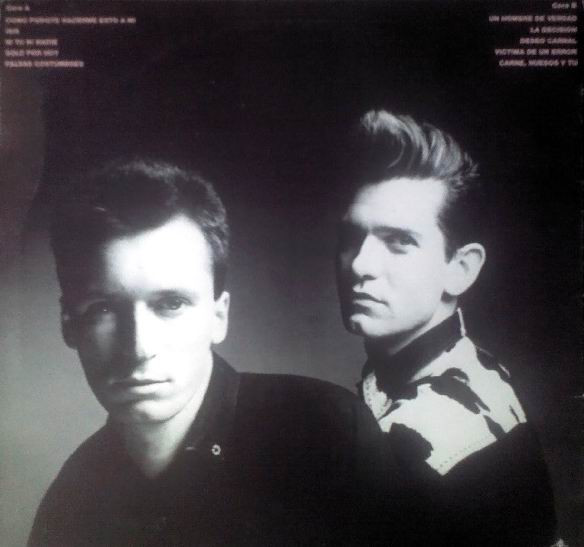
“Cómo pudiste hacerme esto a mí” és una cançó icònica del grup espanyol Alaska y Dinarama, coneguda pel seu ritme de ball i lletres que exploren temes de traïció, gelosia i venjança. Va ser llançada el 1984 com el primer senzill del seu àlbum "Deseo carnal", assolint el número 1 a les llistes d'èxits durant diverses setmanes. La interpretació en directe a Mèxic es va utilitzar com a vídeo musical per a la cançó.
El vídeo musical captura l'essència d'Alaska y Dinarama en aquell moment, amb Alaska liderant l'actuació amb el seu estil característic i presència escènica. La banda interpreta la cançó amb energia, mentre els plans mostren els membres tocant els seus respectius instruments, creant una atmosfera vibrant i plena d'energia a l'escenari del programa "Tocata".
A la cara B del single i del maxi-single hi tenim una remescla de “Tormento”, una de les millors cançons de la banda, que es podia haver publicat perfectament com a cara A ja què té les mateixes característiques tan comercials com ritmiques i enganxoses que les primeres cares dels singles oficials.
"Ni tú ni nadie" és una de les cançons més emblemàtiques d'Alaska y Dinarama, llançada com el segon senzill del seu àlbum "Deseo carnal" el 1984. Aquesta cançó va ser un gran èxit i continua sent recordada pel seu ritme i lletres enganxoses. En la reedició de l'àlbum el 2006 per EMI, es van incloure diverses versions de la cançó, incloent remasteritzacions, la versió en maxi-single i una demo en què només canta Carlos Berlanga. L’any 2010 Fangoria van gravar una versió nova.
"Ni tú ni nadie" és una cançó escrita per Nacho Canut i Carlos García-Berlanga. La lletra, cantada en primera persona, aborda una relació complicada en què l'altra persona exerceix pressió sobre el narrador, qui declara que ni aquesta persona ni ningú més poden canviar-lo. La cançó també parla de la lluita per sobreviure a una ruptura sentimental. Amb la seva estructura de vers-tornada i la interpretació d'Alaska i Carlos Berlanga, la cançó destaca pel seu ritme alegre, amb sospirs d'Alaska als ponts instrumentals i repics de campanes que li donen un toc distintiu. Curiosament, "Ni tú ni nadie" és més recordada popularment com "Mil campanes” per la frase de la seva tornada, que pel seu títol original.
Recentment s’ha publicat un vídeo oficial de "Ni tú ni nadie" que alterna imatges del vídeo original, similar al de “Cómo pudiste hacerme esto a mí”, amb imatges d’una noia caminant pels carrers de Madrid. El vídeo també compta amb un final alternatiu per a la cançó.