Total de visualitzacions de pàgina:

5.5.24


GUNS N‘ ROSES - DON’T CRY


Estrenada: setembre de 1991

Llistes: EUA: #10  Regne Unit: #8


"Don't Cry" dels Guns N' Roses mostra la versatilitat i la creativitat de la banda amb les seves múltiples versions publicades en diferents àlbums. La versió original de la cançó, inclosa a "Use Your Illusion I", es presenta com la quarta pista del disc. Mentrestant, la versió alternativa, la trobem a "Use Your Illusion II", i ofereix una interpretació amb una lletra diferent i un arranjament musical lleugerament alterat. A més, una tercera versió enregistrada durant les sessions de "Appetite for Destruction" el 1986 proporciona als fans una visió de l'evolució de la cançó al llarg del temps.


Axl Rose va revelar en una entrevista amb Geffen Records que "Don't Cry" va originar-se abans que els Guns N' Roses es reunissin. La cançó va ser escrita per Rose i el guitarrista Izzy Stradlin després que tots dos desenvolupessin sentiments per la mateixa dona. Davant de la seva indecisió, ella va pronunciar les paraules memorables a Rose: "No ploris, Bill", inspirant el títol de la cançó i el sentiment subjacent.


Els Guns N' Roses van fer intents per enregistrar "Don't Cry" per al seu àlbum debut, "Appetite for Destruction" de 1987, però van allargar la recerca per capturar el so desitjat, i es van veure obstaculitzats pels pressupostos limitats en aquell moment. Malgrat els seus primers esforços, la cançó no va aparèixer en cap àlbum fins al 1991. Tot i que la banda va interpretar-la en directe durant els seus primers anys, van deixar de tocar-la després de completar "Appetite for Destruction". No obstant, les gravacions pirata de la cançó van circular, amb Shannon Hoon, conegut pel seu paper a Blind Melon, fins i tot incorporant-la al repertori de la seva banda de versions.


El vídeo musical de "Don't Cry" és una producció amb una història elaborada per Axl Rose i Josh Richman, dirigida per Andy Morahan, que també va dirigir el vídeo de "November Rain". El vídeo té una durada de 5:14 i consta de diverses escenes diferents. Comença amb un nadó i passa a un entorn nevat on un Axl congelat sosté una pistola, representant l'escena del "Home Congelat" que simbolitza quedar atrapat en el temps. El vídeo després explora imatges conceptuals, incloent escenes d'un funeral, ofegament i desfogament domèstic, intercalades amb imatges de la banda actuant en un terrat. Entre els elements destacats s’inclou un cartell que pregunta "On és Izzy", referint-se a la sortida d'Izzy Stradlin de la banda, i escenes on Slash és agredit físicament per una dona en un cotxe. Slash ha mencionat que aquestes escenes van ser intenses, amb l'actriu colpejant-lo de veritat mentre ell intentava mantenir el focus conduint.


GUNS N‘ ROSES - DON’T CRY


Released: September 1991

Charted:  US: #10   UK: #8 


"Don't Cry" by Guns N' Roses showcases the band's versatility and creativity with its multiple versions released on different albums. The song's original version, featured on “Use Your Illusion I”, presents the fourth track with its distinctive lyrics and melody. Meanwhile, the alternate version, found on “Use Your Illusion II”, offers a unique interpretation with different lyrics and a slightly altered musical arrangement. Additionally, a third version recorded during the “Appetite for Destruction” sessions in 1986 provides fans with an intriguing glimpse into the song's evolution over time.


Axl Rose revealed in an interview with Geffen Records that "Don't Cry" originated before Guns N' Roses came together. The song was written by Rose and guitarist Izzy Stradlin after both developed feelings for the same woman. Faced with her indecision, she uttered the memorable words to Rose: "Don't Cry Bill," inspiring the song's title and underlying sentiment. 


Guns N' Roses made attempts to record "Don't Cry" for their debut album, 1987's "Appetite for Destruction," but struggled to capture the desired sound, hindered by limited budgets at the time. Despite their early efforts, the song didn't make it onto an album until 1991. Although the band performed the song live during their formative years, they ceased playing it after completing "Appetite for Destruction." Nonetheless, bootleg recordings of the song circulated, with Shannon Hoon, known for his role in Blind Melon, even incorporating it into his cover band's repertoire. 


The "Don't Cry" music video is an elaborate production featuring a storyline crafted by Axl Rose and Josh Richman, directed by Andy Morahan, who also helmed the "November Rain" video. The video spans 5:14 and comprises several distinct scenes. It begins with a baby and transitions to a snowy setting where a frozen Axl holds a gun, depicting the "Frozen Man" scene symbolizing being trapped in time. The video then delves into conceptual imagery, including scenes of a funeral, drowning, and domestic unrest, interspersed with footage of the band performing on a rooftop. Notable elements include a sign asking "Where's Izzy," referencing Izzy Stradlin's departure from the band, and scenes where Slash is physically assaulted by a woman in a car. Slash has mentioned that these scenes were intense, with the actress hitting him for real as he tried to maintain focus on driving.


ALANNAH MYLES - BLACK VELVET

Estrenada: juliol de 1989

Llistes: EUA: #1 (2 setmanes)   Regne Unit: #2


"Black Velvet" d'Alannah Myles és un exemple notable d'un èxit transversal que barreja estrofes de blues amb una tornada de rock. Escrita pels compositors canadencs Christopher Ward i David Tyson, la cançó va impulsar Myles a la fama internacional quan va encapçalar la llista Billboard Hot 100 durant dues setmanes el 1990. També va arribar al número u a la llista de cançons d'Àlbum Rock i va assolir un èxit significatiu en diversos països, incloent-hi el Regne Unit, on va arribar al número dos.


La inspiració de Christopher Ward per a "Black Velvet" va sorgir de les seves experiències com a VJ de MuchMusic, el canal de música del Canadà. Mentre cobria el 10è aniversari de la mort d'Elvis Presley a Memphis, Ward va observar la devoció fervent dels fans d'Elvis, que el va deixar impressionat. Immers en l'atmosfera de veneració i nostalgia que envoltava l'icona del rock, Ward va sentir-se inspirat a escriure lletres que capturaven l'essència del que Elvis significava pels seus fans i reflexionaven sobre la seva criança al Sud dels Estats Units. Algunes anàlisis de les lletres:


- "Jimmie Rodgers on the Victrola up high” (Jimmie Rodgers sonant a la Victrola): Destacant la influència del pioner de la música country Jimmie Rodgers en Elvis, suggerint la seva exposició primerenca a la música.

- "Mama's dancin' with baby on her shoulder” (La mare balla amb el nadó a l'espatlla): Retracta Gladys Presley ballant amb el seu fill nadó, Elvis, reflectint l'afecte maternal.

- ""Black velvet and that little boy's smile” (Vellut negre i somriure d'aquell nen): Evocant les imatges dels quadres d'Elvis en vellut negre, capturant el seu somriure icònic que encantava les fans.

- "Black velvet with that slow southern style” (Vellut negre amb aquell estil lent del Sud): Describint l'estil de representació d'Elvis, caracteritzat per moviments lents i sensuals que recordaven la cultura del Sud.

- "Up in Memphis the music's like a heatwave” (A Memphis la música és com una onada de calor): Fent referència a l'animada escena musical de Memphis, especialment a Sun Studios, on Elvis va gravar els seus èxits inicials.

- "White lightning, bound to drive you wild” (El llamp blanc, destinat a enlluernar-te): Connectant la música rock i la seva energia electritzant als efectes embriagadors de l'alcohol.

- "Mama's baby's in the heart of every school girl” (El nen de la mare està al cor de cada noia estudiant): Destacant l'atractiu universal d'Elvis entre les joves seguidores.

- "Love Me Tender leaves 'em cryin' in the aisle” (Love Me Tender les deixa plorant al passadís): Reflexionant sobre l'impacte emocional de la balada "Love Me Tender" d'Elvis en el públic.

- "The way he moved, it was a sin, so sweet and true” (La manera com es movia, era un pecat, tan dolç com veritable): Reconeixent els moviments provocatius de maluc d'Elvis i el seu aire seductor.

- "Every word of every song that he sang was for you. In a flash he was gone, it happened so soon, what could you do?” (Cada paraula de cada cançó que cantava era per a tu. En un instant va desaparèixer, va passar tan aviat, què podies fer?): Reflexionant sobre la connexió d'Elvis amb el seu públic a través de les seves interpretacions sinceres i lamentant la seva mort sobtada i tràgica el 1977.


L'èxit d'Alannah Myles amb "Black Velvet" va ser notable, guanyant prestigiosos premis i reconeixements. Va guanyar un premi Grammy a la Millor Interpretació de Rock Femenina i diversos premis Juno va destacar el seu talent.


ALANNAH MYLES - BLACK VELVET


Released: July 1989

Charted:  US: #1 (2 weeks)  UK: #2 


"Black Velvet" by Alannah Myles is a notable example of a successful crossover hit, blending blues verses with a rock chorus. Written by Canadian songwriters Christopher Ward and David Tyson, the song propelled Myles to international stardom when it topped the Billboard Hot 100 chart for two weeks in 1990. It also reached number one on the Album Rock Tracks chart and achieved significant success in various countries, including the UK, where it peaked at number two. 


Christopher Ward's inspiration for "Black Velvet" stemmed from his experiences as a VJ for MuchMusic, Canada's music channel. While covering the 10th anniversary of Elvis Presley's death in Memphis, Ward observed the fervent devotion of Elvis fans, which left a lasting impression on him. Immersed in the atmosphere of reverence and nostalgia surrounding the iconic rocker, Ward was inspired to write lyrics that captured the essence of what Elvis meant to his fans and reflected on his upbringing in the American South. Some lyric analysis:


- "Jimmie Rodgers on the Victrola up high": Highlighting the influence of country music pioneer Jimmie Rodgers on Elvis, suggesting his early exposure to music.

- "Mama's dancin' with baby on her shoulder": Depicting Gladys Presley dancing with her infant son, Elvis, reflecting maternal affection.

- "Black velvet and that little boy's smile": Evoking the imagery of black velvet Elvis paintings, capturing his iconic smile that charmed female fans.

- "Black velvet with that slow southern style": Describing Elvis' performance style, characterized by slow, sensuous movements reminiscent of Southern culture.

- "Up in Memphis the music's like a heatwave": Referencing the vibrant music scene in Memphis, particularly at Sun Studios, where Elvis recorded his early hits.

- "White lightning, bound to drive you wild": Connecting rock music and its electrifying energy to the intoxicating effects of alcohol.

- "Mama's baby's in the heart of every school girl": Highlighting Elvis' universal appeal among young female fans.

- "Love Me Tender leaves 'em cryin' in the aisle": Reflecting on the emotional impact of Elvis' ballad "Love Me Tender" on audiences.

- "The way he moved, it was a sin, so sweet and true": Acknowledging Elvis' provocative hip movements and their seductive allure.

- "Every word of every song that he sang was for you. In a flash he was gone, it happened so soon, what could you do?": Reflecting on Elvis' connection with his audience through his heartfelt performances and lamenting his sudden and tragic death in 1977.


Alannah Myles' success with "Black Velvet" was remarkable, earning her prestigious awards and accolades. Winning a Grammy Award for Best Female Rock Performance and multiple Juno Awards highlighted her talent.


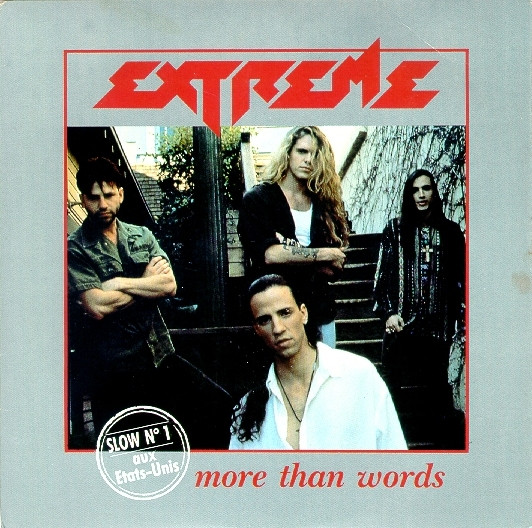
EXTREME - MORE THAN WORDS


Publicació: 12 de març de 1991

Llistes: EUA: #1 (1 setmana) Regne Unit: #2


"More Than Words" és una variació del so típic de funk metal de la banda, cap al ritme pausat de balada on destaquen el treball de guitarra acústica de Nuno Bettencourt i la veu de Gary Cherone. Llançada el 1991 com el tercer senzill del seu àlbum "Pornograffitti", la cançó es va convertir en número ú a diversos països, incloent els Estats Units, on va obtenir la certificació d'or.


"More Than Words" és una balada sincera escrita per Gary Cherone i Nuno Bettencourt. La cançó aprofundeix en les complexitats de l'amor, amb el protagonista anhelant una connexió emocional més profunda més enllà de les paraules. Desitja expressions tangibles d'afecte i intimitat de la seva parella, creient que les accions diuen més coses que les paraules.


Nuno Bettencourt va revelar que va crear la major part de "More Than Words" mentre estava sol a una terrassa amb la seva guitarra. La cançó va venir-li ràpidament, com és típic del seu procés de composició musical. Si una cançó no es concreta ràpidament, tendeix a abandonar-la. Després va portar la cançó a Gary Cherone, qui va col·laborar en la lletra mentre revisaven junts la cançó. La seva intenció era transmetre que la paraula "amor" sovint pot perdre el seu significat quan s'utilitza en excés, així que van intentar destacar la importància de mostrar amor a través d'accions en lloc de només dir les paraules. La cançó es va inspirar en una experiència de la vida real, com va exposar Cherone: "Té una certa història biogràfica amb una persona determinada, així que quan l'escolto, em recorda aquell temps."


Gary Cherone va explicar que "More Than Words" va ser inicialment tant una benedicció com una maledicció per a ell. Va dir: "Es va fer una interpretació equivocada del que era la banda. Era una cosa apart de la banda. Era una balada, però es va fer tan gran que va eclipsar la banda. La gent coneix la cançó i no sap qui la canta". També va expressar que al llarg dels anys, es van agafar a la cançó ja que va servir com a vehicle per arribar a un públic més ampli. Malgrat el seu èxit aclaparador, Cherone encara troba valor en la lletra de la cançó, notant el seu missatge perdurable de què les accions diuen més que les paraules.


Extreme va optar per un enfocament senzill amb "More Than Words", preferint una producció mínima per permetre que la profunditat emocional de la cançó resplendeixi. Aquesta senzillesa es reflecteix en el vídeo musical, dirigit per Jonathan Dayton i Valerie Faris. Filmada en blanc i negre, el vídeo presenta Nuno Bettencourt i Gary Cherone asseguts en un estudi, interpretant sincerament la cançó, res més.


EXTREME - MORE THAN WORDS


Released: March 12, 1991

Charted:  US: #1 (1 week)  UK: #2 


"More Than Words" by Extreme is a departure from the band's typical funk metal sound, featuring acoustic guitar work by Nuno Bettencourt and vocals by Gary Cherone. Released in 1991 as the third single from their album "Pornograffitti," the song became a chart-topping hit in multiple countries, including the United States, where it earned gold certification. 


"More Than Words" is a heartfelt ballad written by Gary Cherone and Nuno Bettencourt. The song delves into the complexities of love, with the protagonist longing for deeper emotional connection beyond mere words. He desires tangible expressions of affection and intimacy from his partner, believing that actions speak louder than words. 


Nuno Bettencourt revealed that he came up with most of "More Than Words" while sitting alone on a porch with his guitar. The song came to him quickly, as is typical for his songwriting process. If a song doesn't come together swiftly, he tends to abandon it. He then brought the song inside to Gary Cherone, who collaborated on the lyrics as they worked on the song together. Their intention was to convey that the word "love" can often lose its meaning when overused, so they aimed to emphasize the importance of showing love through actions rather than just saying the words. The song was inspired by a real-life experience, as Cherone noted, "It has some biographical history to it with a certain person, so when I hear it, it reminds me of that time."


Gary Cherone shared that "More Than Words" was initially both a blessing and a curse for him. He explained, "It was a misinterpretation of what the band was. It was one-tenth of the band. It was a ballad, but it became so big that it was bigger than the band. People know the song and don't know who does it." He also expressed that over the years, they embraced the song as it served as their vehicle to reach a wider audience. Despite its overwhelming success, Cherone still finds value in the song's lyrics, noting its enduring message about actions speaking louder than words.


Extreme opted for a stripped-down approach with "More Than Words," favoring minimal production to allow the song's emotional depth to shine through. This simplicity is mirrored in the music video, directed by Jonathan Dayton and Valerie Faris. Shot in black and white, the video features Nuno Bettencourt and Gary Cherone seated in a studio, earnestly performing the song. 


2.5.24


REO SPEEDWAGON - KEEP ON LOVING YOU

Estrenada: 1980

Llistes: EUA: #1 (1 setmana)  Regne Unit: #7 


"Keep On Loving You" és una balada de rock suau escrita per Kevin Cronin i interpretada per la banda de rock americana REO Speedwagon. Inicialment inclosa a l'àlbum "Hi Infidelity" del 1980, va ser el primer senzill de la banda a entrar al top 50 dels EUA al Billboard Hot 100.


La cançó és una expressió sincera de devoció inquebrantable i compromís amb la parella, independentment dels desafiaments que es presentin. El cantant transmet apassionadament el seu amor durador i la determinació de continuar estimant la seva parella incondicionalment. Porta el missatge que l'amor és fort i val la pena perseverar-hi. Malgrat enfrontar-se a adversitats la cançó destaca la importància de mantenir-se fidel a les pròpies emocions, mantenint així les relacions vives i duradores.


Kevin Cronin va escriure "Keep On Loving You" després de descobrir que la seva dona li havia estat infidel abans del seu matrimoni. La cançó reflecteix la seva resolució de superar la traïció i romandre compromès amb la seva relació. Inicialment, quan Cronin va presentar la cançó a la banda, estaven reticents a gravar-la. REO Speedwagon eren coneguts pel seu so de rock dur, i una balada suau semblava fora de lloc. El teclista Neal Doughty estava p articularment aprensiu a gravar la cançó d'amor, temorós que no pogués connectar amb els seus fans més fidels. El suport entusiasta del guitarrista Gary Richrath, juntament amb la seva interpretació energètica al costat de Cronin, va convèncer la banda que la cançó tenia potencial. Un cop "Keep On Loving You" va arribar a les ones radiofòniques, es va convertir en un èxit aclaparador per a REO Speedwagon, transformant la seva trajectòria musical i portant-los un nou èxit.


Kevin Cronin va advertir contra l'ús de "Keep On Loving You" com a cançó de casament malgrat la seva suggerència de l'amor perdurable al seu títol. Va assenyalar que mentre molta gent l'ha triada per als seus casaments o la consideren "la seva cançó" amb les seves parelles, potserbsense analitzar el contingut dels versos. La lletra en realitat parla de superar la infidelitat i navegar per emocions complexes dins d'una relació. Cronin va desaconsellar associar-la amb ocasions romàntiques com ara casaments dient: "El meu primer pensament sempre és: 'Espereu. Heu escoltat els versos de la cançó?'"


Malgrat tot, "Keep On Loving You" és sovint celebrada com un himne a la fidelitat i és considerada una de les cançons més romàntiques mai escrites. VH1 fins i tot la va incloure en el seu programa Top 40 Love Songs. Malgrat la seva reputació romàntica, els sentiments de la cançó no es van traduir a la vida personal de Kevin Cronin, ja que ell i la seva dona es van separar uns anys després del llançament de l'àlbum.


REO SPEEDWAGON - KEEP ON LOVING YOU


Released: 1980

Charted:  US: #1 (1 wk)  UK: #7


"Keep On Loving You" is a soft rock ballad written by Kevin Cronin and performed by American rock band REO Speedwagon. Initially featured on REO Speedwagon's 1980 album "Hi Infidelity," it marked the band's first single to break the top 50 on the U.S. Billboard Hot 100.


The song is a heartfelt expression of unwavering devotion and commitment to one's partner, irrespective of the challenges faced. The singer passionately conveys his enduring love and determination to continue loving their significant other unconditionally. It carries the message that love is resilient and worth persevering for. Despite facing hardships and potential heartache, the song emphasizes the importance of remaining true to one's emotions, ultimately keeping relationships alive and thriving.


Kevin Cronin wrote “Keep On Loving You” after discovering that his wife had been unfaithful to him before their marriage. The song reflects his resolve to move past the betrayal and remain committed to their relationship. Initially, when Cronin presented the song to the band, they were hesitant to record it. REO Speedwagon was known for their hard rock sound, and a soft ballad seemed out of character. Keyboardist Neal Doughty was particularly apprehensive about recording the love song, fearing it might not resonate with their hardcore fans. Guitarist Gary Richrath's enthusiastic support, coupled with his energetic playing alongside Cronin, convinced the band that the song had potential. Once “Keep On Loving You” hit the airwaves, it became a breakthrough hit for REO Speedwagon, transforming their musical trajectory and bringing them newfound success.


Kevin Cronin cautioned against using "Keep On Loving You" as a wedding song despite its title's suggestion of blissful love. He pointed out that while many people have chosen it for their weddings or consider it "their song" with their partners, they may have overlooked the content of the verses. The song's lyrics actually delve into overcoming infidelity and navigating complex emotions within a relationship. Cronin advised against associating it with romantic occasions like weddings saying: "My first thought is always, 'Wait. Did you listen to the verses of the song?'"


"Keep On Loving You" is frequently celebrated as an anthem of fidelity and is regarded as one of the most romantic songs ever penned. VH1 even featured it on their Top 40 Love Songs program. Despite its reputation for romanticism, the song's sentiments didn't translate to Kevin Cronin's personal life, as he and his wife parted ways a few years following the album's release.