Total de visualitzacions de pàgina:

10.5.24


EURYTHMICS - THERE MUST BE AN ANGEL (PLAYING WITH MY HEART)

Publicació: 24 de juny de 1985

Llistes: EUA: #22   Regne Unit: #1 (2 setmanes)


"There Must Be an Angel (Playing with My Heart)" és una destacada cançó de l'àlbum "Be Yourself Tonight" dels Eurythmics, que presenta un solo d'harmonica del llegendari Stevie Wonder. La cançó va assolir un èxit global generalitzat, especialment a Irlanda, Noruega i el Regne Unit, on es va convertir en l'únic número u del duo.


"There Must Be an Angel (Playing with My Heart)" va marcar un fet significatiu per als Eurythmics, convertint-se en el seu primer i únic single número u al Regne Unit el 27 de juliol de 1985. Va mantenir la primera posició durant dues setmanes i va aconseguir el número u també a Finlàndia, Irlanda i Noruega. A més, la cançó va arribar al top 10 en diversos països, incloent-hi Austràlia, Àustria, Bèlgica, França, Alemanya, els Països Baixos, Nova Zelanda i Suècia. Als Estats Units, va assolir el número 22 a la llista Billboard Hot 100.


La contribució de Stevie Wonder a "There Must Be an Angel (Playing with My Heart)" va afegir un toc únic a la cançó. Lennox i Stewart es van afrontar a la incertesa sobre la participació de Wonder a causa del seu imprevisible horari. Quan Wonder va arribar a Los Angeles per enregistrar, la seva presència va deixar una grata impressió en ells. Lennox va recordar amb tendresa la seva arribada, descrivint Wonder com una persona encantadora amb trenes guarnides amb boniques perles daurades. Durant la seva actuació, els moviments de cap de Wonder feien soroll amb les perles, però el seu assistent va resoldre ràpidament el problema fixant-li els cabells amb un sac de fesols, assegurant un enregistrament impecable.


"There Must Be an Angel (Playing with My Heart)" destaca de moltes altres cançons dels Eurythmics per la seva temàtica de pura joia i felicitat en l'amor, en contrast amb la tensió dinàmica present en altres obres seves. La lletra d'Annie Lennox expressa l'eufòria de estar profundament enamorat, evocant la sensació que els àngels juguen amb el seu cor. Malgrat els desafiaments personals, incloent-hi el breu matrimoni de Lennox amb Radha Raman, la cançó reflecteix un moment brillant en la seva vida romàntica. La capacitat de Lennox de capturar diverses emocions en la seva música és evident, ja que navega tant per experiències alegres com tumultuoses, com es mostra en "There Must Be an Angel" i "Would I Lie to You?" del mateix àlbum, respectivament.


El videoclip transporta els espectadors als magnífics tribunals de Lluís XIV de França, retractat per David A. Stewart. Ambientat al Teatre Nou de Wimbledon a Londres, el vídeo mostra una representació teatral amb àngels cantants, incloent-hi un interpretat per Steven O'Donnell. Annie Lennox pren el paper d'una cantant captivadora, portada a entretenir el rei i la seva cort a Versalles.


EURYTHMICS - THERE MUST BE AN ANGEL (PLAYING WITH MY HEART)


Released: June 24, 1985

Charted:  US: #22   UK: #1 (2 weeks)


"There Must Be an Angel (Playing with My Heart)" is a standout track from Eurythmics' album "Be Yourself Tonight," featuring a harmonica solo by the legendary Stevie Wonder. The song achieved widespread success globally, particularly in Ireland, Norway, and the United Kingdom, where it became the duo's sole chart-topping hit.


"There Must Be an Angel (Playing with My Heart)" marked a significant milestone for Eurythmics, becoming their first and only number-one single in the United Kingdom on 27 July 1985. It maintained the top position for two weeks and achieved chart-topping success in Finland, Ireland, and Norway as well. Additionally, the song reached the top 10 in various countries including Australia, Austria, Belgium, France, Germany, the Netherlands, New Zealand, and Sweden. In the United States, it peaked at number 22 on the Billboard Hot 100 chart.


Stevie Wonder's contribution to "There Must Be an Angel (Playing with My Heart)" added a unique touch to the song. Lennox and Stewart faced uncertainty about Wonder's participation due to his unpredictable schedule. When Wonder arrived in Los Angeles to record, his presence left a lasting impression. Lennox fondly recalled his arrival, describing Wonder as "an adorable person" with braids adorned with beautiful gold beads. During his performance, Wonder's head movements caused the beads to make noise, but his assistant quickly resolved the issue by securing his hair with a beanbag, ensuring a flawless recording. 


"There Must Be an Angel (Playing with My Heart)" stands out from many Eurythmics songs due to its theme of pure joy and happiness in love, contrasting with the dynamic tension present in their other works. Annie Lennox's lyrics express the euphoria of being deeply in love, evoking the sensation of angels playing with her heart. Despite personal challenges, including Lennox's brief marriage to Radha Raman, the song reflects a brighter moment in her romantic life. Lennox's ability to capture various emotions in her music is evident, as she navigates through both joyful and tumultuous experiences, as showcased in "There Must Be an Angel" and "Would I Lie to You?" from the same album, respectively.


The music video transports viewers to the lavish courts of Louis XIV of France, portrayed by David A. Stewart. Set at the New Wimbledon Theatre in London, the video depicts a theatrical performance featuring singing angels, including one played by Steven O'Donnell. Annie Lennox takes on the role of a captivating singer, brought forth to entertain the king and his court at Versailles. 


8.5.24


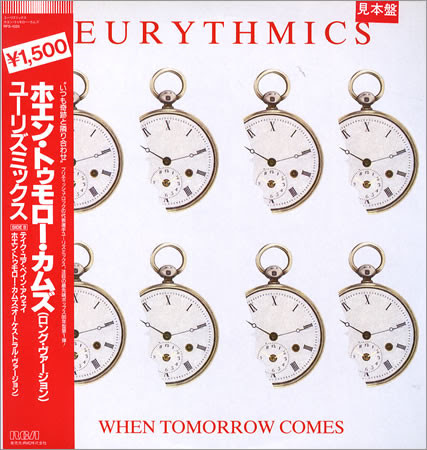
 EURYTHMICS - WHEN TOMORROW COMES

Released: June 2, 1986

Charted:  UK: #30 


"When Tomorrow Comes" marked Eurythmics' continuation of their rock and R&B sound from their previous album, "Be Yourself Tonight." Written by Annie Lennox, David A. Stewart, and guest keyboardist Pat Seymour, the song captures the duo's signature blend of pop sensibility with elements of rock and soul. The song served as the lead single from the album “Revenge” and achieved moderate success in the UK, reaching the Top 30. It fared better in Australia and Scandinavia, where it broke into the Top 10. Surprisingly, the song was not released as a single in the United States.


Eurythmics showcased their versatility by incorporating live musicians like Clem Burke from Blondie on drums, Jimmy "Z" Zavala on saxophone, John McKenzie on bass, and Michael Kamen arranging the orchestra for the “Revenge” album. "When Tomorrow Comes" showcases Eurythmics' evolution into a more mainstream pop-rock sound, diverging from their earlier work. Despite this shift, the song retains its allure and potency, with Annie Lennox's vocals shining amidst the distorted guitars and saxophone, adding a powerful yet serene quality to the track.


Directed by Stewart alongside his frequent collaborator Chris Ashbrook, in contrast to Eurythmics' more avant-garde videos, the video takes a more conventional approach. However, viewers are treated to Annie Lennox's dancing skills and a glimpse of Dave Stewart during one of his memorable hair phases. 


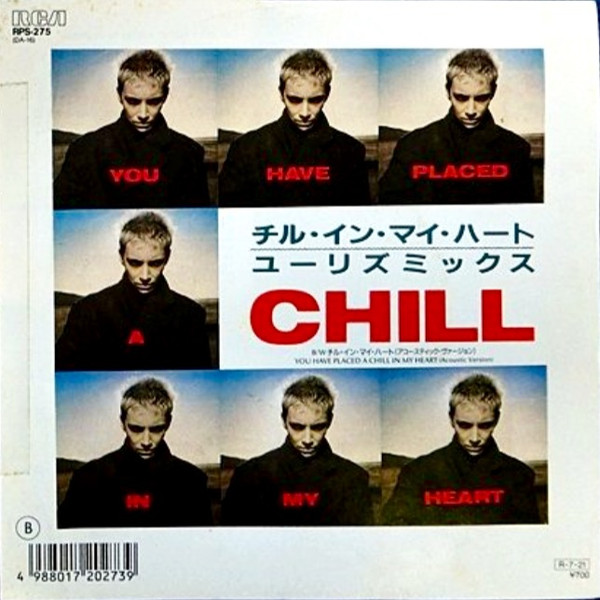
EURYTHMICS - YOU HAVE PLACED A CHILL IN MY HEART


Released: May 30, 1988

Charted:  US: #64   UK: #16 


"You Have Placed a Chill in My Heart" is a track written by British pop duo Eurythmics. Crafted by bandmates Annie Lennox and David A. Stewart, the song is featured on the duo's sixth studio album, “Savage”. Released in May 1988 by RCA, it served as the fourth and final single from the album in the United Kingdom, and as the second single in the United States.


In "You Have Placed a Chill in My Heart," Eurythmics lead vocalist Annie Lennox channels strength and resilience, reflecting on her past feelings of confinement and belittlement by a partner who has left her feeling cold. The song captures her journey toward embracing a love that is nurturing and genuine. While Lennox has drawn inspiration from specific relationships in some of her songs, she hasn't attributed this one to any particular individual. Instead, its theme resonates with any woman who has felt unloved and unappreciated, particularly those navigating the challenges of domestic life. With lines like "A woman's just too tired to think about the dirty old dishes in the kitchen sink," Lennox captures the exhaustion and emotional burden often experienced by women in such situations. While Lennox is renowned for her bold female empowerment anthem "Sisters Are Doin' It for Themselves," "You Have Placed A Chill In My Heart" showcases a more nuanced and poetic approach, highlighting her lyrical versatility and depth.


The song "You Have Placed a Chill in My Heart" is best understood within the context of two other singles from the "Savage" album: "Beethoven (I Love to Listen To)" and "I Need A Man." In "Beethoven," Annie Lennox portrays a woman who experiences frustration and boredom, leading her to veer off course. Meanwhile, in "I Need A Man," she explores her carnal desires. "You Have Placed A Chill In My Heart" represents a shift towards empowerment and self-awareness, as Lennox emerges from her struggles with a newfound sense of clarity and self-worth.


The thematic connection among these songs is reinforced by their music videos, all directed by Sophie Muller. In the "Beethoven" video, Lennox transforms from a demurely dressed, frustrated housewife into a confident blonde bombshell ready to embrace life. "I Need A Man" sees her performing with newfound confidence in a club setting. Finally, "You Have Placed A Chill In My Heart" features Lennox in a more natural setting, set against the backdrop of the desert—a place often associated with self-discovery and renewal. The video concludes on a positive note, with Lennox embracing a man as fireworks illuminate the sky, symbolizing her newfound happiness and fulfillment.


EURYTHMICS - HERE COMES THE RAIN AGAIN


Publicació: 12 de gener de 1984

Llistes: EUA: #4   Regne Unit: #8 


"Here Comes the Rain Again" és una cançó del duo britànic Eurythmics, que serveix com a primera pista del seu tercer àlbum d'estudi, "Touch". Escrita pels membres del grup Annie Lennox i David A. Stewart, i produïda per Stewart, la cançó es va llançar el gener de 1984 com el tercer senzill de l'àlbum al Regne Unit i com el primer senzill als Estats Units.


"Here Comes the Rain Again" es desvia de l'estructura vers-tornada-vers convencional alternant entre una secció A ("Here Comes the Rain Again” - “Aquí ve la pluja de nou") i una secció B ("So baby talk to me" - “Així que, amor, parla amb mi"), amb una variació mínima entre les repeticions. La cançó presenta un curt pont instrumental a la meitat, contribuint a una sensació de monotonía, que reflecteix la caiguda contínua de la pluja.


A "In The Dave Stewart Songbook", Stewart comparteix el naixement de "Here Comes the Rain Again", revelant que ell i Lennox la van escriure mentre eren a l'Hotel Mayflower de Nova York. Stewart explica que tocava un riff melancòlic en un petit teclat Casio que acabava de comprar, mentre Lennox mirava el cel ennuvolat des de la finestra. Lennox llavors va cantar espontàniament "Here Comes the Rain Again", que va inspirar la creació de la cançó. Stewart destaca que a vegades tot el que cal és una sola frase, atmosfera o melodia per posar en marxa el procés creatiu, comparant la composició de cançons a resoldre un puzzle on les peces que falten es van omplint gradualment.


El videoclip dirigit per Dave Stewart, Jonathan Gershfield i Jon Roseman, es va llançar el desembre de 1983, un mes abans del llançament del single. Comença amb una presa aèria del Vell Home de Hoy a l'illa de Hoy a les Illes Orkney, abans de passar a Annie Lennox caminant per la costa rocosa i la cinglera. Més tard, Lennox explora una casa abandonada vestida amb una camisa de nit i sosté una llanterna, mentre Stewart la segueix amb una càmera de vídeo. Moltes escenes mostren els dos músics filmats per separat i després superposats en el mateix marc.


EURYTHMICS - HERE COMES THE RAIN AGAIN


Released: January 12, 1984

Charted:  US: #4   UK: #8 


"Here Comes the Rain Again" is a song by the British duo Eurythmics, serving as the opening track from their third studio album, “Touch”. Written by group members Annie Lennox and David A. Stewart, and produced by Stewart, the song was released on January 1984, as the album's third single in the UK and as the first single in the United States.


"Here Comes the Rain Again" deviates from the conventional verse-chorus-verse structure by alternating between an A section ("Here comes the rain again") and a B section ("So baby talk to me"), with minimal variation between repetitions. The song features a short instrumental bridge in the middle, contributing to a sense of monotony, mirroring the continuous falling of rain.


"In The Dave Stewart Songbook," Stewart shares the genesis of "Here Comes the Rain Again," revealing that he and Lennox composed it while staying at the Mayflower Hotel in New York City. Stewart recounts playing a melancholic riff on a small Casio keyboard he had just purchased, while Lennox gazed out the window at the overcast sky. Lennox then spontaneously sang, "Here Comes The Rain Again," which sparked the creation of the song. Stewart emphasizes that sometimes all it takes is one line, atmosphere, or melody to set the creative process in motion, likening songwriting to solving a puzzle where missing pieces are gradually filled in.


The music video directed by Dave Stewart, Jonathan Gershfield, and Jon Roseman, was released in December 1983, preceding the single's release by a month. It begins with an aerial shot of the Old Man of Hoy on the Island of Hoy in the Orkney Islands before transitioning to Annie Lennox walking along the rocky shore and cliff top. Lennox later explores a derelict cottage while clad in a nightgown and holding a lantern, while Stewart follows her with a video camera. Many scenes feature the two musicians filmed separately and then superimposed into the same frame.


KAJAGOOGOO - TOO SHY


Estrena: gener de 1983

Llistes: EUA: #5   Regne Unit: #1 (2 setmanes)


"Too Shy" és una cançó escrita i enregistrada per la banda anglesa Kajagoogoo, llançada com a primer senzill del seu àlbum debut "White Feathers". Aquesta cançó presenta al cantant principal Chris Hamill (conegut com "Limahl") intentant convèncer una noia perquè s'obri amb ell. La cançó va ser escrita per Limahl i el baixista de la banda, Nick Beggs.

Nick Rhodes de Duran Duran va aconseguir que la banda signés amb el seu segell EMI, i Rhodes va produir la cançó amb Colin Thurston, qui va produir els dos primers àlbums de Duran Duran.


"Too Shy" va ser un èxit enorme de Kajagoogoo al seu país natal, el Regne Unit. Als Estats Units, MTV es va llançar l’agost de 1981 obrint la porta de la promoció per a molts grups foranis. Durant els següents anys moltes bandes britàniques amb una aparença interessant van tenir èxit a Amèrica simplement perquè tenien vídeos disponibles per al canal per reproduir; a Europa hi havia més facilitat per a programar vídeos musicals abans que es promocionesin als Estats Units. Alguns d'aquests grups, com Duran Duran, van tenir regularitat a Amèrica, però d'altres, com Haircut One Hundred, Soft Cell o Dexys Midnight Runners, van ser fenòmens d'un sol èxit a Estats Units. Kajagoogoo pertanyen a l'última categoria, tot i que van tenir diversos èxits més al Regne Unit, com "Ooh To Be Ah" i "Big Apple".


Aquesta és una cançó que parla sobre una persona que lluita per comunicar els seus sentiments i desitjos a la noia que li agrada. L'ús de frases fent referència a la llengua callada, la mancat d'alè per llançar-se o moure’t en cercles no t’ajudarà, suggereixen un sentiment de nerviosisme i vacil·lació cap a fer el pas. La frase repetida "You're too shy shy, hush hush eye to eye" reforça encara més aquesta idea que la persona reprimeix els seus veritables sentiments a causa de la seva timidesa. L'ús de la frase "Modern medicine falls short of your complaint" (La medicina moderna falla en el teu reclam) crea un sentiment de frustració, com si el cantant sentís que hauria de poder superar la seva timidesa però sembla que no pot fer-ho.


El cantant Limahl va marxar després del primer àlbum de Kajagoogoo, i la banda va continuar sense èxit com a "Kaja", mentre que Limahl va seguir com a solista, assolint un únic èxit el 1985 amb "Never Ending Story".


KAJAGOOGOO - TOO SHY


Released: January 1983

Charted:  US: #5    UK: #1 (2 wks)


"Too Shy" is a song written and recorded by English band Kajagoogoo released as the first single from their debut album “White feathers”. This synthesizer-driven song finds lead singer Chris Hamill (who goes by "Limahl") trying to convince a girl to open up to him. The song was written by Limahl and the band's bass player, Nick Beggs.

Nick Rhodes of Duran Duran got the band signed to their label EMI, and Rhodes produced this track with Colin Thurston, who produced Duran Duran's first two albums.


It was Kajagoogoo's huge hit in their native UK. In America, MTV launched in August 1981, and over the next few years many British bands with interesting looks had some success in America simply because they had videos available for the station to play - in Europe there were outlets for music videos before they became viable in the States. Some of these acts, like Duran Duran, had staying power, but others, like Haircut One Hundred, Soft Cell or Dexys Midnight Runners, were one-hit wonders in America. Kajagoogoo is very much in the latter category, although they had several more hits in the UK, including "Ooh To Be Ah" and "Big Apple."


This is a song about a person who is struggling to communicate their feelings and desires to their romantic interest. The use of phrases such as "Tongue tied or short of breath" and "Moving in circles won't you dilate" suggest a sense of nervousness and hesitation towards making a move. The repeated lines "You're too shy shy, hush hush eye to eye" further emphasize this idea that the person is holding back their true feelings due to their shyness. The request for the object of the speaker's affection to "move a little closer" in the pre-chorus implies that the speaker is seeking some sort of physical or emotional closeness, but is too shy to make the first move. The use of the line "Modern medicine falls short of your complaint" creates a sense of frustration, as if the speaker feels that they should be able to overcome their shyness but can't seem to do so. 


Lead singer Limahl left after Kajagoogoo's first album, and the band continued without success as "Kaja" while Limahl carried on as a solo act, scoring a hit in 1985 with “Never ending story”.