"Sisters Are Doin' It for Themselves" is a powerful feminist anthem by Eurythmics and Aretha Franklin. Written by Annie Lennox and David A. Stewart, it appears on both Eurythmics' "Be Yourself Tonight" and Franklin's "Who's Zoomin' Who?" albums. Originally intended as a collaboration with Tina Turner, the duo recorded with Franklin in Detroit due to Turner's unavailability. The track features contributions from members of Tom Petty's Heartbreakers, including Stan Lynch on drums, Benmont Tench on organ, and Mike Campbell on lead guitar, along with session bassist Nathan East.
"Sisters Are Doin' It for Themselves" proved to be a commercial success following its release as a single by RCA Records in October 1985. The song reached number 9 on the UK Singles Chart and number 18 on the US Billboard Hot 100. Additionally, the track received recognition with a nomination for a Grammy Award for Best R&B Performance by a Duo or Group with Vocals.
Annie Lennox shared insights into the creation of "Sisters Are Doin' It For Themselves" in a 1991 interview with Q magazine. She described it as a challenge to craft a pop song that could serve as both a radio hit and a feminist anthem. Lennox recalled waking up one morning with the lyrics fully formed in her mind, envisioning the song's concept. She felt it required a powerful female vocalist to bring it to life and initially approached Tina Turner, although Turner ultimately declined due to the feminist content. Aretha Franklin expressed interest and Lennox, along with Dave Stewart, traveled to Detroit to collaborate with her. Despite not immediately connecting with Franklin, Lennox found her to be somewhat shy, lonely, and surrounded by an eccentric entourage, a departure from her usual experiences.
The music video was filmed at Detroit's Music Hall and features interspersed clips from old black and white films, including scenes from the 1962 movie "A Kind of Loving." Interestingly, the video uses the single version of the song rather than the album version.
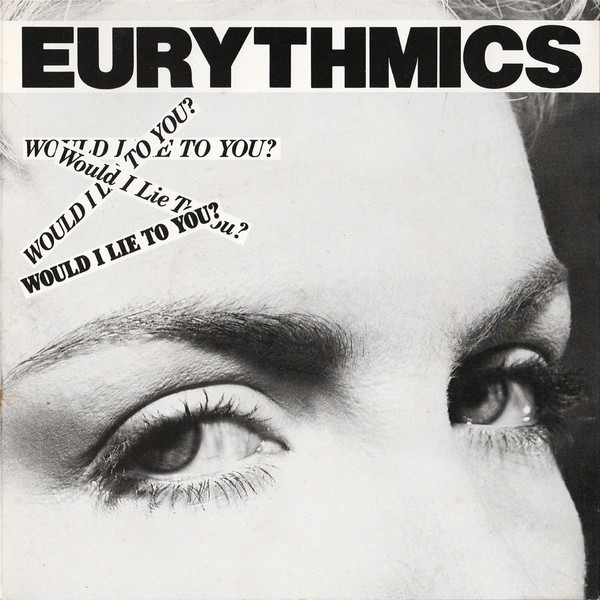
EURYTHMICS - WOULD I LIE TO YOU?
Released: April 9, 1985
Charted: US: #5 UK: #17
"Would I Lie to You?" marked a significant shift in musical direction for Eurythmics, transitioning from their signature synthpop sound to a more rock and rhythm and blues-influenced style. Released on April 1985, as the lead single from their fourth studio album, “Be Yourself Tonight”, the track showcased a departure from electronic programming in favor of a full backing band.
Dave Stewart's quest for a "killer R&B riff" for Eurythmics' third album led to a serendipitous moment during breakfast, where he discovered the riff while strumming his acoustic guitar. Initially met with skepticism from Annie Lennox due to its departure from their usual sound, the infectious energy of the riff inspired Lennox to write the iconic lyrics, "Would I Lie To You," along with unconventional harmonies. Lennox's rapid ability to devise these unique harmonies showcased her musical genius, ultimately resulting in a fusion of Stax-style R&B and Eurythmics' distinctive sound.
Annie Lennox infuses "Would I Lie To You?" with the fiery emotions of an aggrieved lover walking away from infidelity. The song wasn't aimed at Dave Stewart, although they had a romantic involvement before forming Eurythmics. Instead, it draws from Lennox's personal experience, particularly her divorce from her first husband, Radha Raman, a Hare Krishna devotee.
The music video directed by Mary Lambert received heavy rotation on MTV. Screenshots from the video were used for the front and back cover photos, as well as the inner cover art of the “Be Yourself Tonight” album. The visual narrative mirrors the song's lyrics, with Annie Lennox confronting a cheating lover, portrayed by actor Steven Bauer, as she decisively walks away from the relationship for good.
EURYTHMICS - THORN IN MY SIDE
Publicació: 9 d'abril de 1985
Llistes: EUA: #68 Regne Unit: #5
"Thorn in My Side" és un poderós himne de desafiament que aborda la traïció d'una parella infidel. Llançada com a segon senzill del seu àlbum "Revenge" el 1986, la cançó va ser escrita per Annie Lennox i David A. Stewart, amb Stewart encarregant-se de les tasques de producció. Mentre el senzill anterior "When Tomorrow Comes" només va tenir un èxit modest, "Thorn in My Side" va revitalitzar la presència a les llistes del duet, convertint-se en el seu novè Top 10 al Regne Unit, on va arribar al número cinc. Malgrat un rendiment menys impressionant a la llista Billboard Hot 100 als Estats Units, estancant-se al número 68, la cançó va trobar un major èxit a Irlanda, arribant al número dos, i entrant al top 10 a Nova Zelanda i Suècia.
"Thorn in My Side" reflecteix la convulsió emocional d'Annie Lennox després del seu divorci, canalitzada en una lletra poderosa que mostra tant la ràbia com la passió. Segons Dave Stewart, la interpretació de Lennox de la lletra punyent va ser res menys que notable, amb la seva veu gelada però apassionada capturada en una sola presa. Stewart conclou que l'habilitat de Lennox per transmetre emocions brutes a través de la seva veu va consolidar la seva reputació com una de les millors cantants de tots els temps.
Dirigit per Chris Ashbrook en col·laboració amb Dave Stewart, el videoclip reflecteix la implicació de Stewart en la conceptualització de l'estètica visual d'Eurythmics. La pel·lícula presenta la banda actuant en un bar ambientat en un estudi, guarnits amb els seus característics vestits de l'època de Revenge de color negre i cuir. Predominantment, mostra plans curts d'Annie Lennox interpretant la cançó en una habitació amb la banda i un petit públic, incloent-hi una aparició notable d'un home sense samarreta amb el tatuatge d’una rosa. El motiu de la rosa torna al final mentre Lennox escampa pètals. El públic inclou un grup d'Hells Angels, afegint aun to cru a l'atmosfera de l’escena. Clem Burke, bateria de Blondie, fa una aparició al vídeo, reflectint la seva col·laboració amb Eurythmics durant aquell període. A més, la vocalista de suport Joniece Jamison, que va debutar a "When Tomorrow Comes", també apareix en aquest vídeo.
Billboard va descriure "Thorn in My Side" com a reminiscent del "Swinging London, 1964", amb un to que equilibra l'ironia i l'afecte pel passat. Cash Box la va elogiar com un senzill pop / rock atractiu, notant com la veu victoriosa d'Annie Lennox i la melodia contagiosa amaguen les lletres rabioses de la cançó.
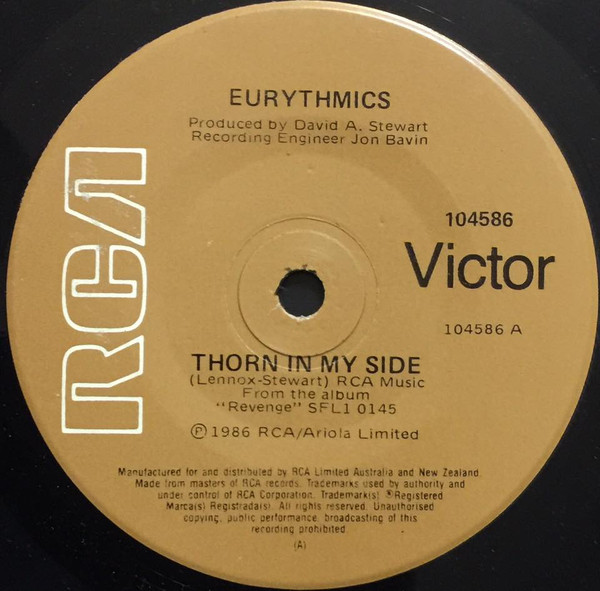
EURYTHMICS - THORN IN MY SIDE
Released: April 9, 1985
Charted: US: #68 UK: #5
"Thorn in My Side" is a powerful anthem of defiance, addressing the betrayal of an unfaithful partner. Released as the second single from their album "Revenge" in 1986, the song was penned by Annie Lennox and David A. Stewart, with Stewart handling production duties. While the preceding single "When Tomorrow Comes" had only modest success, "Thorn in My Side" revitalized the duo's chart presence, becoming their ninth Top 10 hit in the UK, where it peaked at number five. Despite a less impressive performance on the Billboard Hot 100 in the US, stalling at number 68, the song found greater success in Ireland, reaching number two, and charting in the top 10 in New Zealand and Sweden.
"Thorn in My Side" reflects the emotional turmoil of Annie Lennox following her divorce, channeled into powerful lyrics that capture both anger and passion. According to Dave Stewart, Lennox's delivery of the cutting lyrics was nothing short of remarkable, with her icy-cold yet passionate performance captured in a single take. Stewart conclude that Lennox's ability to convey raw emotion through her vocals solidified her reputation as one of the greatest singers of all time.
Directed by Chris Ashbrook in collaboration with Dave Stewart, the music video reflects Stewart's involvement in conceptualizing Eurythmics' visual aesthetics. The film features the band performing in a studio set bar, donned in their signature black and leather Revenge stage costumes. It predominantly features tight shots of Annie Lennox performing the song in a room with the band and a small audience, including a notable appearance by a shirtless man with a rose tattoo. The rose motif recurs towards the end as Lennox scatters petals. The audience includes a group of Hells Angels, adding to the gritty atmosphere of the scene. Clem Burke, drummer of Blondie, makes an appearance in the video, reflecting his collaboration with Eurythmics during that period. Additionally, backing vocalist Joniece Jamison, who debuted in "When Tomorrow Comes," is also featured in this video.
Billboard described "Thorn in My Side" as reminiscent of "Swinging London, 1964," with a tone that balances irony and affection for the past. Cash Box praised it as an appealing pop/rock single, noting how Annie Lennox's winning vocal and the infectious melody mask the song's seething lyrics.
EURYTHMICS - THERE MUST BE AN ANGEL (PLAYING WITH MY HEART)
Publicació: 24 de juny de 1985
Llistes: EUA: #22 Regne Unit: #1 (2 setmanes)
"There Must Be an Angel (Playing with My Heart)" és una destacada cançó de l'àlbum "Be Yourself Tonight" dels Eurythmics, que presenta un solo d'harmonica del llegendari Stevie Wonder. La cançó va assolir un èxit global generalitzat, especialment a Irlanda, Noruega i el Regne Unit, on es va convertir en l'únic número u del duo.
"There Must Be an Angel (Playing with My Heart)" va marcar un fet significatiu per als Eurythmics, convertint-se en el seu primer i únic single número u al Regne Unit el 27 de juliol de 1985. Va mantenir la primera posició durant dues setmanes i va aconseguir el número u també a Finlàndia, Irlanda i Noruega. A més, la cançó va arribar al top 10 en diversos països, incloent-hi Austràlia, Àustria, Bèlgica, França, Alemanya, els Països Baixos, Nova Zelanda i Suècia. Als Estats Units, va assolir el número 22 a la llista Billboard Hot 100.
La contribució de Stevie Wonder a "There Must Be an Angel (Playing with My Heart)" va afegir un toc únic a la cançó. Lennox i Stewart es van afrontar a la incertesa sobre la participació de Wonder a causa del seu imprevisible horari. Quan Wonder va arribar a Los Angeles per enregistrar, la seva presència va deixar una grata impressió en ells. Lennox va recordar amb tendresa la seva arribada, descrivint Wonder com una persona encantadora amb trenes guarnides amb boniques perles daurades. Durant la seva actuació, els moviments de cap de Wonder feien soroll amb les perles, però el seu assistent va resoldre ràpidament el problema fixant-li els cabells amb un sac de fesols, assegurant un enregistrament impecable.
"There Must Be an Angel (Playing with My Heart)" destaca de moltes altres cançons dels Eurythmics per la seva temàtica de pura joia i felicitat en l'amor, en contrast amb la tensió dinàmica present en altres obres seves. La lletra d'Annie Lennox expressa l'eufòria de estar profundament enamorat, evocant la sensació que els àngels juguen amb el seu cor. Malgrat els desafiaments personals, incloent-hi el breu matrimoni de Lennox amb Radha Raman, la cançó reflecteix un moment brillant en la seva vida romàntica. La capacitat de Lennox de capturar diverses emocions en la seva música és evident, ja que navega tant per experiències alegres com tumultuoses, com es mostra en "There Must Be an Angel" i "Would I Lie to You?" del mateix àlbum, respectivament.
El videoclip transporta els espectadors als magnífics tribunals de Lluís XIV de França, retractat per David A. Stewart. Ambientat al Teatre Nou de Wimbledon a Londres, el vídeo mostra una representació teatral amb àngels cantants, incloent-hi un interpretat per Steven O'Donnell. Annie Lennox pren el paper d'una cantant captivadora, portada a entretenir el rei i la seva cort a Versalles.
EURYTHMICS - THERE MUST BE AN ANGEL (PLAYING WITH MY HEART)
Released: June 24, 1985
Charted: US: #22 UK: #1 (2 weeks)
"There Must Be an Angel (Playing with My Heart)" is a standout track from Eurythmics' album "Be Yourself Tonight," featuring a harmonica solo by the legendary Stevie Wonder. The song achieved widespread success globally, particularly in Ireland, Norway, and the United Kingdom, where it became the duo's sole chart-topping hit.
"There Must Be an Angel (Playing with My Heart)" marked a significant milestone for Eurythmics, becoming their first and only number-one single in the United Kingdom on 27 July 1985. It maintained the top position for two weeks and achieved chart-topping success in Finland, Ireland, and Norway as well. Additionally, the song reached the top 10 in various countries including Australia, Austria, Belgium, France, Germany, the Netherlands, New Zealand, and Sweden. In the United States, it peaked at number 22 on the Billboard Hot 100 chart.
Stevie Wonder's contribution to "There Must Be an Angel (Playing with My Heart)" added a unique touch to the song. Lennox and Stewart faced uncertainty about Wonder's participation due to his unpredictable schedule. When Wonder arrived in Los Angeles to record, his presence left a lasting impression. Lennox fondly recalled his arrival, describing Wonder as "an adorable person" with braids adorned with beautiful gold beads. During his performance, Wonder's head movements caused the beads to make noise, but his assistant quickly resolved the issue by securing his hair with a beanbag, ensuring a flawless recording.
"There Must Be an Angel (Playing with My Heart)" stands out from many Eurythmics songs due to its theme of pure joy and happiness in love, contrasting with the dynamic tension present in their other works. Annie Lennox's lyrics express the euphoria of being deeply in love, evoking the sensation of angels playing with her heart. Despite personal challenges, including Lennox's brief marriage to Radha Raman, the song reflects a brighter moment in her romantic life. Lennox's ability to capture various emotions in her music is evident, as she navigates through both joyful and tumultuous experiences, as showcased in "There Must Be an Angel" and "Would I Lie to You?" from the same album, respectively.
The music video transports viewers to the lavish courts of Louis XIV of France, portrayed by David A. Stewart. Set at the New Wimbledon Theatre in London, the video depicts a theatrical performance featuring singing angels, including one played by Steven O'Donnell. Annie Lennox takes on the role of a captivating singer, brought forth to entertain the king and his court at Versailles.
8.5.24
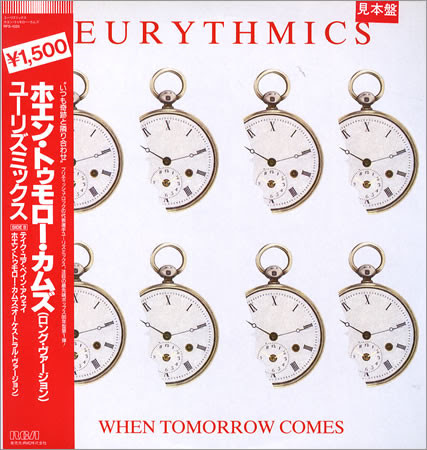
EURYTHMICS - WHEN TOMORROW COMES
Released: June 2, 1986
Charted: UK: #30
"When Tomorrow Comes" marked Eurythmics' continuation of their rock and R&B sound from their previous album, "Be Yourself Tonight." Written by Annie Lennox, David A. Stewart, and guest keyboardist Pat Seymour, the song captures the duo's signature blend of pop sensibility with elements of rock and soul. The song served as the lead single from the album “Revenge” and achieved moderate success in the UK, reaching the Top 30. It fared better in Australia and Scandinavia, where it broke into the Top 10. Surprisingly, the song was not released as a single in the United States.
Eurythmics showcased their versatility by incorporating live musicians like Clem Burke from Blondie on drums, Jimmy "Z" Zavala on saxophone, John McKenzie on bass, and Michael Kamen arranging the orchestra for the “Revenge” album. "When Tomorrow Comes" showcases Eurythmics' evolution into a more mainstream pop-rock sound, diverging from their earlier work. Despite this shift, the song retains its allure and potency, with Annie Lennox's vocals shining amidst the distorted guitars and saxophone, adding a powerful yet serene quality to the track.
Directed by Stewart alongside his frequent collaborator Chris Ashbrook, in contrast to Eurythmics' more avant-garde videos, the video takes a more conventional approach. However, viewers are treated to Annie Lennox's dancing skills and a glimpse of Dave Stewart during one of his memorable hair phases.