Total de visualitzacions de pàgina:

17.5.24


ROLLING STONES - PAINT IT BLACK


Publicació: 7 de maig de 1966 (EUA) 13 de maig de 1966 (Regne Unit)

Llistes: EUA: #1 (2 setmanes)  Regne Unit: #1 (1 setmana)


"Paint It Black" és una cançó dels Rolling Stones, escrita per Mick Jagger i Keith Richards. Combina influències índies, del Pròxim Orient i de l'Europa Oriental i presenta lletres que aborden temes de dolor i pèrdua. La cançó es va llançar com a single per London Records el 7 de maig de 1966 als Estats Units i per Decca Records el 13 de maig al Regne Unit. Posteriorment, es va convertir en el tema d'obertura de la versió americana de l'àlbum d'estudi del 1966 de la banda "Aftermath", tot i que no es va incloure en la versió original del Regne Unit.


"Paint It Black" està escrita des de la perspectiva de algú que experimenta depressió, desitjant que tot es torni negre per coincidir amb el seu estat d'ànim. Tot i que Mick Jagger va mencionar que no hi havia cap inspiració específica per a la lletra, la cançó evoca temes de dolor i pèrdua. La imatge d'una fila de cotxes pintats de negre i la referència a les flors i l'amor que no tornen suggereixen dol i la ressaca de la mort d'un ésser estimat. La frase "I could not foresee this thing happening to you” (No podia preveure que això et passés a tu) indica la naturalesa sobtada i inesperada de la pèrdua. La menció de mirar cap al sol ponent i esperar reunir-se amb l'ésser estimat abans del matí suggereix un desig de connexió més enllà de la mort.


Els Rolling Stones van concebre inicialment "Paint It Black" com una cançó d'ànima més lenta i convencional, però durant una sessió d'enregistrament, Bill Wyman va improvisar a l'orgue imitant música escoltada als casaments jueus. El co-gerent Eric Easton i Charlie Watts es van unir amb un patró de bateria improvisat de doble temps, semblants als ritmes de danses del Pròxim Orient. Aquest ritme alegre contrastava amb la lletra mòrbida de la cançó i es va incorporar a la gravació. A més, Brian Jones, guitarrista dels Stones, va tocar el sitar a la pista, en un gest cap a l'ús de l'instrument pels Beatles a "Norwegian Wood (This Bird Has Flown)" el 1965.


Keith Richards va explicar la inspiració de "Paint It Black", afirmant que mentre la banda estava a Fiji durant un curt període, van trobar diversos instruments indis en fabricació, incloent sitars fets de síndries o carbasses que havien estat endurides. Intrigats per aquests instruments, van decidir experimentar amb ells a l'estudi. Richards va explicar que el sitar proporcionava el so perfecte per a "Paint It Black", ja que van trobar que era més adequat que una guitarra per la seva capacitat d'aconseguir la tonalitat desitjada.


Brian Jones va jugar un paper significatiu en la creació de "Paint It Black", contribuint als arranjaments i la direcció musical. Malgrat la seva substancial aportació, Jones no va ser acreditat com a compositor, amb Mick Jagger i Keith Richards rebent el crèdit exclusiu. Aquesta omissió dels crèdits de composició no era poc comú per a Jones, ja que sovint jugava un paper més en segon pla en el procés creatiu de la banda. Tot i que Jones va fer contribucions notables a altres cançons dels Rolling Stones, com tocar la guitarra solista a "Get Off of My Cloud" i la flauta a "Ruby Tuesday", el seu treball a "Paint It Black" és considerat com un dels seus assoliments musicals més significatius dins de la banda.


La inclusió d'una coma abans de la paraula "black" al títol del single, convertint-lo en "Paint It, Black", ha donat lloc a diverses interpretacions entre els fans. Alguns han suggerit que implica que una persona anomenada "Black" s'insta a pintar, potencialment fent una declaració sobre les relacions racials. No obstant, és més probable que la coma fos el resultat d'un error ortogràfic, que no era poc comú a la dècada dels 60. Com a resultat, qualsevol significat més profund associat amb la coma pot ser purament coincidència, amb el títol previst simplement sent "Paint It Black".


ROLLING STONES - PAINT IT BLACK


Released: May 7, 1966 (US) May 13, 1966 (UK)

Charted:  US: #1 (2 weeks)  UK: #1 (1 week)


"Paint It Black" is a raga rock song by the Rolling Stones, written by Mick Jagger and Keith Richards. It blends Indian, Middle Eastern, and Eastern European influences and features lyrics addressing themes of grief and loss. The song was released as a single by London Records on May 7, 1966, in the United States and by Decca Records on May 13 in the United Kingdom. It later became the opening track on the American version of the band's 1966 studio album “Aftermath”, although it was not included on the original UK release.


"Paint It Black" is written from the perspective of someone experiencing depression, desiring for everything to turn black to match their mood. While Mick Jagger mentioned there was no specific inspiration for the lyrics, the song evokes themes of grief and loss. The imagery of a line of cars painted black and the reference to flowers and love not returning suggest mourning and the aftermath of a loved one's death. The line "I could not foresee this thing happening to you" indicates the sudden and unexpected nature of the loss. The mention of looking into the setting sun and hoping to reunite with the loved one before morning suggests a longing for connection beyond death.


The Rolling Stones initially conceived "Paint It Black" as a slower, conventional soul song, but during a recording session, Bill Wyman improvised on the organ in a playful manner, imitating music heard at Jewish weddings. Co-manager Eric Easton and Charlie Watts joined in with an improvised double-time drum pattern, reminiscent of rhythms found in Middle Eastern dances. This upbeat rhythm contrasted with the song's morbid lyrics and was incorporated into the recording. Additionally, Stones guitarist Brian Jones played the sitar on the track, a nod to The Beatles' use of the instrument in "Norwegian Wood (This Bird Has Flown)" in 1965. 


Keith Richards recounted the inspiration of "Paint It Black," stating that while the band was in Fiji for a brief period, they encountered various Indian instruments being made, including sitars crafted from watermelons or pumpkins that had been hardened. Intrigued by these instruments, they decided to experiment with them in the studio. Richards explained that the sitar provided the perfect sound for "Paint It Black," as they found it to be more suitable than a guitar due to its ability to achieve the desired tonality for the song.


Brian Jones played a significant role in the creation of "Paint It Black," contributing to the arrangements and musical direction of the song. Despite his substantial input, Jones was not credited as a songwriter, with Mick Jagger and Keith Richards receiving the sole credit. This omission from the songwriting credits was not uncommon for Jones, as he often played a more behind-the-scenes role in the band's creative process. While Jones made notable contributions to other Rolling Stones songs, such as playing lead guitar on "Get Off of My Cloud" and recorder on "Ruby Tuesday," his work on "Paint It Black" is regarded as one of his most significant musical achievements within the band.


The inclusion of a comma before the word "black" in the title of the single, rendering it as "Paint It, Black," has led to various interpretations among fans. Some have suggested that it implies a person named "Black" being urged to paint, potentially making a statement on race relations. However, it's more probable that the comma was the result of a clerical error, which was not uncommon in the '60s. As a result, any deeper meaning associated with the comma may be purely coincidental, with the intended title simply being "Paint It Black."


16.5.24


ROLLING STONES - BROWN SUGAR

Publicació: 16 d'abril de 1971

Llistes: EUA: #1 (2 setmanes)   Regne Unit: #2 


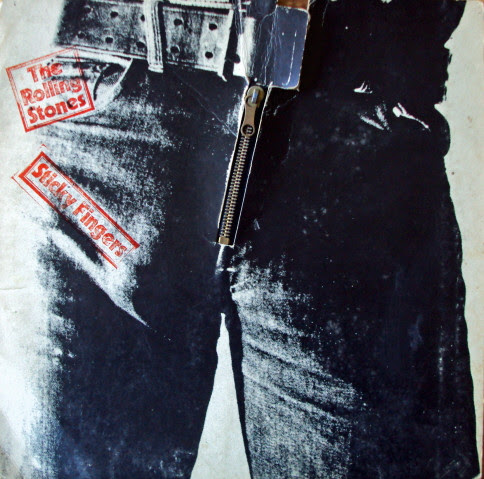
"Brown Sugar" és una cançó puntal de la banda de rock anglesa The Rolling Stones. Escrita principalment per Mick Jagger, serveix com a tema d'obertura i single principal del seu àlbum "Sticky Fingers" (1971). La cançó va encapçalar les llistes a Estats Units i Canadà, mentre que va arribar al número dos al Regne Unit i a Irlanda.


La lletra descriu les experiències terrorífiques dels esclaus d'Àfrica que van ser venuts a Nova Orleans i van ser sotmesos a violacions pels seus amos blancs. Malgrat el tema seriós, l'estructura de rock vitalista i energètica de la cançó pot donar la impressió d'una narrativa lleugera sobre relacions interracials. Segons el llibre "Up And Down With The Rolling Stones" de Tony Sanchez, les referències a l'esclavitud i a les fuetades també porten un doble sentit, al·ludint als perills de ser "dominat" per la heroina marró, coneguda com a "Brown Sugar", degut al seu color quan es crema en una cullera.


Segons Bill Wyman, part de la inspiració darrere de la cançó va venir d'una cantant de suport negra anomenada Claudia Lennear, que era membre de les Ikettes d'Ike Turner. Jagger i Lennear es van conèixer durant la gira de The Rolling Stones amb Turner el 1969. A més, la cantant d'origen americà Marsha Hunt es menciona a vegades com una altra inspiració per a la cançó. Jagger i Hunt es van conèixer quan ella era part del repartiment en la producció londinenca del musical "Hair". La seva relació, que es va mantenir en secret fins al 1972, va donar lloc al naixement d'una filla anomenada Karis. Originalment, Mick Jagger va escriure la cançó amb el títol provisional "Black Pussy". No obstant, finalment es va considerar que era massa directe i es va canviar a "Brown Sugar".


Una versió piratejada amb Eric Clapton a la guitarra slide va ser enregistrada en una festa d'aniversari per Keith Richards i sovint es considera una audició informal perquè Clapton es sumés als Stones com a segon guitarrista. Tot i que el estil de Clapton, tot i ser tècnicament competent, mancava de sinergia amb el so de la banda, ja que la seva guitarra solista no interactuava amb la resta del grup. En moltes entrevistes, Richards ha elogiat el talent musical de Clapton, però va assenyalar que el so de dues guitarres que ell i Ron Wood van cultivar no s'adaptava a l'estil de Clapton. De tota manera, un any després de la gravació inicial, els Rolling Stones van produir una altra versió de "Brown Sugar" als Olympic Studios de Londres, amb Eric Clapton a la guitarra i Al Kooper als teclats. Tot i que es va considerar llançar aquesta versió com a single, va quedar arxivada fins al 2015, quan va aparèixer en una reedició de "Sticky Fingers".


Per promocionar la cançó, els Rolling Stones van aparèixer al Top of the Pops, on van interpretar "Brown Sugar", juntament amb "Wild Horses" i "Bitch" per presentar l'àlbum al programa. Aquesta actuació es va gravar cap a finals de març de 1971 i es va emetre el 15 d'abril i el 6 de maig. Desafortunadament, degut a les pràctiques de la BBC de l'època, només va sobreviure l'actuació de "Brown Sugar", amb el saxofonista Trevor Lawrence imitant el solo real de Bobby Keys.


"Brown Sugar" va significar el debut de Rolling Stones Records, el propi segell subsidiari de la banda sota Atlantic Records. Aquest single icònic també va presentar al món el famós logotip de la llengua associat amb els Rolling Stones.


ROLLING STONES - BROWN SUGAR


Released: April 16, 1971

Charted:  US: #1 (2 weeks)  UK: #2 


"Brown Sugar" is a standout track by the English rock band the Rolling Stones. Primarily written by Mick Jagger, it serves as the opening track and lead single from their album Sticky Fingers (1971). The song topped the charts in both the United States and Canada, while reaching number two in the United Kingdom and Ireland.


The lyrics depict the harrowing experiences of slaves from Africa who were sold in New Orleans and subjected to rape by their white masters. Despite the serious subject matter, the song's upbeat and energetic rock structure may give the impression of a light-hearted narrative about interracial relationships. According to the book "Up And Down With The Rolling Stones" by Tony Sanchez, the references to slavery and whipping also carry a double meaning, alluding to the dangers of being "mastered" by Brown Heroin, commonly known as "Brown Sugar," due to its brown color when cooked in a spoon.


Mick Jagger wrote the lyrics for "Brown Sugar." According to Bill Wyman, part of the inspiration behind the song came from a black backup singer named Claudia Lennear, who was a member of Ike Turner's Ikettes. Jagger and Lennear met during The Rolling Stones' tour with Turner in 1969. Additionally, American-born singer Marsha Hunt is sometimes mentioned as another inspiration for the song. Jagger and Hunt met when she was part of the cast in the London production of the musical "Hair." Their relationship, which was kept secret until 1972, resulted in the birth of a daughter named Karis. Originally, Mick Jagger wrote the song with the working title "Black Pussy." However, he ultimately deemed this too direct and changed it to "Brown Sugar."


A bootleg version featuring Eric Clapton on lead slide guitar was recorded at a birthday party for Keith Richards and is often seen as an informal audition for Clapton to join The Stones as a second guitarist. Clapton's style, while technically proficient, lacked the synergy with the band's sound, as his lead lacked interaction with the rest of the group. In many interviews Richards has praised Clapton's musicianship, but he noted that the two-guitar sound he and Ron Wood cultivated wasn't suited to Clapton's style. Anyway a year after the initial recording, The Rolling Stones produced another version of "Brown Sugar" at Olympic Studios in London, featuring Eric Clapton on guitar and Al Kooper on keyboards. Although considered for release as a single, this version was shelved until 2015 when it appeared on a Sticky Fingers reissue.


To promote the song, the Rolling Stones appeared on Top of the Pops, where they performed "Brown Sugar," along with "Wild Horses" and "Bitch" for the album segment of the show. This performance was taped around late March 1971 and broadcasted on April 15th and May 6th. Unfortunately, due to BBC practices of the time, only the performance of "Brown Sugar" survived, with saxophonist Trevor Lawrence miming to Bobby Keys' actual solo.


"Brown Sugar" marked the debut release on Rolling Stones Records, the band's own subsidiary label under Atlantic Records. This iconic single also introduced the world to the now-famous tongue logo associated with The Rolling Stones.


15.5.24


ROLLING STONES - ANGIE

Estrenada: 20 d'agost de 1973

Llistes: EUA: #1 (1 setmana)   Regne Unit: #5 


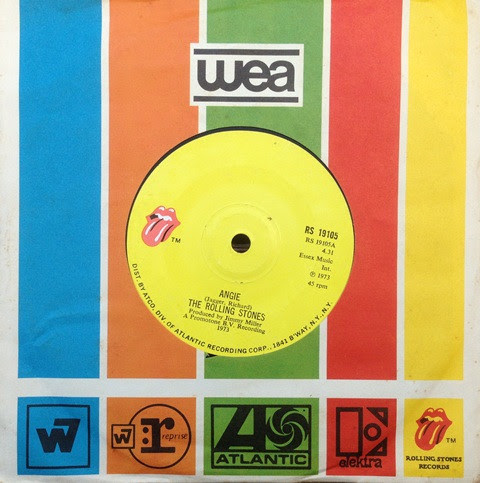
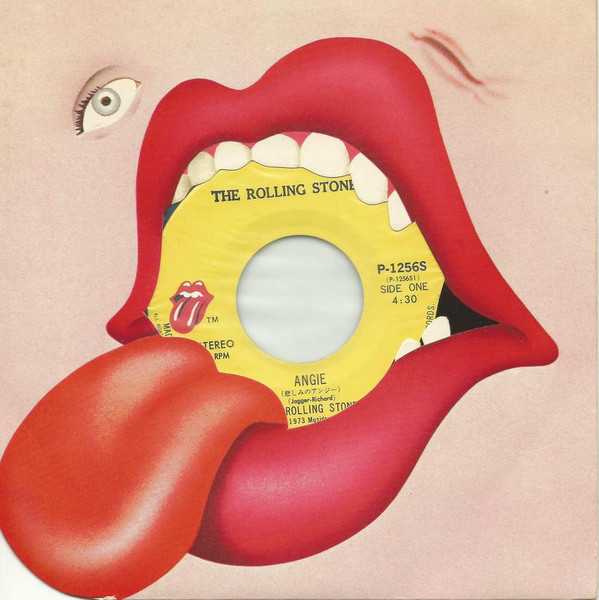
"Angie" destaca com una balada commovedora en el repertori dels Rolling Stones, llançada com a single principal de l'àlbum "Goats Head Soup" l’agost de 1973. Enregistrada a finals de 1972, la cançó mostra un acompanyament de piano composat per Keith Richards i interpretat pel músic de sessió Nicky Hopkins. A més, l'arranjament de cordes, que contribueix a l'atmosfera melancòlica de la cançó, va ser creat per Nicky Harrison.


Tot i el persistent rumor que suggereix que "Angie" va ser escrita sobre la dona de David Bowie, Angela, Mick Jagger va aclarir que en realitat va ser Keith Richards qui va trobar el títol. Segons Jagger, Richards es va inspirar en la seva pròpia filla, Angela. Keith Richards mateix va aclarir l’inspiració darrere d’"Angie" a la seva autobiografia "Life", explicant que la cançó no tractava específicament sobre ningú sinó que va ser inspirada pel naixement de la seva filla, Angela. A l'autobiografia de Keith Richards, va revelar que la idea del nom "Angie" li va venir durant la seva desintoxicació de la heroïna a Suïssa. Va recordar haver escrit la cançó en una sola tarda, trobant consol en el fet de poder tornar a tocar la seva guitarra. Richards va aclarir que "Angie" no era sobre cap individu específic sinó un nom que li ballava pel cap en aquell moment. Podria haver utilitzat "Diana" o qualsevol altre nom. 


"Angie" va ser indubtablement un èxit massiu, arribant al capdavant de les llistes de més d'un país arreu del món. És habitual que les emissores de ràdio facin edicions de les cançons per adaptar-les a les seves necessitats de programació, especialment quan es tracta de pistes llargues. Reduir la cançó a 3 minuts, ometent certes seccions, probablement la va fer més apta per a la ràdio.


ROLLING STONES - ANGIE


Released: August 20, 1973

Charted:  US: #1 (1 week)  UK: #5 


"Angie" stands out as a poignant ballad in The Rolling Stones' repertoire released as the lead single from the album "Goats Head Soup" in August 1973. Recorded in late 1972, the song showcases a delicate piano accompaniment composed by Keith Richards and performed by session musician Nicky Hopkins. Additionally, the strings arrangement, contributing to the song's melancholic atmosphere, was crafted by Nicky Harrison. 


Despite the persistent rumor suggesting that "Angie" was written about David Bowie's wife, Angela, Mick Jagger clarified that it was actually Keith Richards who came up with the title. According to Jagger, Richards was inspired by his own daughter, Angela. Keith Richards himself clarified the inspiration behind "Angie" in his autobiography "Life," explaining that the song was not specifically about anyone but rather inspired by the birth of his daughter, Angela. In Keith Richards' autobiography, he revealed that the inspiration for the name "Angie" came to him during his detoxification from heroin addiction in Switzerland. He recalled writing the song in a single afternoon, finding solace in being able to play his guitar again. Richards clarified that "Angie" wasn't about any specific individual but rather a name that resonated with him at the time, similar to how "Diana" might be used. 


"Angie" was undeniably a massive hit, reaching the top of the charts in multiple countries around the world. It's common for radio stations to make edits to songs to fit their programming needs, especially when dealing with longer tracks. Shortening the song to 3 minutes by omitting certain sections likely made it more radio-friendly and increased its airplay.