Total de visualitzacions de pàgina:

25.5.24


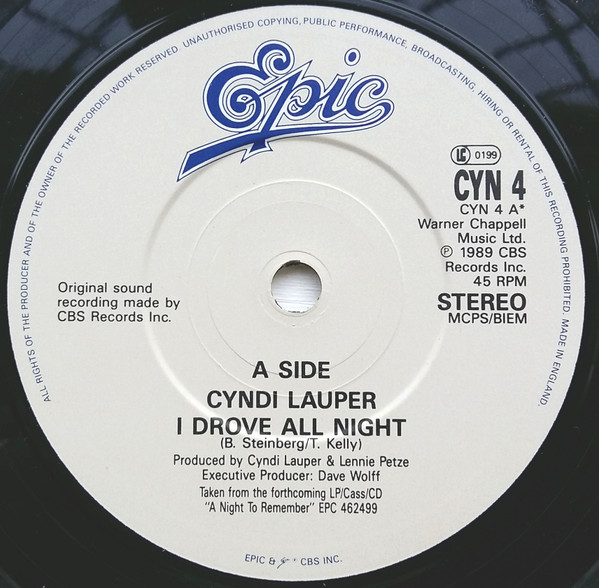
CYNDI LAUPER - I DROVE ALL NIGHT


Released: April 24, 1989

Charted:  UK: #7   US: #6 


"I Drove All Night" is a powerful ballad by Cyndi Lauper, with an interesting history behind. Originally penned for Roy Orbison, it found its way to Cyndi, who recorded and released it for her album "A Night to Remember". Lauper's rendition of the song achieved significant success, becoming a top 10 hit in various charts on both sides of the Atlantic in 1989. The song's popularity solidified its place as one of Lauper's notable tracks and marked her final top 40 hit on the American pop charts.


The song's lyrics convey intense longing and the determination to be with someone, portrayed through Lauper's emotive vocals and the song's driving beat and memorable melody. Despite any perceived limitations in range, Lauper's voice carries emotional depth and sincerity, evident in her delivery of the song's apologetic yet passionate lyrics. The pre-chorus showcases Lauper's ability to build intensity and deliver powerful belting, adding layers of emotion to the song. While her vocal style may not adhere to conventional standards of technical proficiency, it resonates with authenticity and expression. In the chorus, Lauper's lyrics express a mix of tenderness and assertiveness, reflecting the complex emotions of the song's protagonist as she seeks connection with her lover. 


Lauper's rendition of the song has become iconic, remaining the definitive version despite numerous covers over the years. The track's resonance extends beyond music, as it has been featured in movies and TV shows, often serving as a theme for dramatic moments. 


The music video directed by Cyndi Lauper and Scott Kalvert is known for its captivating visuals and innovative elements. The video incorporates the opening lines from the song "Kindred Spirit" and features shots of an antique car, which adds to the nostalgic and romantic atmosphere of the video. Lauper's signature energetic and expressive dancing is a central feature of the video, adding to its dynamic and captivating nature. Additionally, the use of movie film projected onto Lauper's naked body adds an artistic and visually striking element to the video, further enhancing its impact and memorability. 


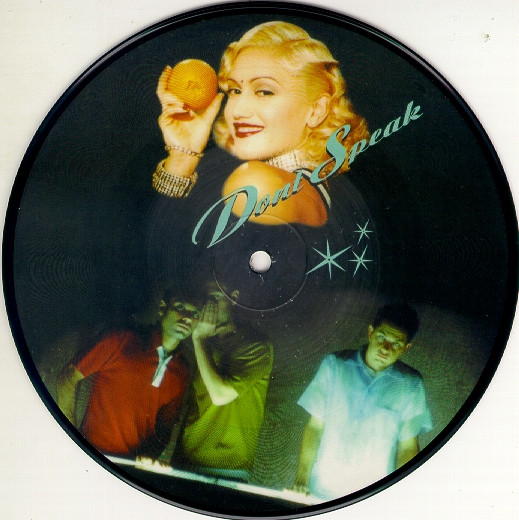
NO DOUBT - DON’T SPEAK


Estrena: abril de 1996

Llistes: Regne Unit: #1 (3 setmanes)


"Don't Speak" és una balada del tercer àlbum de No Doubt, "Tragic Kingdom" (1995). Malgrat la seva popularitat i la seva considerable difusió a la ràdio, "Don't Speak" no va entrar a les llistes dels Billboard Hot 100 dels Estats Units a causa de les regles de classificació en aquell moment i no estar editada en single en el país,  però va encapçalar la llista Hot 100 Airplay durant unes impressionants 16 setmanes. "Don't Speak" va tenir un impacte significatiu al Regne Unit, arribant al número u i mantenint-se en aquesta posició durant tres setmanes. Aquest èxit va fer que es convertís en el major èxit de No Doubt al Regne Unit.


"Don't Speak" està profundament arrelada en les experiències personals de la cantant principal, Gwen Stefani. Escrita originalment com una cançó d'amor per Gwen i el seu germà Eric Stefani, es va transformar en un himne commovedor de ruptura després que la relació de set anys de Gwen amb el baixista de No Doubt, Tony Kanal, arribés al final. Eric Stefani, el fundador de la banda, va marxar abans que aconseguissin èxit a gran escala per treballar com a animador de The Simpsons. La ruptura de Gwen i Tony va passar durant la gravació de l'àlbum "Tragic Kingdom", un procés que va abastar dos anys. La seva relació, que va començar poc després que Kanal es sumés a la banda el 1987, va acabar finalment, portant Gwen a canalitzar les seves emocions en les lletra sincera de "Don't Speak".


El vídeo musical dirigit per Sophie Muller, marca l'inici d'una col·laboració de llarga durada entre la banda i la directora. El vídeo comença amb una escena de Kanal agafant una taronja podrida d'un arbre, un gest simbòlic sovint omitit a les versions televisades. Filmada principalment a l'escenari 2 dels estudis Mack Sennett a Silver Lake, el vídeo alterna entre la interpretació de la banda i escenes que mostren el focus dels mitjans de comunicació en Stefani per sobre de la resta de la banda. La segona meitat inclou imatges en directe de la actuació de la banda al Roseland Ballroom de Nova York, amb aparicions de membres de Dog Eat Dog i Goldfinger. A més, hi ha un breu moment que mostra Dumont tocant al costat del guitarrista dels Foo Fighters, Pat Smear. El vídeo conclou amb Kanal reemplaçant la taronja a l'arbre, aconseguit amb imatges de Kanal al revés tirant de la taronja. Hi ha una versió alternativa del vídeo que mostra només la part de la actuació en directe.


"Don't Speak" va portar a No Doubt un reconeixement significatiu, guanyant-nominalitzacions als Premis Grammy i un Premi American Music. Tot i que no van guanyar en aquestes categories, la cançó els va fer guanyar el seu primer Premi MTV Video Music Award a la millor vídeo de grup el 1997.


NO DOUBT - DON’T SPEAK


Released: April 1996

Charted:  UK: #1 (3 weeks)


"Don't Speak" is a poignant ballad from No Doubt’s third album, "Tragic Kingdom" (1995). Despite its popularity and significant airplay, "Don't Speak" did not chart on the US Billboard Hot 100 due to charting rules at the time, but it topped the Hot 100 Airplay chart for an impressive 16 weeks. "Don't Speak" made a significant impact in the UK, reaching number one and maintaining that position for three weeks. This success propelled it to become No Doubt's biggest hit in the UK.


"Don't Speak" by is deeply rooted in lead singer Gwen Stefani's personal experiences. Originally written as a love song by Gwen and her brother Eric Stefani, it transformed into a poignant breakup anthem after Gwen's seven-year relationship with No Doubt's bassist Tony Kanal came to an end. Eric Stefani, the band's founder, left before they achieved widespread success to work as an animator for The Simpsons. Gwen and Tony's breakup occurred during the recording of the "Tragic Kingdom" album, a process that spanned two years. Their relationship, which began shortly after Kanal joined the band in 1987, ultimately ended, leading Gwen to channel her emotions into the heartfelt lyrics of "Don't Speak."


The music video directed by Sophie Muller, marks the beginning of a longstanding collaboration between the band and the director. The video begins with a scene of Kanal picking a rotten orange from a tree, a symbolic gesture often omitted from televised versions. Shot primarily on Stage 2 at Mack Sennett Studios in Silver Lake, the video alternates between the band performing and scenes depicting the media's focus on Stefani over the rest of the band. The latter half includes live footage from the band's performance at the Roseland Ballroom in New York City, featuring guest appearances by members of Dog Eat Dog and Goldfinger. Additionally, there's a brief moment showing Dumont playing alongside Foo Fighters guitarist Pat Smear. The video concludes with Kanal replacing the orange in the tree, achieved through footage of Kanal in reverse pulling the orange off. There is an alternate version of the video showing just the live performance part.


"Don't Speak" brought No Doubt significant recognition, earning them nominations for Grammy Awards and an American Music Award. Although they didn't secure wins in those categories, the song did earn them their first MTV Video Music Award for Best Group Video in 1997. 


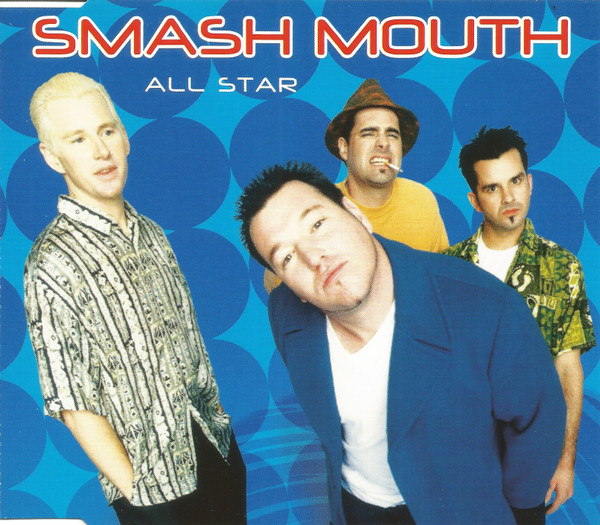
 SMASH MOUTH - ALL STAR

Released: May 4, 1999

Charted:  US: #4   UK: #24 


"All Star" is a song by the American rock band Smash Mouth, featured on their second studio album, Astro Lounge (1999). Penned by Greg Camp and produced by Eric Valentine, it was released on May 1999, as Astro Lounge's lead single. The track was crafted in response to Interscope's request for more singles, drawing influence from contemporary acts like Sugar Ray and Third Eye Blind. Camp aimed to create an anthem for outcasts, departing from Smash Mouth's ska punk roots for a more radio-friendly sound.


"All Star" was inspired by Smash Mouth's fanbase, particularly those who faced bullying or criticism for their interests. Greg Camp, the band's guitarist and songwriter, crafted the song as a form of daily affirmation for these fans. While on tour for their debut album, Fush Yu Mang, the band received numerous letters from fans expressing struggles with bullying and criticism. Camp drew from these experiences to create an uplifting anthem aimed at fostering self-confidence and resilience.


Greg Camp incorporated a voice sample from NASA's Apollo moon mission recordings, specifically the phrase "go for the moon," into "All Star." Camp created the song in his basement studio, using turntables to craft beats and scratches. Since the audio clips are in the public domain, Camp didn't have to pay to use them, as NASA has made many of these files available online.


While "All Star" shares its name with sports terminology and the band name Smash Mouth has football connotations, Greg Camp didn't write the song with sports in mind. Instead, the song serves as an anthem for anyone facing criticism or opposition while pursuing their goals, reflecting Camp's intention to uplift and inspire listeners in various endeavors.


Directed by McG, the music video features cameos by various actors portraying their characters from the superhero film "Mystery Men." The video includes appearances by William H. Macy, Ben Stiller, Hank Azaria, Paul Reubens, Kel Mitchell, Janeane Garofalo, Doug Jones, and Dane Cook. These appearances are primarily based on stock footage from the film, with body doubles portraying the characters in all other scenes. The video begins with the characters from "Mystery Men" seeking recruits, eventually expressing interest in Smash Mouth singer Steve Harwell. The rest of the video showcases Harwell performing various feats, such as rescuing a dog from a burning building and flipping over a toppled school bus, interspersed with scenes from "Mystery Men."


24.5.24


KLF - JUSTIFY AND ANCIENT / 3 a.m. ETERNAL 


JUSTIFY AND ANCIENT (STAND BY THE JAMS)

Released: November 25, 1991

Charted:  US: #11   UK: #2 


"Justified & Ancient" by the KLF originated from their debut album in 1987 but gained fame with its remake released on November 25, 1991. The pop-house single, subtitled "Stand by the JAMs," featured American country music singer Tammy Wynette on vocals. This version became an international hit, reaching number two on the UK Singles Chart, number 11 on the US Billboard Hot 100, and topping charts in 18 countries.


The title "Justified & Ancient" pays homage to the KLF's earlier identity as "The Justified Ancients of Mu Mu" (The JAMs). This pseudonym was inspired by the Illuminatus! book series, where the Justified Ancients of Mu Mu are a fictional subversive cult. The song's lyrics depict the Justified Ancients journeying to Mu Mu Land in an ice cream van. The line "Make mine a 99" references the KLF's promotional stunt where they hijacked an ice cream van in Liverpool to give out free 99 ice creams. This event is also mentioned in the song's lyrics with the line, "They're justified and they're ancient and they drive an ice cream van."


The subtitle "(Stand By The JAMs)" pays homage to Tammy Wynette's hit "Stand By Your Man". In the video, Wynette is depicted sitting on a throne while the words "Miss Tammy Wynette is the first lady of country music" scroll by. Wynette initially misunderstood the title as "Justified And Anxious" until KLF's Bill Drummond clarified it for her in Nashville. Despite initial confusion, the collaboration revived Wynette's career, leading to an influx of interest from other pop stars' agents and managers.


"Justified & Ancient (Stand by the JAMs)" marked the KLF's final release through retail channels before Bill Drummond and Jimmy Cauty retired the KLF name and left the music business.


3 a.m. ETERNAL 

Released: January 7, 1991 (live at the S.S.L.)

Charted:  US: #5     UK: #1 (2 weeks)


"3 a.m. Eternal" by the KLF is a track from their album "The White Room" and was released as a single between 1989 and 1992 by their label KLF Communications. The reworked version titled "3 a.m. Eternal (Live at the S.S.L.)," was tailored for a broader audience and released on January 7, 1991. It featured rap verses by Ricardo da Force and opening vocals by soul legend P.P. Arnold, both of whom also appeared in the music video. To create the illusion of a live recording, crowd noise, purportedly from a live U2 concert, was added to the mix. The subtitle "S.S.L." refers to a Solid State Logic mixing desk, highlighting the technical aspect of the production. 


"3 a.m. Eternal" was originally recorded in 1988 by the duo Bill Drummond and Jimmy Cauty. Three years later, they revamped the song with DJ and rapper Ricardo Da Force and vocalist Maxine Harvey. Ricardo Da Force, also known as Ricardo Lyte, met Drummond and Cauty while DJing in Ibiza. Impressed by his rapping, they asked him to contribute to their album. 


PP Arnold's experience with The KLF duo was not entirely positive, as she felt uncomfortable with some aspects of their collaboration. She expressed dissatisfaction with the suits she was asked to wear for the video, likening them to those worn by the Ku Klux Klan, which made her reluctant to wear them. As a result, she appears only briefly in the video, at the beginning and end, as she voiced her concerns about another artist miming to her voice on Top of the Pops.


The KLF's performance of "3 a.m. Eternal" at the 1992 Brit Awards caused quite a stir. Starting with the lyrics "This is radio freedom," accompanied by the sound of machine gun fire, they shocked the audience by firing a real machine gun loaded with blanks. The unexpected spectacle caused a commotion as the audience reacted in shock. Following the performance, at the Brit Awards after-party, The KLF made a bold statement by leaving a dead sheep and announcing their departure from the music industry. To emphasize their decision, they deleted their entire back catalogue of music, demonstrating their commitment to leaving the industry behind.