Total de visualitzacions de pàgina:

24.6.24


EARTH WIND & FIRE & THE EMOTIONS - BOOGIE WONDERLAND 


Estrenada: 6 de maig de 1979

Llistes: Regne Unit: #4   EUA: #6


"Boogie Wonderland" és una col·laboració entre Earth, Wind & Fire i The Emotions llançada el 1979. Escrita per Allee Willis i Jon Lind, la cançó va assolir èxit a les llistes musicals, arribant al número 14 a la llista de ball de Billboard, al número sis al Hot 100 i al número dos a les Billboard Hot Soul Singles. Maurice White i Al McKay van dirigir la producció d'aquest himne disco, que va rebre certificació d'or als Estats Units i de platí al Regne Unit.


"Boogie Wonderland" presenta una perspectiva més matitzada de l’escena disco, influenciada per la pel·lícula "Looking For Mr. Goodbar". Allee Willis, una de les autores, va explicar que no és una cançó feliç com "September". En comptes d'això, explora les vides de persones al límit de l'autodestrucció, buscant consol a la vida nocturna. La lletra reflecteix les lluites i el buit que experimenten aquells que freqüenten excessivament els clubs. En desafiar l'escapisme de ballar, hi ha una consciència subjacent de la necessitat d'alguna cosa més significativa, simbolitzada pel desig d'un amor veritable que els alliberi de la desesperança. La cançó retracta "Boogie Wonderland" com un estat mental en el que s'entra quan estàs envoltat de música i ball, però amb l’esperança que les persones puguin esforçar-se per sentir-se tan satisfetes durant el dia com ho fan de nit.


Allee Willis va buscar diferenciar "Boogie Wonderland" de la gran quantitat de cançons amb "boogie" en els seus títols que eren prevalents el 1978. Com a estudiant de periodisme, valorava lletres que poguessin funcionar per elles mateixes com a narratives seductores. Tot i estimar la música disco, va trobar que moltes d'aquestes cançons mancaven de substància. Així que va buscar crear una cançó disco amb més profunditat i originalitat, una que transcendís els temes lírics convencionals associats amb el gènere.


Earth, Wind & Fire, com els Commodores, van incorporar elements disco de manera impecable en el seu estil de funk/soul sense sacrificar el seu toc distintiu. Amb "Boogie Wonderland", van buscar crear una pista disco que destaqués entre l'abundància de cançons amb sons similars d'aquella època. Allee Willis va afirmar que la qualitat única de la cançó, incloent-hi la seva orquestració complexa, la seva estructura d'acords poc convencional i el seu contingut líric distintiu, la diferenciaven del repertori disco típic.


Les veus femenines a "Boogie Wonderland" van ser interpretades per The Emotions, un trio vocal femení de Chicago format per les germanes Wanda, Sheila i Jeanette Hutchinson. Maurice White ja havia col·laborat amb The Emotions i va produir el seu single "Best Of My Love", que va liderar les llistes el 1977.


EARTH WIND & FIRE & THE EMOTIONS - BOOGIE WONDERLAND 


Released: May 6, 1979

Charted:  UK: #4   US: #6 


"Boogie Wonderland" stands as a collaboration between Earth, Wind & Fire and the Emotions, released in 1979. Penned by Allee Willis and Jon Lind, the track became a chart success, reaching number 14 on the US Billboard dance chart, number six on the Hot 100, and number two on Billboard Hot Soul Singles. Maurice White and Al McKay helmed production for the disco anthem, which earned gold certification in the US and platinum in the UK.


"Boogie Wonderland" presents a more nuanced perspective on the disco scene, influenced by the film "Looking For Mr. Goodbar." Allee Willis, one of the song's writers, explained that it's not a happy song like "September." Instead, it delves into the lives of individuals on the brink of self-destruction, seeking solace in the nightlife. The lyrics reflect the struggles and emptiness experienced by those who frequent clubs excessively. In defiance of the escapism of dancing, there's an underlying awareness of the need for something more meaningful, symbolized by the desire for true love to pull them out of despair. The song portrays "Boogie Wonderland" as a state of mind entered when surrounded by music and dancing, but it's hoped that individuals can strive to feel as fulfilled during the day as they do at night.


Allee Willis aimed to differentiate "Boogie Wonderland" from the plethora of songs with "boogie" in their titles that were prevalent in 1978. As a journalism major, she valued lyrics that could stand alone as compelling narratives. Despite her love for disco music, she found many of these songs lacking in substance. Thus, she sought to create a disco song with more depth and originality, one that transcended the conventional lyrical themes associated with the genre. 


Earth, Wind & Fire, like the Commodores, seamlessly incorporated disco elements into their funk/soul sound without sacrificing their distinctive style. With "Boogie Wonderland," they aimed to create a disco track that stood out amidst the abundance of similar-sounding songs during that era. Allee Willis emphasized that the song's unique qualities, including its intricate orchestration, unconventional chord structure, and distinct lyrical content, set it apart from typical disco fare. 


The female vocals on "Boogie Wonderland" were performed by The Emotions, a female vocal trio from Chicago consisting of sisters Wanda, Sheila, and Jeanette Hutchinson. Maurice White had previously collaborated with The Emotions and produced their 1977 chart-topping single "Best Of My Love." 


ROD STEWART - DA YA THINK I’M SEXY?


Publicació: 10 de novembre de 1978

Llistes: Regne Unit: #1 (1 setmana)   EUA: #1 (4 setmanes)


"Da Ya Think I'm Sexy?" és una cançó de Rod Stewart llançada el 1978 com a primer single del seu àlbum "Blondes Have More Fun." Coescrita per Stewart, Carmine Appice i Duane Hitchings, el seu riff distintiu va ser inspirat per un tema anomenat "Taj Mahal" del músic brasiler Jorge Ben. Quan Ben va presentar una demanda per qüestions de drets d'autor sobre el riff, Stewart va acordar donar els ingressos de la cançó a UNICEF.


La música de "Da Ya Think I'm Sexy?" va ser principalment escrita pel bateria Carmine Appice, qui acabava de unir-se a la banda de Rod Stewart. Inspirat per "Miss You" dels Rolling Stones i la tendència disco de l'època, Stewart volia una cançó amb un toc disco similar. Appice va crear els acords i la melodia, refinant-los amb el compositor Duane Hitchings. Stewart va contribuir amb la tornada i, juntament amb la banda, van experimentar amb diverses disposicions abans de decidir-se per la versió final amb el productor Tom Dowd. Malgrat les intencions inicials d'un so més simple, la pista va acabar incloent elements addicionals com cordes, teclats i congas, resultant en una producció més gran del que s'havia pensat inicialment. Malgrat tot, la cançó va ser un èxit massiu, arribant al número 1 a les llistes mundials.


Stewart aclareix que la cançó està narrada en tercera persona, detallant una història sobre una parella més que sobre ell mateix. Els primers versos descriuen una escena on una dona espera sola, esperant suggeriments, mentre un home evita nerviosament les preguntes. El coautor Carmine Appice explica que moltes de les cançons de Stewart són narracions o mini-històries, i aquesta en particular retracta un home que coneix una noia en un club, la nerviositat mútua i el desenllaç de la seva trobada.


Rod Stewart va plantejar estratègies innovadores de màrqueting per "Da Ya Think I'm Sexy?" molt abans que aquestes pràctiques es convertissin en normes de la indústria. Va produir un videoclip per a la cançó fins i tot abans del llançament de MTV, reconeixent el potencial dels mitjans visuals en la promoció musical. A més, va llançar una versió limitada en maxi-single, amb només 300.000 còpies, convertint-lo en un objecte de col·leccionista molt buscat. L'àlbum en si es va oferir com a picture disc d'edició limitada, amb gràfics impresos directament al vinil i incloent un cartró amb la cara de Stewart. Només es van premsar 100.000 còpies d'aquesta edició única.


Rod Stewart, tradicionalment conegut per les seves balades blues i folk, va fer un canvi notable cap al disco amb "Da Ya Think I'm Sexy?" Aquest canvi li va portar un nou públic mentre molestava alguns dels seus fans de tota la vida que preferien els seus dies més rockers amb The Faces. Stewart va reconèixer les reaccions mixtes a la cançó, descrivint-la com un moment innovador però impactant en la seva carrera. Malgrat les crítiques inicials, el públic va acceptar ampliament la cançó, tot i que Stewart mateix inicialment se'n va avergonyir. Amb el temps, tant la cançó com la música disco com a gènere van guanyar més apreciació, i cap al 2012, Stewart va reconèixer la popularitat de la cançó, explicant com la gent l'estimava malgrat el rebuig inicial.


ROD STEWART - DA YA THINK I’M SEXY?


Released : November 10, 1978

Charted:  UK: #1 (1 week)  US: #1 (4 weeks)


"Da Ya Think I'm Sexy?" is a song by Rod Stewart released in 1978 as the lead single from his album "Blondes Have More Fun." Co-written by Stewart, Carmine Appice, and Duane Hitchings, the song's distinctive riff was inspired by a track called "Taj Mahal" by Brazilian musician Jorge Ben. When Ben filed a lawsuit over the riff, Stewart agreed to donate proceeds from the song to UNICEF.


The music for "Da Ya Think I'm Sexy?" was primarily written by drummer Carmine Appice, who had recently joined Rod Stewart's band. Inspired by The Rolling Stones' "Miss You" and the disco trend of the time, Stewart wanted a disco-esque song with a similar vibe. Appice crafted the chords and melody, refining them with songwriter Duane Hitchings. Stewart contributed the chorus, and together with the band, they experimented with various arrangements before settling on the final version with producer Tom Dowd. Despite initial intentions for a simpler band-oriented sound, the track ended up featuring additional elements like strings, keyboards, and congas, resulting in a larger production than originally envisioned. Nonetheless, the song became a massive hit, topping charts worldwide.


Stewart clarifies that the song is narrated in the third person, detailing a story about a couple rather than himself. The opening lines depict a scene where a woman sits alone, awaiting suggestions, while a man is nervously avoiding questions. Co-writer Carmine Appice explains that many of Stewart's songs are narratives or mini-stories, and this particular song portrays a guy meeting a girl in a club, their mutual nervousness, and the eventual outcome of their encounter.


Rod Stewart demonstrated innovative marketing strategies for "Da Ya Think I'm Sexy?" well before such practices became industry norms. He produced a music video for the song even before the launch of MTV, recognizing the potential of visual media in music promotion. Additionally, he released a limited edition 12" version of the single, with only 300,000 copies, making it a sought-after collector's item. The album itself was offered as a limited edition picture disc, featuring graphics printed directly on the vinyl, and included a cardboard pull-out of Stewart's face. Only 100,000 copies of this unique edition were pressed.


Rod Stewart, traditionally known for his soulful blues and folk ballads, made a notable shift to disco with "Da Ya Think I'm Sexy?" This change brought him a new audience while alienating some of his longtime fans who preferred his hard-rocking days with the Faces. Stewart acknowledged the mixed reactions to the song, describing it as a disruptive yet impactful moment in his career. Despite initial critical backlash, the public largely embraced the song, though Stewart himself initially felt embarrassed by it. Over time, both the song and disco as a genre gained more appreciation, and by 2012, Stewart recognized the song's enduring popularity, acknowledging how much people loved it despite his earlier reservations.


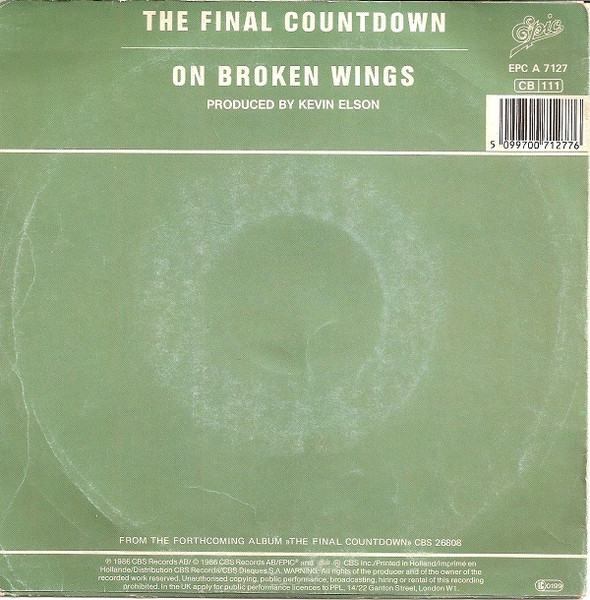
EUROPE - THE FINAL COUNTDOWN


Estrena: 14 de febrer de 1986

Llistes: EUA: #8   Regne Unit: #1 (2 setmanes)


"The Final Countdown" és una cançó de la banda de rock sueca Europe, llançada el 1986. El cantant principal Joey Tempest la va escriure, inspirat en un riff de teclat que va crear a principis dels anys 80. "Space Oddity" de David Bowie fa ser una influència en la lletra. Inicialment pensada com a obertura de concerts, es va convertir en el primer single i el títol del tercer àlbum d'estudi de la banda.


Joey Tempest va expressar sorpresa davant l'immens èxit de "The Final Countdown", assenyalant que originalment es va concebre com a obertura de concerts i mai va ser concebuda per ser un èxit comercial. Malgrat la seva longitud i propòsit inicial, la cançó es va fer àmpliament popular i s'ha utilitzat en diversos esdeveniments, des de curses de Fórmula 1 fins a combats de boxa. Tempest va mencionar que havia rebut cartes de persones que consideraven la cançó un himne, especialment durant esdeveniments significatius com la caiguda del Mur de Berlín. Va reconèixer que la cançó s'ha interpretat de moltes maneres i ha tingut un impacte durador més enllà de la seva intenció original.


Joey Tempest va descriure la lletra de "The Final Countdown" com apocalíptica i optimista, imaginant un viatge a l'espai cap a Venus i deixant enrere la Terra. Va explicar que la demo instrumental de la cançó va inspirar una narrativa sobre deixar la Terra, suggerint que algun dia la humanitat podria necessitar partir del planeta.


El videoclip és meta en naturalesa, mostrant la banda filmant-se per a un vídeo mentre actua a l'arena Solnahallen a prop de Stockholm. El director Nick Morris va filmar la banda durant els seus concerts, capturant les seves actuacions enèrgiques i la interacció amb els fans. El concepte inicial del vídeo era el llançament d'una nau espacial, però es va descartar per restriccions de costos. En canvi, Morris es va inspirar en l'escena de la sala de control de la pel·lícula dels Beatles "A Hard Day's Night" i va decidir mostrar l'actuació en viu d'Europe a la seva Suècia natal. La inclusió de diversos rellotges, comptadors i equips de producció van afegir gravetat al vídeo i van complementar el tema de la cançó de començar un gran viatge a l'espai.


Conseguir les imatges aèries per al videoclip va ser tota una aventura. El director Nick Morris i el seu equip van aconseguir un helicòpter de policia per a la filmació, amb "Europe 86" pintat al sostre del lloc del concert per a la identificació. No obstant això, quan van volar inicialment sobre el recinte, era massa aviat, i no hi havia multitud ni excitació. El pilot va suggerir una solució: volar a Estocolm, agafar una mica de cafè i tornar més tard per a la filmació. Després d'una ràpida pausa per al cafè, van tornar a volar i van capturar amb èxit les imatges que es veuen al principi del vídeo.


EUROPE - THE FINAL COUNTDOWN


Released: February 14, 1986

Charted:  US: #8    UK: #1 ( 2 wks)


"The Final Countdown" is a song by the Swedish rock band Europe, released in 1986. Lead singer Joey Tempest wrote the song, inspired by a keyboard riff he created in the early 1980s. The lyrics were influenced by David Bowie's "Space Oddity." Initially intended as a concert opener, it became the first single and title track of the band's third studio album.


Joey Tempest expressed surprise at the immense success of "The Final Countdown," noting that it was originally intended as a concert opener and was never meant to be a short pop hit. Despite its length and initial purpose, the song became widely popular and has been used in various events, from Formula 1 races to boxing matches. Tempest mentioned receiving letters from people who viewed the song as an anthem, particularly during significant events such as the fall of the Berlin Wall. He acknowledged that the song has been interpreted in many ways and has had a lasting impact beyond its original intention.


Joey Tempest described the lyrics of "The Final Countdown" as both apocalyptic and optimistic, envisioning a journey into space towards Venus and leaving Earth behind. He explained that the song's instrumental demo inspired a narrative about leaving Earth, suggesting that one day humanity might need to depart from the planet. 


The music video is meta in nature, featuring the band being filmed for a video while performing at the Solnahallen arena near Stockholm. Director Nick Morris filmed the band during their concerts, capturing their energetic performances and interaction with fans. The initial concept for the video was a space shuttle launch, but it was scrapped due to cost constraints. Instead, Morris drew inspiration from the control room scene in The Beatles movie “A Hard Day's Night” and decided to showcase Europe's live performance in their native Sweden. The inclusion of various clocks, countdowns, and production equipment added gravitas to the video and complemented the song's theme of embarking on a grand journey into space.


Getting the aerial shots for the music video was quite an adventure. Director Nick Morris and his team secured a police helicopter for the shoot, with "Europe 86" painted on the roof of the concert venue for identification. However, when they initially flew over the venue, it was too early, and there was no crowd or excitement. The pilot suggested a solution: fly to Stockholm, grab some coffee, and return for the shot later. After a quick coffee break, they flew back and successfully captured the shots seen at the beginning of the video.