Total de visualitzacions de pàgina:

8.7.24


THE WHITE STRIPES - SEVEN NATION ARMY


Publicada: 17 de febrer de 2003

Llistes: EUA: #76   Regne Unit: #7


"Seven Nation Army" és una cançó dels White Stripes, publicat com a tema d'obertura del seu àlbum "Elephant" (2003). Va ser llançada per V2 Records a les ràdios alternatives americanes el febrer de 2003 com a senzill principal de l'àlbum, i mundialment per XL Recordings. Jack White va escriure i produir la cançó, que presenta veus distorsionades, un a potent bateria i una línia de baix creada sense un baix tradicional; en lloc d'això, White va utilitzar una guitarra amb efecte d'octava per emular el so distintiu de baix.


La cançó explora el creixent èxit dels White Stripes i els reptes que això comporta. Després de concebre el riff icònic, Jack White va crear una narrativa en què un protagonista torna a la ciutat enmig de rumors i xafarderies. La cançó aborda temes d'aïllament i la pressió de l'escrutini públic, reflectint les experiències personals de White amb la fama i les relacions.


"Seven Nation Army" ha transcendit del seu context original per convertir-se en un himne esportiu mundial, sovint cantat per aficions durant partits i esdeveniments. El seu riff icònic ha estat adoptat per aficionats a l'esport de tot el món, amb variacions utilitzades per recolzar equips i celebrar victòries. La associació de la cançó amb l'esport va arribar a nous nivells durant la Copa del Món de la FIFA del 2018, on es va utilitzar com a himne i va ser adoptada pels suporters arreu del món. En particular, els aficionats italians de futbol van adoptar la cançó durant la campanya victoriosa del seu equip a la Copa del Món del 2006, cantant el riff als partits i celebracions. Jack White va expressar el seu encant per l'evolució de la cançó, destacant la bellesa de com s'ha integrat en el teixit de la música popular a través dels aficionats al futbol.


El vídeo musical, dirigit per Alex Courtes i Martin Fougerol, fa servir tècniques innovadores de composició, amb cada pla enmarcat per un triangle en una progressió contínua cap endavant. El vídeo va guanyar el premi MTV Video Music Award a la Millor Edició, però també va guanyar notorietat per induir marejos en alguns espectadors. En un moment destacat, Jack White assenyala la seva mà durant el tercer vers, indicant el seu estat natal de Michigan, que sovint es representa per una forma de mitjó. Aquest gest reflecteix una pràctica comuna entre els residents de Michigan quan indiquen el seu lloc d'origen.


THE WHITE STRIPES - SEVEN NATION ARMY


Released: February 17, 2003

Charted:  US: #76    UK: #7 


"Seven Nation Army" is a track by the White Stripes, serving as the opening song on their album "Elephant" (2003). Released by V2 Records to American alternative radio on February 2003, it was the album's lead single, issued worldwide by XL Recordings. Jack White wrote and produced the song, which features distorted vocals, a straightforward drumbeat, and a bass line created without a traditional bass guitar; instead, White utilized a guitar with an octave effect to emulate the distinctive bass sound.


The song delves into the White Stripes' burgeoning fame and the challenges it brought. Jack White, after conceiving the iconic riff, crafted a narrative where a protagonist returns to town amidst gossip from acquaintances. The song explores themes of isolation and the pressure of public scrutiny, reflecting White's personal experiences with fame and relationships. 


"Seven Nation Army" has transcended its original context to become a ubiquitous sports anthem, often chanted by audiences during games and events. Its iconic riff has been adopted by sports fans worldwide, with variations used to support teams and celebrate victories. The song's association with sports reached new heights during the 2018 FIFA World Cup, where it served as a theme song and was embraced by fans across the globe. In particular, Italian soccer fans embraced the song during their team's victorious campaign in the 2006 World Cup, chanting the riff at games and celebrations. Jack White expressed his delight at the song's evolution, noting the beauty of how it has become ingrained in the fabric of folk music through its embrace by fans.


The music video for directed by Alex Courtes and Martin Fougerol, employs innovative compositing techniques, with each shot framed by a triangle in continuous forward progression. The video won the MTV Video Music Award for Best Editing but also gained notoriety for inducing motion sickness in some viewers. In a notable moment, Jack White points to his hand during the third verse, indicating his home state of Michigan, which is often represented by a mitten shape. This gesture reflects a common practice among Michigan residents when indicating their place of origin.


7.7.24


TEARS FOR FEARS - MAD WORLD


Estrenada: 20 de setembre de 1982

Llistes: Regne Unit: #3 


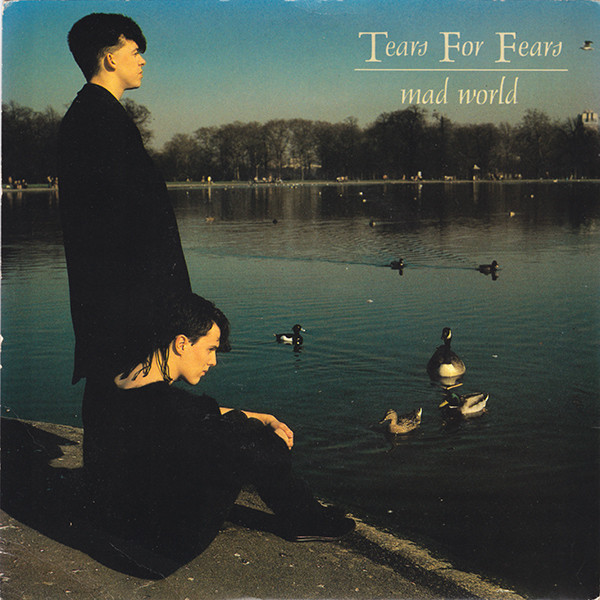
"Mad World" és una cançó llançada el 1982 com a tercer senzill i primer èxit en llistes. Escrita per Roland Orzabal i cantada per Curt Smith, va arribar al número tres de les llistes del Regne Unit al novembre de 1982. Es va llançar, juntament amb la seva cara B "Ideas as Opiates", a l'àlbum debut de la banda "The Hurting". La cançó va ser el primer èxit internacional de Tears for Fears, arribant al Top 40 en diversos països durant els anys 1982-1983. La foto de la portada del single es va fer al Round Pond a Kensington Gardens, Londres, Anglaterra.


"Mad World" explora la perspectiva d'una persona jove deprimida que se sent desconnectada del món que l'envolta. La lletra descriu un sentiment de buidor i un anhel d'escapar del dolor emocional. El vers "The dreams in which I'm dying are the best I've ever had" ha estat interpretat com suggerint pensaments de suïcidi, però Orzabal va explicar que reflecteix la teoria del psicòleg Arthur Janov. Segons Janov, els somnis intensos poden proporcionar un alliberament emocional, i a la cançó, aquests somnis ofereixen un ressò temporal de les lluites del protagonista.


A l'edat de 19 anys, Roland Orzabal va escriure "Mad World" després de ser inspirat per "Girls On Film" de Duran Duran. Inicialment composada amb guitarra acústica, Orzabal va trobar que la versió en solitari no era prou satisfactòria en els primers intents. Va sorgir una oportunitat quan van obtenir accés a l'extens equip de sintetitzadors d'Ian Stanley a la seva residència. Stanley eventualment es va unir a Tears for Fears com a teclista, aportant una caixa de ritmes que va ser clau per refinar el so de la cançó. La demo inicial de "Mad World" va tenir Orzabal com a vocalista, però va quedar insatisfet amb el resultat. Després de suggerir al seu company de banda Curt Smith que prengués la veu  principal, la cançó va experimentar un canvi transcendental, amb la veu de Smith complementant perfectament l'arranjament impulsat pels sintetitzadors.


Dirigit per Clive Richardson, conegut pel seu treball amb Depeche Mode, el videoclip filmat entre l'estiu i la tardor de 1982 a Knebworth House, va ser el debut de Tears for Fears. Mostra Curt Smith mirant per una finestra mentre Roland Orzabal balla a un moll al costat del llac. El vídeo també inclou una escena de festa amb amics i família de la banda, incloent la mare de Smith i la seva dona en aquell moment, Lynne. Smith va mencionar que el vídeo es va fer amb un pressupost modest, amb tothom venint des de Bath per a passar un dia de diversió. La celebració de l'aniversari de la mare de Smith es representa en el vídeo.


"Mad World" ha gaudit de diverses versions al llarg dels anys, incloent una versió de Michael Andrews i Gary Jules enregistrada per a la banda sonora de la pel·lícula “Donnie Darko” el 2001. Aquesta versió es va llançar com a single el 2003 i va aconseguir un èxit significatiu, arribant al número u de les llistes del Regne Unit durant tres setmanes consecutives.


TEARS FOR FEARS - MAD WORLD


Released: September 20, 1982

Charted:  UK: #3   


"Mad World" is a song released in 1982 as the third single and first chart hit. Written by Roland Orzabal and sung by Curt Smith, the song reached number three on the UK Singles Chart in November 1982. It appeared alongside its B-side, "Ideas as Opiates", on the band's debut album "The Hurting" (1983). The song marked Tears for Fears' first international success, reaching the Top 40 in multiple countries during 1982–83. The single’s cover photo was taken at Round Pond in Kensington Gardens, London, England.


"Mad World" explores the perspective of a depressed young person who feels disconnected from the world around them. The lyrics depict a sense of emptiness and a longing to escape from emotional pain. The line "The dreams in which I'm dying are the best I've ever had" has been interpreted as suggesting thoughts of suicide, but Orzabal explained that it reflects psychologist Arthur Janov's theory. According to Janov, intense dreams can provide emotional release, and in the song, these dreams offer a temporary respite from the protagonist's struggles. 


At the age of 19, Roland Orzabal wrote "Mad World" after being inspired by Duran Duran's "Girls On Film." Initially composed on acoustic guitar, Orzabal found the solo rendition lacking during early attempts. An opportunity arose when they gained access to Ian Stanley's extensive synthesizer equipment at his residence. Stanley eventually joined Tears for Fears as their keyboardist, bringing along a drum machine that proved pivotal in refining the song's sound. The initial demo of "Mad World" featured Orzabal on vocals, yet he was dissatisfied with the result. Upon suggesting to his bandmate Curt Smith that he take over the lead vocals, the song underwent a transformative shift, with Smith's voice complementing the synth-driven arrangement perfectly.


Directed by Clive Richardson, known for his work with Depeche Mode, the music video filmed in late summer 1982 at Knebworth House, was Tears for Fears' debut. It features Curt Smith looking out of a window while Roland Orzabal dances on a lakeside jetty. The video also includes a party scene with the band's friends and family, including Smith's mother and his wife at the time, Lynne. Smith mentioned the video was made on a modest budget, with everyone bussed in from Bath for a day of fun. His mother's birthday celebration is depicted in the video. 


"Mad World" has enjoyed several notable covers over the years, including a rendition by Michael Andrews and Gary Jules recorded for the soundtrack of the film Donnie Darko in 2001. This version was released as a single in 2003 and achieved significant success, topping the UK Singles Chart for three consecutive weeks. 


BONEY M. - RASPUTIN


Estrena: 28 d'agost de 1978

Llistes: Regne Unit: #2


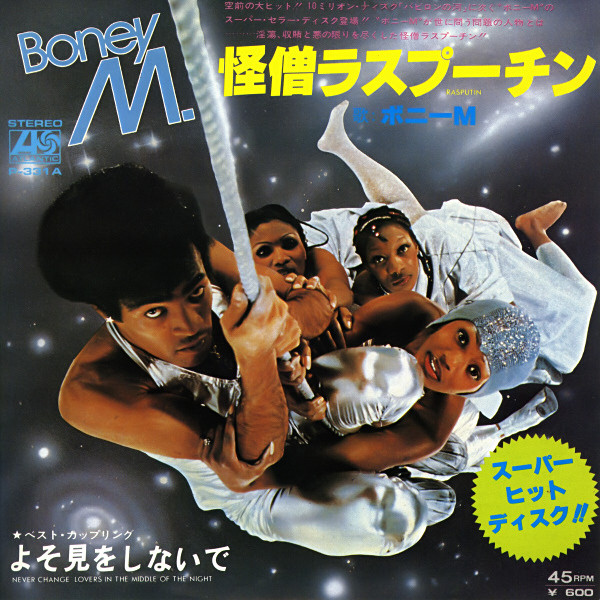
"Rasputin" va ser llançada l’agost de 1978 com el segon single de l’àlbum "Nightflight to Venus". Escrita per Frank Farian, juntament amb George Reyam i Fred Jay, la cançó explora la figura intrigant de Grigori Rasputin, qui va ser un estret col·laborador del tsar Nicolau II i la seva família a principis del segle XX a Rússia.


Grigori Rasputin, un místic monjo rus, va atraure inicialment l'atenció per les seves suposades visions de la Mare de Déu. Va viatjar per tot Rússia predicant una doctrina que posava èmfasi en pecar seguit de penitència com a mitjà per aconseguir una proximitat espiritual amb Déu. El seu cognom, "Rasputin", deriva de la paraula russa "rasputny", que significa "vivència deslligada", posant de manifest la seva reputació per un comportament escandalós.


La influència de Rasputin sobre el tsar Nicolau II i la seva esposa Alexandra va créixer degut a la seva suposada capacitat per guarir el seu fill hemofílic, Alexei, durant episodis d’hemorràgia que patia. Aquesta suposada curació va reforçar la seva posició dins de la família reial i va conduir a la seva estreta associació amb ells. La influència política creixent i l’estil de vida controvertit de Rasputin van alimentar el ressentiment entre els nobles russos.


El desembre de 1916, un grup de conspiradors, incloent-hi el príncep Felix Yusupov, va enverinar Rasputin al Palau Yusupov a Sant Petersburg. Quan el verí va fallar en matar-lo, Rasputin va ser disparat diverses vegades. Encara viu, finalment va ser ofegat al riu Neva.


A la cançó, Rasputin és retratat com una figura carismàtica amb diversos aspectes: playboy, sanador místic i manipulador polític. El ritme es va crear utilitzant una balalaika, un instrument tradicional rus caracteritzat pel seu cos triangular i tres cordes. La lletra i el ritme disco enganxós van contribuir a la seva popularitat, convertint-la en un èxit notable per al grup.


BONEY M. - RASPUTIN


Released: August 28, 1978

Charted:  UK: #2   


"Rasputin" was released on August 1978, as the second single from their album "Nightflight to Venus". Written by Frank Farian, along with George Reyam and Fred Jay, the song delves into the intriguing character of Grigori Rasputin, who was a close associate of Tsar Nicholas II and his family in early 20th-century Russia. 


Grigori Rasputin, a Russian mystic and monk, initially gained attention for his reported visions of the Virgin Mary. He traveled across Russia, preaching a doctrine that emphasized sinning followed by repentance as a means to achieve spiritual closeness to God. His surname, "Rasputin," derived from the Russian word "rasputny," meaning "loose living," highlighting his reputation for scandalous behavior. 


Rasputin's influence over Tsar Nicholas II and his wife Alexandra grew due to his perceived ability to heal their hemophiliac son, Alexei, during episodes of hemorrhaging. This healing reportedly bolstered his standing within the royal family and led to his close association with them. Rasputin's increasing political influence and controversial lifestyle fueled resentment among Russian nobles.


In December 1916, a group of conspirators, including Prince Felix Yusupov, poisoned Rasputin at the Yusupov Palace in St. Petersburg. When poison failed to kill him, Rasputin was shot multiple times. Still alive, he was finally drowned in the Neva River. 


In the song, Rasputin is depicted as a charismatic figure with various facets: a playboy, mystical healer, and political manipulator. The textured rhythm was created using a balalaika, a traditional Russian instrument characterized by its triangular body and three strings. The song's lyrics and catchy disco beat contributed to its popularity, making it a notable hit for the group.


EURYTHMICS - SEXCRIME (NINETEEN EIGHTY-FOUR)


Estrenada: 22 d'octubre de 1984

Llistes: EUA: #81 Regne Unit: #4


"Sexcrime (Nineteen Eighty-Four)" és una cançó del duo britànic Eurythmics, escrita i interpretada per a la banda sonora de la pel·lícula "Nineteen Eighty-Four," basada en la novel·la homònima de George Orwell. Va ser el primer single del seu àlbum "1984 (For the Love of Big Brother)" i va ser produida per Dave Stewart.


Eurythmics va escriure i enregistrar "Sexcrime (Nineteen Eighty-Four)" per a la pel·lícula "1984", com a part del seu treball a la banda sonora. No obstant, van trobar un contratemps quan van descobrir que un altre músic, Dominic Muldowney, també estava treballant en una banda sonora per a la mateixa pel·lícula, fet que el productor Simon Perry i el director Michael Radford no els van revelar.


Perry i Radford van criticar públicament la banda sonora dels Eurythmics, amb Perry descrivint-la com una "ràfega de porqueries". Això va provocar tensions entre Eurythmics i l'equip de producció de la pel·lícula, i Dave Stewart va expressar la seva frustració dient que el productor era "una rata de dues cares".


Malgrat la controvèrsia, Richard Branson, cap de Virgin Films, va insistir que la banda sonora dels Eurythmics s'inclogués a la pel·lícula juntament amb algunes de les obres de Muldowney. L'àlbum de la banda sonora es va publicar abans de l'estrena de la pel·lícula, i "Sexcrime" es va llançar com a single. La reivindicació dels Eurythmics va arribar quan la cançó es va convertir en un èxit a nivell nacional al Regne Unit, coincidint amb l'èxit de la pel·lícula a la taquilla, on va arribar al número u.


"Sexcrime" es caracteritza per l'ús intensiu de samplers de la veu d'Annie Lennox, incorporant trossos de la seva interpretació vocal per crear un efecte sonor repetitiu. La veu de Dave Stewart, modificada amb un vocoder, també té un paper destacat, repetint la frase "nineteen eighty four" ("mil nou-cents vuitanta-quatre"). El terme "sexcrime" mateix prové de la novel·la de George Orwell com un dels diversos mots de Neollengua utilitzats dins del seu món distòpic.


La cançó va servir com a música de fons per al tràiler de la pel·lícula, i el seu vídeo promocional es va incloure en les edicions en vídeo domèstiques de la pel·lícula.


EURYTHMICS - SEXCRIME (NINETEEN EIGHTY-FOUR)


Released: October 22, 1984

Charted:  US: #81  UK: #4 


"Sexcrime (Nineteen Eighty-Four)" is a song by the British duo Eurythmics, written and performed for the soundtrack of the film Nineteen Eighty-Four, based on George Orwell's novel of the same name. Serving as the lead single from their album "1984 (For the Love of Big Brother)," the song was produced by Dave Stewart.


Eurythmics wrote and recorded "Sexcrime (Nineteen Eighty-Four)" for the film "1984," as part of their work on the soundtrack. However, they encountered a setback when they discovered that another musician, Dominic Muldowney, was also working on a soundtrack for the film, a fact that the film's producer Simon Perry and director Michael Radford had not disclosed to them.


Perry and Radford publicly criticized the Eurythmics' soundtrack, with Perry describing it as "crass rubbish." This led to tensions between the Eurythmics and the film's production team, with Dave Stewart expressing his frustration by calling the producer "a two-faced rat."


Despite the controversy, Richard Branson, head of Virgin Films, insisted that the Eurythmics' soundtrack be included in the film alongside some of Muldowney's work. The soundtrack album, titled "1984 (For the Love of Big Brother)," was released before the film, and "Sexcrime" was released as a single. The Eurythmics' vindication came when the song became a major hit in the UK, coinciding with the film's success at the box office, where it reached number one.


"Sexcrime" is characterized by heavy sampling of Annie Lennox's voice, incorporating snippets of her vocal performance to create a stuttering effect. Dave Stewart's voice, 

modified using a vocoder, is also prominently featured, repeating the phrase "nineteen eighty four." The term "sexcrime" itself is drawn from George Orwell's novel as one of several Newspeak words used within its dystopian world.


The song served as background music for the film's trailer, and its promotional video was featured on home video releases of the film.