Total de visualitzacions de pàgina:

9.10.24


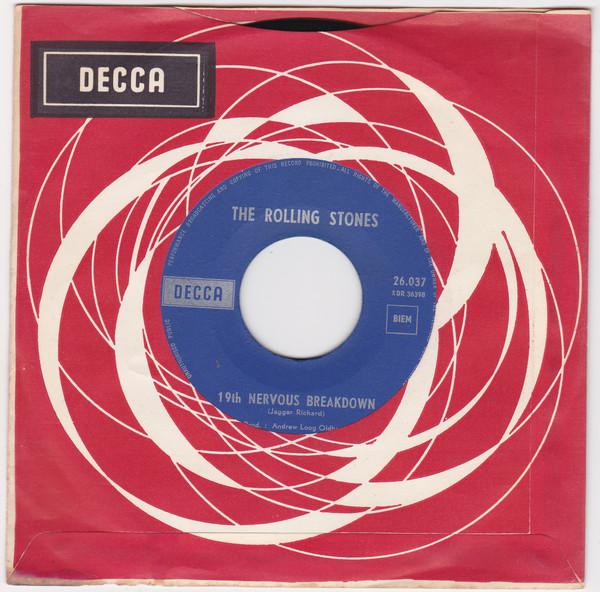
ROLLING STONES - 19th NERVOUS BREAKDOWN


Publicació: 4 de febrer de 1966

Llistes: EUA: #2  Regne Unit: #2


"19th Nervous Breakdown" és una cançó enregistrada per la banda de rock anglesa The Rolling Stones. Escrita per Mick Jagger i Keith Richards, es va gravar a finals de 1965 i es va llançar com a single al febrer de 1966. La cançó va assolir un èxit significatiu, arribant al número 2 tant a la llista Billboard Hot 100 dels Estats Units com a la llista Record Retailer (que més tard es va convertir en la UK Singles Chart) del Regne Unit. A més, va liderar les llistes de Cash Box i NME. Malgrat el seu èxit, al Regne Unit va posar fi a la ratxa de singles consecutius número u de la banda que havia començat amb "It's All Over Now" el 1964.


La lletra critica a individus consentits que ho tenen tot però continuen sent infeliços. Mick Jagger va subratllar que la cançó no era autobiogràfica. Respecte a la inspiració per la lletra, Jagger va explicar: "Coses que estan passant al meu voltant, la vida quotidiana com la veig jo. La gent diu que sempre canto sobre pastilles i col·lapses, per tant, he de ser un addicte - això és ridícul. Algunes persones són tan estretes de ment que no admeten que això realment passa a altres persones a part de les estrelles del pop."


Mick Jagger va reflexionar sobre el context i la recepció de "19th Nervous Breakdown", recordant els seus inicis durant un període passat a la Costa Oest: "Aquell és un període molt de Los Angeles, recordo estar molt a la Costa Oest en aquell temps. '19th Nervous Breakdown' és una mena de cançó de broma, realment. Vull dir, la idea que algú pogués ofendre's per això és realment divertida. Però recordo que algunes persones ho van fer."


Va parlar sobre el clima cultural de l'època, afirmant: "És molt difícil tornar a situar-se en aquell període ara les cançons populars realment no abordaven gaire cosa. Bob Dylan ho feia, però no se'l considerava un artista pop mainstream. I de tota manera, ningú no sabia de què parlava. Bàsicament, les seves cançons eren massa denses per a la majoria de la gent. I així que escriure sobre alguna cosa que no fos els tòpics d'amor habituals era considerat molt fora de lloc i mai es tocava. Qualsevol cosa fora d'això escandalitzaria la gent."


Jagger va assenyalar que cançons com "19th Nervous Breakdown" inicialment sorprenien alguns oients, però el públic s'hi va acostumar ràpidament: "Així que cançons com aquesta eren una mica impactants per a la gent. Però suposo que aviat s'hi van acostumar. Un parell d'anys després, les coses van prendre un gir i van prendre una direcció encara més fosca. Però aquells eren dies molt innocents, crec."


ROLLING STONES - 19th NERVOUS BREAKDOWN


Released: February 4, 1966

Charted:  US: #2    UK: #2 


"19th Nervous Breakdown" is a song recorded by the English rock band The Rolling Stones. Written by Mick Jagger and Keith Richards, it was recorded in late 1965 and released as a single in February 1966. The song achieved significant success, reaching number 2 on both the US Billboard Hot 100 and Britain's Record Retailer chart (which later became the UK Singles Chart). Additionally, it topped the charts compiled by Cash Box and NME. Despite its success, in the UK, it ended the band's streak of consecutive number-one singles that had started with "It's All Over Now" in 1964.


The lyrics of "19th Nervous Breakdown" are a critique of spoiled individuals who are given everything yet remain unhappy. Mick Jagger emphasized that the song was not autobiographical. Regarding the inspiration for the lyrics, Jagger explained, "Things that are happening around me - everyday life as I see it. People say I'm always singing about pills and breakdowns, therefore I must be an addict – this is ridiculous. Some people are so narrow-minded they won't admit to themselves that this really does happen to other people besides pop stars." 


Mick Jagger reflected on the context and reception of "19th Nervous Breakdown," noting its origins during a period spent on the West Coast: "That's a very Los Angeles period, I remember being in the West Coast a lot then. '19th Nervous Breakdown' is a bit of a joke song, really. I mean, the idea that anyone could be offended by it really is funny. But I remember some people were."


He elaborated on the cultural climate at the time, saying, "It's very hard to put yourself back in that period now - popular songs didn't really address anything very much. Bob Dylan was addressing it, but he wasn't thought of as a mainstream Pop act. And anyway, no one knew what he was talking about. Basically, his songs were too dense for most people. And so to write about anything other than the normal run-of-the-mill love clichés was considered very outré and it was never touched. Anything outside that would shock people."


Jagger pointed out that songs like "19th Nervous Breakdown" were initially jarring to some listeners, but the public quickly adapted: "So songs like '19th Nervous Breakdown' were slightly jarring to people. But I guess they soon got used to it. A couple years after that, things took a sort of turn and then saw an even more dark direction. But those were very innocent days, I think." 


8.10.24


AEROSMITH - MAMA KIN

Released: January 5, 1973

Album: Aerosmith


"Mama Kin" is a hard rock song featured on the 1973 self-titled debut album and written by lead singer Steven Tyler. Known for its raw energy and aggressive lyrics, it became a concert staple and appeared on several live albums. The song’s hard-hitting guitar riffs and use of saxophone reflect the band’s early influence from The Rolling Stones. "Mama Kin" is considered one of Aerosmith's most enduring tracks, showcasing the gritty rock style they would revisit throughout their career.


"Mama Kin" was one of the early songs that Steven Tyler envisioned when Aerosmith was formed. The song represents Steven Tyler's concept of a spiritual force that fuels creativity and desire. The phrase "Keep in touch with Mama Kin" serves as a reminder to stay connected with what drives personal ambition and excellence. This song was crucial in Aerosmith's early success, helping them secure a record deal with Columbia Records after Clive Davis saw them perform it live in 1972. Tyler believed in the song's potential so strongly that he had "MA KIN" tattooed on his bicep, predicting it would make the band rich and famous.


Tyler crafted the lyrics using a method he often employed in the band's early years: he would take Tuinal pills, scat nonsensical sounds into a recorder while Joe Perry played guitar, and later listen to the playback to replace the scat with actual words. 


Guns N' Roses frequently performed "Mama Kin" at their early shows and even covered it on their 1988 live album “G'N'R Lies”. In 1988, Guns N' Roses opened for Aerosmith on their “Permanent Vacation” tour. During the tour, "Sweet Child O' Mine" became the #1 song in the U.S., propelling G N' R to immense popularity. While Aerosmith felt slighted when Rolling Stone magazine favored Guns N' Roses for a cover story, the two bands had a strong rapport on tour, with Guns N' Roses showing great respect for Aerosmith. At the tour's final show, Aerosmith invited Guns N' Roses on stage for a memorable extended performance of "Mama Kin."


AEROSMITH - JADED

Released: February 20, 2001

Charts: US: #7    UK: #13 


"Jaded" is a song by Aerosmith, written by lead singer Steven Tyler and songwriter Marti Frederiksen. Released in February 2001 as the first single from the band's “Just Push Play” album, it was debuted at the American Music Awards and performed during the Super Bowl XXXV halftime show. The single's cover art, which featured a naked woman holding an apple, sparked some controversy. 


"Jaded" reflects the feeling of emotional numbness or disillusionment that can come from being overindulged and taking things for granted. In the song, the girl is given everything, leaving her unable to fully experience life or feel deeply. Aerosmith's Steven Tyler wrote the song with his youngest daughter in mind, expressing regret for missing much of her childhood due to touring, band commitments, and his struggles with drug addiction. Tyler feels he not only jaded his daughter but also himself by not being present during those formative years.


The Tower of Power horn section played on Aerosmith's album but was largely buried in the mix. Emilio Castillo, a founding member of Tower of Power, shared his experience of being hired after years of the band wanting them to collaborate. Although Castillo expressed concerns about the use of an in-house arranger, he agreed to work with him, hoping for the best. However, when the album was released, the horns were barely audible, as Aerosmith's guitar-driven sound took precedence in the mix. Castillo noted that while he didn't want to disrupt the session, he would insist on using their own arranger for future collaborations to ensure the distinctive sound of Tower of Power was preserved.


The music video for "Jaded," directed by Francis Lawrence, premiered on MTV on February 13, 2001 and showcases the band performing in the opulent lobby of the Los Angeles Theater, interspersed with scenes featuring actress Mila Kunis as a "jaded" girl who has lost touch with reality. The theater, known for its extravagant French Rococo design, serves as the backdrop, with footage taken from various locations within the venue, including the ballroom and mezzanine hallway, which features a visually striking effect that creates an illusion of an endless corridor. 


There are two versions of the video, sharing much of the same footage but differing in the arrangement of shots and angles. The first version opens with a quick zoom on the stage and a close-up of Steven Tyler, while the second features a slow zoom and a horse statue. 


 SPANDAU BALLET - TRUE

Estrena: 15 d'abril de 1983

Llistes: EUA: #4  Regne Unit: #1 (4 setmanes)


"True" és una cançó llançada l'abril de 1983 com a tema principal i tercer senzill del tercer àlbum de Spandau Ballet. La cançó es va convertir en un gran èxit, arribant al número 1 de la llista de singles del Regne Unit l'abril de 1983 i aconseguint un èxit internacional, entrant al top 10 en diversos països. Als Estats Units, "True" va ser la primera aparició de la banda al Billboard Hot 100. Amb el seu so suau i ple de soul, la cançó es va convertir en una peça icònica dels anys 80, i sovint es fa servir en pel·lícules i anuncis publicitaris.


La lletra es va inspirar en el desig no correspost de Gary Kemp per Clare Grogan, la cantant principal d'Altered Images i actriu de la pel·lícula “Gregory's Girl”. Tot i que la seva relació va ser purament platònica, els sentiments de Kemp van portar a la creació de la cançó. Musicalment, Kemp es va inspirar en l’estil soul de Marvin Gaye i Al Green, mentre que la lletra va estar influenciada tant per Green com per The Beatles.


Gary Kemp volia crear una cançó de “blue-eyed soul”, influenciada pel tema "Let’s Stay Together" d'Al Green. La idea musical per "True" va sorgir després que Kemp veiés “Let It Be”, on la cançó de John Lennon "Dig a Pony" el va impactar. Admirava com Lennon allargava la paraula "I" en una melodia fluïda i va aplicar un enfocament similar a la seva pròpia cançó. Kemp va reestructurar l'obertura de la frase d'Al Green "I'm so in love with you" per crear la frase icònica "Ah ha-hah hahh-hi / I know this / much is / true-oo", donant a la cançó la seva famosa melòdia.


Kemp va infondre referències personals i literàries a la lletra, inspirat pels seus sentiments no confessats per Grogan i per la novel·la “Lolita” de Vladimir Nabokov, que Grogan li havia regalat. Algunes frases, com "Take your seaside arms", van ser adaptades directament de la novel·la, on Nabokov escriu "seaside limbs". Kemp també va transformar una altra frase del llibre en "With a thrill in my head and a pill on my tongue". La cançó reflecteix la lluita de Kemp per expressar les seves emocions de manera honesta, especialment en una cançó d'amor, que es manifesta en la frase "Why do I find it hard to write the next line?". En la seva autobiografia, Kemp va admetre que se sentia tímid i reticent a l'hora de revelar els seus veritables sentiments a través de la cançó, reconeixent la vulnerabilitat i l'embarràs que comportava intentar confessar la seva atracció.


El videoclip original de "True" incloïa una seqüència en blanc i negre que mostrava el viatge emocional d'un jove, que transitava de l'angoixa a la joia mentre deambulava pels carrers de la ciutat. El vídeo també contenia representacions animades de l'home i un colom, creades per Dominic Anciano, que la banda va acabar rebutjant. Malgrat el valor de producció, el vídeo no tenia una trama definida, cosa que va ser una elecció deliberada. Gary Kemp va explicar que volia que el vídeo fos obert a la interpretació, permetent als oients formar les seves pròpies idees sobre el significat de la cançó. En lloc d'imposar una narrativa, el vídeo es va centrar en l’enfocament artístic, com efectes de llum a través de l'aigua i vidres trencats.


SPANDAU BALLET - TRUE


Released: April 15, 1983

Charts:  US: #4    UK: #1 (4 weeks)


"True" is a song released in April 1983 as the title track and third single from the band’s third album. The song became a major hit, reaching number one on the UK Singles Chart in April 1983 and gaining international success by entering the top 10 in several countries. In the US, "True" marked the band's first entry into the Billboard Hot 100. Known for its smooth, soulful sound, "True" became an iconic track of the 1980s, frequently featured in films and commercials.


The lyrics were inspired by Gary Kemp's unrequited crush on Clare Grogan, the lead singer of Altered Images and star of “Gregory's Girl”. Although their relationship remained platonic, Kemp's feelings sparked the creation of the song. Musically, Kemp was influenced by the soulful styles of Marvin Gaye and Al Green, while the lyrics drew from both Green and The Beatles. 


Gary Kemp sought to create a "blue-eyed soul" song with influences from tracks like Green’s “Let’s Stay Together.” The musical idea for "True" began after Kemp watched “Let It Be”, where John Lennon's "Dig a Pony" stuck with him. He admired how Lennon elongated the word “I” into a flowing melody and applied a similar approach to his own song. Kemp restructured the opening of Al Green’s line "I'm so in love with you" into "Ah ha-hah hahh-hi / I know this / much is / true-oo,” giving the song its iconic melodic phrasing.


Gary Kemp infused personal and literary references into the lyrics, inspired by his unspoken feelings for Clare Grogan and the novel “Lolita” by Vladimir Nabokov, which Grogan had gifted him. Some lines, such as "Take your seaside arms," were directly adapted from the novel, where Nabokov wrote "seaside limbs." Kemp also transformed another phrase from the book into "With a thrill in my head and a pill on my tongue." The song reflects Kemp's struggle with expressing emotions honestly, particularly in a love song, which is conveyed in the lyric "Why do I find it hard to write the next line?" In his autobiography, Kemp admitted feeling shy and hesitant about revealing his true feelings through the song, acknowledging the vulnerability and embarrassment that came with trying to confess his infatuation.


The original music video featured a black-and-white sequence portraying a young man's emotional journey, transitioning from anguish to jubilation as he roams city streets. The video also included animated renderings of the man and a dove, created by Dominic Anciano, but the band ultimately disliked the animation and chose not to use it. Despite the production value, the video lacked a storyline, which was a deliberate choice. Gary Kemp explained that he wanted the video to be open to interpretation, allowing listeners to form their own ideas about the song's meaning. Instead of pushing a narrative, the video focused on artistic visuals, including light effects through water and broken glass.