Total de visualitzacions de pàgina:

29.10.24


QUEEN - A KIND OF MAGIC


Publicació: 17 de març de 1986  

Llistes: EUA: #42  Regne Unit: #3


"A Kind of Magic" és la cançó principal de l’àlbum de 1986, escrita pel bateria Roger Taylor per a la pel·lícula “Highlander”, on s’utilitza com a tema final. La cançó es va convertir en un èxit internacional, arribant al #3 al Regne Unit, al #1 a l'Argentina i a Espanya, i classificant-se entre els deu primers en diversos països europeus, tot i que només va arribar al #42 als EUA.


Inicialment, Roger Taylor va escriure la melodia i els acords de "A Kind of Magic", però Freddie Mercury va reestructurar-la significativament, afegint una nova línia de baix, reorganitzant les seccions i produint una nova mescla amb David Richards. La línia de baix de John Deacon a la versió de Mercury aporta profunditat a la peça, convertint-se en un dels elements més destacats. Es diu que Taylor es va sentir frustrat, ja que Mercury va fer aquests canvis mentre ell era de vacances, encara que la cançó continua acreditada únicament a Taylor. La versió original de Taylor sona a la pel·lícula “Highlander”, mentre que la versió de Mercury apareix a l'àlbum.


A “Highlander”, Connor MacLeod (interpretat per Christopher Lambert) descriu la seva immortalitat com "una mena de màgia", una frase que va inspirar Roger Taylor, qui la va utilitzar com a base per a la cançó. La lletra conté múltiples referències a la pel·lícula, incloent-hi frases com "one prize, one goal" (un premi, un objectiu), "no mortal man" (cap home mortal), i "there can be only one" (només en pot quedar un). La portada del single també es relaciona amb la pel·lícula, amb Clancy Brown caracteritzat com el temible malvat, el Kurgan.


El vídeo musical, dirigit per Russell Mulcahy, presenta Freddie Mercury com una figura màgica que reviu els seus companys de banda—Brian May, Roger Taylor i John Deacon—mostrats com rodamóns en un teatre abandonat. L'entrada de Mercury els transforma en les seves versions habituals amb els seus instruments, abans de tornar als seus papers de rodamóns quan ell surt. El vídeo, filmat al Playhouse Theatre de Londres, inclou elements animats creats per The Walt Disney Company, sincronitzats amb el ritme de la cançó. Brian May va utilitzar una rèplica de 1984 de la seva guitarra Red Special, i la banda va suportar el fred de març en el teatre sense calefacció.


"A Kind of Magic" es va convertir en un dels moments àlgids de la gira “Magic” de Queen l'any 1986, que va resultar ser la seva última gira amb la formació original, ja que Freddie Mercury va ser diagnosticat amb la sida l'any 1987, fet que li va impedir continuar amb les gires.


QUEEN - A KIND OF MAGIC


Released: March 17, 1986

Charts:  US: #42  UK: #3 


Queen's "A Kind of Magic" is the title track from their 1986 album, written by drummer Roger Taylor for the movie “Highlander”, where it serves as the ending theme. The song became an international hit, reaching #3 in the UK, #1 in Argentina and Spain, and ranking in the top ten across several European countries, while peaking at #42 in the U.S. 


Roger Taylor initially wrote the melody and chords for "A Kind of Magic" but Freddie Mercury reworked it significantly, adding a new bass line, rearranging sections, and producing a fresh mix with David Richards. John Deacon's bass line on Mercury's version adds notable depth, making it a standout element of the track. Taylor was reportedly frustrated, as Mercury made these changes while he was on holiday, though the song remains credited solely to Taylor. Taylor's original version plays in the “Highlander” film, while Mercury's appears on the album.


In “Highlander”, Connor MacLeod (played by Christopher Lambert) describes his immortality as "a kind of magic," a phrase that inspired Roger Taylor, who used it as the basis for the song. The lyrics contain multiple references to the film, including lines like "one prize, one goal," "no mortal man," and "there can be only one." The single's cover art also ties back to the film, featuring Clancy Brown in character as the menacing villain, The Kurgan.


The music video directed by Russell Mulcahy, features Freddie Mercury as a magician figure who revives his bandmates—Brian May, Roger Taylor, and John Deacon—portrayed as tramps in an abandoned theater. Mercury’s entrance transforms them into their regular personas with instruments, before they revert to their tramp roles as he exits. The video, filmed at London’s Playhouse Theatre, includes animated elements created by The Walt Disney Company, synchronized with the beat of the song. Brian May used a 1984 replica of his Red Special guitar, and the band endured the March cold in the unheated theater.


"A Kind of Magic" became a major highlight of Queen's 1986 “Magic” tour, which turned out to be their final tour with the original lineup. This was due to Freddie Mercury’s AIDS diagnosis in 1987, after which he became too unwell to continue touring. 


28.10.24


CREEDENCE CLEARWATER REVIVAL - LOOKING OUT MY BACK DOOR


Released: July 25, 1970

Charts: US: #2    


"Lookin' out My Back Door" is a song written by John Fogerty and featured on the 1970 album “Cosmo's Factory”. The song became their fifth and final number-two hit on the Billboard Hot 100, only kept from the top spot by Diana Ross's rendition of "Ain't No Mountain High Enough." It was the band's only song to reach number one on the Cash Box Top 100 chart. 


This song was partly inspired by John Fogerty's three-year-old son, Josh. Fogerty wanted to create a fun, whimsical song that his son would enjoy, leading to the playful "doot doot doo" line. The imagery of a parade in the lyrics was drawn from a Dr. Seuss book titled “To Think That I Saw It on Mulberry Street”, which Fogerty had read as a child.


Regardless of its innocent origin, some listeners interpreted the song as a drug reference, imagining that "Flying Spoon" referred to drug paraphernalia and the fantastical imagery described an acid trip. This theory is unfounded, as Creedence Clearwater Revival did not engage with psychedelic drugs, making the song simply a lighthearted, family-friendly tune.


"Lookin' out My Back Door" begins and ends with a reference to Illinois, with the narrator locking the front door in a futile effort to keep his troubles from following him home. The song also nods to country singer Buck Owens, reflecting John Fogerty's admiration for traditional country music. Buck Owens' son, Buddy Alan, covered the song in 1971, blending Creedence Clearwater Revival's rock sound with a country music touch.


The album cover of the album shows Creedence Clearwater Revival's rehearsal space, which was nicknamed "Cosmo's Factory." This name came from their drummer Doug Clifford's nickname, "Cosmo," and a remark he made about how rehearsing there was "better than working in a factory." The band initially rehearsed in a shed in Clifford's backyard, and the name stuck, symbolizing the hard work and dedication they put into their music.


CREEDENCE CLEARWATER REVIVAL - RUN THROUGH THE JUNGLE


Llançament: Abril de 1970  

Llistes: EUA: #4  


"Run Through the Jungle" és una cançó de 1970 de Creedence Clearwater Revival, escrita pel cantant i guitarrista principal John Fogerty. Llançada com a senzill doble A juntament amb “Up Around the Bend”, la cançó apareix a l’àlbum “Cosmo's Factory” de la banda.


El seu so fosc i pantanós, així com la seva lletra, van portar molts a interpretar-la com un reflex de la Guerra del Vietnam, especialment per la menció de la "jungla" i el moment de la seva publicació, després de cançons de protesta anteriors de CCR com “Who'll Stop the Rain?” i “Fortunate Son”,  però John Fogerty va aclarir que la cançó tractava sobre la proliferació d'armes als Estats Units. Tot i que ell no és contrari a les armes, Fogerty expressava la seva preocupació pels perills d'un accés descontrolat, en una frase destacada en la lletra: "200 million guns are loaded, Satan cries, 'Take aim!'" (S'han carregat 200 milions d'armes, Satanàs crida: 'Apunta't).


Musicalment, Fogerty va revelar que "Run Through the Jungle" estava influenciada pel bluesman del Delta Charlie Patton i la llegenda del blues Howlin' Wolf. Encara que inicialment no coneixia Patton, més tard va descobrir gravacions de la seva música, una experiència que va comparar amb la de descobrir antics pergamins pels historiadors. Fogerty va veure clarament la influència de Patton en Howlin' Wolf, que ja era una inspiració important per a ell. Quan va enregistrar “Run Through the Jungle”, Fogerty canalitzava l'estil vocal poderós i rude de Howlin' Wolf, amb arrels en el llegat del blues de Patton.


Fogerty va tocar l'harmònica a “Run Through the Jungle”, però la va enregistrar per separat i la va afegir a posteriori per fer més fàcil la ràpida transició entre l'harmònica i les veus. La frase "Devil's on the loose" va ser inspirada per una confusió del periodista musical Phil Elwood, qui va entendre erròniament "doubles on kazoo" en la cançó “Down on the Corner” de CCR com "Devil's on the loose." A Fogerty li va agradar tant l'error que el va incorporar a “Run Through the Jungle” i va acreditar a Elwood per la inspiració.


L'antic executiu de Creedence Clearwater Revival, Saul Zaentz, va demandar John Fogerty, afirmant que la cançó en solitari de Fogerty, “The Old Man Down the Road”, era massa similar a “Run Through the Jungle” de CCR, acusant-lo essencialment de plagiar-se a ell mateix. Aquest cas va ser innovador, ja que va ser una de les primeres vegades que un artista va ser demandat per suposadament copiar la seva pròpia obra. Fogerty va guanyar el cas, però Zaentz també el va demandar per la cançó “Zanz Kant Danz”, argumentant que era un atac personal. Zaentz va guanyar aquesta demanda, i Fogerty va haver de canviar el nom de la cançó a “Vanz Kant Danz”.


CREEDENCE CLEARWATER REVIVAL - RUN THROUGH THE JUNGLE


Released: April 1970

Charts: US: #4    


"Run Through the Jungle" is a 1970 song by Creedence Clearwater Revival, written by lead singer and guitarist John Fogerty. Released as a double A-side single with "Up Around the Bend," the song was featured on the band's “Cosmo's Factory” album.


 Its dark, swampy sound and lyrics often led listeners to interpret it as a reflection on the Vietnam War due to its mention of a "jungle" and its release during that era, following CCR's earlier protest songs like "Who'll Stop the Rain?" and "Fortunate Son." John Fogerty clarified that it was actually about the proliferation of guns in America. While not anti-gun himself, Fogerty was concerned about the dangers of uncontrolled firearms, a message emphasized in the lyric: "200 million guns are loaded, Satan cries, 'Take aim!'"


John Fogerty revealed that this track was musically influenced by Delta bluesman Charlie Patton and blues legend Howlin' Wolf. Though Fogerty initially hadn't heard of Patton, he later discovered recordings of his music, which he compared to uncovering something as monumental as ancient scrolls. Patton's influence on Howlin' Wolf, who was already a major inspiration for Fogerty, became clear to him. When Fogerty recorded "Run Through the Jungle," he was channeling the powerful, gritty vocal style of Howlin' Wolf, which in turn had roots in Patton's blues legacy.


John Fogerty played the harmonica on "Run Through the Jungle," but recorded it separately and dubbed it in due to the quick transition from harmonica to vocals. The line "Devil's on the loose" in the song was inspired by a misinterpretation from music journalist Phil Elwood, who had mistakenly heard "doubles on kazoo" in the CCR song "Down on the Corner" as "Devil's on the loose." Fogerty liked the error so much that he incorporated it into "Run Through the Jungle" and credited Elwood for the inspiration.


Former Creedence Clearwater Revival executive Saul Zaentz sued John Fogerty, claiming that Fogerty's solo song "The Old Man Down the Road" was too similar to CCR's "Run Through the Jungle," essentially accusing Fogerty of plagiarizing himself. This case was groundbreaking, as it was one of the first instances where an artist was sued for allegedly copying their own work. Fogerty won that case, but Zaentz also sued him over the song "Zanz Kant Danz," arguing it was a personal attack. Zaentz won this lawsuit, and Fogerty was forced to change the song's name to "Vanz Kant Danz."


CREEDENCE CLEARWATER REVIVAL - UP AROUND THE BEND


Released: April 1970

Charts: US: #4   UK: #3 


"Up Around the Bend" is a song composed and recorded shortly before the band's April 1970 European tour and featured on their “Cosmo's Factory” album. Released as a single, with "Run Through the Jungle" on the B-side, the double-sided single reached number four on the Billboard Hot 100 in the spring of 1970. It was also a significant hit in the UK, peaking at number three on the UK Singles Chart. Elton John covered "Up Around the Bend" shortly after its release, and his version has appeared on several compilation albums.


"Up Around the Bend," written by John Fogerty, is an optimistic song hinting at hope for a better future, despite the challenges of the early '70s. Fogerty was inspired by a motorcycle ride through the California hills when creating it. Bassist Stu Cook described the track as the opposite of their darker song "Run Through the Jungle." When CCR toured the UK, they had to clarify to British audiences that the song's title didn't refer to going insane, as "around the bend" commonly means in British slang.


John Fogerty, over snarling electric guitars, delivers a message urging listeners to "leave the sinking ship behind" and "catch a ride to the end of the highway." While the song reached No. 4 on the Billboard pop chart, its meaning remains open to interpretation. Some speculate that Fogerty was encouraging people to reject the policies of President Nixon's administration, while others view it as simply a call for momentary escape and freedom on the open road. 

In 2016, Wrangler used it in a commercial for their jeans, despite John Fogerty's earlier objections to the company's use of "Fortunate Son" in 2000 without his permission. Fogerty, who doesn't control the rights to the songs he wrote for CCR, was unable to prevent their use in advertisements. 


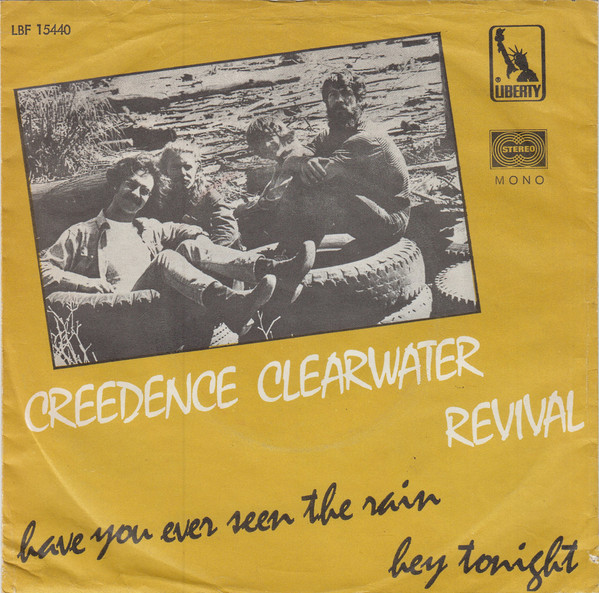
CREEDENCE CLEARWATER REVIVAL - HAVE YOU EVER SEEN THE RAIN?


Llançament: Gener de 1971  

Llistes: EUA: #8   Regne Unit: #36  


"Have You Ever Seen the Rain" és una cançó escrita per John Fogerty i llançada com a senzill el 1971 dins de l'àlbum “Pendulum”. El single va tenir més èxit al Canadà, on va arribar al número u de la llista nacional de senzills RPM 100 el març de 1971. Als Estats Units va assolir el vuitè lloc a la llista Billboard Hot 100 i el tercer lloc a la llista pop de Cash Box. Al Regne Unit, va arribar al número 36. La cantant gal·lesa Bonnie Tyler en va fer una versió en el seu àlbum de 1983 “Faster Than the Speed of Night”, assolint el lloc número 47 al Regne Unit.


"Have You Ever Seen the Rain" reflecteix els sentiments de John Fogerty sobre la imminent marxa del seu germà Tom de Creedence Clearwater Revival i la tensió general dins la banda durant un període d'èxit. La frase "I want to know - have you ever seen the rain comin' down on a sunny day?" (Vull saber si has vist mai la pluja caient en un dia assolellat?) simbolitza la sortida de Tom mentre la banda estava en el seu apogeu comercial. La cara B del senzill, “Hey Tonight”, mostra John tranquil·litzant la banda suggerint que tot aniria bé malgrat els desafiaments. Tom Fogerty va deixar el grup a principis de 1971, poc després de la publicació de l'àlbum. Més tard, va llançar tres àlbums en solitari abans de morir de tuberculosi el 1990, amb un quart àlbum publicat pòstumament el 1992.


John Fogerty va revelar que el significat de “Have You Ever Seen the Rain” ha evolucionat amb el temps. Durant un concert a Arizona el 2012, va explicar que, tot i que la cançó s'inspirava inicialment en un període difícil de la seva vida, ja no l'associa amb la tristesa. En lloc d'això, ara pensa en la seva filla, Kelsy, i en la imatge dels arcs de Sant Martí cada cop que la canta. Fogerty també va afirmar que aquesta és la seva cançó preferida de totes les que ha escrit.


Per al 50è aniversari de la banda el 2018, es va llançar un videoclip protagonitzat pels joves actors Jack Quaid, Sasha Frolova i Erin Moriarty. Dirigit per Laurence Jacobs, el vídeo es descriu com una història de maduració ambientada a Montana, que es centra en tres amics íntims mentre un d'ells es prepara per marxar. Captura moments d'amistat, incloent tirar pedres al riu, conduir pel camp en una Chevrolet pickup vermella vintage i passar una estona junts al voltant d’un foc. Un vídeo del making-of, llançat el 26 de juny de 2019, inclou entrevistes amb els actors i el director. Posteriorment, Quaid i Moriarty van protagonitzar la sèrie “The Boys” d'Amazon Prime.


CREEDENCE CLEARWATER REVIVAL - HAVE YOU EVER SEEN THE RAIN?


Released: January 1971

Charts: US: #8    UK: #36 


"Have You Ever Seen the Rain" is a song written by John Fogerty and released as a single in 1971 from the “Pendulum” album. The song was most successful in Canada, where it reached number one on the RPM 100 national singles chart in March 1971. In the US it peaked at number eight on the Billboard Hot 100 and reached number three on the Cash Box pop chart. In the UK, the song charted at number 36. Welsh singer Bonnie Tyler covered the song on her 1983 album “Faster Than the Speed of Night”, with her version reaching #47 in the UK.


"Have You Ever Seen the Rain" reflects John Fogerty's feelings about the impending departure of his brother Tom from Creedence Clearwater Revival and the overall tension within the band during a time of success. The lyric "I want to know - have you ever seen the rain comin' down on a sunny day?" symbolizes Tom's exit while the band was at its commercial peak. The B-side of the single, "Hey Tonight," features John reassuring the band that everything would be alright despite the challenges. Tom Fogerty left the group in early 1971, shortly after the album's release. He later released three solo albums before passing away from tuberculosis in 1990, with a fourth album released posthumously in 1992.


John Fogerty revealed that the meaning of "Have You Ever Seen the Rain" evolved for him over time. During a 2012 concert in Arizona, he explained that while the song was initially inspired by a difficult period in his life, he no longer associates it with sadness. Instead, he now thinks of his daughter, Kelsy, and the imagery of rainbows whenever he sings it. Fogerty also stated that this song is his all-time favorite, despite being one he wrote himself.


For the band's 50th anniversary in 2018, a music video was released, featuring up-and-coming actors Jack Quaid, Sasha Frolova, and Erin Moriarty. Directed by Laurence Jacobs, the video is described as a "coming-of-age story" set in Montana, focusing on three best friends as one prepares to move away. It captures moments of friendship, including skipping rocks, driving through the countryside in a vintage red Chevy pickup, and bonding around a fire. A behind-the-scenes featurette, released on June 26, 2019, includes interviews with the cast and director. Quaid and Moriarty later starred in Amazon Prime's “The Boys”.