Total de visualitzacions de pàgina:

22.11.24


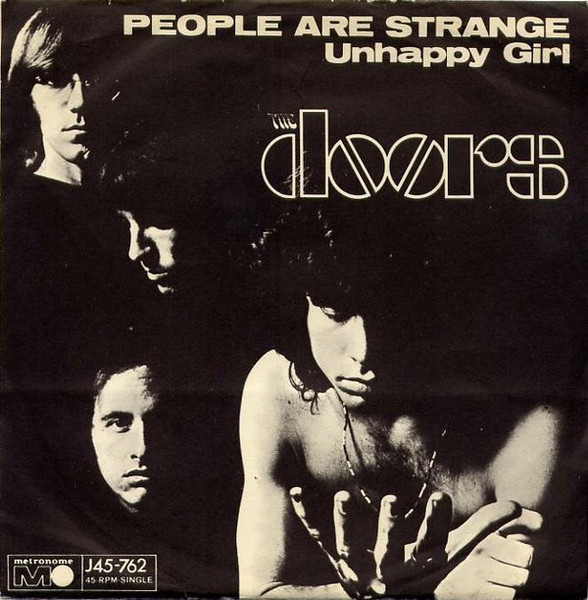
THE DOORS - PEOPLE ARE STRANGE

Llançada el 4 de setembre de 1967

Llistes d'èxits: EUA: #12 


"People Are Strange," de l'àlbum “Strange Days” de The Doors, captura sentiments d'alienació amb lletres que reflecteixen la soledat i la desconnexió: "People are strange when you’re a stranger / Faces look ugly when you’re alone" ("La gent és estranya quan ets un estrany / Les cares semblen lletges quan estàs sol"). Malgrat els temes ombrívols, la música presenta arranjaments vius i teatrals, creant un contrast amb el to melancòlic de la lletra. Escrita principalment per Jim Morrison i Robby Krieger, la cançó es va convertir en un himne per als descontentaments socials, arribant al número 12 al Billboard Hot 100.


A principis de 1967, Jim Morrison, lluitant amb la depressió, va visitar el guitarrista Robby Krieger i el bateria John Densmore. Després d’una caminada per Laurel Canyon, el seu estat d’ànim va millorar, i va escriure la lletra i melodia inicials de "People Are Strange." Inspirat per la vista de la ciutat, va cantar la tornada, cosa que va convèncer Krieger del potencial de la cançó. La lletra explora la solitud de sentir-se un inadaptat, amb Morrison observant que "si ets estrany, la gent és estranya." Tot i la temàtica melancòlica, l'arranjament enèrgic dels Doors, amb un piano animat i un solo de guitarra espontani de Krieger, dona a la cançó un to vibrant, transformant-la en una celebració dels marginats socials.


L'any 1987, Echo & The Bunnymen la va versionar i van assolir el número 29 a les llistes britàniques. La versió va aparèixer a la pel·lícula “The Lost Boys”. El teclista dels Doors, Ray Manzarek, va produïr i va tocar a la peça. La pel·lícula incloïa un gran pòster de Jim Morrison, fent referència a la connexió de la banda amb The Doors. Echo & The Bunnymen mantenia altres vincles amb els Doors, ja que també van versionar "Soul Kitchen" a l'àlbum “It's All Live Now” i van col·laborar amb Manzarek a "Bedbugs And Ballyhoo." El guitarrista d'Echo, Will Sergeant, va mencionar que, tot i que inicialment el cantant Ian McCulloch no era fan dels Doors, més tard va començar a apreciar la banda, probablement influenciat per la constant reproducció de cintes dels Doors per part de Sergeant.


THE DOORS - PEOPLE ARE STRANGE


Released: September 4, 1967

Charts:  US: #12 


"People Are Strange" from the 1967 album “Strange Days”, captures feelings of alienation with lyrics that reflect loneliness and disconnection: “People are strange when you’re a stranger / Faces look ugly when you’re alone.” Despite the somber themes, the music features lively, theatrical arrangements that add contrast to the song's melancholic tone. Written primarily by Jim Morrison and Robby Krieger, it became an anthem for the disenchanted and reached #12 on the Billboard Hot 100. 


In early 1967, Jim Morrison, struggling with depression, visited guitarist Robby Krieger and drummer John Densmore. After a walk through Laurel Canyon, Morrison's mood lifted, and he composed the initial lyrics and melody for *"People Are Strange."* Inspired by the view over the city, he sang the haunting chorus, which convinced Krieger that it had hit potential. The lyrics explore the loneliness of being a misfit, with Morrison observing, "if you're strange, people are strange." Despite the somber themes, the Doors' lively arrangement, featuring jaunty piano and a spontaneous guitar solo by Krieger, adds an upbeat tone, turning the song into a celebration of societal outcasts.


In 1987, Echo & The Bunnymen covered "People Are Strange," which reached #29 on the UK charts and appeared in the movie “The Lost Boys”. This version, produced by Doors keyboardist Ray Manzarek, also featured him playing on the track. The film notably included a large poster of Jim Morrison, referencing the band’s connection to The Doors. Echo & The Bunnymen had other Doors ties as well, covering "Soul Kitchen" on their album “It's All Live Now” and collaborating with Manzarek on "Bedbugs And Ballyhoo." Echo’s guitarist, Will Sergeant, noted that although singer Ian McCulloch initially wasn’t a Doors fan, he later appreciated the band, likely influenced by Sergeant’s consistent playing of Doors tapes.




21.11.24


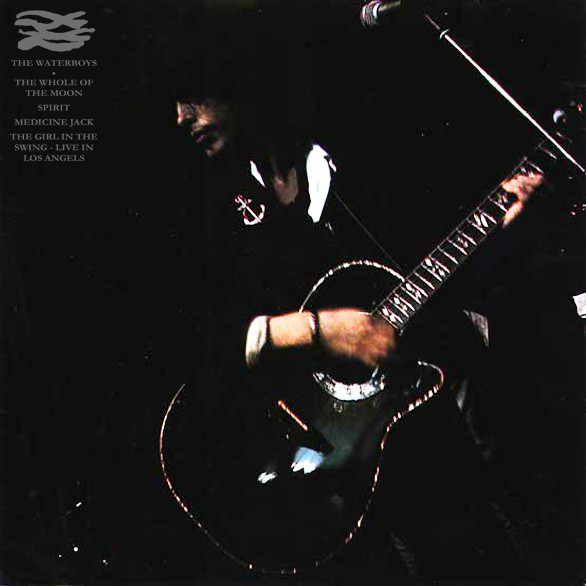
THE WATERBOYS - THE WHOLE OF THE MOON


Llançament: 14 d’octubre de 1985  

Posició a les llistes: Regne Unit: #3  


"The Whole of the Moon" és una cançó de The Waterboys, escrita i produïda per Mike Scott. Llançada com a single l’octubre de 1985 dins l’àlbum “This Is the Sea”, inicialment va tenir un èxit moderat, però amb el temps es va fer popular i es va convertir en una de les cançons més emblemàtiques de la banda. A Austràlia va assolir el número 12 i, després de ser reeditada el 1991, va arribar al número 3 al Regne Unit. La cançó va guanyar el Premi Ivor Novello a la “Millor Cançó Musicalment i Liricament” el 1992 i continua sent una peça destacada en els concerts de The Waterboys.


"The Whole of the Moon" reflecteix la fascinació de Mike Scott en adonar-se de la immensitat de coneixements i experiències que existeixen més enllà del que ell mateix coneixia. Scott va explicar que la va escriure quan tenia 26 anys, inspirat per la sensació de meravella en començar a comprendre la vastitud del coneixement d'altres persones. La cançó tracta d'un tipus de persona, més que d’una persona específica, simbolitzant una figura amb més saviesa i visió, capaç de veure "tota la lluna", una metàfora que representa una visió completa de la realitat. Transmet la presa de consciència de Scott sobre tot el que encara queda per aprendre i experimentar.


Scott va afegir que "The Whole of the Moon" també podria referir-se a algú que visqués intensament, brillant amb una inspiració gairebé d'un altre món però que es va apagar massa aviat, com figures com Syd Barrett o Jimi Hendrix. Encara que alguns fans especulen que la cançó podria estar inspirada en personalitats com C.S. Lewis, Prince o l’amic de Scott, Nikki Sudden, l’autor va aclarir que cap d’aquests va ser una inspiració directa. La cançó, en realitat, parla d’un tipus de persona amb una gran visió o coneixement, despertant una sensació d’admiració per la seva presència intensa i fugaç.


Inicialment, la inspiració de Scott per escriure "The Whole of the Moon" va sorgir per impressionar la seva parella, qui li va preguntar si era fàcil composar cançons. Com a resposta, Scott va escriure la frase "I saw the crescent, you saw the whole of the moon" (Jo vaig veure el creixent, tu vas veure tota la lluna), inspirant-se en la lluna visible aquella nit. La seva parella va quedar impressionada, i més tard va completar  la lletra i el ritme de piano. Aquesta idea senzilla i espontània es va transformar en una cançó sobre l'admiració per aquells amb una visió i comprensió extraordinàries.


El videoclip, dirigit per Meiert Avis, es va filmar al Teatre Lyceum de Londres el novembre de 1985. Mike Scott hi actua en directe sobre una versió adaptada de la pista, amb afegits de violí i guitarra acústica enregistrats als Wessex Studios. Lu Edmonds de Public Image Ltd. apareix simulant tocar el baix, mentre que el violinista Steve Wickham, qui es va unir a The Waterboys després del llançament de “This Is the Sea”, va gravar una part real per al vídeo, assegurant-se que la seva contribució fos autèntica.


The Waterboys, una banda britànica formada a Londres el 1981, estava liderada per Mike Scott (veu/guitarra) i el multiinstrumentista Anthony Thistlethwaite. Amb el temps, el grup va incorporar Karl Wallinger (guitarra/teclats), Steve Wickham (violí) i Kevin Wilkinson (bateria). Després de l'èxit de "The Whole of the Moon", Wallinger va deixar la banda per formar el seu propi grup, World Party, que va tenir un èxit als Estats Units amb "Ship of Fools" el 1987.


THE WATERBOYS - THE WHOLE OF THE MOON


Released: 14 October 1985

Charts:  UK: #3     


"The Whole of the Moon" is a song by the Waterboys, written and produced by Mike Scott. Released in October 1985 as a single from their album “This Is the Sea”, it initially charted modestly but gained popularity over time, eventually becoming one of the band's signature songs. In Australia, it reached No. 12 upon release, and after its 1991 re-release, it peaked at No. 3 in the UK. The song won the Ivor Novello Award for "Best Song Musically and Lyrically" in 1992 and has remained a staple at Waterboys’ live performances.


"The Whole of the Moon" reflects Mike Scott's awe at realizing how much knowledge and experience exists beyond his own. Scott explained that he wrote it at 26, inspired by the sense of wonder he felt as he began to understand the vastness of knowledge and experience others held. The song addresses a type rather than a specific person, symbolizing a figure with greater wisdom and vision, seeing "the whole of the moon"—a metaphor for the big picture. It highlights Scott's realization of how much more there is to learn and experience.


Mike Scott elaborated that "The Whole of the Moon" could also reflect someone who lived intensely, embodying a brilliant, almost otherworldly inspiration, but burned out too soon—figures like Syd Barrett or Jimi Hendrix. Although some listeners speculated that the song was about notable figures like C.S. Lewis, Prince, or Scott's friend Nikki Sudden, Scott clarified that none of these individuals directly inspired it. Instead, the song speaks to a type of person with remarkable vision or knowledge, evoking a sense of awe at their intense, fleeting presence.


Initially, Mike Scott's inspiration for "The Whole of the Moon" was to impress his girlfriend, who had asked if songwriting was easy. To demonstrate, Scott wrote the line, “I saw the crescent, you saw the whole of the moon,” taking advantage of the visible moon that night. His girlfriend was impressed, and he later expanded on the song’s lyrics and piano rhythm, using a self-taught, unique playing style. This simple, spontaneous idea evolved into a song about admiration for those with extraordinary vision and understanding.


The music video for was directed by Meiert Avis and filmed at London’s Lyceum Theatre in November 1985. Mike Scott performs live over an adapted version of the track, with added fiddle and acoustic guitar recorded at Wessex Studios. Lu Edmonds of Public Image Ltd. appears miming the bass, while fiddler Steve Wickham, who joined the Waterboys after “This Is the Sea” was released, recorded a genuine part for the video to ensure his contribution felt authentic.


The Waterboys, a British band formed in London in 1981, were led by Mike Scott (vocals/guitar) and multi-instrumentalist Anthony Thistlethwaite. Over time, the lineup expanded to include Karl Wallinger (guitar/keyboards), Steve Wickham (fiddle), and Kevin Wilkinson (drums). After the release of their hit "The Whole of the Moon", Wallinger departed to form his own band, World Party, which later scored a U.S. hit with "Ship of Fools" in 1987.


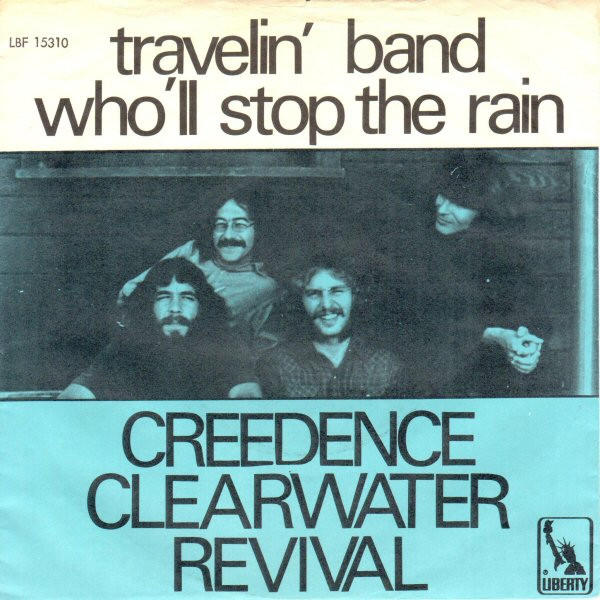
CREEDENCE CLEARWATER REVIVAL - WHO’LL STOP THE RAIN

Released: January 1970

Charts: US: #2   UK: #8 


"Who'll Stop the Rain" is a song written by John Fogerty released as a double-sided single with "Travelin' Band". Included on the album “Cosmo's Factory” it became one of three singles from the LP to reach the top five on the Billboard Pop Singles chart peaking at #2.


"Who'll Stop the Rain" is often interpreted as a Vietnam War protest song, similar to Creedence Clearwater Revival's "Fortunate Son”, but during a 2012 performance at the Arizona State Fair, John Fogerty explained that the song was actually inspired by his experience at Woodstock. Fogerty recalled watching the rain come down on the festival-goers, who danced in the mud, huddled together, and braved the cold. Upon returning home from the event, he wrote "Who'll Stop the Rain," making it more about his reflections on the relentless rain and the atmosphere at Woodstock rather than a direct commentary on the Vietnam War.


When asked by Rolling Stone about the specific meaning of "Who'll Stop the Rain" beyond its symbolic nature, John Fogerty acknowledged that he was indeed referring to Washington, D.C., and its political environment when he wrote the song. However, he shared a personal anecdote about his son, Josh, who was four years old at the time. After hearing the song, Josh innocently said, "Daddy stop the rain." This moment highlighted the contrast between the song's deeper political commentary and the simple, literal interpretation of its lyrics by a child.


In 1978 the song was used in a film of the same name, starring Nick Nolte as a Vietnam veteran. The movie was originally titled “Dog Soldiers” after the source novel, but the title was changed when the producers secured the rights to use the song. Creedence Clearwater Revival songs, including "Who'll Stop the Rain," have been featured in numerous films and commercials, largely because John Fogerty had signed away legal control of his old recordings to Fantasy Records. In an NPR interview, Fogerty expressed frustration with how Fantasy Records misused CCR's music, placing it in car and tire commercials. 


20.11.24


THE DOORS - THE CRYSTAL SHIP

Released: January 4, 1967

Album: The Doors


"The Crystal Ship" is a song by the Doors from their 1967 debut album “The Doors”. It was featured as the B-side to their hit single "Light My Fire." Jim Morrison wrote the song as a love ballad dedicated to his first serious girlfriend, Mary Werbelow, after the end of their relationship.


Though some interpret the "Crystal Ship" as a drug metaphor, it is widely seen as a reflection of Morrison's lingering emotions for Werbelow. The song's lyrics explore Morrison's inability to let go, with lines like "another kiss" symbolizing his desire to relive moments with her. Phrases such as "The days are bright and filled with pain" suggest that, despite his new success, Morrison was still emotionally tied to Werbelow. Ultimately, the song is a bittersweet tribute to their past relationship, with Morrison acknowledging both the end of their time together and his continued connection to her.


"The Crystal Ship" is a lyrically ambiguous and dreamlike song, inviting a range of interpretations. While Morrison’s lyrics seem to express the longing and sorrow following his breakup with Mary Werbelow, critics argue that the song's imagery is purposefully vague, allowing for multiple meanings. Greil Marcus suggests the opening line might hint at themes of sleep, overdose, or even a dark pact, while James Perone points out that "the crystal ship" could represent either sleep or a drug experience—though in 1967, the drug interpretation was more prevalent. Authors David Luhrssen and Michael Larson add that the song's dreamlike quality could also reflect a sensual experience.


Jim Morrison, an avid reader, drew inspiration for the song from a Celtic legend in “The Book of the Dun Cow”, a manuscript of Irish stories compiled around the 9th century by monks, blending his personal experiences with ancient Celtic and poetic influences. The song title likely connects to William Blake's poem “The Crystal Cabinet”, one of many works by Blake that influenced Morrison's songwriting. 


A music video for the song was later created by combining footage of the Doors performing on “American Bandstand” with scenes of Jim Morrison and his girlfriend, Pamela Courson, at Kern River near Bakersfield, California. 


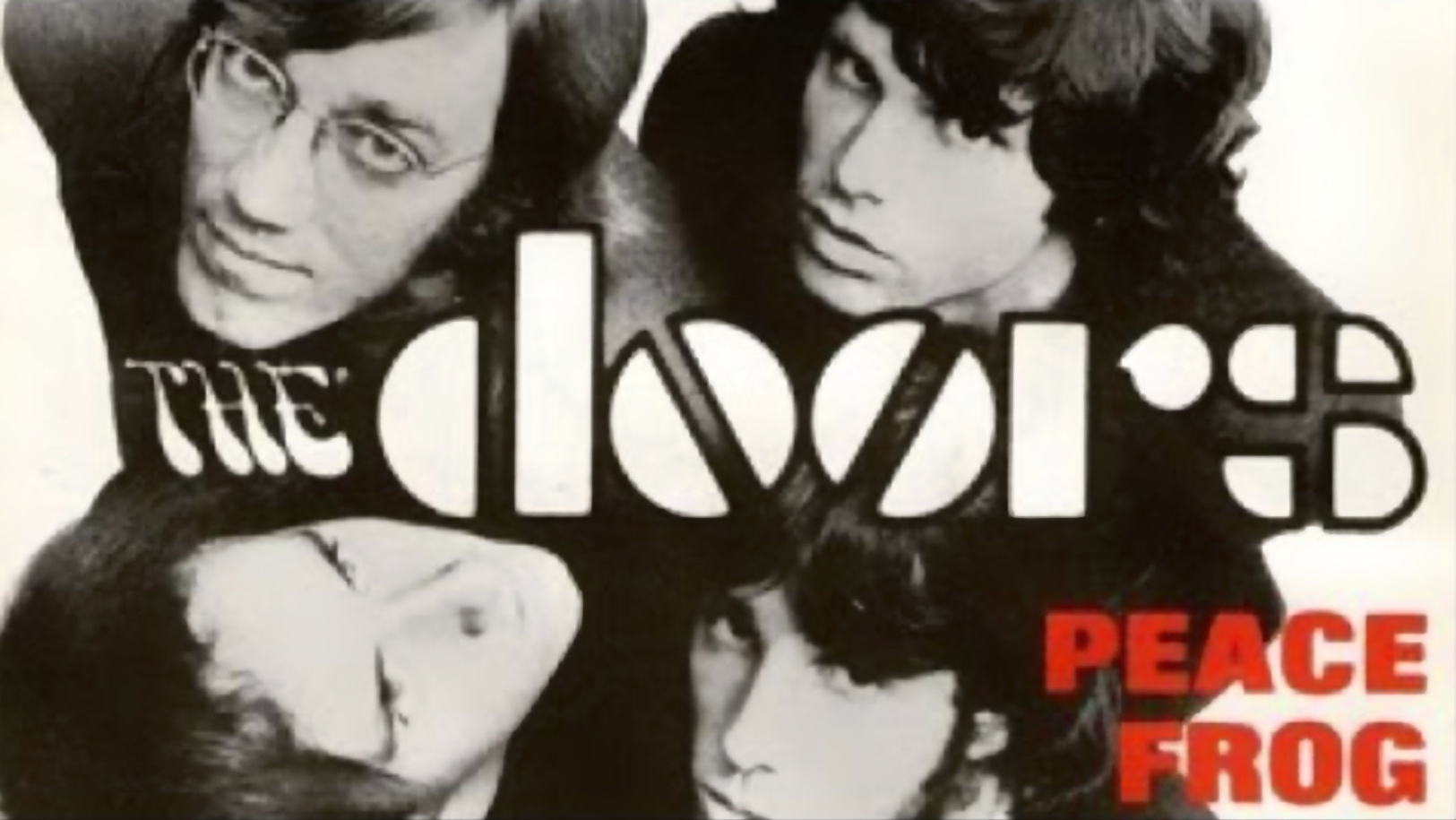
THE DOORS - PEACE FROG


Released: February 9, 1970

Album: Morrison Hotel


"Peace Frog" is a song by the Doors from their 1970 album “Morrison Hotel”. Guitarist Robby Krieger wrote and recorded the music first, with Jim Morrison later adding lyrics adapted from his poems. While not released as a single in the U.S., it was issued as the B-side to "You Make Me Real" in France.


"Peace Frog" features a complex, energetic groove driven by Robby Krieger's guitar riff and John Densmore's funk-inspired drumming. Ray Manzarek’s vibrant organ fills create a crowded soundscape, leaving minimal room for Jim Morrison's vocals, which he pushes into brief openings to heighten the song's intensity. The lyrics are drawn from Morrison's poems, including "Abortion Stories," which inspired the song's dark, vivid imagery.


"Peace Frog" was developed in the studio; with producer Paul Rothchild's encouragement, Morrison drew on his poetry notebooks to complete the song’s lyrics. Themes in the song include Morrison’s childhood memory of witnessing an accident involving Native Americans, which he believed left a lasting spiritual mark on him—a scene later depicted in Oliver Stone’s “The Doors” movie. 


The line "Blood in the streets of the town of New Haven" references Jim Morrison's arrest in New Haven in 1967. Morrison recounted that he was with a girl before a show when a police officer interrupted them, eventually spraying Morrison in the eyes with a chemical. Despite his protests, Morrison was later arrested on stage for breach of the peace and resisting arrest. The arrest turned chaotic as Morrison struck a crucifixion pose on stage, leading some audience members to clash with the police. The line also appears in the song, referring to police violence during the 1968 Democratic National Convention, where officers clashed with anti-war protesters.