Total de visualitzacions de pàgina:

16.12.24


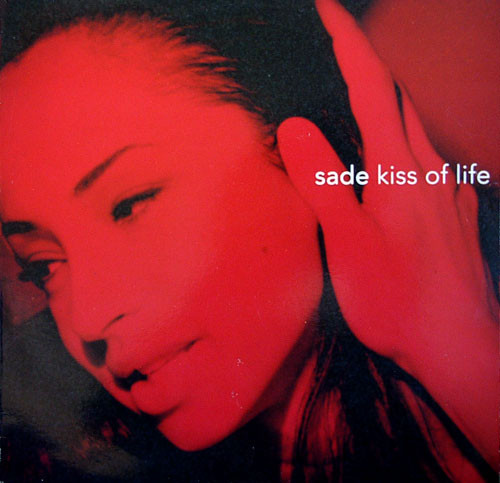
SADE - KISS OF LIFE


Llançament: 26 d’abril de 1993

Llistes: EUA: #78    Regne Unit: #44


Love Deluxe, el quart àlbum d’estudi de Sade, va recuperar el so característic del grup amb jazz fresc, acompanyat de l’estil vocal suau i evocador de Sade Adu. “Kiss of Life” va ser escrita per Sade i els membres del grup Stuart Matthewman, Andrew Hale i Paul S. Denman, amb producció conjunta del grup i Mike Pela. Llançada com a tercer senzill l’any 1993, va arribar al número 44 de les llistes del Regne Unit i al número 78 del Billboard Hot 100 als Estats Units. La cançó va tenir un èxit destacat a la llista Billboard Hot R&B/Hip-Hop Songs, on va assolir el número 10, i va rebre una notable reproducció a les emissores de jazz suau. Amb una línia de baix influenciada pel funk i un piano de jazz, la cançó és una oda a l’alegria de l’amor.


“Kiss of Life” és una cançó romàntica que celebra l’impacte profund d’un sol petó que uneix una parella per sempre. A la lletra, la cantant atribueix la seva trobada a una força divina, simbolitzada com “un àngel” que la guia fins a la seva ànima bessona. Les imatges vives de l’amor com un color al cel i un batec que s’accelera capturen la passió d’aquesta connexió. La tornada introdueix el “petó de la vida” com un acte transformador que desperta i encén les emocions dels amants. El solo de saxofon aprofundeix en l’ambient íntim i romàntic de la cançó, mentre que el final reafirma la idea que el seu amor és orquestrat divinament i valorat com un regal.


En la seva crítica a Smash Hits, Leesa Daniels la descriu com a familiar però perfecta per a un capvespre romàntic, gràcies al seu ritme pausat, el solo de saxofon i la veu rasposa. El videoclip dirigit per Albert Watson, es va gravar a Miami i inclou escenes als voltants del Washington Park Hotel de South Beach.


SADE - KISS OF LIFE


Released: April 26, 1993

Charts:  US: #78    UK: #44 


"Love Deluxe”, Sade's fourth studio album, brought back the band's signature detached, cool jazz sound and Sade Adu's distinctively smooth, evocative vocal style. "Kiss of Life" was written by Sade Adu and band members Stuart Matthewman, Andrew Hale, and Paul S. Denman, with production by the band and Mike Pela. Released as the third single in 1993, it reached number 44 on the UK Singles Chart and number 78 on the US Billboard Hot 100. The track was particularly successful on the Billboard Hot R&B/Hip-Hop Songs chart, where it peaked at number 10, and gained notable airplay on smooth jazz stations. Featuring a funk-infused bassline and jazz piano, the song is an ode to the joy of love.


"Kiss of Life" is a romantic song celebrating the profound impact of a single kiss that bonds a couple forever. In the lyrics, the singer attributes their fateful meeting to a divine force, symbolized as "an angel" who guided her to her soulmate. The vivid imagery of love as a color in the sky and a heartbeat that quickens captures the passion of this connection. The chorus introduces the "kiss of life" as a transformative act that awakens and ignites the lovers’ emotions. The saxophone solo deepens the song's intimate, romantic ambiance, while the outro reaffirms the idea of their love being divinely orchestrated and cherished as a gift. 


In her review for Smash Hits, Leesa Daniels describe it as familiar yet perfect for a romantic sunset setting, with its slow beat, sax solo, and husky vocals. The song's music video, directed by Albert Watson, was shot in Miami, featuring scenes around the Washington Park Hotel in South Beach. 


ROD STEWART - YOUNG TURKS


Llançament: 9 d’octubre de 1981

Llistes d’èxits: EUA: #5 | Regne Unit: #11


“Young Turks” és una cançó de Rod Stewart inclosa en el seu àlbum de 1981 “Tonight I’m Yours”. La música va ser composada per Carmine Appice, Duane Hitchings i Kevin Savigar, mentre que la lletra va ser escrita per Stewart. Tot i que el títol fa referència a “Young Turks” —un terme associat a la joventut rebel—, aquesta frase no apareix a la lletra de la cançó, on es fa servir el refrany “Young Hearts”. La cançó va marcar un canvi important en la carrera de Stewart, adoptant els sons synth-pop i new wave que caracteritzaven la música dels anys 80.


La cançó no té cap referència a Turquia ni a la seva història, tot i que el títol fa al·lusió a la Revolució dels Joves Turcs del segle XX, un moment clau a l’Imperi Otomà.


La lletra de “Young Turks” narra la història de Billy i Patty, una parella jove que busca llibertat i perseguir els seus somnis malgrat les dificultats econòmiques. Sentint-se atrapats, decideixen marxar de casa per començar una nova vida junts. La cançó reflecteix l’esperit aventurer de la parella, però també les seves dificultats, culminant quan Billy informa els pares de Patty que han tingut un fill.


El videoclip va ser el primer emès a MTV a incloure breakdance, fet que li va donar una gran rotació poc després del llançament del canal. Rod Stewart va esdevenir una figura important a MTV, amb prop de 40 vídeos a la seva rotació. El vídeo, dirigit per Russell Mulcahy i coreografiat per Kenny Ortega, explica la història de la parella fugida, Billy i Patty, intercalant escenes de ball. Es va filmar al centre de Los Angeles durant l’estiu de 1981, amb localitzacions destacades com el desaparegut Licha’s Santa Fe Grill, l’Hotel Hayward i un antic pati ferroviari.


Rod Stewart ha expressat la seva estima per “Young Turks”, especialment pel seu to optimista. Gaudeix interpretant-la en directe i l’ha descrit com una de les seves favorites, destacant-ne l’energia, que s’alinea perfectament amb els seus punts forts com a compositor.


ROD STEWART - YOUNG TURKS


Released: October 9, 1981

Charts:  US: #5    UK: #11 


“Young Turks” is a song by Rod Stewart from his 1981 album Tonight I’m Yours. The music was composed by Carmine Appice, Duane Hitchings, and Kevin Savigar, with lyrics by Stewart. The term “young Turk,” referring to rebellious youth, inspired the song’s theme, though the phrase itself does not appear in the lyrics. The song, which uses the refrain “Young Hearts” instead, marked a major shift in Stewart’s career, embracing the synth-pop and new wave sounds of the 1980s.


The song features no mention of Turkey or its history, despite its title referencing the early 20th-century Young Turk Revolution, which marked a significant turning point in the Ottoman Empire. 


Rod Stewart’s “Young Turks” tells the story of Billy and Patty, a young couple chasing freedom and dreams despite financial struggles. Feeling constrained, they leave home to start a new life together. The song captures their adventurous spirit, but also their challenges, as Billy eventually informs Patty’s parents that they’ve had a baby boy. 


The music video was the first on MTV to feature breakdancing, helping it gain heavy rotation shortly after MTV launched. Stewart was a prominent presence on the channel, with about 40 of his videos in rotation. Directed by Russell Mulcahy and choreographed by Kenny Ortega, the video tells the story of a runaway couple, Billy and Patti, interwoven with dance sequences. Filmed in downtown Los Angeles in the summer of 1981, notable locations include the now-abandoned Licha’s Santa Fe Grill, the Hotel Hayward, and a railway yard. 


Rod Stewart has expressed his love for “Young Turks,” particularly its optimistic tone. He enjoys performing it live, describing it as one of his favorites and highlighting that its energy aligns perfectly with his strengths as a songwriter.


15.12.24


THE MAMAS AND THE PAPAS - LOOK THROUGH MY WINDOW


Released: September 1966

Charts:  US: #24 


“Look Through My Window” is a song by the Mamas & the Papas, written by John Phillips around 1964 during a brief separation from his partner, Michelle Phillips. John believed Michelle was in California, but she was actually nearby in Greenwich Village. 


“Look Through My Window” was the lead single from the Mamas & the Papas’ third album, “The Mamas & The Papas Deliver”. Following the group’s streak of three Top 5 singles on the Billboard Hot 100, expectations were high, but the song peaked at only number 24 in the United States and did not chart in the UK. This disappointing performance led to the decision to release another single from their second album, as John Phillips recounted in his autobiography.


“Look Through My Window” explores themes of change, loss, and acceptance in the aftermath of a relationship. Using the metaphor of rain beating on the roof, the song reflects the narrator’s resignation to their lover’s departure and the emotional pain that follows. The lyrics also emphasize the inevitability of moving on, with imagery of people passing by on the street symbolizing the passage of time and the world continuing despite personal struggles.


“Deliver” is the third studio album by The Mamas & the Papas, released in February 1967 by Dunhill Records. It peaked at No. 2 on Billboard’s Top LPs chart within three weeks of its debut. The album’s title was an inside joke among the group, referencing Cass Elliot’s pregnancy and the secrecy surrounding it due to societal stigma toward unwed mothers. The name playfully suggested the group had “delivered” both a musical and metaphorical creation.


THE MAMAS AND THE PAPAS - I SAW HER AGAIN


Released: June 1966

Charts:  US: #5    UK: #11 


“I Saw Her Again” is a song co-written by John Phillips and Denny Doherty. Released in June 1966, it reached No. 1 on the Canadian RPM Singles Chart, No. 11 in the UK, and No. 5 on the Billboard Hot 100 in the U.S. The song was included on their second album, released in September 1966.


“I Saw Her Again” tells the story of a complicated love affair between two people who can’t resist each other, despite the emotional pain it causes. The lyrics reflect the protagonist’s conflicting feelings as they reunite with their lover after a period of separation, struggling between desire and the turmoil of their situation. The song was written by John Phillips about his wife Michelle Phillips’ affair with bandmate Denny Doherty. The affair caused Michelle’s temporary dismissal from The Mamas & the Papas and led to her divorce from John. Despite the irony, Doherty received a songwriting credit. The sessions were likely as tense as Fleetwood Mac’s Rumours recordings a decade later, marked by personal turmoil within the band.


This song was produced by Lou Adler and engineered by Bones Howe. The repeated “I saw her” around the 2:45 mark was a happy accident during the recording session. Bones mistakenly punched in the vocals early, creating the unintended double phrase. Lou Adler liked the effect and decided to keep it, recognizing the value of spontaneous studio mistakes. 


A music video was created to promote “I Saw Her Again”, featuring The Mamas & the Papas outside De Voss, a clothing shop on the Sunset Strip in Los Angeles. John arrives on a motorcycle, followed by Michelle, Denny, and Cass in a car. Inside, Michelle and Cass browse garments, while John sprays the air and Denny smokes a cigarette. The group playfully tosses clothes around before leaving the store in pairs. 


THE DOORS - LOVE HER MADLY


Released: March 1971

Charts:  US: #11 


"Love Her Madly," released in March 1971, was the first single from the Doors’ album “L.A. Woman”, their last with Jim Morrison. The song was one of the Doors' highest-charting hits, reaching No. 11 on the Billboard Hot 100 and No. 3 in Canada. It was issued shortly before Morrison left for Paris, where he died in July 1971. Morrison performed "Love Her Madly" live only twice, at shows in Dallas and New Orleans in December 1970.


Robby Krieger wrote "Love Her Madly" on his recently purchased Gibson 335 acoustic 12-string guitar. The lyrics reflect his relationship with his girlfriend, Lynn Veres, who often threatened to leave during arguments, slamming the door with such force that the house would shake. Krieger met Lynn, then a go-go dancer, at the Ondine Club in New York City. Although she had a brief fling with Jim Morrison, she ultimately ended up with Krieger, and the two married in 1972, remaining together thereafter.


"Love Her Madly" showcases Jim Morrison’s smoother vocal style, influenced by his admiration for Frank Sinatra. Guitarist Robby Krieger noted that Morrison especially enjoyed singing the line:


"All your love is gone, so sing a lonely song  

Of a deep blue dream, seven horses seem  

To. Be. On. The. Mark."


Morrison suggested including cryptic elements to intrigue listeners, even if they didn’t have specific meanings. The "seven horses" reference symbolized luck and connected to Morrison’s interest in horse racing from his days in Florida, while "on the mark" fit with the song's steady, rhythmic structure.


The Doors’ producer, Paul A. Rothchild, left the “L.A. Woman” sessions because he felt the song “Love Her Madly” sounded like cocktail music, which he criticized heavily despite its commercial success. Although guitarist Robby Krieger has claimed Rothchild was actually referring to "Riders on the Storm," Rothchild himself later confirmed that "Love Her Madly" was indeed the song that prompted his departure. After Rothchild left, the Doors decided to produce the album themselves, with longtime engineer Bruce Botnick. This led to a more relaxed, collaborative recording environment where the band played together live without overdubs, completing the album in just two weeks.


The B-side of "Love Her Madly," titled "You Need Meat (Don't Go No Further)," is notable as the only Doors studio track from Jim Morrison's era that features Ray Manzarek on lead vocals. It’s also one of only three non-album B-sides by the band, alongside "Who Scared You?" and the rare post-Morrison track "Treetrunk." "You Need Meat" first appeared on an album in the “Weird Scenes Inside the Gold Mine” compilation.