Total de visualitzacions de pàgina:

23.1.25


THE POLICE - WRAPPED AROUND YOUR FINGER


Llançament: 8 de juliol de 1983

Llistes: EUA: #8, Regne Unit: #7


“Wrapped Around Your Finger” és un single de l’àlbum “Synchronicity”, escrit per Sting i publicat a tot el món per A&M Records. Al Regne Unit, va ser el segon senzill de l’àlbum i va arribar al número 7 de les llistes a l’agost de 1983. Als Estats Units, va ser el quart senzill i va assolir el número 8 al Billboard Hot 100 al març de 1984, convertint-se en l’últim èxit del grup dins del Top 10. La cara B del single al Regne Unit incloïa “Someone to Talk To”, mentre que als Estats Units hi havia una versió en directe de “Tea in the Sahara”. El single es va llançar després de l’èxit mundial de “Every Breath You Take”.


“Wrapped Around Your Finger” és una exploració matisada de les dinàmiques de poder en les relacions, combinant una lletra complexa amb subtils influències del reggae. La lletra retracta un psicodrama en què una dona més experimentada manipula un home més jove i ingenu. Narrada des de la perspectiva d’ell, la història evoluciona a mesura que el protagonista aprèn les tàctiques de la dona i, finalment, capgira la dinàmica de poder amb la declaració: “You’ll be wrapped around my finger” (Estaràs al meu servei). Aquest gir transforma el protagonista, que passa de ser dominat a convertir-se en el mestre, mostrant una desconnexió cerebral i un calculat canvi de control.


La frase “Caught between Scylla and Charybdis” fa referència a la mitologia grega, concretament a L’Odissea. Escil·la, una nimfa convertida en monstre de sis caps per Circe, vivia a un costat de l’estret de Messina, mentre Caribdis, un monstre que provocava remolins, habitava l’altre costat. Els mariners que travessaven l’estret afrontaven una mort quasi segura, simbolitzant una situació on cal triar entre dues opcions perilloses. Ulisses va sobreviure famosament a aquest trànsit mortal.


La menció de “Mephistopheles” a la frase “Mephistopheles is not your name” al·ludeix al diable, inspirant-se en el folklore alemany i en obres literàries com Faust de Goethe. Aquestes al·lusions enriqueixen l’exploració de la manipulació i les lluites de poder de la cançó, subratllant el viatge intel·lectual i emocional del protagonista cap a la recuperació del control en la relació.


El videoclip, dirigit per Godley & Creme, mostra imatges atmosfèriques de la banda tocant en una habitació fosca plena d’espelmes. Sting corre per un laberint de canelobres alts, que acaba tombant al final. El vídeo utilitza una tècnica de moviment ràpid: la banda va sincronitzar a una velocitat accelerada, i, en alentir el metratge, els seus moviments semblen a càmera lenta. Sting va elogiar el vídeo pel seu disseny escenogràfic, qualificant-lo com un concepte de “L’aprenent de bruixot”, mentre que Andy Summers va criticar l’exageració de Sting i va expressar la seva insatisfacció amb la cançó i el vídeo.


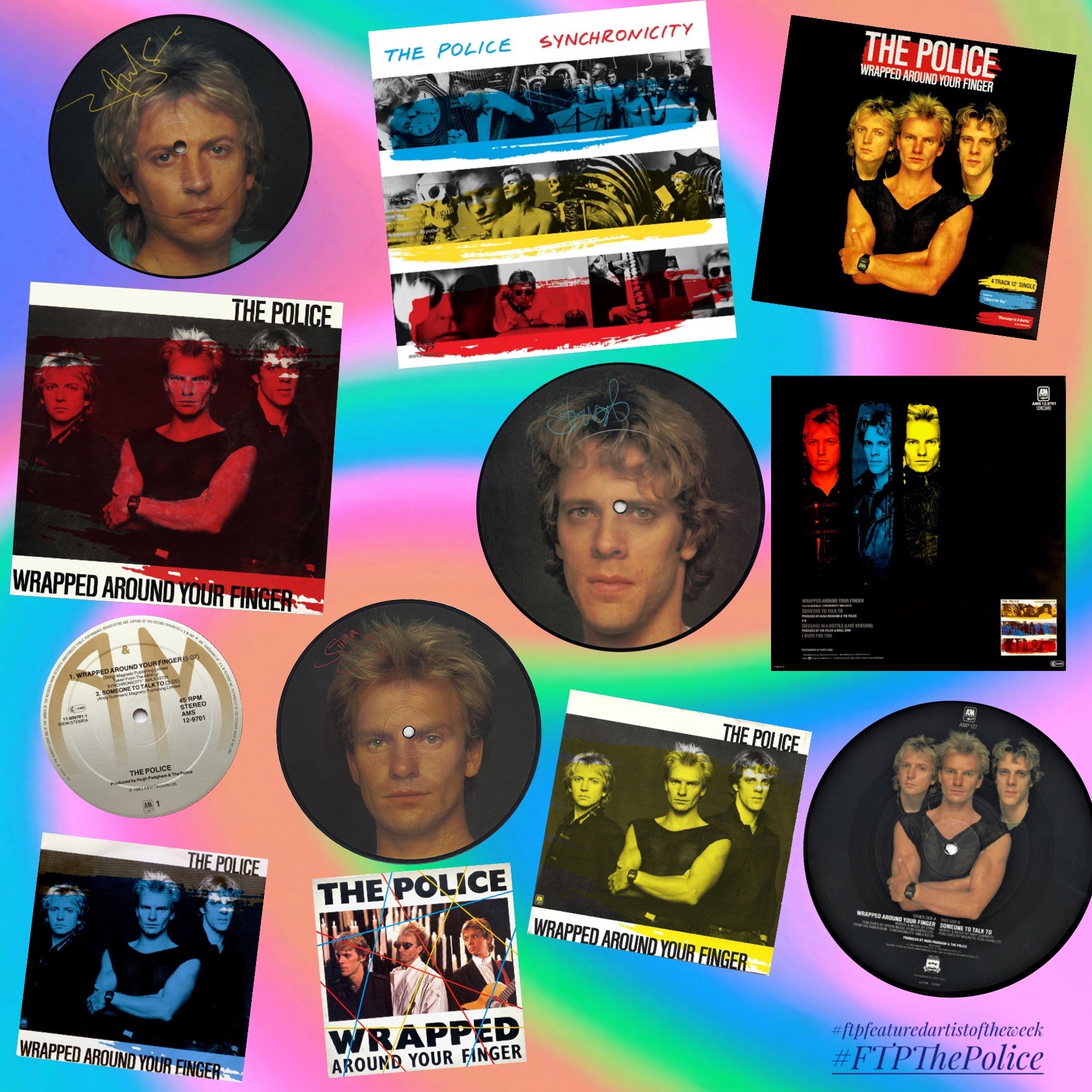
La funda del single al Regne Unit es va publicar en tres variacions de color: blau, vermell i groc. També es va llançar en un disc amb imatge, cadascun amb el rostre d’un dels membres de la banda. Dels 12.000 exemplars publicats, 10.000 presentaven el rostre de Sting, mentre que les versions amb Summers i Copeland van ser limitades a 1.000 exemplars cadascuna, convertint aquestes variacions en objectes més rars.


THE POLICE - WRAPPED AROUND YOUR FINGER


Released: July 8, 1983

Charts:  US: #8   UK: #7 


“Wrapped Around Your Finger” is a single from the album “Synchronicity”. Written by Sting, it was released worldwide by A&M Records. In the UK, it was the second single and peaked at No. 7 on the charts in August 1983. In the US, it was the fourth single and reached No. 8 on the Billboard Hot 100 in March 1984, becoming the band’s final top 10 hit there. The UK B-side featured “Someone to Talk To,” while the US release included a live version of “Tea in the Sahara.” It followed the global success of “Every Breath You Take.”


“Wrapped Around Your Finger” is a nuanced exploration of power dynamics in relationships, blending intricate lyrics with subtle reggae influences. The lyrics depict a psychodrama where a more experienced woman manipulates a younger, naive male partner. Sung from his perspective, the narrative shifts as he learns her tactics and ultimately overturns the power dynamic, declaring, “You’ll be wrapped around my finger.” This reversal transforms the once-dominated protagonist into the master, showcasing a cerebral detachment and calculated shift in control.


The line “Caught between Scylla and Charybdis” references Greek mythology, drawing from The Odyssey. Scylla, a nymph turned six-headed monster by Circe, resided on one side of the Strait of Messina, while Charybdis, a whirlpool-dwelling monster, occupied the other. Sailors navigating the strait faced near-certain doom, symbolizing being trapped between two perilous choices. Odysseus famously survived this harrowing passage.


The mention of “Mephistopheles” in the line “Mephistopheles is not your name” refers to the Devil, borrowing from German folklore and literary works like Goethe’s Faust. These allusions enrich the song’s exploration of manipulation and power struggles. Together, these references underscore the protagonist’s intellectual and emotional journey toward reclaiming control in the relationship.


The music video was directed by Godley & Creme, who also work on other Police videos. It features atmospheric footage of the band performing in a dimly lit, candle-filled room. Sting runs through a maze of tall candlesticks, knocking them down in the end. The video uses a fast-motion technique where the band mimed at an accelerated speed, and when slowed to normal, their movements appear in slow motion. Sting praised the video for its atmospheric set design, calling it a “Sorcerer’s Apprentice” concept, while Andy Summers criticized Sting’s overacting and expressed dissatisfaction with the song and video.


The British picture sleeve for the single was released in three color variations: blue, red, and yellow. It was also available on a picture disc, each featuring the face of one of the band members. Out of the 12,000 copies released, 10,000 featured Sting’s face, while the versions with Summers and Copeland’s faces were limited to 1,000 each, making those variations rarer.



22.1.25


PAUL McCARTNEY & WINGS - MY LOVE


Llançament: 23 de març de 1973

Llistes d’èxits: Regne Unit: #9  EUA: #1 (4 setmanes)


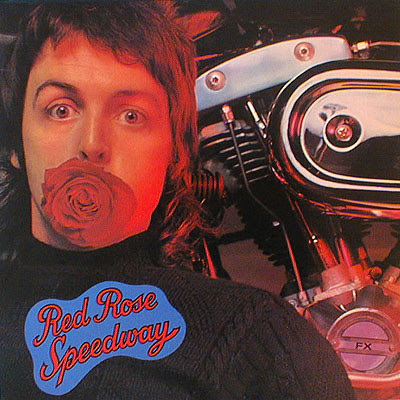
“My Love”, publicada com el single principal de l’àlbum “Red Rose Speedway”, és una balada d’amor dedicada a Linda, l’esposa de Paul McCartney i membre de la banda Wings. Aquest senzill va ser el primer en què el nom de Paul McCartney apareixia acreditat al costat del de Wings, ja que les publicacions anteriors de la banda es van atribuir exclusivament a Wings. Aquesta decisió va ser motivada pel fet que les vendes discretes del debut de Wings, “Wild Life” (1971), podrien haver estat causades per la manca de reconeixement del públic sobre la participació de McCartney. El canvi de nom es va mantenir amb la publicació de “Red Rose Speedway” el 30 d’abril de 1973, consolidant l’acreditació conjunta de Paul McCartney & Wings. L’èxit de “My Love” va contribuir significativament a la prosperitat comercial de l’àlbum.


La gravació de “My Love” va incloure una orquestra, i McCartney va permetre que el guitarrista Henry McCullough improvisés el solo durant la presa final. McCullough, que havia demanat permís per provar una idea diferent, va marcar un moment clau en la seva carrera amb aquesta improvisació. McCartney, que normalment componia els solos de guitarra, poques vegades permetia canvis en les seves decisions a l’estudi. Tanmateix, el solo de McCullough es va convertir en un element emblemàtic de la cançó.


McCartney va escriure “My Love” com una balada al piano, probablement entre 1969 i 1970, en els primers anys de la seva relació amb Linda. Després de formar Wings amb ella el 1971, la va incloure en els repertoris dels concerts de la banda durant les gires de 1972. En el debut en directe de Wings, el 9 de febrer de 1972 a la Universitat de Nottingham, Linda va cantar algunes frases en resposta a la veu principal de Paul, afegint un toc especial a la interpretació en viu, que es va mantenir fidel a la versió oficialment gravada.


Després de la mort de Linda el 1998, Paul McCartney va escollir “My Love” com a part del programa musical de les cerimònies memorials celebrades en la seva memòria a Londres i Nova York. Profundament afectat pel dol, McCartney va compartir públicament els seus sentiments i va organitzar els serveis amb un grau de professionalitat comparable al d’un concert, segons el biògraf Howard Sounes.


PAUL McCARTNEY & WINGS - MY LOVE


Released : March 23, 1973

Charts:  UK: #9  US: #1 (4 weeks)


"My Love" released as the lead single from the album "Red Rose Speedway," is a love song dedicated to McCartney's wife and bandmate, Linda. Notably, this single marked the first time Paul McCartney's name appeared in the artist credit for a Wings record, as their previous releases had been credited to Wings alone. The decision to credit the release to "Paul McCartney & Wings" instead of Wings alone was influenced by the belief that the lackluster sales of Wings' 1971 debut, "Wild Life", were partly due to the public being unaware of McCartney's involvement. The name change persisted with the release of "Red Rose Speedway" on 30 April 1973, continuing the joint billing of Paul McCartney and Wings. The song's success contributed to the commercial prosperity of the album.


Recording "My Love" with an orchestra, Paul McCartney allowed guitarist Henry McCullough to improvise the solo in the final take. McCartney, who had written the solo as he often did with their solos, was initially uncertain about McCullough's request to try something else. McCullough's decision to change the solo turned out to be a career-defining moment for him, as McCartney rarely had his decisions overruled in the studio. McCullough's improvised solo on "My Love" became a notable element of the song and left a lasting impact on both musicians.


Paul McCartney wrote "My Love" as a piano ballad, a love song to his wife Linda, early in their relationship, likely around 1969 or 1970. After forming the band Wings with Linda in 1971, McCartney included "My Love" in the set lists for the group's concert tours in 1972. During Wings' public debut performance at Nottingham University on February 9, 1972, Linda sang lines in response to McCartney's lead vocal, adding a unique touch to the song. The live performance closely resembled the version later recorded for official release.


After Linda's passing in 1998, Paul McCartney chose "My Love" to be part of the musical program at the memorial services held in her memory, both in London and New York City. McCartney, deeply affected by grief, expressed his emotions publicly and organized the services with a level of professionalism akin to his concert performances, according to biographer Howard Sounes.


21.1.25


HOWARD JONES - LITTLE BIT OF SNOW


Released: March 2, 1987

Charted:  UK: #70 


“Little Bit of Snow” is a song by British singer-songwriter Howard Jones from his 1986 album “One to One”. Released as a single on March 1987, it peaked at #70 on the UK Singles Chart but was not released in the US. 


“Little Bit of Snow” is a poignant song that addresses addiction, self-destruction, and the importance of compassion and resilience. Using “snow” as a metaphor for cocaine, the lyrics express a heartfelt plea to someone battling inner demons, urging them to resist the temporary escape of substance abuse and consider the emotional toll on their loved ones.


The song explores themes of interconnectedness and loss, emphasizing that addiction impacts not just the individual but also those who care about them. Through vivid imagery of light and darkness, it conveys a message of hope, perseverance, and the collective strength of human support. 


Jones’s decision to contribute the track to the 1986 Anti-Heroin Project charity album, It’s a Live-In World, underscores its strong anti-drug message and reinforces its purpose as a call for compassion, support, and resilience in the face of addiction.


Howard Jones revealed that producer Arif Mardin’s enthusiasm for the unique time signature of “Little Bit of Snow” led to a distinctive string arrangement and the addition of vibraphonist Gary Burton, giving the track its unique texture.


THE POLICE - DON’T STAND SO CLOSE TO ME


Llançament: 19 de setembre de 1980

Llistes: EUA: #10, Regne Unit: #1 (4 setmanes)


“Don’t Stand So Close to Me” és una cançó publicada com a primer senzill del tercer àlbum de The Police, “Zenyatta Mondatta”. La cançó explora la història d’una relació escandalosa entre un professor i una alumna, que acaba sent descoberta. Va esdevenir el tercer single de la banda en arribar al número 1 al Regne Unit i va ser el senzill més venut de 1980 al país, amb 808.000 còpies venudes aquell any. També va arribar al Top 10 a Austràlia, el Canadà i els Estats Units. La cançó va guanyar el Grammy de 1982 a la millor interpretació de rock per un duo o grup amb veu.


La lletra de “Don’t Stand So Close to Me” s’inspira en la novel·la Lolita de Vladimir Nabokov i tracta l’atracció inapropiada d’un professor per una alumna. Tot i que Sting havia estat professor abans de la seva carrera musical, ha afirmat repetidament que la cançó no és autobiogràfica i que la història és totalment fictícia. La frase “Just like the old man in the book by Nabokov” fa una referència directa a Lolita, tot i que Sting pronuncia malament el nom de l’autor. El final ambigu de la lletra suggereix que el professor i l’alumna podrien acabar junts, reflectint els temes de la novel·la. Malgrat les especulacions, no s’ha identificat cap alumna real com a inspiració per a la cançó.


El videoclip de 1980 mostra The Police divertint-se en un entorn escolar, amb toga de graduació, exhibint el seu bon humor i camaraderia. Sting porta una samarreta de The Beat (coneguts com The English Beat als EUA), que van ser teloners de part de la seva gira “Ghost in the Machine”. Aquest vídeo desenfadat va guanyar popularitat a MTV quan es va llançar el 1981. Per contra, el videoclip de 1986, per a la versió regravada de la cançó i dirigit per Godley & Creme, presenta un to més seriós, amb els membres de la banda en una posada en escena sobria i efectes especials datats.


El 1986, The Police es van reunir per regravar algunes de les seves cançons anteriors, però les tensions internes van ressorgir, i l’única cançó completada va ser “Don’t Stand So Close to Me ’86”. Aquesta versió es va publicar com a single i es va incloure al recopilatori “Every Breath You Take - The Singles”.


La col·laboració de Sting amb Dire Straits a “Money for Nothing” el 1985 va resultar en una tornada que recorda la melodia d’aquesta cançó. Tot i que inicialment Sting va rebutjar acreditar-se com a compositor, la seva discogràfica hi va insistir perquè pogués rebre drets d’autor.


THE POLICE - DON’T STAND SO CLOSE TO ME


Released: September 19, 1980

Charts:  US: #10   UK: #1 (4 weeks)


“Don’t Stand So Close to Me” is a hit song released in September 1980 as the lead single from the third album, “Zenyatta Mondatta”. It explores the story of a teacher engaging in a scandalous relationship with a student, which eventually gets exposed. The song became the band’s third UK No. 1 single and the best-selling single of 1980 in the UK, with 808,000 copies sold that year. It also reached the top ten in Australia, Canada, and the US. The Police won the 1982 Grammy Award for Best Rock Performance by a Duo or Group with Vocal for this track.


“Don’t Stand So Close to Me” tells the story of a teacher’s inappropriate attraction to a student, inspired by Vladimir Nabokov’s Lolita. While Sting was a teacher before his music career, he has consistently stated that the song is not autobiographical and that the narrative is entirely fictional. The line “Just like the old man in the book by Nabokov” directly references Lolita, although Sting mispronounces the author’s name. The ambiguous ending suggests the teacher and student may get together, echoing the novel’s themes. Despite speculation, no real-life schoolgirl has been identified as the inspiration for the song.


The Police created a music video for “Don’t Stand So Close to Me” in 1980, featuring the band having fun in a school setting, wearing graduation gowns, and showing off their playful camaraderie. Sting dons a T-shirt for The Beat (or The English Beat in the US), who opened for some of their Ghost in the Machine tour shows. This lighthearted video became popular on MTV when it launched in 1981. In contrast, a 1986 video for the re-recorded version, directed by Godley & Creme, depicted a more serious tone with the band appearing somber amidst dated special effects.


The Police reunited in 1986 to re-record some of their previous hits, but old tensions resurfaced, and the only song they completed was “Don’t Stand So Close To Me ’86.” This version was released as a single and included on their greatest hits album “Every Breath You Take - The Singles”.


Sting’s collaboration with Dire Straits on “Money for Nothing” in 1985 resulted in a chorus reminiscent of this song’s melody. Although Sting initially declined a songwriting credit, his record label insisted to ensure royalty payments.