Total de visualitzacions de pàgina:

24.1.25


THE POLICE - EVERY LITTLE THING SHE DOES IS MAGIC


Llançament: 16 d’octubre de 1981

Llistes: EUA: #3, Regne Unit: #1 (1 setmana)


“Every Little Thing She Does Is Magic” és una cançó del quart àlbum de The Police, “Ghost in the Machine”. Publicada com a segon single al Regne Unit i Irlanda, i com a senzill de debut a altres llocs, va arribar al número 1 al Regne Unit el novembre de 1981. També va assolir el primer lloc a Canadà, Irlanda i els Països Baixos, el número 2 a Austràlia i el número 5 a Noruega. Als EUA, va arribar al número 3 del Billboard Hot 100, igualant-se amb “King of Pain” com el segon senzill amb millor classificació del grup, després del seu número 1, “Every Breath You Take”.


A diferència de moltes altres cançons del grup, “Every Little Thing She Does Is Magic” destaca per la seva alegria i romanticisme. Escrita per Sting el 1976, abans de traslladar-se a Londres, inicialment va ser descartada per ser poc comercial. Però, amb la intenció d’alleugerir el to seriós de l’àlbum, la banda la va recuperar. Sting havia creat una demo amb Jean Roussel que la discogràfica considerava un èxit assegurat. Després de múltiples intents fallits d’enregistrar-la, Stewart Copeland va suggerir utilitzar la demo com a guia. La seva energia frustrada es va traduir en una bateria contundent que va donar cohesió al tema. Amb una producció brillant que inclou pianos i sintetitzadors, la cançó adopta un to festiu i pop que trenca amb el so habitual de la banda.


El videoclip, dirigit per Derek Burbidge, es va gravar a l’illa de Montserrat, on The Police enregistraven “Ghost in the Machine”. Mostra la banda a l’AIR Studios de George Martin i compartint moments amb els habitants locals, reflectint la seva connexió amb la cultura caribenya, que havia influït en el seu so reggae. Llançat poc després del debut de MTV, el videoclip va contribuir a consolidar The Police com estrelles de vídeo i a augmentar la seva popularitat als Estats Units durant l’inici dels anys vuitanta.


“Every Little Thing She Does Is Magic” presenta Sting com un romàntic maldestre, fascinat però inept en l’amor. És un triomf pop per a The Police, amb una barreja de guitarres reggae enèrgicament retallades, arranjaments rics de piano i sintetitzadors que aporten un atractiu comercial sense perdre el seu encant característic. La guitarra subtil d’Andy Summers afegeix profunditat, mentre que les enginyoses lletres de Sting destaquen, especialment en frases com: “It’s a big enough umbrella, but it’s always me that ends up getting wet” (És un paraigua prou gran, però sempre sóc jo qui s'acaba mullant). 


La frase “Do I have to tell the story of a thousand rainy days since we first met? It’s a big enough umbrella but it’s always me that ends up getting wet” (He d'explicar la història de mil dies de pluja des que ens vam conèixer? És un paraigua prou gran però sempre sóc jo qui s'acaba mullant), va ser reutilitzada per Sting en altres cançons, com “O My God” de “Synchronicity” i “Seven Days” del seu àlbum en solitari “Ten Summoner’s Tales”.


THE POLICE - EVERY LITTLE THING SHE DOES IS MAGIC


Released: October 16, 1981

Charts:  US: #3   UK: #1 (1 week)


“Every Little Thing She Does Is Magic” is a song from the fourth album, “Ghost in the Machine”. Released as the second single in the UK and Ireland, and as the debut single elsewhere, it topped the UK charts in November 1981. The song also reached No. 1 in Canada, Ireland, and the Netherlands, No. 2 in Australia, and No. 5 in Norway. In the US, it peaked at No. 3 on the Billboard Hot 100, tying with “King of Pain” as the band’s second-best-performing single there, after their chart-topping “Every Breath You Take”.


“Every Little Thing She Does Is Magic” stands out as one of The Police’s most joyous and love-infused tracks, a rarity in their catalog. It was originally written by Sting in 1976 before he moved to London. The song, initially dismissed as non-commercial, was revisited for the album to lighten its serious tone. Sting had developed a demo with Jean Roussel, which the record label identified as a hit. After multiple failed attempts, drummer Stewart Copeland suggested using the demo as a guide, and his frustrated, energetic drumming brought the track together. Unlike their typical sound, the song features a bright production with pianos and synths, giving it a candied, celebratory feel. 


The music video directed by Derek Burbidge, features The Police in Montserrat, where they recorded “Ghost in the Machine”. It includes scenes at George Martin’s AIR Studios and moments with local island residents, reflecting the band’s connection to Caribbean culture and its influence on their reggae-inspired sound. Released shortly after MTV’s launch, the video helped establish The Police as video stars, contributing to their rise as one of the biggest bands in America during the early 1980s.


“Every Little Thing She Does Is Magic” showcases Sting as a hapless romantic, enamored but inept at love. The song marks a pop triumph for The Police, blending choppy reggae guitars with rich piano and synth arrangements that push their sound into mainstream appeal without losing its charm. Andy Summers’ guitar adds subtle depth, while Sting’s witty lyrics shine, particularly in lines like “it’s a big enough umbrella, but it’s always me that ends up getting wet.” 


Sting reused the lyric, “Do I have to tell the story of a thousand rainy days since we first met? It’s a big enough umbrella but it’s always me that ends up getting wet,” in other songs, including The Police’s “O My God” from “Synchronicity” and his solo track “Seven Days” from “Ten Summoner’s Tales”. 


MEAT LOAF - I’D DO ANYTHING FOR LOVE (BUT I WON’T DO THAT)


Llançament: 31 d’agost de 1993

Llistes d’èxits: EUA: #1 (5 setmanes)  Regne Unit: #1 (7 setmanes)


“I’d Do Anything for Love (But I Won’t Do That)” és una cançó de Meat Loaf, escrita per Jim Steinman i amb la col·laboració vocal de Lorraine Crosby (acreditada com a “Mrs. Loud”). Va ser publicada com el senzill principal de l’àlbum “Bat Out of Hell II: Back into Hell”. Les sis últimes estrofes de la cançó inclouen la contribució de Crosby, però al videoclip dirigit per Michael Bay, les seves veus van ser doblades per Dana Patrick. En actuacions en directe i promocions, Meat Loaf solia estar acompanyat de la cantant Patti Russo.


“I’d Do Anything for Love (But I Won’t Do That)” va significar el triomfant retorn de Meat Loaf el 1993, després d’anys de problemes personals i professionals. La cançó va reunir-lo amb el compositor Jim Steinman, responsable dels èxits del llegendari àlbum “Bat Out of Hell” del 1977. Amb un estil teatral i grandiós, el tema va captivar tant els fans de sempre com una nova audiència, cosa que va contribuir al seu enorme èxit.


La cançó és una emotiva i poètica declaració d’amor. Meat Loaf promet devoció eterna a la dona que estima, subratllant l’amor per sobre del desig. Amb una temàtica similar a La Bella i la Bèstia, combina passió i cavallerositat. Steinman va aclarir que el “that” (això) del títol es refereix a accions concretes que el protagonista es compromet a no fer, com ara deixar d’estimar-la o fer-li mal, convertint la cançó en una declaració d’amor noble i incondicional.


El videoclip, dirigit per Michael Bay, es va inspirar en La Bella i la Bèstia i El Fantasma de l’Òpera, d’acord amb la visió de Steinman. Originalment, es va considerar David Fincher per dirigir-lo, però el cost era massa elevat, i Bay va assumir el projecte amb un pressupost de 750.000 dòlars. Malgrat el pressupost reduït, el vídeo es va convertir en icònic, amb alta rotació a MTV.


El rodatge de quatre dies es va fer sota una calor sufocant (32 °C) i va incloure un maquillatge elaborat per Bob Keane, que volia crear un aspecte que fos alhora aterridor i simpàtic per a Meat Loaf. El vídeo utilitza una versió escurçada de la cançó de set minuts i va ser lloat per la seva qualitat cinematogràfica, amb un executiu fent broma que havia costat tant com una pel·lícula sencera, com Quatre bodes i un funeral.


Aquest va ser l’èxit més gran de Meat Loaf. Va arribar al número 1 als Estats Units el 6 de novembre de 1993 i va mantenir-se al capdamunt durant cinc setmanes. Al Regne Unit, va ser el senzill més venut del 1993, amb 761.200 còpies venudes i set setmanes al número 1, tot i perdre el número 1 de Nadal davant el single de Mr. Blobby. La cançó també va liderar les llistes d’Alemanya, Austràlia, Canadà i altres països. Meat Loaf va guanyar el seu únic Grammy amb aquesta cançó, en la categoria de Millor Interpretació de Rock Solista, i mai va ser nominat a cap altre Grammy durant la seva carrera.


MEAT LOAF - I’D DO ANYTHING FOR LOVE (BUT I WON’T DO THAT)


Released: August 31, 1993

Charts:  US: #1 (5 weeks)  UK: #1 (7 weeks)


“I’d Do Anything for Love (But I Won’t Do That)” is a song by Meat Loaf, written by Jim Steinman, and featuring Lorraine Crosby as the female vocalist (credited as “Mrs. Loud”). It was released as the lead single from “Bat Out of Hell II: Back into Hell” album. The song’s climactic last six verses include Crosby’s contributions, but in the Michael Bay-directed music video, her vocals were lip-synced by Dana Patrick. For live performances and promotions, Meat Loaf was often accompanied by singer Patti Russo. 


“I’d Do Anything for Love (But I Won’t Do That)” marked Meat Loaf’s triumphant comeback in 1993 after years of personal and professional struggles. The song reunited him with songwriter Jim Steinman, who had written the hits from the 1977 album “Bat Out of Hell” The track’s grand theatrical style was accepted for longtime fans and a new audience, contributing to its massive success. 


“I’d Do Anything for Love (But I Won’t Do That)” portrays a deeply romantic and poetic plea for love, with Meat Loaf vowing lifelong devotion to the woman he’s fallen for. The song emphasizes love over lust, with the protagonist promising to remain faithful and never betray her trust. The track carries a “Beauty and the Beast” theme, blending passion with chivalry. Steinman clarified that the “that” in the song refers to specific actions Meat Loaf promises not to do, such as stopping his devotion or doing anything harmful, making the song a declaration of noble, unwavering love.


The music video was directed by Michael Bay and drew inspiration from Beauty and the Beast and The Phantom of the Opera, aligning with songwriter Jim Steinman’s vision. Originally, David Fincher was considered to direct but was too expensive, so Bay took on the project for $750,000. Despite the reduced budget, the video became iconic, heavily aired on MTV.


The four-day shoot took place in sweltering heat (90°F/32°C) and featured intricate makeup by Bob Keane, who aimed to create a look that was both terrifying and sympathetic for Meat Loaf. The video used a shortened seven-minute version of the song and was praised for its cinematic quality, with an executive joking that it cost as much as an entire feature film, like Four Weddings and a Funeral.


This was Meat Loaf’s most successful hit, reaching #1 in the U.S. on November 6, 1993, and holding the position for five weeks. In the UK, it was the best-selling single of 1993, selling 761,200 copies and staying at #1 for seven weeks, though it missed out on the Christmas #1 to Mr. Blobby’s Christmas single. The song also topped charts in Germany, Australia, Canada, and other countries. Meat Loaf won his only Grammy Award for the song, taking home the trophy for Best Rock Solo Performance, and was never nominated for another Grammy during his career.


23.1.25


THE POLICE - WRAPPED AROUND YOUR FINGER


Llançament: 8 de juliol de 1983

Llistes: EUA: #8, Regne Unit: #7


“Wrapped Around Your Finger” és un single de l’àlbum “Synchronicity”, escrit per Sting i publicat a tot el món per A&M Records. Al Regne Unit, va ser el segon senzill de l’àlbum i va arribar al número 7 de les llistes a l’agost de 1983. Als Estats Units, va ser el quart senzill i va assolir el número 8 al Billboard Hot 100 al març de 1984, convertint-se en l’últim èxit del grup dins del Top 10. La cara B del single al Regne Unit incloïa “Someone to Talk To”, mentre que als Estats Units hi havia una versió en directe de “Tea in the Sahara”. El single es va llançar després de l’èxit mundial de “Every Breath You Take”.


“Wrapped Around Your Finger” és una exploració matisada de les dinàmiques de poder en les relacions, combinant una lletra complexa amb subtils influències del reggae. La lletra retracta un psicodrama en què una dona més experimentada manipula un home més jove i ingenu. Narrada des de la perspectiva d’ell, la història evoluciona a mesura que el protagonista aprèn les tàctiques de la dona i, finalment, capgira la dinàmica de poder amb la declaració: “You’ll be wrapped around my finger” (Estaràs al meu servei). Aquest gir transforma el protagonista, que passa de ser dominat a convertir-se en el mestre, mostrant una desconnexió cerebral i un calculat canvi de control.


La frase “Caught between Scylla and Charybdis” fa referència a la mitologia grega, concretament a L’Odissea. Escil·la, una nimfa convertida en monstre de sis caps per Circe, vivia a un costat de l’estret de Messina, mentre Caribdis, un monstre que provocava remolins, habitava l’altre costat. Els mariners que travessaven l’estret afrontaven una mort quasi segura, simbolitzant una situació on cal triar entre dues opcions perilloses. Ulisses va sobreviure famosament a aquest trànsit mortal.


La menció de “Mephistopheles” a la frase “Mephistopheles is not your name” al·ludeix al diable, inspirant-se en el folklore alemany i en obres literàries com Faust de Goethe. Aquestes al·lusions enriqueixen l’exploració de la manipulació i les lluites de poder de la cançó, subratllant el viatge intel·lectual i emocional del protagonista cap a la recuperació del control en la relació.


El videoclip, dirigit per Godley & Creme, mostra imatges atmosfèriques de la banda tocant en una habitació fosca plena d’espelmes. Sting corre per un laberint de canelobres alts, que acaba tombant al final. El vídeo utilitza una tècnica de moviment ràpid: la banda va sincronitzar a una velocitat accelerada, i, en alentir el metratge, els seus moviments semblen a càmera lenta. Sting va elogiar el vídeo pel seu disseny escenogràfic, qualificant-lo com un concepte de “L’aprenent de bruixot”, mentre que Andy Summers va criticar l’exageració de Sting i va expressar la seva insatisfacció amb la cançó i el vídeo.


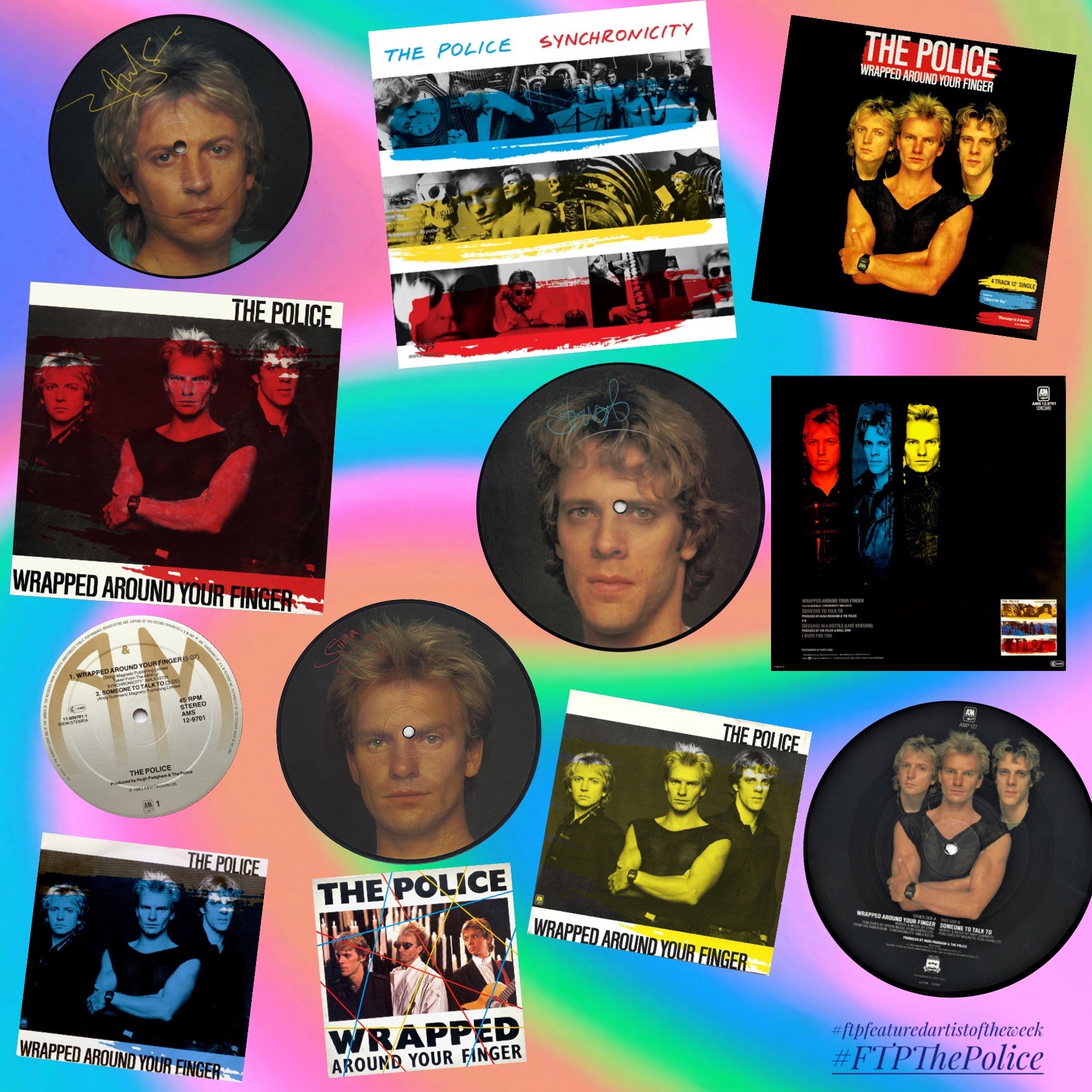
La funda del single al Regne Unit es va publicar en tres variacions de color: blau, vermell i groc. També es va llançar en un disc amb imatge, cadascun amb el rostre d’un dels membres de la banda. Dels 12.000 exemplars publicats, 10.000 presentaven el rostre de Sting, mentre que les versions amb Summers i Copeland van ser limitades a 1.000 exemplars cadascuna, convertint aquestes variacions en objectes més rars.


THE POLICE - WRAPPED AROUND YOUR FINGER


Released: July 8, 1983

Charts:  US: #8   UK: #7 


“Wrapped Around Your Finger” is a single from the album “Synchronicity”. Written by Sting, it was released worldwide by A&M Records. In the UK, it was the second single and peaked at No. 7 on the charts in August 1983. In the US, it was the fourth single and reached No. 8 on the Billboard Hot 100 in March 1984, becoming the band’s final top 10 hit there. The UK B-side featured “Someone to Talk To,” while the US release included a live version of “Tea in the Sahara.” It followed the global success of “Every Breath You Take.”


“Wrapped Around Your Finger” is a nuanced exploration of power dynamics in relationships, blending intricate lyrics with subtle reggae influences. The lyrics depict a psychodrama where a more experienced woman manipulates a younger, naive male partner. Sung from his perspective, the narrative shifts as he learns her tactics and ultimately overturns the power dynamic, declaring, “You’ll be wrapped around my finger.” This reversal transforms the once-dominated protagonist into the master, showcasing a cerebral detachment and calculated shift in control.


The line “Caught between Scylla and Charybdis” references Greek mythology, drawing from The Odyssey. Scylla, a nymph turned six-headed monster by Circe, resided on one side of the Strait of Messina, while Charybdis, a whirlpool-dwelling monster, occupied the other. Sailors navigating the strait faced near-certain doom, symbolizing being trapped between two perilous choices. Odysseus famously survived this harrowing passage.


The mention of “Mephistopheles” in the line “Mephistopheles is not your name” refers to the Devil, borrowing from German folklore and literary works like Goethe’s Faust. These allusions enrich the song’s exploration of manipulation and power struggles. Together, these references underscore the protagonist’s intellectual and emotional journey toward reclaiming control in the relationship.


The music video was directed by Godley & Creme, who also work on other Police videos. It features atmospheric footage of the band performing in a dimly lit, candle-filled room. Sting runs through a maze of tall candlesticks, knocking them down in the end. The video uses a fast-motion technique where the band mimed at an accelerated speed, and when slowed to normal, their movements appear in slow motion. Sting praised the video for its atmospheric set design, calling it a “Sorcerer’s Apprentice” concept, while Andy Summers criticized Sting’s overacting and expressed dissatisfaction with the song and video.


The British picture sleeve for the single was released in three color variations: blue, red, and yellow. It was also available on a picture disc, each featuring the face of one of the band members. Out of the 12,000 copies released, 10,000 featured Sting’s face, while the versions with Summers and Copeland’s faces were limited to 1,000 each, making those variations rarer.