Total de visualitzacions de pàgina:

10.2.25


DURAN DURAN - HUNGRY LIKE THE WOLF


Llançament: 4 de maig de 1982

Posicions a les llistes: EUA: #3 Regne Unit: #5


“Hungry Like the Wolf”, del segon àlbum “Rio”, es va publicar com a senzill el 1982 al Regne Unit i el 1983 als Estats Units. Escrita per la banda i produïda per Colin Thurston, es va convertir en el gran èxit que va catapultar Duran Duran als EUA. La seva popularitat es va disparar gràcies al seu vídeo musical d’aventures filmat a Sri Lanka, on Simon Le Bon protagonitza una persecució a l’estil Indiana Jones darrere d’una dona misteriosa.


La cançó té diversos elements curiosos: Cheryl, la xicota del teclista Nick Rhodes, va contribuir amb el riure del principi i els gemecs finals, simbolitzant la fam del llop saciada. També va proporcionar el riure característic de la cançó “Rio”.


La cançó pren influències sorprenents, com “If You Could Read My Mind” de Gordon Lightfoot i la faula de La Caputxeta Vermella, barrejant-les amb l’estètica i l’actitud de la new wave. La lletra presenta una persecució apassionada i primitiva de l’amor, fent servir la metàfora del llop per expressar desig, obsessió i determinació. La tornada transmet una energia irreprimible, evocant una força salvatge en la recerca de connexió.


Dirigit per Russell Mulcahy, el videoclip es va rodar a Galle, Sri Lanka, inspirant-se en Raiders of the Lost Ark i Apocalypse Now. Mentre Simon Le Bon fuig pels mercats, la resta del grup el busca en un escenari exòtic. Durant el rodatge, un error amb les metxes de Le Bon li va deixar els cabells de color taronja, fet pel qual va acabar portant el seu característic barret al vídeo.


MTV es va enamorar de l’estètica aventurera del vídeo i el va emetre intensament, ajudant a impulsar el single fins al #3 als EUA. Va ser el primer videoclip a guanyar un Grammy al Millor Vídeo Musical Curt i segueix sent una de les cançons més icòniques i reproduïdes de Duran Duran, un símbol definitiu dels anys 80.


“Hungry Like the Wolf” és una de les cançons més energètiques i rockeres dels primers Duran Duran, caracteritzada per una combinació potent de guitarra i sintetitzadors i per la tornada enganxosa de Simon Le Bon. El “do-do-do-do-do-do” repetitiu la va fer inoblidable i la va consolidar com el tema essencial del grup, sobretot als Estats Units.


DURAN DURAN - HUNGRY LIKE THE WOLF


Released: May 4, 1982 

Charts:  US: #3  UK: #5 


“Hungry Like the Wolf” from the second album “Rio”, was released as a single in 1982 in the UK and 1983 in the US. Written by the band and produced by Colin Thurston, it became their breakthrough hit in America. Its success was bolstered by an adventurous music video set in Sri Lanka, featuring Simon Le Bon in an Indiana Jones-style chase after a mysterious woman. Keyboardist Nick Rhodes’ girlfriend, Cheryl, contributed to the song providing the laugh at the beginning and the moaning at the end, symbolizing the wolf’s hunger being sated. Cheryl also delivered the laughter heard on “Rio.”


“Hungry Like the Wolf” was inspired by Gordon Lightfoot’s “If You Could Read My Mind” and the fable “Little Red Riding Hood,” blending diverse influences to shape its sound and visual style. The band’s girlfriends even contributed to their makeup, further enhancing the aesthetic that defined their place in the emerging new wave movement. Lyrically, the song portrays a relentless and passionate pursuit of love, using the metaphor of a wolf to express intense longing and determination. The chorus captures a primal desire, reflecting a drive to overcome any obstacles in the pursuit of connection.


The music video was directed by Russell Mulcahy and filmed in Sri Lanka, drawing inspiration from “Raiders of the Lost Ark” and “Apocalypse Now”. Set in Galle, it features Simon Le Bon running through markets while the rest of the band searches for him in an exotic setting. A mishap with Le Bon’s hair, which turned orange after failed highlights, led to his iconic hat in the video. MTV executives loved the adventurous aesthetic, heavily airing the video, which helped the single reach #3 in the U.S. It became the first video to win a Grammy for Best Short Form Music Video and remains one of Duran Duran’s most iconic and streamed songs, a definitive track of the 1980s.


The song stands out as one of Duran Duran’s most energetic and rocking tracks of their early days, marked by a dynamic interplay of guitar and synths and Simon Le Bon’s infectious chorus. The repetitive “do-do-do-do-do-do” hook made it unforgettable, becoming the quintessential Duran Duran song for many, especially in the US.


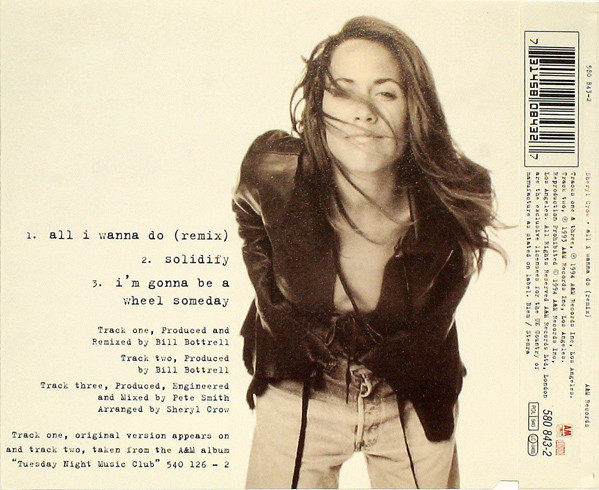
SHERYL CROW - ALL I WANNA DO


Llançament: 12 de juliol de 1994

Posició a les llistes: EUA: #2  | Regne Unit: #4


“All I Wanna Do” és una cançó de Sheryl Crow, llançada el juliol de 1994 que va ser el seu primer gran èxit i va ser inclosa en el seu àlbum de debut “Tuesday Night Music Club” (1993). Coescrita per Crow, David Baerwald, Bill Bottrell i Kevin Gilbert, la lletra es va adaptar del poema “Fun” (1987) de Wyn Cooper. La cançó va ser el major èxit de Crow als Estats Units, arribant al número 2 del Billboard Hot 100 durant sis setmanes i assolint el primer lloc a la llista Billboard Adult Contemporary. Va guanyar dos premis Grammy el 1995: Millor Gravació de l’Any i Millor Interpretació Vocal Pop Femenina, i també va ser nominada a Cançó de l’Any.


Sheryl Crow va descobrir el poema “Fun” mentre improvisava a l’estudi i es va sentir atreta per la seva primera frase: “All I wanna do is have some fun”. Va considerar que capturava l’apatia i la desil·lusió de Los Angeles en aquell moment, malgrat el to alegre de la cançó. Crow va contactar amb Wyn Cooper, que es va mostrar satisfet amb l’adaptació i va rebre crèdit com a compositor. Inicialment, la peça no estava prevista per a l’àlbum, però el germà de Crow la va convèncer que seria un èxit. La història de la cançó es basa en un bar real del carrer Formosa Avenue (prop d’un túnel de rentat de cotxes), encara que Crow va admetre que mai havia passat un matí bevent allà.


L’estil vocal conversacional de la cançó es va inspirar en el clàssic de 1973 “Stuck in the Middle with You” de Stealers Wheel. El productor Bill Bottrell va destacar que la veu i l’actitud de Crow eren immediates i úniques. Segons ell, les lletres conversacionals funcionaven millor perquè sonaven naturals i espontànies.


El videoclip, dirigit per David Hogan i Roman Coppola, amb fotografia de Martin Coppen, mostra Sheryl Crow i la seva banda tocant al carrer, amb elements surrealistes com personatges volant per l’aire. Es va rodar davant del Roxy Theatre a Clarksville, Tennessee. La versió original incloïa el personatge de “Billy”, interpretat per Gregory Sporleder, però es va llançar una segona versió sense ell, que apareix en el DVD dels seus Greatest Hits. Una versió addicional del vídeo es va publicar el 2009 amb la reedició de l’àlbum.


“Tuesday Night Music Club” va ser l’àlbum de debut de Sheryl Crow. Abans d’això, havia gravat un altre disc, però no en va quedar satisfeta i va convèncer la discogràfica per cancel·lar-lo i començar de nou. L’àlbum va trigar gairebé un any a guanyar popularitat, mentre Crow feia gires per petits locals, construint una base de seguidors. El seu gran salt va arribar el 1994, quan va obrir els concerts de la gira de reunió dels Eagles i va actuar al Woodstock II.


SHERYL CROW - ALL I WANNA DO


Released: July 12, 1994

Charts:  US: #2    UK: #4 


“All I Wanna Do” is a song by Sheryl Crow, released in July 1994 as her breakthrough hit from the 1993 album “Tuesday Night Music Club”. Co-written by Crow, David Baerwald, Bill Bottrell, and Kevin Gilbert, its lyrics were adapted from Wyn Cooper’s 1987 poem “Fun”. The song became Crow’s biggest U.S. hit, reaching number two on the Billboard Hot 100 for six weeks and topping the Billboard Adult Contemporary chart. It won the 1995 Grammy Awards for Record of the Year and Best Female Pop Vocal Performance and was also nominated for Song of the Year.


Sheryl Crow discovered the poem “Fun” while jamming in the studio and was drawn to its opening line, “All I wanna do is have some fun.” She felt it captured the sense of apathy and defeat in Los Angeles at the time, despite the song’s upbeat sound. Crow connected with Cooper, who was pleased with the adaptation, and he was credited as a songwriter. Initially, the track was not intended for the album, but Crow’s brother insisted it was a hit. The song’s setting—a bar on Formosa Avenue near a car wash—was real, though Crow admitted she had never spent a morning drinking there.


The conversational singing style of the song was influenced by Stealers Wheel’s 1973 hit “Stuck in the Middle with You”. Producer Bill Bottrell noted that Crow’s voice and attitude stood out immediately. He believed that conversational lyrics worked best because they felt natural and plainspoken.


The music video was directed by David Hogan and Roman Coppola, with cinematography by Martin Coppen. It features Sheryl Crow and her band performing on the street, with surreal elements like characters flying through the air. Filmed in front of the Roxy Theatre in Clarksville, Tennessee, the video originally included the character “Billy,” played by Gregory Sporleder. A second version was later released with his scenes removed, which appears on Crow’s Greatest Hits DVD. In 2009, an additional music video was released as part of the album reissue.


“Tuesday Night Music Club” was her debut album. Before this, she had recorded another album but disliked its sound, convincing her label to scrap it and let her start over. The album took nearly a year to gain traction as Crow toured small venues, gradually building an audience. Her big break came in 1994 when she opened for the Eagles on their reunion tour and performed at Woodstock II.


9.2.25


HOWARD JONES - THINGS CAN ONLY GET BETTER


Llançament: 1 de febrer de 1985

Llistes d’èxits: EUA: #5  Regne Unit: #6


“Things Can Only Get Better” és una cançó optimista de Howard Jones, llançada com a primer senzill del seu àlbum de 1985, “Dream into Action”. Amb un missatge positiu, la cançó inclou cors de l’equip femení Afrodiziak. La portada del maxisingle mostrava una fotografia de perfil de Jones assegut en un tamboret alt, mentre que la portada del single presentava una versió en silueta de la mateixa imatge amb diferents fons acolorits. La cançó es va convertir en un dels seus èxits més grans, assolint el número 5 als Estats Units i el número 6 al Regne Unit.


Escrita com un himne motivador per al seu públic creixent després de l’èxit del seu àlbum debut, Jones volia oferir un missatge d’ànim. La cançó reconeix que tothom passa per moments difícils, però posa èmfasi en la capacitat de perseverar i reconstruir. Jones va explicar: “Encara que tot vagi molt malament, sempre pots aixecar-te i fer que les coses millorin.” Segons ell, la cançó continua sent rellevant, qualificant-la com una “cançó animadora” per ajudar els oients en moments de dificultat.


El videoclip, dirigit per Nigel Dick, mostra Jones cantant durant la preparació d’un concert i fent una actuació animada. Inclou cameos curiosos, com un artista marcial que recorda Daniel LaRusso de The Karate Kid i un personatge inspirat en Charlie Chaplin, el Tramp, interpretat pel mímic Jed Hoile, que també formava part dels espectacles en directe de Jones. Aquests personatges vaguen entre bastidors durant el muntatge i més tard s’uneixen al públic. El vídeo acaba amb el Tramp caminant de la mà d’una nena que abans havia observat les preparacions. El videoclip va tenir molt èxit a MTV, contribuint a la popularitat de la cançó.


El crític John Leland de la revista Spin va elogiar la cançó, destacant el seu baix net, les trompetes i sintetitzadors precisos, i les vocals captivadores i ben equilibrades, que representen el millor del moviment Anglo soul.


HOWARD JONES - THINGS CAN ONLY GET BETTER


Released: February 1, 1985

Charts:  US: #5    UK: #6 


“Things Can Only Get Better” is an uplifting track by Howard Jones, released as the lead single from his 1985 album “Dream into Action”. Known for its positive message, the song features backing vocals by the all-female group Afrodiziak. The 12” cover featured a profile photograph of Howard Jones seated on a high bar stool, while the 7” artwork showcased a silhouette version of the same image with various colored backgrounds. The song was one of his biggest hits, reaching number 5 in the United States and number 6 in Great Britain.


“Things Can Only Get Better” was written as a motivational anthem for his growing audience after the success of his debut album. Jones aimed to provide encouragement, acknowledging that everyone experiences difficult times but emphasizing the ability to persevere and rebuild. He explained, “Even if everything goes horribly wrong, you can still pick yourself up and make things better.” Jones believes the song remains relevant, describing it as a “cheerleading song” designed to uplift listeners during challenging moments. 


The video, directed by Nigel Dick, depicts Jones singing during the setup for a concert, transitioning to a lively performance. It features quirky cameos, including a martial artist resembling Daniel LaRusso from The Karate Kid and a Charlie Chaplin-inspired Tramp character, played by mime Jed Hoile, who was part of Jones’ stage show. These characters wander backstage during setup and later join the audience. The video ends with the Tramp walking hand in hand with a young girl who had earlier watched the preparations. The video was a hit on MTV, contributing to the song’s popularity.


John Leland of Spin magazine praised the track, highlighting its clean bassline, precise trumpets and synths, and engaging, well-paced vocals, which represent the best of the Anglo soul movement.


8.2.25


FINE YOUNG CANNIBALS - SHE DRIVES ME CRAZY 


Llançament: 26 de desembre de 1988

Posició a les llistes: EUA: #1 (1 setmana) | Regne Unit: #5


“She Drives Me Crazy” és un èxit de 1988 del grup britànic Fine Young Cannibals, escrit per Roland Gift i David Steele, i coproduït per David Z. Enregistrada als Paisley Park Studios de Prince, la cançó es va convertir en el single més reeixit de la banda, assolint el número 5 al Regne Unit i el número 1 als EUA l’abril de 1989. També va arribar al primer lloc a Austràlia, Canadà i Espanya, i va obtenir grans posicions arreu d’Europa.


Inicialment titulada “She’s My Baby”, la cançó va passar per una transformació quan Roland Gift va decidir canviar a un estil vocal en falset, fet que li va donar un segell distintiu i va contribuir al seu èxit massiu. L’ús del falset de Gift i el seu fraseig allargat en la tornada, com ara “I can’t he-elp my se-elf”, van fer la cançó instantàniament reconeixible i la van convertir en un clàssic inoblidable.


Després de col·laborar en la banda sonora de la pel·lícula “Something Wild”, Fine Young Cannibals van ser contactats pel director Barry Levinson per contribuir a la música del seu film “Tin Men”, ambientat al Baltimore dels anys 60. Levinson va destacar la capacitat del grup per barrejar ritmes moderns amb el soul tradicional, creant un so minimalista però ric, que evocava la música de principis dels 60. La banda va compondre diversos temes per a la pel·lícula, incloent-hi “She Drives Me Crazy”, “Social Security”, “Good Thing”, “Hard As It Is”, i “Tell Me What”. A més, van fer un cameo al film interpretant el paper d’una banda en directe.


El videoclip de la cançó va tenir dues versions diferents, dirigides per Philippe Decouflé i Pedro Romhanyi.


El 2008, Dolly Parton va versionar “She Drives Me Crazy” en el seu àlbum “Backwoods Barbie”, donant-li un toc bluegrass amb un final de “hoedown” (ball folk nord-americà). Parton va explicar que la cançó era una de les preferides del seu marit, i va decidir reinterpretar-la amb un estil country.


FINE YOUNG CANNIBALS - SHE DRIVES ME CRAZY 


Released: December 26, 1988

Charts:  US: #1 (1 week)  UK: #5 


“She Drives Me Crazy” is a 1988 hit by British group Fine Young Cannibals, written by Roland Gift and David Steele, and co-produced by David Z. Recorded at Prince’s Paisley Park studios, it became the band’s most successful single, peaking at No. 5 in the UK and topping the US Billboard Hot 100 in April 1989. The song also reached No. 1 in several countries, including Australia, Canada, and Spain, and charted highly across Europe. Two music videos were created for the track, directed by Philippe Decouflé and Pedro Romhanyi.


Originally titled “She’s My Baby,” the song underwent a transformation when lead singer Roland Gift switched to a falsetto vocal style and the lyrics were revamped. This distinctive vocal approach became the song’s signature, turning it into a massive hit and unforgettable earworm. Gift’s elongated phrasing in the chorus, such as “I can’t he-elp my se-elf,” added to its unique appeal and lasting impact.


After contributing music to the film “Something Wild”, Fine Young Cannibals were approached by Barry Levinson to create songs for his film “Tin Men”, which was set in 1960s Baltimore. Levinson admired the band’s ability to blend modern rhythms with traditional soul, describing their sound as sparse yet rich, evoking the uncluttered music of the early ’60s. Fine Young Cannibals contributed several songs to the soundtrack, including “She Drives Me Crazy,” “Social Security,” “Good Thing,” “Hard As It Is,” and “Tell Me What.” The band also made a cameo appearance in the movie as a house band.


Dolly Parton covered “She Drives Me Crazy” on her 2008 album “Backwoods Barbie”. She explained that it was a favorite of her husband’s and reimagined it as a bluegrass track with a hoedown twist at the end.