Total de visualitzacions de pàgina:

26.2.25


SIMPLE MINDS - LOVE SONG


Llançament: 7 d’agost de 1981

Llistes: Regne Unit: #6


“Love Song” és el setè senzill de la banda escocesa Simple Minds, publicat l’agost de 1981, un mes abans de l’àlbum “Sons and Fascination”. Va ser la primera entrada del grup al Top 50 del Regne Unit, assolint el número 47, però va tenir més èxit a Suècia i Austràlia, on va arribar al Top 20. L’any 1992, es va llançar una versió remixada per promocionar el recopilatori “Glittering Prize 81/92”, acompanyada pel tema “Alive and Kicking”. Aquesta reedició va impulsar “Love Song” al Top 10 del Regne Unit, arribant al número 6 i donant-li una segona vida més d’una dècada després de la seva estrena original.


“Love Song” va sorgir durant el període creatiu de Simple Minds a principis de 1981, quan el productor John Leckie va animar Jim Kerr a escriure lletres més directes. Quan la cançó es va gravar per a “Sons and Fascination”, la banda ja havia canviat a Steve Hillage com a productor, qui compartia la seva passió pel Krautrock. Aquesta influència va portar el seu so cap a un estil més polit i expansiu, marcant la transició de la seva fase experimental inicial cap a un rock electrònic més enèrgic.


Pel que fa a la lletra, “Love Song” reflecteix la relació històrica entre Europa i Amèrica, capturant els alts i baixos d’aquesta connexió. El tema es va escriure i es va fer la seva primera maqueta a principis de 1981, va ser provat en directe durant la gira nord-americana del març d’aquell any i ha continuat sent una peça clau en els seus concerts des de llavors.


El videoclip es desenvolupa en un club nocturn, on Jim Kerr interpreta el paper de DJ mentre els altres membres de la banda creen problemes, irriten els convidats i es fiquen en baralles. A mesura que avança la nit, els assistents descobreixen que no poden marxar fins que Kerr acabi la cançó. Quan la peça finalitza, ell lidera la banda fora del club, deixant una atmosfera de misteri i control sobre l’escena.


A l’estat espanyol es va popularitzar per ser la música de la sintonia del programa radiofònic “Super García en la hora cero” del periodista esportiu José María García. 


SIMPLE MINDS - LOVE SONG


Released: August 7, 1981

Charts: UK: #6 


“Love Song” is the seventh single by Scottish band Simple Minds, released in August 1981, a month before their album “Sons and Fascination”. It marked the band’s first UK Top 50 entry, peaking at #47, but found greater success in Sweden and Australia, reaching the Top 20. In 1992, a remixed version was released to promote the “Glittering Prize 81/92” compilation, backed with “Alive and Kicking”. This reissue propelled “Love Song” into the UK Top 10, where it peaked at #6, giving the track a second life over a decade after its original release.


“Love Song” emerged during Simple Minds’ creative period in early 1981 when producer John Leckie encouraged Jim Kerr to write more straightforward lyrics. By the time the song was recorded for “Sons and Fascination”, the band had switched to producer Steve Hillage, who shared their passion for Krautrock. This influence pushed their sound toward a sleeker, more expansive style, marking a shift from their early experimental phase to pulsating electronic rock.


Lyrically, “Love Song” is said to reflect the historical bond between Europe and America, capturing the ups and downs of their relationship. The track was written and demoed in early 1981, tested live during their North American tour in March, and has remained a staple in their live performances ever since.


The music video takes place in a nightclub, where Jim Kerr plays the role of a DJ while the other band members stir up trouble, irritating guests and getting into fights. As the night unfolds, the guests find themselves unable to leave until Kerr finishes the track. Once the song concludes, he leads the band out of the club, leaving a sense of mystery and control over the scene.


SIMPLE MINDS - BELFAST CHILD


Released: February 6, 1989

Charts: UK: #1 (2 weeks)


Released on 6 February 1989 as the lead track on the Ballad of the Streets EP, “Belfast Child” became one of Simple Minds’ most successful songs. The EP also featured “Mandela Day”. The song reached number one on the UK Singles Chart, as well as in Ireland and the Netherlands, and secured top-ten positions in Belgium, New Zealand, Norway, Spain, Switzerland, and West Germany. The music video, directed by Andy Morahan and edited by Mark Alchin, was filmed in black and white, depicting children and poverty in Belfast.


The idea for Simple Minds to record a folk song came from producer Trevor Horn during a visit to Loch Earn in late 1987. Inspired by the surroundings, the band explored traditional melodies, eventually settling on “She Moved Through the Fair”. Bassist John Giblin first played the tune at a band dinner, prompting Jim Kerr to develop the idea further, drawing inspiration from recent events in Northern Ireland, including the 1987 Enniskillen bombing.


The song evolved through multiple recording sessions, first at Glenstriven in Scotland, where various arrangements—including acoustic and symphonic versions—were tested. The band later attempted to record it at Sarm Studios in London, but the session didn’t work out. The final version was recorded back at Loch Earn, incorporating a drum machine and an atmospheric soundscape, which included an accidental door slam that Trevor Horn envisioned as the distant sound of a bomb.


The track’s length became a contentious issue, with producers and the record label pushing for a shorter version. After much debate, a radio edit was created, though it still remained over five minutes long. Belfast Child was the centerpiece of the “Ballad of the Streets EP”, which topped the UK charts in 1989. It became a major highlight of the “Street Fighting Years” tour and remained a key part of the band’s live set into the 2000s, though its presence waned in the 2010s.


25.2.25


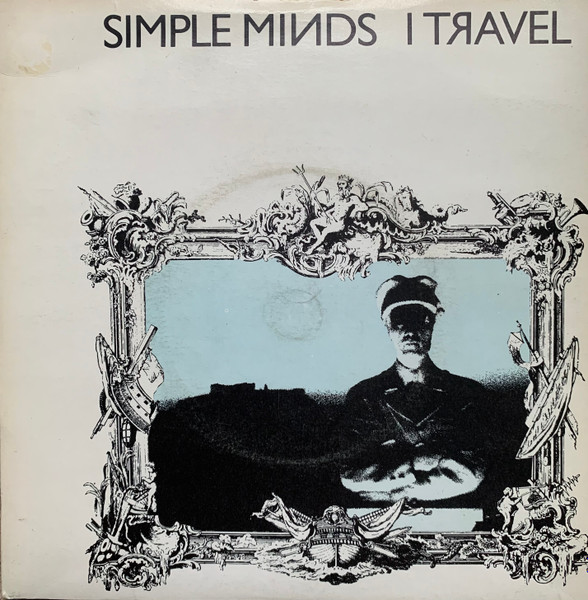
SIMPLE MINDS - I TRAVEL


Released: October 17, 1980

Album: Empires and Dance


“I Travel” is a song by the Scottish band Simple Minds, released in 1980 as a single from their third album “Empires and Dance”. The track is a fast-paced, electronic-driven post-punk/new wave song with strong influences from Krautrock, disco, and early electronic music.


“I Travel” captures Simple Minds’ early experimental brilliance, blending post-punk energy with emerging electronic influences. Driven by Derek Forbes’ futuristic basslines and a pulsating rhythm, the track reflects the band’s experiences touring Europe, where the grandeur of historic cities contrasted with the tensions of the Cold War.


Lyrically, Jim Kerr paints a vivid picture of a continent marked by cultural richness and political unrest, referencing bombings and militant groups like the Red Brigade and Baader-Meinhof. His sharp, urgent vocals enhance the song’s sense of movement and unease. 


Inspired by Berlin’s club scene and influenced by artists like Kraftwerk and Giorgio Moroder, I Travel signaled the band’s shift toward a more electronic and danceable sound, signaling their emergence as a force in post-punk music. Although it wasn’t a big hit at the time of release, “I Travel” has since become a cult favorite and is often regarded as a precursor to the synth-driven sound that dominated the 1980s. It remains a staple in Simple Minds’ live performances.


“Empires and Dance” was released on September 12, 1980 through Arista Records. Recorded at Rockfield Studios and the Rolling Stones Mobile Studio, the album blends structured, danceable tracks like I Travel, This Fear of Gods, and Thirty Frames a Second with more experimental pieces such as Constantinople Line, Twist/Run/Repulsion, and Kant-Kino. Lyrically, Jim Kerr adopts the perspective of a traveler moving through central Europe, observing its political and social climate. The album charted modestly, peaking at number 41 on the UK Albums Chart. 


24.2.25


RIGHT SAID FRED - I’M TOO SEXY


Llançament: 15 de juliol de 1991

Estats Units: #1 (3 setmanes)  Regne Unit: #2 


“I’m Too Sexy” és el senzill debut de la banda pop britànica Right Said Fred, llançat el juliol de 1991 dins de l’àlbum “Up”. Escrita pels germans Fred i Richard Fairbrass juntament amb Rob Manzoli, es va convertir en un èxit internacional massiu. Tot i que només va arribar al número dos a la llista britànica de singles, va encapçalar les llistes de set països, inclosos els Estats Units, el Canadà, Austràlia i Irlanda.


Right Said Fred, format pels germans Richard i Fred Fairbrass i el guitarrista Rob Manzoli, va crear “I’m Too Sexy” com una paròdia del narcisisme que observaven mentre gestionaven un estudi de dansa a Londres. La cançó va néixer espontàniament quan Richard Fairbrass va cantar la frse ara icònica en broma mentre jugava amb una pista en bucle.


Una demo de la cançó va arribar al promotor musical Guy Holmes, que en va veure el potencial però va decidir transformar-la en un tema de ball. Com que cap discogràfica important hi va mostrar interès, Holmes va fundar el seu propi segell, Tug Records, i la va llançar de manera independent. Va començar a guanyar popularitat quan BBC Radio 1 va començar a emetre-la, convertint-se finalment en un èxit mundial. Holmes va recordar més tard que la va descobrir gràcies a una trobada casual amb una dona borratxa que gestionava la banda, i de seguida va reconèixer el seu potencial com a hit de ball.


“I’m Too Sexy” va ser número 1 en 28 països, però mai va assolir el cim al Regne Unit, on es va quedar sis setmanes al número 2, superada per ”(Everything I Do) I Do It for You” de Bryan Adams. Inicialment, Richard Fairbrass no hi va donar importància, però més tard va admetre certa frustració pel domini d’Adams a les llistes.


Als Estats Units, “I’m Too Sexy” va ser l’únic gran èxit de Right Said Fred, convertint-los en un clàssic one-hit wonder després de passar tres setmanes al número 1. De fet, van ser el primer grup britànic des de The Beatles a debutar directament al primer lloc als EUA. Al Regne Unit van continuar tenint èxits com “Don’t Talk Just Kiss” (#3) i “Deeply Dippy” (#1).


El videoclip, dirigit per James Lebon, mostra la banda posant amb humor com a models en una passarel·la, envoltats de fotògrafes en biquini. També inclou clips reals de models desfilant en diverses desfilades de moda. Llançat el gener de 1992, el vídeo va influir en els assistents a les discoteques, molts dels quals van imitar el característic ball de catwalk de la banda.


RIGHT SAID FRED - I’M TOO SEXY


Released: July 15, 1991

US: #1 (3 weeks)


“I’m Too Sexy” is the debut single by British pop band Right Said Fred, released in July 1991 from their album “Up”. Written by brothers Fred and Richard Fairbrass along with Rob Manzoli, the song became a massive international hit. While it peaked at number two on the UK Singles Chart, it topped the charts in seven countries, including the US, Canada, Australia, and Ireland.


Right Said Fred, consisting of brothers Richard and Fred Fairbrass along with guitarist Rob Manzoli, created “I’m Too Sexy” as a playful take on the narcissism they observed while managing a London dance studio. The song originated from a spontaneous moment when Richard Fairbrass jokingly sang the now-famous line while messing around with a looped track.


A demo of the song reached music promoter Guy Holmes, who saw its potential but had it remixed into a dance track. When no major label showed interest, Holmes launched his own label, Tug Records, and released it independently. The song gained traction after BBC Radio 1 started playing it, ultimately becoming a global hit. Holmes later recalled discovering the song through a chance encounter with a drunk woman who managed the band, recognizing immediately that it had the potential to be a dance smash.


I’m Too Sexy was a #1 hit in 28 countries but never reached the top spot in Right Said Fred’s home country, the UK, where it was kept at #2 for six weeks by Bryan Adams’ (Everything I Do) I Do It For You. While initially indifferent, band member Richard Fairbrass later admitted frustration with Adams’ chart dominance.


In the US, I’m Too Sexy was Right Said Fred’s only hit, making them a classic one-hit wonder after spending three weeks at #1. They were the first British group since The Beatles to debut at #1 in the US. However, in the UK, they had continued success with hits like “Don’t Talk Just Kiss” (#3) and “Deeply Dippy” (#1).


The music video directed by James Lebon features the band humorously posing as models on a runway set, surrounded by bikini-clad female photographers. It also includes clips of real models walking the catwalk at various fashion shows. Released in January 1992, the video influenced clubgoers, many of whom imitated the band’s signature “catwalk” dance.


23.2.25


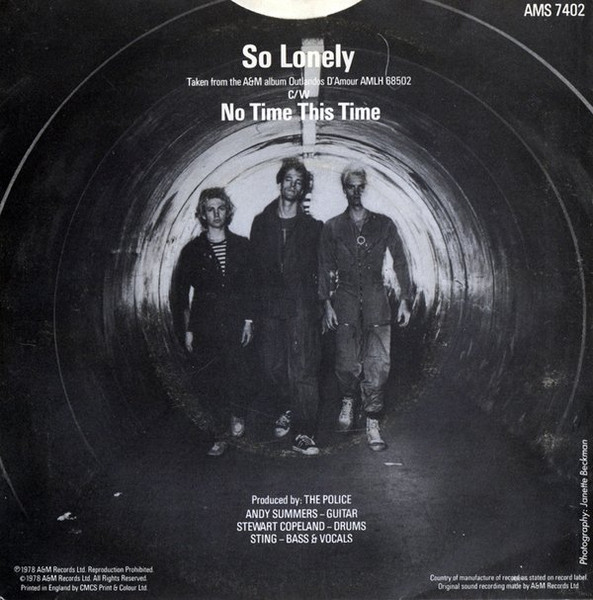
THE POLICE - SO LONELY


Llançament: 24 de novembre de 1978

Llistes: Regne Unit: #6


“So Lonely” és una cançó amb influències de reggae de The Police, llançada com el tercer i últim senzill del seu àlbum debut, “Outlandos d’Amour”, el 24 de novembre de 1978. Interpretada per Sting, el single inicialment no va entrar a les llistes, però va escalar fins al número 6 després de la seva reedició. Aquest patró es va repetir amb altres senzills de l’àlbum, que van tenir més èxit després de ser reeditats. Als Estats Units, “So Lonely” no es va llançar com a single. La lletra, reciclada d’una cançó anterior de Sting anomenada “Fool in Love”, reflecteix sentiments d’intensa solitud després d’un desengany amorós.


“So Lonely” barreja reggae blanc, new wave i blues, caracteritzant-se per la transició dels versos relaxats amb ritmes de reggae a una tornada energètica i explosiva. La cançó combina elements de “Roxanne” i “Next to You”, mostrant l’habilitat de Sting per unir lletres malenconioses sobre la solitud amb una música animada i ballable. Els versos es reforcen amb el falsetto planyívol de Sting, que allarga les notes per destacar la fluïdesa de la seva línia de baix. Això contrasta amb la tornada vibrant, on les harmonies i les guitarres dinàmiques creen una energia gairebé caòtica. Aquesta transició amplifica l’impacte emocional, convertint la solitud dels versos en un esclat dinàmic i contagiós.


The Police eren coneguts per les estructures repetitives de les seves cançons, i “So Lonely” n’és un exemple destacat. La tornada consisteix en la frase “so lonely” repetida 12 vegades, i després d’un breu solo de guitarra subtil d’Andy Summers, la cançó retorna a una repetició prolongada de “feel so lonely.” En total, la frase del títol es repeteix 54 vegades al llarg de la cançó.


El videoclip mostra The Police passejant pels carrers de Hong Kong i viatjant en metro a Tòquio el 1980. La banda apareix fent playback amb walkie-talkies, mentre el bateria Stewart Copeland interpreta amb humor els cops de bateria sobre diversos objectes, com autobusos i productes del mercat.


THE POLICE - SO LONELY


Released: November 24, 1978

Charts:  UK: #6 


“So Lonely” is a reggae-inspired song by the Police, released as the third and final single from their debut album Outlandos d’Amour on November 24, 1978. Sung by Sting, the single initially failed to chart but climbed to No. 6 upon its re-release. This pattern mirrored other singles from the album, which gained greater success after reissues. In the US, “So Lonely” was not released as a single. The song’s lyrics, originally recycled from his earlier track “Fool in Love,” reflect feelings of intense loneliness after heartbreak. 


“So Lonely” is a unique blend of white reggae, new wave, and blues, characterized by a transition from mellow reggae verses to an energetic chorus. Combining elements of “Roxanne” and “Next to You,” the song showcases Sting’s ability to pair melancholy, bluesy lyrics about loneliness with uplifting, danceable music. The verse of “So Lonely” is elevated by Sting’s plaintive falsetto, as he stretches out long notes that highlight the fluidity of his bassline. This contrasts sharply with the explosive chorus, where layered harmonies and gated guitars create a vibrant, almost chaotic energy. The transition amplifies the emotional impact, turning the solitude of the verse into an infectious, dynamic outburst.


The Police were known for their repetitive song structures, and “So Lonely” is a prime example. The chorus consists of the phrase “so lonely” repeated 12 times, and after a brief, understated guitar solo by Andy Summers, the song dives back into extended repetitions of “feel so lonely.” In total, the title phrase is repeated 54 times. 


The music video features The Police wandering through the streets of Hong Kong and riding subway trains in Tokyo in 1980. The band is shown lip-syncing the song into walkie-talkies, while drummer Stewart Copeland humorously performs drum fills on various objects, including buses and market items.