Total de visualitzacions de pàgina:

15.3.25


GUNS & ROSES - SWEET CHILD OF MINE


Llançament: juny de 1988

Posició a les llistes: EUA: #1 (2 setmanes)


“Sweet Child o’ Mine” és una cançó de Guns N’ Roses, inclosa en el seu àlbum de debut “Appetite for Destruction”. Llançada com a single als Estats Units el juny de 1988, va esdevenir l’únic #1 de la banda al Billboard Hot 100. Al Regne Unit, inicialment va assolir el #24 l’agost de 1988, però després d’una reedició al maig de 1989, va pujar fins al #6.


La lletra de la cançó prové d’un poema d’Axl Rose dedicat a la seva parella Erin Everly, filla de Don Everly de The Everly Brothers. Rose i Everly es van casar el 1990, però el matrimoni va ser anul·lat nou mesos després per presumptes abusos. Axl va descriure la cançó com la seva primera cançó d’amor positiva, en contrast amb les temàtiques habituals del rock.


El riff icònic de guitarra va ser creat per Slash, que inicialment el va considerar ridícul. Però a Axl li va encantar i, amb Izzy Stradlin afegint acords, la cançó va anar prenent forma. Tot i l’èxit, Slash mai ha estat un gran fan de la cançó, fins al punt de qualificar-la com la pitjor de Guns N’ Roses en alguna ocasió. Va esmentar influències de Jeff Beck, Cream, Led Zeppelin, i fins i tot de “Blinded By The Light” de Manfred Mann i “Baker Street” de Gerry Rafferty per als seus solos.


“Sweet Child o’ Mine” va arribar al #1 als Estats Units el 10 de setembre de 1988, on es va mantenir durant dues setmanes. En aquell moment, Guns N’ Roses obrien concerts per Aerosmith, però al final de la gira, el 15 de setembre, GNR ja era més popular que Aerosmith i van acabar apareixent a la portada de Rolling Stone el 17 de novembre. Malgrat la política d’Aerosmith contra les drogues durant la gira, no van donar sermons a Guns N’ Roses, sinó que els van regalar samarretes amb una llista de centres de rehabilitació en comptes de dates de la gira.


El videoclip, dirigit per Nigel Dick, és un simple clip en blanc i negre de la banda tocant, en contrast amb vídeos més elaborats com “November Rain”. Inicialment es va considerar un vídeo conceptual alternatiu, on una dona asiàtica traficava heroïna amagada dins d’un nadó, però finalment es va descartar. El vídeo oficial va guanyar l’MTV Video Music Award al Millor Vídeo de Heavy Metal.


GUNS & ROSES - SWEET CHILD OF MINE


Released: June 1988

US: #1 (2 weeks)


“Sweet Child o’ Mine” is a song by Guns N’ Roses, featured on their 1987 debut album “Appetite for Destruction”. Released as a single in the U.S. in June 1988, it became the band’s only Billboard Hot 100 #1 hit. In the UK, it initially peaked at #24 in August 1988 but climbed to #6 when re-released in May 1989.


The lyrics came from a poem Axl Rose wrote about his girlfriend Erin Everly, daughter of Don Everly (The Everly Brothers). They later married in 1990, but the marriage was annulled nine months later due to alleged abuse. Rose described the song as his first positive love song, a contrast to the usual themes in rock music.


The iconic guitar riff was created by Slash, who initially dismissed it as silly, but Axl loved it, and with Izzy Stradlin adding chords, the song took shape. Despite its success, Slash has never been fond of it, once calling it the worst Guns N’ Roses song. He cited influences from Jeff Beck, Cream, Led Zeppelin, and even Manfred Mann’s “Blinded By The Light” and Gerry Rafferty’s “Baker Street” for his solos.


“Sweet Child o’ Mine” hit #1 in the U.S. on September 10, 1988, staying there for two weeks while Guns N’ Roses was opening for Aerosmith. By the end of the tour on September 15, GNR had surpassed Aerosmith in popularity and landed the cover of Rolling Stone on November 17. Despite Aerosmith’s no-drugs rule on tour, they didn’t lecture GNR but instead gave them T-shirts listing rehab centers instead of tour dates.


The music video, directed by Nigel Dick, is a simple black-and-white performance clip, contrasting with the band’s later elaborate videos like “November Rain.” It won the MTV Video Music Award for Best Heavy Metal Video. An alternate concept was originally considered, depicting an Asian woman smuggling heroin inside a baby, but it was ultimately scrapped.


14.3.25


SHAKESPEARS SISTER - STAY


Llançament: 13 de gener de 1992

Posició a les llistes: Regne Unit: #1 (8 setmanes)


“Stay” és un single de Shakespears Sister, llançat el 1992 com el segon tema del seu àlbum “Hormonally Yours”. Escrita per Siobhan Fahey, Marcella Detroit i Dave Stewart, va esdevenir el major èxit del duet, arribant al número 1 del Regne Unit durant vuit setmanes i convertint-se en el quart single més venut del 1992 al país. La cançó també va encapçalar les llistes a Suècia i Irlanda i va tenir èxit als EUA (#4 Billboard Hot 100) i Canadà (#4 Canadian RPM 100).


“Stay” es va inspirar en el film de ciència-ficció de 1953 “Cat-Women of the Moon”, sobre astronautes que descobreixen dones seductores però perilloses a la Lluna. Siobhan Fahey i Marcella Detroit volien comprar-ne els drets per crear un vídeo-àlbum amb escenes originals i noves, però el projecte mai es va materialitzar. Tot i així, l’àlbum “Hormonally Yours” es va basar parcialment en aquest concepte, amb cançons com “Goodbye Cruel World”, “Catwoman”, “Moonchild” i “Hello (Turn Your Radio On)” inspirades en la pel·lícula.


El videoclip, dirigit per Sophie Muller, està ambientat en una nau espacial semblant a una habitació d’hospital, on Marcella Detroit cuida el seu amant moribund. A la part central de la cançó, Siobhan Fahey, interpretant la Mort, apareix en un portal dalt d’una escala, vestida amb un vestit brillant. Fahey es burla de Detroit, assegurant-li que no pot salvar l’home. A mesura que la Mort baixa les escales, Detroit lluita per despertar-lo. L’escena representa una batalla simbòlica entre la vida (Detroit) i la mort (Fahey). En el clímax, l’home es desperta i abraça Detroit, forçant la Mort a retirar-se, derrotada.


La manera desmanegada com Fahey baixa les escales va alimentar rumors que havia begut vodka després d’esperar 12 hores per rodar la seva part, però més tard va afirmar que era una decisió intencionada per reforçar la seva interpretació burleta i caòtica.


El vídeo també inclou una variació d’una frase de Macbeth, canviant “When shall we three meet again” per “When shall we two meet again”, en referència al conflicte central entre les dues protagonistes. El videoclip va guanyar el BRIT Award al Millor Vídeo de 1993.


SHAKESPEARS SISTER - STAY


Released: January 13, 1992

UK: #1 (8 wks) 


“Stay” is a 1992 single by Shakespears Sister, released as the second track from their album “Hormonally Yours”. Written by Siobhan Fahey, Marcella Detroit, and Dave Stewart, it became the duo’s biggest hit, reaching #1 in the UK for eight weeks and becoming the fourth-best-selling UK single of 1992. The song also topped the charts in Sweden and Ireland and was a transatlantic success, peaking at #4 on the US Billboard Hot 100 and the Canadian RPM 100 Hit Tracks chart.


“Stay” was inspired by the 1953 sci-fi film “Cat-Women of the Moon”, about astronauts discovering alluring but dangerous women on the Moon. Siobhan Fahey and Marcella Detroit initially planned to buy the rights to the film and create a video album, mixing original footage with new scenes. The album “Hormonally Yours” was partially based on this concept, with other songs like “Goodbye Cruel World,” “Catwoman,” “Moonchild,” and “Hello (Turn Your Radio On)” also drawing from the movie. However, the plan to purchase the film never materialized.


Directed by Sophie Muller, the video for “Stay” is set in a spaceship resembling a hospital room, where Marcella Detroit tends to her dying lover. At the song’s bridge, Siobhan Fahey, playing the Angel of Death, emerges from a portal atop a staircase, dressed in a sparkling catsuit. She taunts Detroit, claiming she cannot save the man. As Death descends the stairs, Detroit desperately tries to wake him. A struggle ensues between the two women, symbolizing a battle between life (Detroit) and death (Fahey). In the climax, the man wakes up and embraces Detroit, forcing Death to retreat back up the staircase into the light, defeated.


Fahey’s awkward descent down the stairs fueled rumors that she had been drinking vodka after waiting 12 hours to film her part, though she later claimed it was part of her character’s drunken, mocking persona. 


The video also features a variation of the opening lines from Macbeth, changing “When shall we three meet again” to “When shall we two meet again”, referencing the story’s focus on the two women’s battle. The video won the 1993 BRIT Award for Best Video.


13.3.25


FAIRGROUND ATTRACTION - PERFECT


Llançament: Març de 1988

Posicions a les llistes: Regne Unit: #1 (1 setmana)


“Perfect” va ser el senzill de debut de la banda britànica Fairground Attraction. Va tenir un èxit immediat, primer al Regne Unit i Irlanda, on va arribar al número 1, i després a nivell internacional, convertint-se en un èxit mundial. La cançó va ser escrita per Mark E. Nevin, que, després de la separació del grup el 1990, va continuar escrivint cançons per artistes com Morrissey, Carole King i David Bowie. “Perfect” va guanyar el Brit Award a Millor Single Britànic el 1989.


Fairground Attraction es va formar el 1987 amb Eddi Reader (veu), antiga corista de Eurythmics, The Waterboys i Alison Moyet, el guitarrista Mark E. Nevin, col·laborador de Kirsty MacColl, Simon Edwards (guitarrón) i Roy Dodds (bateria). La banda va desenvolupar un so únic, barrejant folk, country, pop i influències cajun per al seu àlbum debut, “First of a Million Kisses”. L’àlbum va assolir el número 2 al Regne Unit i va incloure dos senzills al Top 10 britànic: Perfect (#1) i la guitarra espanyola destacada de Find My Love (#7).


Tanmateix, l’èxit del grup va ser breu. El seu segon àlbum, “Ay Fond Kiss” (1990), només va arribar al número 55 al Regne Unit i va tenir poc impacte comercial, ja que la banda ja s’havia dissolt abans del seu llançament. Després de la separació, Eddi Reader va iniciar una carrera en solitari amb èxit, aconseguint el número 4 amb el seu segon àlbum “Eddi Reader”. L’any passat, la banda es va reformar amb els quatre membres originals per gravar un nou àlbum, “Beautiful Happening”.


FAIRGROUND ATTRACTION - PERFECT


Released: March, 1988

Charts: UK: #1 (1 week)


 “Perfect” was the debut single by British band Fairground Attraction. It proved to be an immediate success, first in the UK and Ireland, where it topped the charts, and then internationally, where it became a worldwide hit. The song was written by Mark E. Nevin, who since the band split in 1990, has had songs recorded by the likes of Morrissey, Carole King and David Bowie. The song was awarded the Brit Award in 1989 for Best British Single.


Fairground Attraction formed in 1987 by former backing singer (Eurythmics, The Waterboys, Alison Moyet) Eddi Reader (vocals), former Kirsty MacColl collaborator Mark E. Nevin (guitar), Simon Edwards (guitarrón) and Roy Dodds (drums). They created a fairly unique sound, blending folk, country, pop and cajun influences, for their debut album, “First of a Million Kisses”. The album peaked at #2, supported by two UK top ten singles, “Perfect” (#1) and the Spanish guitar heavy “Find My Love” (#7). However, the band's success was brief, and their second album, 1990’s “Ay Fond Kiss” struggled to sell, making UK: #55. The band had already split at the time of release of that record, with Reader launching a successful solo career with her second, self-titled album making #4 in the UK charts. The band reformed last year with all four original members returning for the album “Beautiful Happening”. (Mozz Osborne)


PHIL COLLINS - ONE MORE NIGHT


Llançament: 24 de gener de 1985

Posicions a les llistes: Regne Unit: #4 EUA: #1 (2 setmanes)


“One More Night” és una cançó de Phil Collins, llançada com el primer senzill als EUA i el segon al Regne Unit del seu tercer àlbum d’estudi, “No Jacket Required”. Va esdevenir el segon número 1 de Collins als EUA, després de “Against All Odds”, i el quart senzill en el Top 10 del Regne Unit, arribant al número 4. Als EUA, va debutar al número 50 del Billboard Hot 100 el 9 de febrer de 1985 i va assolir el número 1 set setmanes després, mantenint-se al cim durant dues setmanes.


Phil Collins va començar a escriure la cançó amb una caixa de ritmes, inspirat en un tempo similar al d’una cançó de The Jacksons. Va explicar que, mentre experimentava amb la màquina, la frase “one more night” encaixava naturalment amb el ritme, i la resta de la cançó va sorgir ràpidament. Tot i que transmet un to melancòlic, Collins va descriure la lletra com a càlida i optimista, més que trista.


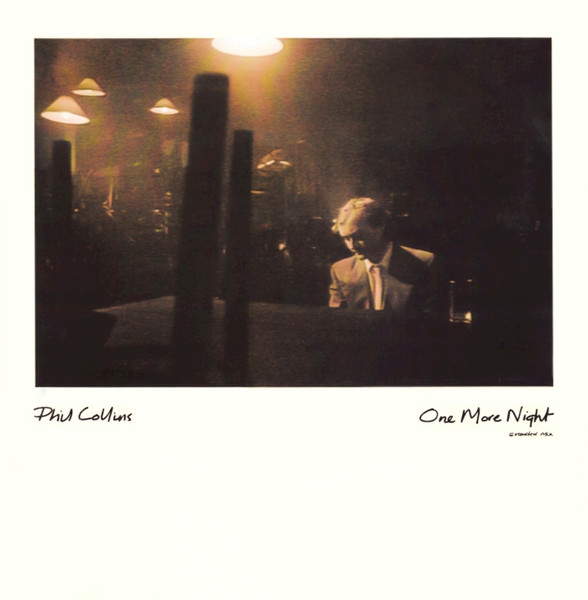
El videoclip, dirigit per Jim Yukich, mostra Phil Collins tocant el piano en un bar de centre urbà amb poca il·luminació. L’escenari és el The Princess Victoria, un pub de Shepherd’s Bush (Londres), propietat de Richard Branson en aquell moment. El vídeo es connecta directament amb el de “Sussudio”, i tots dos es poden veure conjuntament a “The Singles Collection”.


PHIL COLLINS - ONE MORE NIGHT


Released: January 24, 1985

Charts: UK: #4   US: #1 (2 weeks)


“One More Night” is a song by Phil Collins, released as the first U.S. single and second U.K. single from his third studio album, “No Jacket Required”. It became Collins’ second U.S. No. 1 hit, following “Against All Odds,” and his fourth top-ten single in the U.K., peaking at No. 4. In the U.S., the song debuted at No. 50 on the Billboard Hot 100 on February 9, 1985, and reached No. 1 seven weeks later, staying at the top for two weeks.


Phil Collins began writing it on a drum machine, inspired by a tempo similar to a Jacksons’ song. He explained that while experimenting with the machine, the phrase “one more night” naturally fit the rhythm, and the rest of the song came together quickly. While the song has a melancholic feel, Collins described the lyrics as more warm and optimistic rather than depressing.


The music video directed by Jim Yukich, features Phil Collins playing the piano in a dimly lit downtown bar. The bar, The Princess Victoria in Shepherd’s Bush, West London, was owned by Richard Branson at the time. The video serves as a continuation of Collins’ “Sussudio” video, with both clips seamlessly linked in The Singles Collection. 


12.3.25


PETER GABRIEL - DIGGING IN THE DIRT


Released: September 7, 1992

Charts:  US: #52   UK: #24 


“Digging in the Dirt” was released as the lead single from the album “Us”. It reached No. 24 on the UK Singles Chart and No. 52 on the US Billboard Hot 100. This is one of Peter Gabriel’s most personal and intense songs, exploring themes of self-examination, therapy, and repressed anger. Inspired by his own experiences with psychotherapy and the end of his relationship with Rosanna Arquette, the song reflects his efforts to confront his darker emotions. Gabriel also studied human psychology and violence, reading books like “Why We Kill” to understand destructive behavior. The song’s contrast between aggressive verses and a reflective chorus mirrors his inner conflict, making it a powerful exploration of personal growth and emotional struggle.


Musically, “Digging in the Dirt” blends electronic and organic elements, featuring percussion tracks by Egyptian musician Hossam Ramzy, originally recorded for “Zaar” from Gabriel’s “Passion” album. These rhythms were combined with electronic beats and a synth bass. The song was built around a rhythmic groove, but Gabriel struggled to complete it, initially finding it incomplete without a strong bass and drum foundation. Once the rhythm section was finalized, the track gained its full driving intensity.


The music video, directed by John Downer, was one of Peter Gabriel’s most visually intense and symbolic works. Like his earlier videos for .Sledgehammer” and “Big Time”, it relied heavily on stop-motion animation, requiring Gabriel to remain motionless for extended periods while each frame was painstakingly captured. It won the 1993 Grammy Award for Best Short-Form Music Video.


Gabriel appears in various unsettling scenarios: being buried alive, overtaken by creeping vines, and struggling with a wasp, all of which symbolize inner conflicts, repressed emotions, and personal transformation. The imagery reflects the psychological and emotional struggles he was experiencing at the time. The final scene, featuring a vibrant meadow of flowers, offers a stark contrast to the earlier dark and claustrophobic visuals.