Total de visualitzacions de pàgina:

16.3.25


SIMPLE MINDS - PROMISED YOU A MIRACLE


Llançament: 2 d’abril de 1982

Llistes: Regne Unit: #13


“Promised You a Miracle” és una cançó de Simple Minds publicada el 1982 com el primer single del seu cinquè àlbum, “New Gold Dream (81–82–83–84)”. Va ser el primer gran èxit de la banda al Regne Unit, arribant al número 13 significant la seva transició cap a un so més accessible per a la ràdio.


El tema es va gestar ràpidament durant uns assajos a Rockfield Studios, a principis de 1982, amb la banda improvisant sobre un ritme i un riff. Jim Kerr va escriure la lletra de manera instintiva, capturant l’energia positiva i l’ambició de la cançó. Conscients del seu potencial, van decidir gravar-la amb el productor Pete Walsh i llançar-la abans de l’àlbum per augmentar la seva popularitat i aconseguir una actuació a Top of the Pops. L’aposta va sortir bé, i “Promised You a Miracle” es va convertir en el seu primer èxit al Top 20 del Regne Unit.


Jim Kerr la descriu com una història d’ambició, escrita amb la intenció clara de convertir-se en un èxit. Va elaborar la lletra per encaixar amb el to positiu i inspirador de la peça, buscant un resultat enganxós. Musicalment, es va inspirar en “Too Through”, una peça de 1981 de Bad Girls, amb Jocelyn Brown. Mentre eren a Nova York, el bateria Kenny Hyslop la va gravar de Kiss FM i la va compartir amb la banda. Inspirats pel seu ritme, van desenvolupar la seva pròpia versió durant una improvisació, que finalment va donar lloc a “Promised You a Miracle”. Va ser l’únic tema d’estudi enregistrat amb Hyslop, que va deixar la banda poc després.


La cançó es va publicar durant la segona etapa de la gira de “Sons and Fascination”, i ja formava part del seu repertori en directe. Com que encara no havien gravat més material nou, la cara B del senzill incloïa “Theme for Great Cities”, del seu àlbum de 1981 “Sister Feelings Call”.


SIMPLE MINDS - PROMISED YOU A MIRACLE


Released: April 2, 1982

Charts: UK: #13 


“Promised You a Miracle” is a 1982 song by Simple Minds, released as the lead single from their fifth album, “New Gold Dream (81–82–83–84)”. It was the band’s first major UK chart success, reaching #13 and marking their transition to a more radio-friendly sound.


The song came together quickly during rehearsals at Rockfield Studios in early 1982, with the band jamming around a groove and riff. Jim Kerr wrote the lyrics instinctively, capturing the uplifting, ambitious feel of the track. Recognizing its potential, they recorded it with producer Pete Walsh and released it before the album to boost their popularity and secure a Top of the Pops appearance. The gamble paid of and “Promised You a Miracle” became their first UK Top 20 hit.


Jim Kerr describes “Promised You a Miracle” as a story of ambition, written with the clear intention of being a hit. He crafted the lyrics to match the song’s positive, uplifting feel, aiming for something catchy and memorable. Musically, the song was inspired by “Too Through”, a 1981 track by Bad Girls, featuring Jocelyn Brown. While in New York, drummer Kenny Hyslop recorded it from Kiss FM and introduced it to the band. Inspired by its groove, they developed their own sound during a jam session, which led to the creation of “Promised You a Miracle.” It was the only studio track recorded with Hyslop, who left the band shortly afterward. 


“Promised You a Miracle” was released during the second leg of Sons and Fascination Tour, where it was already being performed live. Since the band had not yet recorded additional new material, the B-side of the single featured “Theme for Great Cities” from their 1981 album “Sister Feelings Call”.


15.3.25


THE DOORS - HELLO, I LOVE YOU


Llançament: 11 de juny de 1968  

Llistes d’èxits: EUA: #1 (2 setmanes)  Regne Unit: #15  


"Hello, I Love You," llançada per The Doors al seu àlbum “Waiting for the Sun” del 1968, va esdevenir un èxit comercial, assolint el número 1 als EUA i al Canadà. Tanmateix, alguns fans i els mateixos membres de la banda van considerar que no representava completament el so autèntic de The Doors, trobant-la massa comercial i lleugerament superficial en la seva lletra. Aquesta cançó, una de les primeres que van escriure i tocar junts, no es va incloure inicialment en els seus àlbums anteriors perquè el grup la considerava massa pop i sentia que ja havien superat aquest estil. Malgrat això, Elektra Records va pressionar perquè s’hi inclogués, reconeixent el seu potencial com a single amb gran projecció.


Jim Morrison la va escriure el 1965 després de veure una dona bonica a la platja, cosa que el va inspirar a apuntar unes frases al seu quadern, incloent-hi els versos: "Sidewalk crouches at her feet / Like a dog that begs for something sweet" (La vorera s'ajup als seus peus / Com un gos que demana alguna cosa dolça). Aquella mateixa nit la va completar, i es convertiria en un homenatge a la bellesa de la platja i en una popularització de la frase atrevida "Hello, I love you. Won't you tell me your name?" (Hola, t'estimo. No em diràs el teu nom?).


Inicialment, The Doors la van enregistrar el 1965 com a part d’una demo de sis cançons abans que el guitarrista Robby Krieger s’unís a la banda. No obstant, no es va llançar oficialment fins al 1968, quan la banda necessitava material per completar el seu tercer àlbum, “Waiting for the Sun”. Originalment, tenien la intenció de dedicar el primer costat de l’àlbum a una peça extensa basada en la poesia de Morrison, "Celebration of the Lizard," però, quan aquest projecte es va descartar, van decidir recuperar "Hello, I Love You" com a alternativa.

Quan es va llançar, el single es va convertir en una de les primeres cançons de rock promocionades en format estèreo, on la música s’escoltava en efecte panoràmic d’esquerra a dreta, destacant la nova tecnologia d’àudio. Aquesta versió en estèreo va ajudar a marcar tendència perquè el format estèreo esdevingués estàndard per als singles de 45 rpm. Les primeres còpies americanes del single incloïen el títol complet "Hello I Love You Won't You Tell Me Your Name."


"Hello, I Love You" guarda una forta semblança amb "All Day and All of the Night" de The Kinks, fins al punt que The Doors van acabar pagant drets d’autor a The Kinks per les vendes del single britànic després d’amenaça d’acció legal. Ray Davies, amb un toc d’humor, va agrair que Jim Morrison admetés la similitud, destacant la importància de l’honestedat i la transformació artística.


THE DOORS - HELLO, I LOVE YOU


Released: June 11, 1968

Charts:  US: #1 (2 weeks)  UK: #15 


"Hello, I Love You," released by the Doors on their 1968 album “Waiting for the Sun”, became a commercial hit, topping charts in the U.S. and Canada, but some fans and the band itself felt the song didn't fully represent the Doors' sound, finding it overly commercial and lyrically superficial. Originally one of the first songs they wrote and performed together, the band was reluctant to include it on their third album, feeling it was a pop track they had artistically outgrown. Despite this, Elektra Records pushed for its inclusion, recognizing its potential as a successful single.


Jim Morrison wrote it in 1965 after seeing a beautiful woman on the beach. Inspired, he jotted down lyrics in his notebook, including the lines, "Sidewalk crouches at her feet / Like a dog that begs for something sweet." That night, he completed the song, which would become a tribute to beachside beauty and even popularized the bold pickup line, "Hello, I love you. Won't you tell me your name?"


The Doors initially recorded it in 1965 on a six-song demo before guitarist Robby Krieger joined the band. However, they didn’t officially release it until 1968, when they needed material for their third album, “Waiting for the Sun”. The band had initially planned to dedicate the album's first side to an extended piece based on Morrison's poetry, "Celebration of the Lizard," but when that plan fell through, they revisited "Hello, I Love You" as an alternative.


When "Hello, I Love You" was released, stereo 45 rpm records were rare, especially in Top 40 music. The Doors' single became one of the first rock songs promoted in stereo, featuring a dramatic stereo effect where the music pans from left to right, showcasing the new audio technology. This stereo release helped set a trend toward stereo becoming standard for 45 rpm singles. Early American pressings of the single included the extended title "Hello I Love You Won’t You Tell Me Your Name."


"Hello, I Love You" bears a strong resemblance to The Kinks' "All Day and All of the Night," so much so that The Doors ultimately paid royalties to The Kinks from British single sales after threats of legal action. Ray Davies, reflecting on this with humor, appreciated that Jim Morrison admitted the similarity, emphasizing the importance of honesty and artistic transformation. 


U2 - SOMETIMES YOU CAN’T MAKE IT ON YOUR OWN / CITY OF BLINDING LIGHTS


SOMETIMES YOU CAN’T MAKE IT ON YOUR OWN

Released:  February 7, 2005

Charts:  UK: #1 (1 week)  US: #97 


"Sometimes You Can't Make It on Your Own" is a song from the album "How to Dismantle an Atomic Bomb". It was released as the album's second single globally (excluding North America) on February 2005. It debuted at number one on the UK Singles Chart, marking U2's sixth number-one single in the United Kingdom. At the 48th Annual Grammy Awards in 2006, the song won two Grammy Awards: Best Rock Performance by a Duo or Group with Vocal and Song of the Year.


"Sometimes You Can't Make It on Your Own" began taking shape during U2's PopMart Tour in 1997–1998, initiated by Bono and the Edge. The song's development coincided with a poignant period for Bono, as his father, Bob Hewson, battled terminal cancer during the recording of U2's 2000 album “All That You Can't Leave Behind”. Originally titled "Tough," the song reflected Bono's impression of his father as a resilient and humorous Dubliner with a cynical outlook. Despite initial efforts, the band found the song's early version too conventional and worked extensively to refine its harmonic structure while preserving its strong melodies. Ultimately, U2 opted not to include it on the album.


During the recording sessions for the album “How to Dismantle an Atomic Bomb”, the band revisited the tune. The song underwent several revisions as guitarist the Edge felt the original chord sequence was too obvious. Producer Daniel Lanois contributed to the initial stages of the song's development, but the band continued to struggle with its structure. After multiple rewrites, producer Steve Lillywhite critiqued the track, noting the lack of a proper chorus and suggesting it needed a bridge to enhance its structure. In response, Bono spontaneously sang a new segment in falsetto, which instantly completed the song despite lacking lyrics at the time. Lillywhite remarked that despite the song's long evolution over five years, no one had previously identified its need for a chorus.


"Sometimes You Can't Make It on Your Own" holds deep personal significance for Bono, as he first performed it at his father's funeral. The song reflects on their complex relationship, which evolved positively before his death. Bono's father, a tenor and lover of opera, influenced the song's lyrics, notably the line "You are the reason the opera is in me." Bono describes his father's practical advice against dreaming as a push towards action, which shaped his approach to pursuing ambitious ideas. 


CITY OF BLINDING LIGHTS

Released: June 6, 2005

Charts:  UK: #2 


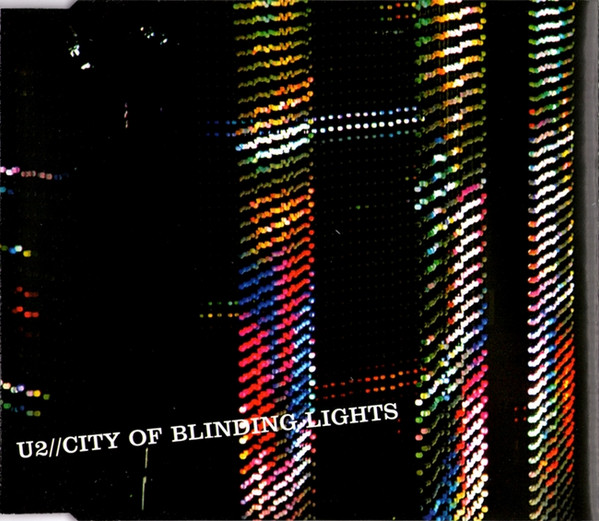
"City of Blinding Lights" is a track by U2 from their album "How to Dismantle an Atomic Bomb". Produced by Flood, with additional production by Chris Thomas and Jacknife Lee, it was released as the album's fourth single on June 2005. The song achieved commercial success, reaching number one in Spain and entering the top ten charts in Canada, Ireland, the United Kingdom, and several other countries.


U2 started developing "City of Blinding Lights" during the “Pop” album sessions but shelved it until completing it for "How to Dismantle an Atomic Bomb" years later. Bono's lyrics reflect memories of his teenage visit to London with his wife and the band's early experiences in New York City in 1980. The Edge appreciates Bono's ability to create cinematic lyrics that vividly evoke specific places and times, particularly highlighting how New York City captures a distinct state of mind and emotional resonance.


"The first verse is in London and the chorus is in New York," Bono explained in "U2 by U2." He described how the song reflects his first trip to London with his wife, and their exploration of the city's offerings and challenges. The chorus shifts to New York, specifically recalling a moment during U2's Elevation tour at Madison Square Garden, where he was moved by the audience's emotional response. 


The music video was filmed at General Motors Place in Vancouver, British Columbia, on April 27, 2005, during U2's Vertigo Tour. Directed by Alex Courtes and Martin Fougerol, it features the band performing the song live on stage, incorporating footage from their concert the following day. The video intentionally keeps lighting low to emphasize the LED curtains used in the tour, creating a visually striking effect with shadows on the band members' faces. The filming location in Vancouver was chosen for its strong production capabilities, drawing thousands of fans who participated after the shoot details leaked.


PETER GABRIEL - SHOCK THE MONKEY


Released: September 1982

Charts:  US: #29   UK: #58 


“Shock the Monkey” is a song released in September 1982 as the lead single from the fourth self-titled studio album, issued in the US under the title “Security”. It became Gabriel’s first Top 40 hit in the US, reaching No. 29 on the Billboard Hot 100 and topping the Billboard Mainstream Rock chart. In the UK, it peaked at No. 58.


“Shock the Monkey” is often mistaken for a song about animal rights or shock therapy due to its title and imagery, but Peter Gabriel has clarified that it is actually about jealousy. The “monkey” symbolizes primal human instincts, particularly fear and insecurity. The phrase “shock the monkey to life” refers to moments of realization triggered by jealousy, confirming one’s fears or suspicions. While the song mentions various animals, its true meaning lies in exploring emotional reactions and human impulses.


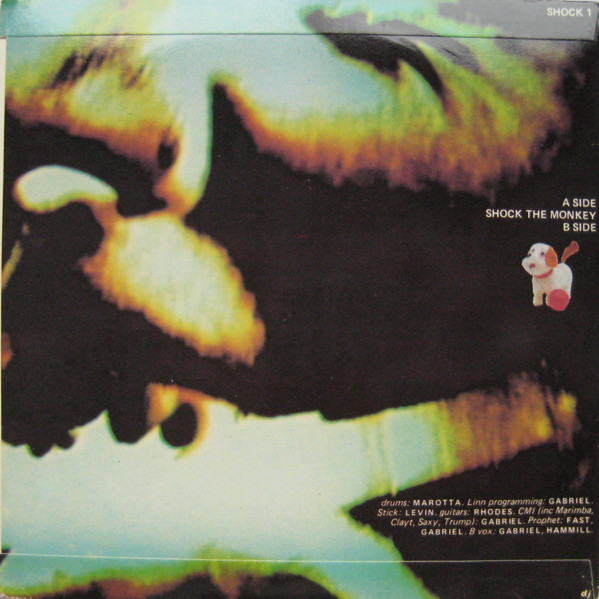
“Shock the Monkey” showcased Peter Gabriel’s innovative use of electronic music technology. For this song and the rest of the “Security” album, he used cutting-edge devices like the Fairlight CMI, Prophet 5 synthesizers, and an LM-1 drum machine to create its distinctive sound. Along with co-producer David Lord, Gabriel manipulated samples and processed rhythms, shaping the song from the beat upward. Drummer Jerry Marotta adjusted his playing to suit this approach, avoiding cymbals and using a surdo drum instead of a traditional kick drum. This experimental production technique resulted in a unique sound that was difficult to replicate.


The music video directed by Brian Grant is known for its unsettling and surreal imagery. A staple of early MTV, the video features Peter Gabriel in two contrasting roles: a businessman in a dark suit and a shaman-like figure with white face paint and black geometric markings. The setting shifts between two office-like rooms where a movie projector plays footage of a gibbon. As the video progresses, the businessman’s environment becomes increasingly chaotic, with objects in disarray and Gabriel himself appearing more distressed. The visuals grow more intense, featuring scenes of Gabriel fleeing through a wilderness, being restrained by three little people, and appearing disoriented in a hospital-like setting. The video culminates with the two Gabriels merging, and the gibbon’s face superimposed over them.