Total de visualitzacions de pàgina:

23.3.25


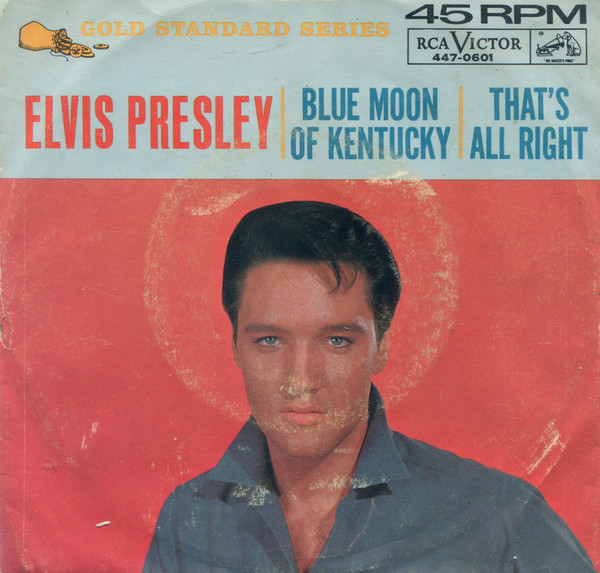
ELVIS PRESLEY - THAT’S ALL RIGHT 


Llançament: 19 de juliol de 1954

Llistes d’èxits: Regne Unit: #3


“That’s All Right” és una cançó de blues escrita i interpretada per Arthur Crudup, enregistrada per primera vegada el 1946. El març de 1949, RCA Victor la va reestrenar com “That’s All Right, Mama” en el seu nou format de singles de 45 rpm, convertint-se en el primer enregistrament de rhythm and blues del segell en aquest format.


La versió d’Elvis Presley va ser el seu primer single, gravat durant la seva primera sessió als Sun Records el 1954. En aquell moment, Elvis tenia 19 anys i treballava com a conductor de camions. Originalment, havia anat a Sun per gravar una cançó per a la seva mare. Sam Phillips, propietari de Sun, buscava un home blanc que sonés com un home negre, i la seva assistent Marion Keiser va recomanar-li Elvis.


Durant la sessió, Elvis, el baixista Bill Black i el guitarrista Scotty Moore van experimentar amb diverses cançons fins que, de manera espontània, van tocar “That’s All Right” d’Arthur “Big Boy” Crudup del 1946 amb un estil més ràpid i energètic. Phillips es va enamorar d’aquesta versió innovadora i la van gravar. Aquesta fusió única de blues i energia uptempo fa que alguns considerin la cançó com una de les primeres peces de rock and roll.


Elvis va gravar “That’s All Right” als Sun Studios de Memphis el 5 de juliol de 1954, durant la seva segona sessió amb el guitarrista principal Scotty Moore. Aquesta peça va marcar un punt d’inflexió en la seva carrera i va ser la primera cançó que va interpretar en directe. El seu concert debut va tenir lloc el 30 de juliol de 1954, on va obrir per Slim Whitman a Memphis i va tocar “That’s All Right, Mama”, “Blue Moon of Kentucky” i “I’ll Never Let You Go (Little Darlin’)”.


Segons Moore, la sessió de gravació no va ser fàcil. Elvis va començar a fer bromes i a saltar mentre tocava, cosa que va frustrar el productor Sam Phillips. Phillips els va fer començar de nou, i va ser aquesta segona presa la que es va convertir en l’enregistrament definitiu.


Sam Phillips va portar una còpia del single al DJ Dewey Phillips, un pioner de WHBQ a Memphis. El 8 de juliol de 1954, Dewey es va convertir en el primer DJ a punxar una cançó d’Elvis en el seu programa Red, Hot & Blue. La resposta del públic va ser aclaparadora, i Dewey la va posar repetidament fins que finalment va convidar Elvis a una entrevista en directe. Dewey, conegut per barrejar música negra i blanca al seu programa, va ajudar “That’s All Right” a guanyar popularitat a Memphis i més enllà, obrint el camí per a l’ascens meteòric d’Elvis.


En la pel·lícula biogràfica de 2022, Elvis, dirigida per Baz Luhrmann, Gary Clark Jr. interpreta Arthur “Big Boy” Crudup tocant “That’s All Right” en una escena on un jove Elvis observa com toca en un juke joint. La pel·lícula també inclou versions de la cançó interpretades per Austin Butler (que encarna l’Elvis adult) i per Elvis Presley mateix. Un moment destacat és una escena a Las Vegas en què Butler, com a Elvis, lidera l’orquestra en un nou arranjament de la cançó. Aquesta actuació, inicialment prevista amb playback, es va gravar en directe després que Luhrmann decidís que necessitava més espontaneïtat. Butler va oferir una actuació improvisada en només unes poques preses, creant una de les escenes més celebrades de la pel·lícula.


El 5 de juliol de 2004, exactament 50 anys després de la gravació de “That’s All Right, Mama” per Elvis Presley, la cançó va ser reeditada. Tot i que als Estats Units no va tenir gaire atenció, al Regne Unit va assolir el número 3 i també va entrar a les llistes del Canadà i Austràlia. El 1998, l’enregistrament original d’Elvis de 1954 va ser inclòs al Grammy Hall of Fame, reconeixent el seu impacte en la història de la música.


ELVIS PRESLEY - THAT’S ALL RIGHT 


Released: July 19, 1954

Charts: UK: #3 


“That’s All Right” is a blues song written and performed by Arthur Crudup, first recorded in 1946. In March 1949, RCA Victor re-released the track as “That’s All Right, Mama” on its new 45 rpm single format, marking the label’s first rhythm and blues record in this format.


His cover of “That’s All Right” was Elvis Presley’s first single, recorded during his first session at Sun Records in 1954. At the time, Elvis was a 19-year-old truck driver who had originally come to Sun to record a song for his mother. Sam Phillips, Sun’s owner, was searching for a white man who sounds like a black man, and his assistant Marion Keiser brought Elvis to his attention.


In the session, Elvis, bassist Bill Black, and guitarist Scotty Moore experimented with various songs. They struck gold when they spontaneously played Arthur “Big Boy” Crudup’s 1946 blues tune “That’s All Right” in a faster, more energetic style. Phillips loved the innovative approach, and they recorded it. This unique blend of blues and uptempo energy led some to consider it one of the first rock ‘n’ roll songs.


Elvis recorded “That’s All Right” at Sun Studios in Memphis on July 5, 1954, during just his second session with lead guitarist Scotty Moore. This track marked a turning point in Elvis’ career and became the first song he performed live. His debut concert took place on July 30, 1954, where he opened for Slim Whitman in Memphis, playing “That’s All Right, Mama,” “Blue Moon Of Kentucky,” and “I’ll Never Let You Go (Little Darlin’).


According to Moore, the recording session wasn’t without challenges. Elvis began “acting the fool” and jumping around while playing, prompting frustration from producer Sam Phillips. Phillips made them start over, and it was this second take that became the iconic recording.


Sam Phillips took a copy of the single to Dewey Phillips, a pioneering DJ at WHBQ in Memphis. On July 8, 1954, Dewey became the first DJ to play an Elvis song, spinning it on his Red, Hot & Blue show. The track received an overwhelming response, leading Dewey to play it repeatedly and eventually bring Elvis in for an on-air interview. Dewey Phillips was known for his groundbreaking approach, mixing black and white music on his show, which attracted a diverse audience. His support for “That’s All Right” helped the song gain traction in Memphis before it went national, paving the way for Elvis’ meteoric rise.


In Baz Luhrmann’s 2022 biopic Elvis, Gary Clark Jr. portrayed Arthur “Big Boy” Crudup, performing “That’s All Right” in a scene where a young Elvis sneaks a glimpse of him playing at a juke joint. The film also features versions of the song by Austin Butler, who plays the adult Elvis, and by Elvis Presley himself. One standout moment is a Vegas scene where Butler, as Elvis, leads the orchestra in a new arrangement of the song. Initially rehearsed using playback, Luhrmann decided the scene needed a live performance. He instructed Butler to perform the song spontaneously with live instruments, much like Elvis would have done. Despite initial nerves, Butler delivered an improvisational performance in just a few takes, creating one of the movie’s most celebrated scenes.


On July 5, 2004, exactly 50 years after Elvis Presley recorded “That’s All Right Mama,” the song was re-released. While it didn’t gain much attention in the United States, it achieved significant success in the UK, reaching #3, and also charted in Canada and Australia. In 1998, Elvis’s original 1954 recording was inducted into the Grammy Hall of Fame, recognizing its lasting impact on music history.




22.3.25


FRANKIE VALLI - GREASE 


Llançament: maig de 1978

Posició a les llistes: EUA: #1 (2 setmanes)


“Grease” és una cançó escrita per Barry Gibb i gravada per Frankie Valli, llançada com a single el maig de 1978. És el tema principal de la pel·lícula “Grease”, basada en el musical de 1971. Va ser el segon número 1 als Estats Units de la banda sonora, després de “You’re The One That I Want”. Publicada al maig de 1978, es va beneficiar de l’èxit massiu del film, escalant posicions al Billboard Hot 100 al juliol i assolint el #1 el 26 d’agost. La cançó, que celebra l’estil de vida greaser, apareix dues vegades a la banda sonora: com a tema d’obertura i de tancament.


Amb més de set milions de còpies venudes arreu del món, “Grease” va ser una de les quatre cançons escrites exclusivament per a la pel·lícula i que no formaven part del musical original. Barry Gibb va produir el tema juntament amb Albhy Galuten i Karl Richardson, coneguts pel seu treball a “Saturday Night Fever”. Tot i que Gibb va escriure la cançó, no en va fer la veu principal, ja que el productor Robert Stigwood volia que “Grease” tingués una identitat pròpia separada de “Saturday Night Fever”. Per això, es va triar Frankie Valli, una veu icònica, encara que no havia tingut èxits recents. Gibb, però, hi va fer els cors, i Peter Frampton hi va tocar la guitarra solista.


En una entrevista a Billboard, Valli va recordar que Barry Gibb li va oferir la cançó personalment. El seu mànager, Allan Carr, que també era productor de “Grease”, li va donar a triar entre interpretar el tema principal o fer un paper a la pel·lícula com a cantant de “Beauty School Dropout”. Valli va triar “Grease”, que es va convertir en un dels èxits més grans de la seva carrera.


Tot i que el seu so disco contrastava amb l’ambientació dels anys 50 del film, el públic va adorar la cançó. Va obtenir disco de platí, i la banda sonora de “Grease” va vendre més de 8 milions de còpies només als Estats Units.


FRANKIE VALLI - GREASE 


Released: May 1978

US: #1 (2 wks) 


“Grease” is a song written by Barry Gibb and recorded by Frankie Valli, released as a single in May 1978. It serves as the title track for the movie “Grease”, which was based on the 1971 stage musical. It was the second US #1 hit from the soundtrack, following “You’re The One That I Want.” Released in May 1978, it benefited from the film’s blockbuster success, climbing the Billboard Hot 100 in July and reaching #1 on August 26. The song, celebrating the greaser lifestyle, appears twice on the film’s soundtrack—both as the opening and closing track.


Selling over seven million copies worldwide, “Grease” was one of four songs written specifically for the film that were not part of the original stage production. Barry Gibb produced the track alongside Albhy Galuten and Karl Richardson, known for their work on “Saturday Night Fever”. Barry Gibb wrote it but did not sing lead, as producer Robert Stigwood wanted “Grease” to have its own identity, separate from “Saturday Night Fever”. Instead, Frankie Valli was chosen due to his recognizable voice, though he hadn’t had a recent hit. Gibb still provided backup vocals on the track. Additionally, Peter Frampton played lead guitar on the song.


Valli recalled in a Billboard interview that Barry Gibb personally offered him the song. His manager, Allan Carr—who was also a “Grease” producer—gave him the choice of recording the title track or appearing in the film as the singer of “Beauty School Dropout.” Valli chose “Grease,” which became one of the biggest hits of his career.


Despite its disco sound clashing with the film’s 1950s setting, audiences loved the song. It went platinum, and the “Grease” soundtrack sold over 8 million copies in the US alone.


THE POLICE - FALL OUT


Llançament: 1 de maig de 1977

Posicions a les llistes: Regne Unit: #47


“Fall Out” va ser el primer senzill de la banda britànica The Police, llançat l’1 de maig de 1977 amb “Nothing Achieving” com a cara B. En aquell moment, la formació de la banda era Sting, Stewart Copeland i Henri Padovani. Més tard aquell mateix any, el guitarrista Andy Summers va substituir Padovani, completant la formació que definiria el so de la banda.


Aquest senzill no formava part de cap àlbum i inicialment no va aconseguir entrar a les llistes d’èxit. Tanmateix, quan es va re-llençar el 1979, després de l’èxit de “Message in a Bottle”, va arribar al número 47 de les llistes britàniques. Des de llavors, “Fall Out” s’ha inclòs en diversos àlbums recopilatoris i en directes, com ara “Message in a Box: The Complete Recordings” i “The Police Live”.


Escrit per Stewart Copeland amb l’ajuda lírica del seu germà Ian Copeland, el single es va gravar abans que la banda realitzés el seu primer concert en directe. Copeland descriu la lletra com a sincera, mentre que Sting considera que, malgrat la manca de sofisticació de les seves primeres cançons, aquestes eren plenes d’energia en brut. “Fall Out” reflecteix l’esperit del moviment punk de l’època amb la seva resistència a la conformitat i als convencionalismes socials.


El single es va gravar amb un pressupost de 150 lliures, prestades per Paul Mulligan, i és l’única gravació de The Police que compta amb el guitarrista original Henri Padovani. Tot i això, a causa dels nervis de Padovani durant l’enregistrament, Stewart Copeland va acabar tocant la major part de les parts de guitarra mentre que Padovani va aportar els solos.


La cançó va tenir èxit dins de l’escena punk del Regne Unit, ajudant la banda a obtenir visibilitat i signar un contracte amb A&M Records. El 1979, Miles Copeland, germà de Stewart, va crear el segell discogràfic I.R.S. Records com una filial d’A&M, que posteriorment contractaria artistes destacats dels anys 80 com The Go-Go’s, The Bangles i R.E.M.


“Fall Out” representa els inicis punk de The Police, abans que evolucionessin cap a un so més melòdic amb influències reggae, amb Sting com a principal compositor de la majoria dels seus èxits.


THE POLICE - FALL OUT


Released: May 1, 1977

Charts:  UK: #47 


“Fall Out” was the debut single by British rock band The Police, released on May 1, 1977, with “Nothing Achieving” as the B-side. At the time, the band consisted of Sting, Stewart Copeland, and Henri Padovani. Later that year, guitarist Andy Summers replaced Padovani, completing the lineup that would define the band.


The track, a non-album single, initially failed to chart but gained more attention when it was re-released in 1979, reaching No. 47 on the UK Singles Chart shortly after their hit “Message in a Bottle” topped the chart. “Fall Out” has since been included in several compilation and live albums, including Message in a Box: The Complete Recordings and The Police.


“Fall Out” was written by drummer Stewart Copeland with lyrical assistance from his brother Ian, and recorded before the band had performed live. Copeland described the lyrics as heartfelt, while Sting described the early tracks as lacking sophistication but full of raw energy, crediting Copeland’s focus and drive for the band’s inception. The track’s lyrics convey a resistance to conforming to societal trends, embodying the punk ethos of the time. 


The single was recorded on a £150 budget borrowed from Paul Mulligan and is the only Police recording featuring original guitarist Henry Padovani. Due to Padovani’s studio nerves, Copeland played most of the guitar parts, using a Gibson SG, while Padovani contributed the solos with his Jacobacci guitar. 


The song sold well within the UK punk scene, helping the Police gain traction and sign with A&M Records. In 1979, Miles Copeland, Stewart’s brother, launched I.R.S. Records as an imprint of A&M, which would go on to sign major ‘80s acts like The Go-Go’s, the Bangles, and R.E.M. While Fall Out represented their punk beginnings, the Police would later evolve into a more melodic band with reggae influences, with Sting writing most of their hits.


21.3.25


PHIL COLLINS - A GROOVY KIND OF LOVE


Released: August 22, 1988

Charts: UK: #1 (2 weeks)  US: #1 (2 weeks)


“A Groovy Kind of Love” is a song written by Toni Wine and Carole Bayer Sager, inspired by a melody from classical composer Muzio Clementi. The song was written in just 20 minutes in the mid-1960s when Sager was 22 years old and working as a high school English teacher, while Wine was still in high school at 17. They aimed to incorporate the word “groovy” into the title, as it was a popular slang term at the time.


The first version was recorded by the American duo Diane & Annita in 1965 under the title “Groovey Kind of Love”, but it gained major success when recorded by The Mindbenders in 1965 and later by Phil Collins, whose 1988 version became a number one hit.


Phil Collins recorded his version of “A Groovy Kind of Love” in 1988 for the soundtrack of the film “Buster”, in which he starred. Initially, Collins suggested the song for Stephen Bishop, but while filming, he proposed it as a love theme for the main character. He recorded a demo, which unexpectedly ended up being used in the film.


Co-produced with Anne Dudley (of The Art of Noise), Collins’ version slowed down the original 1965 hit by The Mindbenders, adding synths, echoing drum beats, and orchestral strings. Though the lyrics celebrate the joy of love, Collins’ melancholic delivery gives the song a bittersweet tone. The track became a number one hit, appearing on several of his compilation albums, including “…Hits”, “Love Songs: A Compilation…” “Old and New”, and “The Singles”.


When released as a single, “A Groovy Kind of Love” reached No. 1 in both the U.S. and UK, making it Phil Collins’ only song to top the charts in both countries. It was also his last UK No. 1 hit. The single was certified silver in the UK and topped the U.S. Adult Contemporary chart. It remained on the Billboard Hot 100 for 25 weeks, the longest run of any Collins single. The song also earned him a Grammy nomination for Best Pop Vocal Performance, Male in 1989.