Total de visualitzacions de pàgina:

7.4.25


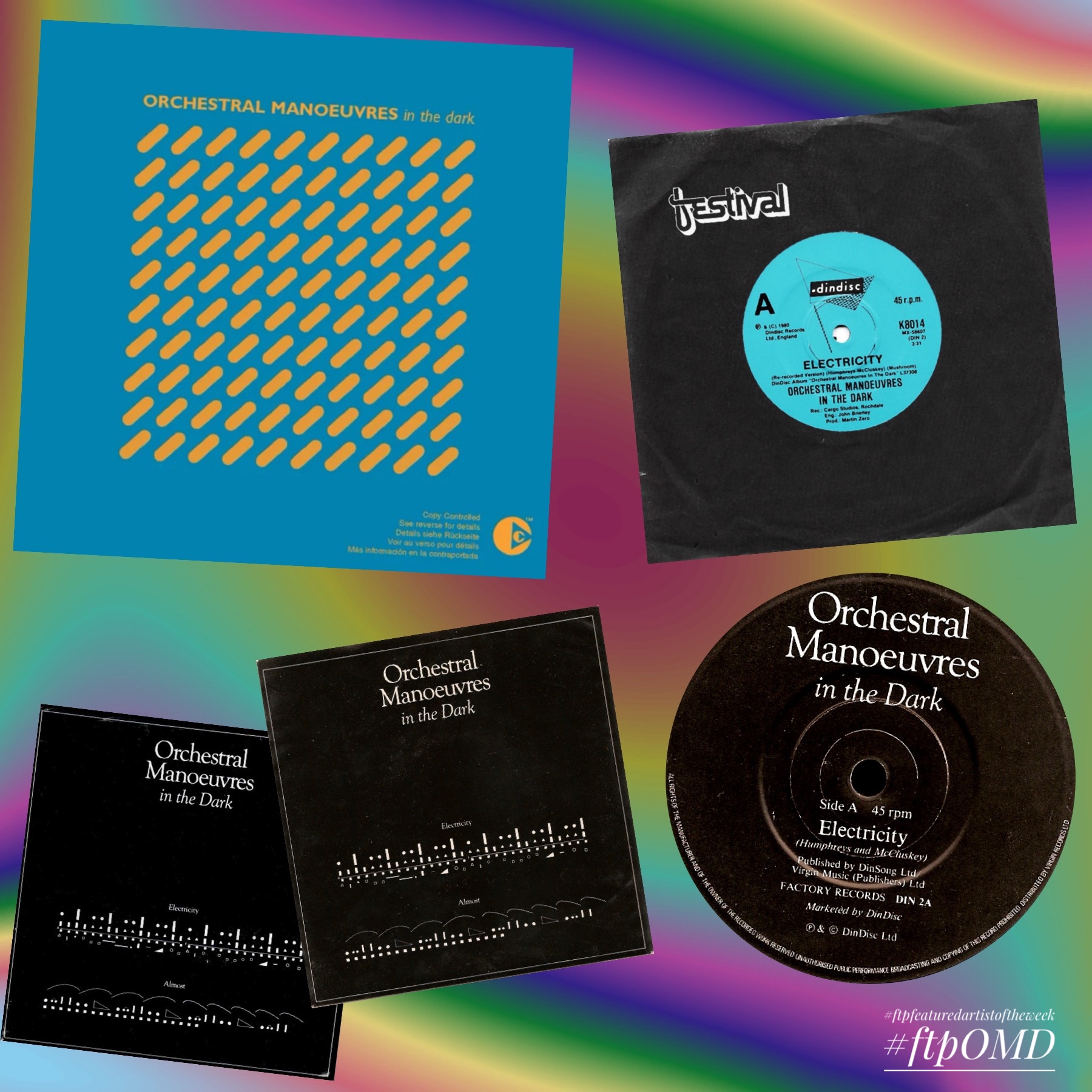
OMD - ELECTRICITY


Released: May 21, 1979

Album: Orchestral Manoeuvres in the Dark


“Electricity” is the 1979 debut single by English synth-pop band Orchestral Manoeuvres in the Dark (OMD), written by Andy McCluskey and Paul Humphreys when they were just 16. Though it never charted highly, it became one of the band’s most iconic songs and a key track in the rise of the UK synth-pop movement. With lyrics addressing energy waste, the song features both members singing in unison, with Humphreys more prominent in the mix. Its early success led to a major record deal, and over time, “Electricity” has become a beloved classic.


“Electricity” was first recorded by Andy McCluskey and Paul Humphreys in their earlier band, the Id, in 1978. After performing their debut gig as OMD—opening for Joy Division at Eric’s Club in Liverpool—McCluskey sent a demo of the track to Factory Records founder Tony Wilson. Although Wilson himself wasn’t initially impressed, his wife liked it, which convinced him to release it as a single. The song’s early success helped OMD secure a seven-album deal with the label Dindisc, launching their career.


“Electricity” was heavily influenced by Kraftwerk’s “Radioactivity,” with OMD’s Andy McCluskey admitting it was essentially their sped-up version of the track. The band’s fascination with technology and machines, like electricity, stemmed from their interest in electronics—Paul Humphreys had studied the subject and almost became an engineer. Mixed by Martin Hannett at Strawberry Studios, the song features an unconventional bass drum sound created with a detuned Korg synth. 


Erasure’s Vince Clarke credited OMD’s “Electricity” as the song that inspired him to pursue electronic music, calling it uniquely different from anything he’d heard before. The track also influenced Duran Duran—Nick Rhodes regularly included it in his DJ sets, and John Taylor acknowledged it as an early inspiration for the band. Though it never charted high, “Electricity” became a fan favorite and a staple at every OMD concert, often closing their shows as a powerful encore.


PHIL COLLINS - TWO HEARTS


Llançament: 14 de novembre de 1988

Llistes: UK: #6   EUA: #1 (2 setmanes)


“Two Hearts” és una cançó de Phil Collins creada per la pel·lícula de 1988 “Buster”, en la qual ell mateix també era el protagonista. Coescrita i produïda per Collins i Lamont Dozier, es va publicar el novembre de 1988 i es va convertir en un gran èxit, arribant al #1 als EUA, Canadà i Japó. Va liderar la llista Billboard Hot 100 durant dues setmanes i es va mantenir cinc setmanes al cim de la llista Adult Contemporary. Al Regne Unit, va assolir la sisena posició.


“Two Hearts” va guanyar un Globus d’Or i un Grammy a la Millor Cançó Escrita per a una Pel·lícula o Televisió. També va ser nominada a l’Oscar, però va perdre contra “Let the River Run” de Carly Simon (Working Girl).


Es tracta d’una cançó d’amor que parla d’una parella profundament connectada, fins al punt de sentir que comparteixen un mateix cor i una mateixa ment. Inicialment, als crèdits de “Buster”, apareixia amb el títol complet “Two Hearts (One Mind)”, reforçant la idea d’un amor que transcendeix la distància i el temps.


Collins la va escriure amb Lamont Dozier, a qui va conèixer en un dels seus concerts. Quan estava treballant en “Buster”, una pel·lícula ambientada als anys 60, Collins volia una cançó amb un so clàssic d’aquella època, i va recórrer a Dozier per aconseguir-ho. Aquest, inspirant-se en el seu treball passat, va compondre la música de “Two Hearts”, i Collins en va quedar encantat.


Es van fer dos videoclips, dirigits per Jim Yukich: Un on Collins interpreta tots els membres de la banda. Un altre, en clau humorística, on participa en un combat de lluita lliure contra The Ultimate Warrior.


PHIL COLLINS - TWO HEARTS


Released: November 14, 1988

Charts: UK: #6   US: #1 (2 weeks)


“Two Hearts” is a song by Phil Collins from the 1988 film “Buster”, in which he also starred. Co-written and produced by Collins and Lamont Dozier, the song was released on November 1988, and became a major hit, topping the charts in the US, Canada, and Japan. It reached No. 1 on the Billboard Hot 100 for two weeks and spent five weeks atop the Adult Contemporary chart. The song also peaked at No. 6 in the UK. “Two Hearts” won a Golden Globe and a Grammy Award for Best Song Written for a Motion Picture or Television. It was also nominated for an Oscar but lost to Carly Simon’s “Let the River Run” from “Working Girl”.


“Two Hearts” is a love song about a couple deeply connected, feeling as though they share one heart and mind. Originally listed in the “Buster” credits as “Two Hearts (One Mind)”, the song reflects an enduring love that transcends distance. Phil Collins co-wrote the song with Lamont Dozier, whom he first met at one of his concerts. When Collins was working on “Buster”, a film set in the 1960s, he sought Dozier’s expertise in crafting a song with a classic ’60s feel. Dozier drew inspiration from his past work and created the music for “Two Hearts”, which Collins loved.


Two music videos were directed by Jim Yukich—one featuring Collins performing as every band member, and another humorously placing him in a wrestling match against The Ultimate Warrior.


6.4.25


AC/DC - WHOLE LOTTA ROSIE


Llançament: 20 de maig de 1977

Àlbum: Let There Be Rock


“Whole Lotta Rosie” és una cançó de la banda australiana AC/DC, publicada com l’últim tema de l’àlbum “Let There Be Rock”. Escrita per Angus Young, Malcolm Young i Bon Scott, es va llançar com a single en alguns països, amb “Dog Eat Dog” com a cara B. El tema va guanyar més notorietat quan la seva versió en directe, extreta de l’àlbum “If You Want Blood You’ve Got It” (gravada a Glasgow el 30 d’abril de 1978), es va publicar com a senzill l’octubre de 1978. Musicalment, la cançó s’inspira en “No Money Down” de Chuck Berry.


La lletra de “Whole Lotta Rosie” es basa en una experiència real de Bon Scott amb una groupie de Tasmània. En una entrevista de 1976, Malcolm Young va animar Scott a explicar la història de “la grossa”. Segons Scott, després d’un concert, va preguntar a la multitud: “Qui ho vol?”, i una dona corpulenta, coneguda com Big Bertha, es va oferir. Sense atrevir-se a dir que no, va acceptar, però després d’estar amb ella, la dona va cridar una amiga presumint que Scott era la seva 37a “conquesta” aquell mes. A més, tenia una llibreta negra on anotava totes les seves trobades. Scott va transformar aquesta experiència en una cançó, canviant el seu nom a Rosie.


Els primers anys d’AC/DC estaven plens d’excessos i aventures que sovint inspiraven les seves lletres. Bon Scott sempre havia expressat la seva admiració per les dones corpulentes, i moltes de les seves històries reals es van convertir en cançons. Un altre exemple és “Go Down”, també de “Let There Be Rock”, que menciona Ruby Lips, una altra persona real.


Encara que la versió original de “Whole Lotta Rosie” es troba a “Let There Be Rock”, la versió en directe d’”If You Want Blood You’ve Got It” és considerada la més icònica. Aquesta gravació inclou el públic de Glasgow cridant “Angus! Angus!” mentre comença el riff inicial. Tot i que “Back in Black” és sovint citat com el millor riff d’AC/DC, “Whole Lotta Rosie” té el seu propi lloc llegendari. De fet, va ser votada la millor cançó de metal de la història en la primera edició de la revista Kerrang!


AC/DC - WHOLE LOTTA ROSIE


Released: May 20, 1977

Album: Let There Be Rock


“Whole Lotta Rosie” is a song by Australian hard rock band AC/DC, appearing as the final track on their 1977 album “Let There Be Rock”. Written by Angus Young, Malcolm Young, and Bon Scott, it was released as a single in select countries that year, backed by “Dog Eat Dog.” The song later gained greater recognition when a live version from the album “If You Want Blood You’ve Got It”, recorded in Glasgow on April 30, 1978, was released as a single in October 1978. Musically it draws inspiration from Chuck Berry’s “No Money Down”.


“Whole Lotta Rosie” is based on a real-life experience of AC/DC’s lead singer Bon Scott with a plus-sized groupie from Tasmania he met backstage in Australia. In a 1976 interview, guitarist Malcolm Young encouraged Scott to share the story of “the fat one.” Scott recounted how a woman, nicknamed Big Bertha, stepped forward after he asked the crowd, “Who wants it?” Too intimidated to refuse, he went along with it, only for her to call out to a friend afterward, boasting that he was her 37th conquest that month. She even had a black book where she recorded her encounters. Scott turned this incident into a song, renaming her Rosie.


AC/DC’s early days were filled with wild experiences, many of which inspired their lyrics. Bon Scott had a known appreciation for larger women and often referenced real-life encounters in his songs. Another track from “Let There Be Rock”, “Go Down,” mentions Ruby Lips, another real person.


The original version of “Whole Lotta Rosie” appeared on “Let There Be Rock”, but the live version on “If You Want Blood You’ve Got It” is widely regarded as the definitive take. This performance features an electrifying crowd in Glasgow, chanting “Angus! Angus!” as the opening riff kicks in. While “Back in Black” is often cited as AC/DC’s greatest riff, “Whole Lotta Rosie” has its own claim to fame. The song was voted the greatest metal track ever in the first edition of Kerrang! magazine. 


5.4.25


AC/DC - LET THERE BE ROCK


Llançament: 30 de setembre de 1977

Àlbum: Let There Be Rock


“Let There Be Rock” és la cançó que dona nom a l’àlbum de 1977 d’AC/DC. Escrita per Angus Young, Malcolm Young i Bon Scott, la peça dura més de 6 minuts i va ser produïda per Harry Vanda i George Young.


La cançó actua com el mite de la creació del rock segons AC/DC. La primera frase fa referència al naixement del rock ‘n’ roll el 1955, una clara influència de “Roll Over Beethoven” de Chuck Berry, que imaginava Txaikovski rebent la notícia de l’arribada del rock i compartint-la amb el món. Tot i que sembla un simple himne rock, la cançó té un fons històric, nomenant figures clau com Bill Haley i Chuck Berry, i traça l’ascens del rock, la fama i la proliferació de guitarres elèctriques. L’última estrofa descriu una banda de “42 decibels” (canviat a “92 decibels” en versions en directe) tocant música atronadora a “The Shaking Hand”.


“Let There Be Rock” ha estat un pilar dels concerts d’AC/DC des de 1978, amb solos de guitarra d’Angus Young que en ocasions s’han allargat fins als 20 minuts. Durant la gravació de la cançó, l’amplificador d’Angus va explotar, però la banda va continuar tocant enmig del caos.


El videoclip de 1977 es va gravar a l’església Kirk Gallery de Sydney i presentava els membres d’AC/DC, incloent el nou baixista Cliff Williams. Bon Scott apareixia vestit de capellà, mentre que la resta de la banda feia d’escolans, amb Angus Young portant una aurèola. El vídeo acaba amb la banda improvisant, i una versió alternativa inclou efectes de color i un zoom a un vitrall.


AC/DC - LET THERE BE ROCK


Released: September 30, 1977

Album: Let There Be Rock


“Let There Be Rock” is a song featured as the title track on the 1977 album of the band. Written by Angus Young, Malcolm Young, and Bon Scott, the song runs over 6 minutes and was produced by Harry Vanda and George Young.


The song acts as AC/DC’s rock creation myth, with the opening line referencing the birth of rock ‘n’ roll in 1955. It draws on the Chuck Berry song “Roll Over Beethoven” and imagines Tchaikovsky receiving the news of rock’s arrival, sharing it with the world. While appearing to be a simple rock anthem, the track is sophisticated in its historical references to the birth of rock ‘n’ roll, highlighting key figures like Bill Haley and Chuck Berry. The song traces the rise of rock bands, fame, and the proliferation of electric guitars. The final verse describes a “42-decibel” rock band (changed to “92-decibel” in live versions) playing loud music in “The Shaking Hand”.


“Let There Be Rock” has been a staple in AC/DC’s live shows since 1978, with Angus Young’s guitar solo sometimes stretching up to 20 minutes. The recording of the song even saw Angus’ amp explode, but the band kept playing through the chaos.


The 1977 music video for “Let There Be Rock” was filmed at the Kirk Gallery church in Sydney and featured AC/DC members, including new bassist Cliff Williams. Bon Scott dressed as a priest, while the band played as altar boys, with Angus Young wearing a halo. The video ends with the band jamming, and an alternate version features color effects and a zoom-in on a stained glass window.


AC/DC - SHOT IN THE DARK


Released: October 7, 2020

Album: Power Up


“Shot in the Dark” is a single by AC/DC from their 17th studio album, “Power Up”. Recorded between late 2018 and early 2019, it was released on October 2020, marking the band’s first new music since 2015 and their first release after the passing of Malcolm Young in 2017.


The song was teased on October 1, 2020, in a 30-second video, showing the band powering up an amp with their iconic lightning bolt logo while playing the track. It went on to earn two Grammy nominations for Best Rock Performance and Best Music Video at the 64th Grammy Awards.


The album “Power Up” marks a reunion for AC/DC, bringing back Brian Johnson (vocals), Phil Rudd (drums), and Cliff Williams (bass), who had previously left due to hearing loss, legal issues, and retirement, respectively. They rejoined Angus Young (guitar) and Stevie Young (rhythm guitar), forming the same lineup that recorded 2014’s “Rock or Bust”.


When AC/DC’s record company suggested a new album, Angus Young reached out to the band, and they all immediately agreed. They reunited in a Vancouver studio in August 2018, and according to Johnson, the chemistry was instant: “When the boys plugged in… that was it.”


The phrase “a shot in the dark” usually means a wild guess or an uncertain action, but AC/DC gives it a different twist, referring to a night-time shot of alcohol. Angus Young told Rolling Stone the title was a little bit cheeky, as the band enjoys a drink at night.


The album serves as a tribute to Malcolm Young, who is credited as a writer on all 12 tracks. Angus Young told USA Today that his late brother would have been proud of the album, adding that the title itself reflects Malcolm’s energy and power as a guitarist.


The official music video was directed by David Mallet, AC/DC’s longtime video collaborator. It features the band performing on a dark soundstage with a polished floor, illuminated by their glowing logo in the background. Brian Johnson recalled that the set was so dark they could barely see anything, comparing it to “black water.” He also mentioned the challenge of keeping the floor clean after every take. For the video, Mallet attached two small cameras to Angus Young’s guitar—an improvement from their “Thunderstruck” video, where they had tried a similar shot but with just one much heavier camera.