Total de visualitzacions de pàgina:

9.4.25


ABC - THE LOOK OF LOVE


Llançament: 7 de maig de 1982

Llistes: Regne Unit: #4  Estats Units : #18 


“The Look of Love” és una cançó de la banda de pop anglesa ABC, llançada el maig de 1982 com el tercer single del seu àlbum de debut, “The Lexicon of Love”, un dels àlbums més emblemàtics dels anys 80. La cançó va ser el resultat d’una ambiciosa col·laboració entre ABC i el productor Trevor Horn, donant lloc a una obra mestra del pop dels anys 80. Aquest senzill es va convertir en el més gran èxit d’ABC al Regne Unit, arribant al #4, i també va assolir el #1 a la llista Dance/Disco de Billboard als EUA i el #18 al Billboard Hot 100.


ABC volia crear un disc amb un so perfecte per als clubs, inspirant-se en les seves nits de festa a Sheffield. Trevor Horn, conegut pel seu estil de producció meticulós, va barrejar ritmes disco influenciats per Chic amb orquestracions dramàtiques que recordaven el treball de Nelson Riddle per a Frank Sinatra. El seu objectiu era portar la producció al límit i crear un pop sofisticat i modern capaç de competir amb els discos de dance i rock americans.


La lletra és profundament personal, inspirada en una ruptura real de Martin Fry. La perfeccionista producció de Horn va arribar fins al punt d’insistir que la dona que havia deixat Fry enregistrés el “goodbye” que se sent al segon vers. A més, Fry esmenta el seu propi nom a la lletra: “They say ‘Martin, maybe, one day you’ll find true love.’” (“Diuen: ‘Martin, potser algun dia trobaràs l’amor veritable.’”)


La cançó va guanyar molta popularitat als Estats Units gràcies a MTV, que va tenir un paper clau en l’èxit d’ABC. El videoclip, dirigit per Brian Grant, s’inspirava en els clàssics de Hollywood, amb Fry descrivint-lo com una barreja d’”An American in Paris” i “The Benny Hill Show”.


El maxisingle es va llançar en quatre versions diferents, anomenades Parts One, Two, Three, and Four:

Part One: La versió estàndard de l’àlbum.

Part Two: Una versió instrumental.

Part Three: Una versió vocal sense els arranjaments orquestrals.

Part Four: Una breu secció instrumental acústica.


L’àlbum “The Lexicon of Love” es va llançar el 21 de juny de 1982 sota el segell Neutron Records, debutant al #1 a la llista d’àlbums del Regne Unit. Va aconseguir el disc de platí al Regne Unit i d’or als Estats Units, amb quatre senzills al Top 20 britànic. Produït per Trevor Horn i enregistrat per Gary Langan, l’àlbum compta amb les orquestracions d’Anne Dudley i la programació de J. J. Jeczalik. Horn també va convèncer la banda perquè substituís el seu baixista, Mark Lickley, per Brad Lang.


Un any després del llançament de l’àlbum, Horn, Langan, Dudley i Jeczalik van formar The Art of Noise, i molts dels músics de “The Lexicon of Love” van acabar col·laborant amb el segell ZTT. Reconegut com un dels millors àlbums dels anys 80, “The Lexicon of Love” va ser inclòs a “1001 Albums You Must Hear Before You Die” (edició 2018).


ABC - THE LOOK OF LOVE


Released: May 7, 1982

Charts:  UK: #4  


“The Look of Love” is a song by English pop band ABC, released on May 1982, as the third single from their debut album “The Lexicon of Love”, a classic album of the 80s. The song was the result of an ambitious collaboration between ABC and producer Trevor Horn, creating a perfect piece of 1980s pop music. This single became ABC’s highest-charting hit in the UK, reaching #4, and also hit #1 on the US Billboard Dance/Disco chart and #18 on the Billboard Hot 100.


ABC wanted to craft a club-friendly record inspired by their nights out in Sheffield. Horn, known for his meticulous production style, blended Chic-inspired disco grooves with the dramatic orchestration of Nelson Riddle’s work for Frank Sinatra. His goal was to push production boundaries and create sophisticated, state-of-the-art pop that could rival American dance and rock records. 


The lyrics were deeply personal, inspired by Martin Fry’s real-life breakup. Producer Trevor Horn’s perfectionism even led him to insist that the woman who had left Fry should be the one to record the “goodbye” heard in the second verse. Fry also references himself in the lyrics: “They say ‘Martin, maybe, one day you’ll find true love.’”


The song gained massive exposure in the U.S. thanks to MTV, which played a major role in ABC’s success. The music video, directed by Brian Grant, was inspired by classic Hollywood films, with Fry describing it as a mix of An American in Paris and The Benny Hill Show.


The single was released in multiple versions, referred to as Parts One, Two, Three, and Four:

Part One: The standard album version.

Part Two: An instrumental version.

Part Three: A vocal version without orchestral overdubs.

Part Four: A short acoustic instrumental section.


“The Lexicon of Love” was released on June 21, 1982, by Neutron Records, debuting at No. 1 on the UK Albums Chart. The album went platinum in the UK and gold in the US, with four UK top 20 singles. Produced by Trevor Horn and engineered by Gary Langan, it features orchestrations by Anne Dudley and Fairlight CMI programming by J. J. Jeczalik. Horn also persuaded the band to replace bassist Mark Lickley with Brad Lang. A year after its release, Horn, Langan, Dudley, and Jeczalik formed The Art of Noise, with many of the album’s musicians later contributing to the ZTT label. Recognized as one of the greatest albums of the 1980s, it was included in “1001 Albums You Must Hear Before You Die” (2018 edition).


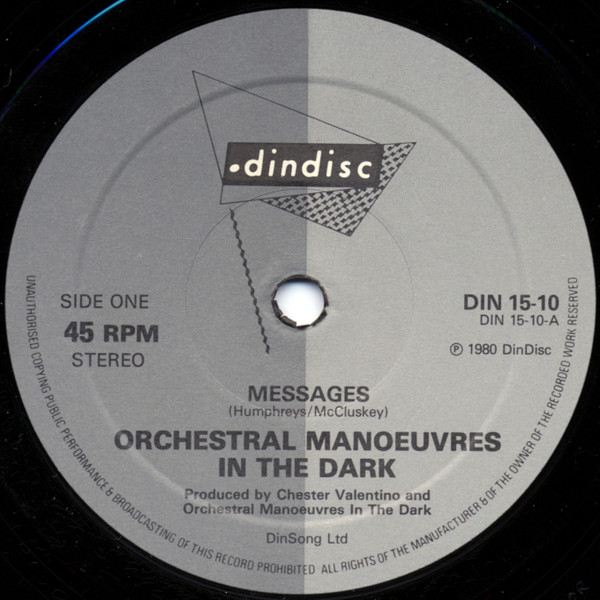


OMD - MESSAGES


Released: May 2, 1980

Charts: UK: #13 


“Messages” is a song by Orchestral Manoeuvres in the Dark (OMD), originally featured on their 1980 debut album. Initially a melancholic, synth-heavy track about lost love, it was later re-recorded with producer Mike Howlett to create a more emotionally charged and rhythmically defined single. This new version, released in May 1980, became OMD’s first Top 40 hit, reaching number 13 on the UK Singles Chart. Like their debut single “Electricity,” it features a melodic synth break in place of a traditional chorus.


An early version of “Messages” was recorded in August 1979 and first broadcast on John Peel’s BBC Radio 1 show in September. This slower version shared the same structure and lyrics as later takes, but was more raw and minimal. Most original 10-inch pressings of the single were destroyed, as the band opted to re-record the song. The re-recorded version featured tighter production, separate takes for each drum element to avoid “rock ‘n’ roll spill,” and even three distinct bass guitar parts. This polished version became OMD’s breakthrough.


“Messages” explores the emotional fallout of a broken relationship, focusing on themes of poor communication, emotional distance, and unresolved conflict. The lyrics reflect the narrator’s frustration and confusion as they receive messages from a partner who seems to prolong the emotional turmoil rather than provide closure. The verses highlight recurring arguments and a lack of true connection, while the chorus reveals the narrator’s growing distress.


8.4.25


AC/DC - DIRTY DEEDS DONE DIRT CHEAP

Llançament: 5 d’octubre de 1976

Àlbum: Dirty Deeds Done Dirt Cheap


“Dirty Deeds Done Dirt Cheap” és una cançó de hard rock d’AC/DC, escrita per Angus Young, Malcolm Young i Bon Scott. Va ser la cançó principal del seu àlbum de 1976 i es va llançar com a single a Austràlia, el Regne Unit i, més tard, als Estats Units el 1981, on va arribar al número quatre de la llista Mainstream Rock Tracks. Les cares B del senzill van variar segons el país, incloent cançons com “R.I.P. (Rock in Peace)”, “Big Balls”, “The Jack” i “Highway to Hell”.


Angus Young va treure el títol de la cançó d’un dibuix animat de 1962, “Beany and Cecil”, inspirant-se en la targeta de presentació del personatge Dishonest John. La cançó es caracteritza pel seu to amenaçador, amb Bon Scott interpretant un assassí a sou que ofereix diversos serveis letals. És l’única cançó d’AC/DC on Malcolm Young canta una frase, i també inclou cors d’Angus Young. Amb el seu riff pesat i lletres sinistres, la cançó va destacar especialment quan va debutar a la televisió australiana en un programa ple d’actuacions pop, com les d’ABBA. Es va gravar als Alberts Studios de Sydney, poc després de “T.N.T.”.


La lletra inclou el número “3-6-2-4-3-6”, que coincidia amb un número de telèfon real a Austràlia en aquell moment i també amb les clàssiques mesures corporals 36-24-36. Aquestes mateixes mesures es van mencionar l’any següent a “Brick House” dels Commodores i van ser parodiades per Sir Mix-a-Lot a “Baby Got Back”.


Als Estats Units, un matrimoni d’Illinois, Norman i Marilyn White, va demandar AC/DC per invasió de la privacitat després de rebre centenars de trucades de broma de fans que marcaven erròniament el número 362-4368. La parella va al·legar que les trucades eren obscenes i amenaçadores i va reclamar 250.000 dòlars en danys i perjudicis, a més d’una regravació de la cançó. El cas va ser desestimat sota la protecció de la Primera Esmena.


AC/DC - DIRTY DEEDS DONE DIRT CHEAP


Released: October 5, 1976

Album: Dirty Deeds Done Dirt Cheap


“Dirty Deeds Done Dirt Cheap” is a hard rock song by AC/DC, written by Angus Young, Malcolm Young, and Bon Scott. It was the title track of their 1976 album and was released as a single in Australia, the UK, and later in the US in 1981, where it reached number four on the Mainstream Rock Tracks chart. The song’s B-sides varied by region, including tracks like “R.I.P. (Rock in Peace),” “Big Balls,” “The Jack,” and “Highway to Hell.”


Angus Young got the title for “Dirty Deeds Done Dirt Cheap” from the 1962 cartoon Beany and Cecil, inspired by the villain Dishonest John’s business card. The song is known for its menacing tone, with Bon Scott portraying a contract killer offering various lethal services. It’s the only AC/DC track where Malcolm Young sings a line and features backing vocals from Angus. With its heavy riff and sinister lyrics, the song stood out when it debuted on Australian TV alongside pop acts like ABBA. It was recorded at Alberts Studios in Sydney shortly after “T.N.T.”.


The lyrics “Just ring: 3-6-2-4-3-6” referenced a real phone number in Australia at the time and also matched the classic hourglass body measurements (36-24-36). The same measurements appeared in the Commodores’ Brick House a year later, while Sir Mix-a-Lot mocked them in Baby Got Back.


In the U.S., an Illinois couple, Norman and Marilyn White, sued AC/DC for invasion of privacy after receiving hundreds of prank calls from fans misdialing the number as 362-4368. They claimed the calls were lewd and threatening and sought $250,000 in damages, plus a re-recording of the song, but the case was dismissed under First Amendment protections.


PETER GABRIEL - BIKO


Llançament: Agost de 1980

Llistes: Regne Unit: #38


“Biko” és una cançó de Peter Gabriel de protesta contra l’apartheid, publicada el 1980 com a single del seu tercer àlbum. Inspirada en la mort de l’activista sud-africà Steve Biko, la cançó va rebre elogis per la seva lletra potent, la seva instrumentació i la interpretació vocal de Gabriel. Tot i assolir només el número 38 a les llistes britàniques, va ser prohibida a Sud-àfrica pel seu missatge polític. Amb el temps, la peça es va convertir en una fita en la carrera de Gabriel, consolidant el seu compromís amb l’activisme pels drets humans.


Bantu Stephen Biko va ser un activista sud-africà contra l’apartheid i una figura clau del moviment de la Consciència Negra. El 1968, va cofundar l’Organització d’Estudiants Sud-africans i, el 1972, la Convenció del Poble Negre, promovent l’apoderament dels negres i la resistència a l’apartheid. El 1973, el govern sud-africà li va imposar una ordre de prohibició que restringia els seus moviments i activitats públiques. L’agost de 1977, Biko va ser arrestat per violar aquesta ordre i va ser brutalment apallissat durant un interrogatori policial, patint greus lesions cerebrals. Va morir el 12 de setembre de 1977, convertint-se en un símbol de la brutalitat de l’apartheid. La seva mort va causar una forta reacció internacional, i Peter Gabriel, commogut per la seva història, va estudiar la seva vida abans d’escriure “Biko”.


A l’hora de compondre-la, Gabriel va adoptar una perspectiva d’observador en tercera persona en comptes de narrar la història des del punt de vista de l’activista. En una entrevista, es va descriure a si mateix com un noi blanc, de classe mitjana, exalumne d’una escola elitista que observava els fets a distància. Gabriel es va sentir impactat pel fet que el govern sud-africà permetés l’assassinat de Biko tot i la pressió internacional sobre el seu empresonament. Va admirar la intel·ligència, la racionalitat i la manca d’odi de Biko, destacant que els seus escrits eren sòlids i evitaven els extrems de la política polaritzada.


Peter Gabriel va desenvolupar la base musical de “Biko” en un mes, però va trigar gairebé un any a perfilar-ne la lletra. La cançó comença com una crònica periodística, fent referència a la mort de Biko el setembre del 77 a Port Elizabeth i esmentant la sala 619 de la policia, on va ser colpejat. El to de la peça es torna més desafiant a la segona estrofa, condemnant la violència de l’apartheid, amb Gabriel expressant la seva ràbia dient que només pot somiar en vermell. Al cor final, s’hi van unir tots els presents a l’estudi mòbil, inclosos músics, tècnics i fins i tot els cuiners. L’única excepció va ser el teclista Larry Fast, que es va quedar a càrrec de la gravació. Els productors Steve Lillywhite i Hugh Padgham també van participar en la interpretació coral.


PETER GABRIEL - BIKO


Released: August 1980

UK: #38 


“Biko” is a 1980 anti-apartheid protest song by Peter Gabriel, released as a single from his third album. Inspired by the death of South African activist Steve Biko, the song received critical acclaim for its powerful lyrics, instrumentation, and vocals. Though it reached No. 38 on the UK charts, it was banned in South Africa due to its political message. The song became a milestone in Gabriel’s career, consolidating his commitment to human rights activism.


Bantu Stephen Biko was a South African anti-apartheid activist and a key figure in the Black Consciousness movement. He co-founded the South African Students’ Organisation in 1968 and the Black People’s Convention in 1972, advocating for black empowerment and resistance to apartheid. In 1973, the government placed a banning order on him, restricting his movements and public activities. In August 1977, Biko was arrested for violating this order and was brutally beaten during police interrogation, sustaining severe brain injuries. He died on September 12, 1977, becoming a symbol of apartheid’s brutality. His death gained international attention, and Peter Gabriel, moved by his story, studied his life before writing the song “Biko.”


For “Biko”, Peter Gabriel took a third-person observer approach rather than telling the story from Biko’s perspective. In an interview, he described himself as a “white, middle-class, ex-public schoolboy” observing events from a distance. Gabriel was shocked that the South African government allowed Biko to be killed despite international attention on his imprisonment. He admired Biko’s intelligence, rationality, and lack of hatred, noting that his writings were grounded and avoided the extremes of polarized politics.


Peter Gabriel developed the basic track for Biko in a month but spent nearly a year refining the lyrics. The song opens like a news report, referencing Biko’s death in “September ’77” in “Port Elizabeth” and mentioning “police room 619,” where Biko was beaten. The song’s tone becomes more defiant in the second verse, condemning apartheid violence, with Gabriel expressing his anger by saying he can “only dream in red.” The final chorus features everyone present at the mobile studio, including Peter Gabriel, musicians, technicians, and even the cooks. The only exception was keyboardist Larry Fast, who had to ensure the recording was properly captured. Producers Steve Lillywhite and Hugh Padgham also joined in singing.