Total de visualitzacions de pàgina:

15.4.25


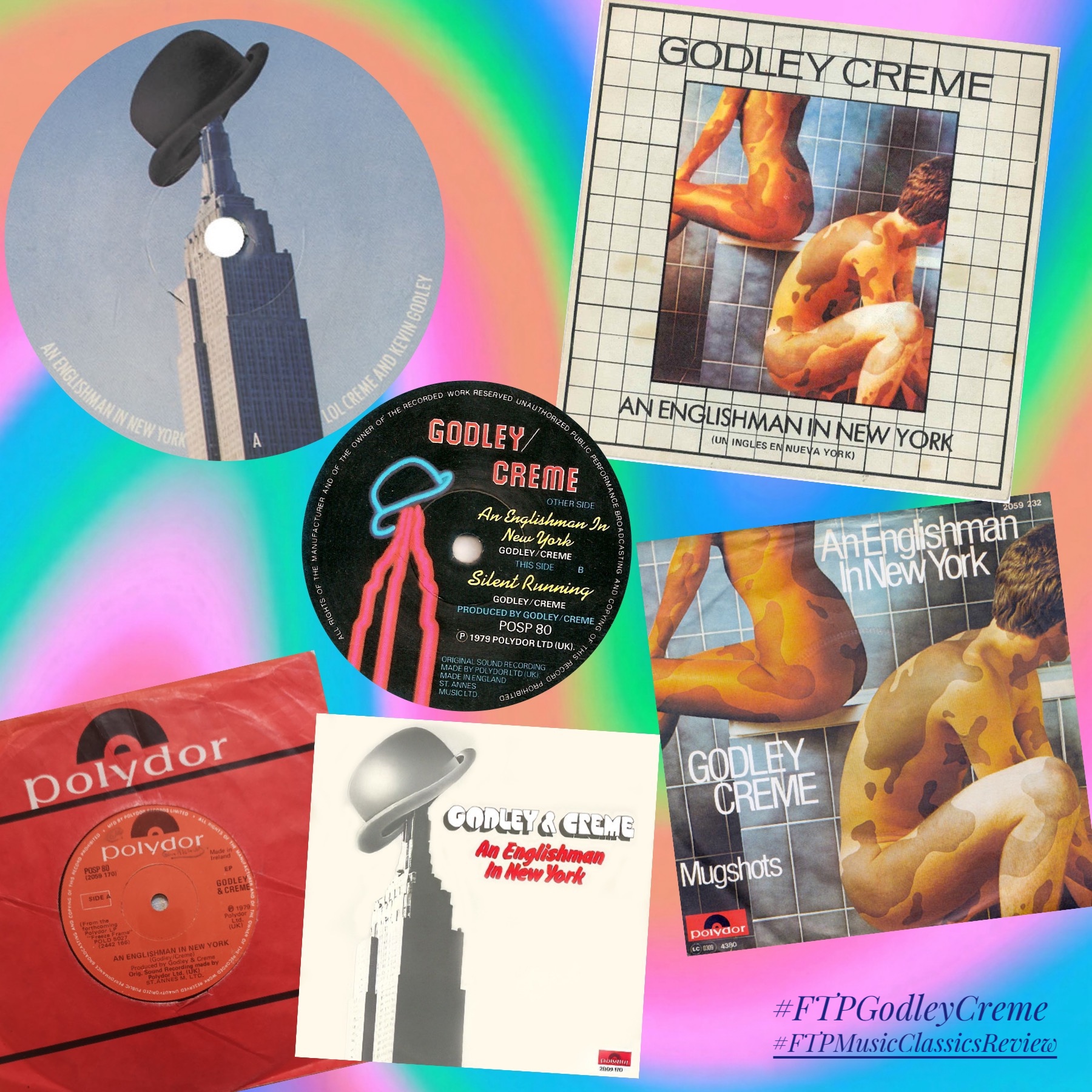
GODLEY & CREME - AN ENGLISHMAN IN NEW YORK 


Llançament: Novembre de 1979

Àlbum: Freeze Frame


“An Englishman in New York” és una cançó del duo Godley & Creme, extreta del seu àlbum “Freeze Frame”. Inspirada en el seu primer viatge a Nova York durant la seva etapa amb 10cc, la cançó expressa la seva fascinació per l’energia caòtica i absurda de la ciutat. La lletra reflecteix els contrastos i excentricitats de Nova York, una metròpoli on tot sembla xocar alhora. Kevin Godley va explicar que els va impactar la intensitat de la ciutat i la barreja d’extrems que la definien. L’àlbum inclou la versió original de 5:51 minuts, mentre que una versió més curta (3:55) es va publicar com a single a Austràlia i Europa.


El videoclip, dirigit per Derek Burbidge, mostra Godley & Creme com a directors d’una big band surrealista, amb músics que semblen figures robòtiques i emmascarades. Aquest va ser el primer videoclip del duo, i la seva gravació va resultar fonamental per a la seva carrera. Tot i que inicialment només eren intèrprets, van implicar-se profundament en la filmació i el muntatge, adonant-se del potencial del videoclip com a mitjà artístic. Aquesta experiència els va portar a fer el salt a la direcció de vídeos musicals, creant clips icònics per artistes com Duran Duran (Girls On Film), The Police (Synchronicity II) i Eric Clapton (Forever Man).


Godley va explicar com van absorbir tot el que passava al plató i van acabar prenent les regnes creatives, per molesta que fos la situació pel director original. No obstant, Burbidge els va mentoritzar, ajudant-los a entendre la connexió entre música i narrativa visual, cosa que va influir decisivament en la seva trajectòria com a directors.


Godley & Creme eren coneguts per estructures musicals no convencionals, i “An Englishman in New York” no és una excepció. La cançó segueix un format imprevisible, amb només una vaga semblança de tornada (“Strange apparatus…”), i curiosament, el títol no apareix a la lletra.


El 1987, Sting va publicar la seva pròpia cançó titulada “Englishman in New York”, sense cap relació amb la de Godley & Creme. La versió de Sting explica la història de Quentin Crisp, escriptor britànic i icona LGBTQ+ que es va traslladar a Nova York. Sting també tenia un vincle professional amb Godley & Creme, ja que van dirigir diversos dels seus videoclips, tant en la seva carrera en solitari com amb The Police.


GODLEY & CREME - AN ENGLISHMAN IN NEW YORK


Released: November 1979

Album: Freeze Frame


“An Englishman in New York” is a song by Godley & Creme from their album “Freeze Frame”. It reflects the duo’s fascination with America and was inspired by their first trip to New York City during their time with 10cc. The lyrics capture the chaotic and absurd energy of the city, portraying its contrasts and eccentricities. As Kevin Godley explained, they were struck by New York’s intensity and its mix of extremes, where everything seemed to collide at once. The album version of the song runs 5:51, while a shorter single version (3:55) was released in Australia and parts of Europe.


The music video, directed by Derek Burbidge, features Godley & Creme as bandleaders in a surreal supper club, conducting a band of masked, robotic figures. It was their first music video and became a pivotal moment in their careers. While initially just performers, they became deeply involved in the filming and editing process, realizing the potential of music videos as an artistic medium. This experience inspired their transition into directing, leading them to create iconic videos for artists like Duran Duran (“Girls On Film”), The Police (“Synchronicity II”), and Eric Clapton (“Forever Man”).


Godley described how they absorbed everything on set and gradually took over the creative process, much to the original director’s irritation. However, Burbidge mentored them, helping them recognize the connection between visual storytelling and music, which shaped their future careers as pioneering music video directors.


Godley & Creme were known for their unconventional song structures, and “An Englishman in New York” is no exception. The song follows a loose, unpredictable format, with only a semblance of a chorus (“Strange apparatus…”), and notably, the title never appears in the lyrics.


Sting released his own song titled “Englishman in New York” in 1987, though it was unrelated to Godley & Creme’s track. Sting’s song tells the story of Quentin Crisp, a British writer and gay icon living in New York. Sting also had a history with Godley & Creme, working with them on several music videos, both as a solo artist and during his time with The Police.


14.4.25


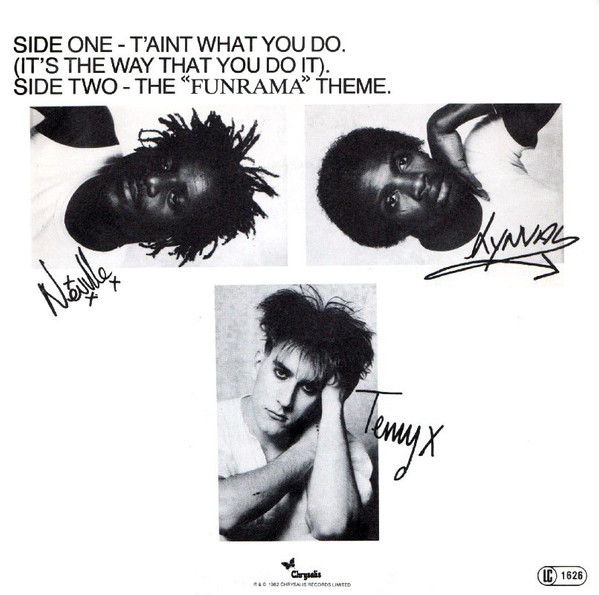
FUN BOY THREE & BANANARAMA - IT AIN’T WHAT YOU DO (IT’S THE WAY THAT YOU DO IT)


Llançament: 29 de gener de 1982

Posició a les llistes: UK: #4


“It Ain’t What You Do (It’s the Way That You Do It)” és una versió pop/new wave d’un clàssic de jazz titulat “‘Tain’t What You Do (It’s the Way That You Do It)”, escrit per Sy Oliver i Trummy Young. La cançó va ser gravada per Jimmie Lunceford, Harry James i Ella Fitzgerald el 1939, i també per Nat Gonella and His Georgians, convertint-se en un tema habitual del ball shim sham.


El 1982, Fun Boy Three i Bananarama van enregistrar una versió ska-pop de la cançó, inclosa en el primer àlbum de Fun Boy Three. Aquesta nova interpretació va arribar al número 4 de la llista de singles del Regne Unit i va obtenir la certificació de Plata de la British Phonographic Industry.


La col·laboració entre Bananarama i Fun Boy Three es va iniciar gràcies a Terry Hall, qui va quedar impressionat pel seu estil i pel senzill anterior del grup, “Aie a Mwana”. L’èxit d’”It Ain’t What You Do” va portar-los a col·laborar novament en “Really Saying Something”.


Fun Boy Three fou una banda de new wave i pop anglesa activa entre 1981 i 1983, fundada per Terry Hall, Neville Staple i Lynval Golding després de la seva marxa de The Specials. Inicialment van adoptar un estil minimalista, basat en percussions i ritmes esquelètics, però en el seu segon àlbum van ampliar la seva formació amb nous músics, com un violoncel·lista i un trombonista, permetent-los actuar en directe amb un so més ric i elaborat. Malgrat la seva curta trajectòria, Fun Boy Three va aconseguir set èxits al Top 20 britànic.


Bananarama és un grup de pop anglès format a Londres el 1980 per Sara Dallin, Siobhan Fahey i Keren Woodward. Amb una combinació de pop comercial i influències dance, van aconseguir un rècord Guinness com el grup femení amb més entrades a les llistes britàniques. El 1988, Siobhan Fahey va deixar la banda per formar Shakespears Sister, sent substituïda per Jacquie O’Sullivan fins al 1991, quan Bananarama va continuar com a duet. Entre 1982 i 2009, van col·locar 32 singles al Top 50 britànic.


FUN BOY THREE & BANANARAMA - IT AIN’T WHAT YOU DO (IT’S THE WAY THAT YOU DO IT)


Released: January 29, 1982

Charts:  UK: #4 


”‘Tain’t What You Do (It’s the Way That You Do It)” is a jazz song written by Melvin “Sy” Oliver and James “Trummy” Young, first recorded in 1939 by Jimmie Lunceford, Harry James, and Ella Fitzgerald. It was also recorded by Nat Gonella and His Georgians the same year and is commonly associated with the “shim sham” dance.


In 1982, Bananarama and Fun Boy Three released a pop/new wave cover of the song, retitled “It Ain’t What You Do.” Their ska-influenced version appeared on Fun Boy Three’s debut album and became a hit.


The collaboration between Bananarama and Fun Boy Three was initiated by Terry Hall, who was impressed by Bananarama’s style and their previous single “Aie a Mwana.” Their version of “It Ain’t What You Do” became a major UK hit, reaching number four on the Singles Chart and earning a Silver certification from the British Phonographic Industry. The success of the song led Bananarama to collaborate with Fun Boy Three again on “Really Saying Something.”


Fun Boy Three was an English new wave pop band active from 1981 to 1983, formed by Terry Hall, Neville Staple, and Lynval Golding after leaving The Specials. They released two albums and achieved seven UK top 20 hits. The band moved away from the ska sound of The Specials, initially focusing on minimal percussion-driven arrangements. For their second album, they expanded their lineup with additional musicians, including a cellist and trombone player, which allowed for richer arrangements and enabled them to perform live rather than being strictly a studio band.


Bananarama is an English pop group formed in London in 1980 by Sara Dallin, Siobhan Fahey, and Keren Woodward. Originally a trio, they achieved major success on both pop and dance charts, earning a Guinness World Record for the most chart entries by an all-female group. Siobhan Fahey left in 1988 to form Shakespears Sister and was replaced by Jacquie O’Sullivan until 1991, after which Bananarama continued as a duo. Between 1982 and 2009, they had 32 singles reach the UK Top 50.


13.4.25


RUPERT HOLMES - ESCAPE (THE PIÑA COLADA SONG)


Llançament: 17 de setembre de 1979

Llistes: EUA: #1 (3 setmanes)


“Escape (The Piña Colada Song)” és un èxit pop desenfadat de 1979 que es va convertir en l’últim número 1 als Estats Units de la dècada. Inclosa en l’àlbum “Partners in Crime”, la cançó explica una història enginyosa i irònica: un home avorrit de la seva relació respon a un anunci personal per conèixer una altra dona… només per descobrir que la seva parella actual és qui havia posat l’anunci.


Rupert Holmes la va escriure inicialment sota el títol “People Need Other People”, però no estava satisfet amb la lletra. Durant el procés de gravació, va fer servir una tècnica innovadora per a l’època, loopant una secció de 16 compassos d’una primera presa per crear la base instrumental. Mentre buscava una lletra més interessant, es va inspirar en un anunci personal que va veure a The Village Voice i va imaginar un escenari on algú respon a un anunci col·locat per la seva pròpia parella sense saber-ho. Aquest gir inesperat es va convertir en el punt central de la cançó i en la clau del seu èxit.


Holmes volia que “Him” fos el primer single de “Partners in Crime”, però la discogràfica va insistir a publicar “Escape”. La cançó va començar a guanyar popularitat després que una emissora de ràdio de Washington la posés en rotació, però els oients la demanaven com “The Piña Colada Song”, cosa que generava confusió a les botigues de discos. Per evitar pèrdues de vendes, el segell discogràfic va insistir a canviar-ne el nom a Escape (The Piña Colada Song), i Holmes va acceptar de mala gana.


Tot i que és conegut principalment per aquesta cançó, Rupert Holmes ha tingut una carrera diversa i reeixida en el món de l’entreteniment. Ha escrit diverses obres de Broadway, com “Say Goodnight, Gracie” i “The Mystery of Edwin Drood”, que va guanyar múltiples premis Tony. Com a compositor, ha treballat per artistes com Barbra Streisand, Judy Collins i fins i tot Britney Spears. També va crear la sèrie de televisió “Remember WENN” i va escriure la novel·la “Where The Truth Lies”. La seva trajectòria li ha valgut premis Tony, Emmy i Edgar, però malgrat la seva extensa obra, Holmes reconeix que “Escape” continua sent la seva obra més reconeguda.


RUPERT HOLMES - ESCAPE (THE PIÑA COLADA SONG)


Released: September 17, 1979

US: #1 (3 weeks)


“Escape (The Piña Colada Song)” is a lighthearted pop hit from 1979 that became the last U.S. #1 song of the decade. Featured on his album “Partners in Crime”, the song tells a witty and ironic story about a man bored with his relationship who answers a personal ad—only to discover that the woman he’s meeting is his own partner. 


Rupert Holmes originally wrote it as “People Need Other People,” but he wasn’t satisfied with the lyrics. During the recording process, he used an innovative (for the time) sampling technique, looping a 16-bar section from an early take to create the song’s instrumental backing. Struggling to find the right lyrics, Holmes was inspired by a personal ad in The Village Voice and imagined a “What If” scenario where someone unknowingly responds to an ad placed by their own partner. This twist became the heart of the song’s now-famous storyline. 


Rupert Holmes initially wanted “Him” to be the lead single from “Partners in Crime”, but the record label insisted on releasing “Escape.” The song gained popularity after a Washington radio station played it, but listeners referred to it as “The Piña Colada Song,” causing confusion in record stores. To avoid losing sales, the label pushed to rename it “Escape (The Piña Colada Song),” and Holmes reluctantly agreed.


Rupert Holmes has had a diverse and successful career in entertainment. He has written several Broadway plays, including Say Goodnight, Gracie and The Mystery of Edwin Drood (which won multiple Tony Awards). His songwriting credits include works performed by Barbra Streisand, Judy Collins, and Britney Spears. Holmes also created the TV series Remember WENN and authored the novel Where The Truth Lies. His contributions to music, theater, and television have earned him Tonys, Emmys, and Edgar Awards. Despite his broader musical career, Holmes acknowledges that “Escape” remains his most recognizable work.


12.4.25


OMD - TALKING LOUD AND CLEAR


Released: June 4, 1984

Charts: UK: #11 


Released in June 1984 as the second single from Junk Culture, “Talking Loud and Clear” showcases OMD’s ability to balance musical sophistication with emotional simplicity. The track became a European hit, reaching No. 11 in the UK and charting in the Top 10 in Ireland, Belgium, and the Netherlands. Musically, it’s a whimsical, effervescent synth-pop song, with sparkling melodies, bubbling keyboard riffs, and a steady rhythm that drives it onto the dancefloor. The production feels both lush and playful, evoking a childlike innocence and joy.


Lyrically, the song reflects on a serene, idyllic moment—possibly a memory of youthful friendship or a romantic connection—emphasizing mutual understanding and peaceful communication. The warmth of the synths complements the nostalgic tone of the lyrics, capturing a moment of quiet emotional clarity. 


11.4.25


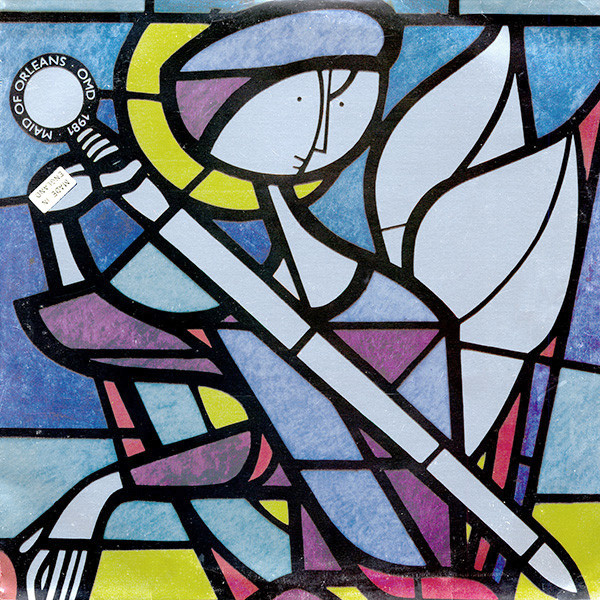
OMD - MAID OF ORLEANS


Llançament: 15 de gener de 1982

Posicions a les llistes: UK: #4


“Joan of Arc (Maid of Orleans)” és un senzill del grup Orchestral Manoeuvres in the Dark (OMD) i el tercer llançament del seu àlbum “Architecture & Morality”. Per evitar confusions amb el seu senzill anterior, també dedicat a la figura de Joana d’Arc, la cançó es va publicar amb el títol complet “Maid of Orleans (The Waltz Joan of Arc)”. Tot i que ambdues peces exploren la vida i el martiri de l’heroïna francesa, “Maid of Orleans” va assolir un èxit molt més gran a nivell internacional, arribant al número 1 a diversos països, incloent Alemanya, on va ser el senzill més venut de 1982. A escala global, es calcula que en va vendre més de quatre milions de còpies.


La cançó va ser escrita per Andy McCluskey el 30 de maig de 1981, coincidint amb el 550è aniversari de la mort de Joana d’Arc. McCluskey la descriu sovint com el “Mull of Kintyre” d’OMD: un himne majestuós, emotiu i un moment clau en la seva trajectòria. També va ser el darrer llançament del grup sota el segell Dindisc.


En una entrevista publicada al web oficial d’OMD, McCluskey va explicar el procés de creació de la introducció atmosfèrica de “Maid of Orleans”. Va reconèixer que l’inici de la cançó dificultava la seva emissió a la ràdio, per la qual cosa van crear versions editades. L’idea per a aquest començament inquietant va sorgir després de tenir la cançó acabada, en adonar-se que necessitava una entrada més impactant.


Influenciats per la seva recerca de paisatges sonors ambientals durant l’època d’”Architecture & Morality”, van voler que la introducció servís per crear un ambient emocional, més que transmetre un missatge concret. Per als més tècnics, McCluskey va detallar que els sons estranys es van generar a partir de mostres vocals de Mellotron, que es van alentir, accelerar i distorsionar a través de la taula de mescles Helios sobrecarregada de The Manor Studio. També s’hi van afegir soroll i caixes reverberades per completar el paisatge sonor fantasmagòric.


El videoclip promocional, dirigit per Steve Barron, compta amb l’actriu Julia Tobin de la Royal Shakespeare Company en el paper de Joana d’Arc. Les escenes exteriors es van filmar el gener de 1982 a Brimham Rocks i Fountains Abbey (North Yorkshire), durant un hivern especialment fred. Les escenes interiors es van rodar a The Manor Studio, a l’Oxfordshire.


Tant Andy McCluskey com Paul Humphreys van explicar que el títol “Architecture & Morality”, suggerit per Martha Ladley, reflectia l’essència de la música d’OMD: una fusió entre l’estructura electrònica i mecànica (“arquitectura”) i l’expressió emocional i humana (“moralitat”).


OMD - MAID OF ORLEANS


Released: January 15, 1982

Charts: UK: #4 


“Joan of Arc (Maid of Orleans)” is a 1982 single by Orchestral Manoeuvres in the Dark and the third release from their album “Architecture & Morality”. To avoid confusion with their earlier single “Joan of Arc”, it was retitled “Maid of Orleans (The Waltz Joan of Arc)” upon release. Both songs explore the life and martyrdom of the French heroine, but “Maid of Orleans” became the bigger international success, reaching number one in several countries, including Germany, where it became the best-selling single of 1982. Globally, it sold over four million copies.


Written by Andy McCluskey on 30 May 1981, the 550th anniversary of Joan of Arc’s death, the track is often described by McCluskey as OMD’s own “Mull of Kintyre” — a sweeping, emotional anthem and a defining moment in their career. It also marked the final release on the band’s Dindisc label.


Andy McCluskey shared insights on the official OMD website about the atmospheric intro to “Maid of Orleans”. He acknowledged that the intro posed challenges for radio play, prompting the band to create shortened edits. The idea for the eerie introduction came after the song was already recorded, as the band felt it needed a more striking start. 


Influenced by their “Architecture & Morality” era focus on ambient soundscapes, the intro was designed to create a mood rather than convey specific meaning. It serves to establish an emotional setting from which the main song could emerge. For the technically curious, McCluskey explained that the strange noises were crafted from Mellotron vocal samples, which were slowed down, sped up, and heavily distorted using the overdriven Helios mixing desk at The Manor Studio. Additional elements like pink noise and reverberated snare drums helped complete the haunting, textured sound.


The promotional video was directed by Steve Barron and featured Julia Tobin of the Royal Shakespeare Company portraying Joan of Arc. Outdoor scenes were filmed in January 1982 at Brimham Rocks and Fountains Abbey near Aldfield, North Yorkshire, during an especially cold winter. The indoor scenes were shot at The Manor Studio in Oxfordshire. 


Andy McCluskey and Paul Humphreys explained that the title “Architecture & Morality”, suggested by Martha Ladley, reflected the essence of OMD’s music: a balance between structured, mechanical electronic sounds (“architecture”) and emotional, human expression (“morality”).