“Lovin’, Touchin’, Squeezin’” is a 1979 single from the “Evolution” album, and the first Journey Top 40 hit in the U.S., peaking at No. 16 on the Billboard Hot 100. The song tells a story of betrayal and karma, with the narrator being cheated on by a woman, who later faces the same fate from her new lover. When she returns seeking comfort, the narrator rejects her, delivering the line: “Now it’s your time, girl, to cry.” The track also gained renewed attention after being featured in the pilot episode of Glee.
“Lovin’, Touchin’, Squeezin’” was written by Journey’s lead singer Steve Perry and is based on his personal experience of heartbreak after seeing his girlfriend kiss another man. Describing it as “love justice,” Perry channeled his emotions into the song’s raw lyrics and sorrowful tone. The song features a memorable fade-out of “na na na”s, symbolizing speechless heartbreak.
A music video directed by Bruce Gowers was also released, and the track helped mark Journey’s steady rise in both chart performance and mainstream success.
JOURNEY - SEPARATE WAYS (WORLD APART)
Released: January 4, 1983
Charts: US: #8
“Separate Ways (Worlds Apart)” is a 1983 single by Journey from their album Frontiers. It reached No. 8 on the Billboard Hot 100 and held the top spot on the Top Tracks chart for four weeks. Written by Steve Perry and Jonathan Cain during a tour, originally worked out on a small Casio keyboard in a hotel room. The band finalized the song at soundcheck and debuted it that same night, receiving an enthusiastic response despite incomplete lyrics. The song was inspired by the emotional toll of life on the road—specifically the divorces of bandmates Neal Schon and Ross Valory. Perry and Cain aimed to turn that pain into something meaningful, resulting in a powerful anthem about heartbreak and resilience.
The music video, shot on a New Orleans wharf, became iconic for its “air band” style, with members pretending to play instruments. Though the band disliked making videos, they understood MTV’s impact and let directors take creative control. On set, tensions rose due to Perry’s girlfriend, Sherrie, objecting to another woman playing his love interest.
The song gained renewed popularity in 2022 after a dark, haunting remix by Bryce Miller was used in the Stranger Things Season 4 trailer, leading it to chart again digitally.
JOURNEY - ONLY THE YOUNG
Released: January 7, 1985
Charts: US: #9
“Only the Young” is a song by Journey, written by Jonathan Cain, Steve Perry, and Neal Schon. Originally recorded for their 1983 “Frontiers” album, it was removed last-minute and first released by the band Scandal in 1984. Journey’s version later appeared on the “Vision Quest” soundtrack and became a Top 10 hit in the U.S.
“Only the Young” is an anthem celebrating the power, freedom, and clarity of youth. It portrays young people as bold, insightful, and unafraid to question the world around them. The repeated line, “Only the young can say they’re free to fly away,” captures the sense of limitless possibility that defines youth. The song acknowledges their passions, dreams, and the fire that drives them, presenting youth not just as a time of life, but as a powerful force of hope, truth, and change.
The song holds emotional significance for the band after they shared it with 16-year-old fan Kenny Sykaluk, who was terminally ill with cystic fibrosis. Journey visited him in the hospital through the Make-A-Wish Foundation, playing the unreleased track just before his passing. Deeply affected by the experience, the band began using the song as the opener for their Raised on Radio tour in his honor.
21.4.25
T.REX - HOT LOVE
Publicació: 12 de febrer de 1971
Classificació al Regne Unit: #1 (durant 6 setmanes)
“Hot Love” va ser un autèntic moment cultural que va marcar l’inici de l’era glam rock i va convertir Marc Bolan en el pioner indiscutible del moviment. Llançada el 12 de febrer de 1971, la cançó va arribar al número 1 de les llistes britàniques el 14 de març, mantenint-se al capdamunt durant sis setmanes consecutives. Va ser el primer número 1 de T. Rex al Regne Unit i va encendre el fenomen conegut com a “T. Rextasy”, que va arrasar arreu del país. Sexy però innocent, dolça però amb actitud — “Hot Love” no només va dominar les llistes, sinó que va capturar l’esperit d’una generació.
Després de l’èxit de “Ride a White Swan”, “Hot Love” mostrava un so més polit i apte per a la ràdio — combinant el lirisme fantasiós de Bolan amb tornades enganxoses, un ritme de rock and roll i un toc incipient del que esdevindria el segell característic del glam: brillantor, extravagància i carisma.
Les actuacions de “Hot Love” a Top of the Pops el març de 1971 van ser llegendàries. La transformació de Bolan — d’un cantautor psicodèlic a una icona glam — es va consumar quan va aparèixer a l’escenari amb roba de setí lluent i maquillatge brillant als ulls. Aquest estil, creat per la dissenyadora Chelita Secunda, es va convertir en una imatge emblemàtica i va desencadenar una revolució estètica.
La versió original de “Hot Love” es va emetre per primera vegada a la BBC Radio 1 al desembre de 1970 amb una interpretació més lenta i despullada. No obstant això, la versió definitiva — enregistrada als Trident Studios a finals de gener de 1971 — era més refinada, addictiva i pensada per arribar al gran públic.
Tot i que no va tenir el mateix impacte als Estats Units — on només va arribar al número 72 al Billboard Hot 100 i al 54 a la llista de Cash Box — la cançó va ser molt ben rebuda al Regne Unit, amb elogis per la seva energia contagiosa i el carisma creixent de Bolan com a estrella del pop.
T.REX - HOT LOVE
Released: February 12, 1971
UK #1 (6 weeks)
“Hot Love” was a cultural moment that ushered in the era of glam rock and made Marc Bolan the pioneer of the movement. Released on 12 February 1971, the track soared to #1 on the UK Singles Chart, holding that spot for an impressive six weeks starting 14 March 1971. This made it the first UK chart-topper for T. Rex and truly ignited the “T. Rextasy” phenomenon that swept Britain. Sexy yet innocent, sweet but swaggering—“Hot Love” didn’t just top charts; it defined a generation.
Following the success of “Ride a White Swan”, “Hot Love” showcased a more refined, radio-friendly sound—blending Bolan’s whimsical lyricism with catchy pop hooks, a rock and roll rhythm, and hints of what would become glam’s signature sparkle.
The Top of the Pops performances of “Hot Love” in March 1971 were nothing short of iconic—Marc Bolan’s transformation from psychedelic folkie to glam rock trailblazer was complete the moment he stepped onto the stage in shiny satin and glittering makeup. Styled by Chelita Secunda, this was the first time Bolan appeared on television with that now-legendary sparkle under his eyes, an aesthetic that would spark a cultural revolution.
Though the original version of “Hot Love” aired in December 1970 on BBC Radio 1 as a stripped-down, slower rendition, the final version—recorded at Trident Studios in late January 1971—was slicker, catchier, and tailor-made for mass appeal.
While it didn’t replicate its UK success in the United States—only reaching #72 on the Billboard Hot 100 and #54 on the Cash Box chart—the song was a critical darling in the UK, with many praising its infectious energy and Bolan’s growing star power.
20.4.25
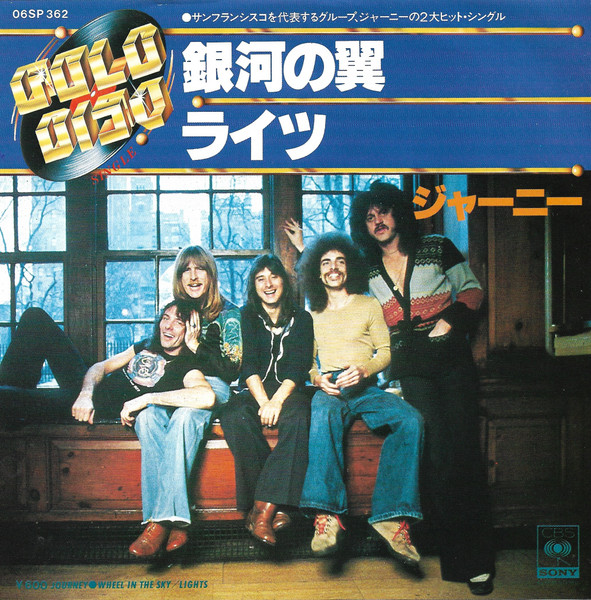
JOURNEY - WHEEL IN THE SKY
Released: March 1978
Charts: US: #57
“Wheel in the Sky” marked a turning point for Journey—both musically and vocally. Originally a poem called “Wheels in My Mind” written by Diane Valory, the lyrics were adapted into a rock track by Robert Fleischman (briefly the band’s lead singer), Neal Schon, and Ross Valory. By the time recording for Infinity officially began in 1977, Steve Perry had taken over vocal duties. Perry’s powerful voice helped elevate the song into one of Journey’s earliest hits, and it became a signature track as they transitioned into a more radio-friendly rock sound. It was their first charting single, peaking at #57 on the Billboard Hot 100, and helped pave the way for the band’s massive success in the ’80s.
Lyrically, the song touches on themes of restlessness, time, and longing, centered around the metaphor of the wheel in the sky turning — “Wheel in the sky keeps on turnin’, I don’t know where I’ll be tomorrow” — capturing the loneliness and unpredictability of life on the road. What’s interesting is how this song captures a philosophical tone — it’s less of a typical love song and more about uncertainty, movement, and longing, wrapped in that “life-goes-on” feeling. the metaphor of the wheel constantly turning adapts with anyone dealing with instability or change, especially in the context of life on the road, which the band was very much living at the time.
Even though it wasn’t a massive hit on the charts, it was the foundation for the band’s eventual explosion in popularity. Perry’s arrival shifted the entire dynamic, helping Journey evolve from a prog-rock cult band into a radio-dominating arena rock act. It’s kind of poetic in itself — a song about forward momentum was the one that actually started pushing them forward.
19.4.25
JOURNEY - WHO’S CRYING NOW
Released: July 9, 1981
Charts: US: #4 UK: #46
“Who’s Crying Now” was the lead single from Journey’s iconic 1981 album “Escape” and marked the beginning of a new era for the band. Written by Jonathan Cain and Steve Perry, it showcased a softer, more melodic side of Journey’s sound, blending rock with pop and emotional depth. The song climbed to #4 on both the Billboard Hot 100 and Mainstream Rock Tracks charts, becoming one of the standout hits of their career. It was also Journey’s highest-charting single in the UK for decades, peaking at #46, until the resurgence of “Don’t Stop Believin’” in 2009, which finally eclipsed it thanks to renewed popularity from shows like “The Sopranos” and “Glee”.
“Who’s Crying Now” is not only one of Journey’s signature ballads, but it also marked a pivotal moment in the band’s evolution — being one of the first tracks to feature Jonathan Cain after he replaced original keyboardist Gregg Rolie. Cain brought a fresh energy and a more pop-influenced songwriting sensibility that helped push “Escape” to the top of the charts.
The song itself was born during a moment of creative inspiration: Steve Perry, driving from Bakersfield to San Francisco, started humming the melody and chorus into a cassette recorder. The very next day, during a stormy afternoon, he visited Cain and together they fleshed out the song — with Cain contributing the now-iconic title line: “Who’s crying now?”
Musically, the track is a masterclass in emotional build-up. It starts subtle and smooth, with Cain’s warm piano tones and Perry’s soulful delivery, and slowly crescendos into Neal Schon’s unforgettable, fiery guitar solo that closes the song. It balances tenderness and intensity in a way that feels effortless — the kind of ballad that became a blueprint for Journey’s future hits.
“Escape”, the album, went on to be Journey’s only #1 LP, housing not just this classic, but also “Don’t Stop Believin’,” “Stone in Love,” and “Open Arms.” It’s the sound of a band at their creative peak — and “Who’s Crying Now” is one of its emotional centerpieces.