Total de visualitzacions de pàgina:

24.4.25


 STEVIE WONDER - I JUST CALLED TO SAY I LOVE YOU

Publicació: 1 d’agost de 1984

Classificació: Regne Unit #1 (6 setmanes), Estats Units #1 (3 setmanes)


“I Just Called to Say I Love You” és una de les cançons més exitoses —i també més divisives— de Stevie Wonder. Llançada l’any 1984, es va convertir en un fenomen mundial, encapçalant les llistes en 28 països i guanyant l’Oscar a la Millor Cançó Original per la seva inclusió al film “The Woman in Red”. A la tornada de la cançó hi ha un missatge senzill i sincer: l’amor no necessita una ocasió especial. Com diu la lletra, “no és Cap d’Any per celebrar”, només una trucada espontània per dir: “T’estimo”. Aquesta honestedat va tocar el cor de milions de persones, tot i que la crítica sovint va considerar la cançó massa sentimental o mancada de la profunditat de les seves obres anteriors, més compromeses socialment.


Curiosament, la cançó no estava prevista inicialment per a la banda sonora de “The Woman in Red”. Va ser Dionne Warwick, que feia de coordinadora musical del film, qui va suggerir Wonder per al projecte. Finalment, va acabar component set cançons per a la pel·lícula. A banda del tema principal i “I Just Called to Say I Love You”, també s’hi incloïen “Love Light in Flight” i “Don’t Drive Drunk” —aquesta última amb un missatge clar de conscienciació social.


La història darrere d’“I Just Called to Say I Love You” va donar un gir inesperat l’octubre del 1985, quan Lloyd Chiate i Lee Garrett (antic col·laborador de Wonder) el van denunciar per plagi, afirmant que havien escrit una cançó anomenada “Hello It’s Me/I Just Called to Say” l’any 1976 i que l’havien interpretada per a ell. L’acusació assenyalava que Wonder hauria copiat el títol i la idea de la tornada.


Durant el judici, Stevie Wonder va declarar que havia creat la tornada de la seva cançó el 16 de juliol de 1976, mentre tornava d’una visita a casa de la seva mare. Tot i que la melodia s’havia iniciat llavors, va assegurar que la versió final va ser completada expressament per a la pel·lícula, cosa que la feia elegible per l’Oscar. Aquesta admissibilitat va ser qüestionada quan la cançó va guanyar l’estatueta als 57ens Premis de l’Acadèmia, en una competició que incloïa altres grans èxits com “Against All Odds” (Phil Collins), “Footloose” (Kenny Loggins), “Let’s Hear It for the Boy” (Deniece Williams) i “Ghostbusters” (Ray Parker Jr.). Totes les cançons nominades havien estat número 1 als Estats Units —l’única vegada en la història dels Oscars que ha passat això. Malgrat els dubtes, no es va prendre cap acció legal, i Wonder va conservar el seu Oscar.


A mitjans dels anys 80, Stevie Wonder ja havia adoptat un estil més suau i orientat al pop adult contemporani, allunyant-se del seu so més funk i reivindicatiu dels anys 70, com el de “Superstition” o “Living for the City”. Tot i les crítiques d’alguns seguidors, Wonder sempre ha defensat la senzillesa emocional i el missatge universal de la cançó, que continua interpretant als seus concerts. Malgrat la polèmica, segueix sent una de les cançons d’amor més reconegudes i emblemàtiques de tots els temps.


STEVIE WONDER - I JUST CALLED TO SAY I LOVE YOU


Released: August 1, 1984

UK #1 (6 weeks) US #1 (3 weeks)


“I Just Called to Say I Love You” is one of Stevie Wonder’s most commercially successful—yet critically divisive—songs. Released in 1984, it became a global phenomenon, topping the charts in 28 countries and earning him an Academy Award for Best Original Song for its role in the film “The Woman in Red”. At its core, the song delivers a simple, heartfelt message: love doesn’t need a special occasion. As the lyrics point out, there’s “no New Year’s Day to celebrate,” just a spontaneous call to say, “I love you.” This sincerity struck a chord with millions, though critics often derided the song for being too sentimental or lacking the depth of his earlier, more socially conscious work.


It wasn’t originally planned for “The Woman in Red” soundtrack. Dionne Warwick—serving as the film’s “song coordinator”—suggested Stevie Wonder for the project, and he ended up composing seven songs for the movie. Alongside the title track and “I Just Called to Say I Love You,” the album also featured “Love Light in Flight” and “Don’t Drive Drunk,” the latter of which was a cautionary anthem with a public service message.


The backstory behind “I Just Called to Say I Love You” took a dramatic turn in October 1985, when songwriters Lloyd Chiate and Lee Garrett filed a lawsuit against Stevie Wonder, claiming that he had plagiarized their song titled “Hello It’s Me/I Just Called to Say.” They alleged they had written and played it for Wonder back in 1976, and accused him of lifting the title and chorus idea. Ironically, Lee Garrett was a longtime collaborator and co-writer with Wonder on previous songs like “Signed, Sealed, Delivered (I’m Yours).” 


In court, Wonder testified that he had actually come up with the chorus to his song on July 16, 1976, while traveling home from a visit to his mother. He maintained that although the melody began then, the full version as heard in “The Woman in Red” soundtrack was completed specifically for the film, making it eligible for the Academy Award. That eligibility came under scrutiny when “I Just Called to Say I Love You” won the Oscar for Best Original Song at the 57th Academy Awards in 1985. It beat out some massive hits: “Against All Odds” (Phil Collins), “Footloose” (Kenny Loggins), “Let’s Hear It for the Boy” (Deniece Williams), “Ghostbusters” (Ray Parker Jr.). All five were #1 Billboard Hot 100 singles, marking the only time in Oscar history that every nominee for Best Original Song had topped the US charts. Though the lawsuit raised eyebrows about whether Wonder’s song had truly been written for the film (a requirement for Oscar eligibility), no action was taken, and Wonder kept his Oscar.


By the mid-‘80s, Stevie Wonder had shifted toward a smoother, adult contemporary sound, a notable departure from the funkier, socially conscious tracks of the ‘70s like “Superstition” and “Living for the City.” While some longtime fans lamented the change, Wonder stood by the song’s emotional simplicity and universal message, regularly performing it at concerts. Despite the criticism, the track remains one of the most recognizable love songs of all time.


JOURNEY - BE GOOD TO YOURSELF


Released: April 1986

Charts: US: #9 


“Be Good to Yourself” is a 1986 single by Journey from their ninth studio album, “Raised on Radio”. It marked the band’s return after a three-year hiatus, during which lead singer Steve Perry released a successful solo album and participated in “We Are the World,” while guitarist Neal Schon worked on a side project. The upbeat track reached number 9 on the U.S. Billboard Hot 100 and served as the lead single for the new album.


“Be Good to Yourself” was inspired by lead singer Steve Perry’s personal struggles, including his ailing mother and a difficult domestic situation. The phrase was a common “Perry-ism” — a life-affirming message that resonated with him deeply. Keyboardist Jonathan Cain noted the phrase and worked on the lyrics for five months before a burst of inspiration helped him finalize the song just in time for mixing. Perry recorded the vocals in under an hour. Written by Perry, Cain, and Neal Schon, it was the only track from Raised on Radio featuring just the three of them, as longtime bassist Ross Valory and drummer Steve Smith had been replaced by studio musicians Randy Jackson and Larrie Londin. 


At the peak of MTV’s popularity, Journey made headlines by choosing not to release a music video for their 1986 lead single “Be Good to Yourself.” The band’s manager, Herbie Herbert, clarified that this wasn’t a slight against MTV but a conscious decision to avoid overexposure and prevent the song from being tied too closely to a director’s vision. Journey wanted the music to stand on its own. They also rejected corporate sponsorship for their tour. However, due to strong MTV airplay for subsequent live-performance videos like “Girl Can’t Help It” and “I’ll Be Alright Without You,” a live video for “Be Good to Yourself” was eventually released.


JOURNEY - FAITHFULLY


Released: April 1983

Charts: US: #12 


“Faithfully” is a 1983 ballad by Journey from their album Frontiers, written by keyboardist Jonathan Cain. It reached No. 12 on the Billboard Hot 100 and became one of the band’s most iconic songs, despite lacking a traditional chorus. The lyrics reflect the struggles of life on the road while trying to maintain a committed relationship. Cain wrote it about his then-wife, singer Tané, though the couple later divorced. 


Jonathan Cain described writing “Faithfully” as a supernatural experience, saying the song came to him in a dream and was completed within 30 minutes. He called it “a love song to God” and felt divinely inspired to finish it without help. The opening lyrics came to him while on a tour bus, and he later wrote the rest at a piano. The line “We all need the clowns to make us smile” honors Journey’s road and stage managers. Guitarist Neal Schon said Cain claimed to have dreamed the melody, calling it a rare and inspiring creative moment.


Journey’s first music video was for this song and marked a shift into the MTV era. Struggling to find a director in the U.S., their manager Herbie Herbert hired NFL Films to shoot the video, using a behind-the-scenes “life on tour” concept that paralleled the song’s lyrics. The footage showed the band traveling, performing, and even Steve Perry shaving his mustache. The video, which drew from the Journey: Frontiers and Beyond documentary narrated by John Facenda, helped define a new style of “road video” later adopted by many major rock acts. 


JOURNEY - LIGHTS


Released: June 16, 1978

Charts: US: #68 


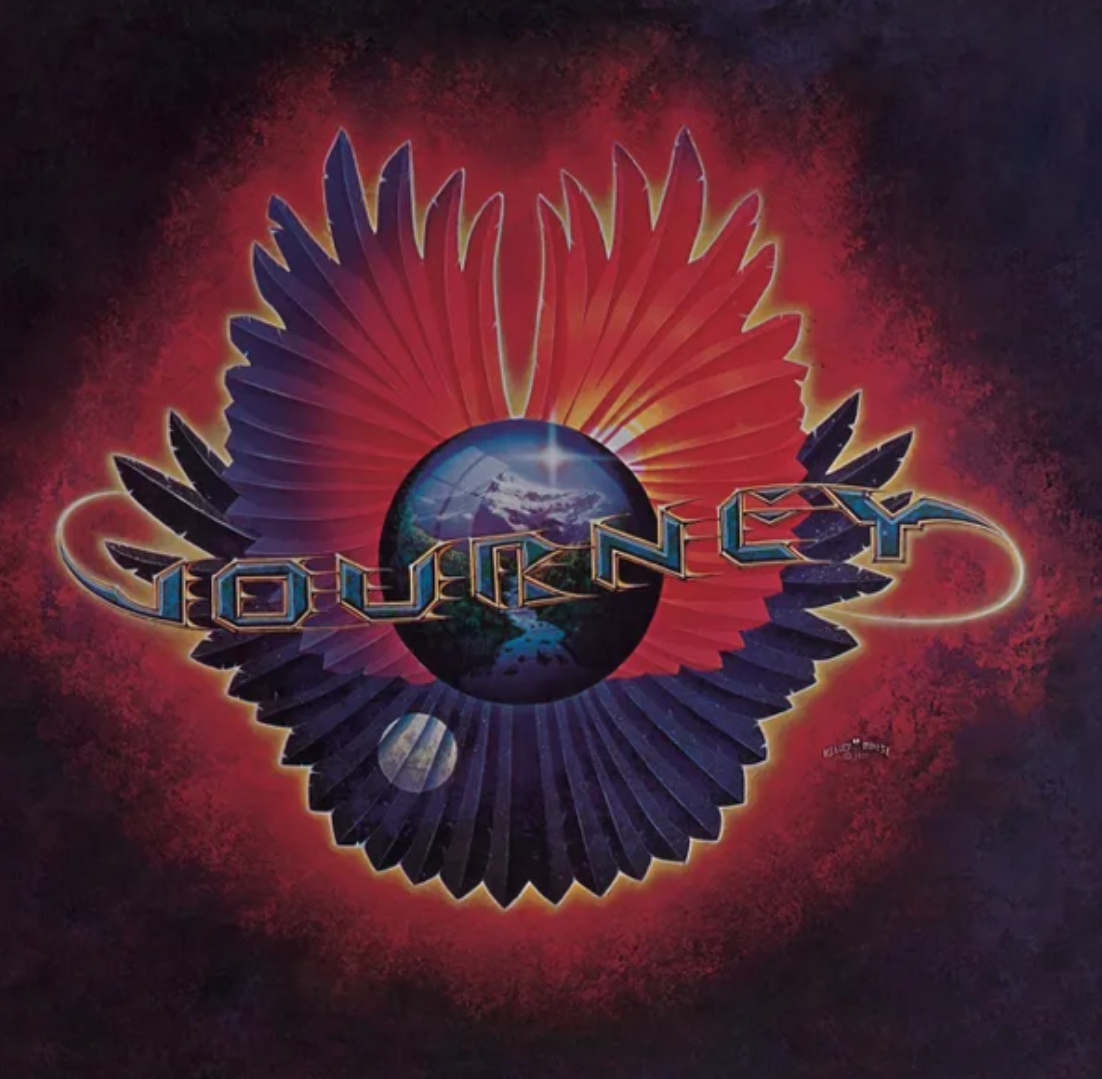
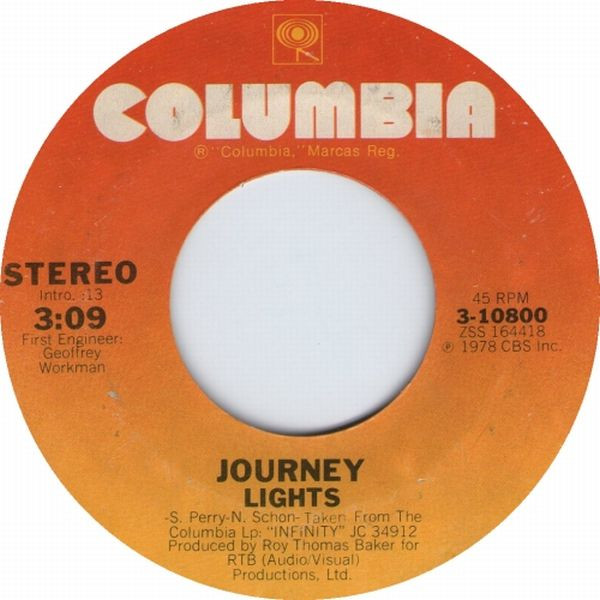
“Lights” is a song by American rock band Journey, written by Steve Perry and Neal Schon it was released as the third single from the “Infinity” album in 1978. Although it initially peaked at only No. 68 on the Billboard Hot 100, it has grown in popularity over the years, becaming one of the band’s signature so


“Lights” is one of Journey’s earliest songs featuring lead singer Steve Perry, originally written about Los Angeles but later revised to reflect the band’s hometown of San Francisco. Perry changed the lyrics after joining Journey, inspired by the view of the city at sunrise. He and guitarist Neal Schon finished the song in about 20 minutes. 


“Lights” reflects a deep sense of homesickness and emotional longing. While the song centers on San Francisco, it goes beyond just missing a place—it captures the universal feeling of wanting to return to something familiar and comforting. The chorus highlights the pull of home, while the verse “So you think you’re lonely, well my friend, I’m lonely too” reveals a shared sense of isolation, hinting at missing not only a city but also a person. 


23.4.25


AC/DC - THUNDERSTRUCK


Llançament: 10 de setembre de 1990

Àlbum: The Razors Edge


“Thunderstruck” és una de les cançons més icòniques d’AC/DC, llançada com a primer single de l’àlbum “The Razors Edge”. S’ha convertit en una fixa als concerts, interpretada gairebé a cada xou des de la seva publicació. De fet, és una de les quatre úniques cançons post-“Back in Black “ que la banda encara toca en directe.


Escrita per Angus i Malcolm Young, va ser un dels grans èxits del retorn d’AC/DC. La lletra gira al voltant de la potència i l’energia, i Angus Young va explicar que buscaven un títol similar a “Powerage” o “Highway to Hell”. Van acabar escollint “Thunder” perquè transmetia una sensació elèctrica i poderosa, en sintonia amb l’estil de la banda. Un rumor deia que Angus havia escrit la cançó després de sobreviure a un llamp durant un vol, però ell mateix va aclarir que tot va començar amb un truc de guitarra que va desenvolupar i que Malcolm va complementar amb una part rítmica.


El riff d’introducció és un dels més famosos d’AC/DC. Segons “The Story of AC/DC: Let There Be Rock”, Angus va gravar-lo amb totes les cordes tapejades excepte la B, per aconseguir el seu so característic. Brian Johnson va explicar que Angus havia de practicar-lo cada dia, ja que era “una maleïda bogeria” de tocar en directe.


El senzill va tenir un èxit massiu, ajudant AC/DC a recuperar popularitat després d’uns anys més tranquils. El crit de “Thunder!” recorda l’himne de l’era Bon Scott “T.N.T.”, mentre que la veu aguda de Brian Johnson reforça l’energia de la cançó. Quan el riff principal entra cap als tres minuts, el tema arriba al seu màxim esplendor rocker.


El videoclip, dirigit per David Mallet, es va gravar al Brixton Academy de Londres el 17 d’agost de 1990. Per aconseguir un efecte visual unitari, tot el públic portava samarretes d’AC/DC gratuïtes amb la frase “I was Thunderstruck” al davant i la data del concert al darrere.


AC/DC - THUNDERSTRUCK


Released: September 10, 1990

Album: The Razors Edge


“Thunderstruck” is one of AC/DC’s most iconic songs, released as the lead single from their 1990 album “The Razors Edge”. It has become a setlist staple, performed at nearly every show since its release. Aside from new material, it is one of only four post-Back in Black songs that the band still plays live.


It was written by Angus and Malcolm Young and became one of AC/DC’s biggest comeback hits. The lyrics were built around the idea of power, with Angus Young explaining that they wanted a title similar to “Powerage” or “Highway to Hell”. They settled on “Thunder” because it had a strong, electrifying feel, fitting perfectly with AC/DC’s high-energy style. While a story circulated that Angus wrote the song after surviving a lightning strike on a plane, he later clarified that it actually started as a guitar trick that he developed and showed to Malcolm, who added a rhythm part to complete the song.


The opening riff is one of AC/DC’s most famous, and according to The Story of AC/DC: Let There Be Rock, Angus taped up all strings except the B-string to create the distinctive sound. Brian Johnson recalled that Angus had to practice the riff multiple times daily before performing, calling it a “fucking nightmare” to play live.


The song was a massive success, helping AC/DC regain momentum after a few quieter years. The chant of “Thunder!” recalls the band’s Bon Scott-era anthem T.N.T., while Johnson’s high-pitched vocals add to the song’s electrifying energy. When the main riff fully kicks in around the three-minute mark, it delivers a moment of pure rock exhilaration.


The music video, directed by David Mallet, was filmed at London’s Brixton Academy on August 17, 1990. To create a unified visual effect, the entire audience wore free AC/DC T-shirts that read “I was Thunderstruck” on the front and had the date printed on the back.