“Typical Male” és un single de pop-rock publicat el 1986 per Tina Turner, i va ser el tema principal del seu sisè àlbum d’estudi en solitari, “Break Every Rule”. La cançó va ser escrita per Terry Britten i Graham Lyle, el mateix tàndem responsable del seu gran èxit “What’s Love Got to Do with It”, i produïda per Britten. Phil Collins hi va col·laborar tocant la bateria, afegint un toc encara més polit i característic del so pop dels anys vuitanta. El senzill va tenir molt d’èxit comercial, arribant al número 2 del Billboard Hot 100 dels Estats Units durant tres setmanes consecutives, al número 1 a la llista de Cash Box, i al número 3 de la llista Hot Black Singles de Billboard.
Musicalment, “Typical Male” és una peça enganxosa, optimista i ben produïda, amb una instrumentació brillant, ritmes contagiosos i un to flirtejador. La lletra presenta de manera humorística una dona atreta per un advocat encantador, que al final resulta ser un home típic—encisador i ben plantat, però emocionalment previsible. La interpretació de Turner combina picardia i sensualitat amb seguretat escènica. La cara B del senzill va ser “Don’t Turn Around”, que anys més tard esdevindria famosa gràcies a versions d’Aswad i Ace of Base.
El videoclip que acompanya la cançó és divertit i visualment creatiu, amb Tina Turner vestida amb un minivestit vermell, coquetejant amb un advocat estirat i ben vestit. Al llarg del vídeo, ella juga partides de escacs i Scrabble per cridar-li l’atenció i fins i tot interactua amb una escultura gegant de la seva cama. També hi apareix un telèfon gegant, que Turner fa servir com un balancí per llançar l’home a l’aire. El vídeo acaba amb tots dos personatges marxant agafats de la mà, subratllant el to coquet i irònic de la cançó.
TINA TURNER - TYPICAL MALE
Released: August 11, 1986
Charts: UK: #33 US: #2
“Typical Male” is a 1986 pop-rock single by Tina Turner, featured as the lead track from her sixth solo studio album, Break Every Rule. The song was written by Terry Britten and Graham Lyle, the same duo behind her massive hit “What’s Love Got to Do with It”, and produced by Britten. Phil Collins contributed drums to the track, adding to its slick, upbeat 1980s production. The single was a commercial success, reaching #2 on the US Billboard Hot 100 for three consecutive weeks, #1 on the Cash Box chart and #3 on the Billboard Hot Black Singles chart.
“Typical Male” is a catchy, polished pop-rock tune with bright instrumentation, infectious rhythms, and a flirtatious tone. Lyrically, the song humorously portrays a woman attracted to a charming lawyer, only to realize he’s just another “typical male” – suave and smooth, but emotionally predictable. Turner’s delivery mixes playfulness and sex appeal. The B-side of the single was “Don’t Turn Around”, which gained fame through later covers by Aswad and Ace of Base.
The accompanying music video is playful and visually inventive, featuring Tina Turner dressed in a red minidress as she flirts with a stiff, well-dressed male lawyer. She engages in various games (chess, Scrabble) to get his attention and playfully interacts with a giant sculpture of his leg. A surreal, oversized telephone also makes an appearance, with Turner using it like a seesaw to launch the lawyer into the air. The video ends with the two characters walking off hand in hand, underscoring the song’s cheeky tone.
16.6.25
DAVID BOWIE - SUFFRAGETTE CITY
Publicació: 28 d’abril de 1972
Àlbum: The Rise and Fall of Ziggy Stardust and the Spiders from Mars
“Suffragette City” és una de les cançons més enèrgicament glam rock de David Bowie, plena de força bruta, càrrega sexual i una irreverència descarada. Publicada originalment com a cara B del single “Starman” el 28 d’abril de 1972, la cançó es va convertir ràpidament en una de les preferides dels fans, i va ser inclosa poc després com la penúltima pista del mític àlbum “Ziggy Stardust”. L’any 1976, RCA la va tornar a publicar com a single principal per promocionar el recopilatori “Changesonebowie”, tot i que sorprenentment no va entrar a les llistes d’èxits, un destí insòlit per una cançó que avui és considerada una peça clau de l’era Ziggy i un clàssic dels seus concerts en directe.
Coproduïda per Ken Scott i enregistrada als Trident Studios de Londres, “Suffragette City” es va crear cap al final de les sessions de Ziggy, carregada d’un esperit punk i boogie a l’estil de Little Richard. És una locomotora glam, impulsada pels riffs potents de Mick Ronson, el baix vibrant de Trevor Bolder, i la bateria frenètica de Mick Woodmansey. El que sona com una secció salvatge de saxos és en realitat un sintetitzador ARP, una trampa sonora amb la qual Bowie volia generar un so “més gran que la vida”.
La lletra de “Suffragette City” és un deliri d’hedonisme, alliberament i collage pop-cultural. El títol evoca el moviment pel dret al vot de les dones, però Bowie el fa servir com una imatge provocadora, més que una declaració històrica—una col·lisió de gènere, rebel·lia i sexualitat glam. Les referències a A “Clockwork Orange” d’Anthony Burgess, com el terme “droogie” (argot rus per “amic”), connecten amb la fascinació de Bowie per les cultures juvenils distòpiques. Tot plegat és servit a una velocitat vertiginosa, culminant en el famós crit: “Wham! Bam! Thank you, ma’am!”, una frase descarada i inoblidable, extreta indirectament d’un tema de Charles Mingus de 1961 i també favorita del seu bateria, Max Roach.
Curiosament, Bowie va escriure “Suffragette City” pensant en Mott the Hoople, que estaven a punt de dissoldre’s per falta d’èxit comercial. Bowie, fan declarat del grup, els va oferir la cançó i es va oferir com a productor. Ells van rebutjar “Suffragette City”, però van acceptar una altra peça seva: “All the Young Dudes”, que esdevindria el seu gran èxit i salvaria la seva carrera.
En directe, la cançó es va convertir en un ritual explosiu. Durant la gira de Ziggy Stardust el 1972, Bowie va escandalitzar el públic simulant sexe oral amb la guitarra de Mick Ronson mentre s’arrossegava sota ell durant el clímax del tema. Aquesta escena, immortalitzada pel fotògraf Mick Rock, es va convertir en icònica. Bowie, fidel a la seva actitud provocadora, va demanar al seu mànager que comprés una pàgina sencera a la revista Melody Maker per publicar la imatge.
Tot i que mai va triomfar a les llistes, “Suffragette City” es va consolidar com una de les pedres angulars dels concerts de Bowie, aclamada per la seva intensitat i el seu ritme implacable. Era una de les seves peces preferides, i el seu crit d’exaltació “Wham! Bam! Thank you, ma’am!” ha estat repetit, parodiat i homenatjat per artistes de diverses generacions. Fins i tot Paul McCartney va fer un subtil gest d’homenatge utilitzant la paraula “Suffragette” a la seva cançó Jet el 1973.
“Suffragette City” continua sent una declaració abrasadora de llibertat rock ‘n’ roll, una peça que condensa en poc més de tres minuts les obsessions de Bowie: literatura, sexualitat, història de la música i rebel·lia futurista. Encara avui sona amb la mateixa força que el 1972, recordant-nos que, en l’univers Bowie, les portes de la ciutat sempre estan obertes—per als valents, els estranys i els que criden sense penediment.
DAVID BOWIE - SUFFRAGETTE CITY
Released: April 28, 1972
Album: The Rise and Fall of Ziggy Stardust and the Spiders from Mars
“Suffragette City” is one of David Bowie’s most electrifying glam rock anthems, bursting with raw energy, sexual charge, and swaggering irreverence. Originally released on 28 April 1972 as the B-side to “Starman”, the song quickly became a fan favorite and was later included as the penultimate track on “The Rise and Fall of Ziggy Stardust and the Spiders from Mars”, released that June. In 1976, RCA reissued “Suffragette City” as an A-side single to promote Bowie’s compilation album “Changesonebowie”, though it failed to chart—a surprising fate for what has since become a staple of his live sets and a defining song of the Ziggy Stardust era.
Co-produced by Ken Scott and recorded at Trident Studios in London, “Suffragette City” arrived late in the Ziggy sessions, brimming with punkish defiance and Little Richard-style piano boogie. It rides a glam rock locomotive, driven by Mick Ronson’s muscular guitar riffs, Trevor Bolder’s throbbing bass, and Mick Woodmansey’s propulsive drumming. What sounds like a wild saxophone section, in fact, came from an ARP synthesizer—Bowie’s attempt to produce a “larger-than-life” sax sound that would match the song’s kinetic velocity.
Lyrically, “Suffragette City” is a fever-dream of hedonism, liberation, and pop-cultural bricolage. The title references women’s suffrage, but Bowie wields it less as a historical statement and more as a provocative image—a collision of gender, rebellion, and glam sexuality. The lyrics are laced with references to Anthony Burgess’ “A Clockwork Orange”, including the word “droogie” (Russian-influenced slang for “friend”), which ties into Bowie’s fascination with dystopian youth cultures. It’s all delivered in a breathless rush, culminating in the now-iconic refrain: “Wham! Bam! Thank you, ma’am!”—a phrase as brash and unforgettable as the song itself. The “Wham Bam” line wasn’t just Bowie being cheeky; it draws from Charles Mingus’ 1961 track of the same name, and was a favorite phrase of Mingus’ drummer Max Roach.
“Suffragette City” was originally written for Mott the Hoople, who were on the verge of splitting up due to poor sales. Bowie, a big fan of the band, offered them both the song and his services as producer. The band declined “Suffragette City” but accepted another Bowie gift: “All the Young Dudes”, which became their breakout hit and effectively saved their career.
Live, “Suffragette City” took on a life of its own. During the Ziggy Stardust tour in 1972, Bowie shocked audiences with a notorious bit of stage theatrics—simulating oral sex on guitarist Mick Ronson’s guitar, while crawling beneath him during the song’s frenetic climax. The moment, captured by photographer Mick Rock, became infamous. Bowie, never one to waste a scandal, convinced his manager to purchase a full-page ad in Melody Maker to publish the image, doubling down on Ziggy’s boundary-pushing androgyny and sexual provocation.
Though never a chart success, “Suffragette City” became a cornerstone of Bowie’s concerts, praised for its explosive energy and unrelenting pace. It was one of Bowie’s personal favorites, and its exhilarating shout of “Wham! Bam! Thank you, ma’am!” would go on to be echoed by countless artists across decades. Paul McCartney even nodded to it with the word “Suffragette” in his 1973 song “Jet”—a subtle homage, perhaps, to Bowie’s influence.
“Suffragette City” remains a blazing statement of rock ‘n’ roll freedom, a song that compresses Bowie’s obsessions—literature, sexuality, music history, and futurist rebellion—into just over three minutes of glam-punk ecstasy. It’s as fierce today as it was in 1972, a reminder that in Bowie’s universe, the city gates are always open—for the bold, the strange, and the unrepentantly loud.
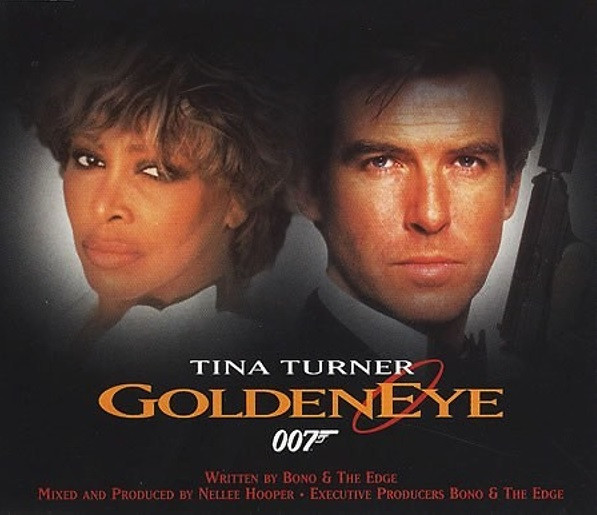
TINA TURNER - GOLDENEYE
Publicada: 6 de novembre de 1995
Llistes: Regne Unit: #10
“GoldenEye” és una cançó tema de James Bond interpretada per Tina Turner, publicada el novembre de 1995 com a tema de la dissetena pel·lícula de James Bond, “GoldenEye”. Va ser escrita per Bono i The Edge d’U2, i produïda per Nellee Hooper, conegut pel seu treball amb Massive Attack i Björk. Més tard va aparèixer tant a la banda sonora de “GoldenEye” com a l’àlbum de Turner de 1996, “Wildest Dreams”. “GoldenEye” va ser l’entrada de Turner en el cànon de temes de Bond, alineant-la amb altres artistes llegendaris com Shirley Bassey, Tom Jones o Paul McCartney.
Inicialment, es va contactar amb Depeche Mode per interpretar el tema, però conflictes d’agenda durant la seva Devotional Tour els van impedir comprometre’s. Un cop Tina Turner va ser assegurada com a vocalista, Bono i The Edge es van incorporar per escriure la cançó específicament per a ella. El resultat és un himne de Bond fosc, sensual i dramàtic que barreja la grandiositat clàssica de pel·lícula d’espies amb textures de trip-hop dels anys 90.
“GoldenEye” canalitza el drama orquestral exuberant típic dels temes de Bond, amb la veu poderosa de Tina donant a la cançó una vora seductora. Combina l’orquestració tradicional de Bond amb una producció moderna, incloent-hi ritmes electrònics i capes d’atmosferes, gràcies a Nellee Hooper.
El senzill va arribar al número 10 de la llista de singles del Regne Unit i es va convertir en un èxit dins del Top 5 en diversos països europeus, incloent-hi França, Finlàndia i Itàlia. Tot i que no va ser un gran èxit als Estats Units, segueix sent un dels temes de Bond més icònics de l’era moderna.
Dirigit per Jake Scott, el videoclip es va estrenar a finals d’octubre de 1995 i mostra Tina Turner amb un vestit blanc sense tirants i glamurós, dempeus o asseguda davant d’un ull daurat gegant, intercalat amb escenes de la pel·lícula.
TINA TURNER - GOLDENEYE
Released: November 6, 1995
Charts: UK: #10
“GoldenEye” is a James Bond theme song performed by Tina Turner, released on November 6, 1995, as the theme for the 17th James Bond film “GoldenEye”. The song was written by Bono and The Edge of U2, and produced by Nellee Hooper, known for his work with Massive Attack and Björk. It later appeared on both the “GoldenEye” soundtrack and Turner’s 1996 album “Wildest Dreams”. “GoldenEye” marked Turner’s entry into the Bond theme canon, aligning her with other legendary artists like Shirley Bassey or Paul McCartney.
Initially, Depeche Mode was approached to perform the theme, but scheduling conflicts during their Devotional Tour prevented them from committing. Once Tina Turner was secured as the vocalist, Bono and The Edge came on board to write the song specifically for her. The result is a dark, sultry, and dramatic Bond anthem that blends classic spy-movie grandeur with ‘90s trip-hop textures.
“GoldenEye” channels the sweeping orchestral drama typical of Bond themes, with Tina’s powerful, smoky vocals giving the song a seductive edge. It combines traditional Bond orchestration with modern production, including electronic beats and layered atmospherics, courtesy of Nellee Hooper.
The single reached #10 on the UK Singles Chart and became a Top 5 hit in several European countries, including France, Finland and Italy. Though not a major hit in the US, it remains one of the more iconic Bond themes of the modern era.
Directed by Jake Scott, the music video premiered in late October 1995 and features Tina Turner in a glamorous white strapless dress, standing or sitting in front of a giant golden eye, interspersed with scenes from the film.
9.6.25
BILLY JOEL - SCENES FROM AN ITALIAN RESTAURANT
Publicada: 29 de setembre de 1977
Àlbum: The Stranger
“Scenes from an Italian Restaurant” és una cançó èpica de set minuts de Billy Joel, inclosa al seu àlbum “The Stranger” de 1977. Tot i no haver-se publicat mai com a single, s’ha convertit en una de les composicions més celebrades de Joel i una peça imprescindible als seus concerts en directe. La cançó combina múltiples estils musicals i narratives, fortament influenciada pel medley de l’àlbum “Abbey Road” dels Beatles, que Joel admirava per la seva fluïdesa i manera d’integrar fragments de cançons inacabades.
Al seu nucli, la cançó és una mirada nostàlgica a la joventut, les relacions i els camins canviants de la vida. Està estructurada com una mini suite en tres parts: comença amb una balada suau al piano, continua amb una secció animada amb influències de jazz i culmina amb una història rock anomenada “The Ballad of Brenda and Eddie”. Tot arrenca amb dos antics companys d’escola retrobant-se en un restaurant italià, compartint records i actualitzant-se sobre les seves vides. A mesura que la conversa avança, la cançó canvia a tercera persona per explicar la història de Brenda i Eddie: una parella que va viure un amor fulgurant, es va casar massa jove, va gastar massa ràpid i va acabar trencant massa aviat. Aquesta història reflecteix un dels temes recurrents de Joel: les persones que toquen el cim massa d’hora i després lluiten per trobar el seu lloc a la vida adulta. Contraposa els somnis i la popularitat juvenil amb la decepció de la maduresa.
Joel va escriure la lletra unint idees musicals i fragments lírics que ja havia desenvolupat anteriorment. La frase “bottle of white, bottle of red” va sorgir d’una conversa real amb un cambrer i va inspirar l’inici de la cançó. El restaurant que va inspirar l’escenari, Fontana di Trevi, es trobava davant del Carnegie Hall a Nova York, on Joel solia sopar de manera anònima abans de fer-se famós.
La cançó es va gravar en directe a l’estudi en aproximadament set preses, amb Joel i la seva banda tocant junts per capturar-ne l’energia. El productor Phil Ramone i el mesclador Jim Boyer van apostar per una producció clara i natural, amb una ecualització mínima per mantenir la netedat dels plats, el baix i la bateria.
Els personatges de Brenda i Eddie s’han convertit en figures llegendàries dins de l’obra de Joel, fins i tot reapareixent al musical de Broadway “Movin’ Out”, que adaptava diverses cançons seves per narrar una història sobre la joventut als anys 60 i 70. Ells eren la parella que tothom envejava… fins que van deixar de ser-ho.
BILLY JOEL - SCENES FROM AN ITALIAN RESTAURANT
Released: September 29, 1977
Album: The Stranger
In 1977, Billy Joel took listeners on a journey that began at a quiet corner table in an Italian restaurant and ended in the faded glow of high school glory. “Scenes from an Italian Restaurant” is a seven-minute epic track, featured on his album “The Stranger”. Though never released as a single, it became one of Joel’s most celebrated compositions and a staple in his live performances. The track blends multiple musical styles and narratives, influenced heavily by The Beatles’ Abbey Road medley, which Joel admired for its seamless integration of unfinished song fragments.
At its heart, “Scenes from an Italian Restaurant” is a nostalgic look at youth, relationships, and life’s changing paths. The song is structured like a mini-suite, combining three distinct sections: a gentle piano ballad, an upbeat jazz-influenced interlude, and a rock-driven story called “The Ballad of Brenda and Eddie.” The story begins with two old classmates meeting at an Italian restaurant, reconnecting over dinner, and catching up on life. As the conversation unfolds, the song shifts into the third person to recount the story of Brenda and Eddie, an ode to the prom king and queen who married too young, spent too fast, and crashed too soon. The song reflects Joel’s recurring theme of people who peak early and struggle later in life. It contrasts youthful dreams and popularity with adult disillusionment.
Joel wrote the lyrics by piecing together older musical ideas and lyrics he had previously developed. The line “bottle of white, bottle of red” came from a real-life interaction with a waiter and inspired the song’s opening. The restaurant that influenced the setting, Fontana di Trevi, was located across from Carnegie Hall in New York City, where Joel often dined anonymously until he gained fame.
The song was recorded live in the studio over about seven takes, with Joel and his band playing together to preserve its energy. Producer Phil Ramone and mixer Jim Boyer emphasized clarity and natural sound in the final mix, with minimal equalization to keep the drums, bass, and cymbals sounding clean and vibrant.
The characters of Brenda and Eddie have become legends in their own right, reappearing in the Broadway musical “Movin’ Out”, which adapted several Joel songs into a narrative about young adulthood in the 1960s and ’70s. They were the couple everyone envied. And then they weren’t.