Total de visualitzacions de pàgina:

14.9.23


KIM CARNES  - BETTE DAVIS EYES


Publicació: març de 1981

Llistes: EUA: #1 (9 setmanes) Regne Unit: #10


"Bette Davis Eyes" va ser gravada originalment en un estil de jazz dels anys 20 per Jackie DeShannon, que va escriure la cançó amb la compositora Donna Weiss. Segons DeShannon, va tenir la idea després de veure la pel·lícula de Bette Davis de 1942 "Now Voyager". Va ser Donna Weiss qui va enviar la maqueta a Carnes, qui juntament amb la seva banda i la productora Val Garay, van fer l'arranjament d'èxit de la cançó.


"Bette Davis Eyes" és un avís. Carnes canta sobre un a maneater, una dona que amb alegria manipularà i destruirà a qualsevol que conegui. La cançó utilitza vocabulari de pel·lícules clàssiques per fer-te saber amb qui estàs tractant aquí: ulls de Bette Davis, cabells daurats de Harlow, sospirs de Greta Garbo. L'escriptura és precisa i elegant. la cançó és un homenatge i celebració d'una persona plena de confiança, misteri i encant.


Però "Bette Davis Eyes" és més una cançó d'amor que una acusació. Carnes canta sobre aquesta noia amb calidesa i afecte. Ella l'admira. Potser també hi ha una mica d’enveja. La dona de la cançó no sembla una amenaça. Sembla impossiblement sexy, glamurosa i imperturbable. "Bette Davis Eyes" no parla en primera persona. És com si Carnes estigués més interessada en aquesta altra dona que no pas en ella mateixa. Sembla que voldria ser aquesta dona.


Carnes té una veu inusualment ronca. Pel que sembla, molta gent que no estava familiaritzada amb ella va pensar que "Bette Davis Eyes" era una cançó de Rod Stewart quan la van escoltar per primera vegada. I en puc donar fe. 


Bette Davis tenia 73 anys quan "Bette Davis Eyes" va arribar al número 1, i va escriure a Carnes, DeShannon i Weiss per agrair-los la cançó. Una de les raons per les quals a la llegendària actriu li va encantar és que la seva neta pensava que la seva àvia era "guai" per haver-se escrit una cançó d'èxit sobre ella. Quan "Bette Davis Eyes" va guanyar el Grammy per a la cançó de l'any i el disc de l'any, Bette Davis va enviar flors a tots els implicats. Davis i Carnes fins i tot es van fer amigues; Carnes va visitar Davis a casa seva unes quantes vegades abans que Davis morís el 1989.


KIM CARNES  - BETTE DAVIS EYES


Released: March 1981

Charted:  US: #1 (9 wks)  UK: #10 


"Bette Davis Eyes" was originally recorded in a 1920s jazz style by Jackie DeShannon , who wrote the song with the songwriter Donna Weiss. According to DeShannon, she got the idea after watching the 1942 Bette Davis movie “Now Voyager”. It was Donna Weiss who submitted the demo to Carnes, who along with her band and producer Val Garay, came up with the hit arrangement for the song.


“Bette Davis Eyes” is a warning. Carnes sings about a maneater, a woman who will happily manipulate and destroy anyone she meets. The song uses classic-film vocabulary to let you know who you’re dealing with here: Bette Davis eyes, Harlow-gold hair, Greta Garbo stand-off sighs. The writing is precise and elegant. the song is a tribute and celebration of a person full of confidence, mystery and charm.


But “Bette Davis Eyes” plays more as a love song than an indictment. Carnes sings about this girl with warmth and fondness. She admires her. Maybe there’s some envy in there, too. The woman in the song doesn’t seem like a threat. She seems impossibly sexy and glamorous and unflappable. None of “Bette Davis Eyes” is in first person. It’s like Carnes is more interested in this other woman than she is in herself. She sounds like she wants to be this woman.


Carnes has an unusually raspy voice. Apparently, lots of people who weren't familiar with her thought “Bette Davis Eyes” was a Rod Stewart song when they first heard it.


Bette Davis was 73 when “Bette Davis Eyes” hit #1, and she wrote to Carnes, DeShannon, and Weiss to thank them for the song. One of the reasons the legendary actress loved the song is that her granddaughter thought her grandmother was "cool" for having a hit song written about her. When “Bette Davis Eyes” won the Grammy for Song Of The Year and Record Of The Year, Bette Davis sent flowers to everyone involved. Davis and Carnes even became friendly; Carnes visited Davis at her house a few times before Davis died in 1989.


13.9.23


GEORGE MICHAEL - I WANT YOUR SEX


Publicació: 18 de maig de 1987 (EUA); 1 de juny de 1987 (Regne Unit)

Llistes: EUA: #2 Regne Unit: #3


"I Want Your Sex" és una cançó de George Michael publicada com el primer senzill del seu àlbum debut en solitari "Faith". També va ser el tercer èxit de la banda sonora de la pel·lícula "Beverly Hills cop II". La versió de l'àlbum té una durada de 9:17 minuts  i apareix com a "I Want Your Sex (Parts I i II)". A les notes del disc, apareix com a "Monogamy Mix", amb les parts "Rhythm 1 Lust" i "Rhythm 2 Brass In Love". A la primera part, Michael va tocar tots els instruments ell mateix. La cançó es va publicar com a maxi-single amb tres parts: Ritme 1: Lust (Luxúria), Ritme 2: Brass In Love (enamorat), Ritme 3: Last Request (Última petició). La primera part va ser el single, que és el que reproduïen les emissores de ràdio. La versió completa del maxi-single té una durada de 13:12 minuts.


La cançó parla del desig apassionat per tenir una connexió íntima amb algú. La lletra articula la frustració del cantant per haver-se negat l'oportunitat d'explorar més la seva relació amb una altra persona. En la tornada, Michael el convida a fer el següent pas, i afirma que "el sexe és natural, el sexe és bo, no tothom ho fa, però tothom ho hauria de fer". La cançó és en última instància un himne per al consentiment, per al sexe consensuat i reconeix la importància dels límits personals i de l'elecció.


Aquesta cançó va causar molta controvèrsia quan es va publicar inicialment, però va ser una cançó que poc a poc va ser acceptada tal com va explicar l'artista. Enmig de la preocupació que la cançó promogués la promiscuïtat a l'era de la sida, la BBC va restringir-ne l'emissió fins després de les 9 del vespre, i moltes emissores de ràdio nord-americanes es van negar a reproduir-la. George Michael va emetre una declaració en resposta, dient: "Els mitjans de comunicació han dividit l'amor i el sexe de manera increïble. L'èmfasi de la campanya de la sida ha estat en el sexe segur, però la campanya no ha respectat les relacions. És una emoció perduda. S'ha perdut la monogàmia. La cançó trcta sobre vincular la luxúria a l'amor, no només als estranys".


Alguns crítics van acusar Michael d'haver imitat a Prince amb aquesta cançó, però els èxits de Prince en aquell moment no eren de naturalesa sexual. Les emissores de ràdio radiaven constantment cançons com "Pop life" i "Raspberry Beret", mentre que cançons més conflictives sexualment com "Erotic City" i " Darling Nikki" eren cara B de single i cançó d'àlbum respectivament i no es posaven. "I Want Your Sex" sí que va generar certa controvèrsia i va ser prohibida per la BBC. Després del xoc inicial d'escoltar els DJ dir el títol, la cançó va ser acceptada i va tenir una llarga vida a les llistes. "I Want Your Sex" va ser un èxit i va arribar al segon lloc als Estats Units, però probablement hauria arribat al número 1 si no fos per totes les emissores de ràdio que es van negar a reproduir-la. Per exemple, Casey Kasem no deia el títol de la cançó quan radiavà l’American Top 40. Durant els anys següents, les portes del sexe es van obrir amb cançons d'èxit titulades "I wanna sex you up" i "I touch myself", amb total llibertat per ser radiades. Agafant el fil inicial, això va donar llibertat a Prince per llançar cançons com "Cream" i "Gett Off" com a singles. 


MTV va exigir un munt d'edicions al vídeo abans de programar-lo. George Michael va fer una declaració contundent en el vídeo d'aquesta cançó, on va escriure les paraules "explore monogàmy" a la seva xicota, una maquilladora anomenada "Kathy Jeung". Era rar que un vídeo inclogués un missatge escrit per complementar una cançó, i la tècnica era molt potent, sobretot perquè poca gent podia criticar el missatge. En retrospectiva, el suport de Michael a la monogàmia sembla lògic, ja que la seva homosexualitat no es va fer pública fins als anys 90.


GEORGE MICHAEL - I WANT YOUR SEX


Released: May 18, 1987 (U.S.); June 1, 1987 (UK)

Charted:  US: #2   UK: #3 


"I Want Your Sex" is a song by George Michael released as the first single from his debut solo album “Faith”. It was also the third hit from the soundtrack to “Beverly Hills cop II”. The album version runs 9:17 and is listed as "I Want Your Sex (Parts I & II)." In the liner notes, the song is listed as the "Monogamy Mix," with the parts being "Rhythm 1 Lust" and "Rhythm 2 Brass In Love." On Part I, Michael played all of the instruments himself. The song was released as a 12" single with three sections: 

Rhythm 1: Lust, Rhythm 2: Brass In Love, Rhythm 3: Last Request. The first section was the 7" single, which is what radio stations played. The full 12" version runs 13:12.


The song is about a passionate desire for an intimate connection with someone. The lyrics articulate the singer's frustration at being denied the opportunity to explore their relationship further with another person. In the chorus, Michael invites them to take the next step, and affirms that "Sex is natural, sex is good, not everybody does it, but everybody should". The song is ultimately an anthem for consensual, consensual sex and acknowledges the importance of personal boundaries and choice.


This song caused a great deal of controversy when it was initially released, but was a rare song that became accepted as the artist explained himself. Amid concerns that the song was promoting promiscuity in the age of AIDS, the BBC restricted airplay to after 9 p.m., and many US radio stations refused to play it. Michael issued a statement in response, saying, "The media has divided love and sex incredibly. The emphasis of the AIDS campaign has been on safe sex, but the campaign has missed relationships. It's missed emotion. It's missed monogamy. 'I Want Your Sex' is about attaching lust to love, not just to strangers."


Some critics accused Michael of ripping off Prince with this song, but Prince's hits at the time were not sexual in nature, as radio stations stuck to his songs like "Pop life" and "Raspberry Beret" while songs like "Erotic City" and "Darling Nikki" were either B-sides or album cuts. "I Want Your Sex" did generate some controversy and was banned by the BBC; after the initial shock of hearing DJs say the title, the song was accepted and had a long chart life. “I Want Your Sex” was a hit, and it peaked at #2 in the US, but probably would’ve gotten to #1 if not for all the radio stations that refused to play it. Casey Kasem wouldn’t say the song’s title on American Top 40. Over the next few years, the sexual floodgates opened up with hit songs titled "I wanna sex you up" and "I touch myself" free to roam the airwaves. Prince was then free to release songs like "Cream" and "Gett Off" as singles.


MTV demanded a bunch of edits to the video before putting it in rotation. Michael made a strong statement with the video for this song, where he wrote the words "explore monogamy" on his reported girlfriend, a make-up artist named "Kathy Jeung." It was rare for a video to include a written message to complement a song, and the technique was very powerful, especially since few people could criticize the message. In retrospect, Michael's support for monogamy seems logical, as his homosexuality became public in the '90s. 


11.9.23


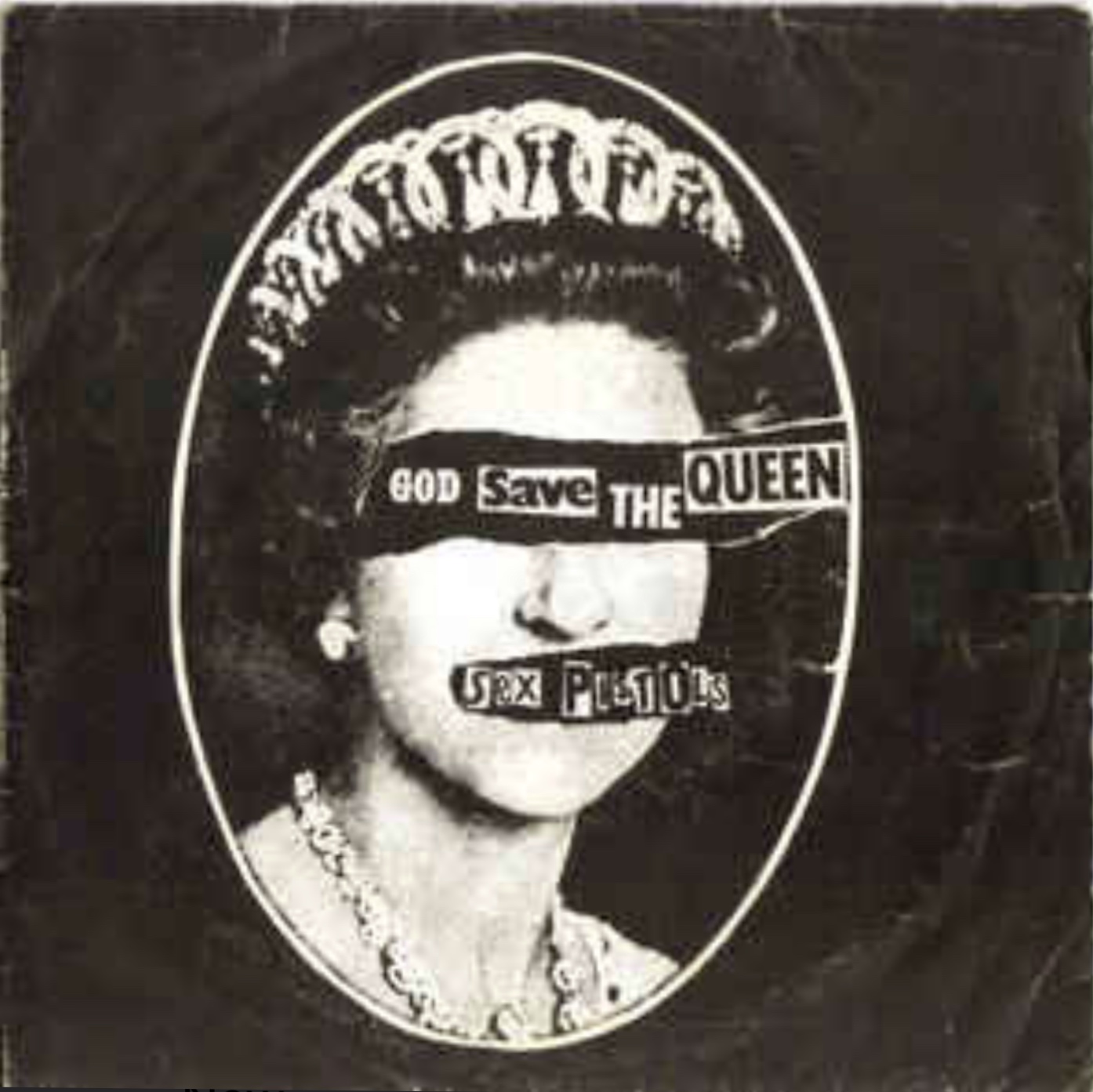
SEX PISTOLS - GOD SAVE THE QUEEN


Publicació: 27 de maig de 1977

Llistes: EUA: - Regne Unit: 2 (?)


"God save the Queen" és una cançó de la banda anglesa de punk rock Sex Pistols. Va ser llançada com a segon senzill de la banda i més tard es va incloure al seu únic àlbum d'estudi, "Never mind the bollocks, here's the Sex Pistols".


Aquesta cançó tracta de rebel·lar-se contra la política britànica. Molts joves es van sentir alienats pel govern sufocant de l'antiga monarquia reial, i la reina (la reina Isabel), era el seu símbol. La cançó es deia originalment "No Future (Sense futur)". La banda la va tocar en directe i va gravar una versió demo amb aquest títol, però la va canviar quan el cantant Johnny Rotten va tenir la idea de burlar-se de la monarquia britànica durant el Jubileu de Plata de la Reina.


El cantant de Sex Pistols, John Lydon, també conegut com Johnny Rotten, tenia la cançó al cap molt abans de portar-la a la banda o fins i tot de escriure-la en un paper. Va explicar en una entrevista amb Daniel Rachel (The Art of Noise: Conversations with Great Songwriters): "'God Save the Queen' va estar rondant a la meva ment durant mesos, molt abans d'unir-me als Sex Pistols; la idea d'estar enfadat, de la indiferència de la reina cap a la població i el distanciament i la indiferència cap a nosaltres com a persones. Vaig haver de treballar en obres de construcció per aconseguir els diners per anar a la universitat perquè volia continuar els meus estudis i, tanmateix, em van cobrar impostos. Per què estic pagant per mantenir aquella vaca ximple a qui no li importo una puta merda? Van arribar els Pistols i en només un matí la vaig escriure en un moment a la taula de la cuina de la mare i el pare amb el plat de mongetes al costat. Vaig expressar el meu punt de vista sobre la Monarquia en general i sobre qualsevol persona que demani la teva obligació perquè si. Això és inacceptable per a mi, el dret a tenir la meva amistat i la meva lleialtat se l’han de guanyar".


El baixista Sid Vicious es va unir a la banda poc abans de la seva publicació: va ser una de les dues úniques cançons que va tocar. El baixista original Glen Matlock era molt més competent musicalment, però es va enfrontar amb els seus companys de banda fet que va provocar la seva marxa.


El Jubileu de Plata de la Reina va tenir lloc el 7 de juny de 1977. Aquell dia, els Sex Pistols van intentar tocar aquesta cançó des del riu Tàmesi, al costat del Palau de Westminster. Va ser la típica acrobàcia promocional de Malcolm McLaren, ja que la policia va interpretar que la banda estava eludint una "prohibició" tocant al riu en lloc de tocar a terra. L'actuació no es va fer mai, ja que van se frustrada per les autoritats.


Després de la seva publicació, la cançó va ser prohibida tant a la BBC com a les emisores de ràdio regulades per l'Autoritat de Radiodifusió Independent amb el controlador de Radio 2 dient que la cançó era "de mal gust". A més, els principals minoristes es van negar a vendre el disc. No obstant això, va assolir el número 2 (per sota de "I don't want to talk about it" de Rod Stewart publicat com a senzill de doble cara A juntament amb "The first cut is the deepest") a la llista oficial de singles del Regne Unit; ho va fer durant la setmana oficial del Jubileu de Plata de la Reina. A la llista de singles que es mostrava a les sucursals de WH Smith, la posició del senzill al número 2 estava representada per una línia en blanc.


No obstant això, diverses fonts afirmen que efectivament va ser el senzill més venut de la setmana, i s'ha suggerit que la cançó va ser bloquejada deliberadament per arribar al numero 1 de la llista "oficial". Segons un article de 1998 a The Independent, durant una setmana els recopiladors "van decretar que les botigues minoritàries no podien tenir les seves vendes representades a la  llista", i tampoc les vendes de Virgin Megastores no es van comptar. Virgin tenia pocs dubtes que aquest era el senzill més venut; en el total de vendes de la companyia va superar les vendes oficialment comptades per al single de Rod Stewart. De fet, la llista de la revista NME va col·locar el senzill dels Pistols al número u durant el Jubileu de Plata d'Isabel II, però va figurar al número 2 de la llista oficial de singles del Regne Unit segons la BBC. Això va provocar acusacions de que les llistes s'havien "arreglat" per evitar que la cançó arribés al número 1. En canvi al 2001, la BBC va referir-se a "God save the Queen" dient que havia "assolit el número u al Regne Unit".


Els Sex Pistols van signar amb A&M Records quan van gravar "God save the Queen". Van acomiadar la banda just quan es va llançar, i van retirar tots els singles del mercat. Els que no es van poder retirar es van convertir en valuosos articles de col·leccionista. L'any 2011, la revista Record Collector va recopilar els 50 discos més col·leccionables, i el primer de la llista va ser la versió de "God save the Queen" d'A&M Records; si en teniu una còpia, la bona notícia és que val 12.000 dòlars (8.000 £).


SEX PISTOLS - GOD SAVE THE QUEEN


Released: May 27, 1977

Charted:  US: -  UK: 2 (?)


"God save the Queen” is a song by the English punk rock band the Sex Pistols. It was released as the band's second single and was later included on their only studio album, “Never mind the bollocks, here’s the Sex Pistols”. 


This song is about rebelling against British politics. A lot of young people felt alienated by the stifling rule of the old-fashioned royal monarchy, and the Queen (Queen Elizabeth), was their symbol. This was originally called "No Future." The band played it live and recorded a demo version with that title, but changed it when lead singer Johnny Rotten got the idea to mock the British monarchy during the Queen’s Silver Jubilee. 


Sex Pistols lead singer John Lydon, aka Johnny Rotten, had the song on his mind long before he brought it to the band or even committed it to paper. He explained in an interview with Daniel Rachel (The Art of Noise: Conversations with Great Songwriters): "'God Save the Queen' was running around in my mind for months, long before joining the Sex Pistols; the idea of being angry, of the indifference of the Queen to the population and the aloofness and indifference to us as people. I had to work on building sites to get the money to go to college because I wanted to further my education and yet I was taxed to f--k. Why am I paying for that silly cow who couldn't give a s--t about me? Along come the Pistols and just one morning over baked beans I wrote it down in one go on Mum and Dad's kitchen table. It was expressing my point of view on the Monarchy in general and on anybody that begs your obligation with no thought. That's unacceptable to me. You have to earn the right to call on my friendship and my loyalty." 


Bass player Sid Vicious joined the band shortly before this was released - it was one of only two songs he played on. Original bassist Glen Matlock was far more competent musically, but clashed with his bandmates, leading to his departure.


The Queen's Silver Jubilee took place on June 7, 1977. On that day, The Sex Pistols attempted to play this song from the Thames river, outside of Westminster Palace. It was a typical Malcolm McLaren promotional stunt, as they played up how the band was circumventing a "ban" by playing on the river instead of setting foot on ground. The performance never took place, as they were thwarted by authorities.


Upon its release, the song was banned from both the BBC and radio stations regulated by the Independent Broadcasting Authority with Radio 2 controller saying the song was "in gross bad taste". Additionally, the major retailers all declined to sell the record. Nevertheless, it peaked at No. 2 (below Rod Stewart's "I don’t want to talk about it" released as a double A side budget single along with "The first cut is the deepest") on the official UK Singles Chart; it did so during the week of the Silver Jubilee's official observation. On the singles chart displayed in branches of WH Smith, the single's position at No. 2 was represented by a blank line.


However, various sources state that it was indeed the highest-selling single of the week, and it has been suggested that the song was deliberately blocked from reaching the top spot on the "official" chart. According to a 1998 article in The Independent, for one week compilers "decreed that shops which sold their own records could not have those records represented in the chart", and thus sales from Virgin Megastores were not counted. Virgin had few doubts that theirs was the higher-selling single; the company's sales total out of stock exceeded the officially cited sales for the Rod Stewart single. The NME magazine chart did in fact place the single at number one during the Silver Jubilee of Elizabeth II, and made it to No. 2 on the official UK Singles Chart as used by the BBC. This led to accusations by some that the charts had been "fixed" to prevent the song from reaching No. 1. In 2001, the BBC described the song as having "reached number one in the UK".


The Sex Pistols were signed to A&M records when they recorded this. They dropped the band just as this was released, pulling all the singles. The ones that slipped through became valuable collectors items. In 2011 Record Collector magazine compiled its Top 50 most collectable records, and top of the list came the A&M release of this song - if you happen to have a copy the good news is it worth $12,000 (£8,000).