Total de visualitzacions de pàgina:

14.10.23


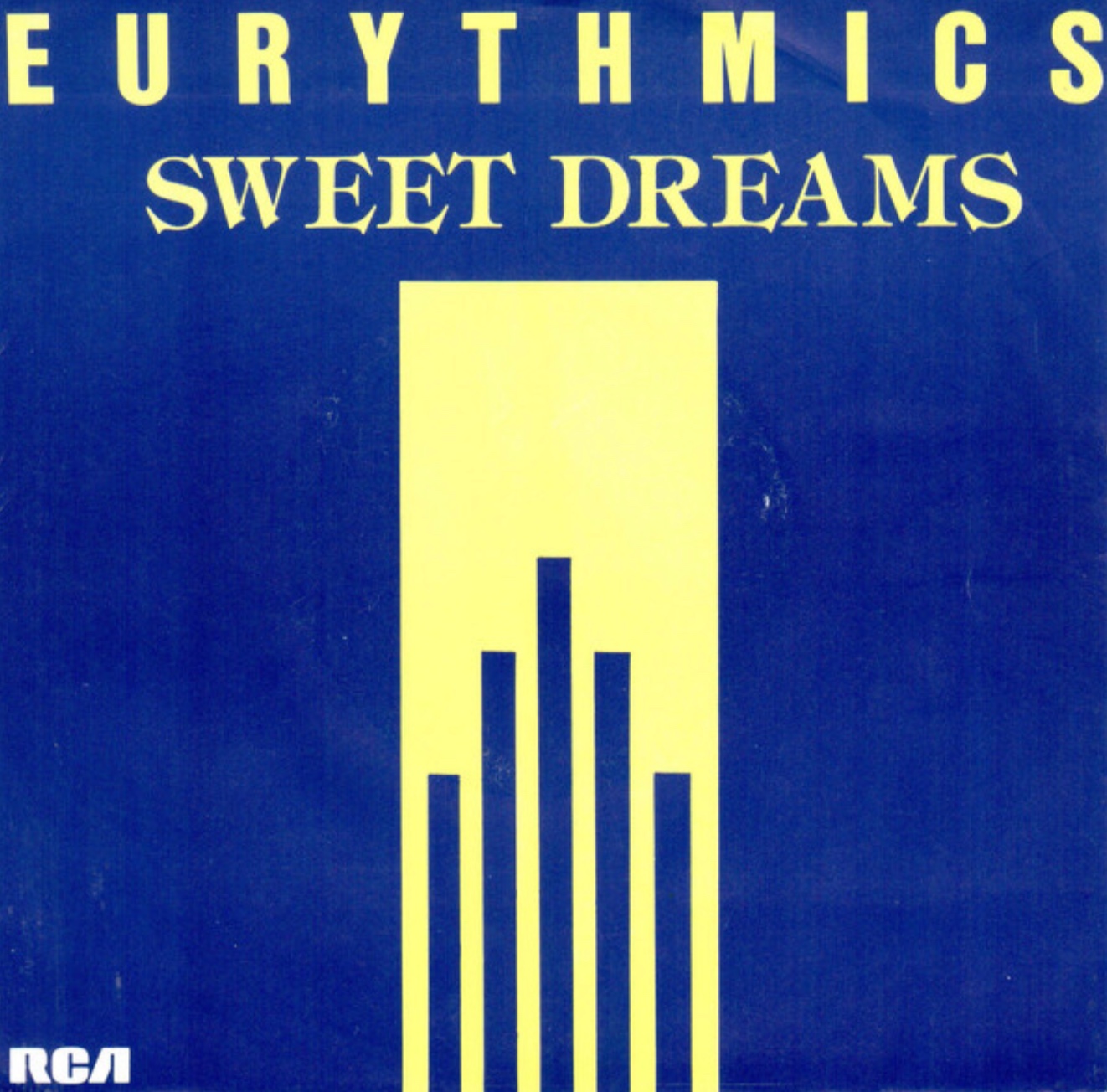
 EURYTHMICS - SWEET DREAMS (ARE MADE OF THIS)

Publicació: 21 de gener de 1983

Llistes: EUA: #1 (1 setmana) Regne Unit: #2


"Sweet Dreams (Are Made Of This)" és la cançó principal del segon àlbum d'Eurythmics i el seu èxit més notable, però va trigar un temps a notar-se. "Vam pensar que havíem fet una cosa realment especial, però no teníem ni idea, realment, de l'impacte que tindria", va dir Stewart. "Tampoc el segell discogràfic, que ni tan sols pensava que fos una cançó per a un single". Tres cançons de l'àlbum es van publicar com a senzills al Regne Unit abans que el segell RCA, finalment es decidís a publicar "Sweet Dreams". Quan ho van fer, es va enlairar ràpidament, arribant al número 2 el març de 1983 només per darrera de "Total eclipse of the heart" de Bonnie Tyler. Després de convertir-se en un èxit al Regne Unit, RCA el va publicar com el primer single d'Eurythmics a Amèrica, on va arribar al número 1 el setembre de 1983.


"Sweet Dreams (Are Made Of This)" no té tornada. Això és perquè tot és una tornada, tot és un ganxo. Freda i autoritària, Annie Lennox t'explica les diferents maneres en què el món t'enfonsarà, tots els impulsos i motius perquèt'enfrontaràs a tothom a qui et trobis. Ella resumeix aquesta visió del món dura i desolada en poques frases, i després les repeteix una i altra vegada. Aquestes línies esdevenen un mantra, un encantament. Naturalment, és un èxit de pista de ball absolut. Això és el que la millor new wave fa: que ballis amb veritats fosques i posicions filosòfiques estridentes.


Com a molts artistes britànics de synth-pop de principis dels 80, va ser MTV qui va obrir la porta d’America per a Eurythmics. El duet estava ben preparst per a l’època del vídeo: Dave Stewart sempre tenia el concepte i Annie Lennox tenia un aspecte i un talent sorprenents per actuar.


L'innovador vídeo de "Sweet Dreams (Are Made Of This)", dirigit per Stewart amb Chris Ashbrook, va presentar a Lennox amb els cabells ataronjats i un vestit negre a mida, convertint-lo en el primer vídeo popular que presenta una dona andrògina. La vaca del vídeo va ser idea de Dave Stewart: era un gran fan dels artistes surrealistes Salvador Dalí i Luis Buñuel. Stewart va dir: "Algunes persones deien:" Dave, per què la vaca? L'Annie és tan bonica". Aquestes persones haurien d'anar a comprar una còpia de Purple Cow de Seth Dogin, sobre com fer que el vostre negoci sigui vistòs. Va ser escrit 20 anys després que sortís la vaca morada al nostre vídeo, que sens dubte va ser el truc i va fer que tota la meva vida fos notable". La vaca, tot i que cridava molt l'atenció, va suposar un problema logístic perquè la majoria d'estudis no els podien acollir. Eurythmics va trobar un estudi al soterrani a Londres amb un ascensor prou gran per transportar l'animal. Lennox recorda el rodatge amb el boví passejant com una de les experiències més surrealistes de la seva vida. Sobre el que va significar tot, va dir en el llibre I Want My MTV: "El vídeo és una declaració sobre les diferents formes d'existència. Hi ha humans, amb els nostres somnis d'indústria i assoliments i èxits. I hi ha una vaca".


Annie Lennox i Dave Stewart van ser parella durant uns tres anys mentre eren membres d'una banda anomenada The Tourists. En aquest temps només van escriure una cançó junts (una instrumental), però quan The Tourists es van separar, van formar Eurythmics com a duet i van començar a escriure junts. Poc temps després, Lennox i Stewart es van separar. Stewart explica la història a The Dave Stewart Songbook: "Quan vam trencar com a parella per alguna raó estranya, va ser com si sempre estiguéssim junts, passés el que passés. Realment no podíem trencar aquest encanteri, així que vam continuar, fent música. Al New York Times del 30 d'octubre de 2007, Annie Lennox va recordar que aquesta cançó va ser escrita pel duet just després d'haver tingut una amarga baralla. "Vaig pensar que era el final del camí i que fins aquí havíem arribat. Estàvem intentant escriure, i em vaig sentir miserable. I ell va dir, bé, 'Ho faré de totes maneres'". Dave Stewart va fer un ritme, Annie Lennox va improvisar el riff del sintetitzador i, de sobte, es van adonar que tenien un èxit potencial.


Quan "Sweet Dreams" va arribar al número 1 a Amèrica, Eurythmics es va convertir en una sensació allà, apareixent a la portada de Rolling Stone i fent espectacles amb les entrades exhaurides. Stewart es va relacionar amb l'escena musical de Los Angeles i hi va comprar una casa. Ell i Tom Petty es van fer bons amics i van escriure tres cançons junts per a l'àlbum de Petty de 1985 "Southern Accents". La casa de Stewart es va convertir en un lloc de trobada per a Petty, George Harrison, Bob Dylan i Jeff Lynne, que van fer equip amb Roy Orbison per formar els Travelling Wilburys el 1988. Van gravar el seu primer àlbum durant dues setmanes utilitzant la casa de Stewart i l'estudi annex. Stewart no va poder participar-hi perquè estava treballant en l'àlbum d'Eurythmics “We too are one”.


EURYTHMICS - SWEET DREAMS (ARE MADE OF THIS)


Released: January 21, 1983

Charted:  US: #1 (1 wk)  UK: #2 


"Sweet Dreams (Are Made Of This)" is the title track to Eurythmics second album and their breakout hit, but it took a while to get noticed. "We thought we'd made something really special but we had no idea, really, the impact it would have", Stewart told. "Neither did the record label, which didn't even think it was a single." Three other songs from the album were released as singles in the UK before their label, RCA, finally issued "Sweet Dreams." When they did, it took off, climbing to #2 in March 1983 behind Bonnie Tyler’s "Total eclipse of the heart". After it became a UK hit, RCA put it out as Eurythmics' first single in America, where it shot to #1 in September 1983.


“Sweet Dreams (Are Made Of This),” doesn't actually have a chorus. That's because everything is a chorus, everything is a hook. Cold and authoritative, Annie Lennox tells you all the different ways the world will screw you, all the impulses and motives you'll face in everyone you meet. She sums up this harsh, bleak worldview in a few sentences, and then repeats them over and over again. Those lines become a mantra, an incantation. Naturally, they make for an absolute dancefloor banger. That's what the best new wave did: it made you dance with dark truths and strident philosophical positions.


Like many early '80s British acts with synthesizers (Human League, A Flock Of Seagulls), it was MTV that broke Eurythmics in America. The duo was well equipped for video age: Dave Stewart was always coming up with concepts, and Annie Lennox had a striking look and talent for acting.


The innovative video for "Sweet Dreams (Are Made Of This)," directed by Stewart with Chris Ashbrook, presented Lennox with close-cropped orange hair and a tailored black suit, making it the first popular video presenting an androgynous female. The cow in the video was Dave Stewart's idea - he was a big fan of surreal artists Salvador Dali and Luis Bunuel. Said Stewart: "A few people were saying, 'Dave, why the cow? Annie is so good looking.' Those people should go buy a copy of Purple Cow by Seth Dogin, about how to make your business remarkable. It was written 20 years after I had the purple cow in our video - which certainly did the trick and made my whole life remarkable." The cow, while very eye-catching, posed a logistical problem because most studios can't accommodate them. Eurythmics found a basement studio in London with an elevator big enough to transport the animal. Lennox recalls the shoot with the bovine walking around as being one of the more surreal experiences of her life. Regarding what it all meant, she said in the book I Want My MTV: "The video is a statement about the different forms of existence. Here are humans, with our dreams of industry and achievement and success. And here is a cow."


Annie Lennox and Dave Stewart were a couple for about three years while they were members of a band called The Tourists. They only wrote one song together in this time (an instrumental), but when The Tourists broke up, they formed Eurythmics as a duo and began writing together. A short time later, Lennox and Stewart broke up. Stewart tells the story in The Dave Stewart Songbook: "When we broke up as a couple for some strange reason it was like we were always going to be together, no matter what. We couldn't really break that spell so we just carried on making music. In the New York Times October 30, 2007, Annie Lennox recalled that this was written by the duo just after they'd had a bitter fight. "I thought it was the end of the road and that was that," she said. "We were trying to write, and I was miserable. And he just went, well, 'I'll do this anyway.'" Dave Stewart came up with a beat, Annie Lennox improvised the synthesizer riff, and suddenly they realized they had a potential hit.


When "Sweet Dreams" went to #1 in America, Eurythmics became a sensation there, appearing on the cover of Rolling Stone and playing sold-out shows. Stewart fell in with the Los Angeles music scene and bought a house there. He and Tom Petty became good friends and wrote three songs together for Petty's 1985 album “Southern Accents”. Stewart's house became a hang-out for Petty, George Harrison, Bob Dylan and Jeff Lynne, who teamed with Roy Orbison to form the Traveling Wilburys in 1988. They recorded their first album over two weeks using Stewart's house and attached studio. Stewart couldn't participate because he was working on the Eurythmics album “We too are one”.  


10.10.23


DAVID BOWIE - CHINA GIRL

Publicació: 31 de maig de 1983

Llistes: EUA: #10   Regne Unit: #2


"China Girl" és una cançó escrita per Iggy Pop i David Bowie el 1976, i publicada per primera vegada per Pop al seu àlbum de debut en solitari de 1977, "The Idiot", Inspirada en una aventura que Pop va tenir amb una dona vietnamita. Bowie va gravar la seva pròpia versió durant les sessions del seu àlbum de 1983 "Let's Dance", segons es diu per ajudar a Pop amb les seves pobres finances en aquell moment. Bowie va versionar l'original de Pop gràcies al productor Nile Rodgers, pensant que podria ser un èxit, i ho va ser!


"China Girl" és una cançó sobre l'amor i l'atracció entre diferents cultures. La lletra explica una història d'amor no correspost per la xicota asiàtica del protagonista. El cantant busca consol en la "China Girl", que representa una cultura diferent a la seva. La cançó transmet sentiments de xoc cultural i anhel, i es pot interpretar de moltes maneres. La lletra insinua temes de dinàmica de poder, ja que el cantant promet a la seva “China Girl” tot per la seva lleialtat i obediència. La cançó comunica el desig d'alguna cosa més gran que un mateix i el xoc de valors i tradicions.


La versió original d'Iggy Pop no tenia el famós riff de guitarra oriental que apareixia a l'enregistrament de Bowie. El productor Nile Rodgers va idear aquest riff de guitarra. Segons Rodgers, havien acabat d'enregistrar la cançó "Let's Dance" i Bowie li va regalar una gravació de la cançó original "China Girl", explicant que podria ser un èxit si els sortia un ganxo. Rodgers era literal, jugant amb la paraula "Xina" per crear el riff, que sabia que ho limitava a la paròdia. Rodgers va dir: "Pensava que David odiaria el riff fins al punt que m'acomiadaria, o veuria la part còmica d'aquesta ximple cançoneta". Rodgers estava nerviós quan va interpretar el riff a Bowie, però a David li va encantar immediatament. Amb aquest riff i una producció molt més suau, la cançó sonava poc com la versió d'Iggy Pop i la cançó es va convertir en un èxit.


Stevie Ray Vaughan és el guitarrista principal d'aquesta cançó i de la major part de l'àlbum. Bowie el va descobrir després de veure'l en un festival de música. Bowie el va cintractsr per tocar al seu àlbum i li va demanar que fes una gira amb ell, però Stevie sorprenentment ho va declinar. Va creure en el seu grup Double Trouble i va pensar que podrien fer la gira pel seu compte.


El vídeo musical de la cançó, que va guanyar el primer premi al millor vídeo masculí als Video Music Awards de 1984, va ser dirigit per David Mallet i filmat el febrer de 1983 al barri de Chinatown de Sydney, Austràlia, simultàniament amb el vídeo de "Let's". Dance". Fascinat per la gran comunitat xinesa d'Austràlia, Bowie va dir que el vídeo de "China Girl" era "una vinyeta de la meva contínua fascinació per tot allò asiàtic".


El vídeo va ser prohibit a molts països, però es va passar molt bé a MTV. La cambrera neozelandesa Geeling Ng va ser escollida per Bowie per interpretar el seu objecte d'afecte. Ara és presentadora de televisió. Ng va recordar a la revista Q el juny de 2009: "David era el meu ídol. Quan el vaig conèixer, va ser increïble. Però va ser molt fàcil de portar-ho". Va afegir: "El David i jo vam començar a sortir poc després, però no vaig gaudir de la manca de privadesa". Al final del vídeo, Ng té una revolcada a la platja amb Bowie. Ella va dir a la revista Q: "Puc puntualitzar, contràriament a la creença popular, que en David i jo no vam tenir relacions sexuals a la platja! El vídeo es va filmar a les 5 del matí; l'aigua estava congelada i tampoc era un gran lubricant,  i ens observaven l’equip de filmació i corredors que passaven. No era gaire romàntic".


DAVID BOWIE - CHINA GIRL


Released: May 31, 1983

Charted:  US: #10  UK: #2 


"China Girl" is a song written by Iggy Pop and David Bowie in 1976, and first released by Pop on his 1977 debut solo album, “The Idiot”. Inspired by an affair Pop had with a Vietnamese woman. Bowie recorded his own version during the sessions for his 1983 album “Let's Dance”, reportedly to assist Pop with his poor finances at the time. Bowie played Pop's original for producer Nile Rodgers, believing it could be a hit, and it was!


"China Girl" is a song about love and the pull of different cultures. The lyrics tell a story of unrequited love for the protagonist's Asian girlfriend. The singer is looking for comfort and solace in his "China Girl," who represents a different culture than his own. The song conveys feelings of culture clash and longing, and could be interpreted in many ways. The lyrics hint at themes of power dynamics, as the singer promises his China Girl everything for her loyalty and obedience. The song communicates the desire for something greater than oneself and the clash of values and traditions.


The original Iggy Pop version of this song didn't have the famous oriental guitar riff that featured on Bowie's recording. Producer Nile Rodgers came up with that guitar riff. According to Rodgers, they had finished recording the song "Let's Dance" and Bowie gave him a recording of the original song "China Girl", explaining that it could be a hit if they came up with a hook. Rodgers was literal, playing on the word "China" to create the riff, which he knew bordered on parody. Rodgers said, "David was going to hate this so much he would fire me, or he was going to get the comedic value out of writing this silly little poppy". Rodgers was nervous when he performed Bowie's riff, but David loved it immediately. With this riff and much softer production, the song sounded little like Iggy Pop's version and the song became a hit.


Stevie Ray Vaughan is the lead guitarist on this song and most of the album. Bowie discovered him after seeing him at a music festival. Bowie got him to play on his album and asked him to tour with him, but Stevie surprisingly declined. He believed in his group Double Trouble and thought they could make a go of it on their own.


The music video for the song, which won the first ever award for Best Male Video at the 1984 Video Music Awards, was directed by David Mallet and filmed in February 1983 in the Chinatown district of Sydney, Australia, simultaneously with the video for "Let's Dance". Fascinated by Australia's large Chinese community, Bowie said the "China Girl" video was "a vignette of my continuing fascination with all things Asian". 


The video was banned in many countries, but it went over very well on MTV. New Zealand waitress Geeling Ng was chosen by Bowie to play his object of affection. She is now a TV presenter. Ng recalled to Q magazine June 2009: "David was my idol. When I met him, it was terrifying. But he was very easy to get on with". She added: "David and I started dating soon afterwards, but I didn't enjoy the lack of privacy". At the end of the video, Ng has a beach romp with Bowie. She told Q magazine: "Can I point out, contrary to popular belief, David and I did not have sex on the beach! It was shot at 5am; the water was freezing and wasn't a great lubricant and we were being watched by a film crew and joggers passing by. Not very romantic". 


GEORGE MICHAEL - FAITH


Publicació: 12 d'octubre de 1987

Llistes: EUA: #1 (4 setmanes) Regne Unit: #2


"Faith" és una cançó del cantautor anglès George Michael, qui la va escriure i produir. Va ser llançada com el segon senzill del seu àlbum amb el mateix nom, de debut en solitari el 1987. Michael va escriure i produir "Faith", tal com va escriure i produir totes les cançons de l'àlbum. Aquesta cançó té una introducció molt inusual: comença amb el so d'un orgue de església tocant la melodia de l’èxit de Wham! de 1984! "Freedom", recordant l'època de la qual Michael s'està distanciant en aquesta cançó.


"Faith" tracta sobre buscar el veritable compromís en una relació. Parla de prendre temps per pensar abans de prendre decisions, la qual cosa requereix més fe de la que es veu a primera vista. La cançó anima a mantenir la fe en la recerca d'una connexió significativa i a no aprofitar els desitjos fugaços. Parla de tenir esperança en alguna cosa més gran i estar disposat a esperar-la, en lloc de conformar-se amb una cosa menys. En última instància, la cançó parla de tenir fe en la recerca d'una relació que vagi més enllà de l'atracció física i pugui proporcionar un amor i real amb el qual sentir-se realitzat. La lletra de "Faith" és gairebé una reprovació a "I Want Your Sex" ja què "Faith" és una cançó sobre no tenir sexe, fins i tot sobre rebutjar-lo.


Quan es va publicar l'àlbum, Michael va explicar per què va triar aquesta cançó com a tema principal, dient: "Representa la manera com em sento en aquest moment. És una paraula enfocada en la meva esperança i optimisme. Ja saps, la fe en mi és només una paraula sobre un sentiment molt fort, i per això em vaig cap ficar en la idea que la cançó fos el senzill. M'agradava la idea d'utilitzar-la com a tema principal".


El George Michael del vídeo "Faith" és el George Michael que el món sempre recordarà: la jaqueta de cuir, els texans tan vius que d'alguna manera són de color fins i tot quan tota la resta és en blanc i negre. El vídeo de "Faith" és, literalment, només Michael imitant les poses d'Elvis sobre un fons blanc, gesticulant amb una guitarra que ni sabia tocar.


Després del final de Wham! un any abans, qualsevol sabria dir quin seria el següent pas per a George Michael. "Faith", és la cançó que realment va convertir-lo en una estrella. "La cançó va encapçalar les llistes d’EUA durant quatre setmanes, i Billboard el va nomenar com el single número 1 del 1988. L'LP "Faith" també va ser l'àlbum més venut d'aquell any. L'àlbum va sortir unes setmanes després del single, i es va convertir en un fenomen cultural complet, sent un super vendes i va guanyar una pila de Premis Grammy. Michael va seguir editant més senzills de l'àlbum, i aquests senzills van seguir arribant al número 1.


GEORGE MICHAEL - FAITH


Released: October 12, 1987

Charted:  US: #1 (4 wks)  UK: #2


“Faith” is a song by English singer-songwriter George Michael, who wrote and produce the song. It was released as the second single from his 1987 debut solo album of the same name. Michael wrote and produced “Faith”, just as he wrote and produced all the songs on the Faith album. This song has a very unusual intro: it starts with the sound of a church organ playing the tune from the 1984 Wham! hit "Freedom”, recalling the era Michael is distancing himself from in this song.


"Faith" is about searching for true commitment in a relationship. It speaks to taking time to think before making decisions, which requires faith that there is more than what is seen at face value. The song encourages the speaker to keep faith in the search for a meaningful connection and not to take advantage of fleeting desires. It speaks to having hope for something greater and being willing to wait for it, rather than settling for something less. Ultimately, the song speaks to having faith in the search for a relationship that goes beyond physical attraction and can provide true love and fulfillment. Michael’s “Faith” lyrics are almost a rebuke to “I Want Your Sex.” “Faith” is a song about not having sex, about turning sex down, even. 


When the album was released, Michael explained why he chose this song as the title track, saying: "It represents the way I feel at the moment. It's kind of another word for my hope and optimism. You know, faith to me is just really such a strong word and the more I got into the idea of the song being the single, the more I liked the idea of using it as the title track."


The George Michael of the “Faith” video is the George Michael that the world will always remember: The stubble, the leather jacket, the jeans so vivid that they’re somehow in color even when everything else is in black-and-white. The “Faith” video is literally just Michael striking Elvis poses against a white background, gesticulating with a guitar that he didn’t know how to play. 


After the end of Wham! a year before, it was anyone's guess what would be next for Michael. “Faith,” is the song that truly turned George Michael into a star level. “Faith” topped the charts for four weeks, and Billboard named it the #1 single of 1988. The “Faith” LP was also that year’s best-selling album. The album came out a few weeks after the single, and it became a full-on cultural phenomenon, with double-diamond sales and a big stack of Grammys. Michael kept cranking out more singles from the album, and those singles kept hitting #1.