Total de visualitzacions de pàgina:

28.10.23


YAZOO - DON’T GO

Publicació: 2 de juliol de 1982

Llistes: Regne Unit: #3


"Don't Go" és una cançó del grup britànic Yazoo. Va ser llançada el 1982 com el segon senzill del seu àlbum debut, "Upstairs at Eric's". La cançó va assolir el número tres de la llista de singles del Regne Unit, convertint-se en el segon èxit de Yazoo. Als Estats Units, va ser el seu segon gran èxit a les llistes de ball nord-americanes, on va passar dues setmanes al número u l'octubre de 1982. El seu primer èxit a les llistes de dansa nord-americanes va ser "Situation", que també havia assolit el número u a la llista a principis del mateix any. Tot i això no va entrar al Billboard Hot 100. 


"Don't Go" transmet l'amor apassionat i desesperat d'una persona per una altra. La cantant expressa que està profundament enamorada i decidida a no deixar marxar l'objecte dels seus afectes passi el que passi, comparant el seu desig amb "una addicció". Malgrat els riscos de ser ferida, la cantant no es deixarà dissuadir i continuarà demanant que el seu ser estimat no marxi.


La cançó va ser escrita per Vince Clarke, que era la meitat de Yazoo (la vocalista Alison Moyet era l’altra meitat), que va formar després de deixar Depeche Mode el 1982. Yazoo només van publicar dos àlbums, amb Clarke i Moyet contribuint cadascun amb cançons, però escrivint per separat. Vince va dir: "Crec que el problema que tenia Yazoo va ser que mai no vam tenir la base d'una relació. Quan vam fer el senzill 'Only you', la companyia discogràfica va dir: 'Bé, per què no feu un disc?' Així que vam fer un àlbum, i després vam fer un altre àlbum. Però no hi havia cap relació ni història amb la banda, així que ens vam ensorrar, tot i que no em penedeixo d'haver-hi estat. Va ser trist, però no crec que poguesim haver continuat treballant junts sense estrangular-nos els uns als altres".


El 2008, Clarke i Moyet van tornar a fer gira com a Yaz i van tenir un inesperat seguiment a Nord-Amèrica. Clarke va dir: "Tot això va ser una mica una sorpresa per a mi, de veritat. Perquè quan vam decidir que faríem la gira, cap de nosaltres no tenia ni idea si algú ens recordaria. Sobretot quan vam arribar als Estats Units, va ser bastant increïble. De fet, quan la gent se’ns va acostar i ens van dir: "Ah, aquell disc, 'Upstairs at Eric's', va ser el que vam escoltar fins a la mort quan érem a la universitat", va ser bastant increïble; no tenia ni idea que això va passar. Perquè no vam tenir ėxit a les llistes als Estats Units, però suposo que va ser una cosa clandestina i es va reproduir a la ràdio de la universitat moltes vegades. Va ser molt gratificant". La música electrònica va funcionar bé al Regne Unit a principis dels anys 80, però als Estats Units va ser molt apreciada a l'escena del club, i aquesta cançó va ocupar el número 1 de les llistes de ball dels Estats Units mentre era ignorada per les emissores de ràdio.


El vídeo musical de la cançó compta amb els membres de la banda Alison Moyet i Vince Clarke en una mena de mansió embruixada amb Clarke en el paper de Victor Frankenstein.


YAZOO - DON’T GO


Released: July 2, 1982

Charted: UK: #3 


"Don't Go" is a song by British synth-pop band Yazoo (known in the United States and Canada as Yaz). It was released in 1982 as the second single from their debut album, “Upstairs at Eric's”. The song peaked at number three on the UK Singles Chart, becoming Yazoo's second top 5 hit. In the United States, the song was their second major hit on the US dance charts, where it spent two weeks at number one in October 1982. Their first hit on the US dance charts was "Situation", which had also reached number one on this chart earlier the same year.


"Don't Go" conveys the passionate, desperate love of a person for another. The singer expresses that they are deeply in love and determined not to let the object of their affections go no matter what, comparing their desire to "an addiction." Despite the risks of being hurt by them, the singer will not be dissuaded and calls out to them not to go.


This was written by Vince Clarke, who was the non-singing half of Yazoo, which he formed after leaving Depeche Mode in 1982. Yazoo lasted just two albums, with Clarke and vocalist Alison Moyet each contributing songs, but writing separately. He said: "I think the problem that Yazoo had was that we never really had the foundation of a relationship. When we made the single ‘Only you’ the record company said, 'Well, why don't you make a record?' So we made an album, and then we made another album. And so there was no real foundation or history to the band. We kind of fell apart, and I don't regret that happening. It was sad, but I don't think we could have continued working together without probably strangling each other".


In 2008, Clarke and Moyet toured again as Yaz, and discovered an unexpected American following. Clarke told: "The whole thing was a bit of a surprise to me, really. Because when we decided that we'd actually do the tour, neither of us had any idea if anybody out there would remember us. Particularly when we came to the States it was quite amazing. In fact, when people came up to us afterwards and said, 'Oh, that record, ’Upstairs at Eric’s’, that was the one that we played to death when we were in college,' that was quite amazing; I had no idea that was going on. Because we didn't chart with it in the States, but I guess the thing was underground and got played on college radio a lot of times. That was very gratifying." Electronic music did well in the UK in the early '80s, but in America it was mostly appreciated in the club scene, and this song went to #1 on the US dance charts while being ignored by radio stations.


The music video for the song features band members Alison Moyet and Vince Clarke in a haunted mansion of sorts with Clarke in the role of Victor Frankenstein.


27.10.23


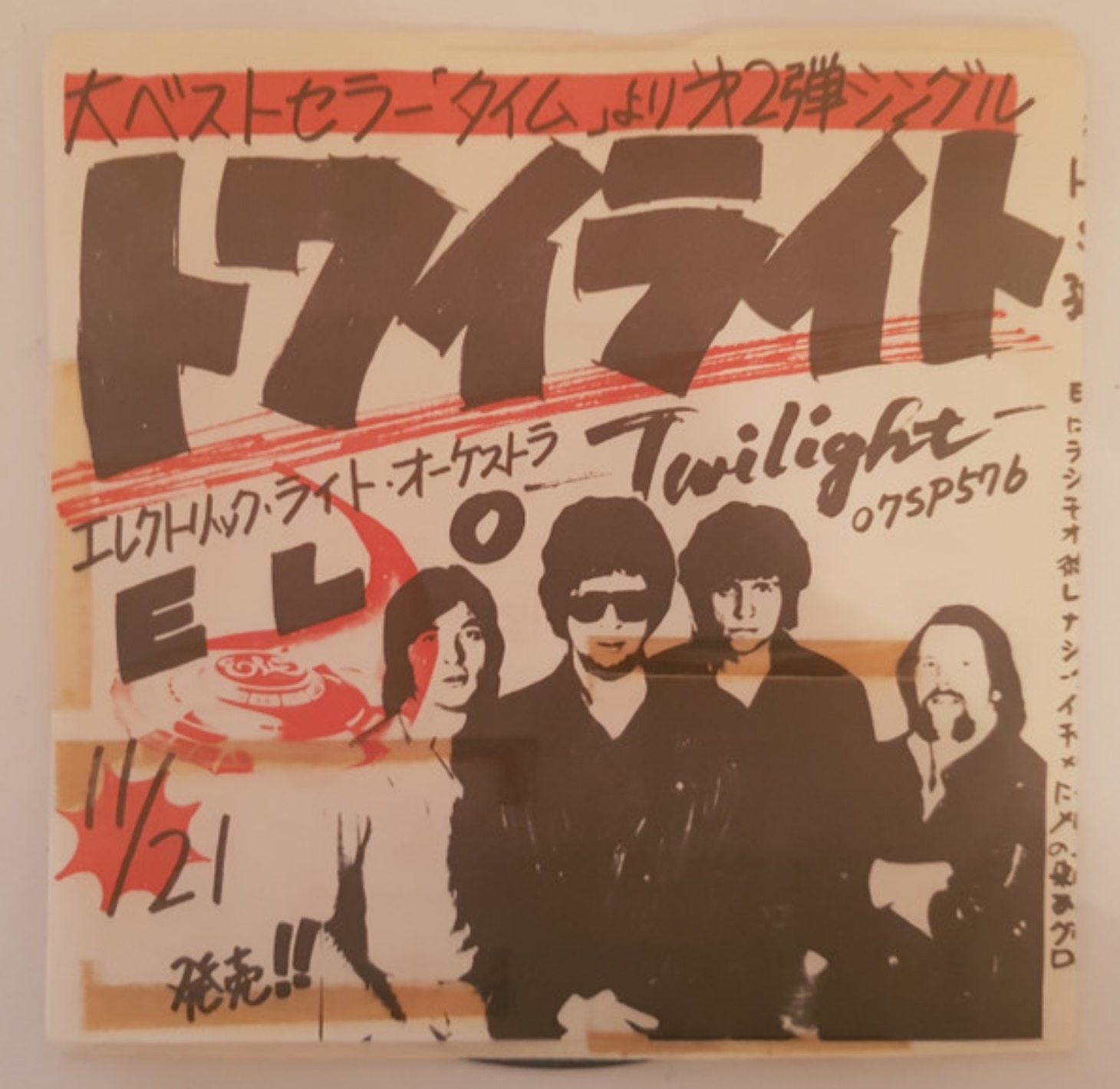
ELECTRIC LIGHT ORCHESTRA - TWILIGHT


Released: October 16, 1981

Charted:  UK: #30   US: #38 


"Twilight" is a song written by Jeff Lynne, originally released on ELO’s 1981 album “Time”, and released as the second single of the record. The song captures the essence of a surreal journey into the unknown, where reality and fantasy intertwine and time feels elusive. It speaks to the allure of escaping into a dreamlike state while acknowledging the inherent uncertainty and transience of such experiences.


Lynne paused at the dawn of the 80s to gauge the tide of the times and decided, astutely, that the future was in electronic new-wave pop. Enter 1981’s startlingly modernist “Time” taking its cues from those moment popular synth-pop bands as Tubeway Army, the Human League or Devo, and set to become ELO’s most conceptual album.


“Time” is an album about a man abducted to a 2095 of human clones, moon tourism, prison satellites, hovercars and 4G android girlfriends, it shed the symphonic for the synthetic, with vocoder vocals and post-disco sci-fi synth riffs. “Yours Truly 2095”; “The Rain Is Falling”; “21st Century Man” and “Ticket to the Moon” all rebooted ELO’s aesthetic for the neon decade, but “Twilight” stood out for its space-age cathedral sizzle, warp-speed pacing and the sort of brazen futuristic hooklines.


Twilight is a bombastic introduction to the album’s sound and a brilliant description to kick off “Time” story. This track is about moving from the 1980s to the future, be it real or a dream. Even the character himself, who presumably sings Twilight, is unsure: “Am I awake or do I dream; the strangest pictures I have seen?” The contradictory lyrical stylings and the quick movement of the track do well to represent this movement. In addition, Twilight presents the dilemma of being trapped in the future with its chorus refrain, “Twilight; I only meant to stay awhile. Twilight; I gave you time to steal my mind away from me.” Either the character cannot bring himself away from this dream world he has constructed, or the time travel device he has used cannot take him back. 


The vagueness of whether or not “Time” story is a dream allows the listener to hear it in two different ways, one that is a quiet reflection on a lost love and another that is a bombastic adventure through the world of the future. Mentions of “shadows of time” illustrate images of time folding in on itself. These moments of strong imagery make “Time” feel like a musical without imagery, forcing the listener to conjure up their image of the future, giving them a strong bond with the main character, whom they can now see. These elements represent a bridge between the past and the future, the real and the imagined, the known and the unknown. As the song says, it is a place between what “now is day and before was night.” Twilight.


ELO writer Barry Delve says that "a cacophony of sound effects...transport us chaotically to the year 2095 to start the album and that the song doesn't stop or pause for at least 2 minutes, making the song one of the most exciting experiences ELO ever gave you”.


25.10.23


ELECTRIC LIGHT ORCHESTRA - TURN TO STONE

Estrena: 14 d'octubre de 1977

Llistat: Regne Unit: #18  EUA: #13


"Turn to Stone" és el tema d'obertura i el primer senzill del doble àlbum de la banda "Out of the Blue". Va ser l'únic senzill de l'àlbum que no va arribar al top ten de les llistes del Regne Unit després del seu llançament, però des de llavors la cançó s'ha convertit en una de les més populars d'ELO entre els fans de la banda.


"Turn to Stone" és una cançó sobre la solitud que es pot sentir quan un ésser estimat està fora i la sensació d'estar atrapat al seu lloc. Les lletres expressen l'anhel pel retorn de l'absent, i el dolor de la separació. El cantant està lluitant per continuar amb l’absència del ser estimat, sent que s'està "convertint en pedra" a mesura que passen els dies. Descriuen el seu món avorrit i sense vida sense aquesta persona i espera un retrobament feliç on pugui tornar a sentir-se viu.


Jeff Lynne va dir: "'Turn to Stone' és una de les meves cançons preferides, de les millors que he fet mai. És milt primaria i senzilla, però alhora molt evocadora. M'encanta el ritme shuffle. Hi ha una part al mig on parlo molt ràpid. Simplement sentia que necessitava alguna cosa senzilla al mig de la cançó. Sovint feia això de posar un trosset divertit en una cançó per si m'avorria. La música disco era popular en aquella època i em va encantar. M’agradava la seva rigorositat. Va ajudar molt al grup perquè realment vaig poder treure’n bon partit. Té molta cosa bona la disco. També m'agrada el punk. Evidentment ho veiem des d'un punt de vista amb bones intencions, tot i que potser els grups encara no sabien com tocar bé. Eren aspres però preparats, com jo quan vaig començar”.


A causa del seu complex enregistrament, la banda va haver de confiar en les cintes per reproduir el mateix so de la cançó en concert, un indicador del domini de Lynne tan a l'estudi com a l'escenari. La petita simfonia de cordes que s'obre camí a través de la tornada és una explosió addicional de sorpresa al més pur estil ELO. El seus cors electrònics de suport es convertirien en una marca registrada de la banda, i el tema en si es va convertir en un tema característic on tot encaixa i omple els sentits auditius dels fans amb la seva facilitat habitual. Si alguna cosa vam aprendre sobre Jeff Lynne a finals dels anys 70, és que sempre va saber trobar la manera d'ajuntar la complexitat i la senzillesa sense afectar les seves obres i entusiasmar els seus seguidors.


ELECTRIC LIGHT ORCHESTRA - TURN TO STONE


Released: October 14, 1977

Charted:  UK: #18  US: #13 


“Turn to Stone” is the opening track and first single from the band's double-album “Out of the Blue”. It was the only single from the album not to reach the top ten of the UK charts after its release, but the song has since become one of ELO's most popular songs among the band's fans.


"Turn to Stone" is a song about the loneliness that can be felt when a loved one is away and the feeling of being stuck in place. The lyrics express a longing for the return of the absent one, and the pain of the separation from them. The speaker is struggling to keep going in their absence, feeling like they are "turning to stone" as the days pass by. They describe their dull, lifeless world without that person, and hope for a happy reunion where they can be alive again.


Jeff Lynne said: “‘Turn to Stone’ is one of my favorites I ever did. It's just so primary and simple, but yet very evocative. I love the shuffle beat. There's a part in the middle where I talk super fast. I just felt like it needed something simple in the middle of the song. I often used to put a funny little piece in a song just in case I get bored with it. I'd go, ‘Well, maybe this is going on too long. I'll think of something daff to put in there’. Disco was popular around this time, and I loved it. I loved the strictness of it. It really helped the group because I could really get a good punch going. There's a lot of goodness in disco. I like some punk too. Obviously they were doing it from a place where they meant well, though maybe they didn't quite know how to play properly yet. They were rough and ready, like I was when I started”.


Due to its highly complex recording, the band had to rely on tapes to reproduce the same sound in concert, an indicator of Lynne's mastery in the studio and on stage. The small string symphony that makes its way through the chorus is an additional explosion of amazement in the purest ELO style. Its electronic backing choir would become a band trademark, and the track itself became a signature track where everything fits together and fills the fans' auditory senses with its usual ease. If we learned anything about Jeff Lynne in the late 70s, it is that he always knew how to find a way for complexity and simplicity to come together without affecting his works and enthusing his followers.


24.10.23


ELECTRIC LIGHT ORCHESTRA - DON’T BRING ME DOWN


Released: August 24, 1979

Charted:  UK: #3   US: #4 


“Don't Bring Me Down” is one of ELO's most memorable and popular songs. It was released as the third single of “Discovery” album. Upon its release in August 1979, the song reached the Number 3 spot on the UK Singles Chart, becoming their second-highest-charting hit in the UK. Hitting Number 4 on the Billboard Hot 100, it is also their biggest hit in the US.


It was a rush release for the UK because, unlike North America and continental European countries which released “Don't Bring Me Down” as the second single off the “Discovery” album, the UK chose to release “The Diary Of Horace Wimp” instead. While “The Diary Of Horace Wimp” was turning out to be a moderate success in the UK, “Don't Bring Me Down”was a smash hit elsewhere. Thus the single was rush released in the UK and became their biggest smashing hit.


“Don’t Bring Me Down” demonstrates the band’s mastery of blending pop influences with a classic rock sound. Jeff has remained coy about from which song he selected the drum beat and it might be the case that he doesn't recall himself where it is from. Audio evidence shows and engineer Mack confirm that it was taken from “On The Run”, recorded earlier for the album, which was slowed down to match the beat.


At the beginning of the song, Jeff can be heard counting in the song (one, two-- one, two, three, four). This appears to be Jeff having a bit of a joke, because a count-in was not actually needed for the song. The song is not actually a live in studio performance by the full band, but rather a song that is fabricated from the looped drum beat and Jeff himself playing various instruments to make the backing track. The count-in was probably added after the backing track was recorded.


Jeff Lynne said: “This one I made up in the studio, and I play all the instruments. It starts with a drum loop from another song that I sped up. I then compressed the shit out of it. When I was singing it, there was gap in the vocals, so I just shouted out ‘groose’. It was a word that came to my head. The engineer said that it meant ‘greetings’ in German, which I thought was lovely and decided to leave in. When I went on stage with it everyone would sing ’Bruce’. I just ended up singing "Bruce" as well”. 


It is unclear why no strings were used. It is well documented that Jeff was getting tired of the requirement for having to use an orchestra on all his songs and the “Discovery” sessions were the first ELO sessions in which the band's string players were not used in the studio, and they were dismissed from the band shortly after the album's release. Lynne explains her side of the story: “This was the first song I did without any strings. It was exciting to work with them when we started, but after six albums, I got fed up with them. There was also trouble with the unions. They'd stop playing before the end of the song if the end of the hour was approaching. Now they aren't so rude since there are samplers and everything”. Jeff completed the backing track and concluded that the song simply didn't need strings, so he never added them to the song. Indeed, “Don't Bring Me Down” was such a big success for the band that Jeff likely decided at that time that the use of strings would be reduced on all future recordings. 


The song is thought to be dedicated to the NASA Skylab space station, which reentered the Earth's atmosphere in July 1979. It was also played to the astronauts on the Space Shuttle Columbia in July 1996, serving as their wake up call.