"Ghost Town" és una cançó de la banda britànica The Specials. El teclista del grup Jerry Dammers la va escriure i gravar en un apartament de Tottenham, Londres. A primera vista, es tracta de la decadència de Coventry, on la banda va créixer, però el significat latent és força diferent.
Evocant temes de decadència, desindustrialització, atur i violència als nuclis urbans, la cançó es recorda per ser un èxit al mateix temps que es produïen disturbis a les ciutats britàniques. Moltes ciutats al Regne Unit podrien relacionar-se amb la cançó. Coventry va ser una pròspera ciutat industrial als anys 60, però va caure en temps difícils als anys 80. "Ghost Town" es va inspirar en l'estat d'ànim de l'estiu de 1981 quan els nivells de disturbis civils, que no s'havien vist en una generació, van arribar al Regne Unit.
La cançó va ser escrita just quan tres membres de la banda Neville Staples, Lynval Golding i Terry Hall, abandonaven The Specials per formar Fun Boy Three. Les tensions internes dins de la banda també estaven arribant al seu punt màxim quan s'estava enregistrant el senzill, la qual cosa va fer que la cançó fos l'últim single gravat pels set membres originals del grup abans de separar-se. Segons Dammers, la cançó es va inspirar en la separació de la banda. El 2008 va dir: "'Ghost Town' tractava de la ruptura dels Specials. Semblava desesperançat. Però no volia escriure sobre el meu estat d'ànim, així que vaig intentar relacionar-ho amb el país en conjunt. ” No obstant això, la cançó va ser aclamada per la premsa musical contemporània del Regne Unit com una peça important sobre la crònica social popular del moment, i les tres revistes musicals més importants del Regne Unit de l'època van atorgar a "Ghost Town" el guardó de "Single of the Year" de 1981.
"Ghost Town" va ser el setè Top 10 del Regne Unit per a The Specials i el segon número 1, després de "Too Much Too Young". La cançó ni tan sols es va publicar com a senzill als Estats Units, on la banda va intentar, i no va aconseguir el 1980 amb una gira i una actuació a Saturday Night Live assolir reconeixement. Van veure que entrar a la ràdio i col·locar-se a les botigues de discos era gairebé impossible perquè no hi havia una classificació per a l'ska i no encaixaven sota els paràmetres de pop, punk, reggae o rock. No va ser fins als anys 90 que algunes bandes van triomfar a Amèrica amb el so que ells van ajudar a crear una dècada abans.
THE SPECIALS - GHOST TOWN
Released: June 12, 1981
Charted: UK: #1 (3 weeks)
"Ghost Town" is a song by the British two-tone band the Specials. The Specials keyboardist Jerry Dammers wrote and recorded this in a Tottenham, London apartment. On the surface, it is about the decline of Coventry, where the band grew up, but the latent meaning is quite different.
Evoking themes of urban decay, deindustrialisation, unemployment and violence in inner cities, the song is remembered for being a hit at the same time as riots were occurring in British cities. Many in the UK could relate. Coventry was a thriving industrial town in 1960s, but fell on hard times in the 1980s. "Ghost Town" caught the mood of Summer 1981 as levels of civil unrest not seen in a generation hit the UK.
The song was written just as three band members Neville Staples, Lynval Golding and Terry Hall, were leaving The Specials to form Fun Boy Three. Internal tensions within the band were also coming to a head when the single was being recorded, resulting in the song being the last single recorded by the original seven members of the group before splitting up. According to Dammers, the song was inspired by the band's split. He said in 2008: "’Ghost Town' was about the breakup of the Specials. It just appeared hopeless. But I just didn't want to write about my state of mind so I tried to relate it to the country as a whole.” However, the song was hailed by the contemporary UK music press as a major piece of popular social commentary, and all three of the major UK music magazines of the time awarded "Ghost Town" the accolade of "Single of the Year" for 1981.
"Ghost Town" was the seventh UK Top 10 for The Specials and their second #1, following "Too Much Too Young". The song wasn't even released as a single in the US, where the band tried and failed to break through in 1980 with a tour and an appearance on Saturday Night Live. They learned that getting on the radio and placing in record stores there was nearly impossible because there was no classification for ska or two-tone, and they didn't fit under the aegis of pop, punk, reggae or rock. It wasn't until the '90s that America warmed to the sound they helped create.
30.10.23
THE TRAMMPS - DISCO INFERNO
Publicació: 28 de desembre de 1976
Llistes: EUA: #11 Regne Unit: #16
"Disco Inferno" és una cançó de la banda discogràfica nord-americana The Trammps del seu quart àlbum d'estudi de 1976 amb el mateix nom. El teclista de la banda, Ron Kersey, la va escriure amb Leroy Green. Com dues altres cançons del grup, va assolir el número 1 a la llista Billboard Dance Club Songs dels Estats Units a principis de 1977. El 19 de setembre de 2005, "Disco Inferno" va ser inclosa al Saló de la Fama de la Música de Dansa en una cerimònia celebrada a la ciutat de Nova York. .
La cançó es va publicar per primera vegada l'any 1976 a l'àlbum del mateix nom. Va ser popular a les discoteques, però només va arribar al número 53 de les llistes dels Estats Units. El 1977, la cançó es va utilitzar a la pel·lícula "Saturday Night Fever", i el 1978 es va tornar a llençar com a single, passant al número 11. L'escena on es va utilitzar la cançó a la pel·lícula es va rodar al Club de Nova York anomenat 2001, on sovint actuaven The Trammps.
"Disco Inferno" celebra l'energia electrificant d'una festa furiosa. La lletra dibuixa una imatge vívida de l'escena, amb gent que es deixa anar i balla al terrat mentre la música sona. El "funk" es descriu com a "flamant" i fora de control, entretenint la multitud mentre el ritme explota. La tornada "Burn, baby, burn" es repeteix al llarg de la cançó i, tot i que es podria interpretar com un missatge destructiu per cremar l'edifici, és més probable que sigui una crida per mantenir l'energia de la festa on fire. La cançó utilitza la metàfora del foc per representar la intensitat i l'energia de l'escena disco. Quan el cantant diu "I'm on fire” (Estic en flames), no està literalment cremant, sinó que sent l'emoció i la passió del moment. La cançó parla també de la idea del comportament autodestructiu, amb la frase "I couldn't get enough, 'til I had to self-destruct" (No en tindré prou fins que em destrueixi). Aquest és un tema habitual en la música disco, que reflecteix el caràcter hedonista de l'escena i el desig de deixar-se anar i escapar de la vida quotidiana. Kersey i Green es van inspirar en una escena de la pel·lícula "The Towering Inferno" on una discoteca a la part superior d'un edifici està en flames.
La cançó va ser interpretada per Tina Turner a la banda sonora de "What's Love Got To Do With It" de 1993 i per Cyndi Lauper a la banda sonora de "A Night At the Roxbury" de 1998. Madonna va interpretar-la a la seva gira Confessions Tour de 2006 com un mix amb la seva cançó "Music" amb un vestit blanc semblant al que portava John Travolta a "Saturday Night Fever".
THE TRAMMPS - DISCO INFERNO
Released: December 28, 1976
Charted: US: #11 UK: #16
"Disco Inferno" is a song by American disco band the Trammps from their 1976 fourth studio album of the same name. The band’s keyboard player Ron Kersey wrote this song with Leroy Green. With two other cuts by the group, it reached #1 on the US Billboard Dance Club Songs chart in early 1977. On September 19, 2005 “Disco Inferno” was inducted into the Dance Music Hall of Fame at a ceremony held in New York City.
The track was first released in 1976 on the album of the same name. It was popular in dance clubs, but made it to just #53 on the US charts. In 1977, the song was used in the movie “Saturday Night Fever”, and in 1978 it was re-released as a single, going to #11. The scene where the song was used in the movie was shot at the 2001 Club in New York, where The Trammps would often perform.
"Disco Inferno" celebrates the electrifying energy of a raging party. The lyrics paint a vivid picture of the scene, with people getting loose and dancing on the roof while the music blares. The "funk" is described as "flaming" and out of control, entertaining the crowd as the beat explodes. The chorus "Burn, baby, burn" is repeated throughout the song, and while it could be interpreted as a destructive message to burn the building down, it's more likely a call to keep the energy of the party burning hot. The song uses the metaphor of fire to represent the intensity and energy of the disco scene. When the singer says "I'm on fire," he's not literally burning, but rather feeling the excitement and passion of the moment. The song also touches on the idea of self-destructive behavior, with the line "I couldn't get enough, 'til I had to self-destruct." This is a common theme in disco music, reflecting the hedonistic nature of the scene and the desire to let loose and escape from daily life. Kersey and Green were inspired by a scene in the movie “The Towering Inferno” where a disco on top of a building is on fire.
The song was covered by Tina Turner on her 1993 “What's Love Got To Do With It”soundtrack and by Cyndi Lauper on the 1998 “A Night At the Roxbury” soundtrack. Madonna performed this on her 2006 Confessions Tour as a mash-up with her song “Music” wearing a white suit similar to the one worn by John Travolta in “Saturday Night Fever”.
29.10.23
ELECTRIC LIGHT ORCHESTRA - CONCERTO FOR A RAINY DAY
Released: October 24, 1977 on “Out of the Blue” album.
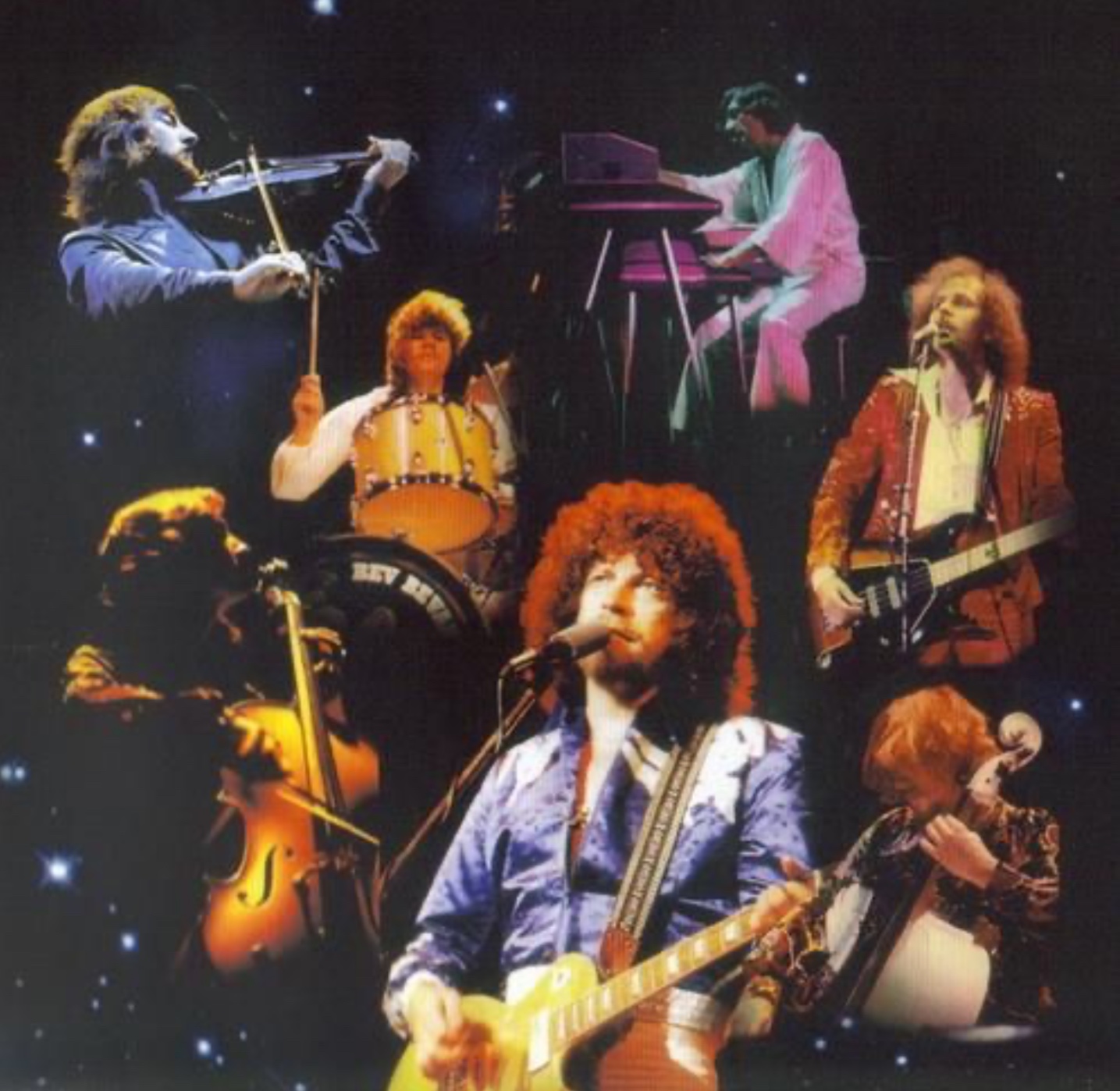
“Out of the Blue”, the seventh studio album by the British rock group Electric Light Orchestra contains the legendary "Concerto for a Rainy Day", four tracks that together form a symphonic suite, with the weather as its theme. The last part, “Mr. Blue Sky”, became a world hit. Trivia for the harder ones amongst you: What instructions were given out via vocoder at the end of the suite?
The third side of the album is a quartet of loosely thematic songs inspired primarily by an extended period of dreary downpour and thunder while holed up in his Swiss chalet, Lynne loosely crafted the songs in response to his own attitude toward the weather and the writer’s block it brought about.
The concept is very loose indeed, but a pliable imagination can find a thread along which to string them all. Maybe we can think of them from the point of view of someone recently cast out of a turbulent relationship. From the dark of a midnight rainfall to the sunlight of afternoon, the weather mirrors the recovery and movement toward renewed optimism that comes from crumbling relationships.
STANDIN’ IN THE RAIN
The first song, “Standin’ in the Rain,” opens the suite with a haunting keyboard over a recording of real rain, recorded just outside the rented studio. The singer has been cast out onto the street alone, freezing and soaking wet. After a cymbal crash, the orchestra takes prominence, and a heavily distorted voice, manipulated to resemble thunder crackling, voices the words "A concerto for a rainy day". At around the one minute mark the staccato strings play a morse code spelling out the band’s name. From this point, the song develops into an "exhilarating instrumental workout" that evokes the intensity of a rainstorm.
"Standin’ in the Rain" appears to convey a sense of frustration and isolation amidst challenging circumstances. The recurring rain motif symbolizes the hardships and difficulties that the singer is facing, as well as a feeling of being overwhelmed. In the song's verses, the singer is shown standing alone in the rain, expressing weariness and a longing to go home. This could represent a state of emotional exhaustion or perhaps a desire for solace and comfort in the face of adversity. The chorus reflects his determination to persevere despite the unfavorable conditions. They are doing their best, but feel as though their efforts are not being recognized or rewarded. This may highlight a sense of futility or a lack of validation in their endeavors. The refrain introduces a sense of alienation, as he observes others rushing by without acknowledging their presence. They wish to connect with others and be heard, but feel overlooked and unheard, further emphasizing their feelings of isolation and longing for recognition. In the second verse, the rain intensifies, paralleling the ever-growing challenges faced by the singer. The desire for freedom amidst the downpour can be interpreted as a yearning to escape or break free from the burdens and difficulties they are experiencing. The bridge delves deeper into the internal struggle of the singer, expressing the conflict between their good intentions and the pain they are feeling. Despite striving to do the right thing, their efforts are seemingly futile, drowned out by the relentless rain. This can evoke a sense of disappointment and vulnerability. "Standin’ in the Rain" captures the emotions of frustration, isolation, and longing for recognition when faced with seemingly insurmountable challenges. The rain serves as a metaphor for the hardships that can feel suffocating and unremitting.
BIG WHEELS
“Big Wheels,” forms the second part of the suite. The song adds layers of instrumentation as it progresses, building from an intimate beginning towards an "epic" crescendo. With its imagery of mechanisms large and beyond control, evoke both weather patterns and a feeling of hopelessness.
"Big Wheels" explores themes of introspection, self-doubt, and the constant cycle of life. The lyrics reflect a sense of contemplation and reflection on one's own existence, particularly in relation to others. In the verses, the songwriter ponders the perception of success and the struggle to find one's place in the world. The line "You got it made, they never understand" suggests that despite outward appearances, true fulfillment and understanding come from within. The reference to a coin falling implies the unpredictable nature of life and the uncertainty of what the future holds. The chorus emphasizes the repetitive nature of life's journey, symbolized by the metaphor of "big wheels turning." This imagery may represent the constant cycle of experiences and challenges that one faces, with the understanding that these wheels keep turning regardless of the outcome. The phrase "Or not at all" could imply that sometimes it feels as though things are moving ceaselessly, while other times, progress may seem stagnant. The bridge introduces a somber tone, describing a lonely and reflective moment in the dead of night. The mention of a "lonely light that shines upon the window" suggests a sense of isolation and longing. The imagery of the pouring rain and "cold dark waiting days" further emphasizes a sense of longing and uncertainty. In the final verse, the songwriter expresses a desire to return home and start anew. The repetition of the phrase "I think I'm gonna have to start again" highlights a feeling of dissatisfaction and the need for a fresh beginning. The inability to find what is "always rolling through my mind" represents a struggle to define one's purpose or find meaning in life.
SUMMER AND LIGHTING
However, optimism returns, or at least the singer regains his legs, as warmer weather returns on “Summer and Lightning,” the third song in the suite, where he signals a break in the clouds and the first hint of Sunrise. It's a bit of a thrill knowing that, as scary as it may be, the risks involved in falling in love are never greater than the thrill of being washed clean in the torrent.
"Summer and Lightning" appears to convey a feeling of longing and desire for love, along with the sense of magic and excitement that comes with it. The lyrics in the first verse suggest that the singer has been waiting for love for a significant amount of time and is struggling to continue in the current situation where they feel mistreated. This longing for love is reflected in the pre-chorus, where the idea of being far away and hoping for a message from the sky is presented. The chorus introduces the concept of magic, with the repeated phrase "Here it comes again, it must be magic." This magic could represent the overwhelming feeling of love and the joy it brings. It creates an atmosphere of wonder and anticipation. In the second verse, the singer envisions the person they desire in their mind, but the time they have lost waiting for them is emphasized. The line "What can I do? The sun ain't shinin'" suggests that despite their yearning, circumstances or obstacles are preventing them from having a fulfilling relationship. The bridge intensifies the emotions, with the repeated lines "I can feel it, feel it," emphasizing the intensity of the narrator's emotions and their connection to this love interest. Throughout the song, the phrase "Summer and Lightning" is used as a metaphor to describe the powerful and electrifying nature of this desired love, evoking a sense of passion, excitement, and energy. It represents the surge of emotions and the electrifying feeling that comes with the presence of love.
In addition to being one of the band’s most thrilling choral epics, “Summer and Lightning” is a quintessential summer storm song. When the swelling harmony comes in: “It s all around me, It must be magic”, it s guaranteed to raise the hair on the back of your neck. “Summer and Lightning” is a sparkling example of Jeff Lynne’s ability to create that unmistakable and original ELO sound.
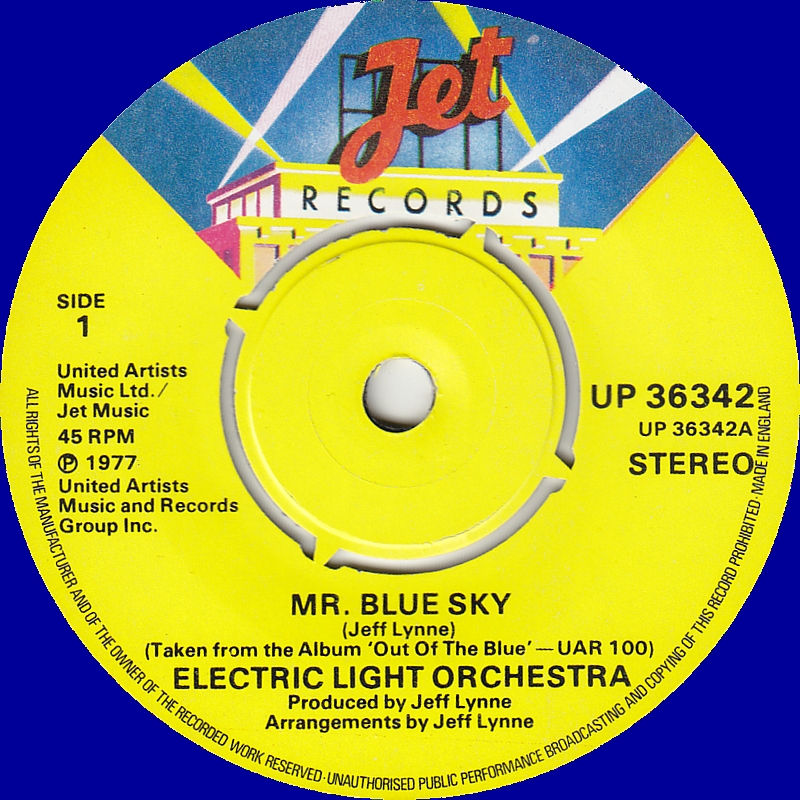
MR. BLUE SKY
Released: January 20, 1978
Charted: UK: #6 US: #35
The concerto ends with “Mister Blue Sky,” the final song of the set. An unabashed celebration of a sunny day and the feeling of freedom that comes from diving into whatever the winds brings.
"Mr. Blue Sky" is a song about finding joy and hope in the midst of difficult times. The lyrics describe a world of sunny days “There ain’t a cloud in sight” with an optimistic attitude that everything will be alright “Today is the day we’ve waited for”. Lynne is asking for an explanation from Mr. Blue Sky, the source of all this hope and optimism, as to why they were gone for so long and where they went wrong. The song is a reminder to find hope in difficult times, that no matter what we go through, the blue sky will always be waiting for us.
Jeff said: “I suppose this is my most well-known song. Everybody tells me something different about it. It's even got crazy appeal to kids since it's like a nursery rhyme. It's the thought of, 'Oh, isn't it nice when the sun comes out?' And you know, it really is. 'The sky is blue, wow, what a thing.' It's a simple kid's story. I remember writing the words down. I was at a chalet in the mountains of Switzerland and it was all misty and cloudy all the way around. I didn't see any countryside for the first four days or so, and then everything cleared and there was this enormous view forever and the sky was blue. It was dark and misty for 2 weeks, and I didn't come up with a thing. Suddenly the sun shone and it was, Wow, look at those beautiful Alps. I wrote Mr. Blue Sky and 13 other songs in the next 2 weeks.”
He also admitted that it was the song that crystallised everything he loved about the band and wanted to transmit to people listening. "It captured what my vision of ELO was all about," he said. "All the bits that come in and out, the backing vocals, the cellos sliding, all the little naughty bits, the sound effects, everything is exactly what I imagined ELO to be."
Bev Bevan said: “it’s a happy song, we all feel happier when the sun shines after a storm. The choir are very good at the end of this track singing in the style of the 'Swingle Sisters'."
You can find the answer to the Trivia in the last orchestral note: the phrase “Please Turn Me Over” spoken through a vocoder can be heard (This bit has been misheard repeatedly as “Mr. Blue Sky, why?”, but original keyboardist Richard Tandy confirmed the actual lyric to members of the Showdown ELO fan list). This is an instruction for owners of the original vinyl album to turn it over to listen to the fourth side.