Total de visualitzacions de pàgina:

5.11.23


 BILLY IDOL - EYES WITHOUT A FACE

Released: March 1984

Charted:  UK: #18   US: #4 


"Eyes Without a Face" is a song by English rock musician Billy Idol, from his 1983 second album “Rebel Yell”, and released as the second single from the album. The song is softer and more ballad-like than most of the album's other singles. It reached No. 4 on the Billboard Hot 100, becoming Idol's first top-10 hit in the US.The recording features the voice of Perri Lister, she appeared in the banned video for "Hot in the City" who sings "Les yeux sans visage" (French for "Eyes without a face") as a background chorus. 


The title of the song refers to the English title of French director Georges Franju's 1960 film “Les yeux sans visage”, a chillingly horrific yet classically poetic film. In it, a gifted plastic surgeon is involved in a near fatal auto accident which horribly disfigures the once beautiful face of his beloved daughter. Along with his assistant, he abducts young women so that he may surgically remove their facial features and graft their beauty onto that of his daughter's grotesque countenance. More than the typical Mad Scientist gore flick of the "horror" genre in movies, it deals with real humanistic themes rather than the loud crash and bang after a minute long string instrument is played in a high key. The arrogance, vanity, and what we ultimately come to realize, guilt of the father who now treats his daughter as a sort of porcelain doll with interchangeable parts. Though he supposedly loves her so, what he does in effect, is dehumanize her for the sake of his own personal redemption.


The song "Eyes Without a Face" uses similar imagery for effect. However, he tackles the concept of the modern romance and uses the same metaphors the movie used to show the absence of humanity and how cold and callous the modern world has grown to be. All that we have endured getting here has made us like the doctor. While the daughter has become eyes without a face (she wears a mask a la Halloween's Michael Myers and the only visible part of her face are her eyes), the doctor has become a face without eyes. He has blinded himself to the hideousness that he has involved himself, his family, and his poor victims in. While the woman in the relationship in the Billy Idol song is "Eyes Without a Face", the singer has become the face without the eyes. Wrapped in guilt for what once was a perfect love, he must face his own pettiness and the fact that he has forever altered his partner and their relationship.


The video was directed by David Mallet, who once again accented the video with three girls slapping their own butts in time to the music. Idol's memories of the video are painful ones. His contact lenses dried out during the shoot, and when he fell asleep on a flight to his next gig in Arizona, they fused to his eyes. He had to get his corneas scraped at a hospital and wear bandages on his eyes for three days.


WARREN ZEVON - WEREWOLVES OF LONDON


Released: January 18, 1978

Charted:  US: #21 


"Werewolves of London" is a song performed by American singer-songwriter Warren Zevon. It was composed by Zevon, LeRoy Marinell and Waddy Wachtel and was included on 1978 “Excitable Boy”, Zevon's third solo album. The track featured Fleetwood Mac's Mick Fleetwood and John McVie on drums and bass respectively. The single was released by Asylum Records and was a top 40 US hit, the only one of Zevon's career.


Zevon had this song written long before it was released in 1978. After putting out an album in 1970, he took work writing jingles and became The Everly Brothers' bandleader. His good friend Jackson Browne championed him and started performing "Werewolves Of London" in 1975, always explaining that the song was written by Zevon.


Browne convinced his label, Asylum, to sign Zevon, and they did, pairing them in the studio with Browne producing. They didn't record "Werewolves Of London" for Zevon's first Asylum album, “Warren Zevon”, in 1976, because Browne, already a savvy industry veteran with three albums under his belt, knew that Zevon's more outlandish songs like "The French Inhaler" and "Desperados Under The Eaves" wouldn't make it to their second Asylum album, so they had to record them while they had the chance. Meanwhile, Browne's label pushed him to record "Werewolves," but he refused, knowing it was quintessential Zevon. Browne returned to produce Zevon's next album, “Excitable Boy”, and this time they included "Werewolves Of London".


At its most basic level, the song recounts a werewolf roaming the streets of Soho in London, searching for a Chinese restaurant, Lee Ho Fook's, and eventually paying a visit to a woman's kitchen. The chorus simply warns the listener that they should beware of the werewolves of London. The song also alludes to Lon Chaney and Lon Chaney, Jr., two famous horror actors. The deeper meaning of the song is open to interpretation, some suggest it is a warning against the dangers of letting one's wild impulses take over, while others argue it is simply a tongue-in-cheek story about facing one’s fears. Ultimately, the song leaves it to the listener to come up with their own interpretations.


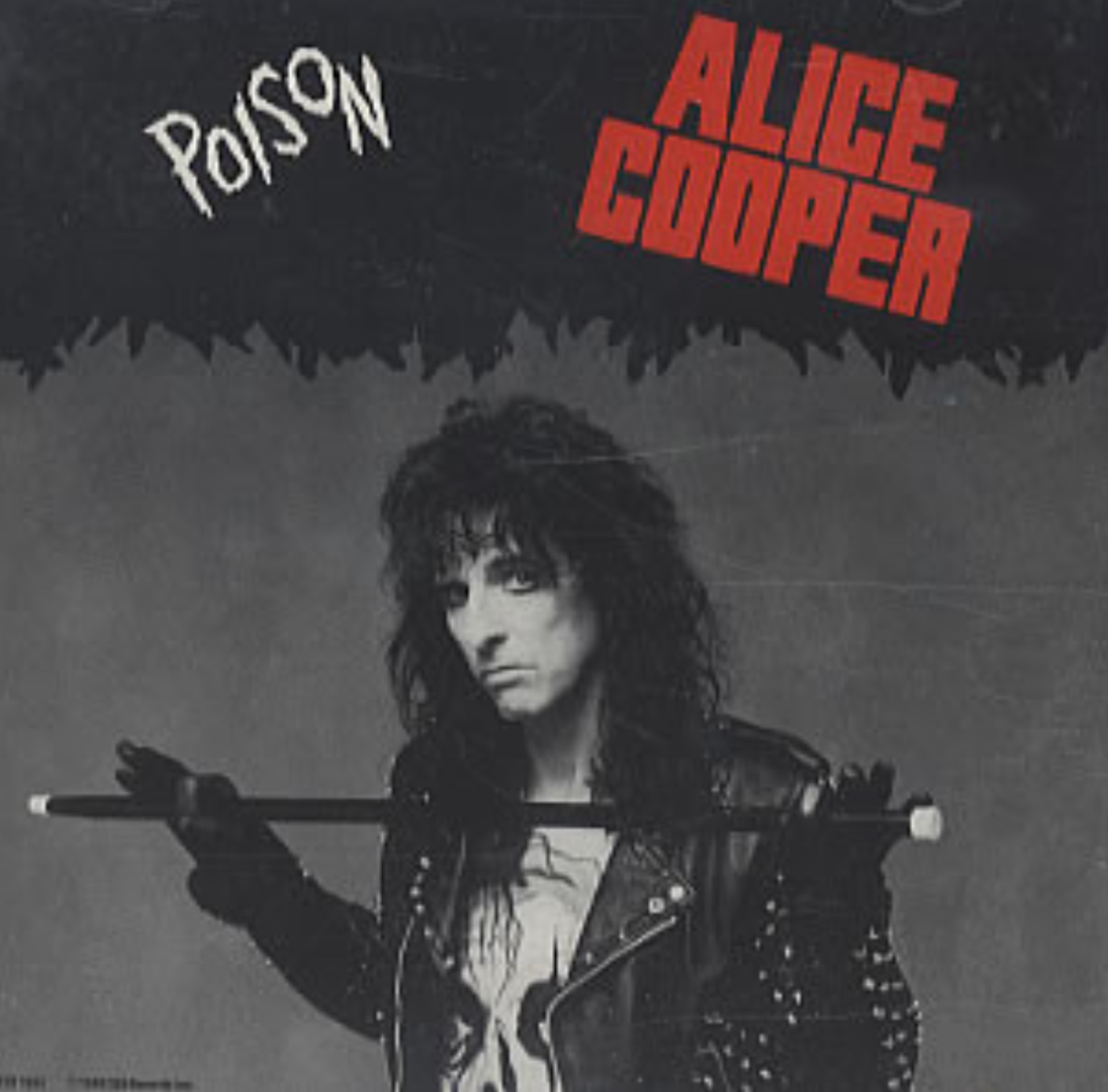
ALICE COOPER - POISON

Released: July 17, 1989

Charted:  UK: #2   US: #7 


"Poison" is a song by American musician Alice Cooper. The song was released as a single in July 1989 from Cooper's eighteenth album, “Trash”. Cooper wrote this song with guitarist John McCurry, and producer Desmond Child, which is one of the most effective ways to produce a hit. A decade earlier, Child wrote "I Was Made For Lovin' You" with members of Kiss, which opened the door for outside writers in Rock bands. His next gig was Bon Jovi, resulting in their breakout hits "You Give Love A Bad Name" and "Livin' On A Prayer."


The song is about the consequences of unhealthy or ill-fated relationships. The lyrics describe a destructive desire to stay with someone despite feeling a sense of danger. The vocals compare the relationship to a toxic poison; one that can cause pain and anguish, while still feeling irresistible and exciting. Ultimately, the song expresses how difficult it can be to break free of a harmful relationship.


"Poison" was a huge comeback song for Cooper, who released five Platinum albums from 1970-1975 but fell out of favor over the next 12 years and battled a debilitating drug and alcohol addiction that nearly killed him, he got sober for good in 1983. The song becomes his first Top 10 hit in the US and UK for 12 and 16 years respectively, and remains one of his best known song. 


This was Cooper's first music video to get rotation on MTV. He broke new ground in 1975 when he turned the stage show for his Welcome To My Nightmare tour into a full movie, which laid the foundation for Michael Jackson's "Thriller" video, both clips were narrated by Vincent Price. With "Poison," Cooper tapped into the MTV audience for the first time and became far more relevant to the younger generation, who got the joke when he showed up in the movie Wayne's World in 1992.


STEVE MILLER BAND - ABRACADABRA


Released : May 1982

Charted:  UK: #2   US: #1 (2 weeks)


"Abracadabra" is a song by American rock group the Steve Miller Band, written by Steve Miller. The song was released as the first single from the 1982 album of the same name that year. This is the biggest hit of Steve Miller's career to date.


"Abracadabra" was the last US Top 40 hit for the Steve Miller Band, and their third #1, following "The Joker" and "Rock 'N' Me." The song got plenty of airplay, but couldn't fill arenas for Miller, who was falling out of favor. "We were considered a dinosaur group," he told The Word regarding this period. "Punk was in, new wave, the hair bands - the guys in the green tights and two-foot hairdos - it seemed at the time that our run was over." The group was only drawing a few thousand fans to their big arena shows, marking the end of their run as a huge concert draw. Miller took six years off from touring, but resumed again in 1988 ("I was just bored to tears," he said). By this time, he had entered the realm of classic rock, and was once again filling arenas. Over the next few decades, he kept a consistent but reasonable touring schedule, playing about 50 shows a year, mostly in the US.


"Abracadabra" is a fun and playful love song about the feeling of being completely enchanted by someone. The lyrics use the metaphor of magic to describe the intensity of the singer's attraction to the subject of the song. The chorus, "Abra-abra-cadabra, I wanna reach out and grab ya, abra-abra-cadabra, Abracadabra," is a play on the words of a magic spell, emphasizing the singer's desire to connect physically with their love interest. Throughout the song, the singer is portrayed as being completely under the spell of their lover, consumed by the passion and desire they feel. The repeated lyric, "I heat up, I can't cool down, my situation goes 'round and 'round," reflects the overwhelming nature of their emotions. The verses of the song describe the physical sensations the singer experiences when their lover is around - they burn with desire, feel magic in their caress, and can't resist the touch of their velvet glove.


The video was the first that Miller made. One of most low-profile frontmen in rock, Miller stayed out of the spotlight and was rarely seen in public off the stage, but in 1982 MTV was becoming a force and you needed a video to sell records. Miller was never going to be a video star, so this video did a little sleight of hand, playing up the magic theme with magicians performing various tricks. Miller is incognito, wearing sunglasses while playing the guitar and moving in slow motion. The clip was directed by Peter Conn, who was one of the first to integrate computer effects into videos.


4.11.23


METALLICA - ENTER SANDMAN

Publicació: 29 de juliol de 1991

Llistes: Regne Unit: #5  EUA: #16


"Enter Sandman" és una cançó de la banda nord-americana Metallica. És la pista d'obertura i el senzill principal del seu cinquè àlbum homònim, publicat el 1991. La música va ser escrita per Kirk Hammett, James Hetfield i Lars Ulrich. El vocalista i guitarrista Hetfield va escriure la lletra, que tracta sobre els malsons d'un nen.


La lletra original de James Hetfield tractava sobre la síndrome de la mort sobtada del nadó (Crib Death), quan un nadó mor inexplicablement al seu bressol. Les  frases, "Off to never land" era, "Disrupt the perfect family", i el "sandman" que mata el nadó, eren coses bastant horripilants, així que el seu productor Bob Rock el va convèncer de canviar-ho per fer-la més accessible al públic. La banda tenia una política de no comentar les contribucions individuals dels altres, però Rock era un foraster i se sentia lliure de parlar. Per a la seva sorpresa, Hetfield s'ho va prendre bé i va modificar la lletra. Parlant amb Uncut el 2007, Hetfield va dir: "Volia més coses mentals on aquest nen es manipulat pel que li diuen els adults. Saps quan et despertes amb aquesta merda a l'ull? Se suposa que l'hi ha posat l'home de sorra per fer-te somiar. Així que el noi de la cançó li diu això a aquest nen petit i el fa sentir una mica estrany. Després d'escoltar això no pot dormir i el remei funciona al contrari. En lloc de tranquil·litzar-lo , la taula ha girat i ara està amoïnat".


El guitarrista Kirk Hammett va explicar a la revista Rolling Stone com va escriure el riff d'aquesta cançó: "Soundgarden acabava de treure “Louder Than Love”. Estava intentant captar la seva actitud cap als riffs heavy. Eren les dues de la matinada. Vaig gravar el que vaig tocar i no hi vaig pensar més. Quan el bateria Lars Ulrich va escoltar el riff, va dir: "Això és realment genial. Però repeteix la primera part quatre vegades". Va ser aquest suggeriment el que ho va fer encara més enganxós".


La cançó va marcar un canvi de Metallica lluny de les cançons més complexes amb múltiples canvis de temps que estaven en joc al seu àlbum anterior, “...And Justice For All”. En un esforç per crear cançons més curtes i més concretes, van utilitzar només dos riffs a la pista i van basar la resta de la cançó en aquests. El resultat va ser una senzilla cançó de rock dur que va triomfar. 


METALLICA - ENTER SANDMAN


Released : July 29, 1991

Charted:  UK: #5   US: #16 


"Enter Sandman" is a song by American band Metallica. It is the opening track and lead single from their self-titled fifth album, released in 1991. The music was written by Kirk Hammett, James Hetfield and Lars Ulrich. Vocalist and rhythm guitarist Hetfield wrote the lyrics, which deal with the concept of a child's nightmares.


James Hetfield's original lyric was about Sudden Infant Death Syndrome (Crib Death), when a baby dies inexplicably in its crib. The line, "Off to never never land" was, "Disrupt the perfect family," and the "sandman" kills the baby. Pretty gruesome stuff, so their producer Bob Rock convinced him to change it to make it more accessible and meaningful. The band had a policy of not commenting on each other's individual contributions, but Rock was an outsider and felt free to speak up. To his surprise, Hetfield took it well and altered the lyric accordingly. Speaking with Uncut in 2007, Hetfield said: "I wanted more of the mental thing where this kid gets manipulated by what adults say. And you know when you wake up with that s--t in your eye? That's supposedly been put in there by the sandman to make you dream. So the guy in the song tells this little kid that and he kinda freaks. He can't sleep after that and it works the opposite way. Instead of a soothing thing, the table's turned."


Guitarist Kirk Hammett told Rolling Stone magazine how he wrote this song's memorable riff: "Soundgarden had just put out Louder Than Love. I was trying to capture their attitude toward big, heavy riffs. It was two o'clock in the morning. I put it on tape and didn't think about it. When [drummer] Lars [Ulrich] heard the riff, he said, 'That's really great. But repeat the first part four times.' It was that suggestion that made it even more hooky."


The song marked a shift from Metallica away from the more complex tracks with multiple time signatures that were in play on their previous album, “...And Justice For All”. In an effort to build "shorter, to-the-point" songs, they used just two riffs on the track and based the rest of the song off those. The result was a simple hard rock song that helped seal the coffin on hair metal.


THE DOORS - RIDERS ON THE STORM

Publicació: juny de 1971

Llistes: Regne Unit: #22  EUA: #14


"Riders on the Storm" és una cançó de la banda nord-americana The Doors, publicada per Elektra Records com el segon senzill del sisè àlbum d'estudi de la banda, "L.A. Woman". És famosa per ser l'última cançó que Jim Morrison va gravar abans de la seva mort sobtada a París el 3 de juliol de 1971. La cançó ha estat classificada com a rock psicodèlic, jazz rock, cançó d'art rock i precursora de la música gòtica.


Si preneu atenció, podeu escoltar a Jim Morrison xiuxiuejant la lletra sobre la seva propia veu, cosa que provoca una mena d'efecte esgarrifós. Aquesta va ser l'última contribució de Morrison com a estrella de rock. Ray Manzarek va dir a la revista Uncut el setembre de 2011: "Hi ha una veu que xiuxiueja a 'Riders on the Storm', si l'escoltes amb atenció, una sobredoblació xiuxiuejada que Jim afegeix sota la seva veu. Això és l'últim que va fer mai. Un sobredoblament efímer i xiuxiuejat. ”


Quan va gravar aquesta cançó, Jim Morrison ja havia decidit que deixaria la banda i marxaria a París, on moriria. Algunes de les lletres d'aquesta cançó ("girl, you gotta love your man...") es relacionen amb el seu amor per la seva xicota Pam Courson, que va anar amb ell a França. Al final d'aquesta cançó, hi ha efectes sonors de trons i la veu tènue de Jim Morrison xiuxiuejant: "Riders on the Storm". Això es va imaginar com el seu esperit xiuxiuejant des del més enllà.


La cançó es pot veure com un relat autobiogràfic de la vida de Morrison: es considerava un Rider on the storm. L'assassí a la carretera és una referència a un guió que ell va escriure anomenat "The Hitchhiker (An American Pastoral)", on Morrison anava a fer el paper d'un autoestopista que es dedica a fer d'assassí en sèrie. La lletra, “Girl you gotta love your man” (Noia, has d'estimar el teu home) es pot veure com una súplica desesperada a la seva núvia Pamela.


“Riders on the Storm" tracta sobre la fragilitat de la vida i com pot canviar en un cas. El cor de la cançó parla d'aquesta idea amb la imatge dels genets a la tempesta, que és una metàfora de com la vida pot canviar de manera imprevisible i sobtada. Els versos i el pont de la cançó parlen de com l'amor i la vida en general són temporals i la memòria romandrà. L'outro és un recordatori que, tot i que les tempestes de la vida sempre hi seran, ofereixen una oportunitat per trobar el teu camí i imposar-te. Així, la cançó és un recordatori per apreciar i aprofitar la vida i l'amor, ja que s'ha de valorar i gaudir al màxim.


THE DOORS - RIDERS ON THE STORM


Released: June 1971

Charted:  UK: #22   US: #14 


"Riders on the Storm" is a song by American rock band the Doors, released by Elektra Records as the second single from the band's sixth studio album, “L.A. Woman”. It is famous for being the last song that Jim Morrison recorded prior to his sudden death in Paris on July 3, 1971. The song has been classified as a psychedelic rock, jazz rock, art rock song, and a precursor of gothic music.


If you listen closely, you can hear Jim Morrison whispering the lyrics over his own singing, which causes a kind of creepy effect. This was Morrison's final contribution as a rock star. Ray Manzarek told Uncut magazine September 2011: "There's a whisper voice on 'Riders on the Storm,' if you listen closely, a whispered overdub that Jim adds beneath his vocal. That's the last thing he ever did. An ephemeral, whispered overdub.”


When he recorded this song, Jim Morrison had already decided that he was going to leave the band and go to Paris, where he would die. Some of the lyrics in this song ("girl, you gotta love your man...") relate to his love for his girlfriend Pam Courson, who went with him to France. At the end of this song, there are sound effects of thunder, and the faint voice of Jim Morrison whispering, "riders on the storm." This was envisioned as his spirit whispering from the beyond.


The song can be seen as an autobiographical account of Morrison's life: he considered himself a Rider on the storm. The killer on the road is a reference to a screenplay he wrote called “The Hitchhiker (An American Pastoral)”, where Morrison was going to play the part of a hitchhiker who goes on a murder spree. The lyrics, -Girl you gotta love your man- can be seen as a desperate plea to his long time girlfriend Pamela.


"Riders on the Storm" is about the fragility of life and how it can change in an instance. The chorus of the song speaks to this idea with the image of riders on the storm, which is a metaphor for how life can change unpredictably and suddenly. The verses and bridge of the song speak to how love and life in general are temporary and memory will remain. The outro is a reminder that though the storms of life will always be there, they provide an opportunity to find your way and prevail. Thus, the song is a reminder to appreciate and take advantage of life and love, as it should be cherished and enjoyed as much as possible.