Total de visualitzacions de pàgina:

9.11.23


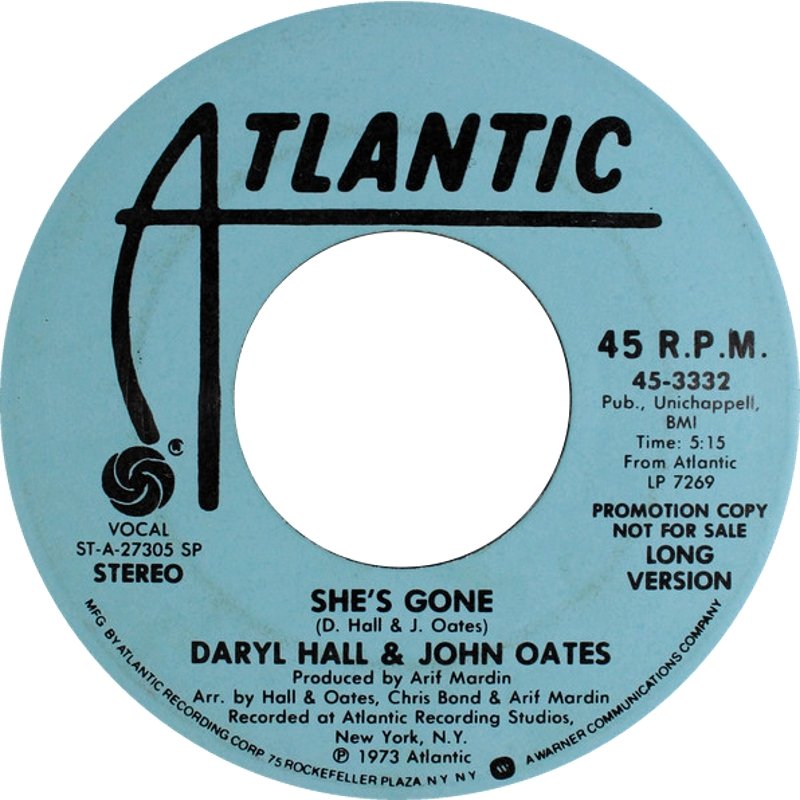
DARYL HALL & JOHN OATES - SHE’S GONE

Publicació: novembre de 1973

Llistes: EUA: #7 Regne Unit: #42


"She's Gone" és una cançó escrita i interpretada originalment pel duo nord-americà Daryl Hall i John Oates. La balada soul s'inclou al seu àlbum de 1973, "Abandoned Luncheonette". Hall & Oates van escriure això mentre es consolaven mútuament amb els desamors. Daryl s'acabava de divorciar de la seva dona Bryna Lublin, i una cita de Cap d'Any havia acabat amb una relació de John.


Moltes cançons de Hall & Oates van ser escrites principalment per un membre del duo, però aquesta cançó va ser una col·laboració al 50%. Hall va explicar que Oates va idear la tornada i la va polir amb la guitarra acústica. Hall va pensar que sonava com la cançó "Wild world" de Cat Stevens, així que amb el seu teclat va reelaborar el ritme. A partir d'aquí, va ser qüestió de trobar la progressió i la lletra. "Ens vam asseure junts i la primera frase que va sortir va ser: 'Everybody's high on consolation (Tothom està ben consol)'", va dir Hall. "Va ser una d'aquelles coses en què les frases fluïen soles, i ho aprofitavem. Per a mi, aquesta és la cançó definitiva de Daryl i John, perquè era molt col·laborativa i explicava molta part de les nostres experiències i vides".


John va explicar: "Vam començar com a compositors. Tant Daryl com jo tenim una gran varietat de gustos musicals. El fet que la música que feiem podria haver caigut en una categoria determinada no vol dir que no en fossim conscients, i m'interessaven altres tipus de música. Quan Hall i Oates es van unir, vaig aportar un enfocament folk-i tradicional nord-americà, i era una cosa de la qual Daryl ni tan sols era conscient. I Daryl va aportar molt més del costat del R&B urbà. I quan els vam barrejar, finalment vam crear un so propi".


Aquesta és una de les cançons preferides de Hall & Oates. Daryl Hall va dir a Entertainment Weekly al 2009: "És molt autobiogràfica. El que vam escriure era real, tot i que tractava sobre dues situacions diferents. I és molt característica amb el nostre estil: una melodia creixent i una progressió d'acords edificant, però sobre una temàtica molt trista". Aquesta cançó ha estat un pilar habitual a les llistes de cançons dels concerts del duo des que la van gravar, una peça per a la que no passa el temps. Al DVD de Hall & Oates 2015 Live In Dublin, Hall presenta la cançó dient: "És honesta, és real, sembla la primera vegada que la toquem".


Aquesta cançó es va publicar per primera vegada com a senzill el febrer de 1974, però es va quedar en el número 60. Més tard aquell any, Tavares la va gravar i, tot i que la seva versió només va arribar al número 50, va ser número 1 a les llistes de R&B. Després que Hall & Oates obtinguessin un bon èxit amb "Sara Smile", Atlantic Records va llançar una versió editada de la cançó que va arribar al número 7 el 1976.


Hall & Oates van crear un vídeo musical per a aquesta cançó el 1973, un dels primers d'un grup nord-americà. Dirigida per la germana d'Oates, Diane, que estudiava cinema a la Temple University, la van rodar en una cadena de televisió de Filadèlfia perquè pogués publicar-se en un programa de dansa local. El clip és absurd i inescrutable, amb Oates amb un esmòquing sense mànigues i un noi amb un vestit de diable que els ajuda a retratar una interpretació literal de les línies, "I'd pay the devil to replace her (Pagaria al diable per substituir-la)". El clip no es va emetre mai, però Oates el va publicar més tard a YouTube.


DARYL HALL & JOHN OATES - SHE’S GONE


Released: November 1973

Charted:  US: #7  UK: #42 


"She's Gone" is a song written and originally performed by the American duo Daryl Hall and John Oates. The soul ballad is included on their 1973 album, “Abandoned Luncheonette”. Hall & Oates wrote this while they were consoling each other over heartbreaks. Daryl had just divorced from his wife Bryna Lublin, and a New Year's Eve date had stood up John.


Many Hall & Oates songs were written primarily by one member of the duo, but this song was an equal collaboration. Hall explained that Oates came up with the chorus, which he wrote on acoustic guitar. Hall thought it sounded like the Cat Stevens song "Wild world” so he went to his Wurlitzer keyboard and reworked the groove. From there, it was a matter of finding the progression and coming up with the lyrics. "We sat down together, and the first line that came out was, 'Everybody's high on consolation'" said Hall. "It was one of those things where the lines just flowed out, and we were banging it back and forth. To me that is the ultimate Daryl and John song, because that was so collaborative, and so much a part of both of our experiences and lives thrown together". 


John said: "We started out as songwriters. And both Daryl and myself, individually and collectively, have a wide variety of musical tastes. Just because the music we made may have fallen into a certain category doesn't mean we weren't aware of and interested in other kinds of music. When Hall & Oates got together, I brought a traditional American folk-y approach, and it was something Daryl wasn't really even aware of. And Daryl brought a lot more of the urban R&B side. And when we blended those together, we eventually created a sound".


This is one of the duo's favorite Hall & Oates songs. Daryl Hall told Entertainment Weekly(October 16, 2009): "It's very autobiographical. What we wrote about was real, even though it was two different situations. And it's very thematic with us: this soaring melody and uplifting chord progression, but about a very sad thing". This has been a mainstay of the duo's setlists since they recorded it, bet it never gets old for them. On Hall & Oates 2015 Live In Dublin DVD, Hall introduces the song by saying, "It's honest, it's real, it feels like the first time every time we play it".


This song first was released as a single in February 1974, but stalled at #60. Later that year, Tavares recorded the song, and while their version only made #50, it was a #1 R&B hit. After Hall & Oates scored a hit with "Sara Smile", Atlantic Records released an edited version of the song which made #7 in 1976.


Hall & Oates created a music video for this song in 1973 - one of the first ever by an American act. Directed by Oates' sister Diane, who was studying film at Temple University, they shot it at a Philadelphia TV station so it could run on a local dance show. The clip is absurd and inscrutable, complete with Oates in a sleeveless tuxedo and a guy in a devil suit helping them portray a literal interpretation of the lines, "I'd pay the devil to replace her". The clip never aired, but Oates later posted it on YouTube.




 CULTURE CLUB - TIME (CLOCK OF THE HEART)


Publicació: 19 de novembre de 1982 (Regne Unit) / 29 de març de 1983 (EUA)

Llistes: Regne Unit: #3   EUA: #2


"Time (Clock of the Heart)" és una cançó de la banda britànica Culture Club, llançada com a senzill independent a la major part del món, i com a segon senzill del seu àlbum debut "Kissing to be Clever" a Amèrica del Nord, continuació del seu senzill debut "Do you really want to hurt me?".


El guitarrista Roy Hay va explicar a la revista Musician com va sorgir aquesta peça: "Mikey Craig (baixista) estàvem provant de fer junts una mica de música, i en escoltar-ho George es va emocionar i li va posar lletra. Al principi, era horrible, molt insípid. Llavors en Mikey va tenir la idea d'utilitzar un ritme esglaonat. Vaig dir: "Sí, fem-ho amb el Moog". Així que ho vam fer, vam aconseguir el gran so d’acompanyament i tot es va unir".


A la lletra, el protagonista li canta a la seva parella dient-li que no es recolzi massa en ell perquè té por de què es facin mal. Pensa que podrien haver tingut una bona relació, però el temps s'està acabant i no han avançat. Li preocupa que estiguin perdent el temps junts i que el temps no els doni l'oportunitat de millorar les coses.


Aquesta cançó dóna una gran resposta a la proposta, "només dóna-li temps". Tal com explica Boy George a la lletra, el temps no sempre fa que una relació funcioni. Estar junts pot fer-vos sentir com si tingueu un amor real, quan realment tot el que heu fet és passar unes hores com a parella. El temps és valuós, i és massa valuós per perdre's en alguna cosa que no funciona.


El videoclip, dirigit per Chris Gabrin, ens porta dins d'un llibre amb un rellotge a la portada per mostrar la banda actuant en un estudi. També se'ls veu asseguts a la sala d'estar, compartint cafè (amb tasses personalitzades) i un pastís en forma de rellotge mentre es veuen a la televisió.


Gabrin va explicar sobre la realització del vídeo: "Vaig trobar un antic estudi de gravació desocupat, a les afores de Londres, tenia cinc homes que passaven moltes hores treballant en la creació d'un estudi de gravació per a nosaltres. Va durar gairebé una setmana per preparar-lo per poder filmar. Teníem uns quants instruments i micròfons instal·lats. Vaig guiar la càmera cap amunt i cap avall, capturant les cares del grup des de tots els angles imaginables. Volia transmetre a la gent una sensació càlida d'aquest nou grup anomenat Culture Club". La vocalista de suport Helen Terry fa un cameo al clip com la mestressa de casa amb rínxols que els serveix pastís, un escenari que va molestar Boy George. Va dir: "Odio el fet que Helen Terry estigui vestida cruelment semblant una Molly Mop, estic una mica molest per com es presenta Helen en aquest vídeo. Va ser una decisió equivocada presa pel director".


En una revisió retrospectiva de la cançó, Allmusic va escriure: "De tots els èxits inicials de Culture Club, “Time (Clock of the Heart)” probablement és la que ha envellit millor. Boy George deixa caure la críptica automitologia el temps suficient per oferir una lletra tendra i sincera sobre l'amor perdut”.


Als Estats Units, la cançó va coincidir en assolir el número 2 del seu predecessor al Billboard Hot 100, "Do you really want to hurt me?". "Flashdance (What a feeling)" d'Irene Cara va ser la cançó que li va impedir arribar al cim de la llista.


CULTURE CLUB - TIME (CLOCK OF THE HEART)


Released: November 19, 1982 (UK) / March 29, 1983 (US)

Charted: UK: #3  US: #2


"Time (Clock of the Heart)” is a song by british band Culture Club, released as a stand-alone single in most of the world, and as the second single from their debut album “ Kissing to be Clever” in North America, follow-up to their debut single "Do you really want to hurt me?”. Also did well on Adult Contemporary formats and MTV, not a traditional combination, but one that proved very successful for the band.


Guitarist Roy Hay explained in Musician magazine how this one came about: "That song came from me and Mikey Craig (bass player) getting some music together, and George getting excited and putting lyrics to it. At first, it was horrible, really bland. Then Mikey had this idea to use a staggered beat. I said, 'Yeah, let's do it with the Moog.' So we did that, got the great snare sound and it came together."


On the lyrics, the protagonist is singing to his partner, telling her not to lean on him too much because he is afraid of getting hurt. He thinks that they could have had a great relationship, but time is running out and they haven't made any progress. He is worried that they are just wasting their time together and that time won't give them the opportunity to make things better


This song provides a great answer to the proposition, "just give it time." As Boy George explains in the lyric, time doesn't always make a relationship work. Staying together might make you feel like you have a real love, when really all you've done is log some hours as a couple. Time is precious, and it's too valuable to waste on something that isn't working.


The music video, directed by Chris Gabrin, takes us inside a book with a clock on the cover to show the band performing in a studio. They're also seen sitting in a living room, sharing coffee (out of personalized mugs) and a clock-shaped cake while watching themselves on TV.


Gabrin told about the making of the video: "I found an old vacated recording studio, just outside London, I had five men spending many hours working on creating a recording studio for us. It went on for almost a week to just get it ready for filming. We had a few instruments and microphones set up. I guided the camera up and down, capturing the group's faces from every conceivable and inconceivable angle I wanted people to get a warm feeling of this super new group called Culture Club." Backing vocalist Helen Terry makes a rather frumpy cameo appearance in the clip as the curler-wearing housekeeper who serves them cake, a scenario that bothered lead singer Boy George. He said: "I hate the fact that Helen Terry is cruelly dressed looking like a Molly Mop, I'm slightly upset of how Helen Terry is presented in this video. It was a wrong decision made by the director."


Cash Box said the song has "a gentle funk anchor on an otherwise airy romantic ballad". In a retrospective review of the song, Allmusic wrote: "Of all of Culture Club's early hits, Time (Clock of the Heart) has probably aged the best. Boy George drops the cryptic self-mythology long enough to deliver a tender, heartfelt lyric on lost love”.


In the United States, the song matched the #2 peak of its predecessor on the Billboard Hot 100, kept from the #1 spot by "Flashdance (What a feeling)" by Irene Cara.


QUEEN - KILLER QUEEN

Publicació: 11 d'octubre de 1974

Llistes: Regne Unit: #2 EUA: #12


"Killer Queen" és una cançó escrita pel cantant Freddie Mercury i gravada per al tercer àlbum de Queen "Sheer Heart Attack" l'any 1974. Mercury va comentar que va escriure la lletra abans que la melodia i la música, mentre que normalment feia el contrari. També va explicar que la cançó parlava d'una noia de classe alta.


"Killer Queen" tracta d'una dona poderosa i influent que és una "reina assassina". Es caracteritza per ser opulenta, amb accés a Möet et Chandon i amb una actitud responsable amb inclinació cap a l'esgraó superior de la societat. La lletra descriu que és capaç de dominar qualsevol situació i que té una forta influència en qualsevol persona que conegui. La tornada de la cançó posa l'accent en la seva força i la seva capacitat per "volar-te la ment", deixant clar que és una força a tenir en compte. Està clar que aquesta "Reina assassina" és algú que cal témer i admirar, una dona de força, poder i influència.


Brian May va dir: "Aquesta és una peça de pop perfecte i una de les millors cançons de Freddie. Està ben construïda i també té un dels solos dels quals estic més orgullós". "Cada tros d'aquesta cançó és pura perfecció pop. Petites coses que apareixen una vegada i tornen, com la campaneta del segon vers". Tot i això, al principi Freddy es va mostrar una mica reticent a l'hora de publicar-la: "Vaig tenir una mica de dubte; pensava que ens posavem en una cosa molt lleugera?" Ell relaciona això amb que inicialment la banda era molt heavy i orientada al rock, i "Killer Queen" va significar una gran desviació d'aquest so.


La cita falsament atribuïda de Maria Antonieta ha passat a la història com a justificació de la Revolució Francesa. Demostra com s'havia desconnectat de la gent comuna la classe dirigent. Segons la llegenda, quan li van informar que no hi havia pa per a la gent per menjar, ella va respondre, inconscient: "Llavors que mengin pastís!" Es diu que, enfurismat per aquesta resposta increïblement ignorant, el poble es va revoltar. A la cançó, s'utilitza aquesta cita per demostrar a quin nivell ven la seva mercaderia aquesta prostituta de preu elevat.


Al New Musical Express del 2 de novembre de 1974, Freddie Mercury, va dilucidar sobre aquesta cançó: "Es tracta d'una noia de classe alta. Estic intentant dir que les persones amb classe també poden ser putas. D'això tracta la cançó, tot i que preferiria que la gent hi fes la seva interpretació, que facin la lectura que els agradi".


QUEEN - KILLER QUEEN


Released : October 11, 1974

Charted:  UK: #2   US: #12


"Killer Queen" is a song written by lead singer Freddie Mercury and recorded for their third album “Sheer Heart Attack” in 1974. Mercury commented he wrote the lyrics before the melody and music, whereas normally he would do the opposite. He stated that the song was about a high-class call girl.


"Killer Queen" is about a powerful and influential woman who is a "killer queen". She is characterized as opulent, with access to Möet et Chandon, and having a take-charge attitude with an inclination towards the upper echelon of society. She is described as being able to command any situation and having a strong influence on anyone she meets. The chorus of the song emphasizes her strength and her ability to "blow your mind," making it clear that she is a force to be reckoned with. It is clear that this "Killer Queen" is someone to be feared and admired, a woman of strength, power, and influence.


Brian May said: "This is a perfect pop record and one of Freddie's greatest songs. It's beautifully constructed and it's also got one of the solos I'm most proud of." "Every slice of that record is pure pop perfection. Little things that visit once and come again, like the little bell in the second verse." Nevertheless, he was a little reticent at first about releasing it: "I was a little hesitant; I was thinking are we setting ourselves as something very light?" He relates this back to how initially the band were very heavy and rock-orientated, and "Killer Queen" was a major departure from that sound.


The falsely attributed Marie Antoinette’s quote has gone down in history as justification for the French Revolution. It demonstrates how out of touch with the common folk the ruling class had become. According to legend, when informed that there was no bread for the people to eat, she replied, oblivious, "then let them eat cake!" It is said, that enraged by this incredibly ignorant response, the people revolted. In the song, it is used to demonstrate at what level this high priced prostitute sells her wares.


In the New Musical Express November 2, 1974, the song's writer Freddie Mercury elucidated on this song: "It's about a high class call girl. I'm trying to say that classy people can be whores as well. That's what the song is about, though I'd prefer people to put their interpretation upon it - to read into it what they like."