Total de visualitzacions de pàgina:

29.11.23


DEPECHE MODE - I FEEL YOU


Released: February 15, 1993

Charted:  UK: #8   US: #37 


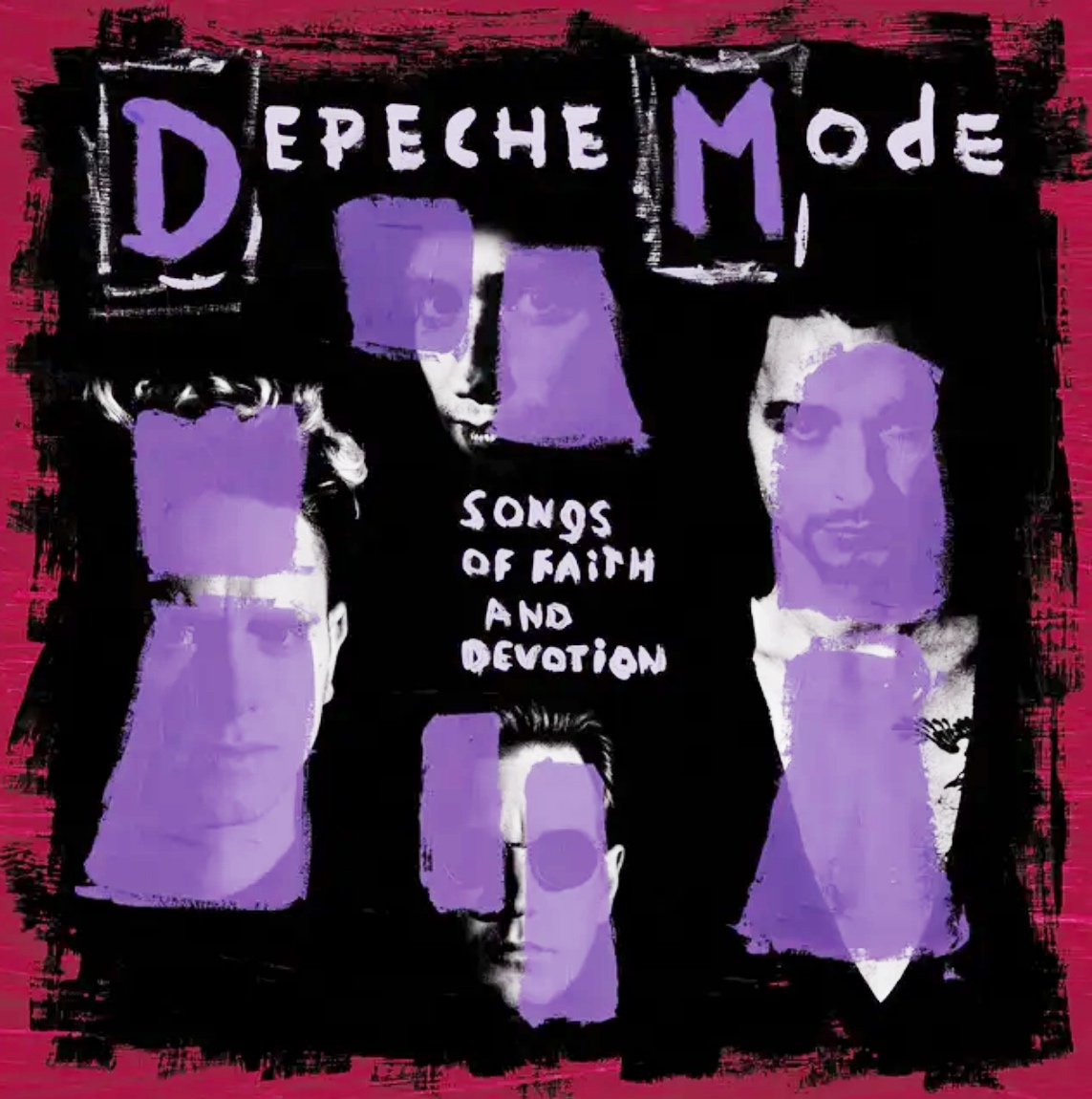
"I Feel You" is a song released as the 27th UK single of the band, and the first single from their 1993 eighth studio album, “Songs of Faith and Devotion”. “I Feel You” has been a staple in Depeche Mode’s live performances since its release, captivating audiences with its powerful energy and emotional resonance.


"I Feel You" is a song about the power and beauty of unconditional love. It speaks to the strength of a bond between two people, bringing them closer and deeper together with each passing moment. The lyrics describe the feeling of being embraced and taken away when the other person is around, and the joy that it brings to the relationship. It is a celebration of the love between two people and the promise of what lies ahead. This track can be interpreted as an exploration of the human condition. It delves into the innate need for connection, the way we are affected by others, and how these experiences shape our understanding of ourselves


"The whole 'Songs Of Faith And Devotion' project started off with the basic principle that we wanted to become more live, spontaneous and have a lot more performances involved. So that whole album turned out to be the rockiest that we've ever wanted to achieve. 'I Feel You' is probably the pinnacle of that and it's about the closest we're going to come to sounding like a real authentic rock band." (Martin Gore)


Dave Gahan in Rolling Stone: And then 'I Feel You' came on, while listening to Martin's demo tape: That was the moment when I looked into the mirror with the broomstick and started miming air guitar. I was ready to do something with some purpose, and suddenly things started to fall into place."


DEPECHE MODE - PRECIOUS 

Released: October 3, 2005

Charted:  UK: #4   US: #71 


"Precious" is a song from their 2005 studio album, “Playing the Angel”. It was released by Mute, Sire, and Reprise Records as the album's lead single. Martin Gore was going through a difficult time in his life. He had recently gone through a divorce, and he was going through a custody battle for his children. During this time, Gore was feeling very vulnerable and was exploring his emotions through his music. The result was the song “Precious”. The song was a way for him to express his regret and longing for the love he had lost.


The song speaks to the universal human experience of love and loss. We all have regrets about things we could have done differently in our relationships. Precious reminds us of the value of the love we have in our lives and how important it is to cherish it.


Although this is a very personal song for Martin Gore, it was sung by their main vocalist, Dave Gahan, which was standard procedure for the band. The “Playing The Angel” album was a turning point though, because Gahan wanted to write half the songs on the set; he settled for three after their producer, Ben Hillier, talked him down.


Martin Gore explained the meaning behind this song: "Well, my private life is pretty crappy. I'm about to divorce my wife, the situation has been going on for sixteen months. My life is certainly not a walk in the park. I also have three children. And 'Precious', the single, is a song that describes exactly this situation. But there are other divorce songs on 'Playing The Angel'. 'Precious' is about how my children cope with the divorce - which isn't very well. But the song ends with the verse "I know you learned to trust / keep faith in both of us". All of our songs, even the most depressive ones, contain hope."


Producer Ben Hillier said about this song: "The two songs on 'Playing The Angel' that are closest to the demos are 'Precious' and 'Macro'. Apart from that, everything else kinda changed quite a lot really. I mean, both of those demos were absolutely excellent, especially 'Precious', I thought that was really good but it just needed to have a bit more dynamic and sort of drive to it." Martin Gore added: "The main piano motif that goes throughout 'Precious' was on the demo, and remained intact for the version on the record."


DEPECHE MODE - NEVER LET ME DOWN AGAIN

Released : August 24, 1987

Charted:  UK: #22   US: #63 


"Never Let Me Down Again" is a song released as the second single from their sixth studio album “Music for the Masses”. The strident lyrics appear to reflect drug use and is a synth-pop masterpiece that well conveys the feelings of drug euphoria. The cover art features fragments of a Soviet map of Russia and Europe, with different fragments used for the different editions of the single.


This song is noted for the video in the 101 documentary when Gahan waves his hands in the air during the coda of the song, and the sold-out show of 60,000 all wave with him. When he was interviewed for the French magazine, Best, in 1989, he said: “For me, this is one of the most intense moments during the concert. “Firstly because this track has a very strong emotional charge, and every time I play it the waving goes well with the crowd. In addition, we were heading towards the end of the show and during this song, the stadium was on fire. When I saw the number of people there, I felt like crying. It was very moving.”


Gore in Bravo Magazine, 1987: "I wrote this song last March. And it was such a long time ago that I cannot say much about it anymore. But you're wrong [about the song because about my girlfriend], the song has nothing to do with relationships. It's about the concept of fleeing from reality and the evil awakening afterwards. Any kind of fleeing. Drugs, alcohol, or whatever."


Martin Gore in Rolling Stone magazine, 1993: "There was one instance regarding 'Never Let Me Down Again' when two separate people came up to me after a show one night and said, "I really like that song". One of them thought it was a gay anthem and the other one thought it was a drug anthem. They both loved the song, so that's fine by me."


The song enjoyed a streaming boost in the US after it was included in the HBO series The Last Of Us. It plays on the radio in the final scene of the show's pilot episode on January 15, 2023.


 DEPECHE MODE - MASTER AND SERVANT

Released: August 20, 1984

Charted:  UK: #9   US: #87 


"Master and Servant" is a song released as the second single from the 1984 fourth studio album “Some Great Reward”. The song delves into the complex dynamics of power and submission in relationships, both personal and societal. With its blend of electronic beats and haunting vocals, “Master and Servant” invites listeners to reflect on the complexities of dominance and submission, challenging societal norms and encouraging a deeper understanding of human nature.


“Master and Servant” is a metaphorical exploration of power dynamics. The lyrics vividly illustrate a relationship between a dominant figure (the master) and a submissive individual (the servant). The song delves into the intense emotions experienced by both parties involved, delving into themes of control, desire, and the struggle for autonomy. It is worth nothing that the song’s lyrics are intentionally ambiguous, allowing for various interpretations and personal connections.


Martin Gore said about the song: "I wrote 'Master And Servant' around 1985. Around that time I was going out to quite a few S&M clubs and stuff, and I just started seeing a correlation between what's happening there and life and politics and stuff. And it's where just this idea, this germ of an idea, started. The song It's about domination and exploitation in life, but it uses sex. It's about the power that people employ in work, love, hate... and in sex. We just used the sexual angle to portray it."


He later gave a completely different version of the reason for his inspiration: “If you wanna know where I first got the idea for the song, it's when I was reading a newspaper before about a man who was named "the Notthinghill murderer". He would take these young gays to his flat and murder them. And it sort of struck me - this game, I found it very interesting - I used to play this game, "master and servant" with them."


DEPECHE MODE - GET THE BALANCE RIGHT

Released: January 31, 1983

Charted:  UK: #13 


This was the first single with Alan Wilder as a member. This was also the first single to feature a "limited edition" version, and the first single to feature live tracks (all recorded October 25th, 1982, at the Hammersmith Odeon). The "Edited Mix" of "Get The Balance Right" on the 12 inch single is simply the "Single Version", retitled.


"Get the Balance Right!" seems to explore the concept of finding a healthy equilibrium in life. The lyrics touch upon themes such as compromise, responsibility, selfishness, and the constant struggle to strike a balance in various aspects of one's existence. The song suggest that life encompasses more than just enjoyable experiences. It highlights the importance of understanding, asserting oneself, and occasionally resorting to deception. This may imply that in order to navigate through life, one needs to adapt to different situations and sometimes make difficult choices. The phrase "get the balance right." acts as a recurring reminder to achieve harmony and moderation in one's actions and decisions. It suggests that finding the right equilibrium is crucial for a fulfilled life. This cut also explores the idea of being responsible and respectable, yet vulnerable to manipulation. It reflects the struggle of being caring and empathetic towards others while also acknowledging the importance of self-preservation. 


With its catchy melody and thought-provoking lyrics, the song emphasizes the importance of finding balance in life. The purpose of the band is to encourage listeners to explore different aspects of their lives and seek harmony in situations caused by love, work, relationships and personal aspirations, making it a personal challenge for those who dare to accept the defiance they propose through their music, which is evident in the line "Prepare yourself for the fall", which suggests that life is inherently unpredictable and that one must always be prepared for unforeseen setbacks.


In the music video, Wilder lip-syncs the first lines of the song, even though Dave Gahan is the lead singer. The director Kevin Hewitt made the assumption that Wilder was the singer and the band was too embarrassed to point out his mistake.