Total de visualitzacions de pàgina:

29.11.23


 DEPECHE MODE - STRANGELOVE

Released : April 27, 1987

Charted:  UK: #16  US: #50 


"Strangelove" is a song released as the lead single from their 1987 sixth studio album, “Music for the Masses”. It reached #76 on the Billboard Hot 100, and was the first of nine number ones on the US Hot Dance Club Play chart, where it stayed for three weeks at the top. t was remixed by production team Bomb the Bass  and released again as a single in the US, known informally as "Strangelove '88", this time reaching number 50 on the Hot 100.


Depeche Mode remixed “Strangelove” after releasing it as a single because they deemed it too cluttered and happy to fit in on “Music For The Masses”. But the first version is still better. A svelte new wave megahit, it wastes no time jumping into not one but two of the band’s greatest melodies, with the verses and choruses somehow being equally infectious. Even the bridge is so catchy that, for lesser bands, it could be the hook of the biggest song of their lives. Long story short: this is unforgettable pop condensed into its purest possible strain.


Gore said: "I really like this track and think it's one of our poppiest singles. Somehow I don't know if it still works for me... occasionally in our career we've stepped on the wrong side of commerciality, not very often , and 'Strangelove' is just on the right side. It's like "Enjoy The Silence", it's just on the right side of commerciality. There's a line and if you step over it too far it becomes bland pop music."


When Depeche Mode was interviewed about the songs on the '101' CD for the April 1989 issue of French magazine 'Best', Alan Wilder said: "The only thing that comes to mind about 'Strangelove' is the amount of time we spent on recording it and the discussions it caused. I can't even say how many times we had to redo it. We had to change the bass line at least a hundred times. We also had a lot of percussion that we ended up removing. In fact, the problem was that we decided it would become a single before even recording it and that complicated things. We wanted to do it well, and all that for a result which, in my opinion, is not excellent. The live version is much more satisfying."


DEPECHE MODE - NEW LIFE

Released: June 13, 1981

Charted:  UK: #11 


"New Life" is the second British single by Depeche Mode from their debut “Speak and Spell” recorded at Blackwing Studios in south London. It was not released commercially in the United States.


The song is about the idea of starting anew, entering a new life and open to opportunity, growth and transformation. It speaks of the transition from one place or mindset to another, while simultaneously being aware of the dangers and risks associated with this. The song is a plea to take a chance and take the chances life presents, to break out of habits and open oneself to the unknown. Through its alternating imagery of shadows and light, the song conveys both the necessity of moving forward and the fears of the unknown. Ultimately, it conveys a sense of hope that newness and possibility are possible, and that there is always an opportunity to start anew.


Vince Clarke wrote the song.There were two versions of the song available. The 7" version would later become the "album version", as it would eventually appear on the UK version of “Speak & Spell”, released in October 1981, and a 12" remix which differs from the version from the album in that it has a different, intensely percussive and harder intro, and a synth part added in the "solo" vocal section in the middle of the song, which is not present in the 7" mix. The remix would later appear in the American version of “Talk and Spell”.


The single became Depeche Mode's biggest hit at the moment in the UK. On 25 June 1981, the band performed "New Life" during their debut on the BBC's Top of the Pops programme. The band would perform the song two more times on the show, on July 16 and July 30, 1981.


The B-side, "Shout!", is the first Depeche Mode song to get an extended 12" remix, called "Rio Mix". This mix would later appear on the remix compilation Remixes 81–04, released in 2004. It is the first recorded song available on the compilation.


DEPECHE MODE - GHOSTS AGAIN

Released : February 9, 2023

Charted:  UK: #20 


"Ghosts Again" is a song released as the lead single from the band’s fifteenth studio album, “Memento Mori”. It reached Top 20 in the UK Singles Sales charts, something that they had not accomplished since their 2006 single "Martyr". it marks the band's first new music following the death of co-founder and keyboardist Andy Fletcher in May 2022.


The lyrics of "Ghosts Again" explore the theme of life's transience, as things can suddenly disappear, break, or vanish. They reflect on our mortality, reminding us that one day we too will become "ghosts again," fading into the ether and losing our physical form. According to vocalist David Gahan, the song strikes a perfect balance between melancholy and joy.


Dave Gahan told: "When I first heard that song, I was like, 'Okay. I'm in.' The demo made me feel instant joy. I remember dancing around my living room, and my daughter came in and she was looking at me weird, like, 'What's going on?' I was like, 'Don't you love this?' She kind of started bopping along with me and she was like, 'I get it. It's a really good song.'"


The “Memento Mori” album title is a Latin expression that translates to "remember you must die." It was originally used to remind proud Roman generals of the inevitability of death and, in the Middle Ages, to exhort people to make the most of their earthly lives. With lyrics that describe "Heaven's dreaming, thoughtless thoughts, my friends," and a "place to hide the tears we cry," "Ghosts Again" serves as a fitting introduction to the themes of life after death that drive “Memento Mori”.


Depeche Mode started work on “Memento Mori” before Andy Fletcher's death, but he didn't record any material for it. "He never got to hear any of it, which is really sad to me because there are songs on this record where I know he'd be like, 'This is the best thing we've had in years,'" Gahan reflected to NME. "I can hear his voice. I can also hear him saying, 'Does every song have to be about death?!'"


Martin Gore co-wrote "Ghosts Again" with Psychedelic Furs lead singer Richard Butler. Four Memento Mori tracks feature songwriting credits from Butler. "I've never written with anyone outside the band in our history," Gore told NME. "Richard reached out to me around April 2020, just texting to say 'We should write some songs together.' I asked for ideas and he sent me a few lines, so I put those to music and we started sending them back and forth.” We ended up writing seven songs. We didn't like the first one, but the other six were so great that I thought it would be a bit of a waste to put them out as a side-project. They just wouldn't get the same sort of exposure as they would if they were put out by Depeche."


DEPECHE MODE - DREAM ON

Released :  April 17, 2001

Charted:  UK: #6   US: #85 


This bluesy electronic track is the lead single from Depeche Mode's 10th studio album “Exciter”. The video features several classic American cars, including a 1973 Lincoln Continental Mark IV and a 1974-1976 Cadillac Coupe DeVille.


The song is a reflection on the idea of karma and how our choices have consequences that can haunt us. The lyrics emphasize the idea of suffering due to our mistakes, and the power of resilience in spite of this. The singer encourages us to look to the future and not be held back by our past. The chorus of the song encourages us to hold onto hope, embrace love, and dream on despite our current circumstances. The song ultimately serves as a reminder that our actions can bring us down, but we still have the power to choose our own fate, to find peace and happiness, if we just keep dreaming.


Dave Gahan told Entertainment Weekly in 2017: "Mark Bell who produced “Exciter”, he's not with us anymore, unfortunately, but he taught me some interesting things about using my voice because he had been working with Björk before that, and he brought in a lot of the things she was doing with her voice into the studio. I learned how to whispering, sing very quietly and very close to the microphone, to use all the noises in my voice to be able to create this creature, this thing, and “Dream On” was one of those songs lyrically where it was a character that I was becoming, that I could be without all the misery. I could step into it, and step out.”


"'Dream On' consists mainly of two guitar lines. We used nylon strings for the first and steel strings for the second line. Both lines were recorded very close to the microphone to receive a lot of noise and this special "pump effect". When you play acoustic guitars very softly, you get a lot of strange tones and noises, which make it sound almost electronic. We had one guitar line with the right groove. And we worked with it as if it was a loop. We adjusted the other line with the PlugIn Vocalign. It was like a live performance, but with a very tight timing. We treated the electronic sounds in 'Dream On' with the same respect as the acoustic ones. I find it really boring when electronic things are treated as if they're from the future, with all that phasing and bouncing silly shit all over the place. This one was really honest with the complete live performances intact, with decorative electronics adding to the pace and the narrative of the song."(Mark Bell)


While Martin Gore generally doesn't like to discuss the meaning of his songs, he told the Associated Press: "It's about a lot of people that I know and me. The songs are never about one thing in particular. It's a song about loathing other people and self-loathing for me."


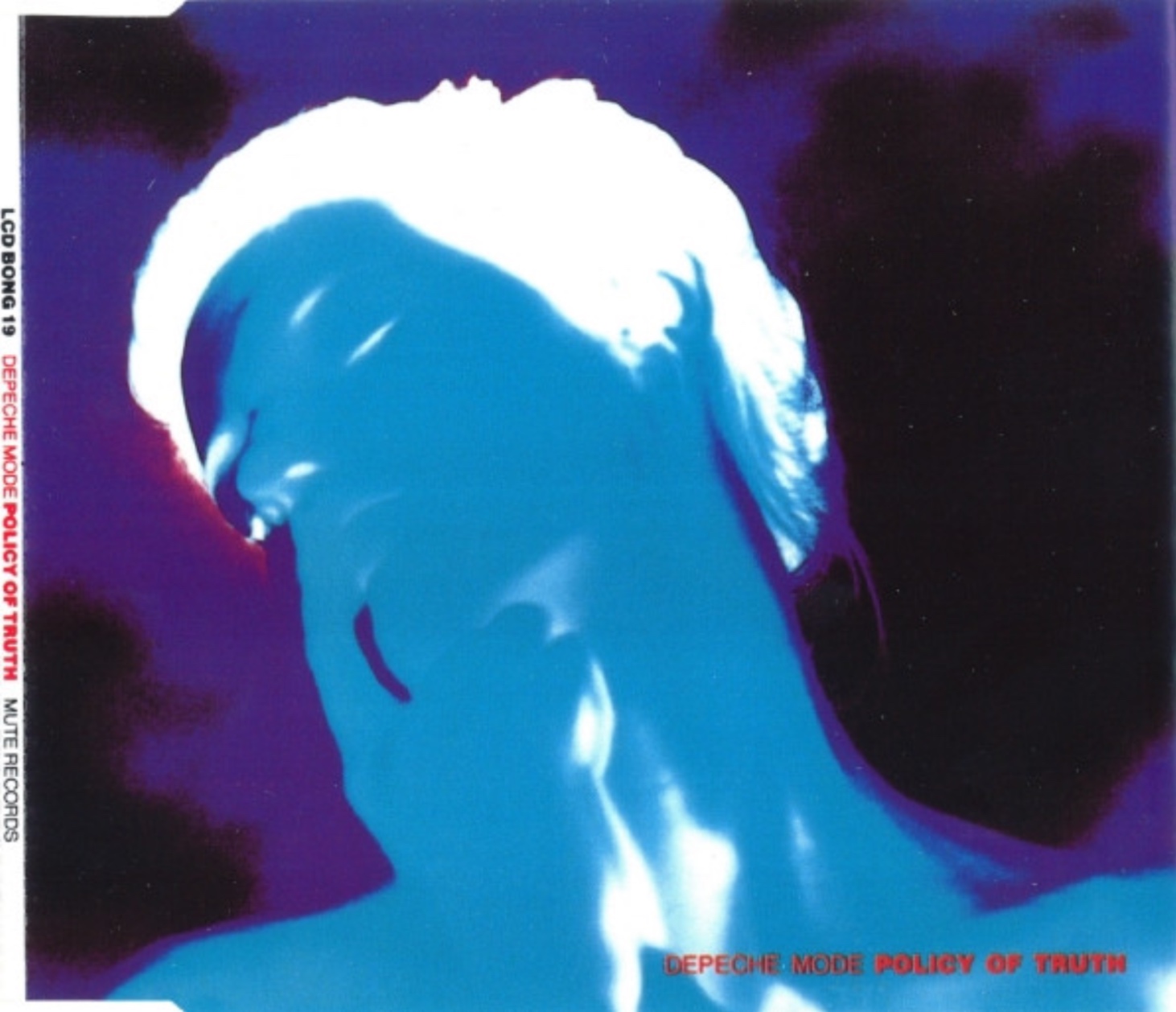
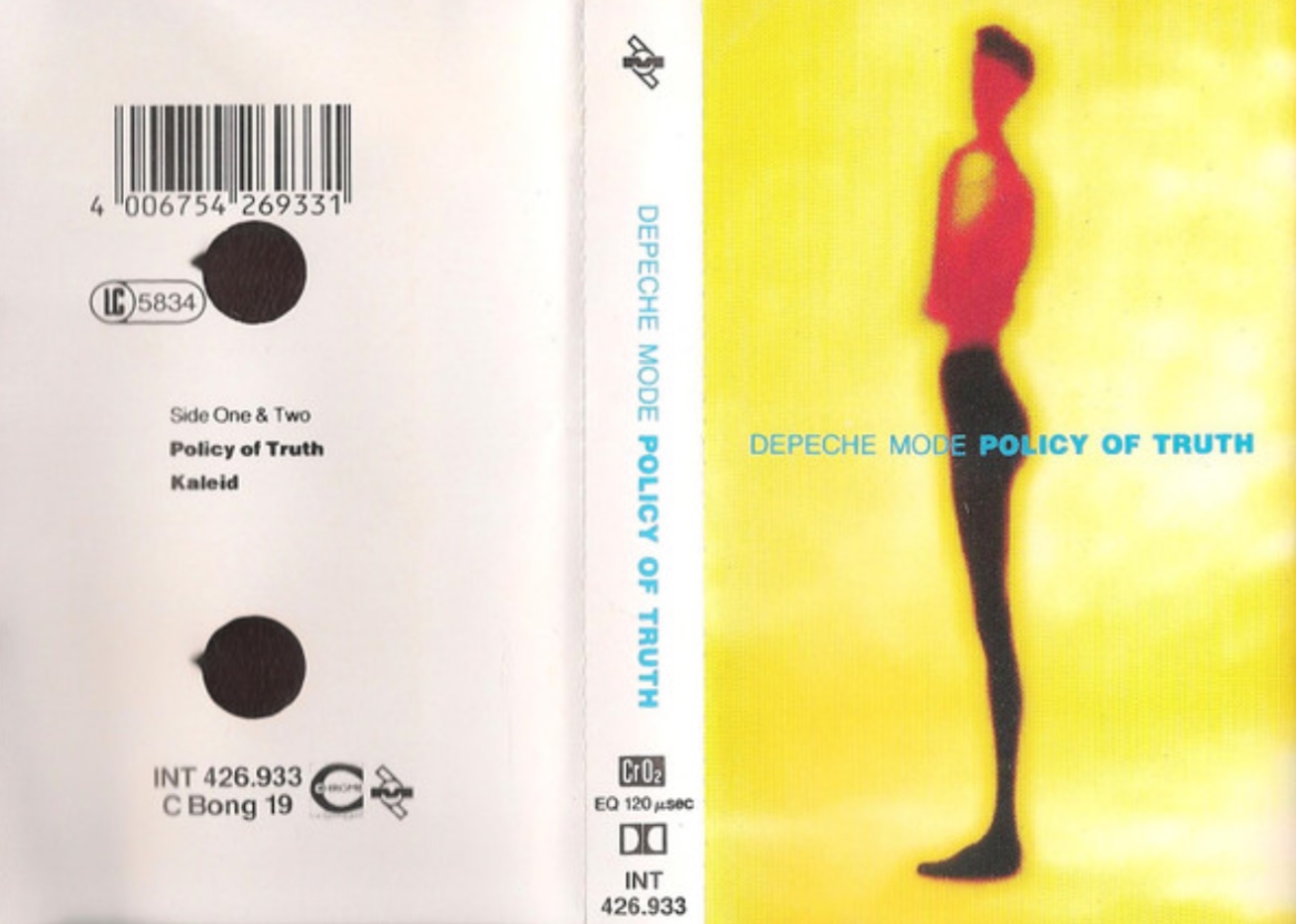
DEPECHE MODE - POLICY OF TRUTH 


Released :  May 7, 1990.

Charted:  UK: #16   US: #15 


"Policy Of Truth" is a song released as the third single of the 1990 “Violator”. It is the only Depeche Mode single to chart higher on the U.S. Billboard Hot 100 chart than on the UK Singles Chart. 


The meaning of the song is that people should not lie and hide things, but rather stand up and be honest and open about their mistakes and learn from them, thus being true to themselves. The song emphasizes the importance of taking responsibility for one's own actions and accepting the consequences that come with them, instead of living a life of lies and deception. The chorus, "Never again is what you swore, the time before", serves as a reminder to not repeat the same mistakes and to live a life of integrity.


Martin Gore in 1998: "It has been one of my all time favourite songs that we've ever recorded. I really like the words to it and the whole concept of having to lie to keep up appearances — maybe it's better to do that. I just really like the whole subject matter of the song. I like the Terry Hoax version or the one by Dishwalla from the tribute album [For The Masses], which is another rock version. I just like the fact that, sometimes the potential of the songs is seen when they are performed in a more conventional format. I think a lot of the time, the songs are overlooked, disregarded or not taken seriously because of the instrumentation we've used."


Recorded initially during the Puk sessions, 'Policy' went through many changes before being almost completely re-recorded at The Church studios in London. Alan Wilder talks about this: "Usually this would signify problems with a song although in this case we knew it was a strong track, not least a potential single. The main riff of the song proved such a problem to get a sound for and we must have tried 100 different variations before settling on what had become perhaps the sound of the album — slide guitar."