Total de visualitzacions de pàgina:

1.12.23


THE JACKSONS - BLAME IT ON THE BOOGIE / SHAKE YOUR BODY (DOWN TO THE GROUND) / SHOW YOU THE WAY TO GO


BLAME IT ON THE BOOGIE

Released : September 8, 1978  

Charted:  UK: #8  US: #54


"Don't blame it on the sunshine, don't blame it on the moonlight, don't blame it on the good times. Blame it on the boogie."


Though the lyrics don't really make an awful lot of sense, The Jacksons' classic 'Blame It On The Boogie' has been filling dance floors for over forty years. That's despite not having even written it themselves, it was in fact another Jackson that wrote the song: a man called Mick Jackson. He wrote it for Stevie Wonder originally and he was asked by Global records, Munich to record the track himself. At the 1978 Midem Music Festival in Cannes, France it was played for the first time and a member of The Jacksons entourage was there searching for tracks. He was amazed by the name coincident and was impressed by the track itself. He secretly taped it and went back to the States so the band could record it as quickly as possible before Mick's version was released. 


There was a race to release the tracks, it was called "The Battle of the Boogie" in the newspapers and it was perfect press material: two Michael Jacksons, two versions of "Blame It On The Boogie". The songs were out within days of each other and it was one of the rare occasions in the modern day that artists charted the same time with the same song. Some fans preferred Mick Jackson's more soulful version and others the more uptempo Jackson's version. Mick Jackson's version reached #15 in the UK and #61 in the US.


A promotional music video by the Jacksons was created for "Blame It on the Boogie" in 1978. The video, featuring the group's members dancing on a black background, relied heavily on electronic trail effects? Also history tells us that "Blame It On The Boogie" has become the group's signature song and their greatest.


SHAKE YOUR BODY (DOWN TO THE GROUND)


Released : March 1979

Charted:  UK: #4  US: #7


In this disco-funk groove, The Jacksons have their eyes on a girl who's playing hard to get and try to get her to loosen up on the dance floor. It was released as the second single from their 13th studio album, “Destiny”, following their cover of "Blame it on the boogie". The album was truly a family affair, with the brothers writing and producing all of the music for the first time. "Shake Your Body" was written by Michael Jackson and younger brother Randy Jackson, with Michael on lead vocals. 


The Jacksons got down with the advent of disco with 'Shake Your Body (Down To The Ground) in 1979, so much so that they recorded an 8-minute version to be played in discotheques at the time. Of course, it's the radio edit we're all more familiar with because of the song's infectious melody and lyrics over its insatiable beat. It was a return to form for The Jacksons, who reached the top ten of charts around the world for the first time after leaving Motown Records in 1976.


Greg Phillinganes hadn't done much arranging before he was brought on to work on the “Destiny” album. He was a session keyboardist who was discovered as a teenager by Stevie Wonder and debuted on Wonder's 1976 album, “ Songs in the key of life”. Colomby convinced him to try his hand at arranging with The Jacksons, and Phillinganes hit it off with Michael - he was invited to work on The King of Pop's solo albums and became his musical director.


Cash Box said it has a "rippling rhythm section, solid beat and stunning chorus" but that Michael Jackson's vocals are the "centerpiece". Record World said it has an unusual arrangement and "has a bit of gospel in the beat and features Michael Jackson's high, distinct vocals."


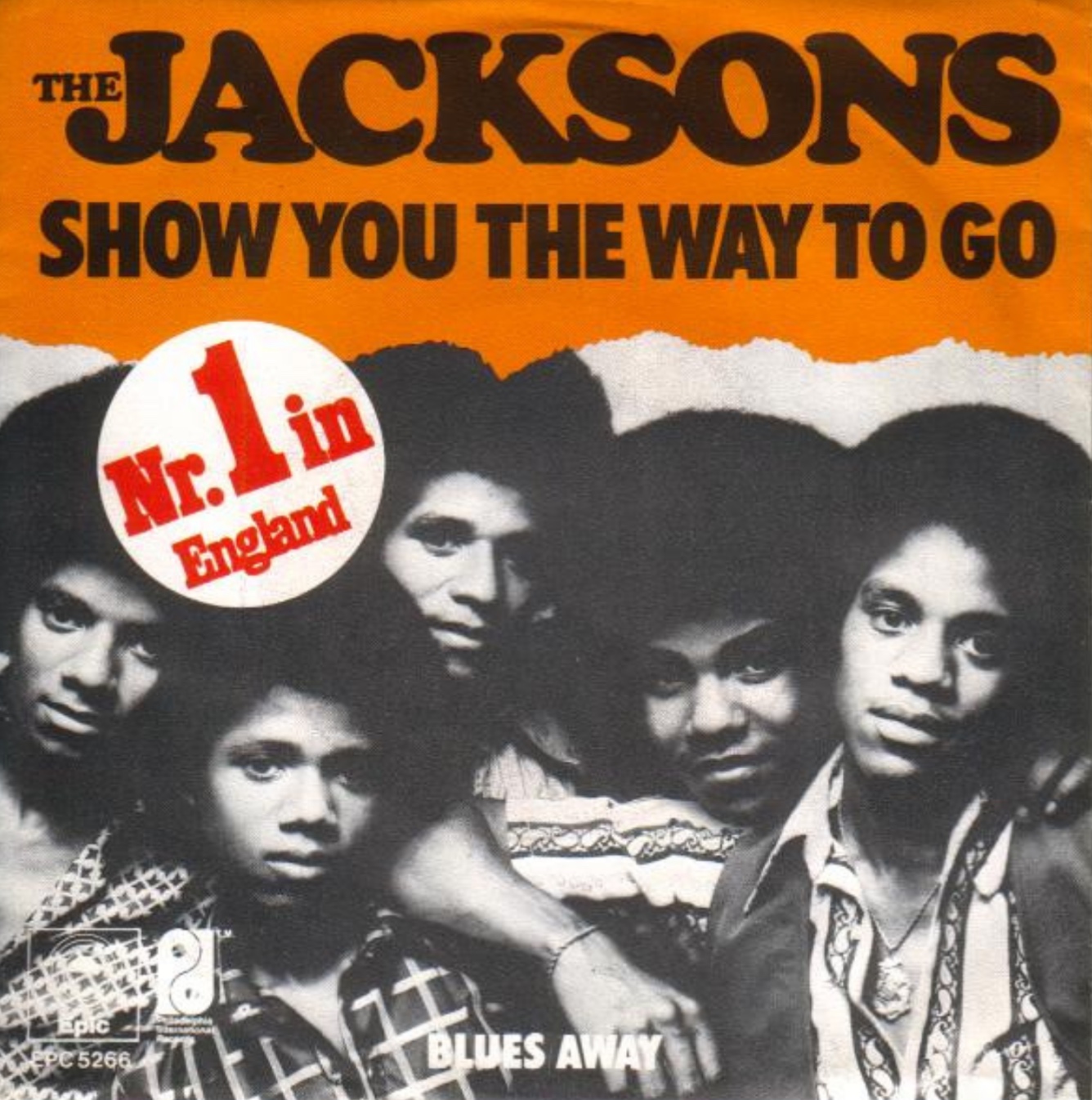
SHOW YOU THE WAY TO GO


Released : March 1977

Charted:  UK: #1  US: #28


“Show You The Way To Go” is a song written by Gamble and Huff and recorded by the Jackson for their 1976 Epic debut album. Released as a single in early 1977, it was the only number one song for the group in the UK.


The shift from the Jackson 5 to the Jacksons was a result of the group splitting from Motown in 1975 due to issues over creative control and royalties. They signed to Epic and started a variety series, that helped re-ignite the group's music career. This was off the group's first album under their new name, which was a success, although not as much as their previous efforts. Jackson Five’s hits had always just missed out on the UK #1. “Show You The Way To Go” got it and became the group's only chart-topper in the UK.


Michael Jackson sang lead and background vocals, he has a great voice period. Unique and soulful in front of the Gamble and Huff production team, this single brings some wonderful soul. Disco was good to Michael Jackson: it came along at just the right time for the child star to cut the glorious forcefulness and find a voice and style that could carry him along. Jackson realised that the unwavering beat of disco left room for doubt and hurt even while the dancing went on, and on “Show You The Way To Go” you can hear him developing that trademark agonised quaver, that pleading squeak which would take him higher than anyone.




30.11.23


DIANA ROSS - LOVE HANGOVER


Publicació: 16 de març de 1976

Llistes: Regne Unit: #10   EUA: #1 (2 setmanes)


"Love Hangover" és una cançó de la cantant Diana Ross, gravada el 1975 i llançada com a senzill del seu àlbum de 1976 "Diana Ross". Aquest va ser el primer èxit de música disco de Motown Records. El segell va trigar a acceptar el so, que venia de llocs com Miami, Nova York i Suècia, no de la seva Detroit. Hal Davis, un productor del segell, va pensar que era hora de provar la música disco, així que va muntar aquest tema, que canvia de l'obertura relaxada, lenta i fresca a un groove ràpid d'uptempo. Els músics de suport incloïen el pianista de The Crusaders Joe Sample, el guitarrista Art Wright, el baixista Henry Davis i el bateria James Gadson. Segons Davis, la sessió va tenir lloc a les 2 de la matinada.


A Diana Ross no li agradava gravar una cançó de música disco, així que el productor Hal Davis va fer tot el possible per posar el to correcte quan va gravar la seva veu. Va programar la sessió a la nit, quan Ross era més agradable, i va fer que l'enginyer Russ Terrana instal·lés llums intermitents a l'estudi. Abans d'gravar-la, Davis va fer que Ross es relaxés amb una copa de vodka. Quan va arribar el moment de gravar, es va treure les sabates i s'hi va posar, improvisant i passant-s’ho bé. En un moment donat, Ross va deixar escapar una rialla que es va  quedar al disc. La veu era exactament el que estaven buscant.


Els pensaments de Ross sobre la sessió d'enregistrament es mostren a la biografia Diana del 2007 de J. Randy Taraborrelli: "Va ser una cosa espontània que vam gravar i si hagués de tornar-hi i fer-ho de nou, no ho podria fer. La música era jo i jo era la música. De la meva boca van sortir coses que ni tan sols esperava".


"Love Hangover" és una cançó molt sexual on Diana Ross canta sobre el sentiment després de fer l'amor i desitjant que no s'acabi. La cançó tracta d'estar tan consumit per l'amor i el desig que Diana no vol cap cura per als intensos sentiments que està experimentant. La lletra expressa un anhel per l'estat eufòric d'estar enamorat i la reticència a deixar anar aquelles emocions embriagadores.


El primer senzill de l'àlbum va ser "I Thought It Took A Little Time (But Today I Fell In Love)", una balada en la tradició de Ross. Aquesta va ser la decisió de Berry Gordy, ja que encara desconfiava de la música disco. Altres van considerar "Love Hangover" com un èxit, inclosos els DJ de clubs que van començar a posar-la. The 5th Dimension va gravar la cançó i la va publicar mentre "I Thought It Took A Little Time" pujava a les llistes. Això va cridar l'atenció de Gordy i ràpidament va publicar la versió de Ross de "Love Hangover" com a single. A la llista Hot 100 del 3 d'abril de 1976, van entrar ambdues versions, amb Ross al número 78 i The 5th Dimension al número 95. La mateixa setmana, "I Thought It Took A Little Time" va assolir el seu punt àlgid al número 47, sense pujar més, ja que Motown va treure la promoció per centrar-se en "Love Hangover". Amb la discogràfica darrere, la interpretació de Ross va assolir el número 1 al maig.


DIANA ROSS - LOVE HANGOVER


Released : March 16, 1976

Charted:  UK: #10    US: #1 (2 weeks)


"Love Hangover" is a song by the Motown singer Diana Ross, recorded in 1975 and released as a single from her 1976 album “Diana Ross”. This was the first disco hit for Motown Records. The label was slow to embrace the sound, which was coming out of places like Miami, New York and Sweden - not Detroit. Hal Davis, a producer at the label, thought it was time to try disco, so he put together this track, which changes from the relaxed, slow, cool opening to a rapid uptempo groove. The backing musicians included The Crusaders pianist Joe Sample, guitarist Art Wright (overdubbed later), bass player Henry Davis and drummer James Gadson. According to Davis, the session took place at 2 am.


Diana Ross was not keen on recording a disco song, so producer Hal Davis went out of his way to set the right tone when she recorded her vocals. He scheduled the session at night, when Ross was most agreeable, and had engineer Russ Terrana set up flashing lights in the studio. Before sending her in, Davis had Ross relax with a drink of vodka. When it came time to record, she kicked off her shoes and got into it, improvising and having a good time. At one point, Ross let out a laugh that made its way onto the record. The vocal was exactly what they were looking for.


Ross' thoughts on the recording session are noted in the 2007 biography Diana by J. Randy Taraborrelli: "It was a spontaneous thing that we captured on record and if I had to go back in and do it again, I couldn't have. The music was me and I was the music. Things came out of my mouth that I didn't even expect."


"Love Hangover" is a very sexual song where Diana Ross sings about the feeling after making love, and wishing it wouldn't end. The song is about being so consumed by love and desire that Diana doesn't want a cure for the intense feelings she is experiencing. The lyrics express a longing for the euphoric state of being in love and the reluctance to let go of those intoxicating emotions.


The first single from the album was "I Thought It Took A Little Time (But Today I Fell In Love)", a ballad in the tradition of Ross. This was Berry Gordy's call, as he was still leery of disco. Others pegged "Love Hangover" as a hit though, including club DJs that started playing it. The 5th Dimension recorded the song and released it while "I Thought It Took A Little Time" was climbing the charts. This got Gordy's attention, and he quickly put out Ross' version of "Love Hangover" as a single. On the Hot 100 chart dated April 3, 1976, both versions entered, with Ross at #78 and The 5th Dimension at #95. The same week, "I Thought It Took A Little Time" reached its peak of #47, going no higher as Motown pulled promotion for it to focus on "Love Hangover". With the label behind it, the Ross rendition climbed to #1 in May.


DEBARGE - RHYTHM OF THE NIGHT / ALL THIS LOVE


RHYTHM OF THE NIGHT


Released: February 23, 1985

Charted:  UK: #4    US: #3 


"Rhythm of the Night" is a song by American musical recording group DeBarge, written by Diane Warren and released on the Motown label as the first single from their 1985 fourth studio album “Rhythm of the Night”. The song jump-started the career of the prolific songwriter Warren. Richard Perry, the hit producer behind hit recordings for the Pointer Sisters, Harry Nilsson, and Carly Simon, among others, was appointed to produce the single.


Warren penned this song for the 1985 Motown-produced martial arts movie The Last Dragon, which starred the Prince ingenue Vanity in the female lead. Motown head Berry Gordy was the executive producer of the film, and DeBarge were signed to his Gordy label. Warren had the song in the works when she got the call to write a song for the film. She made a few tweaks, recorded a demo with a singer named Tommy Funderburk, and submitted "Rhythm Of The Night" for the soundtrack. It was accepted for the film and used in the trailer as well.


The song portrays a message of escapism and finding solace in music and dancing. The lyrics suggest that when the weight of the world becomes overwhelming and life feels chaotic, stepping out into the street and immersing oneself in the energy of the night can provide a much-needed reprise.


The street party sounds overdubbed onto the record included contributions from members of the DeBarge group. This idea was cribbed from the 1983 Lionel Richie song, "All Night Long (All Night)".


ALL THIS LOVE


Released: October 17, 1982

Charted:  US: #17 


"All This Love" is a single by DeBarge, released as the third and final single from their second studio album of the same title on the Gordy label. The single would help DeBarge rise to R&B stardom. The song was covered by Boyz II Men and released on their 2007 compilation album “Motown: A Journey Through Hitsville USA” of Motown hits.


The song is a heartfelt expression of love and gratitude towards a significant other. The lyrics suggest that the protagonist had faced some difficulties in life that seemed unsolvable until their partner came along. The partner's love and support transformed their perspective and offered them a solution. The singer acknowledges that their partner convinced them to take a chance on love and learn its ways. Through this experience, they discovered that love does not bring disappointment or pain but rather brings joy and fulfillment. The song emphasizes the immense love the singer feels for their partner, expressing that all their love is dedicated to them. They believe that their love is waiting patiently for their partner, emphasizing their commitment and devotion.


"All This Love" was immediately embraced by the R&B community while the group gained a pop fan base. In the US, the single reached number 5 on the Billboard R&B chart and number one on the Adult Contemporary chart.