Total de visualitzacions de pàgina:

2.12.23


STEVIE WONDER - SUPERSTITION / YOU ARE THE SUNSHINE OF MY LIFE


SUPERSTITION


Released : October 24, 1972

Charted:  UK: #11   US: #1 


"Superstition” was released as the lead single from his 1972 album “Talking book”. The lyrics describe popular superstitions and their negative effects. Wonder wrote this about the dangers of believing in superstitions.


Wonder suggests that putting faith in irrational beliefs can lead to suffering, and that it is better to focus on understanding things rather than relying on superstition. The lyrics reference different superstitious beliefs such as breaking a mirror leading to seven years of bad luck, as well as referencing the devil, suggesting that superstition is a type of harmful belief. Some other bad luck superstitions he alludes to include walking under a ladder and the number 13. The chorus of the song reiterates the message that believing in things we cannot understand can lead to pain, and that it is better to have faith in knowledge instead


"Superstition" was intended for Jeff Beck, who was brought in to play some guitar parts on the album in exchange for a song, his work can be heard on the track "Looking for another pure love". At one of the sessions, Stevie came up with the riff and wrote some lyrics, and they recorded a rough version of the song that day for Beck. It took Beck a while to record the song, and by the time he released it, Wonder's version had been out for a month and was a huge hit. Beck felt shortchanged, and made some statements in the press that Wonder didn't appreciate. In 1975, Beck released an instrumental version of Wonder's "Cause We've Ended As Lovers" on his album “Blow by blow”. The album was a hit and helped solidify Beck's reputation as an elite guitarist.


This song incorporates many elements of rock music, which helped Wonder extend his appeal to a white audience. Before “Talking book” was released, Stevie went on tour with The Rolling Stones, which boosted his credibility in the world of rock. When "Superstition" was released, it was warmly welcomed on the same radio stations that played The Stones, earning Wonder many new fans. It also helped Wonder move past his image as a child star.


YOU ARE THE SUNSHINE OF MY LIFE


Released : March 1973

Charted:  UK: #7   US: #1 


"You Are the Sunshine of My Life" is a 1973 single released by Stevie Wonder. The song became Wonder's third number-one single on the Billboard Hot 100 chart and his first number-one on the Easy Listening chart. It won Wonder a Grammy Award for Best Male Pop Vocal Performance, and was nominated for both Record of the Year and Song of the Year. This song was the second single released from the 1972 album entitled “Talking Book”, which stayed at number one on the R&B albums chart for three weeks.


The sunshine of Stevie Wonder's life when he wrote this song was Syreeta Wright, whom he married in 1970. Wright, who started at Motown Records as a secretary, co-wrote Wonder's hit "Signed, sealed, delivered I'm yours" that same year, and also all nine songs on Stevie's 1971 album “Where I'm Coming From.” Wonder produced her debut album, “Syreeta,” in 1972 and her next one, “Stevie Wonder Presents: Syreeta,” in 1974. Some sources list the couple's divorce as happening in 1972, but Wright, who died in 2004, claimed they were married until 1975. The marriage was difficult, and exacerbated by their working relationship, which Wright found stifling. "I was always living in his shadow," she said.


"You Are The Sunshine Of My Life" finds wonder expressing his devotion to Syreeta - it's a husband looking upon his now-familiar wife and remembering why he loves her and always will. It didn't work out for this couple, but the sentiment was irrefutable. The song remains a heartfelt expression of undying love.


Marvin Gaye, whose " Mercy mercy me (the ecology)" dealt with spirituality and the Earth, cited this song as an example of how the environment impacts songwriting. He told Soundsmagazine in 1976: "A lot of the time, they don't even know it as writers, but they're just forced to put Mother Nature into the picture, like in 'You Are The Sunshine Of My Life.'"


1.12.23


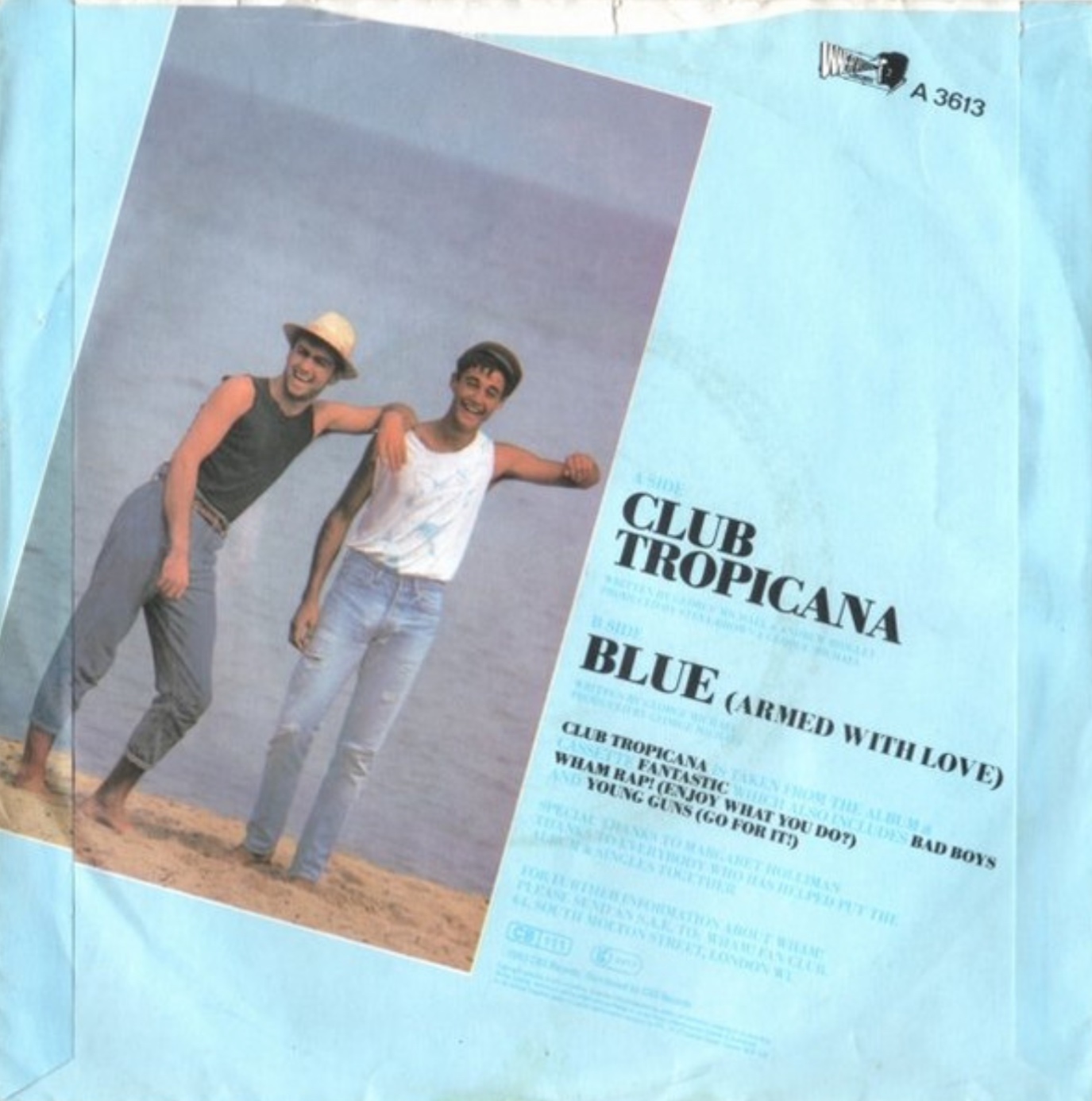
 WHAM! - CLUB TROPICANA

Released: July 22, 1983

Charted:  US: -  UK: #4 


“Club Tropicana” is a song by Wham! released as the fourth single from his “Fantastic” album, and it marked a notable change from his previous singles, which were small anthems of youthful rebellion. This song is a celebration of the joys of summer, the appeal of the tropics, and the freedom of living the high life. 


The lyrics describe a place of hedonism and relaxation, with free drinks, dancing, and sunshine. The singer encourages listeners to take this opportunity and "pack their bags and leave tonight" to escape to Club Tropicana, where they can forget their troubles and just have fun. The song is an invitation to leave the mundane and enjoy the adventure of a tropical paradise.


This would fit perfectly into the propaganda vision for youth of the government of Margaret Thatcher's time. The triumph of a couple of boys from the suburbs who spend the money they have earned on all kinds of luxuries and invite us to share in their triumph. George Michael himself denied the Thatcherite label that was sometimes attached to Wham!, arguing that neither his songs nor his works really fit this image. Although Wham! was not a band known especially for its politically-referenced lyrics, their first hit “Wham! Rap (Enjoy What You Do?)”, was anti-establishment enough to be banned by the BBC, but it was rather the exception that proves the rule.


The lyrics on “Club Tropicana” put aside youthful rebellions and focus on living life as well as possible, and the sound becomes even funkier with powerful bass and appropriate horn accompaniment. With the sound of a opening door, the thumping slap bass line and the drum beat opens the groove with the sound of crowd sounds before Ridgeley’s rhythm guitar comes in-the Brazilian style percussion opening up the beat even further. The horns come in with just the right melodic spice on each chorus of the song. The instrumental bridge is sandwiched between two jazzy acoustic piano solos before George Michael brings the song to the end. The bass thumps, the piano sways, the horns blaze and Andrew Ridgeley's guitar groove takes us straight to the dance floor. Funk is at its best! This was one of the funkiest jams Wham! ever threw down.


In the video, leather jackets and youthful protest messages have been replaced by swimsuits and relaxing in a pool enjoying success.


The new upbeat image of the boys shown on “Club Tropicana” would continue with “Wake Me Up Before You Go-Go”, the apotheosis of Wham!'s upbeat pop sound that would definitively elevate them to stardom, and open the way for them to the United States success. 


THE JACKSONS - BLAME IT ON THE BOOGIE / SHAKE YOUR BODY (DOWN TO THE GROUND) / SHOW YOU THE WAY TO GO


BLAME IT ON THE BOOGIE

Released : September 8, 1978  

Charted:  UK: #8  US: #54


"Don't blame it on the sunshine, don't blame it on the moonlight, don't blame it on the good times. Blame it on the boogie."


Though the lyrics don't really make an awful lot of sense, The Jacksons' classic 'Blame It On The Boogie' has been filling dance floors for over forty years. That's despite not having even written it themselves, it was in fact another Jackson that wrote the song: a man called Mick Jackson. He wrote it for Stevie Wonder originally and he was asked by Global records, Munich to record the track himself. At the 1978 Midem Music Festival in Cannes, France it was played for the first time and a member of The Jacksons entourage was there searching for tracks. He was amazed by the name coincident and was impressed by the track itself. He secretly taped it and went back to the States so the band could record it as quickly as possible before Mick's version was released. 


There was a race to release the tracks, it was called "The Battle of the Boogie" in the newspapers and it was perfect press material: two Michael Jacksons, two versions of "Blame It On The Boogie". The songs were out within days of each other and it was one of the rare occasions in the modern day that artists charted the same time with the same song. Some fans preferred Mick Jackson's more soulful version and others the more uptempo Jackson's version. Mick Jackson's version reached #15 in the UK and #61 in the US.


A promotional music video by the Jacksons was created for "Blame It on the Boogie" in 1978. The video, featuring the group's members dancing on a black background, relied heavily on electronic trail effects? Also history tells us that "Blame It On The Boogie" has become the group's signature song and their greatest.


SHAKE YOUR BODY (DOWN TO THE GROUND)


Released : March 1979

Charted:  UK: #4  US: #7


In this disco-funk groove, The Jacksons have their eyes on a girl who's playing hard to get and try to get her to loosen up on the dance floor. It was released as the second single from their 13th studio album, “Destiny”, following their cover of "Blame it on the boogie". The album was truly a family affair, with the brothers writing and producing all of the music for the first time. "Shake Your Body" was written by Michael Jackson and younger brother Randy Jackson, with Michael on lead vocals. 


The Jacksons got down with the advent of disco with 'Shake Your Body (Down To The Ground) in 1979, so much so that they recorded an 8-minute version to be played in discotheques at the time. Of course, it's the radio edit we're all more familiar with because of the song's infectious melody and lyrics over its insatiable beat. It was a return to form for The Jacksons, who reached the top ten of charts around the world for the first time after leaving Motown Records in 1976.


Greg Phillinganes hadn't done much arranging before he was brought on to work on the “Destiny” album. He was a session keyboardist who was discovered as a teenager by Stevie Wonder and debuted on Wonder's 1976 album, “ Songs in the key of life”. Colomby convinced him to try his hand at arranging with The Jacksons, and Phillinganes hit it off with Michael - he was invited to work on The King of Pop's solo albums and became his musical director.


Cash Box said it has a "rippling rhythm section, solid beat and stunning chorus" but that Michael Jackson's vocals are the "centerpiece". Record World said it has an unusual arrangement and "has a bit of gospel in the beat and features Michael Jackson's high, distinct vocals."


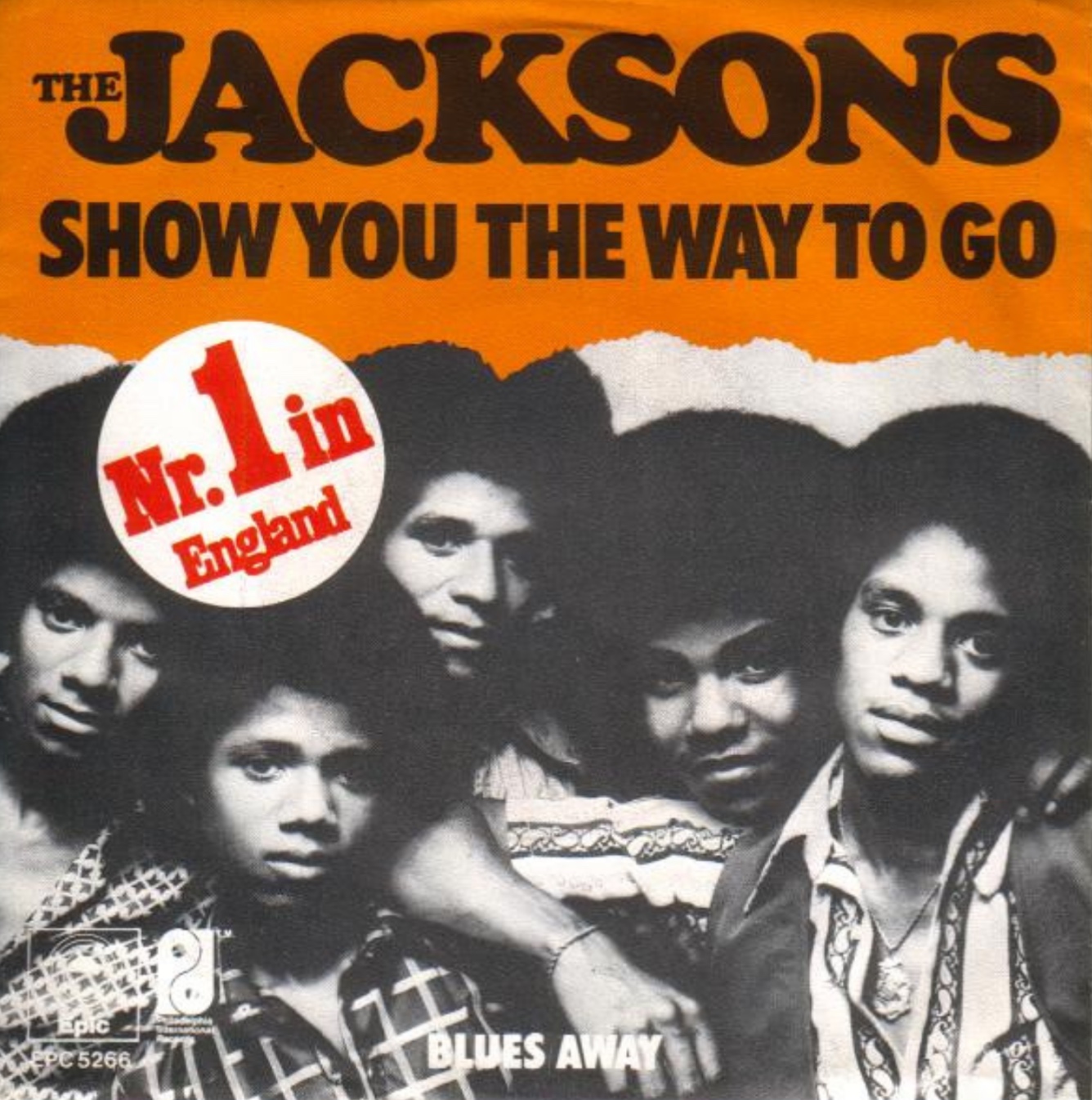
SHOW YOU THE WAY TO GO


Released : March 1977

Charted:  UK: #1  US: #28


“Show You The Way To Go” is a song written by Gamble and Huff and recorded by the Jackson for their 1976 Epic debut album. Released as a single in early 1977, it was the only number one song for the group in the UK.


The shift from the Jackson 5 to the Jacksons was a result of the group splitting from Motown in 1975 due to issues over creative control and royalties. They signed to Epic and started a variety series, that helped re-ignite the group's music career. This was off the group's first album under their new name, which was a success, although not as much as their previous efforts. Jackson Five’s hits had always just missed out on the UK #1. “Show You The Way To Go” got it and became the group's only chart-topper in the UK.


Michael Jackson sang lead and background vocals, he has a great voice period. Unique and soulful in front of the Gamble and Huff production team, this single brings some wonderful soul. Disco was good to Michael Jackson: it came along at just the right time for the child star to cut the glorious forcefulness and find a voice and style that could carry him along. Jackson realised that the unwavering beat of disco left room for doubt and hurt even while the dancing went on, and on “Show You The Way To Go” you can hear him developing that trademark agonised quaver, that pleading squeak which would take him higher than anyone.