Total de visualitzacions de pàgina:

4.12.23


MADNESS - NIGHT BOAT TO CAIRO

Publicació: març de 1980

Llistes: Regne Unit: #6


"Night Boat to Cairo" és una cançó publicada a l'àlbum d'estudi debut de la banda "One Step Beyond.." Va ser la cançó principal de l'EP "Work Rest And Play" de Madness. Escrita inicialment com a instrumental, la cançó consta de dues meitats d'un solo de saxòfon separats per una petita història estranya cantada per Suggs sobre un vaixell encallat al riu Nil a última hora de la nit. La cançó la toquen sovint com a tancament dels concerts.


Després del llançament de "My Girl", la banda va pensar que el disc "One Step Beyond..." ja havia donat tot el que tenien i no volien publicar més senzills. Tanmateix, Dave Robinson, director de Stiff Records, no pensava el mateix. Finalment, van arribar a un acord i la banda va decidir publicar un EP amb un tema del disc i tres temes nous. El resultat va ser l'EP "Work Rest and Play".


"Night Boat to Cairo" destaca per la seva estructura poc convencional, amb l'única veu de la peça que és un sol vers, sense tornada ni elements repetitius per cantar. Aquest tall comença amb tres tocs de saxo emulant un vaixell abans que comenci la introducció d'un minut de durada de la cançó. Aquesta introducció és una barreja atmosfèrica del so ska habitual de Madness barrejat amb riffs vagament d'inspiració egipcia/Orient Mitjà. Aquest so modulat funciona molt bé quan el toca el saxo de Thompson, fent que un instrument familiar soni d'alguna manera exòtic.


La lletra descriu un viatge al llarg del Nil, creant una atmosfera que és més fantasmagòrica i inquietant que relaxant. Un cop acabades les veus, comença la secció instrumental principal de la cançó que és una melodia engrescadora i sorollosa que s'atura lentament, abans de tornar a reprendre, gairebé com si la banda s'hagués perdut al desert egipci.


El teclista Mike Barson va explicar a The Art of Noise: Conversations with Great Songwriters de Daniel Rachel: "Se suposava que havia de ser un instrumental i després Suggs se la va apoderar i va escriure aquella lletra esbojarrada". Suggs ha descrit la cançó com "quilòmetres d'introducció, un parell de versos i quilòmetres d'instrumental, sense tornada i ni tan sols s'esmenta el títol a part que jo ho cridés al principi. És un ambiental amb una gran música i paraules; és clar, és una cançó, però no en el nostre estil tradicional".


A les notes de l'àlbum "Complete Madness" Suggs va escriure: Mike havia composat un ritme que sonava oriental, que en va inspirar la següent lletra: el Nil, el Caire una barca vella i un remador sense dents. Vaig tenir la impressió que aquestes imatges mai s'esborrarien del meu cervell. Quan vaig anar al Caire van desaparèixer.


Després de la decisió de llançar l'EP, es necessitava un vídeo musical promocional, però no hi havia temps per fer-ne un de suficient qualitat abans del llançament. Madness va filmar un vídeo d'estil karaoke davant d'un teló de fons descaradament cromàtic d'una piràmide egípcia, amb la lletra apareixent a la pantalla a l'estil "bola que rebota" mentre les cantava Suggs. Durant les llargues seccions instrumentals, la banda va córrer pel plató, marxant i interpretant el seu "Nutty Train" habitual. Malgrat els efectes pobres i la sensació poc professional del vídeo, es va fer molt popular entre els fans per la seva bogeria i diversió mostrant Madness en els seus moments més divertits.


MADNESS - NIGHT BOAT TO CAIRO


Released: March 1980

Charted:  UK: #6 


"Night Boat to Cairo" it’s a song released on the band’s debut studio album “One Step Beyond..” It was the lead track from Madness' “Work Rest And Play” EP. Initially written as an instrumental, the song consists of two halves of a saxophone solo separated by a strange little story sung by Suggs about a late night boat stranded on the River Nile. The song is often played as a concert closer. 


After the release of "My Girl", the band thought that the album “One Step Beyond...”had already given everything they had and they did not want to release any more singles. However, Dave Robinson, director of Stiff Records, did not think the same. Finally, they reached an agreement and the band decided to release an EP with one track from the album and three new tracks. The “Work Rest and Play” EP was the result.


"Night Boat to Cairo" is notable for its unconventional structure, with the only vocals on the track being a single verse, with no chorus or repeating elements to speak of. This cut begins with three blasts of a ship’s horn before the song’s minute-long introduction begins. The intro is an atmospheric blend of Madness’ usual ska sound mixed with vaguely Egyptian/Middle Eastern inspired riffs. This modulated sound works really well when played by Thompson’s sax, making a familiar instrument sound somehow exotic. 


The verse describes a journey along the Nile, creating an atmosphere that is spooky and eerie rather than relaxing and scenic. Once the vocals are over, the song’s main instrumental section begins, a rousing and chugging tune that slowly grinds to a halt, before picking up again, almost as if the band have got lost in the Egyptian Desert.


Keyboardist Mike Barson explained in Daniel Rachel's The Art of Noise: Conversations with Great Songwriters: "It was supposed to be an instrumental and then Suggs bloody got hold of it and wrote all those dodgy lyrics." Suggs has described the track as “miles of introduction, a couple of verses then miles of instrumental, no chorus and the title isn’t even mentioned apart from me shouting it at the beginning. It’s an atmosphere with great music and words – of course it is a song, but not a traditional one.”


In the notes of the album “Complete Madness” Suggs wrote: Mike had composed a rhythm that sounded oriental, that inspired the following lyrics: the Nile, Cairo an old barge, and a rower without teeth. I had the impression that those images would never be erased from my brain. When I went to Cairo they disappeared.


Following the decision to release the EP, a promotional music video was needed but there was no time to make one of sufficient quality before release. Madness filmed a karaoke-style video in front of a blatantly chromatic backdrop of an Egyptian pyramid, with the lyrics appearing on the screen in "bouncing ball" style as Suggs sang them. During the long instrumental sections of the song, the band ran around the set, marching and performing their signature "Nutty Train." Despite the poor effects and unprofessional feel of the video, it became very popular among fans for its crazy and fun showing Madness at their best funniest moments.


2.12.23


 PATTI SMITH - DANCING BAREFOOT

Released: May 1979

Not charted


"Dancing Barefoot" is a song written by Patti Smith and Ivan Král, and released as a second single from the Patti Smith Group's 1979 album “Wave”. This is one of Smith's most popular songs, and one of her favorites, performed at most of her concerts. It was never a hit, but neither were any of her songs with the exception of the Bruce Springsteen-written "Because The Night".


Jim Morrison of The Doors was an influence on this song. "I always imagined Jim Morrison singing it, which resulted in me singing and recording it in a lower vocal register," Smith wrote. "I wanted the verse to have a masculine appeal and the chorus to have a feminine one." At the end of the song, Smith recites some of her poetry ("The plot of our life sweats in the dark like a face..."), which is something Morrison innovated on Doors songs like "Peace Frog" and "The WASP (Texas Radio and The Big Beat)."


This being a Patti Smith song, it's filled with symbolism and meaning, looking at the gender intersects with the divine. Most of the lines start with "she," with the opening line, "She is blessing," implying a blessing. "I had the concept to write a lyric line that would have several levels - the love of one human being for another and the love of ones creator," Smith wrote on his website. "So in a sense, the song addresses both physical and spiritual love."


The last line in the chorus is often interpreted as "heroin," but it's really "heroine":


Some strange music draws me in

Makes me come on like some heroine


"Heroin" seemed logical considering there are also references to addiction and intoxication ("She is addicted to thee... "She intoxicated by thee"), but the song is not about drugs. She's dancing barefoot because the music is pulling her into a state of higher consciousness, relieving her of her inhibitions and making her feel like a heroine, the feminine form of "hero."


The lyrics didn't come with the album, but a blurb on the sleeve read, "Dedicated to the rites of the heroine," which was the only way to know for sure that Smith wasn't singing the homophone "heroin". Smith says she was asked to change the word to avoid confusion and make the song more marketable, but she refused. This certainly stymied the song commercially, but Smith wasn't going to compromise her art.


"Dancing Barefoot" is the theme song to the 2023 miniseries “Daisy Jones & The Six”, about a fictional band from the '70s. The series uses a lot of original music, but producers felt "Dancing Barefoot" encapsulated the story better than anything they could write. The main character, Daisy (played by Elvis Presley's granddaughter Riley Keough), makes a spiritual connection with music that eventually leads her to the band.


STEVIE WONDER - SUPERSTITION / YOU ARE THE SUNSHINE OF MY LIFE


SUPERSTITION


Released : October 24, 1972

Charted:  UK: #11   US: #1 


"Superstition” was released as the lead single from his 1972 album “Talking book”. The lyrics describe popular superstitions and their negative effects. Wonder wrote this about the dangers of believing in superstitions.


Wonder suggests that putting faith in irrational beliefs can lead to suffering, and that it is better to focus on understanding things rather than relying on superstition. The lyrics reference different superstitious beliefs such as breaking a mirror leading to seven years of bad luck, as well as referencing the devil, suggesting that superstition is a type of harmful belief. Some other bad luck superstitions he alludes to include walking under a ladder and the number 13. The chorus of the song reiterates the message that believing in things we cannot understand can lead to pain, and that it is better to have faith in knowledge instead


"Superstition" was intended for Jeff Beck, who was brought in to play some guitar parts on the album in exchange for a song, his work can be heard on the track "Looking for another pure love". At one of the sessions, Stevie came up with the riff and wrote some lyrics, and they recorded a rough version of the song that day for Beck. It took Beck a while to record the song, and by the time he released it, Wonder's version had been out for a month and was a huge hit. Beck felt shortchanged, and made some statements in the press that Wonder didn't appreciate. In 1975, Beck released an instrumental version of Wonder's "Cause We've Ended As Lovers" on his album “Blow by blow”. The album was a hit and helped solidify Beck's reputation as an elite guitarist.


This song incorporates many elements of rock music, which helped Wonder extend his appeal to a white audience. Before “Talking book” was released, Stevie went on tour with The Rolling Stones, which boosted his credibility in the world of rock. When "Superstition" was released, it was warmly welcomed on the same radio stations that played The Stones, earning Wonder many new fans. It also helped Wonder move past his image as a child star.


YOU ARE THE SUNSHINE OF MY LIFE


Released : March 1973

Charted:  UK: #7   US: #1 


"You Are the Sunshine of My Life" is a 1973 single released by Stevie Wonder. The song became Wonder's third number-one single on the Billboard Hot 100 chart and his first number-one on the Easy Listening chart. It won Wonder a Grammy Award for Best Male Pop Vocal Performance, and was nominated for both Record of the Year and Song of the Year. This song was the second single released from the 1972 album entitled “Talking Book”, which stayed at number one on the R&B albums chart for three weeks.


The sunshine of Stevie Wonder's life when he wrote this song was Syreeta Wright, whom he married in 1970. Wright, who started at Motown Records as a secretary, co-wrote Wonder's hit "Signed, sealed, delivered I'm yours" that same year, and also all nine songs on Stevie's 1971 album “Where I'm Coming From.” Wonder produced her debut album, “Syreeta,” in 1972 and her next one, “Stevie Wonder Presents: Syreeta,” in 1974. Some sources list the couple's divorce as happening in 1972, but Wright, who died in 2004, claimed they were married until 1975. The marriage was difficult, and exacerbated by their working relationship, which Wright found stifling. "I was always living in his shadow," she said.


"You Are The Sunshine Of My Life" finds wonder expressing his devotion to Syreeta - it's a husband looking upon his now-familiar wife and remembering why he loves her and always will. It didn't work out for this couple, but the sentiment was irrefutable. The song remains a heartfelt expression of undying love.


Marvin Gaye, whose " Mercy mercy me (the ecology)" dealt with spirituality and the Earth, cited this song as an example of how the environment impacts songwriting. He told Soundsmagazine in 1976: "A lot of the time, they don't even know it as writers, but they're just forced to put Mother Nature into the picture, like in 'You Are The Sunshine Of My Life.'"


1.12.23


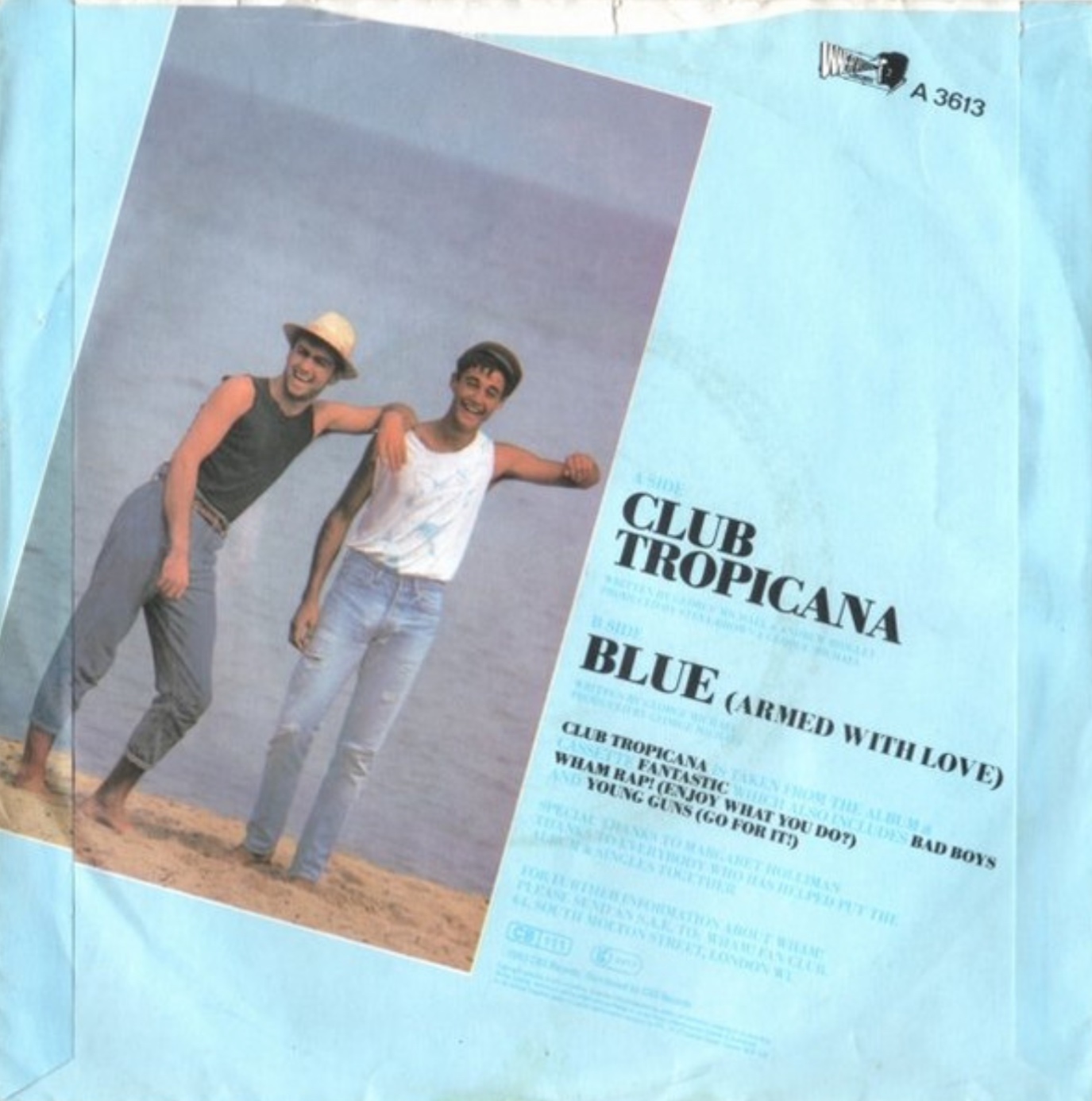
 WHAM! - CLUB TROPICANA

Released: July 22, 1983

Charted:  US: -  UK: #4 


“Club Tropicana” is a song by Wham! released as the fourth single from his “Fantastic” album, and it marked a notable change from his previous singles, which were small anthems of youthful rebellion. This song is a celebration of the joys of summer, the appeal of the tropics, and the freedom of living the high life. 


The lyrics describe a place of hedonism and relaxation, with free drinks, dancing, and sunshine. The singer encourages listeners to take this opportunity and "pack their bags and leave tonight" to escape to Club Tropicana, where they can forget their troubles and just have fun. The song is an invitation to leave the mundane and enjoy the adventure of a tropical paradise.


This would fit perfectly into the propaganda vision for youth of the government of Margaret Thatcher's time. The triumph of a couple of boys from the suburbs who spend the money they have earned on all kinds of luxuries and invite us to share in their triumph. George Michael himself denied the Thatcherite label that was sometimes attached to Wham!, arguing that neither his songs nor his works really fit this image. Although Wham! was not a band known especially for its politically-referenced lyrics, their first hit “Wham! Rap (Enjoy What You Do?)”, was anti-establishment enough to be banned by the BBC, but it was rather the exception that proves the rule.


The lyrics on “Club Tropicana” put aside youthful rebellions and focus on living life as well as possible, and the sound becomes even funkier with powerful bass and appropriate horn accompaniment. With the sound of a opening door, the thumping slap bass line and the drum beat opens the groove with the sound of crowd sounds before Ridgeley’s rhythm guitar comes in-the Brazilian style percussion opening up the beat even further. The horns come in with just the right melodic spice on each chorus of the song. The instrumental bridge is sandwiched between two jazzy acoustic piano solos before George Michael brings the song to the end. The bass thumps, the piano sways, the horns blaze and Andrew Ridgeley's guitar groove takes us straight to the dance floor. Funk is at its best! This was one of the funkiest jams Wham! ever threw down.


In the video, leather jackets and youthful protest messages have been replaced by swimsuits and relaxing in a pool enjoying success.


The new upbeat image of the boys shown on “Club Tropicana” would continue with “Wake Me Up Before You Go-Go”, the apotheosis of Wham!'s upbeat pop sound that would definitively elevate them to stardom, and open the way for them to the United States success.