Total de visualitzacions de pàgina:

5.12.23


MADNESS - ONE STEP BEYOND


Publicació: 26 d'octubre de 1979

Llistes: Regne Unit: #7


"One Step Beyond" és una cançó escrita pel cantant d'ska jamaicà Prince Buster com a cara B del seu senzill "Al Capone" de 1964. Va ser versionda per la banda britànica Madness per al seu àlbum d'estudi de debut de 1979 amb el mateix nom. Tot i que la versió de Buster era majoritàriament instrumental, excepte pel títol de la cançó cridat unes quantes vegades, la versió Madness presenta una introducció parlada de Chas Smash i una frase de fons amb prou feines audible però insistent de "here we go!". La frase parlada, "Don't watch that, watch this", a la introducció és d'una altra cançó de Prince Buster, "Scorcher", mentre que la següent frase "This is a heavy heavy monster sound" està extreta d'un single de Dave i Ansell Collins de la cançó, "Monkey Spanner". Després d'haver gravat la cançó d'homenatge a Prince Buster "The Prince" per al seu senzill debut, i "One Step Beyond" com a continuació, els Nutty Boys fins i tot es van anomenar a ells mateixos “Madness” també per una cançó de Buster.


"One Step Beyond" és una altra cançó de Madness que té una estructura poc convencional, sent gairebé totalment instrumental, excepte per una estranya introducció de paraules parlades. No hi ha cap dubte que "One Step Beyond" és un dels temes més reconeixibles de la banda, amb el seu saxòfon gloriós que és pràcticament impossible de resistir. Combinenat amb el meravellós piano i aquest ritme de ska inflable i teniu tots els ingredients per a un clàssic de 2 tone. Aquest clàssic de l'ska és una raresa brillant que captura perfectament la bogeria de Madness. Fins i tot aquells que no estiguin familiaritzats amb la banda reconeixeran els acords emblemàtics del saxo.


El líder Suggs va recordar a The Daily Mirror el 18 de setembre de 2009: "Acostumàvem a tocar el tema ”Hawaii 5-0” per començar els nostres espectacles. Quan ens vam avorrir, vam fer aquesta cançó, però l'enregistrament original era només de 45 segons de durada. Ni tan sols ens pensàvem que arribaria a l'àlbum. El cap de la nostra discogràfica el va escoltar i va aconseguir que els nostres productors el fessin en bucle per allargar-lo i publicar-lo. Encara comencem tots els concerts amb ella. Hem provat altres cançons, però aquesta és la que sempre torna."


Chas va gravar la veu per a la versió espanyola de "One Step Beyond" (Un Paso Adelante) als estudis Eden. Ho va fer perquè un artista espanyol anomenat Luis Cobos sempre feia versions de cançons populars del Regne Unit i Madness va decidir fer-li el seu propi joc. Com a dada curiosa, cal dir que a Espanya la versió original en anglès de “One Step Beyond” no es va publicar fins a l'aparició del recopilatori “Complete Madness” l'any 1982.


Quan Madness va interpretar aquesta cançó al seu concert de reunió “Madstock” d'agost de 1992 va provocar un petit terratrèmol. Mentre interpretaven "One Step Beyond", la multitud de 37.000 persones va saltar amunt i avall a l'uníson, fent que els blocs de torres propers tremolessin de manera perceptible i els balcons i les finestres s'esquerdessin. Segons el cantant principal Suggs, va ser "una cosa per anar al currículum".


Aquest senzill va ser seguit pel primer videoclip de la banda, en el qual els veiem actuar a l'escenari Hope and Anchor d'Islington, filmat el 7 d'octubre de 1979.

També veiem a Chas Smash, interpretant la veu principal, encara que en aquell moment no era un membre permanent de la banda. Veiem a Suggs sostenint un micròfon, tot i que no canta.


La portada del single de la versió espanyola presentava una portada lleugerament diferent a la de l’àlbum, tot i que la fotografia utilitzada era de la mateixa sessió fotogràfica. Chas Smash era el que parlava al començament de la cançó, però no apareix a la fotografia. No obstant, sí que el veiem a la contraportada del LP en diverses poses de ball.


MADNESS - ONE STEP BEYOND


Released: October 26, 1979

Charted:  UK: #7 


"One Step Beyond" is a tune written by Jamaican ska singer Prince Buster as a B-side for his 1964 single "Al Capone". It was covered by British band Madness for their 1979 debut studio album of the same name. Although Buster's version was mostly instrumental except for the song title shouted for a few times, the Madness version features a spoken intro by Chas Smash and a barely audible but insistent background chant of "here we go!". The spoken line, "Don't watch that, watch this", in the intro is from another Prince Buster song, "Scorcher", whilst the next line "This is a heavy heavy monster sound" is taken from a Dave and Ansell Collins song, "Monkey Spanner". Having recorded the Prince Buster tribute tune "The Prince" for their debut single, and "One Step Beyond" as their follow-up, the Nutty Boys even named themselves after a Buster song, "Madness."


“One Step Beyond” is another Madness song which has an unconventional structure, being almost entirely instrumental except for a bizarre spoken word introduction. There can be no doubt that “One Step Beyond” is one of the band’s most recognizable tracks, with its gloriously grinding saxophone being virtually impossible to resist. Pair this with the wonderful bass-y piano and that bouncy ska beat and you’ve got all of the ingredients for a bona fide 2 Tone classic. This ska classic is a brilliant oddity of a track, which perfectly captures the madness of Madness. Even those completely unfamiliar with the band will recognize those iconic saxophone chords.


Frontman Suggs recalled to The Daily Mirror September 18, 2009: "We used to play the Hawaii 5-0 theme as a novelty cover version to start our shows. When we got bored we did this track instead, but the original recording was only 45 seconds long. We didn't even think it would get on the album. Our record company boss heard it and got our producers to loop it. We still start every gig with it. We've tried other songs but that's the one we always come back to.”


Chas records the vocals for the Spanish version of “One Step Beyond” (Un Paso Adelante) at Eden studios. This was done because a Spanish artist called Luis Cobos was always doing cover versions of popular UK songs and Madness had decided to play him at his own game. As a curious fact, it must be said that in Spain the original English version of “One Step Beyond” was not published until the appearance of the compilation “Complete Madness” in 1982. 


When Madness performed this song at their August 1992 Madstock! reunion concert, it caused a minor earthquake. As they performed "One Step Beyond," the 37,000-strong crowd jumped up and down in unison, causing nearby tower blocks to shake perceptibly and balconies and windows to crack. According to lead singer Suggs, it was "something to go on the CV."


With this single the band's first music video was made, in which we see them performing on the Hope and Anchor stage in Islington, filmed on October 7, 1979.

We also see Chas Smash, performing lead vocals, although at the time he was not a permanent member of the band. We see Suggs holding a microphone, although he does not sing lead vocals.


The single cover of the Spanish version also featured a slightly different cover, although the photograph used was from the same photo shoot. Although Chas Smash was the one speaking at the beginning of the song, he does not appear in the photograph. However, we do see him on the back cover of the album in various dance poses. The Italian version features a two-tone drawing of the pose containing only four dancers.


4.12.23


MADNESS - THE SUN AND THE RAIN 

Released: October 29, 1983

Charted:  UK: #5  US: #72


"The Sun and the Rain," released as a stand-alone single in 1983 and later included in the American/Canadian version of their album "Keep Moving" in 1984, marked Madness' final entry into the USA Billboard Hot 100 Charts. During their peak in the early '80s, Madness maintained a prolific production pace, delivering regular hits that found a home on both albums and stand-alone singles, many of which later featured on their numerous hits compilations.
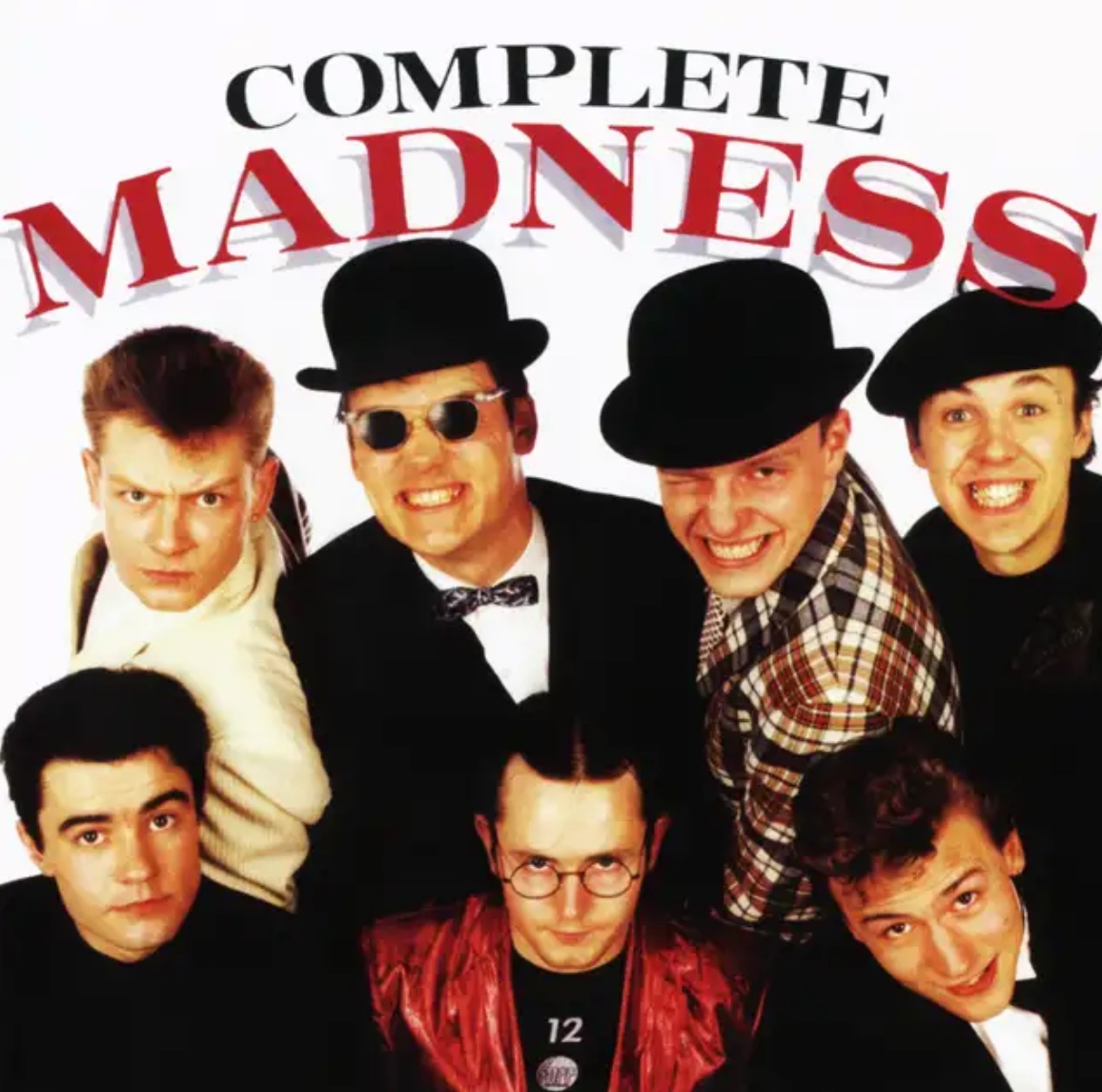

Among these independent singles were notable tracks like "It Must Be Love," "Driving in My Car," "House of Fun," and the infectiously ecstatic "Wings of a Dove." "The Sun and the Rain" from 1983 stands out as a unique tribute to precipitation, showcasing a quintessentially English theme. The urgent, string-laden stomp accompanied by Suggs' lyrics about "standing up in the falling down" and Barson's joyful honky-tonk piano contribute to the song's distinctive and memorable sound.


The music video for "The Sun and the Rain" depicts Madness performing in a rainy street, featuring references to Christmastime and the holiday season. Toward the end, the band is joined by enthusiastic Madness fans who participate in the dancing. The video starts with a scene of the band entering 'Holts' shoe shop in Camden Town, later renamed British Boot Company. Additional scenes showcase the band dressed in red with umbrella hats, playfully causing chaos inside Suggs' ear. Notably, there are shots of Lee Thompson running around with a rocket strapped to his back, referencing the single's b-side and adding a whimsical touch to the visual narrative.


The cover art for "The Sun and the Rain" is a detail from the painting "The Storm" by French artist Narcisse Virgilio Díaz de la Peña. Created in 1871, the full painting can be found in the National Gallery in London. The use of this artwork adds a historical and artistic dimension to the visual representation of the single, connecting Madness's music to a piece of classic art.


Madness's performance of "The Sun and The Rain" on Top of the Pops featured an interesting interaction. During the show, Chris of Madness engaged with Feargal Sharkey, who was performing "Never Never" with The Assembly. Chris brought up a song written by Madness's Carl called "Never Listen to Your Father," which the band had demoed. He asked Sharkey if he would be interested in recording it with them at some point, and, as it turns out, Sharkey eventually agreed to collaborate on the song with Madness in the future.


MADNESS - IT MUST BE LOVE

Publicació: 25 de novembre de 1981

Llistes: EUA: #33   Regne Unit: #4


Editada originalment per Labi Siffre el 1974, la banda va llançar aquesta versió com a single independent el 1981 i també es va incloure al seu àlbum de grans èxits "Complete Madness" un any més tard.


Madness va gravar una demo de "It Must be Love". La van tocar a la gira i Dave Robinson, del segell discogràfic Stiff Records, els va dir que si la llançaven com a single arribaria al número u, prometent donar la propietat del segell discogràfic al grup si el single no era un èxit. Exactament una dècada després del llançament de l'original de Siffre, que havia arribat al número 14 de les llistes del Regne Unit, la versió de Madness va arribar al número 4, per a alleujament de Robinson. La cançó va ser el número 6 quan es va tornar a llançar el 1992 com el single del recopilatori "Divine Madness". Curiosament, la cançó es va incloure en els dos LPs que, fins aquest any, havien estat els únics número u de la banda a Gran Bretanya. Als Estats Units, la cançó es va publicar després de "Our House", però malauradament no va aconseguir repetir el seu èxit arribant només al número 33.


La cançó va ser produïda per Clive Langer i Alan Winstanley. Langer va recordar com van fer ús de les cordes en aquest tema en un article d'Eric Olsen per a la revista Blogcritics: "Vam fer que les cordes toquessin pizzicato, que en aquell moment requeria la contractació de músics reals. Vam assumir la responsabilitat perquè havíem de pagar la factura, però el resultat va valdre la pena. Actualment ho resoleu amb un sampler, però en aquells temps això encara era ciència ficció”. Winstanley va afegir: "Uns quants anys després, Trevor Horn em va dir que ens havia robat la idea de les cordes de pizzicato per al primer àlbum d'ABC; "Això va ser realment molt afalagador".


El vídeo mostra als membres de la banda tocant en una habitació blanca, en un Rolls Royce i al costat d'una tomba. També va comptar amb actuacions submarines del guitarrista Chris Foreman i del saxofonista Lee Thompson. Foreman va recordar a la revista Q l'agost de 2008: "A la piscina, portava alguns pesos de plom. Vaig pensar que em moria. La guitarra llogada es va doblegar, així que vam agafar un assecador i el vam tornar. Ens van dir:" el màstil és com un plàtan. Així que la vam haver de comprar". En el vídeo apareix el cantant original Labi Siffre com a violinista, que va donar la seva benedicció a la versió i se li va escoltar dir que li agradaria fer una versió de alguna cançó de Madness. I, per cert, en Lee va ser l'abella i en Woody l'ocell”.


Aquest és un número pop sincer, ple de riffs de piano que realment toquen el cor. En molts sentits, es pot veure com un precursor de “Our House”, amb elements de corda i una lletra alegre i cordial. De fet, per a alguns, la lletra fins i tot pot ser massa ensucrada, ja que parla d'amor, però cal destacar que la cançó va suposar un avanç en l'estil de Madness, obrint el seu repertori a temes més seriosos i utilitzant instruments que fins aquell moment no havien utilitzat.


MADNESS - IT MUST BE LOVE


Released: November 25, 1981

Charted:  US: #33   UK: #4 


Originally released by Labi Siffre in 1974, the band released this cover as a standalone single in 1981 and it was also included on their greatest hits album “Complete Madness” a year later. 


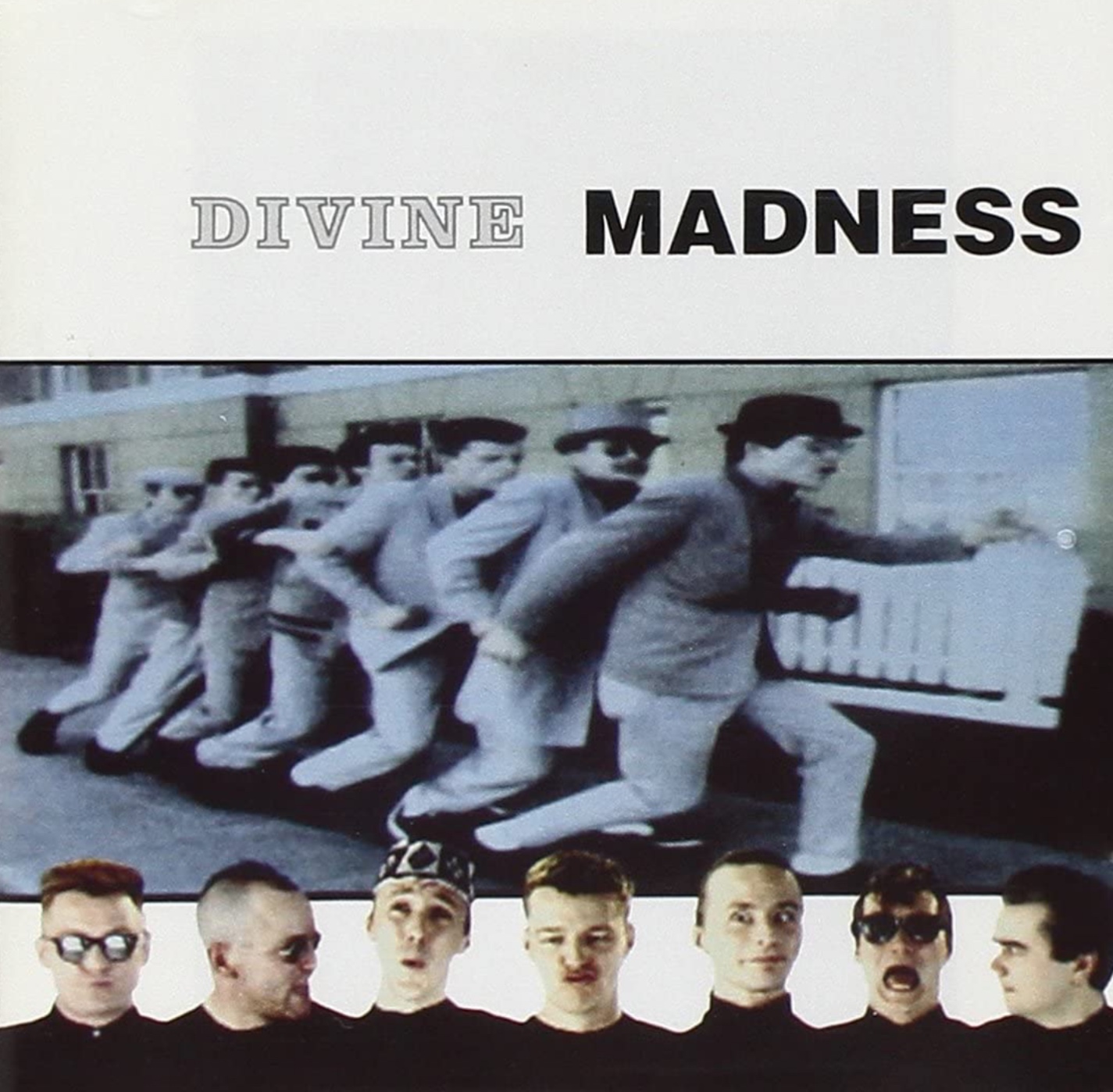
Madness record a demo version of “It Must be Love”. They have been playing it on the tour and Dave Robinson, of the band's label Stiff Records, says if they release it as a single it will get to number one, promising to give up ownership of the label to the group if the single was not a success. Exactly a decade after the release of Siffre's original, which had reached #14 on the UK chart, Madness' version reached #4, much to the relief of Robinson. The song was #6 when it was re-released in 1992 as the single of the compilation “Divine Madness”. Curiously, the song was included in the two LPs that, until this year, had been the band's only number ones in Great Britain. In the US, the track was released after “Our House” but unfortunately didn’t manage to repeat its success peaking at #33. 


The song was produced by Clive Langer and Alan Winstanley. Langer recalled the use of the strings on this track in an article by Eric Olsen for Blogcritics magazine: "We had the strings play pizzicato, which at the time required hiring real musicians. We took responsibility because we had to foot the bill, But the result was worth it. Nowadays you solve it with a sampler, but in those days it was still science fiction.”

 Winstanley added: "A few years later, Trevor Horn told me that he had stolen our idea of ​​pizzicato strings for ABC's first album; "That was actually quite flattering."


The video shows the band members playing in a white room, in a Rolls Royce and next to a grave. It also featured underwater performances by guitarist Chris Foreman and saxophonist Lee Thompson. Foreman recalled to Q magazine in August 2008: "At the pool, I had some lead weights on. I thought I was going to die. The rented guitar got bent, so we got a hairdryer and brought it back. They said, 'The mast is like a banana.' So we had to buy it." The video saw an appearance from original singer Labi Siffre as a violinist, who gave his blessing on the version and was heard to say he'd like to do one of Madness songs. And by the way Lee played the bee and Woody played the bird”.


This is a heartfelt pop number, packed with light piano riffs that really touch the heart. In many ways, it can be seen as a precursor to Our House, with string elements and a cheerful, hearty narrative. In fact, for some, the narrative may even be too saccharine, since it is a love song, but it is notable that the song marked an advance in Madness' style, opening their repertoire to more serious themes and using instruments that until that moment they had not used.


MADNESS - GREY DAY

Released: April 17, 1981

Charted:  UK: #4 


"Grey Day" is a song written by Mike Barson, first single released from the band's third studio album “7”. It was a big departure from their early ska sound with a much darker feel. The song title does not appear in the lyrics as a single phrase, although a couplet rhyming "grey" with "day" features in the chorus.


Madness consistently delved into the everyday struggles of working-class life in England, and "Grey Day" is no exception. Lead singer Suggs adopts the perspective of an individual worn down by life, facing yet another dreary and mundane day. The song poignantly captures feelings of despair, disillusionment, loneliness, and frustration that resonate with the challenges people encounter in their daily lives. It serves as a commentary on the overlooked struggles within a society that may dismiss or underestimate the difficulties faced by its individuals.


The origins of "Grey Day" trace back to the band's early days as The North London Invaders, where guitarist Chris Foreman recalled the initial version as a '60s psychedelic piece lacking structure and lyrics. Despite early skepticism about its commercial viability, the song evolved into a poignant and resonant commentary on the human experience.


Madness recorded "Grey Day" and the rest of the album in the Bahamas for "tax reasons," sharing the neighborhood with Clash frontman Joe Strummer. Lead singer Suggs remembered a significant moment when he asked Strummer to play "Grey Day" while he was DJing, hoping for recognition beyond the energetic tunes they were known for. However, Strummer declined to spin the track.


The music video for "Grey Day" was filmed in March 1981 at Bowmans shop window on Camden High Street and on an open-top bus touring London, featuring their famous nutty train walk. An early setback occurred when the initial two days of black-and-white filming were ruined during development. However, this turned out to be a blessing in disguise, providing the band with valuable rehearsal time in front of the film crew.