Total de visualitzacions de pàgina:

2.1.24


THE BEATLES - TICKET TO RIDE


Publicació: 9 d'abril de 1965

Llistes: Regne Unit: #1 (3 setmanes) EUA: #1 (1 setmana)


"Ticket to Ride" és una cançó dels Beatles, escrita principalment per John Lennon i acreditada a Lennon–McCartney. Llançada com a senzill l’abril de 1965, es va convertir en el seu setè èxit consecutiu al número 1 al Regne Unit i el seu tercer èxit consecutiu al número 1 (i vuitè en total) als Estats Units. Enregistrada al febrer de 1965 als estudis EMI de Londres, la pista va mostrar una evolució en el so dels Beatles amb la incorporació d’una instrumentació més intensa en comparació amb les seves publicacions anteriors. La cançó també apareix al seu àlbum Help! del 1965.


Segons "A Hard Day's Write" de Steve Turner, molts americans creien que el títol "Ticket to Ride" es referia als ferrocarrils britànics i que "ride" indicava la ciutat de Ryde a l'illa de Wight. Paul McCartney va admetre més tard al biògraf Barry Miles que hi havia certa veritat en aquesta interpretació. Tot i que la cançó principalment descrivia una noia que marxava de la vida del narrador, McCartney va reconèixer que eren conscients del potencial d'un doble sentit, donat el seu viatge a Ryde on Paul tenia un cosí que portava un bar. Don Short, que va viatjar amb els Beatles als anys 60, recorda que John Lennon va inventar la frase "Ticket to Ride" amb una altra significació en ment. Segons Short, John va explicar que a Hamburg les noies que treballaven al carrer necessitaven un certificat de salut, i les autoritats els donaven una targeta que indicava que no tenien malalties. No obstant això, Short va reconèixer que John podria haver estat de broma, subratllant la necessitat de ser prudent amb les seves afirmacions.


"Ticket to Ride" va marcar un canvi notable pels Beatles com la seva primera cançó que superava els 3 minuts, influenciant una tendència cap a cançons més llargues. Cançons posteriors com "You Won't See Me" de "Rubber Soul" van seguir la mateixa línia. La tendència es va estendre amb cançons més llargues als àlbums com "Revolver" i, notablement, "Sgt. Pepper's Lonely Hearts Club Band", que presentava quatre pistes que superaven els 3 minuts, incloent-hi dues que superaven els 5. Això va marcar un canvi respecte a les seves composicions més curtes inicials i va preparar el terreny per a exploracions musicals més extenses en les seves obres posteriors, amb cançons com "I Want You (She's So Heavy)" i "Hey Jude" entre les més llargues.


El breu però reconeixible solo de guitarra va ser interpretat per Paul McCartney. Carl Palmer, conegut per ser membre d'Emerson, Lake & Palmer, va elogiar la feina de bateria de Ringo Starr a "Ticket to Ride", descrivint-la com excepcional i destacant-ne les qualitats emocionals i rítmiques.


Els Beatles van ser pioners en la creació de videoclips per promocionar les seves cançons sense haver de presentar-se als estudis de televisió. El vídeo de "Ticket To Ride" va ser part d'una gravació on van enregistrar quatre cançons més. Les imatges es van rodar a l'estudi, mostrant la banda actuant davant de bitllets de tren i autobusos gegants.


THE BEATLES - TICKET TO RIDE


Released : April 9, 1965

Charted:  UK: #1 (3 weeks)  US: #1 (1 week)


"Ticket to Ride" is a song by the Beatles, primarily written by John Lennon and credited to Lennon–McCartney. Released as a single in April 1965, it became their seventh consecutive number 1 hit in the UK and their third consecutive number 1 hit (and eighth in total) in the US. Recorded in February 1965 at EMI Studios in London, the track showcased a progression in the Beatles' sound with the incorporation of drone and a harder instrumentation compared to their previous releases. The song is also featured on their 1965 album Help!


According to Steve Turner's "A Hard Day's Write" many Americans believed the ticket in "Ticket to Ride" referred to British Railways, and ride indicated the town of Ryde on the Isle of Wight. Paul McCartney later admitted to biographer Barry Miles that there was some truth to this interpretation. While the song primarily depicted a girl leaving the narrator's life, McCartney acknowledged they were aware of the potential for a double meaning, given their visit to Ryde where Paul had a cousin with a bar. Don Short, who traveled with the Beatles in the '60s, recalled that John Lennon coined the phrase "Ticket to Ride" with another meaning in mind. According to Short, John explained that in Hamburg, the girls working the streets needed a clean bill of health, and authorities would give them a card indicating they were disease-free. However, Short acknowledged that John could have been joking, emphasizing the need to be cautious with his statements.


"Ticket to Ride" marked a notable shift for the Beatles as their first song over 3 minutes, influencing a trend towards longer songs. Subsequent tracks like "You Won't See Me" from “Rubber Soul” followed suit. The trend extended with longer songs on albums like “Revolver”, and notably, “Sgt. Pepper's Lonely Hearts Club Band”, which featured four tracks over 3 minutes, including two exceeding 5 minutes. This marked a departure from their earlier, shorter compositions and set the stage for more extended musical explorations in their later works, with tracks like "I Want You (She's So Heavy)" and "Hey Jude" among their longest.


The brief but recognizable guitar solo in the song was played by Paul McCartney. Carl Palmer of Emerson, Lake & Palmer fame praised Ringo Starr's drum work on "Ticket to Ride", describing it as exceptional and highlighting its exciting and rhythmical qualities.


The Beatles were pioneers in making music videos, creating them to promote their songs without needing to appear at TV stations. The video for "Ticket To Ride" was part of a shoot where they recorded four other songs. The footage was shot in the studio, featuring the band performing in front of oversized tickets for trains and buses.


THE BEATLES - HELP! SONGS 

"Help!" is the fifth studio album by the Beatles and serves as the soundtrack to their film of the same name. Released on August 6, 1965, the album features seven of its fourteen songs, including the singles "Help!" and "Ticket to Ride," which are prominently featured in the film and make up the first side of the vinyl album. Let's do a brief review of the songs that were not released as singles.


THE BEATLES - YOU’VE GOT TO HIDE YOUR LOVE AWAY


"You've Got to Hide Your Love Away" is a song by the Beatles, written and sung by John Lennon. It was released on the album Help! in August 1965."


John Lennon's acknowledgment of his "Dylan period" sheds light on the influence of Bob Dylan on his songwriting during that time. The dynamic nature of Lennon's musical style, adapting to various influences like Elvis Presley, the Everly Brothers, and Dylan, showcases his versatility as an artist. "You've Got to Hide Your Love Away" reflects Lennon's evolving approach to songwriting, incorporating introspection and self-reflection, as seen in earlier songs like "I'm a Loser."


The speculation about "You've Got to Hide Your Love Away" being a message to Brian Epstein is not confirmed, and interpretations of song lyrics can vary. It was rumored that this was the first gay rock song, a message to Epstein, who was gay. In the part of The Beatles Anthology, that covers Epstein's death, this song is played, giving credence to the idea that this song was indeed a song about hiding one's homosexuality. While the song's meaning is not explicitly detailed by the Beatles, some fans have suggested various interpretations, including connections to John Lennon's personal experiences or feelings.  However, the exact inspiration for the song remains a subject of debate and interpretation.


In the whimsical scene from "Help!" featuring the Beatles playing "You've Got to Hide Your Love Away," the head of the cult emerges from a manhole cover on Ailsa Avenue, adding an eccentric touch to the London setting. As the band performs in John's quarters, a gardener, played by George's in-house gardener, contributes a flute part. The scene takes a surreal turn when Ahme, portrayed by Eleanor Bron, unveils a giant needle, leading to comedic chaos, and George eventually faints after Ahme reveals the sought-after ring. The blend of surreal elements and humor showcases the film's distinctive style.


THE BEATLES - ANOTHER GIRL


"Another Girl" from the Beatles' "Help!" album is a Paul McCartney composition where the singer informs his girlfriend that he has found "another girl." The song blends McCartney's catchy melodies with the upbeat sound characteristic of many Beatles tracks.


Paul McCartney's creation of "Another Girl" during his holiday in Tunisia adds an exotic twist to the song's origins. The fact that he composed it in the acoustically favorable environment of a tiled bathroom showcases McCartney's knack for finding inspiration in unexpected places. The juxtaposition of songwriting in a tranquil setting with the presence of foreign dignitaries adds a unique flavor to the song's backstory.


The fact that "Another Girl" was recorded in one take adds an element of spontaneity to its creation, capturing a moment of musical synergy among the band members. However, the unintended loss of George Harrison's guitar flourish during remixing showcases the delicate balance between creativity and the technical aspects of recording.


In the scene for "Another Girl" from the Beatles movie Help!, Paul McCartney engages in a playful and surreal visual concept. He indeed appears to mimic playing the woman as if she were a guitar, showcasing the whimsical and creative nature often associated with McCartney's artistic expressions. The hover-hand gesture adds a touch of humor to the scene, reflecting the lighthearted and experimental spirit of the band during that era.


THE BEATLES - THE NIGHT BEFORE


"The Night Before" it’s a song included in the soundtrack of the second film “Help!”. This is a dynamic example of Paul McCartney's songwriting, showcasing his ability to blend pop rock elements and introspective lyrics. The theme of reflecting on a significant moment, in this case, the last night with a lover, adds emotional depth to the song.


The song delves into the familiar theme of a sudden change of heart overnight, exploring the emotional aftermath of a lover's departure. The parallels drawn between this song and McCartney's relationship with Asher add a layer of personal context to the lyrics. Comparisons with Lennon's "Yes It Is" highlight the contrasting perspectives, with McCartney expressing a desire to hold on to the positive memories despite the impending abandonment.


"The Night Before" holds historical significance as the first Beatles song to incorporate an electric piano, a subtle but impactful innovation. Its inclusion in the Help! film sequence and the band's limited live performance of the song add to its unique place in the Beatles' repertoire. McCartney's personal admiration for the song, coupled with varied critical opinions, reflects the diversity of the Beatles' catalog, with fans often holding "The Night Before" in high regard among their early works.


THE BEATLES - YOU’RE GOING TO LOSE THAT GIRL


"You're Going to Lose That Girl" is a song from the Beatles' album and film Help! Written primarily by John Lennon, it reflects a collaborative effort with contributions from Paul McCartney. Lennon mentioned in a January 1965 interview that he had only crafted "half a song" for the band's upcoming film. The song's creation likely took place during Lennon's Alpine vacation with his wife Cynthia and Beatles producer George Martin. The break from touring allowed the band members to focus on songwriting, resulting in the recording of several new tracks, including this one, in February 1965.


The scene from the film “Help!” features The Beatles performing "You're Going to Lose That Girl" in the recording studio. It includes footage of Paul McCartney playing the piano and Ringo Starr miming bongos, which were overdubbed onto the recording. The humorous twist occurs towards the end when one of the thugs uses a chainsaw to cut a hole in the floor around Ringo's drum kit. The producer suggests re-recording due to a buzzing noise, leading to a playful exchange among the band members, eventually resulting in Ringo and his drums falling through the floor.


"You're Going to Lose That Girl" is indeed a continuation of the narrative from "She Loves You". The song conveys a sense of urgency, with the singer warning someone that they are at risk of losing their girl. The colloquial variation in the title, "You're Gonna Lose That Girl," is used in North America, providing a slightly different tone.


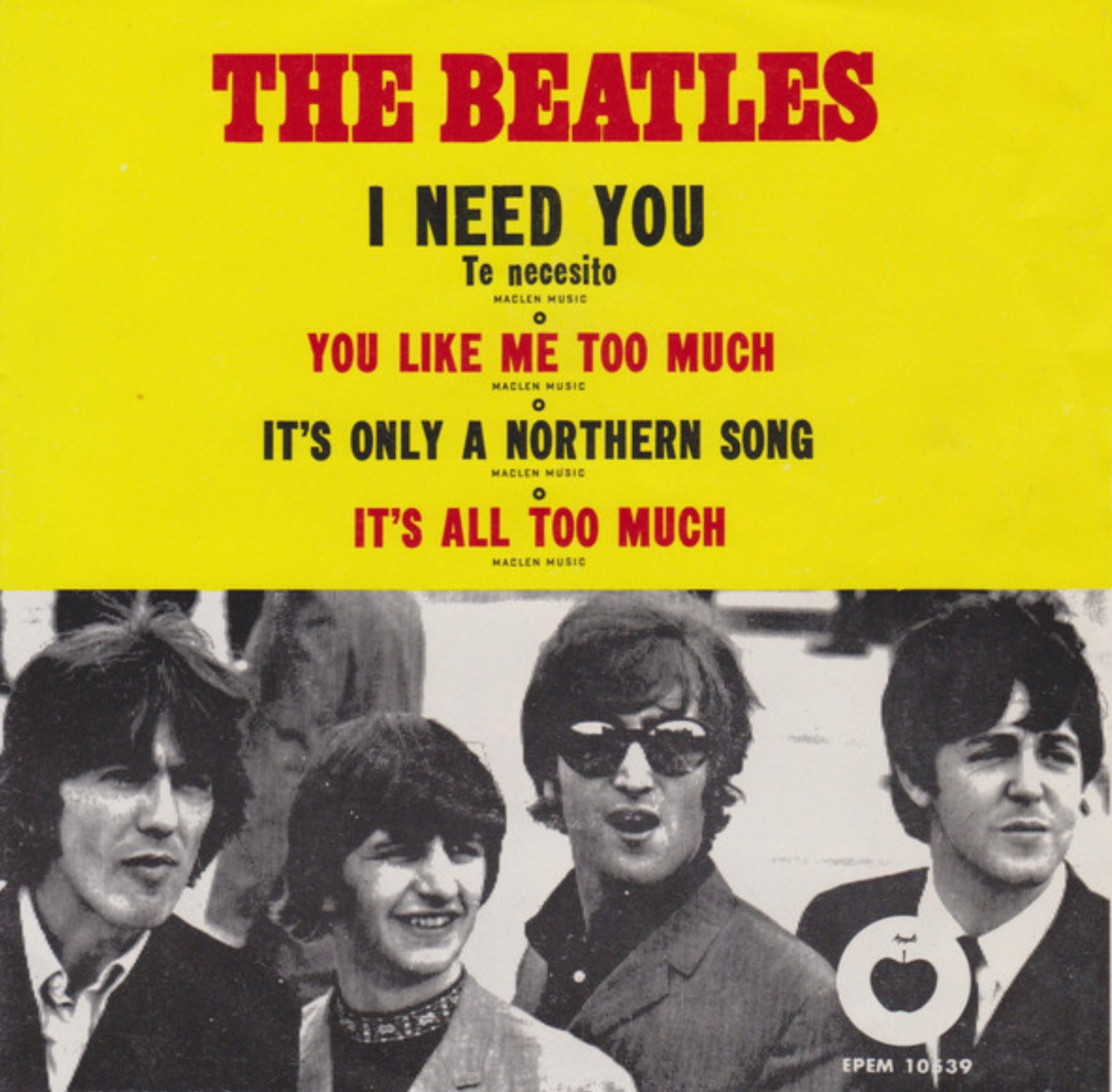
THE BEATLES - I NEED YOU


"I Need You" by George Harrison is a poignant composition featured on the Beatles' 1965 album Help! It marks Harrison's second released composition with the Beatles. The song is also included in the film Help!, adding to the soundtrack's diverse musical offerings. The distinct scene filmed on Salisbury Plain enhances the connection between the song and the movie, with Harrison ensuring his credit is acknowledged during the end credits.


George Harrison's "I Need You" is a heartfelt expression inspired by his feelings for Pattie Boyd, whom he later married in 1966. The song reflects the depth of Harrison's emotions for Boyd, who continued to be a muse for various artists. In addition to "I Need You," Harrison's admiration for Pattie Boyd is evident in other compositions like "Something." The intricate web of musical tributes continued when Eric Clapton penned songs like "Layla" and "Wonderful Tonight" for Boyd. She and Clapton were married from 1979-1988.


"I Need You" holds historical significance as it marks the Beatles' initial use of a guitar volume pedal. This recording innovation contributed to the distinctive sound of the song. Additionally, Tom Petty and the Heartbreakers paid homage to George Harrison by performing "I Need You" at the Concert for George in November 2002, underscoring the enduring impact of Harrison's musical contributions.