Total de visualitzacions de pàgina:

16.2.24


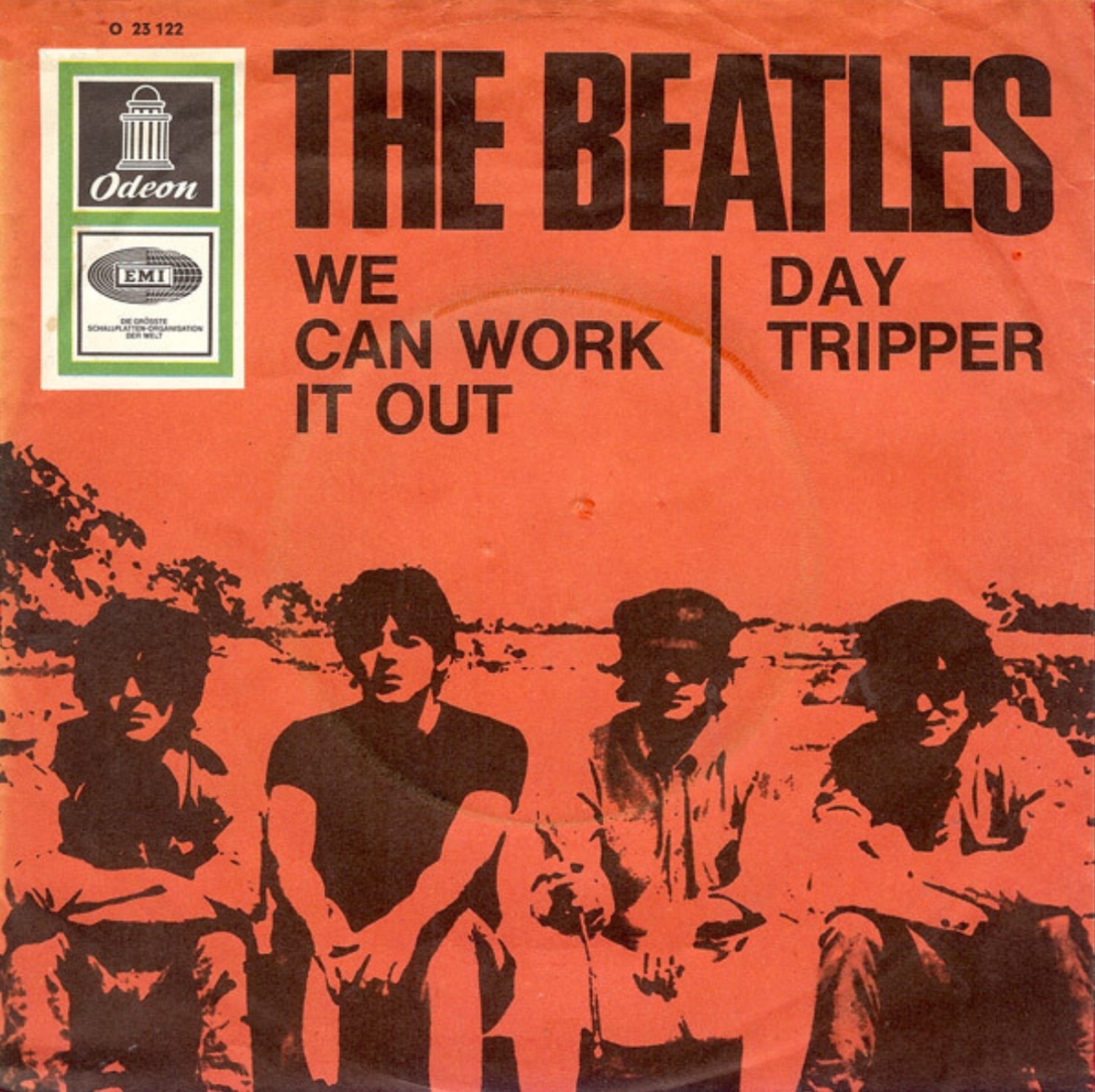
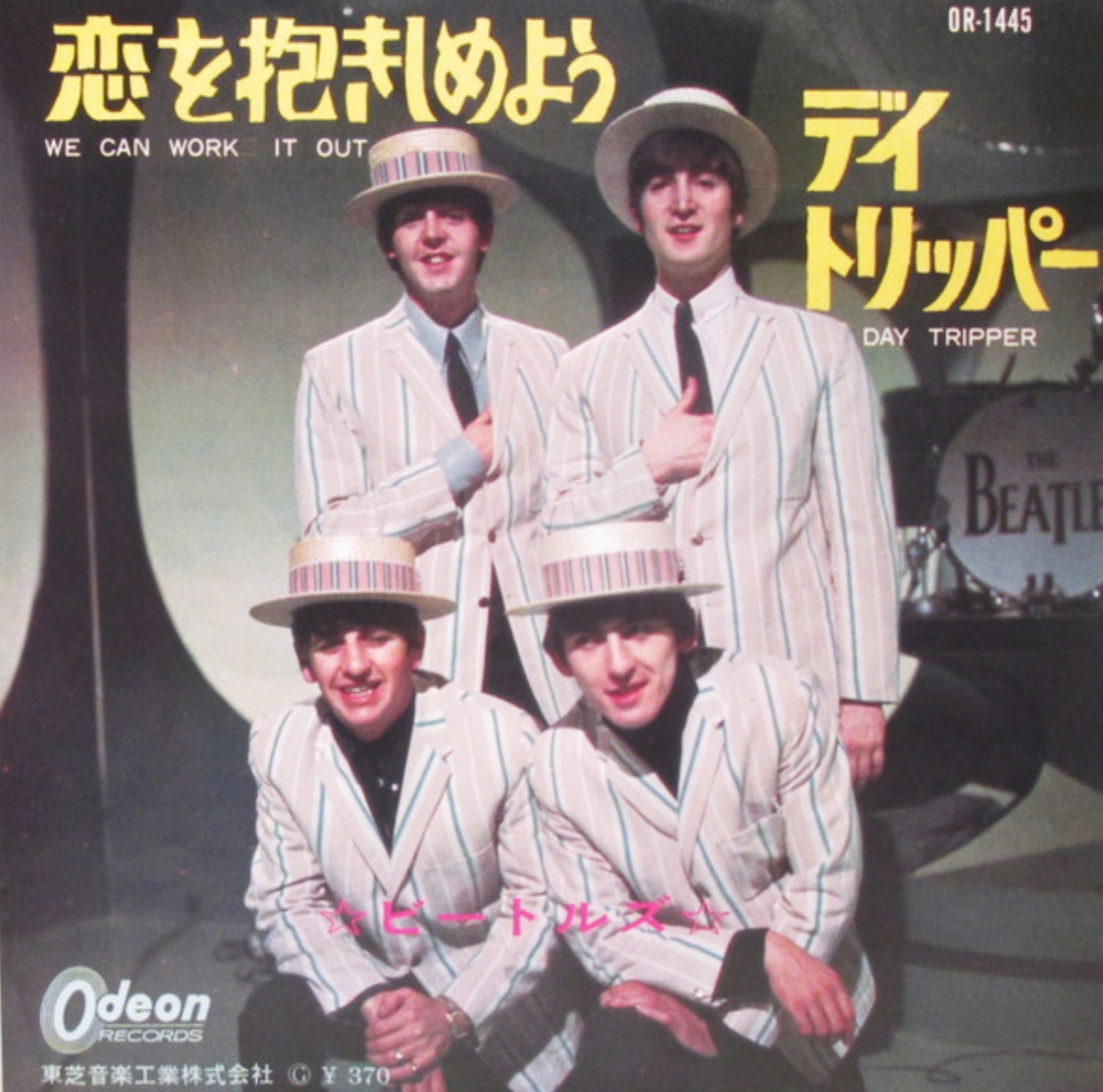
THE BEATLES - DAY TRIPPER / WE CAN WORK IT OUT


DAY TRIPPER

Publicació: 3 de desembre de 1965

Llistes: Regne Unit: #1 (2 setmanes)   EUA: #5 


"Day Tripper" és una cançó de rock dels Beatles llançada com a doble cara A juntament amb "We Can Work It Out" el desembre de 1965. Escrita principalment per John Lennon, amb aportacions de Paul McCartney, està acreditada a la col·laboració Lennon-McCartney. La cançó presenta un destacable riff de guitarra elèctrica i està influenciada per la música soul nord-americana.


"Day Tripper" es va llançar com a doble cara A amb "We Can Work It Out", arribant a la primera posició al Regne Unit i a la cinquena als Estats Units. Malgrat el seu èxit, "We Can Work It Out" va rebre més radiodifusió als Estats Units. El single es va llançar el mateix dia que l'àlbum "Rubber Soul", aprofitant la popularitat dels Beatles amb múltiples llançaments simultanis.


"Day Tripper" es va escriure durant les sessions de "Rubber Soul", amb John Lennon composant la major part de la lletra i la música. Lennon va basar el riff de guitarra en "Watch Your Step" de Bobby Parker, i en una entrevista del 1980, va afirmar ser l’autor de la cançó, incloent el fragment de guitarra. No obstant, en el llibre del 1997 de Paul McCartney, va parlar de la cançó com una col·laboració, però va destacar que Lennon va aportar la major part de les idees. 


Aquesta és la cançó que va marcar la primera referència explícita de John Lennon a l'LSD en una cançó dels Beatles, amb la lletra interpretada  com una broma dirigida a Paul McCartney per no haver experimentat l'àcid. Lennon va descriure "Day Tripper" com una "cancó de drogues", i McCartney va reconèixer en una entrevista del 2004 que es tractava "d'àcid" (LSD). El títol és un joc de paraules, fent referència tant a un turista en una excursió d'un dia com a un "viatge" en el sentit psicodèlic. Lennon va explicar que els "day trippers" eren persones que feien curtes excursions, però també va afegir un toc sarcàstic, insinuant algú només parcialment compromès amb l'estil de vida hippie. Durant les sessions de "Rubber Soul", va sorgir una divisió entre McCartney i els altres a causa de la seva abstinència de LSD.


WE CAN WORK IT OUT 

Publicació: 3 de desembre de 1965

Llistes: Regne Unit: #1 (2 setmanes)   EUA: #1 (3 setmanes)


"We Can Work It Out" escrita per Paul McCartney i John Lennon, es va llançar inicialment com a single de doble cara A juntament amb "Day Tripper" el desembre de 1965. McCartney va escriure la cançó sobre la seva nòvia, l'actriu Jane Asher. Enregistrada durant les sessions de l'àlbum "Rubber Soul", va suscitar un debat sobre quina cara hauria de considerar-se la principal a causa de la qualitat de totes dues cançons.


Els Beatles van gravar "We Can Work It Out" el 20 d'octubre de 1965 als estudis d'EMI a Londres. Inicialment pensada com a part d'un single sense àlbum juntament amb "Day Tripper" de Lennon, la banda va gravar de manera eficient la pista bàsica en només dos intents. No obstant, malgrat aquest inici ràpid, el procés d'enregistrament va durar gairebé onze hores, marcant la seva sessió d'estudi més llarga fins a aquell moment. El toc final va arribar durant una sessió per afegir veus el 29 d'octubre, completant la producció de la cançó.


En el debat sobre quina cançó hauria de ser la cara A del nou single, Lennon inicialment va argumentar per "Day Tripper" en contra de la visió majoritària que considerava "We Can Work It Out" com a opció més comercialment viable. Malgrat l'anunci d'EMI el 15 de novembre que "We Can Work It Out" seria la cara A, Lennon va contradir aquesta decisió públicament dos dies més tard. En conseqüència, el single es va comercialitzar com a "doble cara A". No obstant, la radiodifusió i les peticions de venda a les botigues van revelar ràpidament que "We Can Work It Out" era la cara més popular de les dues.


Els Beatles van crear una pel·lícula promocional, considerada un dels primers videoclips, per "We Can Work It Out". Enregistrat el 23 de novembre de 1965 en un estudí de cinema de Londres, aquesta filmació va incloure clips de quatre altres cançons també. La banda va utilitzar aquests vídeos per a tenir les seves cançons emeses sense fer aparicions a programes de televisió, alliberant les seves agendes. Es van filmar tres versions diferents de "We Can Work It Out", totes elles amb John Lennon a l'òrgan.


"We Can Work It Out" només va ser interpretada en directe pels Beatles durant la seva darrera gira britànica al novembre/desembre de 1965. Paul McCartney va tornar a tocar la cançó molt més tard, interpretant-la per primera vegada el 1991 durant la seva aparició a MTV Unplugged. El 2002, durant la seva gira Back In The US, McCartney en va interpretar una versió en solitari amb la seva guitarra acústica.


THE BEATLES - DAY TRIPPER / WE CAN WORK IT OUT


DAY TRIPPER 

Released : December 3, 1965

Charted:  UK: #1 (2 weeks)  US: #5 


"Day Tripper" is a rock song by the Beatles released as a double A-side single with "We Can Work It Out" in December 1965. Primarily written by John Lennon, with contributions from Paul McCartney, it's credited to the Lennon–McCartney partnership. The song features an electric guitar riff and is influenced by American soul music.


"Day Tripper" was released as a double-A-sided single with "We Can Work It Out," reaching the #1 position in the UK and #5 in the US. Despite its success, "We Can Work It Out" received more airplay in the US. The single was released on the same day as the "Rubber Soul" album in the US, showcasing The Beatles' popularity by supporting multiple releases concurrently.


"Day Tripper" was written during the Rubber Soul sessions, with John Lennon composing most of the lyrics and music. Lennon based the guitar riff on Bobby Parker's "Watch Your Step," and in a 1980 interview, he asserted ownership of the song, including the guitar break. However, in Paul McCartney's 1997 book, he acknowledged it as a collaboration but emphasized Lennon's primary contribution.


This is the track that marked John Lennon's first explicit reference to LSD in a Beatles song, with the lyrics interpreted as a playful tease aimed at Paul McCartney for not having experienced acid. "Day Tripper" was described by Lennon as a "drug song" and McCartney acknowledged in a 2004 interview that it was "about acid" (LSD). The title is a play on words, referencing both a tourist on a day trip and a "trip" in the psychedelic sense. Lennon explained that "day trippers" were people going on short excursions, but he also added a sarcastic touch, implying someone only partially committed to the hippie lifestyle. During the Rubber Soul sessions, a divide emerged between McCartney and the others due to his abstinence from LSD. 


WE CAN WORK IT OUT

Released : December 3, 1965

Charted:  UK: #1 (2 weeks)  US: #1 (3 weeks)


"We Can Work It Out" by The Beatles, written by Paul McCartney and John Lennon, was initially released as a double A-side single with "Day Tripper" in December 1965. McCartney penned the song about his girlfriend, actress Jane Asher. Recorded during the “Rubber Soul” album sessions, it sparked debate over which side should be considered the A-side due to the quality of both tracks.


The Beatles recorded "We Can Work It Out" on October 20, 1965, at EMI Studios in London. Originally intended as part of a non-album single along with Lennon's "Day Tripper," the band efficiently captured a satisfactory basic track in just two takes. However, despite this quick start, the recording process consumed nearly eleven hours, marking their lengthiest studio session at that time. The finishing touch came during a vocal overdubbing session on October 29, completing the production of the song.


In the debate over which song should be the A-side of the new single, Lennon had initially argued for "Day Tripper" against the majority view favoring "We Can Work It Out" as the more commercially viable choice. Despite EMI's announcement on November 15 that "We Can Work It Out" would be the A-side, Lennon publicly contradicted this decision two days later. Consequently, the single was marketed as a "double A-side." However, airplay and point-of-sale requests quickly revealed that "We Can Work It Out" was the more popular of the two sides.


The Beatles created a promotional film, considered one of the early music videos, for "We Can Work It Out". Recorded on November 23, 1965, at a London film studio, this shoot included clips for four other songs as well. The band utilized these videos to have their songs broadcast without making TV show appearances, freeing up their schedules. Three different versions of "We Can Work It Out" were filmed, all featuring John Lennon at the organ.


"We Can Work It Out" was only played live by The Beatles during their final British tour in November/December 1965. Paul McCartney revisited the song much later, performing it for the first time in 1991 during his MTV Unplugged appearance. In 2002, during his Back In The US tour, McCartney played a solo version on his acoustic guitar.






15.2.24


PRINCE - LET’S GO CRAZY / EROTIC CITY


Publicació: 18 de Juliol de 1984

Llistes: Estats Units: #1 (2 setmanes)  Regne Unit: #7 


“Let's Go Crazy” és el primer tema del sisè àlbum de Prince, "Purple Rain", el primer àlbum acreditat a Prince and the Revolution. Un mes després del llançament del disc, aquesta cançó es va publicar com el segon single de l'àlbum, convertint-se en el seu segon número 1 als Estats Units (després de "When doves cry") al Billboard Hot 100, i esdevé una de les cançons més populars de Prince. La cara B va ser la líricament controvertida "Erotic City". Al Regne Unit, la cançó va ser llançada com a doble cara A amb "Take me with U" aconseguint el número 7 a la llista de singles del Regne Unit.


El començament d'aquesta cançó és una de les intros parlades més famoses de la història del pop. Prince pren el personatge d'un predicador i s'uneix a un òrgan de l'església mentre fa el que equival a un sermó, recordant-nos que hem de gaudir d'aquesta vida, sabent que podem esperar un món de felicitat sense fi quan morim. Acrediteu això a George Clinton, que va fer moltes coses semblants com "Free your mind, and your ass will follow...” (allibera la teva ment, i el teu cul seguirà...) amb P-Funk.


Prince va passar de l'anonimat a assolir vendes de platí el 1982  amb "1999" on barrejava música sintetitzada amb influència punk amb R&B i funk. Però per conquerir el món com ho va fer amb "Purple Rain" al 1984, necessitava afegir un altre element a la barreja: una impressionant guitarra rockera. Amb excepcions notables, com ara "Bambi" del 1979, les gravacions amb guitarra de Prince s'havien centrat més en els ritmes funk que en demostrar la seva potent valua com a solista. Però tan bon punt el riff principal distorsionat de "Let's Go Crazy" va prendre el relleu del testimoni d'obertura de la cançó (i l'àlbum), va quedar clar que hi havia alguna cosa nova i diferent. Quan la pista va explosionar, va concloure amb un solo memorable de tancament inspirat en Jimi Hendrix, El disc començava com un canvi sísmic. Segons el fotògraf i amic de Prince Allen Beaulieu, la idea bàsica per a la cançó/riff va ser una cosa que se li va ocórrer mentre feia una sessió amb ell la tardor de 1982, i es va comprometre a gravar-ho, cosa que va fer el 18 de maig de 1983.


La lletra tracta sobre superar la vida i la batalla contra el mal, Satanàs és l’ascensor que ens baixa a l’infern. Se'ns anima a no permetre que el diable ens destrueixi i, en canvi, recórrer a Déu perquè ens ajudi a tornar-nos bojos per pujar al pis més alt, el cel.


Aquesta és la cançó d'obertura de la pel·lícula “Purple Rain”. L'àlbum va ser la banda sonora de la pel·lícula i un gran èxit, passant 24 setmanes al número 1 a Amèrica. Gran part de la pel·lícula té lloc en un club on Prince actua, aquestes escenes es van rodar a la discoteca First Avenue de Minneapolis, on Prince realment tocava habitualment. Quan Prince i la seva banda, The Revolution, es van embarcar en la seva gira per promocionar l'àlbum, van utilitzar la major part de la coreografia de la seva interpretació cinematogràfica d'aquesta cançó per als seus concerts.


“Erotic City (Make Love Not War Erotic City Come Alive)” va ser llançada com a cara B del senzill "Let's Go Crazy" a tot el món. La cançó destaca com el primer llançament de Prince que conté aportacions de Sheila E., tot i que l’àlbum d’ella "The Glamorous Life" que estava principalment escrit, interpretat i produït per Prince, es va publicar sis setmanes abans.


La cançó era notable per les seves referències sexuals i l'ús de la paraula fuck "we can fuck until the dawn"(podem follar fins que es faci clar), encara que algunes persones, especialment Sheila E. (que fa els cors), han proclamat que la paraula en realitat és funk, la qual cosa va permetre que es reproduís a la ràdio a finals dels anys vuitanta i als noranta. Realment no està gens clar que digui funk. 


Prince tenia una quantitat increïble de material inèdit i un tresor en cares B de singles (moltes de les quals es recullen a la recopilació The Hits/The B-Sides de 1993). “Erotic City (Make Love Not War Erotic City Come Alive)” de 1984 és una de les més celebrades, sens dubte la més popular i segurament una de les més controvertides, de les anomenades "Bs assassines" de Prince. Es va utilitzar com a canćó d’obertura del Lovesexy tour del 1988. 


PRINCE - LET’S GO CRAZY / EROTIC CITY


Released: July 18, 1984

Charted: US: #1 (2 weeks)  UK: #7


“Let's Go Crazy” is the first track on Prince’s sixth album “Purple Rain”, the first album to be credited to Prince and the Revolution. One month after the album’s release, this track was released as the album’s second single, becoming his second US #1 single (following “When doves cry”) in Billboard Hot 100, and becomes one of Prince's most popular songs. The B-Side was the lyrically controversial "Erotic city". In the UK, the song was released as a double A-side with "Take me with U" peaking at #7 in the UK Singles Chart.


The beginning of this song is one of the most famous spoken intros in pop history. Prince takes the persona of a preacher and is joined by a church organ as he gives what amounts to a sermon, reminding us that we should enjoy this life, knowing that we can look forward to a world of never-ending happiness when we die. Credit this to George Clinton, who did many similar bits ("free your mind, and your ass will follow...") with P-Funk.


Prince rose from anonymity to 1982's platinum selling “1999” with a distinctly synthesized and punk-influenced blend of R&B and funk. But in order to conquer the world like he did with 1984's “Purple Rain”, he needed to unleash another element into the mix: jaw-droppingly great rock guitar. With notable exceptions such as 1980's "Bambi," Prince's recorded guitar playing had previously focused more on edgy funk rhythms than on bombastic soloing. But as soon as the main distorted riff from "Let's Go Crazy" took over from the song (and album)'s opening testimonial, it was clear something new was in the mix. And by the time the track's screaming, Jimi Hendrix inspired closing solo concluded, it felt more like a seismic shift. The basic idea for the song/riff (that according to Prince photographer and friend Allen Beaulieu was something he came up with while jamming with him in the fall of 1982) was committed to tape in a session on 18 May 1983.


The lyrics are about getting through life and the battle against evil, Satan being the de-elevator. We are encouraged to not allow the devil to break us down and instead to turn to God to help us by going crazy and punching a higher floor (God).


This is the opening song from Prince's film Purple Rain. The album was a soundtrack to the film, and a huge hit, spending 24 weeks at #1 in America. Much of the movie takes place at a club where Prince performs, these scenes were shot at the First Avenue nightclub in Minneapolis, where Prince really was a regular player. When Prince and his band, The Revolution, embarked on their tour to promote the album, they used most of the choreography from their film performance of this song for their concert performances.


“Erotic City (Make Love Not War Erotic City Come Alive)” was released as the B-side of the single "Let's Go Crazy", released worldwide. The sing is notable as the first Prince release to contain input from Sheila E., although her album “The Glamorous Life”, mostly written, performed and produced by Prince, was released six weeks earlier.


The song was notable for its sexual references, and the use of the word fu*k ("we can fu*k until the dawn"), although some people, especially Sheila E. (who sings the chorus), have claimed the word is actually funk, allowing it to be played on the radio in the late 1980s into the 1990s.


Prince as an incredible amount of unreleased material, and a treasure trove of B-sides (most of which are collected in 1993’s The Hits/The B-Sides compilation). 1984’s “Erotic City” is one of the most celebrated, arguably the most popular and surely one of the most controversial, of Prince’s “killer Bs”.


AL GREEN - LET’S STAY TOGETHER


Estrena: novembre de 1971

Llistes: EUA: #1 (1 setmana)  Regne Unit: #7


"Let’s Stay Together" és una cançó de l'intèrpret nord-americà Al Green del seu àlbum del 1972 amb el mateix nom. Va ser produïda i enregistrada per Willie Mitchell. Llançada com a single el 1971, "Let's Stay Together" va arribar al número 1 del Billboard Hot 100, i també va encapçalar la llista R&B durant nou setmanes.


"Let’s Stay Together" és una expressió d'amor, compromís i fidelitat. Expressa el desig de l'intèrpret de romandre en una relació segura i amorosa, independentment dels alts i baixos de la vida. La cançó transmet un missatge d'estabilitat i satisfacció entre dues persones, tot destacant la força del vincle que comparteixen. La lletra  suggereix que fins i tot quan els temps es tornen difícils, la parella hauria de romandre junta, confiant i estimant-se per superar-ho. La tornada de la cançó és una súplica per romandre junts, per posar fe i confiança l'un en l'altre malgrat el que el futur pugui portar. Serveix com a recordatori emocional que l'amor i la fidelitat haurien de tenir prioritat sobre qualsevol altra sensació.


Quan Al Green va gravar “Let’s Stay Together”, la seva obra mestra, cantava a una sala plena de borratxos. El productor Willie Mitchell, qui havia descobert Green i qui l'havia ajudat a descobrir la seva pròpia veu, sabia que Green feia la seva millor feina a l'escenari, quan era capaç de cantar davant d’una audiència. Així que això és el que Mitchell li va donar. Mitchell va reunir un parell de desenes de beguts del barri, va comprar un munt de vi per a ells, i els va fer seure tots tranquil·lament i mirar com Al Green gravava la cançó.


Mitchell entenia el miracle de la veu d'Al Green millor que Green mateix, i “Let’s Stay Together” és una mostra pura d'aquesta veu, dels fets que pot aconseguir i els sentiments que pot evocar. Aquesta veu es desplaça i gira amb una gràcia única i pausada. Green mai no brama ni crida ni força res. Simplement deixa que aquesta veu arribi on la cançó el porti. "I wanna spend my life with you” (Vull passar la meva vida amb tu), respira Green, mentre que aquesta veu irradia alegria absoluta i satisfacció i confort.


Green va escriure la lletra en uns cinc minuts. Aquestes lletres són vagues, universals i encantadores, i no serien res sense aquella veu unida a elles. Potser la simplicitat elegant d'aquestes paraules va venir de la rapidesa amb què Green les va escriure, o potser tenia aquest sentiment en ell durant anys, només esperant que arribés la música adequada per desbloquejar-lo.


TINA TURNER VERSION


Publicació: 7 de novembre de 1983

Llistes: EUA: #26   Regne Unit: #6


La versió del 1983 de Tina Turner va revitalitzar la seva carrera, retornant-la a les llistes del Regne Unit i dels Estats Units per primera vegada en més de deu anys. En una entrevista, Martyn Ware de Heaven's 17 va recordar: "Em van dir, 'Estaries interessat a escriure una cançó per a “Private Dancer”?' I vaig dir, 'Bé, realment no escrivim per a altres persones.' Ens sentíem una mica cohibits perquè normalment el que fèiem era només per a nosaltres. No era només una qüestió d'arrogància; era com, 'Déu meu, per on començarem a escriure una cançó per a Tina Turner?' De debò. Per a nosaltres era una llegenda. Vaig dir, 'Bé, realment no em sento segur amb això, però realment m'agradaria fer una versió, o un parell de versions, així que vam acabar fent una llista curta."


"Ella estava a Londres en aquell moment", va continuar Ware, "i la pista que realment volia fer amb ella era 'Let's Stay Together' perquè pensava que havia girat una mica l'esquena a les seves arrels de soul, clarament volia ser una cantant de rock. Vaig dir, 'Mira, pel que fa a mi, Tina, encara ets una de les millors cantants de soul del món'. I vaig dir, 'Quins eren els teus referents quan eres jove?' I ella va dir, 'Otis Redding, Sam Cooke.' I vaig dir, 'Què en penses de "Let's Stay Together" d'Al Green?' I ella de seguida es va enganxar a la idea".


Turner acabava de signar amb Capitol Records, que va llançar la seva versió de "Let's Stay Together" al Regne Unit. Amb els veus de suport de Glenn Gregory i Martyn Ware de Heaven 17 i un toc de producció modern proporcionat per B.E.F., la cançó va triomfar, arribant al número 6 al desembre de 1983. Publicada als Estats Units, la cançó es va convertir en una favorita als clubs de ball de Nova York i va arribar al número 26 al març de 1984. Després d'encertar al Regne Unit, Capitol va encarregar un àlbum complet, donant a Turner dues setmanes per gravar el que va esdevenir “Private Dancer”, que va retornar Turner a l'estrellatge.


Al 2010 "Let's Stay Together" va ser seleccionada i afegida per la Biblioteca del Congrés dels Estats Units al Registre Nacional d'Enregistraments, que anualment selecciona enregistraments que són culturalment, històricament o estèticament significatius. En aquest cas, estem possiblement parlant d'una de les millors cançons de soul de la història.


AL GREEN - LET’S STAY TOGETHER


Released: November 1971

Charted:  US: #1 (1 wk)  UK: #7


“Let’s Stay Together” is a song by American singer Al Green from his 1972 album of the same name. It was produced and recorded by Willie Mitchell. Released as a single in 1971, "Let's Stay Together" reached number 1 on the Billboard Hot 100, and also topped R&B chart for nine weeks.


"Let’s Stay Together" is an expression of love, commitment, and loyalty. It expresses the singer's desire to remain in a secure and loving relationship, regardless of life's ups and downs. The song conveys a message of stability and contentment between two individuals, while also noting the strength of the bond they share. The lyrics suggest that even when times become tough, the couple should stay together, trusting and loving each other in order to get through it. The chorus of the song is a plea to stay together, to put faith and trust in one another despite whatever the future may bring. It serves as an emotional reminder that love and loyalty should take priority over any other feeling.


When Al Green recorded “Let’s Stay Together”, his masterpiece, he was singing to a roomful of drunks. The producer Willie Mitchell, who had discovered Green and who had helped Green discover his own voice, knew that Green did his best work onstage, when he was able to play to an audience. So that’s what Mitchell gave him. Mitchell rounded up a few dozen neighborhood drunks, bought a bunch of wine for them, and got them all to sit quietly and watch Al Green record the song. 


Mitchell understood the miracle of Al Green’s voice better than Green himself did, and “Let’s Stay Together” is a pure showcase of that voice, of the feats it can accomplish and the feelings it can evoke. That voice glides and twists and spins with a rare unhurried grace. Green never howls or shouts or forces anything. He just lets that voice drift on the song’s currents. “I wanna spend my life with you”, Green breathes, as that voice radiates absolute joy and contentment and comfort.


Green wrote the lyrics in about five minutes. Those lyrics are vague and universal and lovely, and they’d be nothing without that voice attached to them. Maybe the elegant simplicity of those words came from how quickly Green wrote them, or maybe he had that sentiment in him for years, just waiting for the right music to come along and unlock it.


TINA TURNER VERSION


Released: November 7, 1983

Charted:  US: #26   UK: #6 


Tina Turner's 1983 cover of this song revitalized her career, returning her to the charts in both the UK and US for the first time for over a decade. In an interview Heaven’s 17 Martyn Ware  recalled: "They said, 'Would you be interested in writing a song for “Private dancer”?' And I said, 'Well, we don't really write for other people.' We felt a bit self-conscious because we thought that what we did was our particular thing. It wasn't just an arrogance thing; it was, like, 'God, how would we start writing a song for Tina Turner?' Seriously. She was a legend in our eyes. I said, 'Well, I don't really feel confident with that, but I really would like to do a cover version, or a couple of cover versions, so we ended up drawing up a shortlist."


"She was staying in London at the time," Ware continued, "and the one track I really wanted to do with her was 'Let's Stay Together' because I thought she had turned her back a little bit on her soul roots, she clearly wanted to be a rock singer. I said, 'Look, as far as I'm concerned Tina, you are still one of the greatest soul singers in the world.' And I said, 'What were your influences when you were growing up?' And she said, 'Otis Redding, Sam Cooke.' And I said, 'How would you feel about "Let's Stay Together" by Al Green?' And she jumped at the idea".


Turner had just signed to Capitol Records, which released her version of "Let's Stay Together" in the UK. With backing vocals by Glenn Gregory and Martyn Ware of Heaven 17 and a modern production touch supplied by B.E.F., the song took off, rising to #6 in December 1983. Issued in the US, the song became a favorite in New York dance clubs and rose to #26 in March 1984. After it hit in the UK, Capitol commissioned a full album, giving Turner two weeks to record what became “Private dancer” which returned Turner to stardom.


“Let’s Stay Together” was selected by the United States’ Library of Congress as a 2010 addition to the National Recording Registry, which selects recordings annually that are culturally, historically, or aesthetically significant. In this case we are possibly talking about one of the best soul songs in history.